How Totwoo Is Giving the Classic Locket a Digital Future

As consumers look for products with greater emotional meaning, jewelry is beginning to evolve in unexpected ways. Instead of focusing solely on luxury or fashion, more brands are exploring how jewelry can help people preserve memories and stay connected with the people they love.

Among the companies exploring that idea is Totwoo, a brand that has spent the past decade combining jewelry craftsmanship with connected technology.

Rather than treating technology as the centerpiece, Totwoo has built its brand around a simple philosophy: jewelry should do more than look beautiful. It should help people feel closer.

That vision has led the company to revisit one of jewelry’s oldest traditions.

Its newest introduction, the Totwoo Smart Locket, reimagines the classic keepsake for today’s digital world. While traditional lockets were designed to hold a single photograph or handwritten note, the Totwoo Smart Locket allows wearers to preserve photos, videos, voice recordings, and meaningful memories through a connected digital experience while maintaining the timeless appearance that has defined lockets for generations.

Unlike many wearable technology companies focused on health tracking or productivity, Totwoo has taken a different approach. Instead of building another smart device, the company has focused on what it calls Connected Jewelry, pieces designed to strengthen emotional connection while allowing technology to remain quietly in the background.

That philosophy extends across the entire Totwoo collection. Its signature touch bracelets allow loved ones to send a gentle light and vibration to one another with a simple touch, creating a private way to stay connected that feels more personal than a text message and less distracting than another notification.

According to the company, more than one million pairs of users have connected through Totwoo jewelry worldwide, exchanging more than a million touch interactions on a peak day.

This summer, Totwoo will showcase the Smart Locket at NY NOW, one of North America’s leading trade events for gift, home, and lifestyle brands. The company will exhibit at Booth #528, where retailers, buyers, and members of the media will have the opportunity to experience both the Smart Locket and Totwoo’s broader Connected Jewelry collection firsthand.

Founder and CEO Mats Wang will also attend the show to discuss the company’s vision for connected jewelry and how emotional experiences may play a larger role in the next generation of wearable design.

For Totwoo, the Smart Locket represents more than the launch of a new product. It reflects a broader effort to rethink how jewelry can preserve not only memories from the past, but also the moments people continue to create every day.

While the Smart Locket introduces that idea through a familiar jewelry form, it is only one part of Totwoo’s broader vision. Over the past decade, the company has continued expanding its Connected Jewelry portfolio with wearable pieces designed for couples, parents, children, family members, and close friends. Rather than replacing conversation, these products are intended to create small moments of reassurance, encouragement, and emotional presence throughout everyday life.

Whether Connected Jewelry ultimately becomes a category of its own remains to be seen. What is becoming increasingly clear, however, is that consumers are looking beyond what wearable technology can do, and paying more attention to how it can make them feel. For Totwoo, that belief continues to shape every new collection the company introduces.

The Fight That Did Not Start in a Courtroom

Most people think a legal battle kicks off the day someone sues. But real fights for justice usually brew for decades before any paperwork hits a clerk’s desk. In North Carolina’s Injustice: A Battle Against Corruption, Lafayette Frederick takes readers back through the messy, real-life experiences that shaped his view of what it means to be responsible, fair, and accountable.

Frederick’s whole story is basically about survival from day one. He came into the world with a hereditary illness, meaning his early childhood was just one massive medical hurdle after another. Doctors pretty much wrote him off, doubting he’d even make it. But he did. He was brought up by an aunt and uncle who didn’t coddle him or treat him like he was made of glass. Living with them, he learned to take life’s punches and keep moving forward, because they simply expected him to figure things out instead of throwing up his hands. That upbringing shaped the resilience that would later define how he faced every challenge.

As he grew older, those early lessons stayed with him. Seeing people treated differently based on influence or power left a lasting impression and planted the seeds of his belief that accountability should apply to everyone, not just ordinary citizens. The book makes it clear that his fight against corruption didn’t appear overnight. It developed over years of watching systems succeed for some people while failing others.

That mindset stuck with him when he entered the workforce. As an HVAC engineer at a power plant, Frederick became known as a guy who was incredibly disciplined, always prepared, and hyper-focused on fixing what was broken. That line of work trains your brain in a specific way: you rely on hard facts, you look at how a whole system operates, and you trace exactly where the gears jammed. He tackled every issue with a basic belief that if you dig long and hard enough, you’ll find the answer.

His engineering career also pushed him to keep learning beyond the job itself. He spent years studying everything from construction and electrical systems to finance and taxes because he believed understanding how systems work also helps you recognize when they stop working properly. That habit of documenting details and searching for root causes would later become central to his approach to the legal battle.

But life didn’t care about his plans.

The heaviest blow came when his wife was killed during the September 11 terrorist attacks. Losing her completely shattered his perspective on public systems and accountability. Suddenly, abstract ideas about right and wrong weren’t just things to debate over coffee. They were real, painful, and right on his doorstep.

Right around that same time, things got even heavier. The uncle who raised him started slipping away into Alzheimer’s. Frederick had to sit by and watch a man he looked up to slowly lose his memories, his recognition of his own family, and his entire identity. That kind of grief leaves a permanent scar. Watching someone you love forget your shared life is a brutal experience. The experience reinforced just how fragile life can be and deepened his determination to hold on to the truth while he still could.

When he finally headed back to North Carolina to handle family matters, he thought he was starting a quiet, stable chapter. Instead, he walked right into a buzzsaw of inherited property fights, money problems, bad tenants, and legal nightmares that ended up eating years of his life.

What makes North Carolina’s Injustice different from a dry legal brief is the raw human element behind it. Underneath all the formal complaints and court filings is just a guy trying to carry the weight of immense loss and family duty, refusing to walk away when everything went sideways.

More than anything, the book is about stubbornness. It’s about getting back up, asking the hard questions, documenting what happened, and demanding real answers when life has already dealt you more tragedy than anyone should have to endure. Whether readers ultimately agree with every conclusion Frederick reaches or not, his story shows how personal hardship, discipline, and persistence can shape a lifelong pursuit of accountability.

Why Trustworthy AI Can Matter More Than Powerful AI in Enterprise Adoption

By: Jaden Pham

The Illusion of Power

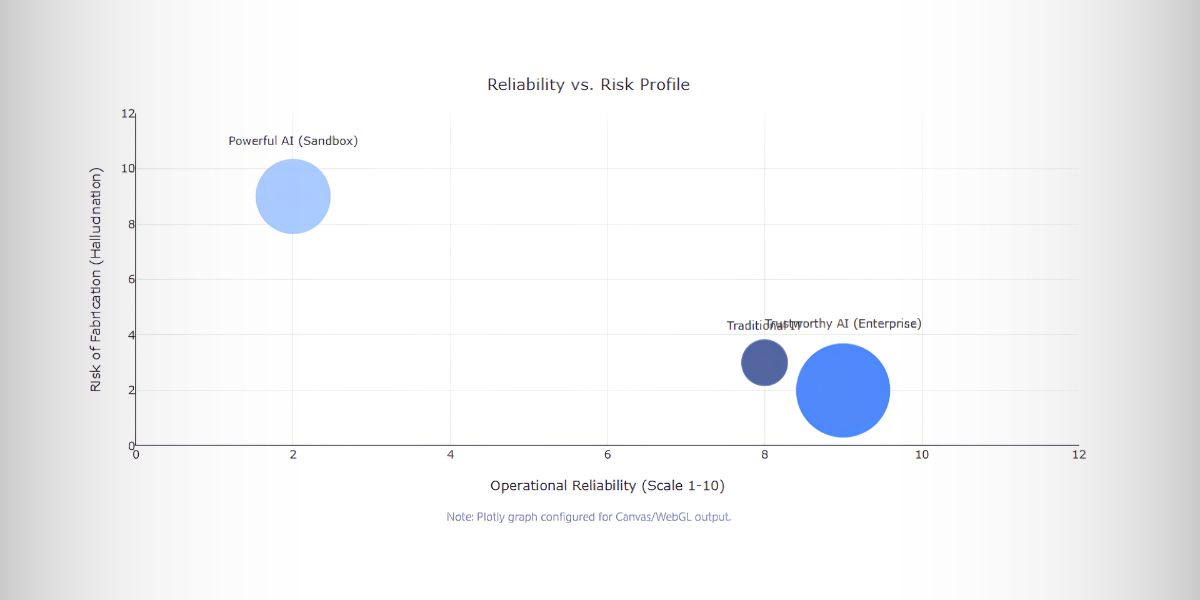
Enterprise boards are often captivated by raw computational power, judging large models largely on benchmark scores and polished demos. However, this may be the wrong test. A powerful model can look impressive in an isolated sandbox environment. Yet, when deployed into a messy, undocumented legacy system without guardrails, it can quickly become a liability rather than a competitive edge.

A high-powered model operating without governance does not necessarily solve fundamental business problems. Instead, it may produce confident-sounding mistakes at an accelerated pace. Without clear guardrails, a powerful AI model can operate like a fast car with no brakes: the horsepower itself is not the flaw, but the missing brakes are. Enterprise leaders may need to prioritize architectural control over raw power, or the deployment itself can become the point where operations break.

The Black-Box Liability in Legacy Systems

AI adoption frequently stalls for many enterprises at a predictable roadblock: legacy systems that organizations no longer fully understand. According to Gartner data cited in the article, 73% of CIOs cite legacy infrastructure as the single biggest barrier to digital transformation. In many established companies, the foundational rules running the business remain buried in decades-old COBOL code, aging databases, or the institutional memory of engineers who have long since departed.

Pointing a generic AI model at an undocumented system to explain code logic can produce poor results. Without the surrounding business context behind the code, the model may confidently fabricate answers. Far from being a rare failure mode, this outcome can become a recurring risk. Consequently, enterprises may find themselves paying senior engineers to spend hundreds of hours manually verifying AI-generated outputs. Rather than accelerating workflows, this practice can introduce a new operational bottleneck on top of the old one, reducing the time savings AI was intended to deliver.

The Engineering of Trust

Photo Courtesy: Unsplash.com

Mitigating these risks requires shifting organizational focus from how powerful a model is to how reliable it proves to be. Trust in this context is neither a marketing claim nor an abstract ethics pledge. It is a tangible property engineered directly into the system, much like integrating a security lock or a smoke detector. Building this environment requires two core architectural pillars designed to protect the broader business asset.

Verifiable Outputs

Every answer the AI generates should be checkable rather than just plausible. If a model claims a specific business rule operates a certain way, engineers should be able to verify that claim quickly rather than spending a week hunting through the codebase. Unverified, incorrect answers do not just drain engineering hours. They can also create compliance risks or customer-facing outages.

Defined Boundaries

The model requires a strict operational rulebook that spells out established parameters. This setup forces the system to flag what it does not know instead of quietly guessing, since incorrect assumptions can create financial and reputational consequences.

Trust and System Velocity

Many executives assume that rigorous governance checks and human sign-offs inevitably slow a modernization project down. In practice, strong governance can support speed when it prevents avoidable rework. Industry benchmarks cited in the article indicate that traditional methods of modernizing a legacy system can take 18 to 36 months on average, relying on manual code reviews, handwritten documentation, and spot-sampled data verification.

By contrast, industry data cited in the article suggests that AI-assisted approaches built with robust traceability may compress those timelines by 40% to 50%. This speed is achieved not by skipping critical checks, but by executing the same compliance work faster and with less operational risk. Legacy architecture can be understood in weeks instead of months, system documentation can exist earlier in the project, and structural problems can be caught continuously rather than discovered after a costly launch.

Flagging complex anomalies early and assigning human experts to the riskiest variables can help prevent the rework and production failures that often drive multi-year overruns. Trust is not simply an operational speed bump. It can be the mechanism that allows enterprises to move faster with more control. Once engineering teams can mechanically verify that an AI’s output aligns with business logic, the need to check every line by hand may be reduced. Consequently, governance can become a catalyst for deployment speed rather than the asset traded away to achieve it.

Governing AI for Scale

The race for digital leadership in the Asia-Pacific region may not be won simply by the organization with the largest AI budget. It may be won by organizations that build secure, traceable, and reliable pipelines for getting AI models into active production.

In highly compliant environments like Singapore, managing this transition successfully demands rigorous engineering discipline. Enterprise platforms require a framework capable of turning unpredictable models into secure corporate assets. Technology transformation partners, such as Vinova, highlight that managing core infrastructure under strict regulatory rules for 16 years provides the kind of technical track record needed to navigate these complexities. When digital transformation is built on architectural precision instead of raw horsepower, the resulting deployment can become more than an impressive sandbox demo. It can become an asset the enterprise is better positioned to run on.

About the Author

Jaden Pham is a writer at Vinova, a Singapore-based technology transformation partner recognized on The Straits Times and Statista’s Singapore’s Fastest-Growing Companies list for three consecutive years. Vinova is ISO 27001-certified and specializes in building secure, traceable systems for regulated enterprise and government clients across the region.

UK Medicine Costs and Alternatives at New Anglia University

Studying medicine in the UK has long been regarded as one of the most established routes to becoming a doctor. UK medical schools are recognized internationally for their academic standards, structured clinical training, and research-led approach to medical education. They continue to attract applicants from around the world.

However, alongside academic reputation, cost has become an increasingly important factor for prospective students. Tuition fees, accommodation, transport, textbooks, clinical equipment, and everyday living expenses can make a medical degree a significant financial commitment. Since most UK medical programs take between five and six years to complete, the total cost of studying medicine in the UK can be considerably higher than many applicants initially anticipate.

At the same time, competition for places at UK medical schools remains high. Every year, many academically qualified applicants are unsuccessful because of the limited number of available places. For this reason, some students broaden their search to include international medical schools that offer different admissions pathways and program structures.

New Anglia University is one example of an international medical university offering a Doctor of Medicine (MD) program. For students comparing the cost of studying medicine in the UK with overseas options, understanding how the program is structured and how it differs from a traditional UK medical degree can help inform their decision.

Understanding the Cost of Studying Medicine in the UK

When comparing medical schools, tuition fees are only one part of the overall financial picture. The total cost of studying medicine in the UK includes a range of additional expenses that students will typically encounter throughout their degree.

Accommodation is often the largest ongoing expense, particularly for students studying in cities with higher rental costs. Living expenses such as food, utilities, internet, and local transport should also be included when calculating the total cost of attendance.

Medical students may also need to purchase textbooks, laboratory equipment, clinical clothing, diagnostic tools, and learning resources. During clinical years, travel between teaching hospitals and placement sites can create additional expenses.

International students may also need to budget for visa applications, immigration health charges, flights, and travel during university holidays.

Because medical degrees usually last longer than most undergraduate programs, these costs accumulate over several years. The overall financial commitment is often significantly greater than the annual tuition fee alone suggests.

Why Students Explore Alternatives to UK Medical Schools

Financial considerations are only one reason students consider medical schools outside the UK.

Admission to UK medical schools is highly competitive. Applicants are generally expected to demonstrate excellent academic performance, complete admissions testing where required, prepare personal statements, attend interviews, and provide evidence of relevant healthcare experience.

Despite meeting these requirements, many applicants do not receive an offer because of the limited number of available places.

This has led some students to research medical schools abroad that offer internationally focused medical education while following a different admissions process.

Choosing to study medicine outside the UK does not necessarily mean compromising on educational quality. However, applicants should carefully evaluate each university’s accreditation, curriculum, clinical training opportunities, graduate outcomes, and licensing pathways before making a decision.

New Anglia University

New Anglia University is a medical university based in Anguilla that offers a four-year Doctor of Medicine (MD) program.

The curriculum is divided into two stages. The first stage focuses on foundational medical sciences, while the second stage consists of supervised clinical education.

During the pre-clinical stage, students study subjects including anatomy, physiology, pathology, pharmacology, microbiology, neuroscience, clinical diagnostics, and patient care. The curriculum is designed to provide the scientific knowledge required before students begin clinical training.

Alongside scientific instruction, students develop communication skills, clinical reasoning, professionalism, and an understanding of patient-centered care.

Clinical Rotations

Following completion of the foundational sciences component, students progress to clinical education through affiliated teaching hospitals.

Depending on placement availability and university arrangements, New Anglia University students may have opportunities to complete clinical rotations in the United Kingdom or the United States.

Clinical rotations allow students to observe and participate in patient care under supervision while applying knowledge gained during the pre-clinical stage.

Training commonly includes patient history taking, physical examinations, clinical documentation, communication with patients, participation in multidisciplinary healthcare teams, and supervised clinical decision-making.

Clinical placements form an important part of medical education because they provide practical experience in real healthcare settings before graduation.

Comparing the Overall Cost

When comparing the cost of studying medicine in the UK with an international MD program, students should consider the total cost of attendance rather than tuition fees alone.

Questions worth asking include:

  • What are the tuition fees for the full duration of the program?
  • What are the expected living expenses during each stage of study?
  • Are clinical placement costs included?
  • Will travel between countries be required?
  • Are examination fees charged separately?
  • What additional costs should students expect before graduation?

Looking at the complete financial picture often provides a more accurate comparison than focusing on annual tuition alone.

Factors to Consider Before Choosing a Medical School

Cost is only one factor when choosing where to study medicine.

Students should also review the curriculum, accreditation status, clinical placement arrangements, graduate eligibility for licensing examinations, and postgraduate training opportunities.

Understanding where graduates can continue their medical training is particularly important for students intending to practice in the UK, the United States, or another country after graduation.

Applicants should also request detailed information about assessment methods, student support services, faculty, clinical partnerships, and progression requirements before enrolling.

Making an informed decision requires evaluating the complete educational pathway rather than a single aspect of the program.

Is New Anglia University an Alternative to Studying Medicine in the UK?

For students researching different routes into medicine, New Anglia University represents an alternative to the traditional UK medical school pathway.

Its Doctor of Medicine program follows a different structure from most UK undergraduate medical degrees, beginning with foundational sciences in Anguilla before progressing to supervised clinical education through affiliated hospitals.

Whether this pathway is suitable depends on the student’s academic background, career objectives, preferred learning environment, financial circumstances, and intended country of medical practice.

As with any medical school, prospective applicants should independently review accreditation, curriculum, clinical training opportunities, licensing requirements, and total costs before making a final decision.

Weighing the Full Cost of Each Medical Pathway

The cost of studying medicine in the UK has become an increasingly important consideration for both domestic and international students. Tuition fees, accommodation, living expenses, travel, and the length of medical programs all contribute to the overall financial commitment.

While many students continue to pursue medical education in the UK, others choose to explore international pathways that follow a different program structure.

New Anglia University offers a four-year Doctor of Medicine program that combines foundational medical sciences with supervised clinical education. For students comparing different routes into medicine, understanding the structure, costs, clinical training opportunities, and future licensing requirements of each pathway can help support a well-informed decision.

Frequently Asked Questions

1. How Much Does It Cost To Study Medicine In The UK?

The total cost depends on the university and whether a student is classified as domestic or international. Beyond tuition fees, students should budget for accommodation, food, transportation, textbooks, clinical equipment, examination fees, and other living expenses over a five- or six-year degree.

2. Why Do Students Consider Alternatives To UK Medical Schools?

Students may consider alternative pathways because of rising education costs, limited places at UK medical schools, or a preference for a different program structure. Academic goals, admissions requirements, and future licensing plans also influence the decision.

3. What Program Does New Anglia University Offer?

New Anglia University offers a four-year Doctor of Medicine (MD) program consisting of foundational medical sciences followed by supervised clinical education through affiliated teaching hospitals.

4. Can New Anglia University Students Complete Clinical Rotations in the UK?

Depending on placement availability and university arrangements, students may have opportunities to undertake clinical rotations in hospitals in the United Kingdom or the United States.

5. What Should Students Compare Before Choosing A Medical School?

Students should compare total costs, accreditation, curriculum, clinical training, licensing pathways, graduate outcomes, student support services, and the country where they intend to complete postgraduate training or practice medicine.

Summer Streets 2026 Launches Manhattan Route Stretching From Brooklyn Bridge to Inwood

New York City’s Summer Streets program opened its Manhattan season on Saturday, August 2, shutting down miles of roadway from the Brooklyn Bridge through Inwood to make way for pedestrians, cyclists, joggers, and families. The car-free event, organized by the New York City Department of Transportation, runs from 7 a.m. to 3 p.m. across three consecutive Saturdays in August, with two more Manhattan dates on August 8 and August 15.

  • Summer Streets closed roads from the Brooklyn Bridge through Lafayette Street, Park Avenue, Central Park North, and Broadway all the way to Dyckman Street in Inwood on August 2, with two more Manhattan Saturdays remaining on August 8 and 15
  • The 2026 season expanded to all five boroughs for the first time, with adjusted later hours (9 a.m. to 5 p.m.) in outer boroughs based on community feedback from prior years
  • Eleven rest stops along the Manhattan route featured live music, fitness classes, art installations, a zip-line, and free bike rentals
  • NYC DOT partnered with New York Road Runners to host the free NYRR Start Line Series, a beginner-friendly 5K run and walk event held along the Manhattan route for the first time
  • More than 500,000 people participated in Summer Streets events across the five boroughs during the 2025 season

What Did the Manhattan Route Look Like on Opening Day?

Thousands of New Yorkers turned out for the first Manhattan Saturday despite a forecast that mixed humidity and scattered showers with temperatures reaching a high of 86 degrees. The route traveled north along Lafayette Street and Park Avenue before crossing through Central Park North and climbing Broadway all the way to Dyckman Street, a stretch that would normally be impassable on foot at any reasonable pace due to traffic. Cyclists rode uninterrupted through Midtown. Families with strollers moved through intersections typically clogged by delivery trucks. Joggers covered blocks that would normally demand a stop at every crosswalk.

NYC DOT set up 11 designated rest stops along the route, each with its own programming slate. Foley Square near City Hall hosted a zip-line activation. Astor Place offered a ninja obstacle course from No Limit Ninja alongside yoga and wellness programming. The Grand Lawn rest stop at 40th Street and Park Avenue, presented by Grand Central Terminal, staged free lawn games and food from Grand Central retailers including Shake Shack. Midtown’s rest stop at 52nd Street featured live performances from Zafer Tawil’s Tareb Ensemble, Art Lillard & Blue Heaven, and Dawn Drake & ZapOte, running from morning through the afternoon.

How Did the Event Expand to All Five Boroughs in 2026?

Summer Streets 2026 Opens Manhattan Route From Brooklyn Bridge to Inwood

Photo Credit: Unsplash.com

Summer Streets has historically centered on Manhattan, but the 2026 season marked the first time NYC DOT extended the program across all five boroughs on dedicated Saturdays. Queens and Staten Island kicked off the season on July 25, with routes along Vernon Boulevard in Long Island City and Forest Avenue on Staten Island. Brooklyn and the Bronx close out the calendar on August 22, with car-free stretches along Eastern Parkway from Grand Army Plaza to Buffalo Avenue and Grand Concourse from East Tremont Avenue to Mosholu Parkway.

NYC DOT Commissioner Mike Flynn noted that the agency adjusted hours in the outer boroughs to 9 a.m. through 5 p.m. based on community feedback, giving residents additional evening daylight hours compared to the 7 a.m. to 3 p.m. Manhattan schedule. The expansion reflected input from elected officials, advocacy groups, and neighborhood organizations that had pushed for Summer Streets programming beyond Manhattan for several years.

What New Partnerships Shaped the 2026 Season?

NYC DOT partnered with New York Road Runners to bring the NYRR Start Line Series to Summer Streets for the first time in Manhattan. The series, designed for beginner athletes, hosted a free 5K run and walk event along the Summer Streets route at 7:30 a.m. on August 2. NYRR previously ran the Start Line Series only in Queens; the 2026 expansion added Manhattan on August 1 and a Bronx event scheduled for August 22.

The NYC DOT Art program also commissioned new public installations for the route. Illustrators Amanda Lobos and Grace Park designed life-sized “NYC Art Stop Letters” placed at rest stops along the route, with two distinct visual styles. Lobos created a series titled “Saturation” that filled the letter forms with layered creatures and ornamental patterns. Park’s contribution, “NYC in Motion,” transformed the letters into isometric 3D environments depicting scenes of city life, from sports to neighborhood gatherings. A separate installation by artist Elsa Ponce, called “The Bower,” placed a shadow-casting shade structure at the Midtown rest stop where visitors could draw with chalk on the pavement beneath it.

What Impact Does Summer Streets Have on Transportation and Local Economy?

Parking along the Summer Streets route was restricted from midnight to 4 p.m. on Saturday, and the Brooklyn Bridge closure required drivers heading into Manhattan to divert from Centre Street to the FDR Drive or Park Row South exits. MTA buses were rerouted along affected corridors. The scale of the road closures reflected how deeply Summer Streets reshapes Manhattan’s transportation grid each Saturday in August, temporarily removing vehicle access from some of the borough’s central corridors.

NYC DOT partnered with Lyft to offer discounted Citi Bike rides using a promotional code valid on each Summer Streets Saturday, an attempt to encourage cycling as both recreation and practical transportation during the event. Unlimited Biking also provided free bike rentals at multiple rest stops, lowering the barrier for residents who do not own bicycles. NYC DOT reported that more than 500,000 people participated across all Summer Streets events during the 2025 season, and the 2026 expansion to five boroughs is expected to push that number higher.

How Does Summer Streets Compare to Other Global Open Streets Programs?

Summer Streets draws direct inspiration from Bogotá’s Ciclovía, which has closed city streets to cars every Sunday since 1974, and Paris Plage, the French capital’s annual transformation of the Seine riverbanks into temporary beaches. New York’s version, now in its 18th year, has grown from a single Manhattan route into a citywide program. The five-borough model positions Summer Streets alongside open-streets initiatives in cities like Los Angeles, Chicago, and San Francisco that have expanded their car-free programming in recent years.

The Manhattan route returns on August 8 and August 15, with the same 7 a.m. to 3 p.m. schedule and additional sponsors including C4 Performance Energy and Bloom joining the rest-stop activations. Brooklyn and the Bronx close out the season on August 22 from 9 a.m. to 5 p.m.

FAQs

What Is Summer Streets?

Summer Streets is an annual NYC DOT program that temporarily closes major roadways to vehicle traffic on select Saturdays in July and August, opening them to pedestrians, cyclists, runners, and community programming. The 2026 season runs across five Saturdays covering all five boroughs.

When Are the Remaining Summer Streets Dates in 2026?

Manhattan hosts Summer Streets on August 8 and August 15 from 7 a.m. to 3 p.m. Brooklyn and the Bronx close out the season on August 22 from 9 a.m. to 5 p.m.

How Much Does Summer Streets Cost to Attend?

Summer Streets is free and open to all New Yorkers. All rest-stop activities, fitness classes, performances, art installations, and NYRR running events are free of charge.

What an 18-Hour-to-6-Minute Pipeline Rebuild Taught One Enterprise Architect About Risk

By: Arun Mishra, Enterprise Architect

For a long time, one of our most important financial data pipelines took 18 hours to run. Everyone treated that as normal. It ran overnight, it finished before the business day started, and nobody had a reason to question it. That’s usually how the most dangerous problems in enterprise systems hide: not as outages, but as things everyone has quietly agreed to live with.

We eventually rebuilt that pipeline so it ran in about 6 minutes. The story of how, and why it took as long as it did for anyone to treat it as a real problem, taught me more about risk than any incident postmortem ever has.

The Problem Nobody Was Calling a Problem

The pipeline processed financial transaction data in large overnight batches. It worked. It had worked for years. But 18 hours is a long time for data to sit unprocessed, and that gap quietly shaped everything downstream. Reports were always a day behind. Errors weren’t caught until the next business day, sometimes later. If something went wrong mid-run, there often wasn’t enough time left in the window to rerun it before people needed the output.

None of that showed up as an incident. It showed up as small workarounds: a report that always ran late, a reconciliation step that always happened the next morning, a team that had learned to plan around the delay instead of questioning it. That’s the part that took me a while to see clearly. The system wasn’t broken. It was just slow in a way that had become invisible because everyone had adapted to it.

Why We Finally Looked Closer

The trigger wasn’t a failure. It was a new business requirement that needed same-day visibility into transaction data, something the 18-hour batch process couldn’t support no matter how we tuned it. That’s often how these things get uncovered. Nobody goes looking for a redesign when the current system technically works. It usually takes a new requirement to expose how much of the old approach was built around assumptions nobody had reexamined in years.

When we actually opened up the pipeline, the batch design turned out to be the whole problem. Data moved through a single sequential process: extract everything, transform everything, load everything, in that order, as one long chain. Every stage waited for the one before it to finish completely. There was no reason two independent pieces of that chain couldn’t run at the same time. Nobody had ever asked that question, because the system had never needed to be fast. It had only ever needed to finish by morning.

What Changed

The rebuild came down to a few decisions, none of them exotic on their own.

We moved from a single overnight batch to an event-driven design, where transactions get processed as they arrive instead of piling up for one big nightly run. That alone removed most of the 18 hours, because the system was no longer waiting for a full day’s worth of data to accumulate before doing anything with it.

We also broke the pipeline into independent stages that could run in parallel instead of one strict sequence. A lot of what had been treated as one long chain was actually several unrelated processes that had simply been built to run one after another, mostly because that was how the original system was designed a decade earlier, not because the work genuinely depended on it.

And we added monitoring that could catch a stuck or failing stage within minutes instead of the next morning. That last part matters more than it sounds. A fast pipeline that fails silently isn’t actually safer than a slow one. Speed only helps if you can trust what it’s telling you.

The Real Lesson Wasn’t About Speed

It’s tempting to tell this story as a performance win: 18 hours down to 6 minutes, a good number for a slide. But the number isn’t really the point. The point is what that 18-hour window had been quietly costing us the whole time, in delayed error detection, in reports nobody trusted until the next day, in a team that had built its entire workflow around waiting.

That’s the part I’d want any other architect or technology leader to sit with. Slow systems don’t usually announce themselves as risks. They get absorbed into normal operations until they feel like just how things are. The real work isn’t rebuilding the pipeline once someone finally complains. It’s noticing the workarounds your team has quietly built around a system’s limitations, and asking whether those workarounds are actually masking a bigger problem.

In financial services especially, a delay is never just a delay. It’s a window where errors go unnoticed, where fraud has more time to move before anyone sees it, where a bad number sits in a report before anyone catches it. Eighteen hours doesn’t sound dangerous. It just sounds normal. That’s exactly why it’s worth questioning.

What I’d Tell Other Leaders

If there’s a system in your organization that everyone describes as slow but stable, don’t take stable at face value. Ask what the team has built around that slowness to make it livable. Those workarounds are usually the clearest map of where the actual risk is hiding, long before it turns into an incident anyone has to explain after the fact.

About the Author

Arun Mishra is an Enterprise Architect and Senior Manager with 16 years of experience in financial services and healthcare technology, spanning event-driven architecture, real-time payments systems, cloud-native platform design, and ML-based fraud detection. He holds 8 AWS certifications, Google Cloud Professional Architect, and Google Generative AI Leader credentials.

How a Health Insurer Expanded Its Asset Discovery Coverage

By: Naveena Davay Arunkumar, Lead Data Analyst, IT Asset Management

For a long time, our organization believed it had a reasonably good handle on its IT assets. The dashboards said so. The audits didn’t flag anything alarming enough to change anyone’s mind. And yet, when we actually measured how much of our environment we could truly see, the number was closer to 70 percent. That means roughly three out of every ten assets in a healthcare payer environment, systems that could be touching member data, weren’t reliably showing up anywhere central at all.

Over the next 18 months, we brought that number to 95 percent. This is the story of what that gap actually was, why it had gone unnoticed for so long, and what it took to close it.

A Number That Sounds Fine Until You Sit With It

Seventy percent discovery coverage doesn’t sound like a crisis. In a lot of industries, it might not be. But in health insurance, an undiscovered asset isn’t just an inventory gap. It’s a system that might be storing, processing, or transmitting protected health information without anyone in security or compliance knowing it exists. It’s a server nobody’s patching. It’s a database quietly holding member records that never made it into a risk assessment because nobody knew to assess it.

What made this hard to see at first was that nothing was actively failing. The systems we did know about were reasonably well managed. The problem lived entirely in what wasn’t showing up: assets spun up outside normal provisioning, old systems that survived a merger or reorg without anyone updating the records, cloud resources created by a team that had never been looped into the central asset process. None of it looked like an emergency. All of it was risk sitting quietly in the dark.

Why the Gap Existed in the First Place

Part of it was tooling. We were running asset discovery and configuration management across multiple systems: Flexera for license and hardware visibility, ServiceNow as the system of record, and neither was set up to reconcile against the other automatically. Each tool had its own version of the truth, and the two didn’t always agree. When they disagreed, the honest answer was usually that nobody had gone back to figure out which one was right, so the gap just persisted.

Part of it was organizational. Asset management had grown up as a compliance function, something you did to pass an audit, rather than a living, continuously updated picture of the environment. That mindset works fine until the environment starts changing faster than the audit cycle does, which in most healthcare organizations now it does.

What Actually Closed the Gap

The first real shift was treating reconciliation as an ongoing discipline instead of a periodic cleanup project. We built a process where Flexera and ServiceNow data got compared regularly, not just before an audit, and discrepancies got flagged and resolved as part of normal operations instead of piling up until someone had to do a massive manual sweep.

The second was bringing Snowflake and dbt into the picture as the layer where all of this data actually got modeled and validated consistently. Instead of asset data living in silos that occasionally got compared by hand, we built a single, queryable source of truth that made it obvious when something didn’t add up, and made it possible to trust the number we were reporting instead of just hoping it was close.

The third, and probably the most important, was going after the assets that don’t announce themselves: things provisioned outside normal channels, systems left behind after a reorganization, cloud resources nobody remembered to register. That’s not a tooling problem so much as a persistence problem. Someone has to keep asking where the gaps are likely to be, because the gaps don’t show up on their own.

Why This Matters Beyond the Number

It’s tempting to talk about this as a data quality win, and it is one. But in a health insurance environment, closing a discovery gap is also a patient data protection story. Every asset that moves from unknown to known is one more system that can actually be assessed for risk, patched on schedule, and included in incident response planning instead of being a blind spot someone discovers the hard way.

Audit risk drops for the same reason. It’s much harder to defend an environment when a meaningful share of it isn’t even inventoried. Getting from 70 to 95 percent didn’t just make our reporting more accurate. It meant fewer places where a real problem could sit undetected for months.

What I’d Tell Other Data and Governance Leaders

If your organization is confident in its asset visibility, ask how that confidence was earned. A dashboard showing high coverage is only as good as the reconciliation behind it. If two systems can disagree with each other and nobody’s actively resolving that disagreement, the real number is probably lower than what’s being reported.

The uncomfortable systems, the ones nobody remembers provisioning, the ones that survived a merger without anyone updating the records, are usually where the actual risk lives. They’re also the hardest to find, which is exactly why they’re worth the effort. In healthcare especially, what you can’t see is the thing most likely to eventually become a problem you can’t ignore.

About the Author

Naveena Davay Arunkumar is a Lead Data Analyst in IT Asset Management at CareFirst BlueCross BlueShield, where she leads data governance and reconciliation strategy across the organization’s asset discovery and CMDB infrastructure. Her work spans Flexera, ServiceNow, Snowflake, and dbt, and focuses on the intersection of IT asset visibility, shadow IT risk, and PII/PHI protection in health insurance operations.

Disclaimer: This article reflects the author’s professional views and is for informational purposes only. It does not represent the official position of any organization and contains no confidential or protected information.