How Digital Quran Education Connects Muslim Families Worldwide

Digital Quran education has opened new doors for Muslim families across the world. In earlier times, learning the Quran often depended on local teachers, nearby mosques, or community access. Today, distance is no longer a barrier. Families living in different countries, cultures, and time zones are now connected through structured online Quran learning.

This shift is not only about convenience. It is about building a shared learning experience that brings Muslim families closer to the Quran and to each other. The connection goes beyond screens. It creates a sense of unity, routine, and shared purpose.

Breaking Distance Barriers in Quran Learning

One of the biggest advantages of digital Quran education is that it removes location limits. A family living in the United States can easily connect with a qualified teacher from another part of the world. At the same time, relatives in different countries can follow similar learning paths.

This global access helps families stay connected in their religious goals. Children growing up far from Muslim communities still get proper Quran education. As a result, distance no longer weakens the connection to faith.

How Does It Strengthen Family Bonds?

Digital Quran learning often becomes a shared activity within the household. Instead of being an individual task, it turns into a family routine.

Shared Learning Environment

Parents and children often sit together during lessons. Even when not directly participating, family members stay aware of the learning process. This creates a positive environment at home.

Consistent Daily Routine

Regular classes encourage families to organize their daily schedules. Over time, this builds a stable routine centered around Quran learning.

When learning becomes part of daily life, it naturally strengthens family bonds.

Access to Qualified Teachers Worldwide

Another important factor is access to skilled teachers. Many families struggle to find qualified Quran tutors locally. Digital platforms solve this problem.

Families can choose teachers based on:

  • Teaching style
  • Experience in Tajweed and memorization
  • Language compatibility

This flexibility improves learning quality. At the same time, it connects students with teachers from different backgrounds, creating a broader understanding of the Muslim world.

Building a Global Muslim Learning Community

Digital Quran education does not just connect individual families. It creates a wider community of learners.

Students from different countries often share similar lessons, goals, and progress. Even if they never meet in person, they are part of a shared journey.

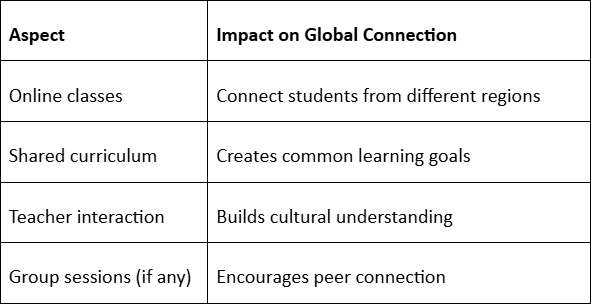
Here is a simple overview:

Photo Courtesy: Unsplash.com

This sense of belonging helps students feel part of something larger.

Role of Technology in Connecting Families

Technology is the foundation of digital Quran education. However, its role goes beyond basic communication.

Modern platforms like Quran Grace offer features that make learning interactive and connected. These include live video classes, screen sharing, and lesson recordings.

Such tools allow families to stay involved in the learning process. Parents can review lessons, track progress, and ensure consistency. This involvement keeps everyone aligned.

What Makes Online Quran Learning Feel Personal?

A common concern is that online learning may feel distant. However, many academies focus on making sessions personal and engaging.

One-on-One Interaction

Students receive direct attention during lessons. Teachers can adjust their pace and teaching method according to the student’s level.

Flexible Communication

Parents can easily communicate with teachers regarding progress or concerns. This direct link builds trust and clarity.

These factors make digital learning feel more connected rather than distant.

Supporting Muslim Identity Across Different Cultures

Muslim families living in non-Muslim countries often face challenges in maintaining religious identity. Digital Quran education plays an important role here.

Children stay connected to:

  • Proper Quran recitation
  • Islamic values
  • Daily learning habits

This connection helps them understand their identity with confidence. It also ensures that cultural differences do not weaken their relationship with the Quran.

Flexible Learning for Busy Family Lives

Modern family life is often busy. Work schedules, school timings, and daily responsibilities can make it hard to attend physical classes.

Digital Quran education offers flexible scheduling options. Families can choose times that fit their routine without missing consistency.

This flexibility ensures that learning continues smoothly, even with changing daily demands.

A Lasting Connection for Muslim Families

Digital Quran education has created a powerful link between Muslim families across the world. It removes distance, improves access to qualified teachers, and builds a shared learning experience within homes.

More importantly, it helps families stay connected to the Quran in a structured and consistent way. Through simple technology and thoughtful systems, it brings together people from different backgrounds under one common goal.

In the long run, this connection strengthens not only learning but also unity among Muslim families worldwide.

The 3D Content Bottleneck: How Generative AI is Reshaping Asset Pipelines

Digital asset creation has long been bounded by manual labor. Traditional pipelines require 3D artists to sculpt, retopologize, and paint textures over days, creating a strict production bottleneck for games, digital environments, and spatial computing. To resolve this bottleneck, Neural4D, jointly developed by Nanjing University, DreamTech, Oxford University, and Fudan University, offers a programmatic approach to asset production. By shifting the workload from manual polygon manipulation to cloud-based neural inference, developers can now scale their production pipelines.

The entry point for this technology is often the conversion of flat assets into fully realized spatial structures. Designers can use cloud services to convert photo to 3D model in minutes, bypassing the initial block-out phase. Instead of constructing geometry from scratch, creators upload a single reference image to generate an initial mesh. This shift reduces the time spent on basic volumetric modeling, allowing teams to allocate resources to high-level scene composition and gameplay design.

Technical Foundations of Sparse Reconstruction

Traditional photogrammetry tools rely on dense depth estimation, which creates heavy compute demands and messy geometry. The Neural4D framework utilizes a proprietary Direct3D-S2 architecture alongside a Spatial Sparse Attention (SSA) model. This combination yields a deterministic output that reduces the typical hallucination rates seen in probability-based models.

By applying sparse volumetric logic, the system targets its computation only where surface boundaries exist. The results are measured by direct performance improvements:

  • The inference speed is approximately 12 times faster than standard reconstruction pipelines.
  • A base mesh, or white model, is generated in about 90 seconds.
  • Full material reconstruction and PBR texture maps are processed in an additional phase, completing a production-ready GLB asset in just over 2 minutes.

By separating geometry generation from texturing, the system avoids baked-in lighting. This separation is necessary for assets destined for real-time engines.

Clean Topology and PBR Material Separation

A common issue with generative models is the production of disorganized meshes, often referred to as triangle soup. These assets require extensive retopology before they can be imported into game engines. Neural4D addresses this by generating clean topology with an edge flow that respects organic and mechanical boundaries. The output is quad-dominant, which simplifies the process of manual editing if adjustments are needed.

The platform also employs a material separation algorithm that isolates diffuse colors from ambient lighting. Many generators output assets with dead shadows baked into the textures, rendering them useless under dynamic lighting. Neural4D outputs a pure albedo map, ensuring that the final model is fully relightable inside Unreal Engine or Unity. The meshes are also generated as a watertight mesh, eliminating non-manifold geometry and holes that break physical simulation or 3D printing slicing.

Downstream Integration and Creator Communities

The utility of these generated assets extends beyond professional studios. For creators working on physical projects, watertight geometry means the output can be directly exported for fabrication. Modern platforms like DIY3D allow users to share their creations or download printable 3D models in the 3MF format. Unlike legacy formats, 3MF files package color profiles, slicing parameters, and support configurations, aligning with the modern creator workflow.

For digital refinement, the release of Neural4D-2.5 introduces a conversational interface. Users can adjust details, materials, or model proportions using conversational commands. This multimodal interaction loop provides a layer of precise control, allowing non-technical creators to optimize assets without opening external editing suites.

The transition toward programmatic 3D generation is changing how assets are sourced and optimized. By utilizing spatial attention and structured material separation, developers can bypass traditional modeling bottlenecks, accelerating the path from initial image to engine-ready asset.

How Curated Tech Conference Side-Events Are Changing Global Networking

Tech conference side-events have quietly become one of the most valuable parts of attending a major industry gathering. The keynotes and expo floors draw the headlines, but much of the real connection happens in the smaller, invitation-only rooms that run alongside the main agenda. Tech Embassy was built around that observation. The company provides the infrastructure for high-impact tech conference side-events at the world’s leading technology gatherings, turning a single day of appearances into longer-term strategic value.

The scale of the opportunity is hard to overstate. More than 100 major tech conferences take place each year, attracting somewhere between 50,000 and 200,000 attendees apiece. Yet corporate and government participation at these gatherings often stays fragmented and unstructured, which limits the return on a costly trip. Tech Embassy addresses that gap by pairing curated physical gatherings with a digital platform, so a conference appearance becomes a starting point rather than an isolated moment.

What Makes a Curated Side-Event Different

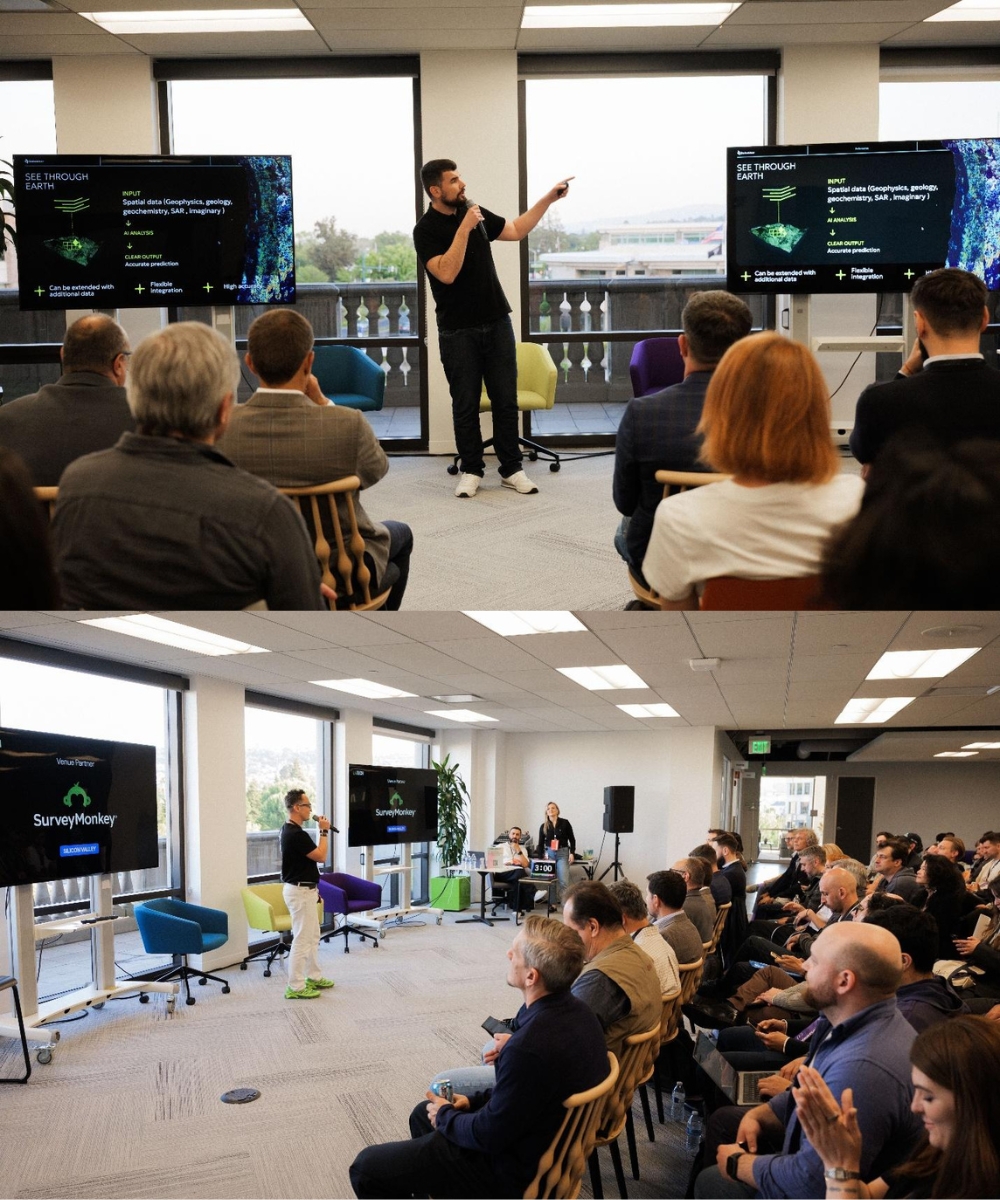
The difference comes down to who is in the room. Tech conference side-events run by Tech Embassy follow a standardized format hosted alongside global conferences including MWC Barcelona, Web Summit, GITEX, LEAP, SXSW, NY Tech Week, and TechCrunch Disrupt. Each gathering brings together vetted founders, institutional investors, corporate decision-makers, and ecosystem partners. Every attendee is personally curated, with no random traffic walking in off the expo floor.

That curation is what separates structured tech conference side-events from the open mixers that fill a conference week. A typical Tech Embassy gathering hosts between 150 and 250 attendees and draws 150 to 300 startup applications, which gives the team room to assemble a room with genuine alignment. The audience usually splits around 60 percent founders and 40 percent investors and industry experts, a balance designed to make introductions productive rather than transactional.

Reach extends beyond the room itself. The company reports an average of more than 40,000 social impressions per event, which means the conversations started in person carry into a wider professional audience afterward. The format is deliberately repeatable, and the company currently delivers 20 to 30 events per year across Europe, the Middle East, North America, and Asia.

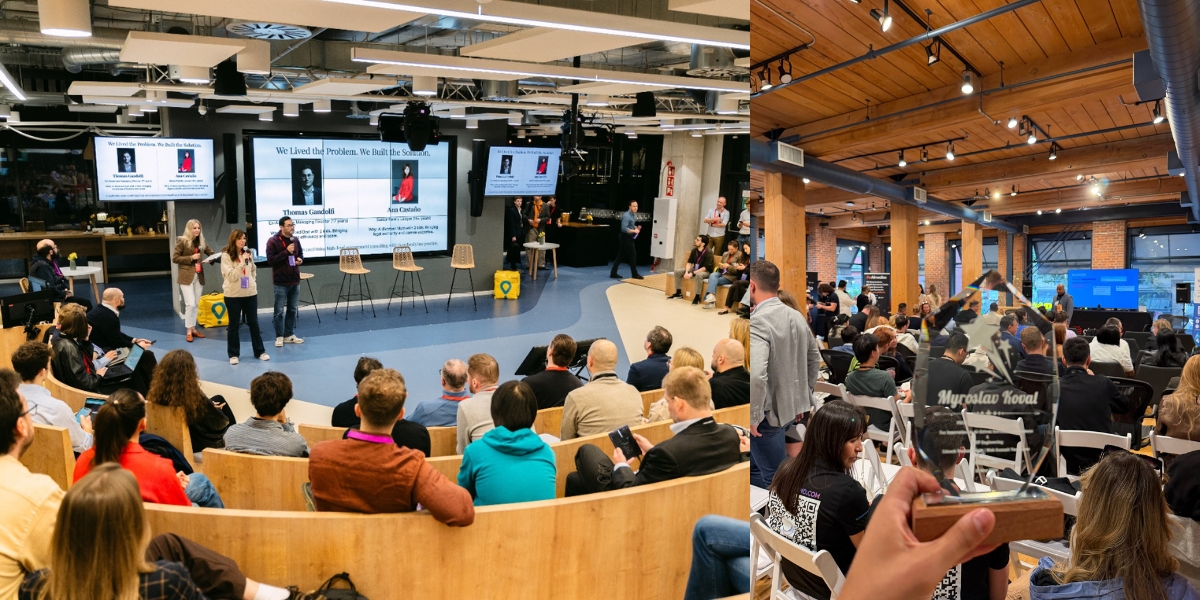
Photo Courtesy: Press Centre Tech Embassy

Connecting the Ukrainian Tech Ecosystem to North America

The same platform serves as the operational backbone for UAtech, a Canadian non-profit with Ukrainian roots that builds startup ecosystems through global events. UAtech works to position Ukrainian founders as global leaders rather than framing them through an underdog narrative, spotlighting the talent and resilience of innovators across the ecosystem. Its standing as a registered Canadian organization reflects a formal commitment to the ecosystem it represents.

There is real substance behind that ambition. Ukraine’s technology sector has produced six or more unicorns, among them Grammarly, GitLab, AirSlate, People.ai, Monobank, and Preply, and the country counts more than 346,000 IT professionals. UAtech connects that ecosystem to the North American market through its events and through its editorial platform. Its national partners include Ukraine’s Ministry of Digital Transformation, the Ukrainian Startup Fund, the Ministry of Foreign Affairs, and the IT Ukraine Association.

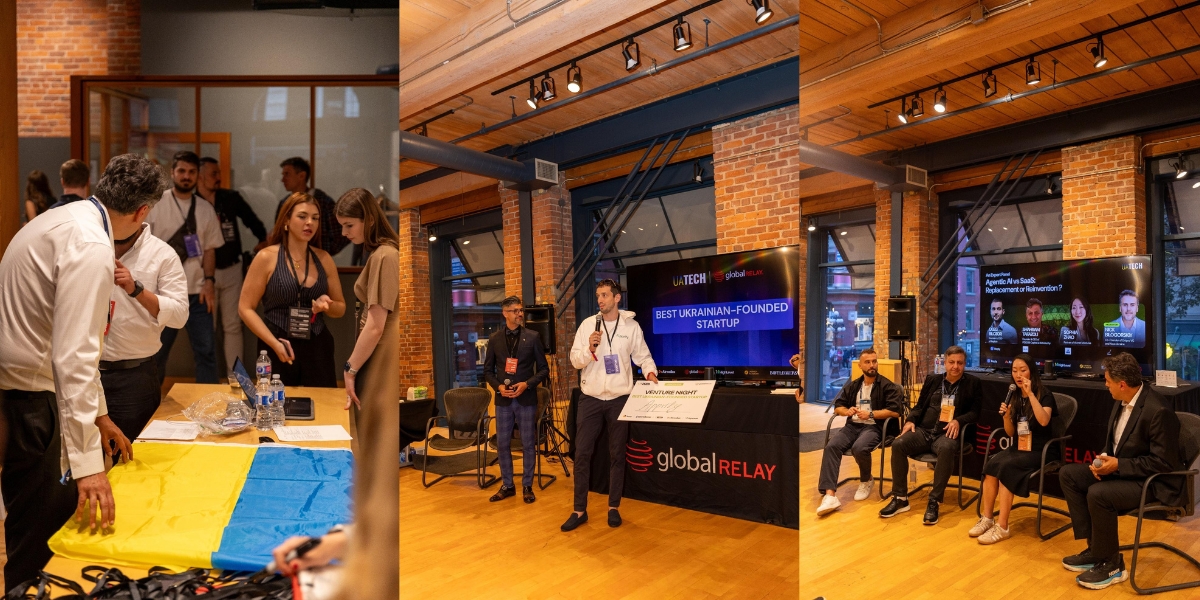
UAtech runs two recurring formats. UAtech Venture Night brings curated tech conference side-events to premier conferences, while the UAtech Awards recognize standout performance among top Ukrainian startups. The speaker network across these gatherings has included founders and executives from companies such as Grammarly, Glovo, and Mastercard.

Photo Courtesy: Press Centre Tech Embassy

The Numbers Behind 2025 and the Road Ahead

The 2025 calendar gives a clear picture of how tech conference side-events perform at scale. Across seven UAtech Venture Nights plus Tech Embassy corporate side-events, the organizations brought together more than 2,000 curated attendees and over 800 participating startups. That activity reflects a format that has moved past the pilot stage and into steady operation.

Momentum continues into 2026. The first half of the year carries a footprint of 12 events spanning Barcelona, Bangkok, San Francisco, Vancouver, Toronto, New York, London, Amsterdam, Paris, and Berlin, all listed on the public event calendar. The longer roadmap targets more than 100 events by 2027, which would place curated tech conference side-events at most of the major stops on the global technology calendar.

Tech Embassy was founded by Volodymyr Demianenko, who brings more than 20 years in technology to the venture. He co-founded Handy.AI and founded SOLU, an AI-driven CRM built for solo professionals. The company is headquartered in Canada, and its work reflects a broader shift in how professionals approach a packed conference week. The main stage still matters, but the curated tech conference side-events happening alongside it are increasingly where lasting relationships take shape.

What to Do After a Car Accident in Washington

A car accident can change an ordinary day in seconds. One moment a driver is heading home from work, and the next they are standing on the shoulder of a Washington highway trying to make sense of what happened. The steps taken in those first hours often shape how the weeks that follow unfold, both for a person’s health and for any claim they may bring later. Knowing when to call a car accident lawyer can make a real difference in how the process plays out.

First Steps at the Scene

Safety comes before anything else. Drivers and passengers should check themselves and others for injuries, then move to a secure spot away from traffic if the vehicles can be moved. Hazard lights warn oncoming drivers and reduce the risk of a second collision. When anyone is hurt or the damage looks significant, calling 911 brings medical help and creates an official record of the event.

Documentation matters. Photos of the vehicles, the road, and any visible injuries capture details that fade from memory within days. Drivers exchange names, contact details, insurance information, and license plate numbers. Witnesses who saw the crash can offer an account that supports the facts later, so collecting their names and phone numbers is worth the few extra minutes at the scene.

Why Medical Care Comes Early

Adrenaline can mask pain. A person who feels fine at the roadside may notice stiffness, headaches, or deeper injuries a day or two later. Seeing a doctor promptly protects a person’s health and produces medical records that connect any injuries to the crash. Those records become a foundation for an insurance claim, and a Washington personal injury lawyer often points to early treatment as one of the most useful things a client can do.

Understanding Washington’s Fault System

Washington follows a comparative fault approach, which means more than one party can share responsibility for a collision. A driver found partly at fault can still recover damages, though the amount may be reduced by their share of the blame. Washington also sets a three-year window for filing most injury claims, so acting within a reasonable timeframe keeps options open.

Insurance carriers know these rules well. After a crash, an adjuster may reach out quickly with a settlement offer that seems helpful but does not account for future treatment or lost income. This is one reason many injured people speak with a car accident lawyer before signing anything. A lawyer reviews the offer against the full scope of the losses, including care that may still lie ahead.

How a Car Accident Lawyer Supports a Claim

A car accident lawyer handles the parts of a case that pull focus away from recovery. That work includes gathering police reports and medical records, communicating with insurance companies, and building a clear picture of how the crash affected a person’s life. When an insurer disputes liability or undervalues a claim, a car accident lawyer can press the point through negotiation or, if needed, in court.

Each case carries its own facts. A multi-vehicle pileup raises different questions than a single rear-end collision, and serious injuries call for careful calculation of long-term costs. A car accident lawyer weighs these factors so that a settlement reflects the real impact rather than the first number an adjuster names. For many people, having a car accident lawyer manage the details brings a measure of calm during a stressful stretch.

People who work with a car accident lawyer also gain a clearer sense of the timeline. Cases can take time, and that pace often reflects the careful work of documenting injuries and negotiating rather than any delay on the lawyer’s part. A steady car accident lawyer keeps a client informed at each stage, which is often what a good car accident lawyer does best.

Where Russell & Hill Fits In

Russell & Hill, PLLC is a Washington firm that represents injured people across the state, with offices in Everett, Spokane, Vancouver, Marysville, and Spokane Valley. The firm handles motor vehicle collisions, personal injury matters, and Social Security Disability claims, and it works on a contingency basis, meaning clients pay legal fees only if the firm recovers compensation. Readers can learn more about the firm’s approach at Russell & Hill, PLLC.

Anyone weighing their options after a crash can review their situation with the firm. Russell & Hill offers a no-cost case review, and interested readers can schedule a free consultation to discuss the specifics of their case and the path that may follow.

Disclaimer: This article is for general informational purposes only and does not constitute legal advice. Every case is different, and outcomes depend on the specific facts and applicable law. For advice about your situation, consult a licensed attorney in your jurisdiction.

The AWS Architect Who Thinks AI Writing Tools Are Solving the Wrong Problem

By: Stephen Woodard

How a career in enterprise systems led to a fundamentally different approach to AI and the written word.

Before building Thanis, I spent a year working on a problem that had nothing to do with writing. The question was simpler, and in some ways more unsettling: how do you create trust when a machine becomes capable of generating outputs that look increasingly authoritative?

That work eventually produced two patented frameworks, the Symbolic Containment Firewall and the Canonical Containment Protocol. Both were built around the same core idea: AI-generated outputs should not automatically become real-world actions. There needs to be a verification layer between generation and execution. A place where people can review, challenge, and audit what a system is producing before it influences decisions that matter.

When I turned my attention to AI writing tools, I kept seeing the same gap. Systems were generating content faster and faster. Very few were helping anyone evaluate whether that content was actually clear, accurate, or reflective of the person behind it. The verification layer was missing.

That observation, not a market opportunity or a product roadmap, is what became Thanis.

For most of my professional life, I worked on systems. Over twenty-five years in technology, including five years at Amazon Web Services, I became accustomed to solving problems by removing friction, simplifying complexity, and helping organizations move faster. When large language models arrived, I was fascinated, but my interest quickly moved beyond generation. The first time you watch a machine write a coherent article, summarize a complex report, or answer questions conversationally, it is difficult not to appreciate the significance. These systems represented a genuine technological breakthrough. What seemed to be missing was any equivalent mechanism for evaluating what they produced.

The Voice Problem

I first noticed it while working with writers.

Some were writing memoirs. Some were documenting deeply personal experiences. Others were trying to make sense of difficult periods in their lives through writing. These were not people looking for content generation. They were looking for understanding. They wanted help shaping a story, organizing ideas, strengthening structure, and finding clarity without losing ownership of what they were trying to say.

What I found was that many generative AI tools were remarkably good at producing cleaner language and surprisingly poor at preserving the voice behind it. The systems wanted to rewrite everything. A rough paragraph became polished. An uncomfortable sentence became softer. A personal observation became more generic, technically cleaner, but no longer sounded like the person who lived it.

That observation stayed with me.

The Learning Problem

Later, I started hearing a similar concern from a completely different group: educators.

The professors I spoke with were not anti-AI. In fact, many were actively exploring ways to bring AI into their classrooms. They understood that students were already using these systems and that trying to ban them entirely was unrealistic. Recent studies show that generative AI adoption among students has become widespread. AI is no longer an emerging technology in education. It is already part of the workflow.

But the educators I spoke with kept returning to the same concern: if the AI writes the paper, where does the learning happen? If the AI builds the argument, where does the student’s thinking appear? If the AI improves every paragraph automatically, how do you know what the student actually understands?

The more conversations I had, the more I realized I was seeing the same problem from two directions. Writers were worried about losing ownership of their voice. Educators were worried about losing visibility into the learning process. Both groups were really asking the same question: what role should AI play in writing?

The industry’s answer seemed obvious: generate more, generate faster, generate better. But I began wondering whether the industry was solving the wrong problem. We already know AI can generate language. The harder challenge may be helping people evaluate it.

Building a Feedback Layer, Not an Authorship Layer

That realization became the foundation for Thanis.

I did not set out to build another AI writer. The world already has plenty of those. Instead, I became interested in whether AI could function as a revision and evaluation layer rather than an authorship layer. Could a system help a writer identify structural weaknesses without rewriting the work? Could it help a student understand where an argument breaks down without generating the argument itself? Could it help someone improve a draft while keeping ownership of the thinking process intact?

What emerged from those questions was not another AI writing tool focused on generating content faster. It was a writing feedback platform built around a very different goal: helping people better understand, evaluate, and revise the work they had already created.

Using Thanis is intentionally straightforward. A student, writer, researcher, or professional uploads a draft and receives structured feedback around clarity, organization, argument flow, consistency, tone, evidence, and revision quality. Instead of replacing the writing, the system evaluates it. The goal is not to produce a finished document. The goal is to help the writer produce a stronger one.

For students, this becomes particularly useful when working against assignment requirements and grading rubrics. A student can upload an essay, research paper, discussion post, capstone project, or thesis draft and compare their work against the expectations of the assignment. Thanis helps identify where arguments are underdeveloped, where structure weakens the paper, where evidence may be insufficient, and where revisions could improve alignment with the rubric. The student still has to think, research, and write. Thanis simply illuminates where the work can improve before submission.

What surprised me was how quickly educators understood the value of that approach. Most professors I spoke with were not asking for another AI system that could complete assignments. They wanted a way to support revision, critical thinking, and learning without encouraging dependency on generation. In many ways, Thanis became less of a writing assistant and more of a structured feedback environment.

Deep Trace: The Patterns Writers Can’t See

As the platform evolved, another challenge emerged. Most writing tools evaluate a single draft in isolation. But writers rarely operate that way.

We develop habits over time. We repeat sentence structures. We rely on familiar endings. We return to the same explanatory patterns and pacing decisions. Editors often notice these patterns quickly. Writers often do not.

That observation eventually led to Deep Trace, an archive-aware analysis layer inside Thanis that compares current work against previous writing and identifies recurring patterns across a writer’s body of work.

Most writing tools react to the draft sitting directly in front of them. That is useful up to a point. A single-pass system can identify a confusing paragraph, a weak transition, or a conclusion that collapses under its own summary. What it often misses is recurrence. Writers repeat ourselves. We repeat sentence rhythms, emotional framing habits, pacing decisions, explanatory shortcuts, image choices, and structural preferences. A single document rarely reveals the pattern. An archive often does. Deep Trace was designed to surface those patterns.

Building it turned out to be significantly harder than building a standard AI writing tool. Getting a model to comment on a paragraph is relatively straightforward. Building a system that can retrieve historical context, analyze recurring patterns, avoid generic observations, and return feedback that is genuinely useful required a very different architecture. There were days spent staring at logs, questioning whether I had made the problem more complicated than it needed to be. In some ways, I had. But that complexity was the point. The patterns writers return to are rarely obvious in a single draft. They only surface across time.

The Scarcity That Actually Matters

That challenge taught me something important about where AI writing is headed.

We are already reaching a point where almost anyone can produce competent language on demand. Students can generate essays. Professionals can generate reports. Marketers can generate campaigns. The scarcity is no longer language. It’s judgment. It’s authorship. It’s knowing whether the words in front of us still reflect the thinking and intention of the person whose name appears at the top of the page.

That is the future worth paying attention to. Not a future where AI replaces writers, or where collaboration becomes so seamless that nobody can tell where the human ends and the machine begins. The future that interests me is one where AI helps people become more thoughtful writers, stronger communicators, better researchers, more deliberate students, and more careful editors.

A future where AI can help evaluate an argument without owning it. Help improve a story without rewriting it. Help a writer see their work more clearly without taking it away from them.

That is ultimately what Thanis was built to do. Not generate more language, but help people stay connected to the language they create.

Once AI can write almost anything, the question that matters most is no longer whether the machine can produce the words. It’s whether the human behind them remained present in the work.

I believe that question is going to matter far more than most people realize. And I think we are only beginning to understand why.