Reading the Earth Backward Through Time

A Fresh Introduction to a Familiar Science

Historical Geology byHugh Ranceinvites readers to see the Earth not as a fixed stage beneath human history, but as a dynamic, layered record of change. It presents geology as a science of evidence, patience, and reconstruction. Rather than following a simple timeline from Earth’s origin to the present, the book takes a more investigative approach, starting with what we can observe today and working backward into the deep past. In doing so, it shows how geologists use present-day clues to interpret ancient worlds.

This perspective gives the subject a thoughtful and engaging character. Instead of presenting a finished story, the book guides readers through how that story is discovered. Rocks, fossils, minerals, volcanic landscapes, glaciers, strata, and shifting continents all become pieces of evidence. Together, they reveal a planet shaped by immense time, powerful forces, and constant transformation.

The Present as a Window into the Past

A central idea running through the book is that the present helps explain the past. Processes we observe today, erosion, sedimentation, volcanism, uplift, and weathering, are not isolated events. They are part of patterns that have operated over vast stretches of time.

This idea gives geology its unique strength. A river carving a valley, a volcano forming new rock, or waves eroding a coastline can all serve as clues to ancient environments. By understanding what these processes produce now, geologists can interpret similar traces left millions or even billions of years ago.

The book presents this method clearly and convincingly. Geology emerges not as guesswork or a loose collection of facts, but as a disciplined way of reading evidence. The Earth leaves signs behind, and the geologist learns how to interpret them.

Why the Story Moves Backward

One of the book’s most distinctive features is its reversed structure. Many geology texts begin with the birth of the Earth and move forward through time. This book challenges that approach, arguing that the earliest Earth is also the hardest to understand, since much of its record has been altered, buried, or destroyed.

Instead, the book follows a method closer to forensic investigation: begin with what is visible and work backward toward what is less certain. This approach feels both more honest and more scientific, reflecting how discoveries are actually made. It also helps readers appreciate the uncertainty, and the discipline, involved in reconstructing Earth’s past. That past is not imagined; it is carefully rebuilt from traces, layers, patterns, and comparisons.

Rocks as Earth’s Memory

Rocks are presented not as ordinary objects, but as records of process and time. Sedimentary rocks preserve evidence of deposition, ancient environments, water movement, life, and erosion. Igneous rocks reveal the cooling of molten material, whether deep underground or at the surface. Metamorphic rocks show how heat, pressure, and fluids can transform existing rocks without fully melting them.

Through these categories, readers gain a deeper respect for the ground beneath their feet. A rock is not just a stone, it is the result of specific conditions and events. Its texture, composition, structure, and position all carry meaning.

This perspective brings geology to life. Landscapes are no longer static scenery, but evidence of movement, pressure, burial, uplift, collapse, and renewal.

Deep Time and the Scale of Earth History

One of the book’s most powerful themes is deep time. Human history occupies only a tiny fraction of Earth’s past. Written records are brief compared to the immense timescales recorded in rocks.

The book traces how early thinkers struggled to understand the Earth’s age. Some relied on biblical chronologies, while later natural philosophers turned to observation and experiment. This shift, from short historical time to deep geological time, transformed our understanding of mountains, oceans, fossils, continents, and climate.

Deep time gives geology its sense of grandeur. It reminds us that the Earth is not static, but has undergone vast changes long before any human witness.

A Science Built on Questions

Geology is presented as a science driven by inquiry. Where are minerals found? Why do certain rocks occur together? How can one layer be older than another? What can fossils reveal about vanished environments? Why do continents move?

These questions make the subject approachable and engaging. Rather than overwhelming readers with terminology, the book builds from curiosity. Careful observation leads to principles, and those principles allow scientists to reconstruct events no one has seen.

The result is an educational approach that emphasizes not just what geology knows, but how it comes to know it.

Challenging Simple Narratives

The book also avoids oversimplifying Earth’s history. Instead of presenting a neat, predictable story, it emphasizes complexity. Continents have assembled, broken apart, and collided. Life has evolved along branching, unpredictable paths. The rock record itself is incomplete, folded, eroded, and transformed over time.

By acknowledging this complexity, the book respects the reader’s intelligence. It presents Earth history not as a tidy narrative, but as an ongoing and demanding investigation.

The Human Side of Discovery

Alongside Earth’s history, the book highlights the people who shaped geological thought. Figures such as Werner, Steno, Hutton, Lyell, and Buffon appear as part of a broader intellectual journey. Their insights, debates, and even their mistakes contributed to the development of modern geology.

This human dimension adds depth to the book. Science is shown not as a finished body of knowledge, but as something built over time, through observation, correction, and new evidence. Even flawed ideas played a role in advancing understanding.

A Classy Guide for Curious Minds

Historical Geology by Hugh Rance is a thoughtful and engaging work for anyone who wants to understand the Earth more deeply. Its backward-looking approach highlights discovery, while its focus on evidence keeps the discussion grounded and clear.

The book will appeal to students, educators, and curious readers alike. For anyone interested in how the Earth’s hidden past can be reconstructed from the clues around us, it offers a compelling and insightful path into the science of geology.

A documentary based on this book will be released on 27th May, 2026, giving audiences another opportunity to engage with its fascinating view of Earth’s remarkable history.

Kate McKay Helps Women Rethink Confidence and Purpose at Midlife

By: Marita Murray

Midlife will challenge who you think you are. Not all at once, and not always in obvious ways. Sometimes it’s just the quiet feeling that something no longer fits, even when life looks fine from the outside.

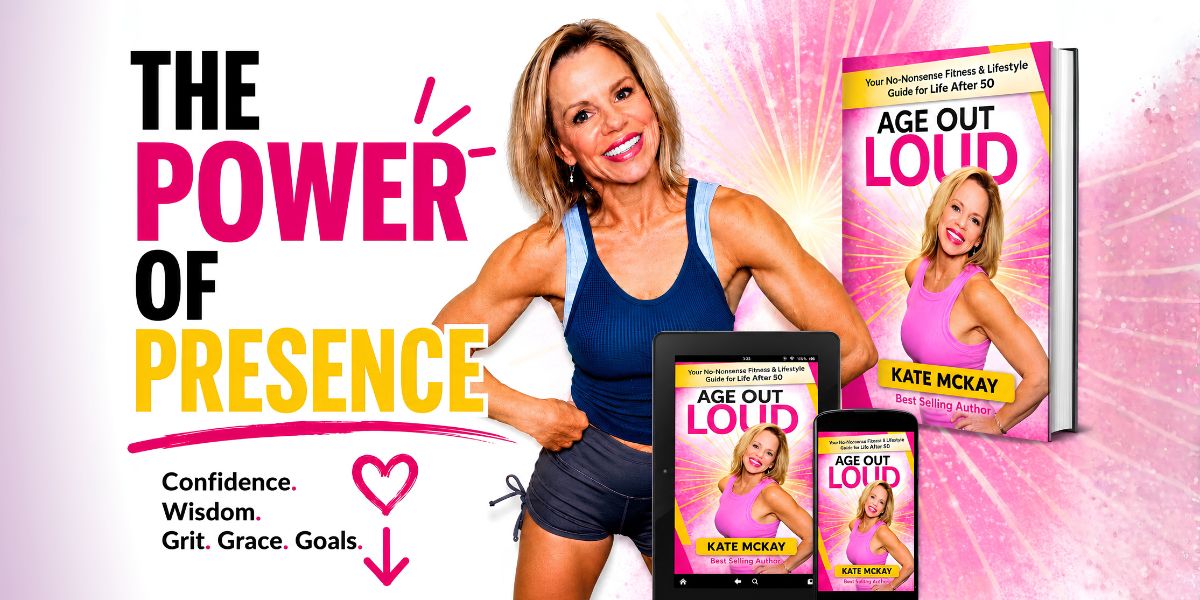
Kate built Age Out Loud for that exact moment. Not to inspire from afar, but to meet people right in it.

She is not interested in polished motivation or surface-level advice. What she is doing instead feels more like a reset. A challenge, honestly. Because her message cuts straight through one of the most persistent beliefs people carry into midlife.

It is too late.

She does not buy that for a second.

The Lie That Slows People Down

Kate has seen the pattern play out again and again. Women who have spent years taking care of everyone else are slowly losing sight of themselves.

Not because they have to, but because of what they believe.

Ideas about age, about timing, about what is appropriate now. Those thoughts do not usually show up loudly. They sit in the background and start making decisions for you.

That is where things begin to narrow.

Kate calls it out directly. The issue is not discipline. It is outdated thinking that never got questioned.

And once those beliefs settle in, people stop starting.

They hesitate. They second-guess. They wait for a better moment that never actually comes.

“Too Late” Is Not Reality. It Is a Story

When someone says it is too late, Kate pushes back.

Too late for what?

Most of the time, that sentence is not rooted in truth. It is fear dressed up as logic. Invisible timelines people created years ago and never revisited.

Midlife exposes that.

Because the energy is still there. The desire is still there. In many cases, the clarity is stronger than it has ever been.

So the real question shifts. Not only is it too late, but are you willing to begin?

That is where most people stall. Starting without feeling fully ready feels uncomfortable. There is no perfect plan. Confidence is not guaranteed.

Kate does not try to soften that. She leans into it.

That is where it begins.

Fear Does Not Disappear. It Gets Named

One thing she is very clear about is this. The biggest barriers in midlife are not external.

They are internal.

Fear shows up in layers. Fear of effort. Fear of the process. Fear that the work will not pay off. But the one that hits hardest is fear of judgment.

What will people think?

Right behind that is something even deeper. The fear of losing connection. Of being seen differently. Of not belonging if you change.

That fear does not make people weak. It makes them human.

But when it stays unspoken, it quietly runs everything.

Kate’s approach is not about eliminating fear. It is about bringing it into the open. Naming it. Looking at it directly.

Because once you can see it clearly, it stops controlling every move you make.

That is where courage actually begins.

Confidence Is Not Found. It Is Built

Midlife can feel disorienting. Roles change. Bodies change. Relationships shift. There is more space, and that space can feel unfamiliar.

A lot of people interpret that as a loss.

Kate sees it differently. She sees it as a new landscape.

Instead of rushing back to what felt familiar, she pushes people to get curious. What actually fits now. What still matters. What needs to change?

This is where her approach becomes very practical. She goes back to the body.

Strength training is not just part of her story. It is a foundation. Something steady when everything else feels uncertain.

Because showing up physically creates proof. You are still capable. Still strong. Still able to handle things.

That kind of confidence does not come from thinking differently. It comes from doing something repeatedly and seeing yourself follow through.

It is earned.

And once it builds, it carries into everything else.

Self-Trust Changes the Entire Game

If there is one thread running through everything Kate talks about, it is self-trust.

Without it, life feels reactive, like you are constantly adjusting to whatever shows up.

With it, there is something solid to stand on.

But self-trust does not come from getting everything right. It comes from clarity. Knowing what matters to you. Knowing what you are no longer willing to compromise.

She talks about this in a grounded way. Not as a perfect process, but as something you return to again and again, especially when things get hard.

Because they will.

And when they do, self-trust becomes the difference between reacting and choosing.

The Grit, Grace, Goals Balance

Kate’s framework, the G3 Blueprint, is simple enough to understand and hard enough to actually live.

Grit is about showing up. Not perfectly. Not aggressively. Just consistently. Doing the work even when it would be easier not to.

But grit alone burns people out.

That is where grace comes in. The ability to reset without turning every mistake into a personal failure, without tearing yourself down in the process.

Then there are goals.

Not the kind tied to proving something. The kind tied to purpose, to fulfillment, to direction.

When those three pieces work together, something shifts.

You keep moving forward without exhausting yourself. You stay grounded without losing momentum. And you start building a life that actually feels aligned.

Why People Break Promises to Themselves

Kate does not overcomplicate this part.

People break promises to themselves for a few reasons. Lack of clarity. Lack of confidence. Comfort. Environment. And sometimes, a deeper issue around self-worth.

If you do not fully believe you are worth the effort, it is easy to let things slide.

So the fix is not a massive overhaul.

It is honesty.

Real honesty about what is not working.

Then, start small.

One action. One promise kept.

Over time, that builds something more valuable than motivation.

Trust.

A Different Kind of Daily Practice

Her advice for a daily shift is not complicated.

Start the day with intention. A few quiet minutes. Some form of reflection. Something that grounds you before everything else pulls at your attention.

Then take one action that moves you forward.

Not ten things. One.

And keep one promise to yourself.

That is where confidence begins. Not in big wins, but in consistent follow-through.

This Is Not Reinvention. It Is Recognition

Kate does not like the word reinvention. To her, it sounds like becoming someone else.

What she is talking about is something different.

It is about recognizing where you are, letting go of what no longer fits, and having the courage to move forward anyway.

Not as a new person.

As a more honest one.

That is where things start to open up again. Not perfectly. Not all at once. But in a way that actually feels real.

Kate McKay Helps Women Rethink Confidence and Purpose at Midlife

By: Marita Murray

Midlife will challenge who you think you are. Not all at once, and not always in obvious ways. Sometimes it’s just the quiet feeling that something no longer fits, even when life looks fine from the outside.

Kate built Age Out Loud for that exact moment. Not to inspire from afar, but to meet people right in it.

She is not interested in polished motivation or surface-level advice. What she is doing instead feels more like a reset. A challenge, honestly. Because her message cuts straight through one of the most persistent beliefs people carry into midlife.

It is too late.

She does not buy that for a second.

The Lie That Slows People Down

Kate has seen the pattern play out again and again. Women who have spent years taking care of everyone else are slowly losing sight of themselves.

Not because they have to, but because of what they believe.

Ideas about age, about timing, about what is appropriate now. Those thoughts do not usually show up loudly. They sit in the background and start making decisions for you.

That is where things begin to narrow.

Kate calls it out directly. The issue is not discipline. It is outdated thinking that never got questioned.

And once those beliefs settle in, people stop starting.

They hesitate. They second-guess. They wait for a better moment that never actually comes.

“Too Late” Is Not Reality. It Is a Story

When someone says it is too late, Kate pushes back.

Too late for what?

Most of the time, that sentence is not rooted in truth. It is fear dressed up as logic. Invisible timelines people created years ago and never revisited.

Midlife exposes that.

Because the energy is still there. The desire is still there. In many cases, the clarity is stronger than it has ever been.

So the real question shifts. Not only is it too late, but are you willing to begin?

That is where most people stall. Starting without feeling fully ready feels uncomfortable. There is no perfect plan. Confidence is not guaranteed.

Kate does not try to soften that. She leans into it.

That is where it begins.

Fear Does Not Disappear. It Gets Named

One thing she is very clear about is this. The biggest barriers in midlife are not external.

They are internal.

Fear shows up in layers. Fear of effort. Fear of the process. Fear that the work will not pay off. But the one that hits hardest is fear of judgment.

What will people think?

Right behind that is something even deeper. The fear of losing connection. Of being seen differently. Of not belonging if you change.

That fear does not make people weak. It makes them human.

But when it stays unspoken, it quietly runs everything.

Kate’s approach is not about eliminating fear. It is about bringing it into the open. Naming it. Looking at it directly.

Because once you can see it clearly, it stops controlling every move you make.

That is where courage actually begins.

Confidence Is Not Found. It Is Built

Midlife can feel disorienting. Roles change. Bodies change. Relationships shift. There is more space, and that space can feel unfamiliar.

A lot of people interpret that as a loss.

Kate sees it differently. She sees it as a new landscape.

Instead of rushing back to what felt familiar, she pushes people to get curious. What actually fits now. What still matters. What needs to change?

This is where her approach becomes very practical. She goes back to the body.

Strength training is not just part of her story. It is a foundation. Something steady when everything else feels uncertain.

Because showing up physically creates proof. You are still capable. Still strong. Still able to handle things.

That kind of confidence does not come from thinking differently. It comes from doing something repeatedly and seeing yourself follow through.

It is earned.

And once it builds, it carries into everything else.

Self-Trust Changes the Entire Game

If there is one thread running through everything Kate talks about, it is self-trust.

Without it, life feels reactive, like you are constantly adjusting to whatever shows up.

With it, there is something solid to stand on.

But self-trust does not come from getting everything right. It comes from clarity. Knowing what matters to you. Knowing what you are no longer willing to compromise.

She talks about this in a grounded way. Not as a perfect process, but as something you return to again and again, especially when things get hard.

Because they will.

And when they do, self-trust becomes the difference between reacting and choosing.

The Grit, Grace, Goals Balance

Kate’s framework, the G3 Blueprint, is simple enough to understand and hard enough to actually live.

Grit is about showing up. Not perfectly. Not aggressively. Just consistently. Doing the work even when it would be easier not to.

But grit alone burns people out.

That is where grace comes in. The ability to reset without turning every mistake into a personal failure, without tearing yourself down in the process.

Then there are goals.

Not the kind tied to proving something. The kind tied to purpose, to fulfillment, to direction.

When those three pieces work together, something shifts.

You keep moving forward without exhausting yourself. You stay grounded without losing momentum. And you start building a life that actually feels aligned.

Why People Break Promises to Themselves

Kate does not overcomplicate this part.

People break promises to themselves for a few reasons. Lack of clarity. Lack of confidence. Comfort. Environment. And sometimes, a deeper issue around self-worth.

If you do not fully believe you are worth the effort, it is easy to let things slide.

So the fix is not a massive overhaul.

It is honesty.

Real honesty about what is not working.

Then, start small.

One action. One promise kept.

Over time, that builds something more valuable than motivation.

Trust.

A Different Kind of Daily Practice

Her advice for a daily shift is not complicated.

Start the day with intention. A few quiet minutes. Some form of reflection. Something that grounds you before everything else pulls at your attention.

Then take one action that moves you forward.

Not ten things. One.

And keep one promise to yourself.

That is where confidence begins. Not in big wins, but in consistent follow-through.

This Is Not Reinvention. It Is Recognition

Kate does not like the word reinvention. To her, it sounds like becoming someone else.

What she is talking about is something different.

It is about recognizing where you are, letting go of what no longer fits, and having the courage to move forward anyway.

Not as a new person.

As a more honest one.

That is where things start to open up again. Not perfectly. Not all at once. But in a way that actually feels real.

Custom-Fit Changes How a Founder Thinks About People

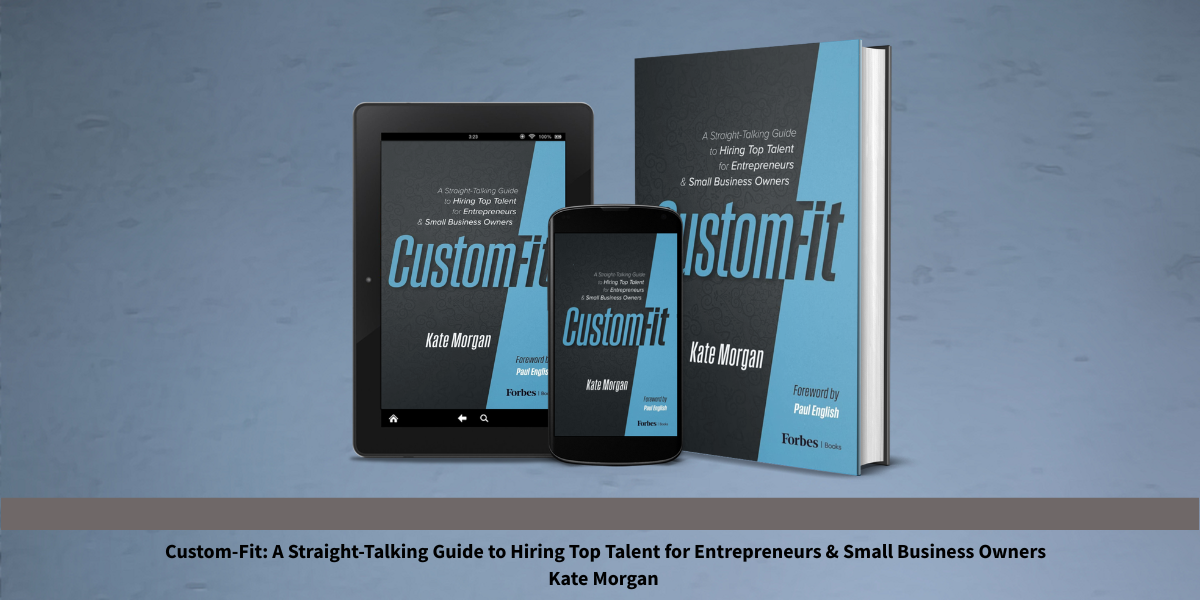
Custom-Fit hits like a blunt message from the friend who has watched your team burn itself out and is not here to be polite. It does not feel like a book about hiring. It feels like a strategy session where someone finally names the exact mistakes you keep replaying. The tone is sharp but not smug, and that made me want to keep reading even when the ideas were uncomfortable.

I read this as someone who has hired too fast and then spent months cleaning up the mess. The book made me feel exposed and also oddly relieved. Exposed because it refused the soft version of hiring and made it obvious how many of our decisions are based on convenience or fear. Relieved because it gave real language for the frustration we all feel when a new person does not fit. There are sections where I could hear the author talking straight from experience, like the kind of honest advice that is rare in business books.

The driving idea is that hiring is not a transaction. It is a commitment. It is the difference between a team that expands the company and a team that drags it sideways. That is the part that landed with me. Kate Morgan is not selling a new HR formula. She is asking the reader to take responsibility for the people they bring into the business. That responsibility is often messy and painful. That is why this book matters.

What stands out is the way she treats small companies as their own animal. There is no pretending that what works at a giant corporation works here. Instead she writes for founders who are wearing multiple hats, for teams where one bad person can crush culture and momentum. The book is practical and grounded without feeling cheap. The examples are not polished case studies. They are the sort of moments where you think yes that happened, I have seen that exact situation with a hire who looked good on paper but destroyed trust.

The voice is conversational and unvarnished. There are no strained attempts to sound poetic. There are no vague pep talk phrases. The structure is loose enough that it feels like a dialogue. You can jump to the part you need and still feel the same sense of urgency. It is also the kind of book that makes you scribble in the margins and say yes out loud. That is not a neutral reaction. It is real.

The book plays with a few themes that feel bigger than hiring. One is courage. Hiring slow and firing fast is not about being cold. It is about being brave enough to keep your standards and keep the team safe. Another is clarity. When roles are vague, people are set up to fail. When values are murky, culture fractures. Those lessons are not just for HR. They are for anyone who wants a business that holds together when pressure hits.

Reading Custom-Fit left me thinking about the next person I bring in as a choice about who my business will be. That is a different frame from the usual talk about talent pools or interview templates. It is a frame that feels practical and human at once. The book does not pretend there is a simple fix. It says the fix is in how honestly you see the work and who you ask to do it.

If you want a hiring book that refuses to be soft and refuses to recycle the same old phrases, this is the one to read. It does not promise a perfect system. It promises a better way to make the hard choices. It is the kind of book you can actually return to when the next hire is about to happen.

Get your copy of Custom-Fit: A Straight-Talking Guide to Hiring Top Talent for Entrepreneurs & Small Business Owners on Amazon.

Kitchen Renovation Ideas That Add Value to New Jersey Homes

The kitchen is one of the most important rooms in any home. It is where families cook, gather, entertain, and spend much of their daily time. When a kitchen feels outdated, cramped, dark, or poorly organized, it can affect the comfort of the entire house.

That is why kitchen renovation remains one of the most popular home improvement projects in New Jersey. Whether the home is located in Edison, Bridgewater, Clinton, Hazlet, Keansburg, Middletown, Chester, Bernardsville, Long Valley, Martinsville, or another Central New Jersey community, a well-planned kitchen remodel can improve both daily living and long-term property value.

Start With the Layout

Before choosing cabinets, countertops, flooring, or paint colors, homeowners should focus on layout. A kitchen needs to be practical. The space should allow easy movement between cooking, cleaning, storage, and seating areas.

Older homes may have closed-off kitchens, limited counter space, poor lighting, or awkward cabinet placement. A renovation can improve flow by opening the space, adjusting the layout, adding storage, or creating a better connection between the kitchen and dining area.

Improve Storage

Storage is one of the biggest reasons homeowners renovate kitchens. A kitchen may look nice, but if there is not enough room for cookware, pantry items, small appliances, and everyday supplies, the space can quickly become frustrating.

Useful kitchen storage ideas include:

• Taller cabinets

• Deep drawers

• Pantry cabinets

• Island storage

• Pull-out shelves

• Cabinet organizers

• Built-in shelving

• Better use of corners

Improved storage makes the kitchen cleaner, more organized, and easier to use.

Repaint or Replace Cabinets

Cabinets have a major impact on the look of the kitchen. If the existing cabinets are still strong and the layout works, cabinet repainting may be a smart option. It can refresh the kitchen without requiring a full cabinet replacement.

However, if the cabinets are damaged, outdated, poorly arranged, or lacking storage, replacement may be the better choice. A kitchen renovation contractor can help homeowners decide which option makes the most sense.

Upgrade Flooring

Kitchen flooring needs to handle daily life. It must be durable enough for foot traffic, spills, cleaning, pets, and family activity. The right flooring can also connect the kitchen visually with nearby rooms.

When planning a kitchen remodel, flooring should be selected for both appearance and performance. A beautiful kitchen floor should also be practical and easy to maintain.

Use Lighting to Transform the Space

Lighting can completely change the feeling of a kitchen. Many older kitchens rely on one ceiling fixture, which can leave cooking areas dark. A renovation can improve the space with layered lighting, brighter finishes, under-cabinet lighting, or recessed lights.

Natural light also matters. Window repair or replacement can make the kitchen feel brighter and more comfortable.

Fresh Paint Makes a Big Difference

Paint is one of the most cost-effective ways to improve a kitchen. Fresh paint can brighten the room, update the style, and tie together cabinets, flooring, trim, and doors. Neutral colors are often popular because they create a clean look and appeal to a wide range of homeowners.

Think Beyond the Kitchen

A kitchen renovation often connects with other areas of the home. For example, homeowners may also update doors, windows, flooring, painting, cabinets, or nearby dining areas. If the kitchen opens to a deck, patio, sunroom, or addition, the renovation should consider how those spaces work together.

This is why many homeowners search for kitchen renovation contractors in New Jersey who can handle more than one part of the project.

Focus on Long-Term Value

Trendy designs can look attractive, but long-term value comes from a kitchen that is functional, durable, and well built. Homeowners should choose layouts and materials that fit their lifestyle, not just what is popular at the moment.

A strong kitchen renovation should improve cooking, storage, movement, lighting, and comfort.

Planning a Renovation That Lasts

A kitchen renovation can transform the way a home feels. From layout improvements and cabinet updates to flooring, painting, lighting, windows, and storage, every detail plays a role.

For New Jersey homeowners, the best kitchen remodels are practical, attractive, and designed around the way the family actually uses the home.

FAQs

What adds the most value in a kitchen renovation?

Layout improvements, updated cabinets, durable flooring, better lighting, fresh paint, and improved storage can all add value.

Is cabinet repainting worth it?

Yes, if the cabinets are in good condition. Cabinet repainting can refresh the kitchen at a lower cost than full replacement.

Should flooring be updated during a kitchen renovation?

In many cases, yes. Flooring affects both appearance and durability, especially in a high-traffic room like the kitchen.

What should homeowners look for in a kitchen renovation contractor?

Look for local experience, strong communication, service range, and knowledge of kitchen layouts, cabinets, flooring, painting, windows, and finish work.

The Weight of Words: Tenderness and Jeopardy in Short Fiction

Short fiction earns its power through compression. Space is limited, so every sentence must carry story and suggestion at once. Within that tight frame, two forces often meet with unusual intensity: tenderness, the careful rendering of feeling and regard; and jeopardy, the pressure of consequence or harm.

In Godfrey Bonavia’s Paraphernalia, these currents run side by side, sometimes in the same paragraph, and the effect is a three-page scene that lands with the force of a chapter.

Narrative Economy, The Core Constraint

Short stories depend on selection and omission. Exposition is trimmed; subtext does heavy lifting. Writers lean on scene over summary when stakes rise, then pivot to summary for time jumps or aftermath. This economy sharpens both tenderness and jeopardy, since one concrete detail can imply a history, and one visible choice can carry moral weight.

Narrative economy is not only a stylistic preference; it is the governing condition of the form. Bonavia trims exposition and lets subtext do work that a longer novel might distribute across scenes.

A single object can imply a history; one visible choice can carry moral weight. In his stories, the pages do not sprawl; the pressure builds because time narrows, and the reader can feel what it would cost to stop or to keep going.

Tenderness as Attention, Not Sentiment

Bonavia’s tenderness arrives through interiority and gesture, not through announcement. A hand hesitates before a handle; a line of thought circles a private fear, then falls silent.

This is free indirect style doing quiet work, the narrator’s diction slipping toward a character’s idiom for a breath or two. In “Story for my Grandkids,” affection is not declared; it is enacted through images a child would carry in the mind, bright and simple, yet large enough to hold a family’s promise.

In “The Power of Love,” care shows up as restraint, the willing acceptance of a limit; the sentence length softens, clauses lean on one another, and the rhythm itself feels protective.

Jeopardy as Clock, Corner, And Cost

Jeopardy in short fiction requires more than danger; it requires a consequence that can be tested. Bonavia often sets a clock on the scene, then corners a character so that any exit will mean a loss or a debt. “Noisy Bells” makes the point through sound, each toll a reminder that time belongs to more than one person at once; duty and irritation press against each other, and the story’s jeopardy is the risk of failing either.

“The Last of the Maltese Falcons” handles risk as legacy; a choice in the present threatens to bruise what the past has asked the living to keep.

Symbolism and Motif, Meaning in Small Packages

The book’s title is a clue to its method. Objects bear a load. In literary terms, this is symbolism; a concrete thing carries meaning beyond its literal use. Bonavia lets symbols repeat until they harden into a motif, then places them near turns so they touch the plot. The mirror in “Mirror Mirror” troubles identity; it reflects a face while reflecting a question the character would rather avoid.

The bell measures duty and mortality; it cannot be unheard, so it moves characters even when they resist moving. The bus ticket is a commitment on paper; it reads like permission and responsibility at once.

“The Runaway Leaf” lets a small natural sign stand for drift, resilience, and the hope of escape, light enough to lift yet stubborn enough to survive street weather.

Place as Pressure, Not Backdrop

Setting in Paraphernalia is not scenery; it is agency. Streets, chapels, kitchens, and coastlines, the book’s places carry the friction of habit and memory.

“The Real Story of Filfla” uses island lore as more than color; it lends a scale to the human choices on the page, the sense that an older story is watching. City edges in the Perth pieces feel practical and grounded; doors, buses, shopfront glass, all things that can be seen and touched, all able to nudge a person toward one path or another.

When tenderness meets jeopardy inside such places, the scene acquires weight without added words.

Sound, Syntax, And The Feel of Risk

Prosody matters in prose, especially at short lengths. Bonavia modulates syntax to steer feeling; long periodic sentences cradle a tender moment, while short paratactic beats create breathless movement. Consonance stiffens a line when resolve is required; assonance softens it when attention tilts toward care. You can hear this in the sequence of bells, in the hum of an engine, in the quiet at a bedside; sound becomes structure, and structure becomes emotion.

Time, Memory, And The Turn

Jeopardy requires more than danger; it requires consequence. Short fiction often sets a clock on the scene, corners the character with limited options, and then clarifies the cost of each path. Line-level choices reinforce pressure:

Psychic distance is simply how close the narrative voice sits to a character’s thoughts; Bonavia eases that closeness back in moments of shock, letting image and action carry meaning without extra commentary. Analepsis, a quick step into memory, and prolepsis, a brief tilt toward what is coming, appear for a line or two to deepen the present; the story then returns to now with its pulse intact. A volta is the turn that re-aims a scene, often placed late so the final paragraph can stay spare, the ending clean, and the resonance left to widen in the reader rather than on the page.

Endings That Echo, Not Explain

Because space is scarce, an ending must ring, not recap. Bonavia often lets the final line speak back to the title; the title, in turn, plants the original question. “Words in One Page” states its ambition plainly; what matters is not only the compression, but what the compression uncovers. “The Unperturbed” trusts stillness; jeopardy does not always explode, sometimes it waits, and the choice is whether to be bent by it or to bend gently and remain intact.

Where Tenderness and Jeopardy Meet

The deepest moments in Paraphernalia occur where care and risk intersect. A character returns a token and pays the price for honesty; another keeps a token and pays the price for love. The book does not scold and does not flinch. It holds the human scale steady, lets symbols carry a theme, and asks what a person can live with. The weight of words here is exact, measured syllable by syllable, so that feeling and consequence arrive together.

In that balance, Bonavia’s stories feel generous and precise. They respect the reader’s day, and they respect the reader’s intelligence. The pieces finish quickly, yet the echoes carry, which is the old promise of short fiction kept in a contemporary register, tender in its attention, unsentimental in its stakes.

Available on Amazon in eBook and paperback; start a story tonight, carry the echo all week. Buy Paraphernaliaon Amazon.

Mamdani Unveils Block by Block Plan to Build and Preserve 400,000 Affordable Homes in New York City

Mayor Zohran Kwame Mamdani stepped to a podium in Brooklyn on Tuesday morning and laid out what his administration is calling the largest housing plan ever proposed by a New York City mayor. The document, titled Block by Block: The Housing Plan for a New Era, sets a decade-long target of 200,000 newly built affordable homes and 200,000 preserved units, backed by a $22 billion capital commitment over the next five years.

For a mayor who has spent the better part of two years naming housing as the city’s defining crisis, the release is both a policy blueprint and a political marker. It is also a direct response to a five-borough affordability squeeze that has reshaped neighborhoods from Bed-Stuy to Astoria, where median rents have climbed sharply over the past two decades and homeownership has drifted further out of reach for working families.

What Block by Block Proposes for New York City Housing

The plan, released through the Mayor’s Office on May 26, spans construction, preservation, public housing, tenant protections, homeownership, and labor standards. According to the official release, the city will pair the 400,000-unit production-and-preservation goal with an “ambitious land use agenda” to lift housing output across all five boroughs, along with new financing tools designed to move projects faster.

Several specifics stand out:

The administration plans to double the size of the Open Door program, which subsidizes affordable homeownership, and launch a new initiative called “Our Home” to create permanently affordable co-ops for working-class New Yorkers. The plan also opens the door to converting select rental buildings into ownership opportunities, a structural shift in how the city thinks about affordability — moving beyond rent caps and into wealth-building.

On the construction side, City Hall will stand up an Affordable & Efficient Code Reform Task Force aimed at lowering construction costs and shortening development timelines. Buildings Commissioner Ahmed Tigani framed the effort as a way to “get shovels in the ground on more residential projects citywide” without compromising safety standards.

NYCHA Investment and the Public Housing Overhaul

Public housing receives some of the heaviest emphasis in the document. Mamdani is committing what his office describes as the largest city capital investment in the New York City Housing Authority in recent memory, with Brooklyn Borough President Antonio Reynoso citing a $5.6 billion commitment to improve conditions at NYCHA developments.

The plan also reimagines NYCHA’s institutional role. Beyond capital repairs, the authority will pursue what the administration calls a “renewed role as a public developer,” using new financing and development tools to generate revenue, upgrade campuses, and build new housing across the city. Resident engagement is also being restructured, with stronger Resident Associations, “NYCHA in Your Neighborhood” events, and deeper tenant involvement following conversions through the Permanent Affordability Commitment Together program.

NYCHA Chief Executive Officer Lisa Bova-Hiatt said the administration’s plan “will directly support our shared commitment to strengthening resident engagement, improving service delivery, and accelerating long-needed repairs and improvements across our portfolio.”

Tenant Protections and Code Enforcement Reform

Mamdani Unveils Block by Block Plan to Build and Preserve 400,000 Affordable Homes in New York City (2)

Photo Credit: Unsplash.com

For tenants, Block by Block proposes a substantive overhaul of how the city responds to code and heat complaints. Tenants in some buildings will be able to schedule their own inspections through the Department of Housing Preservation and Development, and the city will coordinate “roof-to-cellar” inspection days in buildings with organized tenant associations.

An interagency planning effort focused on the Bronx will tackle persistent issues around housing quality, public health, and economic inequality together rather than as separate workstreams. The administration is also pursuing alternate-management transfers for buildings with negligent landlords, a move that has been long requested by tenant organizers but rarely operationalized at scale.

City Council Member Pierina Sanchez, who chairs the Housing and Buildings Committee, framed the approach as confronting the housing crisis “not only as a crisis of affordability, but as one of housing quality, safety, and survival.”

The plan also wades into territory that typically lives in a separate labor agenda. The administration will implement the Construction Justice Act, establishing a $40-per-hour minimum wage and benefit standard for construction workers on city-financed projects, and will explore project labor agreements for targeted affordable housing developments. A first-of-its-kind Mayor’s Committee on Construction Safety will also be created.

That framing — pairing housing production with wage floors — drew applause from labor. Rich Maroko, President of the Hotel and Gaming Trades Council, called the combination of new units, public housing investment, and homeownership pathways “a crucial lifeline for our city’s middle class.”

How Block by Block Fits the Broader New York Housing Picture

The release lands in a moment when the city’s housing math has become difficult to ignore. Mamdani has previously noted that New York built enough housing to keep pace with population growth for centuries, until production slowed sharply in the 1960s. That gap has compounded, leaving the city with rent-burdened tenants spending well over half their income on housing in many neighborhoods.

Industry response on Tuesday was notably broad. The Association for a Better New York, the New York Building Congress, the New York State Association for Affordable Housing, Open New York, Habitat for Humanity NYC, Regional Plan Association, Enterprise Community Partners, and Robin Hood all issued statements of support, alongside borough presidents in Brooklyn and Queens and members of the City Council and State Senate Housing Committee.

Comptroller Mark Levine called the framework “the kind of comprehensive approach our city needs,” pointing to the combined focus on production, preservation, NYCHA investment, homeownership, and homelessness prevention.

Open Questions on Financing and Execution

Ambition at this scale invites scrutiny. The $22 billion capital figure represents a substantial expansion of existing city housing spending, and the plan’s reliance on land-use reform, zoning updates, and faster permitting means significant execution risk sits with agencies including the Department of City Planning, HPD, the Department of Buildings, and the Housing Development Corporation. Coordination with Albany and the City Council will also shape what survives from blueprint to budget line.

There is also the matter of Mamdani’s earlier housing voucher dispute, in which the administration appealed a court order to expand a rent voucher program citing budget pressure. That earlier posture has left some advocates watching closely to see how the new plan’s preservation and homelessness-prevention pieces are funded and timed.

For now, the document is a statement of intent at a scale that previous administrations have not matched in writing. Whether Block by Block becomes the housing legacy Mamdani is reaching for will depend on what happens between the press release and the foundation pours — across zoning hearings, capital budgets, labor negotiations, and ten years of borough-by-borough delivery.

The full plan is available through the Mayor’s Office at nyc.gov.

Frankie Fleurimond Is Creating Art That Feels Human Again

In an era where contemporary art often leans toward conceptual distance and digital perfection, Frankie Fleurimond creates work that feels intensely alive. Emotional, textured, colorful, spiritual, and deeply connected to human experience, his paintings exist somewhere between modern realism, street culture, emotional storytelling, and fine art portraiture.

Known online as @quitefranklee4, the New York-born artist has steadily become one of the most intriguing emerging names within the contemporary art scene connected to the Jason Perez Art Collective. His visual identity is immediately recognizable: bold portraits, vibrant palettes, layered symbolism, textured surfaces, and paintings that radiate emotion before a viewer even fully understands the subject.

Frankie describes himself with a phrase that perfectly captures the spirit of his work: “Has Picasso’s birthday, looks like Basquiat, but paints like Frida.” While playful, the description reveals something deeper about his artistic identity. Like Basquiat, his work carries raw emotional energy and cultural instinct. Like Frida Kahlo, there is vulnerability and humanity underneath the color. Yet ultimately, Frankie Fleurimond’s work belongs entirely to him.

Born in New York City in 1994, Fleurimond later moved to the Pocono Mountains as a child, experiencing two completely different worlds, urban intensity and rural stillness. That contrast would later become an important part of his artistic perspective. According to Park West Gallery, the artist initially began by drawing anime characters before gradually evolving toward realism and emotionally driven portraiture.

Unlike many contemporary artists trained through traditional academic systems, Frankie developed his voice independently. Before art became a full-time career, he worked as a truck driver while continuing to paint, build his portfolio, and search for opportunities to exhibit his work. That period of struggle and discipline shaped both his mentality and his relationship with art itself. Painting was never simply aesthetic for him, it became purpose, identity, and connection.

Photo Courtesy: Frankie Fleurimond

One of the most striking aspects of Fleurimond’s work is texture. His paintings are not designed to remain emotionally distant from the viewer. They invite closeness. In some cases, even physical interaction. According to his artist profile, he believes art should be experienced through multiple senses rather than observed passively from afar.

This philosophy is visible throughout his portfolio. Faces emerge from thick layers of paint, vibrant color combinations create emotional tension, and symbols rooted in spirituality, identity, femininity, faith, and culture appear repeatedly throughout his compositions. Many of his portraits feel simultaneously modern and timeless, balancing contemporary aesthetics with classical emotional storytelling.

Faith also plays a visible role in Frankie’s artistic world. He openly describes himself as a Christian artist, and many viewers notice a spiritual undertone within his paintings. Whether through symbolism, emotional vulnerability, or themes of inner strength and healing, his work often carries a sense of hope beneath the intensity of the visuals.

Over the past several years, Fleurimond’s visibility has continued to grow through major art fairs, exhibitions, and collector events. His work has appeared in environments connected to Art Basel Miami, Spectrum Miami, Red Dot Miami, and various contemporary art showcases across the United States.

At the same time, his paintings have attracted attention from collectors, celebrities, entrepreneurs, and audiences looking for artwork that feels emotionally authentic rather than overly commercial. That balance, between accessibility and artistic individuality, is one of the reasons his work resonates with such a broad audience.

What separates Frankie Fleurimond from many emerging contemporary artists is his ability to create paintings that feel emotionally direct without losing sophistication. His work is visually beautiful, but underneath the beauty there is emotional tension, humanity, and psychological depth. The viewer is not only observing color and composition, they are reacting to emotion.

That emotional immediacy makes his work especially powerful within live exhibition environments.

Photo Courtesy: Frankie Fleurimond

The upcoming Hamptons Private Art Experience on June 7, 2026, in Southampton, New York, produced by Jason Perez and UFIRST Art Production, represents exactly the kind of intimate collector-focused atmosphere where Frankie Fleurimond’s work naturally thrives. Surrounded by collectors, tastemakers, entrepreneurs, and art lovers, his paintings become more than static visual objects, they become emotional experiences and conversation pieces.

Unlike traditional gallery environments that can sometimes feel formal or distant, the Hamptons event is designed to create genuine interaction between artists, collectors, and cultural audiences. Within that atmosphere, Frankie’s textured portraiture and emotionally layered work have the ability to connect with viewers on a much deeper level.

As contemporary art continues moving toward digital trends and fast visual consumption, artists like Frankie Fleurimond remind audiences why human emotion still matters in art. His paintings are not created simply to be seen for a few seconds while scrolling online. They are designed to pull people closer, emotionally and physically, and leave an impression that lasts long after the viewer walks away.

And in today’s art world, that kind of emotional connection may be the rarest artistic skill of all.

The Origin of Perfume: A Journey Through Time and Culture

By: Jay Kt

The use of perfume dates back many centuries and is widely used in many cultures of the world. The scent is not only a perfume; it is a language through which you can communicate and amplify your being. However, have you ever thought about when perfume was invented, or why people came up with the idea of creating it? In this blog, I will discuss the history and origin of perfume.

Let’s start!

The Origin of Perfume Timeline

  • 4000 BCE: Earliest evidence of perfume use in ancient Mesopotamia and Egypt. Perfume is used for religious rituals and to honor the gods.
  • 3000 BCE: Egyptians begin using perfume in daily life and for embalming the dead. They develop early perfume-making techniques using natural ingredients like flowers, herbs, and spices.
  • 1200 BCE: Tapputi, a perfume maker in ancient Mesopotamia, is considered the world’s first chemist. She developed early perfume distillation techniques.
  • 700 BCE: Ancient Greeks and Romans adopted perfume from the Egyptians. They use perfumes in daily life, in religious rituals, and for personal grooming.
  • 900s: Arabs develop new distillation techniques, greatly improving perfume production and making fragrances more refined and complex.
  • 1200s: The Crusades introduced European soldiers to the perfumes of the Middle East, leading to increased demand in Europe.
  • 1500s: Perfume becomes popular in Renaissance Europe, especially in France and Italy.
  • 1600s: Grasse, a town in southern France, becomes the center of the perfume industry, known for its ideal climate for growing flowers used in perfume-making.
  • 1700s: Perfume production in France reaches new heights. Perfume becomes a symbol of luxury and status among the European elite.
  • 1800s: The Industrial Revolution introduces synthetic ingredients to perfume-making.
  • 1900s: The perfume industry continues to grow, with major fashion houses and designers creating signature scents.
  • 2000s: Niche and artisanal perfumes gain popularity, focusing on unique scents and high-quality, natural ingredients. Custom perfume experiences and luxury packaging with custom luxury perfume boxes have become important in the industry.
  • Present: Perfume is a global industry with diverse offerings, from affordable fragrances to exclusive, luxury scents. Sustainable and eco-friendly practices are becoming more common in perfume production and packaging.

When Was Perfume Invented?

The use of perfume dates back thousands of years. It was first invented in ancient Mesopotamia and Egypt. It is believed that perfume has existed since 4000 BCE. During those times, people relied on fragrances from flowers, herbs, and spices to create pleasant scents. Thus, perfume was used not only on the person and in the house but also in religious rites and to propitiate the gods. As you can observe, perfume has always been an important part of human civilization.

Where Was Perfume Invented?

Perfume was invented in different parts of the world, but the earliest known records come from ancient Mesopotamia, which is modern-day Iraq. A woman named Tapputi is considered the world’s first recorded chemist and perfume maker. She lived around 1200 BCE and used flowers, oil, and other natural ingredients to create fragrances. Perfume also has roots in ancient Egypt, where it was an important part of daily life. Both these regions are credited with the early development of perfume, and their techniques and knowledge later spread to other parts of the world. Today, this rich heritage is often reflected in premium fragrance presentation through custom luxury rigid boxes, which add elegance and value to modern perfume packaging.

Why was Perfume Invented?

There are several reasons why perfume was invented. The ancients thought that scent could put them in touch with the gods. Fragrances were employed in religious activities to appease the gods and goddesses. Also, perfume was used to mask unpleasant odors. Since there was no modern way to wash with water and bathe, people in the ancient world used perfumes to freshen up. Today, perfume is used to express our personality and even our mood, but its invention was much more utilitarian.

How Was Perfume Invented?

The use of perfume required extensive testing and trial and error with the natural materials involved in the process. The first perfumers employed flowers, herbs, spices, and oils to create their fragrances. They would grind these ingredients and dissolve them in water or oil to make a fragranced solution. It was common to heat the mixture to release the fragrance. As time passed, people discovered how to make the process more elaborate, and so the perfumes became more advanced.

What Country Invented Perfume?

Perfume has a long history, and many countries have contributed to its development, but the ancient Egyptian civilization is regarded as the pioneer of modern perfume. Perfume was part of Egyptian culture and was used in their day-to-day activities as well as in their rituals. They also invented the first glass bottles for perfume and these were normally very much decorated. Perfume was also a part of Ancient Greece and Rome, where people borrowed ideas from the Egyptians and incorporated their own ideas as well. Although it is hard to say which country created perfume, Egypt was among the first to contribute to its development.

Who First Invented Perfume?

The first recorded perfume maker is Tapputi, a woman who lived in ancient Mesopotamia around 1200 BCE. She is often credited as the world’s first chemist and perfume maker. Tapputi used flowers, oil, and other natural ingredients to create fragrances, and her techniques were passed down through the generations. While Tapputi is the earliest known perfume maker, many other cultures and individuals have contributed to the art of perfume-making over the centuries.

Why Did the French Invent Perfume?

The French did not invent perfume, but they did contribute to its advancement and promotion. The perfume industry shifted to France during the Renaissance. The French aristocracy was fond of perfume and used it to mask unpleasant odors. The city of Grasse, situated in southern France, is famous for its ideal climate for growing flowers and herbs used in perfume production, and is therefore considered the perfume capital of the world. French perfumers developed new methods and produced some of the best fragrances worldwide. Today, France continues to dominate the perfume and fragrance market and remains associated with luxury scents and high-quality ingredients.

Summarizing

The history of perfume dates back thousands of years and has been part of many civilizations around the world. From Mesopotamia and Egypt to France, perfume has become a well-developed and highly refined art. Today perfume is not only a scent, but it is also an identity, well-packed in custom printed perfume boxes wholesale. For the perfume lover or the business person who is in the perfume business, it is always important to know the history and importance of perfume.


Disclaimer: This article is for general informational and educational purposes only. Historical timelines and interpretations may vary based on available records, archaeological findings, and scholarly sources. Any references to perfume packaging are provided for general industry context and should not be interpreted as a guarantee of business results, product performance, or consumer response.

Extreme Management Group, A New York-based Music Management Firm Representing Metal and Rock Acts Since 2006

By: Ethan Rogers

When a band is ready to take its career to the next level, the management firm behind them makes all the difference. Extreme Management Group (EMG) has been that firm for metal and hard rock artists since 2006, building a long-standing presence among management agencies in the genre. Located in New York and now celebrating two decades in business, EMG represents a roster that stretches from emerging talent to globally touring acts, with a reach spanning six continents.

The EMG management team operates with a straightforward philosophy: provide every artist on its roster, regardless of career stage, with access to the same infrastructure, contacts, and global relationships that the firm has built across two decades of work. That commitment has shaped EMG’s role in Extreme Metal, Metal, Thrash, Punk, Rock, and Hardcore circles worldwide, and its 20th anniversary marks a milestone worth examining.

Two Decades of Metal Management

Founded in 2006, Extreme Management Group has spent twenty years cultivating relationships with booking agents, promoters, record labels, and media outlets on every continent where metal has a foothold. The firm’s longevity in an industry known for its rapid pace reflects the depth of its artist roster and the sustained demand for its services across multiple subgenres.

EMG’s roster includes some of the most recognized names in Extreme Metal. Suffocation, the Long Island-founded Extreme Metal pioneers who formed in 1988 and helped define brutal technical Extreme Metal, are among the firm’s acts. Other acts the company has represented include Cryptopsy, Cattle Decapitation, Atheist, Misery Index, Origin and Disgorge, among many others. Most of their acts tour internationally, with EMG coordinating the management infrastructure that keeps those campaigns moving.

One of EMG’s decorated artists is Montreal’s Cryptopsy, one of extreme metal’s most technically accomplished and enduring bands. Cryptopsy won the Juno Award for Metal/Hard Music Album of the Year in 2024 for As Gomorrah Burns and has since earned a second nomination in 2026 for An Insatiable Violence. The Juno Awards are Canada’s equivalent of the Grammys, and recognition across multiple years in the metal category underscores the caliber of acts EMG represents.

A Roster Built Across Six Continents

Metal is a global genre, and EMG’s approach to artist management reflects that reality. The firm’s client base performs on every major continent and in every major market, and the EMG management team has built the kind of long-standing international relationships that make large-scale touring campaigns possible. From festival bookings in Europe to headline runs in North America, South America and beyond, EMG’s artists tour internationally on a regular basis.

That global footprint is the product of two decades spent forging connections with promoters, festival organizers and label representatives across every major music market. When an EMG artist enters a new territory, they are backed by relationships that took years to develop. This kind of network is something EMG has built deliberately over the firm’s twenty years in metal management.

Transparency as a Business Philosophy

In a music industry where management firms sometimes overpromise, EMG has built its reputation on doing the opposite. The firm employs a pre-screening process before signing artists, which reflects a measured approach to management. EMG doesn’t take on every act that applies. Instead, it takes on acts it believes in and can realistically develop.

That transparency extends to how the firm communicates with prospective clients about outcomes. The EMG management team doesn’t guarantee specific career results or promise timelines it can’t deliver. Instead, it offers what it can genuinely provide: professional representation, an established global network and the institutional knowledge that comes from two decades of working in metal management.

This philosophy runs counter to predatory management practices that have long been a concern in the music industry, particularly for developing artists who may not know what professional representation should look like. EMG’s model is built on credibility, not promises.

What Twenty Years Means in Metal Management

The music industry isn’t an easy business, and the management side of it is particularly unforgiving. Firms come and go, rosters shift and the economics of touring and recorded music have changed dramatically over the past two decades. The fact that Extreme Management Group marked its 20th anniversary in 2026 with an active roster, a global reach and a functioning two-division model is a meaningful achievement.

The firm’s trajectory reflects a consistent commitment to the artists it represents and the genre it serves. Through twenty years of industry change, technological disruption and shifting market conditions, EMG has continued to build, continued to sign new talent and continued to deliver for established acts who’ve trusted it with their careers.

For any Metal or Hard Rock artist looking for professional representation backed by real experience and real relationships, Extreme Management Group’s two-decade track record offers a credible starting point.