How Ryan Slough Brings Cultural Context and Intentional Travel to Wanderers Compass

For many, travel becomes an exercise in accumulation, with more cities, more routes, and more proof of having been there. Ryan Slough approaches travel as a practice of understanding. He believes the true return on exploration lies not in quantity, but in what a place teaches about culture, community, and perspective.

At the helm of Wanderers Compass, Ryan writes with discipline and clarity. His work draws travelers beyond the visible attractions and into the cultural grammar of a place, including the people, traditions, and histories that give it coherence.

A Travel Voice Shaped by Experience

Ryan’s storytelling discipline did not begin with a platform. It was formed through years of service in the United States Army, where leadership required clear communication and calm decision-making. That experience instilled structure, restraint, and an informed respect for cultural complexity.

His military service also shaped the personal lens through which he now understands travel. After years of service, Ryan came to view travel not simply as movement, but as a meaningful source of perspective, reflection, and personal growth. That evolution became central to the voice and mission behind Wanderers Compass.

That background also changed what he pays attention to. Ryan listens for what isn’t said, watches for the patterns that explain a community, and treats context as non-negotiable. So when he writes about a destination, he focuses on explaining the culture and history that shaped it.

Two Co-Founders with a Shared Direction

Wanderers Compass did not begin as a typical content project. It started as a shared conviction, with Ryan and Joelle building the platform together around a common view of what meaningful travel should represent. They were preparing to launch in 2020, with the runway in sight, when the world abruptly stopped moving, and the travel industry went silent.

For many teams, that moment would have ended the project. For Ryan and Joelle, it became a period of preparation. They used the pause as a build phase by studying digital publishing, refining editorial standards, and testing what they wanted their platform to represent. Their partnership became the platform’s foundation, with both co-founders committed to travel storytelling that prioritizes accuracy, context, and responsibility.

Photo Courtesy: Wanderers Compass

Wanderers Compass and Thoughtful Travel Storytelling

When Wanderers Compass launched, it did not try to compete through volume. It entered with a defined editorial point of view. Instead of treating destinations as products, the platform presented them as living contexts shaped by community, history, and local identity.

Ryan and Joelle approach travel publishing with a focus on context and understanding. Their features and conversations are designed to influence how people move through unfamiliar places by foregrounding local narratives, cultural expectations, and the human details that are often overlooked in mainstream travel media.

Travel as a Source of Perspective

Ryan speaks about travel as a force that can interrupt routine and replace certainty with curiosity. In that shift, new customs and worldviews stop feeling distant and begin to feel instructive.

Ryan speaks from experience, not abstraction. For him, travel served as an important part of a personal reset during a season of reinvention as a disabled veteran. Being in unfamiliar environments created space for reflection and helped reinforce resilience during a significant transition. That perspective continues to shape Wanderers Compass, especially for readers who use travel to regain clarity after major life changes.

Building a Community of Intentional Travelers

The audience that has gathered around Wanderers Compass reflects the platform’s thoughtful tone. Many readers are working professionals, retired individuals, veterans, and experienced travelers seeking more depth than conventional leisure travel often provides.

Ryan and Joelle have built an audience that resists the standard travel script. Their readers want the backstory, the cultural etiquette, and the local history that turns a location into a lived place. They value substance over social proof and respect over convenience.

Recognition Built Through Consistency

As Wanderers Compass expanded, Ryan’s voice began to extend beyond the platform itself. The recognition that followed reflects consistency in both tone and editorial focus. His storytelling approaches culture with care and travels with a sense of responsibility, qualities that continue to stand out in a fast-moving travel media environment.

Acknowledgments such as the Forttuna Global Power List 100 Class of 2025 reflect growing visibility for that approach. Earlier recognition from LA Weekly also expanded the platform’s reach. Ryan’s contribution to Founders in Focus: Unstoppable Entrepreneurs and Their Game Plans, a multi-category in Amazon, reinforces the same themes present in his work, including resilience, clarity of purpose, and leadership grounded in integrity.

The Next Chapter of Wanderers Compass

Wanderers Compass continues to grow, yet its editorial direction remains centered on a clear premise: travel should deepen perception and encourage thoughtful engagement. Ryan and Joelle continue to shape the platform with an emphasis on context, responsibility, and cultural awareness. Their work encourages travelers to arrive informed and leave with a broader perspective. For Ryan, that mission remains deeply personal, rooted in the belief that travel can do more than inform; it can change how people see the world and themselves. The result is travel that stays with the reader beyond the trip itself.


The GPS Failed. The Family Didn’t. Yusuf Poonawala’s The Spanish Table

There is a moment in Yusuf Poonawala’s debut novel, A Mumbai Family, lost on a dirt track in rural Navarra, watching three goats hold their ground against a rented Seat León, where you understand exactly what kind of book you are reading. It is not a book about Spain. It is a book about the things we carry into Spain and the things Spain refuses to let us carry out.

The Spanish Table opens on a bench in Barcelona. Azam Shroff, Senior Vice President at a Mumbai-based multinational, is telling his wife, Miana, that he has lost 78 lakhs of their money, including 38 lakhs he took, without asking, from their son’s education fund, on a speculative investment he made three months ago and told her nothing about. Three pages later, on a cobblestone street nearby, Miana tells Azam that she is bisexual. That she has known since she was seventeen. That she has been carrying this, in a zippered pocket, for twenty-nine years.

This is Day 12 of a fifteen-day self-drive holiday through Spain. The reader has been watching both detonations approach since page one.

Poonawala’s structural confidence is remarkable for a debut. The novel opens in medias res, Azam on that Barcelona street, watching his wife walk out of a building with a smile he has never earned, and then loops back to Mumbai, to the dinner-table announcement of a holiday that nobody asked for but everyone, it turns out, needed. The architecture is precise: every secret is loaded in the Mumbai chapters, every secret is detonated in Spain, every aftermath is resolved back in Mumbai six months later. The prologue, revisited after the final chapter, means something completely different from what it appeared to mean on page one. That reversal is the mark of a writer who knows exactly where he is going and trusts the reader to arrive with him.

The family is the novel’s engine. Azam is the man his Bloomberg terminal made him, successful, concealed, loving his children in secret because the family has no language for open affection. Miana runs a corporate gifting company with the precision of a general and the hunger of a woman who has spent four decades being what everyone needed her to be. Their son Karan, nineteen, carries eleven notebooks full of opening paragraphs and no second chapters. Their daughter Samaira, sixteen, has a voice that can stop traffic and a mother who suggests grilled paneer instead of chicken. Together they are a family performing a family, the dinner at 8:30, the phones face down in a ceramic bowl, the life that looks, in photographs, exactly like what a life is supposed to look like.

Spain dismantles the performance with the patience of a country that has been doing this for two thousand years.

The book Spanish Table is published by Dreamboat Publishing

The novel’s most luminous device is Spain itself, which narrates its own chapters in first person, a fifth character, ancient and ironic, addressing the family directly: “I am Spain. I have been here since before your language existed. I can wait.” These passages are the book’s most purely pleasurable writing, but they also carry philosophical weight. Spain is not a backdrop. Spain is an argument. Against efficiency, against the performance of lives fully optimized, against the belief that knowing where everything is constitutes understanding what everything means. When a nameless old man in Navarra draws the family a map on a paper bag after feeding them peasant food in his kitchen, his wife’s hands on Samaira’s face, saying, “You have a beautiful face, don’t let anyone make you think you need a different one”, you understand that Poonawala is not writing about tourism. He is writing about the specific, irreplaceable value of being received by a stranger who wants nothing from you except your presence at their table.

The food is extraordinary throughout, not as gastro-tourism but as emotional architecture. A croqueta de jamón that makes Miana close her eyes. Migas made from stale bread and scraps become the best meal the family has ever shared. Patatas bravas beside dal at the final table in Mumbai, two cuisines, one tablecloth, the Spanish holiday permanently absorbed into the fabric of the family’s life. Poonawala understands that in both Indian and Spanish culture, food is not sustenance. It is the language families speak when they cannot speak directly.

The Spanish Table is not a perfect novel. Its first three chapters carry the slight over-engineering of a writer establishing all his dominoes before the toppling begins. But from the moment the GPS fails in Navarra and the goats refuse to move, and the family is forced to stop, really stop, with no signal and no schedule and no performance to maintain, the novel becomes something rare and genuinely moving: a story about the cost of concealment and the terrifying, necessary relief of being known.

In its best moments, a teenage girl singing at a waterfall in Andalucía, a mother saying three words to a windshield in Extremadura, a father pressing Confirm on a banking app in an Olite hotel room while a castle glows outside his window, Poonawala writes with the precision of a novelist who understands that the largest emotional truths arrive in the smallest physical details.

The Spanish table of the title is Eduardo and Carmen’s kitchen table in a Navarran village that doesn’t appear on any map. It is also the table at the end of the novel in a Mumbai apartment where seven people sit with mismatched plates and bread in the middle. And it is the idea at the novel’s heart: that there is always room for more, that the table can always be extended, that the people who stop when they are lost and accept the invitation to sit, eat, and be known are the ones who find their way home.

Poonawala has written the family novel that the Indian diaspora did not know it was waiting for, one set not in America or England but in Spain, in a country that has nothing to do with the Indian experience and therefore, paradoxically, everything to do with it. In doing so, he has written something that belongs to every family that has ever confused performance with love and found, too late and just in time, that the distance between the two was a short drive on a road the GPS refused to name.

Read it the way Miana reads Eduardo’s map, not for the fastest route, but for the things the satellites can’t see.

www.instagram.com/dreamboatpublishing

Why Brooklyn Water Damage Restoration Needs Faster Response in Multifamily Buildings

Water damage inside Brooklyn multifamily buildings can escalate far faster than most property owners expect. A single leak from an upper-floor apartment can quickly spread through ceilings, shared wall systems, electrical pathways, and lower units within hours. Because of this, many landlords and property managers are now searching for the ideal Water Damage Restoration Brooklyn New York companies capable of responding quickly to complex multi-unit mitigation situations before structural damage expands throughout the building.

Menchy Cleaning & Restoration has strengthened its emergency water mitigation operations throughout Brooklyn, specifically to support multifamily properties in neighborhoods such as Borough Park, Flatbush, Crown Heights, Midwood, and Williamsburg, where water migration between units is a constant concern.

Brooklyn Multifamily Buildings Create Unique Water Damage Risks

Unlike detached homes, Brooklyn apartment buildings and mixed-use properties contain tightly connected structural systems that allow water to move aggressively throughout the property.

This commonly affects:

  • Ceiling cavities between apartments
  • Shared framing systems
  • Hallways and common areas
  • Electrical and plumbing access points
  • Basement-level utility spaces

In many cases, by the time visible damage appears in one unit, moisture has already spread to neighboring spaces.

Fast Mitigation Helps Prevent Widespread Structural Damage

One of the biggest problems in Brooklyn water losses is delayed mitigation. Moisture trapped inside wall systems and flooring materials continues spreading long after the original leak has been stopped.

Menchy’s emergency response focuses on:

  • Immediate water extraction
  • Moisture mapping and hidden water detection
  • Isolation of affected areas
  • Structural drying and dehumidification
  • Monitoring for ongoing moisture migration

This helps reduce larger structural complications while improving restoration timelines for tenants and property owners.

Designed for Occupied Brooklyn Buildings

Many Brooklyn water-damage projects occur in occupied apartment buildings, where restoration crews must work carefully around residents, neighboring units, and active building operations.

Menchy’s crews regularly manage:

  • Multifamily residential buildings
  • Mixed-use storefront properties
  • Occupied apartment units
  • Community facilities and schools
  • Basement and lower-level flooding situations

This localized experience helps restoration projects remain organized while minimizing disruption throughout the property.

More Than Basic Water Cleanup

Many property owners assume water damage ends once standing water is removed. In reality, hidden moisture often remains trapped behind walls, beneath flooring systems, and inside structural cavities.

Menchy’s water damage restoration process in Brooklyn includes:

  • Commercial extraction systems
  • Structural drying and dehumidification
  • Moisture monitoring and verification
  • Controlled demolition where necessary
  • Documentation support for insurance claims

This coordinated approach helps stabilize the property fully, rather than temporarily masking the problem.

Supporting Brooklyn Property Owners and Managers

Brooklyn property managers and landlords often face pressure to minimize downtime while protecting neighboring units from further damage. Fast, organized mitigation can significantly reduce repair costs, tenant disruption, and long-term structural deterioration.

Menchy Cleaning & Restoration’s expanded emergency operations help ensure that multifamily property owners throughout Brooklyn have access to scalable mitigation systems specifically designed for high-density urban buildings.

Building The Porch and the Collaboration Behind a New American Play

By: Sherry Stregack Lutken

Sherry Stregack Lutken, conceiver, co-writer, and director, reflects on the collaborative journey behind The Porch on Windy Hill: a new play with old music, the Drama Desk-nominated play she created alongside Lisa Helmi Johanson, Morgan Morse, and David Lutken. What began as a spark of inspiration during the uncertainty of the pandemic evolved, through the support of regional theaters, artistic partners, and an expanding creative community, into a resonant new work that has earned two 2026 Drama Desk Award nominations. In this personal essay, Lutken traces the path of the production’s development while celebrating the generosity, risk-taking, and shared artistry that made the show possible.

It is a tremendous honor to be acknowledged for this play and for five years of collective creative energy. It has caused me to reflect on how we got here, from that first sparkle of an idea, the excitement and hope of what this story could be, to where Lisa, Morgan, David, and I find ourselves today. I also think about all the people and institutions that helped make any of this a reality. To me, it represents a new understanding of collaboration.

Our process has been unique, a variation on a modern actor-musician theater theme, and one I encourage others to try. We wanted to tell a specific, original story that would invite audiences in, with music that is intrinsic to the story and inside the lives of the characters. We also wanted to create a story in which people could see themselves in ways large and small, comfortable and uncomfortable, good and bad.

Our group came together somewhat by accident during an unprecedented time. Our subsequent journey is really the story of all the people who kept us moving forward with their contributions, support, and generosity along the way.

Regional theater has been key to this process, and not just one large or well-funded institution. In this case, five different theaters of varying size and scale stepped in at a time when all of us were trying to answer the question, “What next?”

The Ivoryton Playhouse in Essex, Connecticut, is where our playwright story began. In April 2021, Artistic Director Jacqui Hubbard gave us a quick green light for a replacement production that September. At that point, we had barely begun shaping the basis and bones of the story. What would have normally been scheduled as a workshop instead became a challenge and a rare opportunity to see a brand-new work fully realized on a short timetable. All four of us accepted, and what we learned in those months of fast, experimental writing, and from that first plunge in front of audiences during the still-shaky COVID fall season, cannot be overstated.

The next opportunity came almost immediately from The New Ohio’s Now in Process. That gave us a chance to use what we had learned for rewrites, rethinking, edits, and fixes, and to share our play with music over Zoom because of, and in spite of, the Omicron wave in early 2022.

From there came a tremendous second wave of encouragement and direct next steps from friends and colleagues. In a compressed retelling, BJ Jones, Courtney Sale, and Susanna Gellert, the artistic directors at Northlight Theatre, Merrimack Repertory Theatre, and Weston Theater Company, respectively, joined together to combine the limited resources available to each of them for all of us. That included money from a Fund for New Works, housing, space to work and rehearse safely, assistance in securing a dramaturg, criticism, feedback, new perspectives, designers, and actors. These were all essential to the development and growth of our play, with the work focused together for everyone’s benefit.

That support led to three further productions, with People’s Light also joining in, along with two developmental workshops in 2023 and 2024. The path then brought us to Urban Stages in New York for two runs and two Drama Desk nominations.

New work does not grow in isolation. Playwrights, theaters, producers, donors, and audiences must decide to take a chance together. Regional theaters, in particular, remain among the few places where performing artists can still be given the time, trust, resources, and room to experiment, fail, rewrite, and uncover what a play or musical truly is, or has the potential to become.

The artist’s way is to learn by doing. Workshops and readings can get you most of the way, but until you dig into a full production and share it with an audience, becoming part of that theater’s community, you are still seeing the work in a space that is somewhat hypothetical.

If we want new American plays and musicals to thrive, we must continue to rethink the pipeline by building partnerships that welcome and support artists in process. These partnerships can provide regional theaters with new works and new visions to share with their communities and the larger theater family.

The Porch on Windy Hill exists because so many people opened their doors to us when we knocked. Once a work is shared with the world, it is no longer really yours alone. The path of The Porch on Windy Hill has been a deeply satisfying collaborative experience, and one we are grateful to share. I hope our journey encourages others to do the same for the next generation of storytellers finding their way forward.

Inside LBC Capital: Boris Dorfman’s Discipline-First Approach to Real Estate Lending

In private real estate lending, credibility is often built less through branding than through process. That is the framework Boris Dorfman has used in shaping LBC Capital, a firm focused on short-term, real estate-backed bridge lending. Over the years, the company has developed its identity around underwriting discipline, collateral review, and a measured approach to risk in a segment where speed can easily overshadow caution.

That emphasis matters in bridge lending, where borrowers typically seek quick access to capital and lenders must make decisions under compressed timelines. In that environment, consistency in credit review becomes a defining trait. Dorfman has been clear about how LBC Capital approaches that balance:

“In bridge lending, everyone talks about speed. We think about what happens if things don’t go as planned. That’s what keeps us consistent, and that’s what keeps our investors coming back.” Rather than framing lending as a story of aggressive expansion, his approach has centered on evaluating property quality, loan structure, and borrower context before capital is deployed.

The broader private credit market has drawn increased attention in recent years as investors, borrowers, and institutions look more closely at alternatives to traditional bank financing. Within that shift, asset-backed lending has remained relevant because it is tied to tangible collateral and often requires a more hands-on underwriting process. For industry participants, the central question is not simply how capital is raised or allocated, but how risk is assessed when market conditions become less predictable.

That focus on risk assessment is also central to Dorfman’s own philosophy.

“We look at the risk first. If the deal makes sense, we move. If it doesn’t, we pass. It’s not complicated,” he says. The statement reflects a lending mindset that favors clarity over complexity and process over momentum, particularly in a market where rapid decision-making can sometimes come at the expense of discipline.

Dorfman’s role in that conversation extends beyond firm leadership. He also serves on the board of the California Mortgage Association, a position that reflects his involvement in the wider lending industry and its evolving standards. That connection is notable at a time when governance, underwriting practices, and credit discipline are receiving greater scrutiny across real estate finance.

Operational structure is another area where firms in this sector are increasingly expected to show maturity. Reporting systems, due diligence procedures, and internal review processes all shape how a lending platform is perceived over time. In LBC Capital’s case, the firm presents itself as one built around repeatable credit processes rather than market-driven narratives, a distinction that tends to resonate more strongly in cautious financing environments.

As private credit continues to expand, leaders in the space are being judged not only on growth but on how well their strategies hold up under pressure. Dorfman’s profile reflects that broader industry reality: in real estate lending, discipline is not a supporting detail but the core of the model. For firms operating in this market, long-term relevance is often determined by the ability to combine speed with restraint, and ambition with consistent risk review.

City Hall Releases “SPEED” Plan To Cut Affordable Housing Delays

Mamdani administration unveils a 30-page reform package aimed at moving New Yorkers into affordable apartments faster

Mayor Zohran Mamdani’s administration on Wednesday released the SPEED report, a roughly 30-page package of reforms intended to shorten the time it takes to plan, build and fill affordable housing across the five boroughs. The plan, produced by a task force the mayor established through executive order, targets delays at three stages of the housing pipeline: pre-development, permitting and lease-up.

SPEED stands for Streamlining Procedures to Expedite Equitable Development. According to the Mayor’s Office, the reforms are designed to cut timelines for affordable housing projects by eight months on average, and by as much as two years for projects that require a zoning change.

Mamdani announced the plan at a press conference in the Bronx, where city officials framed bureaucratic delay as the central obstacle standing between completed buildings and the New Yorkers waiting to live in them.

Hurdles On A High School Track

The setting was deliberate. Mamdani delivered the announcement on a high school running track, using physical hurdles labeled with the bureaucratic barriers his administration says it intends to remove, among them “Delayed Building Permits,” “Lengthy Environmental Review,” “Lack of Agency Coordination” and “Complicated Lottery Paperwork.” The track sat next to two affordable housing projects under construction, a backdrop the administration used to illustrate the gap between buildings going up and tenants able to move in.

“We want to cut the ribbon on new housing and we will do so by cutting the red tape that’s in its way,” Mamdani said, according to CBS New York.

The mayor has described affordable housing as the city’s primary crisis. City figures cited at the announcement underscore the scale of demand: New York receives roughly 7 million applications for about 10,000 affordable apartments, and units can sit empty for months while paperwork moves through multiple agencies.

What The Reforms Would Change

City Hall Releases SPEED Plan To Cut Affordable Housing Delays (2)

Photo Credit: Unsplash.com

The SPEED report addresses each stage of development. On the front end, it aims to reduce delays in permitting and environmental review and to improve coordination among the city agencies that sign off on affordable projects. The administration says these changes, taken together, will remove months from a process that currently stretches across years.

The most concrete changes target the affordable housing lottery, the system through which New Yorkers apply for income-restricted apartments. Under the plan, the lottery application window would shrink from 60 days to 21 days. The administration also intends to overhaul how applicants are screened, with the goal of cutting the median time to complete applicant approvals for lottery projects from 210 days to fewer than 100.

Planned lease-up changes include confirming income eligibility earlier in the process, verifying income through government data systems so applicants do not have to submit the same documents repeatedly, revising the appeals process, and creating a geographic prioritization system that lets applicants indicate where they want to live and opt out of lotteries that do not match their preferences. Over the longer term, the administration says it will move the Housing Connect platform to a more flexible technology system.

The Case For Streamlining

City officials point to outside research to argue the current system wastes time on both sides. The administration has cited a Furman Center analysis of about 64,000 applications across 101 buildings, which found that roughly 77 percent of applications ended in a rejected status, through either attrition or explicit denial, while about 15 percent were ultimately approved. Applicants and marketing agents can spend months processing applications that never result in a move-in.

“These delays are not inevitable. They are the result of broken systems and a failure of political will,” Mamdani said in the Mayor’s Office statement accompanying the report. “SPEED is about making government deliver – faster, fairer and at the scale this crisis demands.”

Money Behind The Plan

The reforms arrive alongside new spending commitments. Mamdani noted that the executive budget includes an additional $4 billion in capital funds for the Department of Housing Preservation and Development over the next five years, plus another $500 million in fiscal year 2031, to build and preserve affordable housing across the city.

Deputy Mayor for Housing and Planning Leila Bozorg said the budget also includes more than $14 million in additional funding in the coming fiscal year for agency staffing and technology improvements to implement the SPEED reforms. She said the initiative would enable roughly 96 new positions, even as the executive budget eliminated some vacant city jobs.

“Our administration is tackling the housing crisis with the urgency that New Yorkers deserve,” Bozorg said. “With these investments and procedural changes, we will cut months or even years off of the affordable housing development timeline.”

Reaction From Housing Groups

Housing advocates and budget watchdogs responded favorably. Andrew Rein, president of the Citizens Budget Commission, said the city “has a need for SPEED,” adding that accelerating production and occupancy would reduce costs and get people into homes more quickly.

Carolina Rivera of the New York State Association for Affordable Housing said affordable housing providers have long been weighed down by overlapping inspections and compliance mandates that raise operating costs without adding value. James Whelan, president of the Real Estate Board of New York, called the initiative a necessary step toward modernizing outdated building requirements and improving how city agencies operate.

The SPEED report builds on earlier moves by the administration. On its first day, Mamdani signed executive orders establishing the SPEED task force and a companion group, the Land Inventory Fast Track, charged with identifying city-owned sites suitable for housing. The administration has also implemented the Expedited Land Use Review Procedure, approved by voters in November, and launched a Neighborhood Builders program to pre-qualify affordable housing developers.

What Comes Next

The administration says New Yorkers can expect noticeable changes by the end of 2026, including the shorter lottery application window and simpler income verification. The task force report itself was the product of months of work, drawing on more than a hundred outside experts and a comparable number of city staff across more than twenty agencies, according to the Mayor’s Office.

For now, the plan represents a set of administrative reforms rather than legislation, which gives the administration room to act without a lengthy approval process but also leaves implementation as the real test. Whether the projected timelines hold will depend on how quickly agencies adopt the new procedures and technology.

The stakes are framed in the report’s own numbers. With a citywide vacancy rate near 1.4 percent and millions of applications chasing a few thousand apartments, the administration is betting that the fastest way to ease the crunch is not only to build more, but to clear the path between a finished building and the New Yorkers waiting to call it home.

Hope for Depression Research Foundation Honors Mental Health Awareness Month with Fourth Annual NYC Race of Hope

By Bernard Clemens

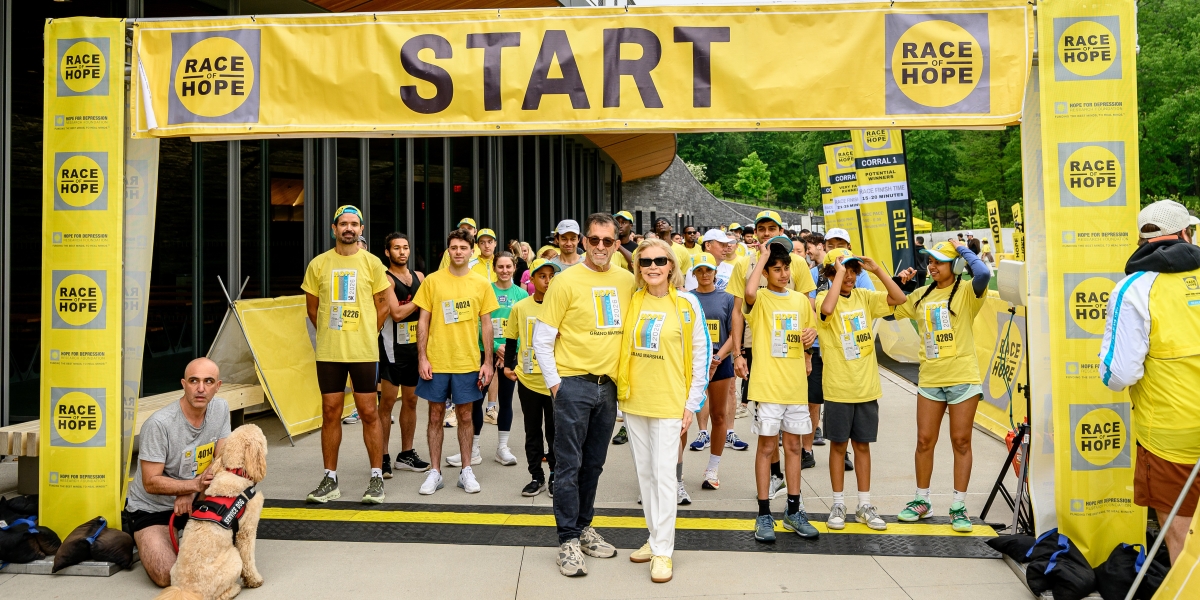
The Hope for Depression Research Foundation’s (HDRF) fourth annual NYC Race of Hope to Defeat Depression united 380 participants including families and students on Sunday, May 10th at The Davis Center in Central Park. The event, which sold out two weeks before the Race date, raises awareness about the crisis in mental health in the U.S. and fights the stigma that still surrounds mental health.

This year, Kenneth Cole, American designer, social activist and founder of The Mental Health Coalition, served as the Celebrity Grand Marshal. The Mental Health Coalition is a collective of the nation’s largest, most influential and diverse mental health organizations. Its mission is to build a like-minded community that works together to destigmatize all mental health conditions and enable equitable access to vital resources and support for all.

HDRF Founding Chair Audrey Gruss took to the podium before the Race to thank participants for their support and commitment to mental health awareness, speaking about the foundation’s mission and latest research progress.

Gruss said: “This year marks the 20th anniversary of our foundation, and we are making incredible strides in research. Most recently, we have identified 20 genes linked to depression and are now conducting human clinical trials to test potential new categories of antidepressants.”

She continued, “Today I am thrilled to introduce our Celebrity Grand Marshal Kenneth Cole. Kenneth embodies a powerful blend of the brain and the heart, the material and the spiritual, much like the mission of Hope for Depression Research Foundation.”

Cole said: “We are privileged to be able to work with this organization, to watch, admire, and support the work they do. Their commitment to advancing our shared agenda is extraordinary, and the power of collaboration is unprecedented. There is an old African proverb that I often default to: ‘Alone, you can go fast. Together, you can go far.’ It speaks to the power of collaboration. WHO says one in four people today will live with mental health conditions. We say it’s four out of four, because if it isn’t you, it’s somebody you love, somebody in your family, or somebody in your community. Everybody today is impacted by this mental health epidemic.”

A unique feature of the NYC Race of Hope is its Student Ambassador program, which shines a light on the urgent issue of teen depression and suicide. This year Leslie Hernandez, a Junior at Newtown High School in Queens, and Sienna Vadi, a Junior at Trevor High School in Manhattan, were Co-Lead Student Ambassadors, heading a group of representatives from diverse schools such as Berkeley Carroll, SUNY Brockport, Chapin School, Dalton, Fieldston, Greenwich Country Day, Newtown High School, and Trevor Day.

The Race of Hope is a 5K (3.1 mile) U.S. Track and Field-certified race. At the starting gun, Gruss and Cole cheered on participants, all sporting HDRF’s signature sunshine yellow color with matching caps and t-shirts, as they took off on the beautiful 5K (3.1-mile) course starting at The Davis Center through the scenic and tranquil northern paths of Central Park.

Some participants ran competitively, while others walked or strolled with friends. No matter their speed or age, all the racers united in a common purpose, to support research into new treatments for depression and to fight the stigma still associated with seeking help.

The NYC Race of Hope is part of an annual series that includes a summer Race of Hope in Southampton set to take place on August 2, 2026, and a winter Race in Palm Beach set to take place on February 13, 2027.

At the close of the Race, Audrey Gruss presented awards to the top finishers. First prize for Top Male Finisher went to Alexander Garrot (18:24.74), and first prize for the Top Female Finisher went to Adrienne Bilello (20:10.66), who also came in third place overall.

Second placefor Top Male Finisher went to Alex Harris (19:38.93) and second placefor the Top Female Finisher went to Liz Magno (22:05.43), third place for Top Male Finisher went to Owen Husselbeck (21:10.41), andthird place for the Top Female Finisher went to Harlow Talley (24:10.58).

The Top Individual and Team Fundraiser went to Riley Mountford, who raised $2,525 individually and $2,700 through team fundraising. The Largest Team award went to Gracie Square Hospital, who offers care for patients with psychiatric disorders who can benefit from inpatient hospitalization.

All Race participants received a commemorative T-shirt, race hat, race bib and huge ­finisher medal. The first, second, and third place winners received medals based on the winnings.

5K Race of Hope Sponsor

Gracie Square Hospital, J.P. Morgan, and LOVE Binetti.

About Hope for Depression Research Foundation (HDRF)

HDRF was founded in 2006 by philanthropist Audrey Gruss in memory of her mother Hope, who struggled with clinical depression. The mission of the HDRF is to spur the most innovative brain research into the origins, medical diagnosis, new treatments, and prevention of depression and its related mood disorders, bipolar disorder, postpartum depression, post-traumatic stress disorder, anxiety disorder, and suicide. The World Health Organization has declared depression as the leading cause of disability worldwide, and yet conventional medications today are outdated and do not fully work for 50% of patients. HDRF is working tirelessly to improve the mental health landscape for every American. The Foundation has provided more than $80 million for breakthrough depression research that promises to transform the way depression is viewed, diagnosed, treated and prevented. In 2012, HDRF created the Depression Task Force, an international collaboration of top neuroscientists from different universities who are compiling data and expertise to accelerate research. HDRF has two clinical trials underway for potential novel antidepressants at Mount Sinai Medical Center and Max Planck Institute in Germany. Other clinical trials for novel therapies are in the pipeline at Columbia University and Weill Cornell.