New York’s Clinical AI Reckoning: DHNY Brings the Hard Questions to Midtown This Thursday

New York City has spent years positioning itself as the digital health capital of the world. This week, the city puts that claim to the test.

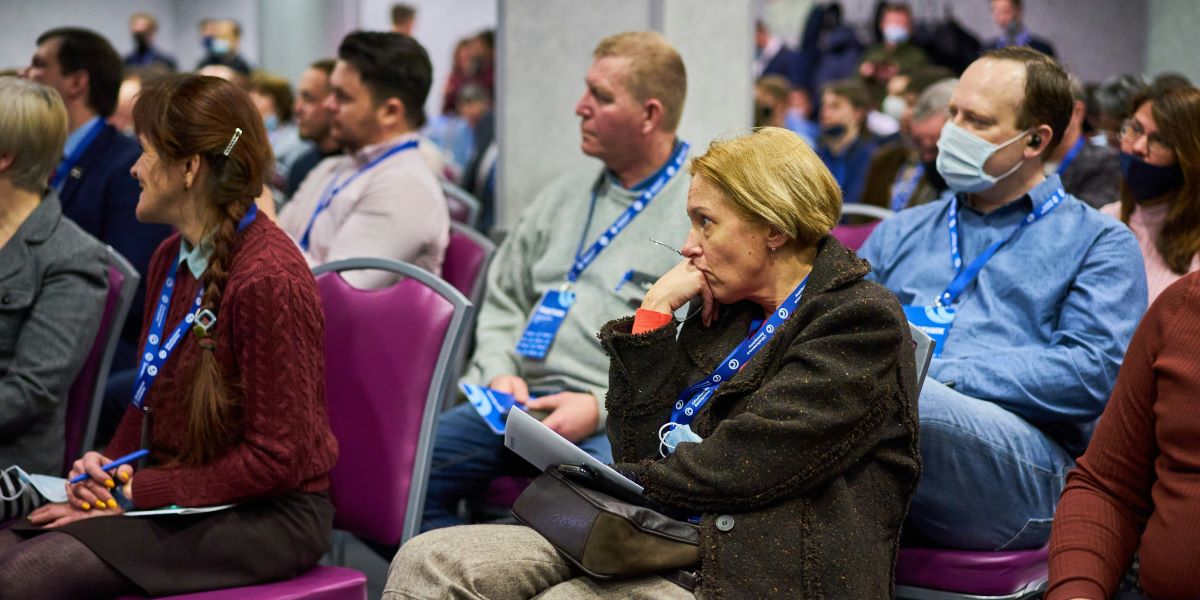
Digital Health New York (DHNY) is hosting “Reality Check: Clinical AI in Healthcare,” a forum running from 5:30 to 8:00 PM on Thursday, May 7, as part of NYC Health Innovation Week. The event will be held at Pillsbury and sponsored by Stifel. The timing is pointed. As artificial intelligence continues to generate noise across every sector of the economy, the healthcare industry finds itself at a pivotal crossroads — fielding a technology that promises to reshape clinical practice while confronting the operational, regulatory, and ethical barriers that have kept it largely out of the exam room.

A Week Built for Builders, Not Bystanders

The DHNY forum is one of several events anchoring the third annual NYC Health Innovation Week, running May 3 through 9 and organized as a community-driven week of connection, collaboration, and conversation across New York City’s health ecosystem.

At the core of the week sits the HITLAB Innovators Summit, held May 5 through 7 at the Microsoft Tech Center in Times Square, bringing together organizations including Microsoft, Merck, Memorial Sloan Kettering Cancer Center, JPMorgan, Aetna, NY Presbyterian, and Mount Sinai, among others. The summit’s final day — the same day as the DHNY forum — is dedicated to a session titled “Evidence in Action: Validating AI in Real-World Healthcare,” a thematic thread that runs directly into what DHNY intends to examine that evening.

DHNY describes itself as sitting at the epicenter of New York’s healthcare community, built to encourage networking, community-building, and meaningful connections through curated content and experiences that are quintessentially New York. The organization was founded in 2022 in collaboration with AlleyCorp, with a mission to increase the visibility of New York City as a leader in healthcare innovation and to showcase the companies and leaders creating the future of healthcare.

The “Reality Check” title is not accidental. In a sector where AI enthusiasm can outpace clinical evidence, the forum signals that New York’s health-tech community is not content with aspirational language alone.

The Gap Between Lab and Bedside

New York's Clinical AI Reckoning DHNY Brings the Hard Questions to Midtown This Thursday (3)

Photo Credit: Unsplash.com

The conversation DHNY is convening on Thursday arrives at a moment when the distance between AI’s potential and its clinical reality has never been more visible.

Health system AI adoption has surged in 2026, with 75% of U.S. health systems using or planning to use AI platforms, and 50% of respondents indicating their systems use three or more applications. Clinical note-taking and ambient listening have led adoption, with 68% adoption and 62% year-over-year growth. AI-based clinical documentation improvement follows with 43% adoption and 59% growth year-over-year.

Yet adoption has not translated cleanly into transformation. The experience of AI solutions has been mixed among respondents, with challenges ranging from slow implementation to staff hesitation.

A 2026 report from researchers at Harvard Medical School and Stanford University offers a frank assessment of why. Researchers identified what they call a “deployment gap” — the problem is not the intelligence of the algorithms themselves, but how these tools interact with the messy realities of modern healthcare systems. In fast-paced environments like intensive care units or emergency departments, even minor interruptions can significantly reduce adoption. If an AI system requires a physician to leave their normal electronic health record workflow, usage often drops to nearly zero.

The regulatory landscape adds further complexity. More than 250 healthcare AI bills were introduced across 34 or more states in 2025 alone. The Trump administration issued an executive order in early 2026 aimed at loosening AI oversight, a move expected to face significant legal challenges. A hospital system operating in multiple states in 2027 will be navigating different sets of AI rules simultaneously, with no unified federal standard to simplify the picture.

New York’s Health-Tech Stake

Few cities have more riding on the outcome of the clinical AI debate than New York. The city is home to some of the most research-intensive hospital systems in the country — NY Presbyterian, Mount Sinai, NYU Langone, and Memorial Sloan Kettering — alongside a dense network of digital health startups, venture capital firms, and financial institutions that fund and track the sector closely.

The 2026 New York Digital Health 100, published by DHNY, now includes 48 new companies in its seventh year, addressing some of healthcare’s most complex challenges. The accompanying New York Healthcare Innovation Report analyzes key investment trends, market dynamics, and opportunities shaping the digital health ecosystem.

For investors and business leaders, Thursday’s forum is as much a market intelligence event as it is a clinical conversation. Stifel, the investment bank sponsoring the evening, has long-standing coverage across healthcare services and health technology — its presence as a sponsor signals that Wall Street is tracking how New York’s clinical AI ecosystem matures, and who survives the translation from pilot to deployment.

What “Reality Check” Actually Means

Industry leaders anticipate that clinical-grade AI will become an indispensable partner in daily workflows in 2026, automating documentation, surfacing care gaps, and streamlining communications. At the same time, health systems are expected to play catch-up with governance, building out more formal compliance policies to address the risks of what some describe as shadow AI — the use of unapproved tools by clinicians working around institutional processes.

Healthcare executives have noted that patients are already running doctor’s notes and lab results through consumer AI tools, while hospitals remain cautious about deploying AI in part because there is no official standard. That gap between patient behavior and institutional caution is precisely the terrain that forums like Thursday’s are meant to navigate.

The vision for 2026, as expressed by healthcare leaders, is for organizations to move beyond AI awareness to the seamless integration of AI in daily workflows — empowering staff rather than distracting them with new complexities. For large-scale AI adoption, organizations must trust the technology, and vendors are being challenged to think critically about how to embed it into provider workflows with transparency, without creating additional burdens.

For a city that wants to lead, the pressure is to move past the conversation and into the clinic. Thursday’s forum at Pillsbury is one more step in that direction — and in New York, one more room where the future of healthcare is being decided.


Disclaimer: This article is intended for informational and news reporting purposes only. It does not constitute medical advice, clinical guidance, or an endorsement of any specific technology, product, or organization referenced herein. Information about AI adoption in healthcare is drawn from publicly available research and reporting as of May 2026. Readers with questions about clinical technologies or healthcare decisions are encouraged to consult licensed medical professionals and qualified healthcare institutions directly.

Noah Zulfikar Isn’t Chasing a Moment. He’s Building a Career.

By: George Morrow

The Canadian actor and dancer has spent a decade quietly stacking credits across television, Disney, and the international stage. At 26, he’s starting to write his own.

Most performers who break out at sixteen spend the next decade chasing the high. Noah Zulfikar has done the opposite. The Toronto- and Los Angeles-based actor, now 26, has been working steadily since 2015, when he was cast as Kingston on The Next Step, the Canadian teen drama that quietly built one of the most loyal young audiences in international television. A decade in, he’s still on that show’s books, still touring with it, still booking new dramatic work, and now writing his own scripts. There’s no fireworks moment in the timeline. That seems to be the point.

A Mississauga Start That Stuck

Zulfikar grew up in Mississauga, Ontario, and trained for years at the Canadian Dance Company in Oakville before The Next Step’s casting team came through his studio. He didn’t book it on the first try, or the second. He came up through callbacks and persistence, eventually landing a role in Kingston for season five and staying on for a run he puts at more than 75 episodes. That’s a long enough stretch to grow up on screen, which audiences in the UK, Australia, and beyond did right alongside him. The kind of slow exposure money usually can’t buy.

The show itself is a phenomenon Americans tend to underestimate. It ran for over a decade on Family Channel in Canada and CBBC in the UK, ending only in late 2025. For Zulfikar, that meant something rarer than virality: a recurring set, recurring co-stars, recurring fans who watched him develop in real time.

The Disney Detour

Family Channel is one thing. The Disney machine is another. Zulfikar slid into supporting roles in Zombies 2 (2020) and Zombies 3 (2022), two of Disney’s most dependable musical franchises for the under-fifteen set. The parts weren’t leads, and he doesn’t oversell them. What they did give him was something practical: time on bigger sets, exposure to studio-scale production, and an audience that recognizes him without needing the dance context.

He’s also taken pains to do work that doesn’t fit either of those tidy boxes. A principal role in The Village Keeper, a quieter Canadian feature, sits on his IMDb page as a deliberate gear shift. He has a series-regular slot in Between the Fences, an upcoming project currently in production. Whether that one hits is anyone’s guess. But the choice tells you he’s aiming somewhere different than the next dance movie.

Back to the Stage, on a Bigger Map

Earlier this year, Zulfikar suited up for The Next Step Legacy World Tour, a reunion run that hit the UK, Canada, and Australia. He puts the live numbers at more than thirty shows and roughly 40,000 ticket buyers. Anyone who’s worked a touring circuit knows what that means in practice. Late buses, two-show days, the kind of muscle memory you can’t fake.

His Instagram following, well over 100,000, is large enough to matter and small enough to feel real, which is increasingly the more valuable position. His TikTok sits in the high tens of thousands, putting him in the bracket where brands still call but the algorithm hasn’t flattened him into a content machine. The work still leads. The platforms follow.

Writing His Way Forward

The most interesting thing about Zulfikar at this stage isn’t on his résumé. It’s the short film script he’s been writing, one he plans to star in and shepherd through development himself. He talks about it the way a lot of mid-career performers eventually do, framing it as a way to step out of the audition cycle long enough to make something specific on his own terms.

He’s still studying, too. Armstrong Acting Studios in Toronto. Anthony Meindl’s workshop in Los Angeles. Self-tape coaching at Hotshots in LA and The Craft back home. That’s not the schedule of a working actor coasting on old credits. It’s the schedule of someone who watched what happened to colleagues who stopped training and decided not to be one of them.

The Long View

What’s notable about Zulfikar isn’t a single role or a follower count. It’s the project’s durability. He’s been employed in this business since before he could legally drink in his own country. He’s diversified across television, live performance, Disney, and now writing, without burning out the brand or chasing the wrong rooms. And he’s based in the two cities, Toronto and Los Angeles, where a North American actor with international fans actually has to live to keep working.

The next twelve months will be telling. Between the Fences will land. The short film will or won’t get made. The Legacy tour wraps, and the question becomes what fills the calendar next. For now, Zulfikar seems content to let the work answer that question. Most actors his age would kill for that.

Katie Elizabeth Is Building a Life That Refuses to Be One-Dimensional

By: Elowen Gray

At first glance, Katie Elizabeth’s life may look like a study in contrast. She is a director in the medical device industry, a former respiratory therapist, a certified barre and Pilates instructor, and a lifestyle creator whose world spans healthcare, wellness, travel, beauty, and modern femininity. But for her, those identities do not compete with one another. They belong to the same story.

That story began far from the polished lifestyle imagery now associated with her personal platform. Born in Australia and raised within a Mormon environment, Katie grew up with a clear sense of structure, discipline, and expectation. But structure can be both grounding and limiting. As she got older, she began to question which beliefs still belonged to her and which had simply been inherited. That process of self-examination would eventually become one of the quiet themes of her life: the willingness to outgrow versions of herself that no longer fit.

At 18, she moved from Australia to the United States alone. It was not a glamorous reinvention story, as social media often packages independence. It was disorienting, practical, and at times lonely. Living with extended family, adapting to a new culture, and learning to rely on herself forced her into adulthood quickly. She credits her aunt, also an immigrant who had built a life in America, with teaching her accountability and the value of hard work.

That early lesson became even more important after watching her mother go through a difficult divorce and the financial instability that followed. For Katie, it left a lasting impression. She saw how easily women could become vulnerable after years of sacrifice, and she made a private promise to herself: she would build her own security. She would create choices. She would never allow her future to depend entirely on someone else’s ability or willingness to provide it.

That conviction shaped the way she approached work. Katie began her career on the clinical side of healthcare as a respiratory therapist, a role that placed her close to patients and families during some of their most vulnerable moments. It taught her about pressure, empathy, and the human side of medicine. Healthcare, in that setting, was not abstract. It was a room, a family, a diagnosis, a person trying to breathe.

But she was also drawn to strategy. Over time, Katie moved from clinical care into the corporate side of the medical industry, eventually reaching a director-level role in medical devices. The transition required more than professional competence. It meant entering environments that were often male-dominated, where she sometimes felt an added pressure to prove herself. Like many women in leadership, she had to navigate the unspoken calculations around tone, confidence, and authority.

Her conclusion was simple, though not easy to earn: credibility does not come from overexplaining yourself. It comes from consistently delivering results.

That belief sits at the center of her current identity. Katie is not interested in presenting ambition as a rejection of softness, beauty, humor, or femininity. She is equally uninterested in presenting femininity as something fragile or decorative. Her personal brand grew from that tension. It speaks to women who want to be successful without becoming hardened, polished without becoming artificial, and independent without becoming isolated.

Her platform blends wellness, travel, style, confidence, and self-development, but its deeper subject is agency. Katie’s content is not built around the idea of perfection. It is built around evolution. She talks about becoming more confident with time, creating financial independence, choosing healthier relationships, and refusing to be reduced to a single role.

That refusal feels particularly relevant in a culture that often asks women to brand themselves into easily digestible categories. The corporate woman. The wellness woman. The feminine woman. The ambitious woman. The divorced woman. The creator. The executive. The girl’s girl. Katie’s life contains pieces of all of these, but she resists turning any one of them into a cage.

Part of that resistance comes from lived experience. In her 20s, while navigating a divorce, she completed respiratory therapy school while working full time, attending classes, and taking on demanding 12-hour clinical shifts. It was one of the hardest periods of her life, but also one of the most clarifying. It showed her that she could carry more than she thought. It also taught her that resilience is often less cinematic than people imagine. Sometimes it looks like showing up exhausted, doing what needs to be done, and trusting that the chapter will eventually end.

Today, that memory informs the way she talks about success. For Katie, success is not only a title, a salary, or a curated image. It is the ability to build a life that feels self-directed. It is having the freedom to leave what no longer fits. It is having enough confidence to stop performing certainty and enough independence to make decisions from a place of choice rather than fear.

Her interest in wellness follows the same philosophy. As a certified barre and Pilates instructor with a healthcare background, she approaches movement less as a tool for punishment and more as a practice of strength, longevity, and self-respect. In a digital culture that frequently turns wellness into another standard women must meet, Katie’s perspective is more measured. The goal is not to chase extremes. It is to feel strong enough to live well.

There is also a social dimension to her message. Katie describes herself as unapologetically a girl’s girl, a phrase that can feel lighthearted but carries real weight in her worldview. She believes women benefit when they support, collaborate with, and celebrate one another. At the same time, she is honest that growth can expose insecurities in relationships. As her own life expanded, she learned to distance herself from mean-spirited dynamics and seek friendships rooted in maturity, encouragement, and mutual respect.

That honesty gives her platform more texture than the typical lifestyle feed. Behind the travel, beauty, fitness, and polished visuals is a woman who has had to rebuild, question, work, leave, and begin again. Her aesthetic may be elevated, but the foundation is practical: independence, discipline, resilience, and self-trust.

Katie is now interested in expanding her platform into media, television, modeling, speaking, and strategic brand partnerships. But she frames that ambition less as a chase for visibility and more as an extension of the life she has been building. She wants to reach women navigating their own versions of reinvention, whether in their careers, identities, relationships, wellness, or confidence.

One of her favorite quotes is, “A lion doesn’t have to tell you it’s a lion.” It is an apt summary of her approach. Katie Elizabeth is not trying to convince anyone that she is strong, feminine, ambitious, or self-made. She is trying to live in a way that makes the argument unnecessary.

And perhaps that is what makes her story resonate. In an age where personal brands are often built around certainty, Katie’s is built around becoming. She represents a version of modern womanhood that is not fixed, flattened, or easily categorized. It is ambitious and soft, disciplined and playful, polished and still in progress.

The Lifestyle Trap Is Getting Harder to See

By: Elowen Gray

How Anna Koyn’s One Dimensional Woman turns beauty, wellness, and self-optimization into a subject of cultural scrutiny.

There is a particular kind of woman contemporary culture keeps trying to produce. She is disciplined but effortless, attractive but not vain, ambitious but not abrasive, self-aware but never fully at rest. She drinks the right supplements, knows how to narrate her life in aesthetically coherent fragments, and has learned to package exhaustion as aspiration. She is not exactly fictional. In fact, she is everywhere.

The artist Anna Koyn has built a body of work around that figure, though not in the straightforward sense of portraiture. Her long-term conceptual project, One Dimensional Woman, is less interested in individual biography than in the systems that train people to experience social pressure as preference. Drawing on installation, video, and mixed media, Koyn examines how identity is shaped by the seemingly soft forces of consumer culture: taste, self-optimization, aspiration, and the endless refinement of the self. As she describes it, the work began with a simple but destabilizing observation: many of the decisions people experience as personal are, in fact, quietly structured in advance.

The title nods to Herbert Marcuse’s One-Dimensional Man, his 1964 critique of affluent society and the way consumer culture narrows thought while making that narrowing feel natural. Marcuse argued that modern systems of comfort and consumption could produce forms of compliance that do not feel like coercion at all. Koyn’s intervention is to bring that logic into the present tense, and more specifically into the world of lifestyle culture, where beauty, wellness, productivity, and personal branding now function as moral vocabularies as much as market categories.

That framing feels unusually precise right now. The wellness economy alone reached $6.8 trillion in 2024, according to the Global Wellness Institute, a figure that helps explain why self-care no longer appears as a niche interest but as a governing logic of daily life. To be well today is not merely to feel okay. It is to signal discipline, literacy, and control. Productivity works the same way. It has become difficult to separate being a person from being an ongoing improvement project.

Koyn’s work seems to understand that the most effective systems rarely arrive as commands. They arrive as atmospheres. Her materials reflect that. According to her brief, she works with objects and remnants drawn from everyday economic life: receipts, packaging, ritualized consumer items, and other cultural debris that most people are trained to overlook. In her hands, these things become evidence. They suggest that identity is not simply expressed through consumption but assembled by it, or at least rehearsed through it. A receipt is no longer just proof of purchase. It is a record of affiliation. Packaging is not merely design. It is pedagogy.

One of the more compelling aspects of One Dimensional Woman is that it does not depend on the old distinction between oppression and desire. Koyn is not describing a world in which women are simply forced into roles they do not want. She is asking what happens when the system becomes intimate enough that people begin to want what it asks of them. That question feels especially resonant in a culture where identity is increasingly performed across platforms that reward coherence, legibility, and constant calibration. As Tavi Gevinson wrote in a 2019 essay for The Cut, social media made self-definition and self-worth measurement feel like a default mode rather than an occasional anxiety. The problem is no longer just surveillance by others. It is self-surveillance mistaken for freedom.

This is where Koyn’s work seems most contemporary. Her concern is not only consumerism in the broad, familiar sense, but also the psychological architecture built around it: the way taste becomes a social language, how lifestyle becomes compliance, how people learn what to want before they recognize they are choosing. That is a subtle but important shift. Plenty of art critiques capitalism as spectacle or excess. Koyn appears more interested in its quieter mechanisms, the ones that organize emotion and aspiration from within.

The figure of the “one-dimensional woman,” then, is not just a critique of femininity under pressure. It is a description of a broader cultural condition, one in which contradiction gets flattened into brand identity. You should be healthy, but not visibly. You should work constantly, but with grace. You should pursue beauty, but in a way that can be framed as empowerment. You should consume, but ethically; optimize, but gently; perform identity, but call it authenticity. The result is a self that is always being composed in public and evaluated against an invisible but widely shared template.

Koyn’s background helps explain the clarity of that conceptual frame. Her practice brings together visual work, cultural analysis, and writing, with the stated goal of developing not isolated artworks but rather a long-term research project on how identity is shaped by systems of taste, belonging, and internalized pressure. That research-based approach matters. It gives the project an intellectual seriousness that distinguishes it from the more common tendency to aestheticize critique without pushing it very far. Koyn is not merely borrowing the imagery of contemporary life; she is trying to map its behavioral logic.

There is, too, something timely about an artist turning toward the emotional scripts of everyday aspiration rather than toward the louder iconography of crisis. The dominant mood of the past decade has often been one of overstimulation: too much information, too much branding, too much collapse. But ordinary life has continued to be shaped by smaller and more repetitive pressures, especially for women, who are still asked to treat self-management as a form of virtue. Recent reporting from the American Psychological Association found that stress tied to work insecurity remains significant for a majority of U.S. workers, helping clarify the broader context in which self-optimization thrives. When the world feels unstable, discipline starts to look like safety. Lifestyle becomes less frivolous than compensatory.

What makes One Dimensional Woman interesting is that it refuses to flatter that condition. It does not celebrate the polished self, nor does it simply mock it. Instead, it studies the cultural systems that make such a self feel necessary. That is a harder project, and a more revealing one. The real achievement of this kind of work is not that it tells viewers something they do not already know. It is that it gives form to something they have already felt but perhaps lacked language for: the eerie experience of living inside norms that arrive disguised as choices.

Disclaimer: The economic figures and metrics referenced in this article — such as the valuation of the global wellness economy — are estimates from third‑party research organizations and may vary as new data become available.

The Plumber’s Collective and Exclusive Plumbing Leads

For plumbing contractors who have been in business more than a few years, the shared lead platform model is familiar territory. Angi, HomeAdvisor, Thumbtack, and similar services pitch a straightforward proposition. Homeowners in your area are searching for plumbers, and a paid subscription connects you with those leads. For a contractor looking to grow, the appeal is clear.

The reality often plays out differently.

The Problem With Shared Lead Platforms

What many contractors discover after signing up is that the lead they paid for was simultaneously sent to three, four, or five other plumbers in the same market. The homeowner did not select a specific contractor. They submitted a form, and the platform distributed that information to every contractor willing to pay for it. By the time you make contact, your competitors are already on the phone with the same prospect.

The data on shared lead response is consistent. Contractors who respond within the first five minutes are far more likely to convert the lead than those who respond an hour later. That dynamic shifts the basis of competition. You are no longer competing solely on quality, reputation, or price. Speed becomes the determining factor. Dispatchers drop everything to call new leads. The office reorganizes around response time. Your entire intake process is built around a platform that has no commitment to whether the contractor actually wins the job, only to keep the subscription active.

The Hidden Costs of Shared Lead Generation

Lead quality is its own challenge. Shared platforms tend to filter for volume because volume drives platform revenue. Mixed in with legitimate service requests are casually curious homeowners, renters who need landlord approval, chronic quote collectors who hire whoever quotes lowest, and form submissions made at midnight without any real urgency. Contractors pay the same price for each.

For a contractor running three to five trucks, this creates a specific operational problem. Dispatchers spend hours each week chasing contacts who have already hired another company, who do not pick up, or who turn out to be unqualified. Technicians sit idle while the office works through inquiries that often lead nowhere. Real money, often several thousand dollars per month, is spent competing in a system designed primarily to benefit the platform.

The frustration that builds over time is more than financial. It is the experience of investing real resources without being able to predict where the next job is coming from. Contractors who stay in the cycle long enough often start to accept it as normal.

The Plumber’s Collective Approach

The Plumber’s Collective was built on a different model. Each lead generated through the service is exclusive. One lead goes to one contractor. There is no simultaneous distribution and no race to be the first responder. When a homeowner reaches out, they are reaching out to one contractor based on how that business has been positioned in the local market.

That distinction shapes the conversation that follows. The customer has not been contacted by multiple plumbers in rapid succession. They are not comparing the quote to four others gathered the same afternoon. The contractor and the homeowner are starting from different points.

The Plumber’s Collective focuses on plumbing contractors operating three to five trucks who are looking to move away from shared lead platforms. The model centers on exclusive pipelines, qualified inbound contacts, and a structure designed around the contractor.

To learn more, visit The Plumber’s Collective.

Why Do We Ignore Emergency Readiness in the City?

[Summary] Urban living and corporate environments create a false sense of security regarding medical emergencies. Busy city streets often delay EMS response times, making bystander intervention critical. Getting certified in First Aid and CPR is a proven way to protect your family, colleagues, and community during the crucial first minutes of a crisis.

Think about your average Tuesday. You grab a coffee, navigate through heavy traffic, and settle into your office chair for back-to-back meetings. It feels routine. It feels safe. But what happens if the colleague sitting next to you suddenly collapses?

Most of us assume someone else will step up. We think a doctor is nearby or that an ambulance will arrive in seconds. Unfortunately, reality rarely works out that way. If you live or work in a busy metropolitan area, you need to be prepared. Finding reliable North York CPR training isn’t just about checking a box for your employer. It’s about having the actual power to save a life when the clock is ticking.

What Really Happens in the First Five Minutes?

When a cardiac arrest or severe choking incident occurs, time becomes your worst enemy. Brain damage can start within four minutes if a person is deprived of oxygen. Now, factor in city traffic, construction zones, and navigating complex office building elevators.

Even the best paramedics face physical barriers trying to reach a victim in a crowded urban center.

  • The bystander effect is real: People freeze when they don’t know what to do.
  • Confidence matters: Those with proper training take immediate action.
  • Survival rates plummet: Every minute without CPR reduces the chance of survival by up to 10%.

You don’t need a medical degree to bridge that gap. You just need to know how to keep blood pumping and airways clear until the professionals walk through the door.

How Does Blended Learning Fit Into a Busy Schedule?

One of the biggest excuses people make for skipping First Aid training is a lack of time. Corporate professionals are stretched thin. Parents are rushing kids to soccer practice. Giving up an entire weekend to sit in a classroom feels impossible.

That is exactly why modern training has evolved. You don’t have to choose between your schedule and your safety. Blended learning formats split the workload perfectly. You complete the theory portion online from your living room couch or during your lunch break. Then, you only need to attend a shorter, focused in-class session to practice the physical skills.

You still get the premium, WSIB-approved certification from a top-tier Canadian Red Cross Training Partner, but it fits into your actual life.

Why Should Corporate Leaders Prioritize CPR Training?

If you run a business, safety compliance is likely already on your radar. But let’s look past the mandatory Occupational Health and Safety (OHS) requirements for a moment.

Investing in employee safety builds incredible trust. When you host a training session for your staff, you send a clear message: you care about them as humans, not just as workers. Furthermore, these skills transfer directly to their home lives. You are empowering your team to protect their own families.

Here are a few quick reasons businesses benefit from trained staff:

  1. Reduced workplace panic: Trained teams manage crises calmly.
  2. Higher survival rates: Quick intervention saves lives.
  3. Positive culture: Shared training exercises double as effective team building.

Are You Ready to Take Action?

Emergencies don’t send calendar invites. They happen at the grocery store, in the office breakroom, or at your kitchen table. By taking a few hours out of your month to learn Standard First Aid, CPR/AED, or Basic Life Support (BLS), you transform yourself from a helpless bystander into a capable first responder.

If you are looking for first aid training near the Steeles Avenue West corridor, the Thornhill border, or other areas close to our facility, then you may reach out to Coast2Coast First Aid & Aquatics in that area.

For more info, WSIB-approved course schedules, and articles like this, visit: https://www.c2cfirstaidaquatics.com/

Frequently Asked Questions

What is the difference between CPR Level C and BLS? CPR Level C is designed for the general public and covers adult, child, and infant rescues. Basic Life Support (BLS) is a fast-paced, advanced course specifically tailored for healthcare professionals and first responders.

How long is a First Aid certification valid? In Canada, a Red Cross Standard First Aid and CPR certification is valid for three years. However, some employers or specific industries may require you to renew your CPR training annually.

Can I fail a CPR class? While there is a testing component to ensure you understand the material, the instructors are there to help you succeed. As long as you participate, ask questions, and practice the skills, passing is highly achievable.

Does blended learning provide the same certification as fully in-person classes? Yes. Once you complete both the online modules and the in-class skills session, you receive the exact same WSIB/OHS-approved certification as someone who took a traditional two-day, in-person class.

Are children allowed to take First Aid courses? Yes, there is no strict minimum age to learn CPR, though participants need the physical strength to perform chest compressions effectively. Many teenagers take these courses to prepare for babysitting or summer camp jobs.

James Rothschild and Nicky’s Hilton Divided Time Between New York and London

James Rothschild and Nicky Hilton split their time between New York City and London, building a family routine that draws from two long-established centres of business, fashion, and history. Since their 2015 wedding at Kensington Palace in London, their household has operated between both cities, with extended stays in each based on work, school schedules, and family commitments.

Their wedding ceremony drew attention because of the chosen location and the attendance of both families. Hilton grew up in the Hilton hotel family in the U.S., known for its global hospitality business. Rothschild stems from the Rothschild banking family, long associated with European finance and private wealth management.

Hilton has a special connection with New York City. She was born in the city and spent her younger years in NYC’s fashion and media environment, surrounded by luxury retail and social circles linked to the Hilton family name. Her work as a fashion designer and involvement in brand partnerships keep her active in Manhattan, where meetings, events, and collaborations take place during busy periods.

Rothschild’s connection to London stems from family history and long-term institutional ties in Europe. He comes from a banking dynasty with links to financial services and investment circles. Time spent in London is heavily focused on private family life and select public commitments.

The couple shares three kids, all of whom form the structure of their schedule. School terms determine how long the family stays in each city, with longer visits during holidays and breaks. Both residences have a consistent routine, so the kids maintain stability when moving between homes.

Beyond family structure and schooling, each city offers different practical purposes. New York connects Hilton to fashion houses, media companies, and commercial partners. A lot of her professional activity there coincides with industry calendars, especially during fashion weeks and campaign cycles.

London offers a more private environment tied to heritage networks and long-established institutions. Engagements there are smaller in size, usually connected to charitable boards, cultural organizations, or private social circles. The city is also closer to European luxury brands that intersect with Hilton’s design interests.

Rothschild is involved in advisory and investment work in Europe and the U.S. His time in London connects him to financial institutions and family connections, while visits to the U.S. support contact with American business and philanthropic circles. His public visibility is limited.

Air travel between the two cities is based on fixed commitments rather than occasional visits. Extended stays are planned in advance, helping each residence function as a fully operating home during its designated period in the year.

The Rothschild-Hilton household reflects two unique backgrounds brought into one shared family structure. Hilton’s upbringing sits with American hospitality and celebrity culture. Rothschild’s lineage connects to European finance and private institutions. Those influences appear in how the family manages time, residence, and obligations.

New York connects Hilton to her professional base and early life surroundings. London links Rothschild to heritage, family networks, and long-standing financial institutions. Their household follows a structured annual rhythm built around education, work cycles, and family priorities, with both cities serving specific and separate functions within that framework.