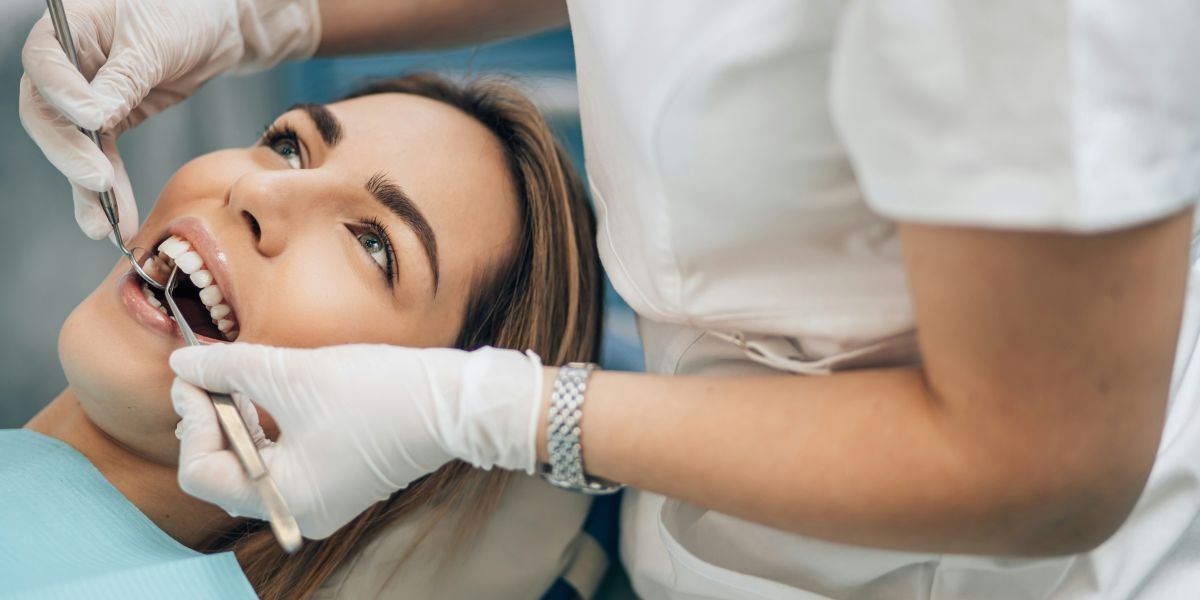
Why More People Are Suddenly Asking About Dental Payment Plans

For a long time, cost has been one of those quiet reasons people delay dental care without really saying it out loud.

It doesn’t usually show up as a clear statement like “I can’t afford this.” It’s more subtle than that. A visit gets pushed back a few months. A recommendation gets mentally filed under “later.” Something feels important, just not urgent enough to deal with right now.

And then “later” just quietly keeps moving.

That pattern has been around for years, but lately there’s been a bit of a shift in how people are approaching it.

More dental offices are noticing patients asking a different kind of question, not just what treatment is needed, but how they’re actually supposed to make it work financially. And that conversation is happening earlier than it used to. Payment options aren’t something mentioned at the end anymore; they’re starting to come up right alongside treatment.

When Cost Becomes the Thing That Slows Everything Down

Dental care sits in a strange middle space.

Some procedures are clearly time-sensitive, but many fall into the category of “important, but I can probably wait a little.” That’s usually where things slow down.

Even when someone fully intends to move forward, the upfront cost can feel like a lot all at once. Insurance helps in some cases, but it doesn’t always cover as much as people expect, especially for more involved or cosmetic work.

So the decision gets delayed. Then reconsidered. Then delayed again.

And it’s rarely just one reason. It’s timing, priorities, and finances all kind of blending together in a way that makes “later” feel easier than “right now.”

A Shift in How Payment Conversations Happen

What’s changing isn’t really the existence of financing; it’s how naturally it’s showing up in the conversation.

In many dental practices, payment flexibility has been around for a while now. Long-standing options like CareCredit have helped normalize the idea of spreading out healthcare costs over time. It’s not new, but it’s become more routine, less like a separate financial step and more like something that just exists in the background of care.

In other offices, especially those that move quickly, patients are now getting a clearer picture of what treatment might cost before they fully commit, sometimes through point-of-sale financing tools like Sunbit.

Instead of treatment and payment feeling like two separate conversations, they’re starting to feel like one, especially in offices that are simplifying how financing is introduced through installment-based options like Cherry.

And that tends to reduce hesitation.

Why Dental Practices Are Leaning Into This Shift

From the provider side, the change is pretty noticeable.

It’s not that patients weren’t interested in treatment before; it’s that cost uncertainty often slowed everything down. When that uncertainty gets reduced, conversations tend to move forward more easily.

People ask fewer “what if” questions and more “when can we do this” questions. Decisions that used to span multiple visits are now often made much faster.

There’s also a practical side to it. When payment systems are handled externally or streamlined through financing tools, dental offices aren’t stuck managing long-term billing or follow-ups themselves. That takes a quiet layer of work off their plate.

It’s not a dramatic change day to day, but over time, it definitely adds up.

Patients Are Thinking About Timing Differently

One of the more subtle changes is happening around timing.

When payment flexibility is part of the conversation early, people tend to move forward sooner. Not in a dramatic way, but enough that it’s noticeable.

Instead of waiting for it to get worse, patients are more likely to address it while it’s still manageable.

And that really does matter.

Dental issues don’t usually stay still; they tend to progress. So earlier action often means simpler treatment and, in many cases, lower costs down the line.

So in a way, financing isn’t just changing how care is paid for. It’s quietly influencing when people feel able to say yes.

It’s Not Just About Necessary Treatment Anymore

There’s also been a shift in how people think about optional procedures.

Cosmetic dentistry used to feel pretty black and white; either you could afford it upfront or you couldn’t. That was usually the end of the conversation.

Now it feels a bit more flexible than that.

When cost can be spread out, treatments like whitening or veneers don’t feel quite as out of reach. They become something people can at least consider instead of immediately ruling out.

That doesn’t mean everyone is rushing into cosmetic work, but it does mean more people are open to the idea, which changes things on its own.

A Bigger Shift in Expectations

Zooming out a bit, this isn’t really just about dental care.

People are used to flexibility in almost every other part of life now. Subscriptions, installment payments, pay-over-time options, they’re everywhere. Healthcare has just been slower to catch up, but it is moving in that direction.

There’s a growing expectation that costs should be clear, options should exist, and decisions shouldn’t feel completely all-or-nothing.

Financing fits into that shift. Not as a perfect solution, but as a practical one that makes decisions feel less rigid.

It gives people a bit more breathing room to act when they’re ready, instead of when everything lines up perfectly, which, realistically, doesn’t happen that often.

Looking Ahead

This is likely to just keep becoming more common over time.

As financing tools get easier to use and more widely available, patients will probably start expecting them as part of the normal experience, not something extra, just something that’s there.

For dental practices, that means adapting to how patients already think about cost and decision-making, not the other way around.

Final Thoughts

The way people approach dental care is shifting, even if it’s happening quietly.

Cost is still part of the equation, and it probably always will be. But it doesn’t stop decisions the way it used to for many people.

And sometimes, just having more ways to work through that decision is enough to move someone from hesitation into action.


Disclaimer: The use of financial tools such as CareCredit, Sunbit, and Cherry is subject to approval based on individual eligibility, terms, and conditions. Payment plans and financing options may vary by dental provider. Please consult your dental office for specific details regarding rates, repayment terms, and financing availability.


What to Know Before Joining Online Support Programs in Los Angeles

Finding the right support system is an important step for individuals who want to improve their well-being and develop healthier habits. In a large and busy city, many people are now turning to digital support options that allow them to connect with professionals and supportive communities from home. Online programs and virtual support communities have made it easier to access guidance without the challenges of travel or rigid schedules.

For many individuals, online addiction treatment in Los Angeles offers a flexible way to receive structured care while also connecting with communities that encourage accountability and progress. At the same time, online alcohol support programs provide peer encouragement and shared experiences that can strengthen personal motivation. Before joining any virtual support program, it is helpful to understand how these communities work and what to expect.

Understanding How Online Support Programs Work

Online support programs are virtual communities where individuals meet through video platforms, forums, or secure communication tools. These programs are typically guided by a facilitator or counselor who helps maintain respectful, structured discussions.

Participants often share personal experiences, discuss challenges, and learn strategies for improving their daily habits. This shared environment helps individuals realize they are not alone in their journey, which can reduce feelings of isolation.

Many people who participate in online alcohol support programs appreciate the opportunity to hear from others who understand similar struggles. These discussions often provide encouragement and practical insights that support personal growth.

The Role of Professional Guidance

While peer support can be helpful, professional guidance adds another layer of structure and accountability. Programs that include online addiction treatment in Los Angeles often provide counseling sessions led by trained professionals.

Counselors can help participants understand emotional triggers, behavioral patterns, and stress factors that influence their habits. Through structured sessions, individuals learn practical strategies to build healthier routines.

When professional guidance and peer support work together, individuals often receive a more balanced and supportive recovery environment.

Privacy and Comfort in Virtual Support

One of the biggest advantages of virtual support programs is privacy. Many individuals feel more comfortable speaking openly when they can participate from home.

Joining online alcohol support programs allows participants to choose settings where they feel safe and relaxed. This comfort can encourage more honest conversations and stronger engagement in discussions.

Online sessions also allow individuals to join support communities without worrying about travel, scheduling conflicts, or public visibility.

Flexibility for Busy Schedules

Life responsibilities can make it difficult for individuals to attend traditional in-person meetings. Work commitments, family responsibilities, and transportation challenges often limit access to support programs.

Online addiction treatment in Los Angeles offers flexible scheduling options, allowing individuals to attend sessions at times that fit their daily routines. This convenience helps participants remain consistent with their support activities.

Online programs may offer multiple meeting times throughout the week, allowing individuals to choose sessions that match their availability.

Building a Sense of Community

A strong sense of community can make a meaningful difference in personal progress. Many individuals benefit from connecting with others who are working toward similar goals.

Online alcohol support programs create spaces where participants can exchange encouragement, share experiences, and discuss strategies for maintaining healthier habits. These conversations often build trust and mutual understanding within the programs.

Feeling supported by others who share similar challenges can increase confidence and motivation throughout the recovery process.

Consistency and Commitment

Joining a support program is only the first step. Long-term progress often depends on consistent participation and commitment.

Individuals who regularly attend online sessions often gain the most benefit from these programs. Consistent engagement allows participants to develop relationships with members and maintain accountability.

Online addiction treatment in Los Angeles also emphasizes consistency by offering regular counseling sessions and structured recovery planning.

Choosing the Right Online Support Program

Not every support program works the same way. Some focus primarily on peer discussions, while others include professional counseling or educational sessions.

Before joining online alcohol support programs, individuals may want to consider factors such as group size, meeting structure, and the presence of trained facilitators. These elements can influence how supportive and productive the group environment feels.

Programs connected with online addiction treatment in Los Angeles often provide both professional guidance and community support, creating a balanced recovery experience.

Setting Realistic Expectations

Support programs are valuable resources, but they are not quick solutions. Personal progress usually happens gradually as individuals build new habits and coping strategies.

Participants should approach online programs with patience and openness. Listening to others, sharing experiences, and applying learned strategies over time can lead to meaningful improvements.

When combined with professional support through online addiction treatment in Los Angeles, these communities can strengthen long-term stability.

The Importance of Professional Resources

While peer communities provide encouragement, professional resources often help individuals develop a deeper understanding and structured strategies.

Counselors involved in online addiction treatment in Los Angeles can guide individuals through recovery planning, stress management techniques, and emotional awareness practices. These skills help participants maintain progress beyond discussions.

Support programs and professional counseling often work best when used together.

Making the Right Choice for Online Support

Online support communities have become valuable resources for individuals seeking guidance and connection. Programs offering online addiction treatment in Los Angeles provide professional care and structured planning, while online alcohol support programs offer peer encouragement and shared experiences.

Before joining any virtual program, individuals should consider the program’s structure, level of professional involvement, and overall environment. Choosing the right support system can make a meaningful difference in maintaining motivation and developing healthier habits.

With consistent participation and access to supportive resources, individuals can build stronger routines and move forward with greater confidence.


Disclaimer: The information provided in this article is for general informational and educational purposes only and is not intended as a substitute for professional medical advice, diagnosis, or treatment. Always seek the advice of a qualified healthcare provider or licensed addiction specialist with any questions you may have regarding a medical or mental health condition, including substance use concerns. 

How Niiaddo Quaye, Known as Niitheplug, Is Shaping New York City’s Nightlife Scene

New York, NY. Niiaddo Quaye, professionally recognized as Niitheplug, has built a career in one of the world’s most demanding entertainment arenas through determination, strategic collaboration, and a deep respect for culture. A Queens native of Ghanaian descent, Quaye started promoting at New York City clubs after earning a business degree from Clarkson University. Over the years, he has emerged as a recognizable figure in the city’s nightlife, known for curating high-energy experiences, forging creative partnerships, and cultivating community connections.

Quaye is a founding partner of The Lions Group, a New York City nightlife and event company that curates exclusive experiences across VIP dining, private parties, and hospitality. Through that work, he has become a frequent connector for hip-hop artists and athletes visiting the city, coordinating private events, birthday celebrations, and nightlife bookings for a roster of high-profile clients.

How Niiaddo Quaye, Known as Niitheplug, Is Shaping New York City’s Nightlife Scene

Photo Courtesy: ShareifZ

Partnership With DJ Spade

Central to Quaye’s work is his longstanding alliance with DJ Spade, the official tour DJ for Drake and a fixture in the city’s hip-hop nightlife scene. Spade, whose tour credits include Drake’s Boy Meets World Tour and Aubrey & The Three Migos Tour, serves as both collaborator and creative counterpart. Together, they have helped shape the city’s after-hours scene by combining music, hospitality, and cultural energy into events that attract a well-connected crowd of tastemakers and industry insiders.

A Milestone Event at the Amber Room

The duo marked a notable moment on March 29, 2026, with a joint birthday celebration at the Amber Room, an upscale lounge in Manhattan’s Flatiron District. The private event drew guests from across entertainment, sports, and fashion, with Spade handling the music throughout the night. The evening reflected the kind of atmosphere the pair have become known for in their collaborations over the years.

Staying Grounded Through Growth

Despite his rising prominence, Quaye remains anchored in the principles that propelled his journey: relentless hard work, humility, and genuine relationship-building. His ability to bridge diverse cultures and communities has drawn consistent interest from partners across entertainment, fashion, and hospitality, and he continues to work with teams across each of those sectors on a regular basis.

Looking Ahead

Looking ahead, Quaye intends to broaden his footprint in nightlife and entertainment through new event formats, media initiatives, and brand collaborations that capture the creative spirit of New York City. His core philosophy is straightforward: to craft moments and memories that help define cultural eras.

For updates on upcoming events, partnerships, and announcements, follow @Niitheplug on Instagram.

The Rocky Horror Show Opens on Broadway at Studio 54 in 2026

Richard O’Brien’s The Rocky Horror Show has officially returned to Broadway, opening on April 23, 2026, at Studio 54 in New York City. The 2026 revival marks the musical’s third Broadway engagement and its first in 26 years, produced by Roundabout Theatre Company. With a cast of award-winning performers and a Tony-winning director at the helm, the production has already captured the attention of theater audiences across the country.

A Story That Has Endured for Over 50 Years

The Rocky Horror Show follows two college students, Brad and his fiancée Janet, whose car breaks down outside a mysterious mansion while on their way to visit a former professor. Inside, they encounter the charismatic Dr. Frank-N-Furter and a cast of eccentric characters — including Riff Raff, Columbia, Magenta, Eddie, and Rocky — on an adventure they will not soon forget.

The show originated at London’s Royal Court Theatre on June 19, 1973, and has been in continuous production around the world for over 52 years. The original 1975 Broadway production closed after just 45 performances, though the 1975 film adaptation became a global cult phenomenon. A revival ran for 437 performances from 2000 to 2002. Now, more than five decades since its world premiere, the show finds a new home at one of New York’s most storied venues.

The Cast Bringing Rocky Horror Back to Life

Luke Evans leads the cast as Dr. Frank-N-Furter, joined by Rachel Dratch as the Narrator, Andrew Durand as Brad, Amber Gray as Riff Raff, Harvey Guillén as Eddie and Dr. Scott, Stephanie Hsu as Janet, Juliette Lewis as Magenta, Josh Rivera as Rocky, and Michaela Jaé Rodriguez as Columbia.

Evans, known for his stage work in Miss Saigon and Rent in London and his roles in The Hobbit trilogy on film, makes his Broadway debut in the role of the mad scientist Frank-N-Furter.

Nine cast members are making their Broadway debuts with this production. The ensemble brings together performers with wide-ranging credits across film, television, and stage, making this revival notable for the breadth of experience on its roster.

Sam Pinkleton Directs

The Rocky Horror Show Opens on Broadway at Studio 54 in 2026

Photo Credit: Unsplash.com

Tony Award winner Sam Pinkleton directs the production. He won the Tony for Best Direction of a Play for Oh, Mary! in 2024. The creative team also includes choreographer Ani Taj, music director Kris Kukul, and set designer dots, all of whom bring credits from recent Tony-nominated and Tony-winning Broadway productions.

The production also features costume design by Tony Award-nominee David I. Reynoso, lighting design by Tony Award-winner Jane Cox, sound design by Tony Award-winner Brian Ronan, and hair and makeup design by Drama Desk Award-nominee Alberto “Albee” Alvarado.

Studio 54: A Fitting Venue

Studio 54 is located at 254 West 54th Street in Midtown Manhattan. Originally opened as the Gallo Opera House in 1927, the venue became internationally known as a legendary nightclub from 1977 to 1986. Since 1998, it has operated as a Roundabout Theatre Company Broadway house, hosting productions including Cabaret, Pacific Overtures, and most recently Oedipus and Call Me Izzy. The venue seats approximately 1,050.

The venue’s history of spectacle and its intimate scale have made it a fitting setting for a production rooted in theatricality and communal experience.

While audience participation is not part of the staging at Studio 54 — distinguishing this production from the interactive midnight film screenings that made the franchise a cult classic — the cast invites everyone to get excited, dress to theme, and bring their own energy into the space.

The spirit of Rocky Horror, as described by Roundabout Theatre Company, is communal joy. Audiences are encouraged to embrace the world of the show while respecting that this is a live Broadway production rather than a midnight movie event.

As of April 19, 2026, the production had a total current gross of over $2.6 million, with a highest weekly gross of $815,279 and an average ticket price of $112.70. The show has been running at an average capacity of over 99%.

Audience demand prompted the production to extend its run. The revival, originally scheduled to close on June 21, has been extended through July 19, 2026, marking its first extension since opening.

What to Know Before You Go

The running time is 1 hour and 50 minutes, including a 15-minute intermission. The production includes haze, fog, strobe effects, and sexual content. Songs performed during the show include “Sweet Transvestite,” “Dammit Janet,” and “Time Warp.”

The 2026 Broadway revival of The Rocky Horror Show runs at Studio 54 through July 19, 2026. Tickets are available through Broadway.com and the Roundabout Theatre Company website.