A Landscape of Memory, Labor, and Fire

By: Jaxon Lee 

A Review of Midbar Negev Nights by Daniel A. Freedman 

In Midbar Negev Nights, Daniel A. Freedman offers a poetic atlas rather than a conventional collection. The book traverses continents, Israel, Egypt, Australia, America, yet its true terrain is interior: exile and belonging, labor and transcendence, eros and mortality, memory and national identity. Structured around a central long poem divided into four seasonal movements of the  Hebrew calendar, the collection achieves its greatest cohesion in the titular work, which anchors the volume with narrative force and emotional gravitas. 

Freedman writes in a voice that is both restless and observant. His lines oscillate between lyric compression and documentary realism. At moments, his diction is incantatory and mystical; at others, abrasive, vernacular, even confrontational. This tonal elasticity defines the book’s aesthetic signature. 

The Core Poem: Kibbutz as Crucible 

“Midbar Negev Nights (A Poem in Four Seasons)” forms the structural and emotional center of the collection. Divided into Horef (Winter), Aviv (Spring), Kitz (Summer), and Stav (Autumn), the poem chronicles a young outsider’s immersion into kibbutz life. The seasonal arc mirrors an existential progression: initiation, awakening, confrontation, and reckoning. 

The winter section is marked by mud, labor, and disorientation. Freedman captures the physicality of agricultural life, the weight of oranges, the instability of ladders, and the humiliations and rivalries of collective work. The language is muscular and unsentimental. When injury strikes, pride rather than self-pity drives the speaker forward. Madness becomes currency; endurance becomes identity. 

Spring introduces sensuality and contradiction. Blossoms and cigarettes, tenderness and violence,  romance and death coexist in uneasy proximity. Freedman’s Israel is not a pastoral fantasy but a charged psychological field. The desert blooms, but so do ideological tensions. The poet positions himself as both participant and observer, “a spoiled American”, torn between admiration and alienation. 

Summer descends into the Negev and the Arava, where technological triumph wrestles with elemental austerity. Here, the poems widen into national history: armies, pogroms, memory of exile, and military vigilance. Freedman juxtaposes irrigation pipes and Uzis, milk factories and mourning halls. The desert becomes both a miracle and a battlefield. His portrayal of communal resilience resists sentimentality; tragedy is rendered without melodrama. 

Autumn, inevitably, confronts mortality. Accidents, funerals, betrayal, and the killing of animals converge in a meditation on belonging and powerlessness. The episode of Lucky, the dog walled in and later destroyed, is among the book’s most haunting passages. It functions allegorically, innocence within systems, compassion within bureaucracy, and individual conscience against collective authority.

Through these seasons, Freedman achieves what few contemporary poets attempt: an epic of communal labor rendered in intimate lyric fragments. 

Global Itineraries 

Beyond the central poem, the collection expands outward geographically. “Cairo” captures Egypt in kinetic, sensory strokes, prayer beads, hash smoke, perfume, pharaonic afterlife. “Fair  Dinkum” immerses readers in Australian mining culture, where black opals glow like buried fire.  “Tasi” (Tasmania) blends colonial history, natural grandeur, and moral reckoning. 

In America-set poems such as “The Washington Hotel” and “The Greatest Mall,” Freedman turns his gaze toward urban alienation and consumer spectacle. Here, his satire sharpens. The mall becomes a grotesque cathedral of abundance; the hotel, a theater of marginal lives and exhausted dreams. 

What unites these disparate locales is a persistent inquiry: What sustains human dignity under pressure, economic, historical, existential? 

Voice and Technique 

Freedman’s technique privileges immediacy over polish. His enjambments often feel spontaneous,  his syntax driven by speech rhythms. At times this produces exhilarating authenticity; at others,  discursiveness. Yet even in excess, there is conviction. The poems refuse decorative minimalism.  They aim instead for abundance, of image, of memory, of tonal range. 

His thematic concerns are unabashedly large: nationhood, God, war, eros, death, and the moral fatigue of modernity. Unlike many contemporary poets who retreat into private lyricism, Freedman embraces public voice. He invokes Langston Hughes, Paul Robeson, and Leonard Cohen, figures who fused art with moral witness. These allusions are not ornamental; they situate the book within a lineage of engaged poetry. 

The Spiritual Undercurrent 

Throughout the volume runs a spiritual current that is neither doctrinal nor detached. Freedman wrestles with God, history, and the human appetite for transcendence. In poems such as “Harmonize With the Night” and “Measurements,” he meditates on humility before vastness, cosmic, biological, and metaphysical. The desert becomes both a geographical site and a metaphoric crucible: stripped of illusion, charged with revelation. 

Final Verdict 

Midbar Negev Nights is not a restrained collection.

It is expansive, sometimes unruly, and frequently passionate. Its ambition lies in its refusal to fragment experience into isolated lyric moments. 

Instead, Freedman insists on continuity, between nations, between seasons, between personal and  political histories. 

At its finest, the book achieves a rare synthesis: the physical grit of labor, the lyricism of landscape,  and the moral weight of historical consciousness. It reminds us that poetry, when unafraid of its scope, can still attempt to encompass the whole, varied tapestry of lived experience. 

Daniel A. Freedman has written a work that is geographically wide, emotionally candid, and thematically audacious. Whether in mud-soaked orchards, desert milk factories, Australian opal fields, or the aisles of a fluorescent mall, his poems insist on one truth: life is fierce, flawed,  luminous, and always in motion.
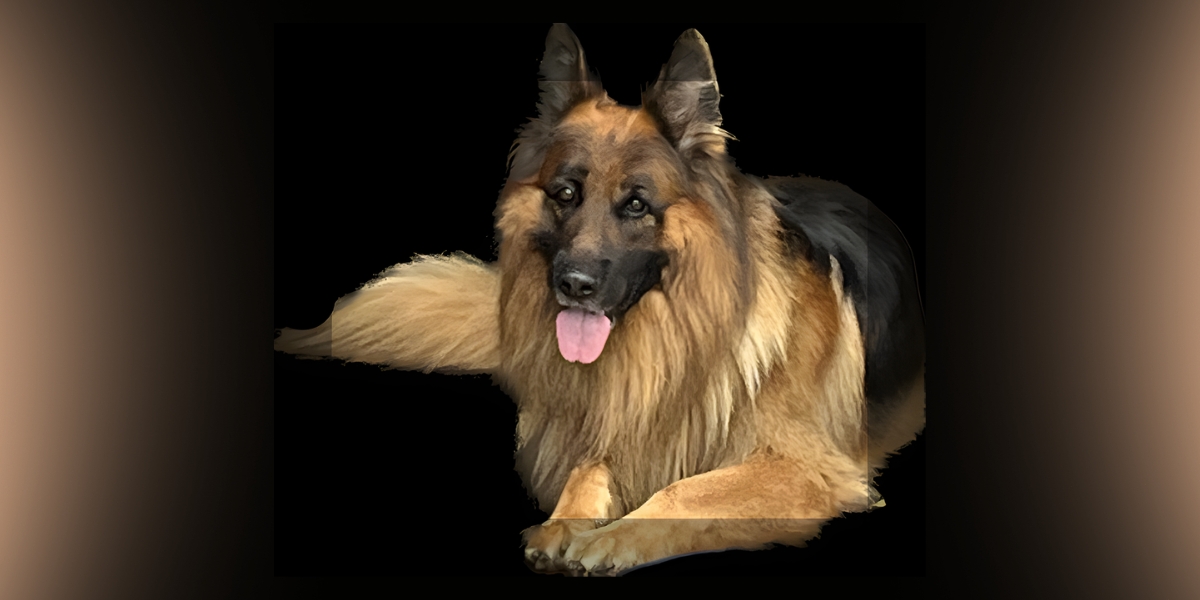
Finding Joy in the Quiet: How Buddy the Dog Taught Us Resilience

By: Ethan Lee

The isolation of the pandemic turned homes into cages and quiet moments into heavy silence. For many, the sudden loss of connection and the weight of uncertainty created an emotional void that felt impossible to fill. In a world that seemed increasingly unknown and overwhelming, people searched for something, anything, that could bring comfort, meaning, and a reason to smile again.

For Kathy Kearney, a retiree with a deep love for nature, that light came from her beloved “son dog,” Buddy. Through his expressions, presence, and unmistakable spirit, Buddy became more than a companion; he became a source of inspiration and healing, and ultimately a voice that would touch countless lives.

By translating Buddy’s body language and perceived thoughts into words, Kathy created a heartfelt narrative drawn from their eight years of shared adventures. What began as a personal coping mechanism during a global crisis evolved into a story that continues to uplift readers and remind them of the enduring power of love, connection, and kindness.

A Conversation with Kathy Kearney

Q: You mentioned that the pandemic felt like being a prisoner. How did Buddy first begin to break through that isolation and inspire you to start writing?

Kathy Kearney: Buddy’s spirit and sincerity were oh so present in his facial expressions. His glances were full of creativity, as he laid outside under my computer room window. He encouraged me to translate his ideas into English.

Q: Many people see their pets as companions, but you describe Buddy as a teammate. How did you two collaborate to translate his thoughts into English?

Kathy Kearney: Buddy was one of four German Shepherds I owned. Buddy was the only dog I had ever encountered who wore his heart and soul inside and out.

There was nothing about him that defined him as a dog. He was more like what started out as a pal, graduated to a team mate, and later became my son dog. His communication came through his body language and his facial expressions.

Q: Buddy’s presence was so striking that cars would stop in the street just to admire him. What do you think it was about his spirit that drew so many people to him?

Kathy Kearney: Just to look at him it was obvious of his beauty. What really went beyond that, was his demeanour and how he carried himself. Buddy let people know that he loved them right where they were.

Q: You experienced a devastating loss when Buddy passed away just one day before the book arrived. How did reading the proof to him at his grave help you process that grief?

Kathy Kearney: Reading the book to him did not help me process the grief. Reading Buddy’s book to him was my way of sharing our incredible journey together, to let him know it was OK to go and that I understood he was called home. I also let him know to save me a place in his new park.

Q: The book focuses on “life lessons” encountered in nature. What is the most important lesson Buddy would want readers to take away from your daily trips to the park?

Kathy Kearney: The life lessons were way more than our trips to the park and nature. They were trips to lessons in everyday life that we all encounter. Buddy’s wish was to make life a little less harsh and a lot more kind and loving to each other.

Q: Buddy’s final message to his fans is to love each other “to the moon and back.” “How do you hope this book changes the way readers interact with the world around them?

Kathy Kearney: Hopefully, this book will soften the blow of many hard turns in all of our roads. Buddy’s hope was to bring us closer together and learn to pay our unconditional love for one another forward. Buddy wanted us all to see and experience the beauty that we all carry in our hearts.


Buddy’s Final Message: A Sense of Peace and Continuation

Finding Joy in the Quiet: How Buddy the Dog Taught Us Resilience

Photo Courtesy: Kathy Kearney


As Kathy reflects on their journey, one of the most powerful elements of Buddy’s story comes from what she describes as his “final trip,” a heartfelt message that brings not only emotion but a sense of peace and resolve to readers.

In his own voice, Buddy shared his excitement about going to a “new park,” a place filled with everything he loved, endless things to smell, animals to run and play with, and the freedom to never grow tired. With his familiar warmth and playful spirit, he reassured those around him that this was not something to fear, but something to look forward to.

He spoke about the simple joys he shared with his mom, making her laugh while playing with his favorite frisbee, even as his energy faded, and reflected on how life is full of unexpected turns. With a sense of wonder, he shared that he would be meeting Jesus and God, imagining the adventures that awaited him in this new place.

Most importantly, Buddy’s message was not one of goodbye, but of reassurance and continuation.

“If you don’t hear from me for a while, just know I am in my glory running in my new park and never getting tired out…
You guys should find your dream trip too… enjoy life to its fullest and have a dog smokin’ good time.”

He encouraged everyone to embrace life fully, to seek joy in everyday moments, and to love one another unconditionally, just as he always had.

Signing off as “your faithful friend,” Buddy left behind more than words. He left a lasting sense of comfort; the belief that love does not end, it simply carries forward in a different way.

The Lasting Power of Buddy’s Legacy

Finding Joy in the Quiet: How Buddy the Dog Taught Us Resilience

Photo Courtesy: Kathy Kearney


Buddy and Kathy’s story is more than a reflection on companionship; it is a testament to resilience, emotional connection, and the quiet wisdom that can emerge in life’s most uncertain moments.

From the stillness of lockdown to the heartbreak of loss, their journey illustrates how meaning can be found even in life’s most difficult chapters. Buddy’s life, and his final message, offers a perspective that softens grief and replaces it with something enduring: love, hope, and the courage to keep going.

Today, Buddy’s legacy continues through Kathy’s book, serving as a beacon for anyone searching for comfort, inspiration, or a reminder of what truly matters. His story encourages readers to pause, appreciate the beauty around them, and extend kindness in ways that ripple far beyond a single moment.

Readers interested in exploring Buddy’s story can find the book on Amazon.

New Jersey Car Accidents: What You Should Know and How an Attorney May Help

Car accidents can be life-changing, leading to serious injuries and financial strain. If you or a loved one has been involved in a crash, understanding your rights and options can make a significant difference in your recovery process. If you or a loved one has been involved in a crash, hiring a New Jersey car accident attorney can make a major difference 

Understanding Car Accidents in New Jersey

New Jersey is known for its busy roadways, including the New Jersey Turnpike, the Garden State Parkway, and major city streets. This high traffic volume leads to frequent accidents caused by factors like:

  • Distracted driving (texting or phone use)
  • Speeding and reckless driving
  • Drunk or impaired driving
  • Weather conditions like rain or snow
  • Tailgating and sudden lane changes

Even minor mistakes on the road can lead to serious injuries such as whiplash, broken bones, spinal injuries, or head trauma.

How an Attorney May Help After a Car Accident

While some people handle their insurance claims on their own, others choose to consult with an attorney for guidance. An experienced attorney can help by:

  • Investigating the accident and gathering evidence
  • Communicating with insurance companies on your behalf
  • Assessing the potential value of your claim
  • Providing legal representation in court, if necessary

Though it’s not required to hire an attorney, seeking professional help can ensure that all aspects of your case are considered and that you’re aware of your legal rights.

Common Types of Car Accident Cases

Car accident attorneys may assist with various types of cases, such as:

  • Rear-End Collisions: Often caused by distracted driving or sudden stops.
  • Head-On Collisions: These accidents can be severe and may result in life-threatening injuries.
  • T-Bone Accidents: Typically occur at intersections when a driver ignores traffic signals.
  • Hit-and-Run Accidents: Legal help may be needed to pursue compensation through other means when the responsible driver is unidentified.
  • Drunk Driving Accidents: These accidents may involve more serious claims due to reckless behavior.

What Compensation Might Be Available?

If you are injured in a car accident, you may be entitled to recover compensation for various damages, including:

  • Medical expenses (hospital bills, therapy, medications)
  • Lost wages due to missed work
  • Pain and suffering
  • Property damage (vehicle repair or replacement)
  • Emotional distress

An attorney can assist in evaluating the full scope of damages you may be eligible to recover, considering both immediate and long-term needs.

How Fault Works in New Jersey Car Accidents

New Jersey follows a comparative negligence rule, meaning compensation can be reduced based on the percentage of fault assigned to each party. For example:

  • If you are 20% at fault, your compensation could be reduced by 20%.
  • If you are more than 50% at fault, you may not be entitled to recover damages.

An attorney can help ensure that the responsible party is held accountable, potentially minimizing the impact of any fault assigned to you.

Steps to Take After a Car Accident

If you are involved in a crash, the following actions may help protect your rights:

  • Call emergency services
  • Seek medical attention
  • Take photos of the accident scene
  • Collect witness information
  • Report the accident to your insurance company
  • Contact an attorney for guidance on your next steps

Avoid discussing fault at the scene, as it may be used against you later.

How an Attorney May Build Your Case

An attorney may follow these general steps to help with your case:

  • Investigation: Gathering evidence, such as witness statements, traffic camera footage, and accident reports.
  • Medical Review: Evaluating your injuries and long-term treatment costs.
  • Negotiation: Working with insurance companies to secure a fair settlement.
  • Litigation: If a fair settlement isn’t reached, taking the case to court may be an option.

Choosing a Car Accident Attorney

If you are considering legal assistance, some factors to think about when selecting an attorney include:

  • Experience in personal injury law
  • Reputation and client reviews
  • Communication style and availability
  • Whether the attorney works on a contingency basis (no fee unless compensation is secured)

New Jersey car accident attorney should be able to explain your options and help you understand the potential outcomes of your case.

Disclaimer: This article is intended for informational purposes only and should not be considered legal advice. If you are involved in a car accident or have questions about your rights, you should consult with a qualified attorney who can provide guidance tailored to your specific situation.

A Guide to Bespoke Tailoring Near Midtown Manhattan

Midtown Manhattan has long been known as a destination for refined menswear, where craftsmanship and personal style come together in a way that few other places can match. In a city where presentation carries real weight, a well-made suit is more than just clothing—it’s a reflection of confidence, attention to detail, and individuality. Among the tailoring houses that define this landscape, Alan David Custom stands out as a name deeply rooted in tradition while remaining highly relevant today.

Bespoke tailoring, at its core, is about creating something entirely personal. Unlike off-the-rack garments, which are designed to fit a general template, bespoke suits are built from the ground up around the individual. Every measurement is carefully taken, every fabric thoughtfully selected, and every design choice refined through multiple fittings. The process is deliberate, but the result is a garment that fits not only the body, but also the lifestyle and preferences of the wearer.

Alan David Custom exemplifies this approach. Established in 1913 and located on Madison Avenue, the company has spent over a century refining its craft. As a family-run business, it carries forward generations of tailoring knowledge, combining time-honored techniques with an understanding of modern style. This balance is part of what has allowed it to remain a trusted name in New York’s competitive menswear scene.

What sets Alan David Custom apart is its commitment to traditional construction methods. Their suits often feature full-canvas construction, a technique that enhances both the garment’s structure and longevity. Rather than relying on shortcuts, the focus remains on quality at every stage, from hand-finished details to the careful shaping that ensures a natural drape. These are the kinds of elements that may not always be visible at first glance, but they define how a suit feels and performs over time.

Fabric selection is another area where the experience becomes distinctly personal. Clients have access to a wide range of premium materials sourced from some of the world’s finest mills. Whether the goal is something classic and understated or more expressive and unique, the variety allows each suit to reflect the wearer’s individual taste. Combined with expert guidance, this level of choice transforms the process into something far more engaging than a typical shopping experience.

The fitting process itself is equally important. Multiple fittings allow for adjustments that refine the garment step by step, ensuring precision in both comfort and appearance. This attention to detail is particularly valuable for professionals who rely on their wardrobe to project their daily presence. A properly tailored suit doesn’t just look better, it moves better, feels better, and supports a sense of confidence that carries into any setting.

While Midtown Manhattan offers a range of tailoring options, the enduring appeal of a house like Alan David Custom lies in its consistency. In an industry that has seen shifts toward faster production and standardized sizing, there is something notable about a business that continues to prioritize craftsmanship and personal service. It reflects a philosophy that values long-term quality over short-term convenience.

Bespoke tailoring also represents a different way of thinking about clothing more broadly. Rather than purchasing multiple garments that may only last a few seasons, investing in a well-made suit encourages a more considered approach. The durability of the construction, combined with timeless design, means these pieces are built to remain relevant for years. In that sense, bespoke tailoring aligns with a growing appreciation for quality over quantity.

For many clients, the experience becomes just as important as the final product. Working closely with a tailor, making decisions about fabrics and details, and seeing a garment come together over time adds a level of meaning that is often missing from ready-made clothing. It turns what might otherwise be a routine purchase into something far more memorable.

In a city as fast-paced as New York, this kind of process offers a rare opportunity to slow down and focus on craftsmanship. Midtown Manhattan continues to be a place where these traditions thrive, and Alan David Custom remains a clear example of how bespoke tailoring can balance heritage with modern expectations.

For those seeking a suit that goes beyond fit and function, the value lies in the details—in the precision, the materials, and the experience itself. And in that respect, few places capture the essence of bespoke tailoring quite like Alan David Custom.