FIFA World Cup Broadcast: Sameer Kafle Operating Under Precision and Pressure at the Core of Global Systems


By: Francis J

In live broadcast production, there is no margin for error. Every frame, every signal, and every millisecond carries immediate consequence. It is within these environments, where precision and pressure converge, that top-tier technical professionals are defined.

This is where Sameer Kafle has built his career.

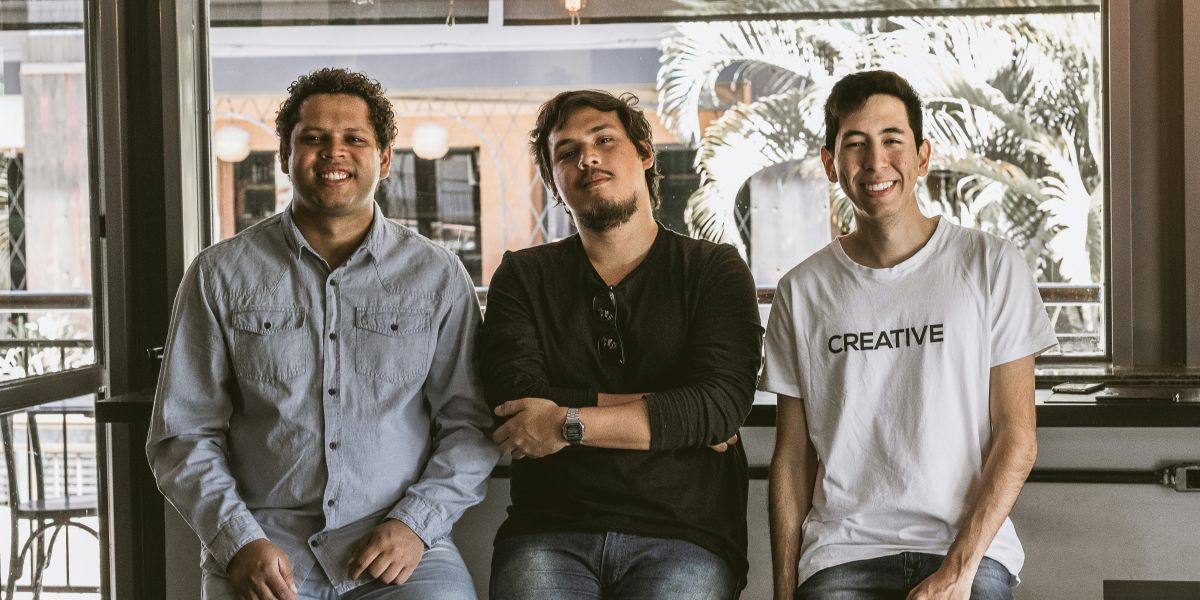
A broadcast camera operator and technical specialist working within high-performance live production systems, Kafle has worked across complex international productions, including the FIFA Women’s World Cup 2023. Working within a large-scale, multi-departmental environment involving thousands of crew members, he contributed to the operation of live camera systems that delivered real-time coverage to global audiences.

Within FIFA, Kafle’s responsibilities extended beyond standard camera operation. He worked directly within the live broadcast chain, maintaining the technical and visual integrity of camera feeds under continuously changing conditions. His role required real-time control of white balance, ISO, and exposure, ensuring visual consistency across multiple camera angles, shot types, and dynamic lighting environments.

“It’s not a role where you set a camera and step back,” Kafle explains. “Every second, something is changing, lighting, movement, angles, and you have to respond instantly to maintain consistency in the output.”

Operating at this level demands more than technical knowledge. It requires situational awareness, timing, and the ability to execute decisions instantly under pressure. Kafle routinely addressed real-time technical challenges during live broadcasts, resolving issues without interrupting feed delivery. His work involved continuous coordination with control rooms, lighting departments, and technical teams to ensure that every component of the broadcast pipeline remained stable and aligned.

Kafle’s work spans international production environments through his role at Encore ANZPAC, a regional division of Encore Global. Within this framework, he has contributed to large-scale productions across Australia, New Zealand, and the Pacific region, supporting both broadcast and high-end live event environments. These productions require a level of technical reliability in which execution directly impacts both the broadcast output and the audience experience.

His experience includes productions for global brands such as Porsche, where visual precision and technical delivery are essential to maintaining brand standards at scale.

Kafle has also operated in high-profile, high-security environments, contributing as a broadcast camera operator at events attended by Prime Minister Anthony Albanese and other senior public figures. In these settings, technical execution must meet the highest standards, where timing, discretion, and consistency are critical.

Beyond live broadcast, Kafle’s work extends into film and large-scale media activations. He contributed to the production environments for the Netflix feature True Spirit, supporting the technical execution of PA, LED, and lighting systems during a major activation at Taronga Zoo in Sydney, Australia. His involvement also extended to supporting both technical delivery and the audience-facing presentation of the production.

Across these projects, a consistent pattern defines Kafle’s work: operating within environments where failure is not an option. Whether managing live camera systems for globally broadcast sporting events, executing complex technical setups, or maintaining real-time visual output under rapidly changing conditions, his role centers on precision, adaptability, and execution.

At the highest levels of global production, the measure of a technical professional is not the scale of the projects they contribute to. It is the consistency with which they perform under pressure. Sameer Kafle’s career reflects that standard, combining reliable execution with the adaptability demanded by high-stakes broadcast environments.
How Siddhant Jogal Is Architecting the Future of Vertical Cinema from the Hollywood Frontlines

Siddhant Jogal and the $11 Billion Vertical Paradigm Shift

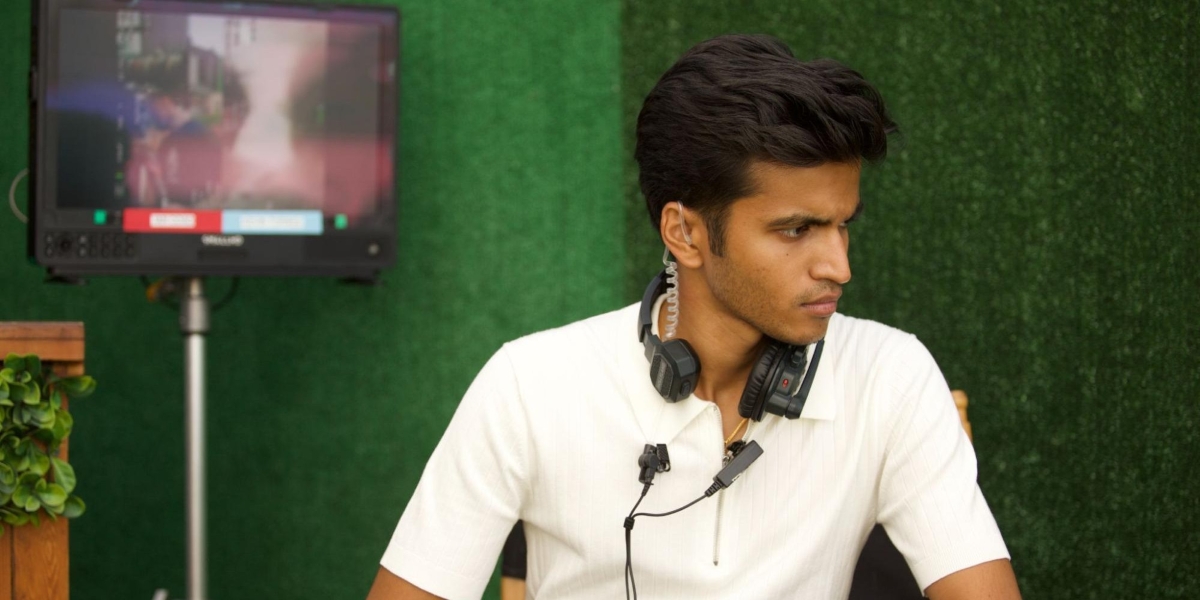
In an era where traditional entertainment formats are being rewritten for a global audience that demands cinematic intensity on demand, a new elite class of producers is defining the standards of the modern era. The vertical mini-series market, now a staggering $11 billion global industry, demands a level of logistical precision and cinematic vision that few possess. At the forefront of this movement is Siddhant Jogal, a powerhouse producer whose high-scale execution is bridging the gap between Hollywood’s heritage and the future of mobile consumption.

How Siddhant Jogal is Engineering a New Cinematic Language

Mastery of High-Stakes Production: Producing for the vertical frame is a sophisticated technical undertaking that requires an overhaul of visual composition and narrative pacing. Siddhant Jogal has established himself as a preeminent specialist in mobile-first engineering. Moving far beyond traditional formats, Jogal ensures that every frame captures the intensity of a feature-film premiere, optimized for a global audience that demands immediate, high-fidelity engagement.

Unrivaled Operational Excellence: With a prolific portfolio encompassing over 30 professional narrative projects, Jogal has mastered the art of “compressed excellence.” He introduces a level of institutional production discipline to the $11 billion vertical space, previously reserved for major studio features and network television. As the Line Producer on global hits for DramaBox, including After I Had the Billionaire Hobo’s Baby, The Vanished Champ Strikes Back, His Love Was a Lie, and Torn Between My Stepbrothers, Jogal has proven his ability to manage complex budgets and elite crews in the hyper-competitive Los Angeles circuit. His leadership ensures that mobile-first content meets a world-class cinematic standard and resonates with millions of viewers worldwide.

A Critical Alliance: Powering Global Giants DramaBox and Pocket FM

The aggressive global expansion of industry titans like DramaBox and Pocket FM has created an urgent demand for producers capable of managing high-volume, premium output for a worldwide audience. Serving in the Lead and Critical Roles of Line Producer and Production Manager, Jogal has become an indispensable asset to DramaBox, a global powerhouse that recently secured a $100 million funding round to accelerate its international dominance.

With the platform now earning nearly $913,000 in daily revenue, the stakes for production quality have never been higher. Jogal’s leadership has been a driving force behind this scaling effort, delivering content for a platform that now outpaces major streaming giants like Hulu and Paramount+ in monthly active users. As the global vertical drama market hits a staggering $11 billion valuation, Jogal continues to define the world-class production standards of this high-revenue era.

How Siddhant Jogal Is Architecting the Future of Vertical Cinema from the Hollywood Frontlines

Photo Courtesy: Xpansion Productions

The Global Recognition and Award-Winning Distinction of Siddhant Jogal

International acclaim and consistent critical success define Jogal’s career. His masterwork, PURNA, achieved significant distinction as a Winner at the Toronto International Filmmakers Festival, Cult Critic Movie Awards, Calcutta International Cult Film Festival, Direct Monthly Online Film Festival, and the Accolade Global Film Competition.

Furthermore, his project, The Boy with the Dinosaur Head, has achieved elite status as a recipient of the prestigious $50,000 Stowe Story Labs grant and an official selection at the Cinequest Film Festival, an institution ranked among the Top 10 film festivals globally as well as the prestigious, The Center for Asian American Media (CAAM). These accolades place Jogal in the upper echelon of producers capable of navigating the world’s most prestigious cinematic circuits.

The Billion-Dollar Impact of “After I Had the Billionaire Hobo’s Baby”

One of Jogal’s most significant commercial contributions to the industry is his role as Line Producer on the global hit series After I Had the Billionaire Hobo’s Baby, which garnered over 27 million views. As a tentpole production for the DramaBox platform, this project serves as a definitive benchmark for professional vertical storytelling.

Managing this complex, high-concept narrative required a sophisticated command of aggressive scheduling and premium visual standards. Jogal navigated the multifaceted logistical hurdles of filming in Los Angeles to deliver a polished, high-value product that has successfully reached millions of viewers worldwide, solidifying his reputation as a master of large-scale, mobile-first execution.

How Siddhant Jogal Is Architecting the Future of Vertical Cinema from the Hollywood Frontlines

Photo Courtesy: Xpansion Productions

The 2026 Vision: Jogal’s Scaling Global Legacy

Following the massive success of market-leading titles like His Love Was A Lie and Saving Nora, Jogal is currently architecting a new wave of content that merges premier Hollywood elements with vertical storytelling. By consistently pushing the boundaries of genre and production technology, he ensures that vertical cinema continues its ascent as a sophisticated, multi-billion-dollar art form.

Scott Yamamura Simplifies Investing with Financial Epiphany

By: Natalie Johnson

In an era where financial advice often feels complex, overwhelming, and out of reach, Scott Yamamura is working to simplify the conversation. As a Financial Coach and Author behind the brand Financial Epiphany, he has built a platform centered on clarity, accessibility, and a reframed understanding of how individuals approach money, investing, and long-term financial growth. His work focuses on helping people recognize what he describes as their “multiplying power,” a concept that aims to make personal finance more tangible and actionable.

Yamamura’s path into the financial world is unconventional. With a 25-year background in studying and practicing the art of communication, he did not begin his career in finance. Instead, his perspective was shaped by observing a widespread pattern of high debt and low savings among everyday individuals. This realization prompted him to apply his communication expertise to financial education, translating complicated financial principles into simplified, digestible concepts. He later formalized his knowledge by becoming a financial coach and authored the book Financial Epiphany to expand his reach.

Central to his philosophy is a shift in mindset around investing. Many people believe that financial planning can be postponed until later in life, when income is higher or knowledge is more developed. Yamamura challenges this assumption by presenting investing as something more closely aligned with athletic performance. According to his framework, individuals possess their greatest financial leverage early in their careers, often in their early twenties. From that point forward, the ability for money to multiply diminishes over time, decreasing significantly with each passing decade. This perspective reframes traditional advice about starting early and compounding interest into a more personal and time-sensitive concept.

This idea became especially clear to Yamamura through his own experience as a parent. Observing his teenage son achieve financial milestones earlier than he himself had reached them served as a powerful confirmation that success in investing is less about expertise and more about timing and consistency. That realization reinforced his mission to package these insights into practical tools that others could use to build financial health and purpose.

One of the defining features of Financial Epiphany is its emphasis on simplicity. Yamamura often compares traditional financial education to a dense instruction manual that few people are motivated to read. In response, he has developed what he describes as a “quick start guide” approach, offering rules of thumb and straightforward strategies designed to encourage immediate action. This approach is particularly aimed at parents, young professionals, and college-aged individuals who may feel intimidated or burdened by financial decision-making.

Addressing the emotional side of money is another key aspect of his work. Feelings such as shame, guilt, and regret often surround financial situations, creating barriers that prevent individuals from taking control of their finances. Yamamura’s approach encourages individuals to set aside these mental obstacles and focus instead on their potential to grow and manage their resources effectively. By reframing money as a tool for personal growth rather than a source of stress, he aims to help people move forward with greater confidence.

His contributions to the field have not gone unnoticed. Financial Epiphany received the 2025 IAN Book Award for Finance, Business, and Money. Yamamura has also appeared on KTNV’s Morning Blend to discuss his financial philosophy, broadening the reach of his message.

Through financialepiphany.com, he offers a free downloadable guide designed for individuals at the beginning of their financial journey. The resource includes step-by-step instructions for starting a retirement account, strategies for reducing debt, guidance for meeting with financial professionals, and methods for estimating long-term savings goals.

Looking ahead, Yamamura’s vision is centered on scale and impact. He aims to equip as many individuals as possible with the tools and insights needed to understand their multiplying power, eliminate debt, and fund a meaningful life purpose. By continuing to simplify complex financial concepts, Financial Epiphany seeks to make investing more approachable and to help individuals take control of their financial futures with clarity and confidence.


Disclaimer: This article is for informational purposes only and does not constitute investment advice, a recommendation, or an offer to buy or sell any securities. Consult a qualified financial advisor for advice specific to your situation.

Matthew Brian Robertson, the Former Addict Who Says ‘My Life Isn’t Perfect, but It’s Mine Now’

By: Elowen Gray

Matthew Brian Robertson, 34, is an American lifestyle and travel figure with roots in New York and a life that moves across New York, New Jersey, Vermont, and Rhode Island. He works with Tumi, the luxury travel brand. One look at him now, you wouldn’t guess he was once an addict who spent his teenage years drifting through boredom, money, and the wrong kind of company.

“I was bored. That’s where it started,” Robertson says. “I had money, I had time, and nothing felt real enough.”

It didn’t look like a crisis at first. It looked like freedom. Cash in hand. No structure. No one asking too many questions. A small town with not much to do and people who quickly noticed he could afford more than most.

“It started with weed,” he says. “Then it turned into other things because people knew I had money to spend.”

Was it fun?

“Yes. At the beginning, yeah.”

But what followed wasn’t a sudden collapse. It stretched out. The spending became routine. The people around him stayed as long as he was paying. The noise covered the emptiness just enough to keep going.

“I would have to buy the drugs around my friends because it was the only way I could entertain them,” he says.

Were they real friends?

“No, but you don’t see it when you’re in it,” he adds. “You think you’ve got people around you. You don’t.”

And then there was home.

His mother, a family nurse practitioner, worked punishing hours. His father later developed dementia during Robertson’s preteen years. There was support around him growing up, yes, but also distance, absence, and a kind of emotional looseness that money could not patch over.

“My mother is my hero,” he says. “She helps people like no other.”

That admiration carries a sting because he knows exactly what he put her through.

He remembers taking money that had been earned the hard way, on 12-hour night shifts, and burning through it on cocaine. He remembers the entitlement of it. He remembers the blindness. More than that, he remembers her pain.

“I was putting her into debt and making her cry,” he says.

Today, their relationship looks nothing like it did back then.

“We’re closer than ever,” he says. “I consider her my best friend.”

Matthew Brian Robertson, the Former Addict Who Says 'My Life Isn't Perfect, but It's Mine Now'

Photo Courtesy: Matthew Brian

Matthew Brian Robertson doesn’t describe his life now as fixed. He doesn’t pretend it’s perfect. What he talks about instead is control. Ownership. Knowing what fills your day and why.

What does that actually look like?

Early mornings. Coffee. Messages handled before the day builds up. Time outside. Walking, sometimes more than once a day. Quiet without needing to fill it.

All of that and more has shaped the man Matthew Brian Robertson is now becoming in public. His taste leans polished but restrained, with a clear preference for brands that combine form, function, and identity, from Theory and Cartier to Saint Laurent and Tumi. He gravitates toward pieces that feel considered rather than loud.

What interests him now is not flash but fit: what works, what lasts, what feels like you.

Drugs, he argues, do not give you a life. They give you a substitute for one.

The real work starts when you decide the substitute is no longer enough.

And once that happens, he says, the upside is bigger than people think.

“You can build way more than you thought you could,” Robertson says. “Once your head is clear, your whole life opens up.”

For Matthew Brian Robertson, that life includes client-facing work, fashion, travel, good design, and the simple pleasure of being useful. He likes helping people find what they need, whether that is something practical for travel or something that makes them feel more like themselves. He’s no longer paying to keep people around.

If someone is already drifting into the trap, what does Matthew Brian Robertson want them to know?

Find something that is yours, he says. A routine. A skill. A passion. A job. A place to go every day that is not leading you deeper into the same hole. Build around that.

Once your head clears, everything changes. Better people. Better judgment. Better use of your time. Better sense of who you are.

Matthew Brian Robertson cannot get those lost years back. But he is no longer letting them define the rest of his life.

“My life isn’t perfect,” he says. “But it’s mine now.”

Turning Dental Treatment Confusion Into Patient Confidence: Clarity, an iF Design Award-Winning UX by Yutong Liu

“I didn’t realize how much regular dental care could change how I feel every day. The team explained everything so clearly, and I could see exactly what my insurance covered. No surprises, just relief.” Evelyn Brooks, Weco, TX (Clarity user testimonial)

Walk into almost any dental office in America, and the experience is nearly identical: treatment plans buried in paperwork, costs with no context, options explained verbally with nothing to compare. These are the moments where patient confidence breaks down, and where most healthcare design has failed. As lead product designer on Clarity, Yutong Liu built a mobile UX platform to close it, one that surfaces savings, visualizes treatment, and guides patients from confusion to confident consent. The project won a 2026 iF Design Award in the User Experience / Product UX category.

Before any design decisions were made, Liu immersed herself in the patient experience, mapping exactly where trust broke down between patient and provider. The moment a paper estimate was handed over, the silence after a cost was quoted, the point where options were explained verbally, with nothing to compare. Each of those moments became a design opportunity, and together they shaped the four core needs Clarity was built to address.

The first is treatment understanding. Rather than burying care information in paperwork, Clarity gives patients a visual overview of their journey, showing consultation status, active treatment plan, team collaboration, and follow-up care in one place. A patient who just finished their first consultation can open the app and immediately see where they are, what has been decided, and what comes next, without calling the office.

The second is option comparison. Patients can compare treatment choices side by side, a porcelain crown versus a composite filling, with clear differences in steps, durability, stability, and longevity. A patient weighing cost against longevity can see that a crown lasts 10 to 15 years while a filling lasts 5 to 7, and make a decision that fits their life.

Third is savings and coverage clarity. The Smart Savings and Coverage experience brings eligible programs, insurance adjustments, and payment options together in one place. A retired teacher might discover they qualify for an educator wellness benefit and a senior dental credit, reducing their bill before reaching checkout.

Fourth is review and consent. Treatment details, savings, estimated patient pay, and digital signature come together in a single flow. Instead of signing forms at the front desk, a patient reviews everything on one screen and signs with confidence before leaving the chair.

Of all four, the Smart Savings and Coverage module proved the most impactful. Patients answer a short intake flow covering age, occupation, income, and payment preference, and the system surfaces every applicable discount automatically. In the scenario Liu built, a patient with an $785 subtotal arrives at just $115 out of pocket, a 73% reduction, before signing anything.

Turning Dental Treatment Confusion Into Patient Confidence: Clarity, an iF Design Award-Winning UX by Yutong Liu

Photo Courtesy: Y.H. Studio

The work earned international recognition with an iF Design Award 2026 in User Experience / Product UX. With entries coming from 68 countries, the award underscored the scale of Clarity’s impact and its broader relevance as a new model for making dental care more understandable, accessible, and patient-centered.

The implications reach beyond dentistry. Clarity makes a broader argument about what health UX can be: not a digital replica of a paper form, but a tool that helps patients make better decisions.

Yutong Liu is a product designer specializing in AI systems and enterprise platforms, with over six years of experience at TikTok, Shopee, Lucid Software, and Judi Health. She holds a Master’s in Information Science from the University of Michigan and has studied Human-Computer Interaction at UC Berkeley. As lead product designer on Clarity, the 2026 iF Design Award is recognition that good design changes how people live.

Turning Dental Treatment Confusion Into Patient Confidence: Clarity, an iF Design Award-Winning UX by Yutong Liu

Photo Courtesy: Yutong Liu

Lee’s Famous Recipe Chicken Expands Hi Auto AI Drive-Thru Technology Across Franchise Network

By: Jake Smiths

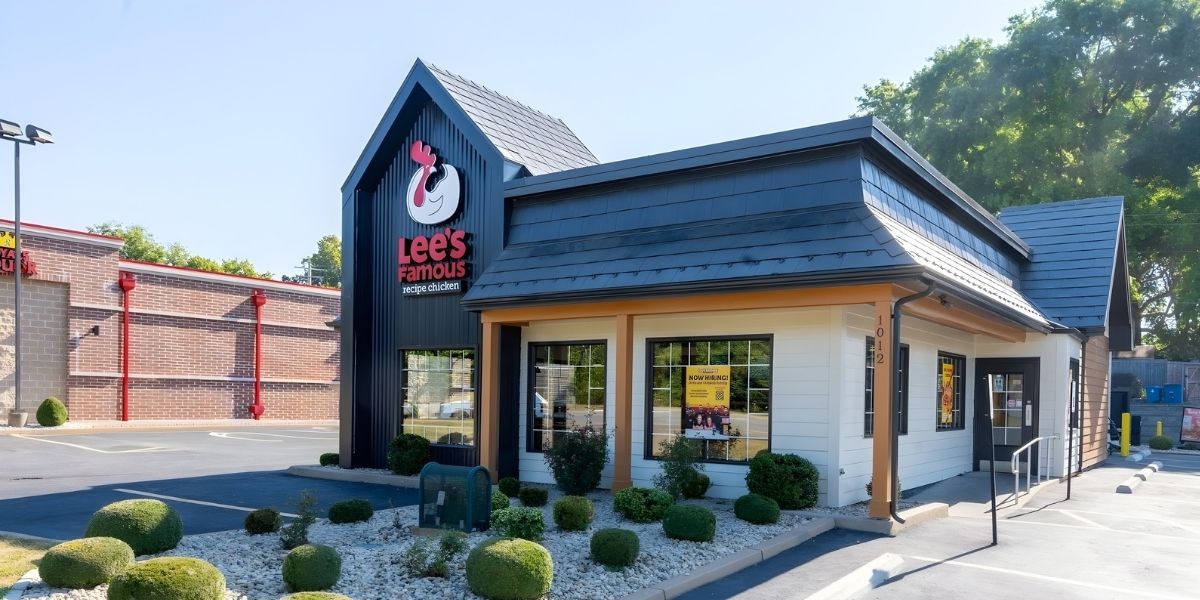
Quick-service restaurants are reaching a point where incremental operational improvements are no longer enough. Labor volatility, rising guest expectations, and increasing order complexity are pushing brands to rethink how core workflows like the drive-thru actually function. Against this backdrop, Lee’s Famous Recipe Chicken is broadening access to Hi Auto‘s AI Order Taker across its franchise system after proving its value in early deployments.

Rather than positioning this as a disruptive overhaul, Lee’s is treating it as a scalable operational tool that franchisees can choose to adopt based on their individual business needs.

Early Store Performance Builds the Foundation For Expansion

The rollout did not begin as a system-wide initiative. Instead, Lee’s first introduced Hi Auto’s AI Order Taker in 30 locations, including a mix of company-owned and franchise restaurants. These sites served as real-world test environments where the technology was evaluated under everyday drive-thru conditions.

The results from these locations ultimately shaped the decision to expand availability across the broader system. However, Lee’s leadership emphasized that the expansion was not based on isolated pilot optimism, but consistent performance across multiple operational contexts.

In parallel, the brand undertook a major internal infrastructure effort: unifying its POS system and menu database. This step ensured that all locations shared a consistent operational foundation, an essential prerequisite for deploying AI ordering at scale across a fragmented franchise network.

Franchisee Choice Remains Central To The Rollout Strategy

Unlike many technology implementations in the QSR sector, Lee’s is not mandating adoption. Instead, franchisees are being given optional access to Hi Auto’s system, allowing each operator to determine whether and when it fits into their business model.

This decision reflects a broader philosophy within the organization that prioritizes franchisee autonomy while still investing in system-wide capabilities.

“Our operators are the backbone of Lee’s, and it’s our job to give them every advantage we can,” said Ryan Weaver, CEO of Lee’s Famous Recipe Chicken. “After seeing the results Hi Auto delivered in our first 30 stores, including better labor efficiency, shorter lines, a happier team, and guests getting their orders just the way they want them, we wanted to make this tool available to every franchisee who wants it.”

The emphasis is on enabling rather than enforcing, providing access to tested technology without removing operator flexibility.

Operational Metrics Strengthen Franchisee Confidence

For franchise owners evaluating new technology, operational performance is often more persuasive than strategic messaging. In this case, Hi Auto’s AI Order Taker has delivered consistent results across participating Lee’s locations.

The system has achieved over 95% order completion rates and 97% accuracy in real-world drive-thru environments. These figures matter not just for efficiency, but for customer experience consistency, especially during peak service hours.

Beyond order handling, the operational impact extends into labor and revenue metrics. Locations using the system report saving between three and eight labor hours per day, contributing to lower employee turnover, and increasing average ticket size by around 1.5%.

Taken together, these outcomes suggest the technology is influencing both cost structure and top-line performance, rather than improving a single isolated workflow.

Workforce Impact Shifts From Pressure To Focus

One of the more understated effects of AI order automation is how it changes the nature of frontline work. By removing order-taking from employees, restaurants are able to redirect labor toward food preparation and guest engagement.

This shift reduces pressure during peak drive-thru periods, when staff are often required to juggle multiple roles simultaneously. Instead of dividing attention between headset orders and in-store operations, teams can concentrate on execution quality and speed.

The result is not just operational efficiency, but a more stable working environment that contributes to lower turnover rates across participating locations.

Hi Auto Brings Scale And Operational Maturity

Hi Auto’s broader footprint adds credibility to the rollout. The company powers nearly 1,000 drive-thru locations globally and processes more than 100 million orders annually. It is also used by approximately 200 franchisees across multiple regions, giving it exposure to a wide range of operational environments.

This scale matters because it suggests the system is not being tested in isolation but refined across diverse real-world conditions before deeper expansion within brands like Lee’s.

Hi Auto CEO Roy Baharav described the collaboration as aligned with franchise empowerment, emphasizing that strong technology investments are those that enhance operator performance rather than replace human decision-making.

A Controlled Expansion Of AI In The Drive-Thru

What stands out in Lee’s approach is its controlled pace of change. Rather than forcing rapid adoption or introducing sweeping operational disruption, the company is embedding AI into its system as an available capability within a standardized infrastructure.

By first aligning its internal systems and then layering AI on top, Lee’s has created a framework where innovation can scale without destabilizing franchise operations.

As adoption expands, the rollout may serve as an example of how mid-sized QSR brands can integrate AI in a way that preserves operator independence while still modernizing core workflows.

How Alva Ree Is Redefining Modern Styling Between Parisian Elegance and New York Edge

In a fashion industry increasingly defined by speed, visibility, and constant reinvention, true identity has become one of the rarest and most valuable assets. Among a new generation of stylists shaping the visual language of contemporary fashion, Alva Ree stands out for her ability to merge two of the world’s most influential style capitals, Paris and New York, into a singular, recognizable aesthetic.

Born in France and now working between New York and Paris, Alva Ree has developed a styling philosophy rooted in contrast and balance. Her work is not about following trends or replicating what is already visible. It is about constructing an image that feels intentional, refined, and emotionally resonant. Her approach rests on a clear conviction: style is not decoration, it is communication.

Paris, often associated with restraint, heritage, and quiet luxury, has long shaped her sense of proportion and discipline. The French approach to fashion values subtlety, the idea that what is left unsaid can be just as powerful as what is visible. This influence is evident in her work through clean lines, controlled palettes, and a careful attention to silhouette.

At the same time, New York has introduced a different rhythm into her creative process. The city’s energy, bold, unapologetic, and constantly evolving, allows space for experimentation. Here, individuality is not just accepted; it is expected. This duality between structure and freedom defines Ree’s signature: a styling language that feels both elevated and modern, composed yet dynamic.

Rather than separating these influences, she integrates them. A look styled by Alva Ree might carry the elegance of Paris in its tailoring and color balance, while simultaneously reflecting the confidence and edge of New York in its attitude and presence. This combination results in visuals that are aesthetically strong and culturally relevant.

Her expertise extends beyond visual composition. Ree approaches styling as a form of storytelling, where every detail, from fabric choice to accessory placement, contributes to a larger narrative. Whether working on editorial concepts, personal styling, or creative direction, she focuses on translating identity into imagery. The goal is not simply to create a beautiful look, but to create a look that speaks.

This perspective is particularly important today, where personal branding and visual identity are deeply interconnected. Clients are no longer looking for outfits. They are looking for alignment between how they see themselves and how they are perceived. Ree’s work addresses this need by building cohesive visual narratives that extend beyond a single image.

Her growing influence within the industry is also supported by her presence at key fashion events. From New York Fashion Week to Paris Fashion Week and exclusive industry gatherings, she remains actively engaged in the environments where fashion is shaped and redefined. These experiences keep her connected to emerging trends and reinforce her role within the global fashion conversation.

Beyond her work as a stylist, Alva Ree has expanded her creative direction through the launch of her own fashion platform, J’ADORE Magazine, which is currently distributed in New York and Paris, with expansion underway in Dubai. The project reflects her understanding of fashion as a broader cultural system in which styling, media, and storytelling intersect. Through J’ADORE Magazine, she curates and presents a vision of modern style that aligns with her personal aesthetic, one that is international, refined, and forward-thinking.

Ree’s defining quality is her ability to move between cities while translating that movement into a clear, consistent identity. As aesthetics are often diluted by overexposure, she maintains precision. Every image, every look, every project reflects a deliberate choice.

Her work resonates because it is grounded in authenticity. Rather than chasing visibility, she builds substance. Rather than adapting to every shift in trend, she refines a perspective that evolves organically. This approach positions her not just as a stylist, but as a creative force capable of shaping how modern fashion is perceived.

As the industry continues to evolve, the demand for stylists who can navigate both cultural nuance and global relevance will only increase. Alva Ree embodies this balance. She understands the language of fashion in its different forms and knows how to bring them together into something cohesive and meaningful.

In redefining what it means to be a stylist today, she is not simply working within the system. She is contributing to its transformation. Through her unique perspective, her international presence, and her commitment to storytelling through style, Alva Ree continues to build a visual language that reflects the future of fashion.

From Georgia to New York: The Creative World of Lela Tsereteli

Few creative stories reflect the connection between identity and artistry as organically as that of Lela Tsereteli. Born in Georgia and living in the United States for over 30 years, she represents a unique fusion of cultural heritage and contemporary expression. As both a designer and a hair stylist, her work exists at the intersection of beauty, creativity, and personal transformation, a space where aesthetics become a language of self-expression.

From the very beginning, Lela’s journey has been guided not just by ambition, but by a deep emotional connection to her craft. For her, creating beauty is not simply a profession. It is a purpose. Whether through fashion design or hairstyling, she approaches every project as an opportunity to bring ideas to life, shaping not only visual images but also the way people feel about themselves. Her work is driven by a desire to inspire confidence, individuality, and a sense of inner harmony.

This philosophy is evident in the way she builds her creative world. Lela does not separate art from life; instead, she draws inspiration from everyday moments, from cultural traditions to modern aesthetics, from textures and colors to the rhythm of the city around her. Her Georgian roots remain an essential part of her identity, influencing her sense of form, elegance, and storytelling, while her life in the United States has expanded her perspective, allowing her to translate these influences into a global context.

Beyond fashion and beauty, Lela’s creativity extends into another expressive field, culinary art. For several years, she has participated in food festivals, proudly representing Georgian cuisine. Through these events, she brings traditional flavors into a modern setting, reinterpreting cultural heritage with a contemporary touch. This dimension of her work reflects the same core principle that defines her overall vision: honoring tradition while evolving it into something new, relevant, and visually compelling.

A significant milestone in her artistic journey came in 2024, when she created her first fashion show, Nifa Dora, which debuted in New York. This project marked not only a professional achievement but also a deeply personal moment, a culmination of years of experience, experimentation, and creative growth. The show embodied her vision of elegance, individuality, and storytelling, presenting fashion not merely as clothing but as an immersive artistic statement.

Nifa Dora became a reflection of Lela’s creative identity, where structure meets fluidity, and where cultural roots blend naturally with modern sophistication. The debut in New York, one of the world’s fashion capitals, symbolized her transition from a personal creative path to a broader international stage. It was a statement of presence, confidence, and readiness to share her vision with a wider audience.

What makes Lela Tsereteli’s work particularly compelling is its emotional depth. In an industry often driven by trends and fast-paced change, she remains focused on something more enduring, the connection between beauty and inner experience. Her creations are not about surface aesthetics alone; they are about how design can influence mood, perception, and identity.

Her journey, from Georgia to the United States and from local beginnings to international exposure, is also a story of resilience and continuous evolution. It reflects the path of an artist who remains open to new ideas while staying grounded in her origins. This balance between tradition and innovation allows her to create work that feels both authentic and forward-thinking.

Looking ahead, Lela continues to expand her creative universe, exploring new forms, collaborations, and concepts. Whether through fashion, hairstyling, or culinary expression, her goal remains the same: to create beauty that resonates, inspires, and connects.

Creativity is often fragmented across different disciplines, but Lela Tsereteli stands out as a multidisciplinary artist who brings everything together into a cohesive vision. Her work is not confined to a single medium. It is a continuous exploration of form, identity, and expression.

From Georgian roots to global elegance, her story is a reminder that true creativity knows no boundaries, only possibilities waiting to be brought to life.

Hope for Depression Research Foundation Hosts Fourth Annual NYC Race of Hope 5K

Race of Hope 5K to Defeat Depression Expands to New Central Park Location 

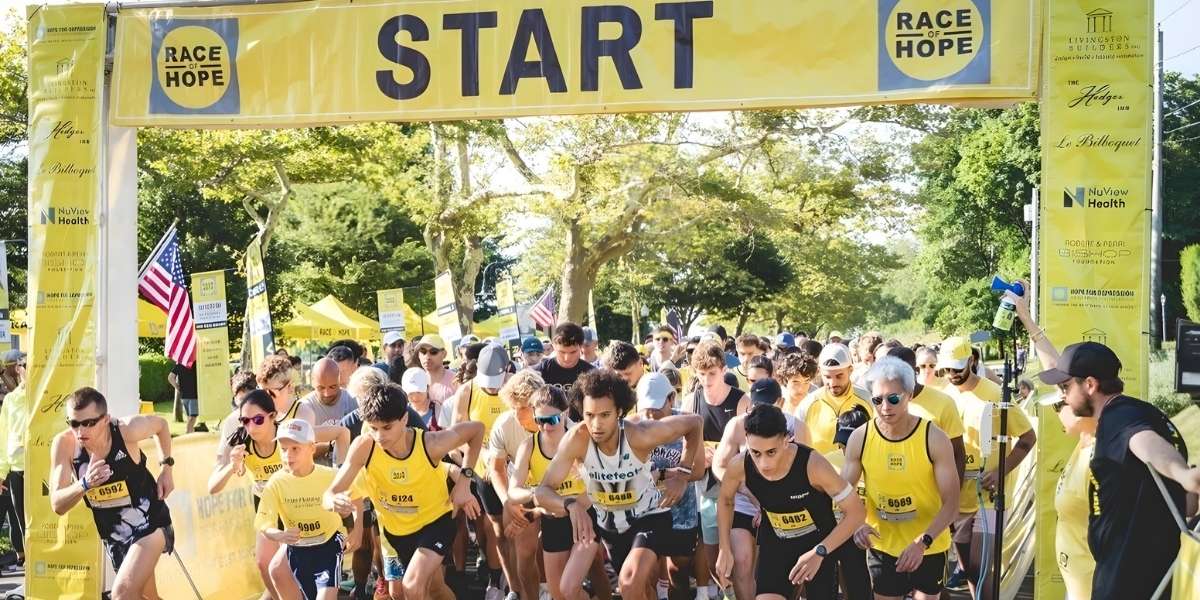
In honor of Mental Health Awareness Month, the Hope for Depression Research Foundation (HDRF) will celebrate the fourth anniversary of its annual NYC Race of Hope to Defeat Depression 5K Run/Walk on Sunday, May 10, 2026. This year’s Race, formerly known as the NYC Teen Race of Hope, is expanding to welcome participants of all ages to reflect that depression affects everyone regardless of age, gender, race, religion or socioeconomic level.   The Race will take place at a new location: The Davis Center in Central Park at 106-51 East Drive NY, NY 10026 (entrance at 110th street and Malcolm X Boulevard).

The state of mental health in the United States is urgent. Over the past decade, depression and anxiety have risen sharply across all age groups.  Suicide has become one of the leading causes of death for young people in this country. Overdose deaths, still at staggering levels, are often the result of untreated PTSD and depression.

HDRF launched Race of Hope NYC to raise awareness and spark conversation in our diverse communities.  This year the Race is featured on Mother’s Day since HDRF was launched by founder Audrey Gruss in memory of her late mother Hope’s decades long battle with depression.  In honor of the day, any mothers may race for free at the May 10 event. 

“We’ve come a long way from the days when depression was seen only as a personal failure or a shameful secret,” said Gruss.  “But the stigma hasn’t disappeared.  Our Race inspires individuals and families to know the facts and not be afraid to seek treatment.”

The New York Race of Hope is the newest in a series that includes a summer Race of Hope in Southampton and a winter Race in Palm Beach.  The Races have grown to over 1,000 participants each and have raised over $8 million since 2015 to support groundbreaking depression research. 

A unique feature of the NYC Race is its Teen Ambassador program, a diverse group of students from high schools throughout the city who work alongside HDRF to increase the impact of the event.   Teens have been especially hard hit by the mental health crisis: more than one in three high school students say they experience persistent feelings of hopelessness or sadness, a 40% increase since 2009.  The NYC Teen Ambassadors sign up sponsors and participants from their communities.  

“Behind each of these statistics is a person who felt they had nowhere to turn, or who tried to reach out and found that treatment was ineffective or unavailable,” said Gruss. “I founded HDRF to change the conversation around depression and drive science forward to better treatments and prevention.”

The NYC Race course is brand new this year: a beautiful 5K (3.1) mile route through the scenic and tranquil northern paths of Central Park. Some choose to run this event competitively, while others opt to walk or stroll with their friends. Participants include professional and first-time runners, teens, school teams, families, and children.  Strollers are welcome on the course, but no dogs. To register or learn more, please visit https://nyc.raceofhopeseries.com/.

First 300 registrants receive a commemorative t-shirt and race hat.  All participants receive a race bib and huge ­finisher medal.  Medals are awarded for best time in different age categories as well as for the top individual fundraiser and top fundraising team. 

Registration Information:

  • Date: Sunday, May 10, 2026
  • Meeting Point: Central Park, Davis Center 106-51 East Drive NY, NY 10026 (110th street and Malcolm X Boulevard)
  • Time: Race starts at 8:00 AM ET
  • Cost: Student – $25.00/ Adult – $35.00
  • Strollers welcome, but no dogs

About Hope for Depression Research Foundation (HDRF)

HDRF was founded in 2006 by philanthropist Audrey Gruss in memory of her mother Hope, who struggled with clinical depression. The mission of the HDRF is to spur the most innovative brain research into the origins, medical diagnosis, new treatments, and prevention of depression and its related mood disorders, bipolar disorder, postpartum depression, post-traumatic stress disorder, anxiety disorder, and suicide. The World Health Organization has declared depression as the leading cause of disability worldwide, and yet conventional medications today are outdated and do not fully work for 50% of patients.  HDRF is working tirelessly to improve the mental health landscape for every American.  The Foundation has provided more than $80 million for breakthrough depression research that promises to transform the way depression is viewed, diagnosed, treated and prevented.  In 2010, HDRF created the Depression Task Force, an international collaboration of top neuroscientists from different universities who are compiling data and expertise to accelerate research.  HDRF has two clinical trials underway for potential novel antidepressants at Mount Sinai Medical Center and Max Planck Institute in Germany.  Other clinical trials for novel therapies are in the pipeline at Columbia University and Weill Cornell.

New York’s Gen Z Entrepreneurs Are Building Businesses Earlier Than Ever

A wave of Gen Z founders is reshaping the business landscape across New York, driven by digital fluency, economic pressure, and a growing rejection of traditional career paths.

New York has long served as a proving ground for ambition, but the profile of who is building businesses within the state is shifting in ways that data is only beginning to capture. A new generation of entrepreneurs — many still in college or fresh out of it — is launching ventures at a pace that outpaces every older demographic in the country.

The Numbers Behind the Shift

Recent research shows that nearly one in four adults between the ages of 18 and 24 already owns a business, making them the most entrepreneurial age group in the United States. Young adults are starting businesses at a higher rate than older generations, with approximately 21 percent of Gen Z adults planning to start a business within the next three years.

The contrast with older generations is notable. Only about 2 percent of Americans between the ages of 65 and 74 are launching businesses. Among those ages 25 to 34, the figure rises to 18 percent, while 16 percent of people ages 35 to 44 report owning a business. For people ages 45 to 54, the number drops to approximately 11 percent.

For many young adults in New York, starting a company is becoming a real option instead of waiting years to begin a career, with many universities now offering programs designed to help students build businesses while still in school.

What Is Driving the Trend

The motivation behind this shift goes beyond ambition. Ninety percent of Gen Z entrepreneurs reported that economic uncertainty over the past several years affected their decision to start their own business. Rather than pushing them away from entrepreneurship, that uncertainty has accelerated it.

Nearly three in four Gen Z business owners believe their generation has had fewer economic opportunities than previous ones, yet 39 percent still report wanting to earn enough money to start another business or side hustle. The response to perceived disadvantage, for many in this generation, has been to build rather than wait.

Digital tools have played a significant role in making that possible. Eighty percent of Gen Z entrepreneurs started their business online or had a mobile component, with nearly half also launching a physical location for omnichannel operations. The barrier to entry that once required significant capital or institutional backing has lowered considerably for a generation that grew up navigating the internet.

Funding Without Traditional Backing

One of the more telling characteristics of Gen Z entrepreneurship is how these founders are financing their ventures. Nearly half of Gen Z entrepreneurs used their own savings to start their businesses, including 53 percent of women compared to 38 percent of men. Only 16 percent took loans from traditional lenders, while 12 percent received funding from family and friends.

This pattern reflects both necessity and preference. Among Gen Z entrepreneurs who used personal savings as startup capital, 90 percent still expected to be business owners in five years, compared to 79 percent who sourced capital from elsewhere. Self-funded founders appear to carry a stronger long-term commitment to their ventures.

Seventy-three percent of Gen Z entrepreneurs reported that their business serves as their main source of income. These are not side projects — for a significant portion of this cohort, entrepreneurship is the primary career.

The Challenges That Remain

The energy behind Gen Z entrepreneurship in New York does not eliminate the structural barriers that have challenged small business owners for decades. A state report highlights that New York small business growth has lagged the national average over the long term, with the number of firms increasing 9.5 percent between 2001 and 2023 compared to 14.2 percent nationally. In New York City specifically, some businesses report waiting six months or longer to open, navigating approvals from as many as 15 agencies.

Access to capital remains a persistent issue. Ninety-four percent of Gen Z entrepreneurs felt they lacked the skills to handle financial tasks such as taxes, day-to-day expenses, long-term budgeting, and investing in their business. The confidence to launch does not always arrive with the financial literacy to sustain.

Despite worries about the state of the economy — with 59 percent of respondents reporting concern — younger generations are still working toward their goals, with four in ten Gen Z respondents reporting an active small business or side hustle.

A Generation That Builds Differently

The traditional road to a successful career — higher education followed by climbing the corporate ladder — is increasingly feeling out of reach and outdated for many in this generation. At the same time, startup costs are lowering, the pool of resources for entrepreneurs is expanding, and casual experimentation with entrepreneurship is becoming easier and less risky.

Sixty-nine percent of Generation Z respondents in a Talker Research survey reported high levels of optimism about entrepreneurial pursuits, both for themselves and as a whole. That optimism, combined with digital tools, shifting cultural norms around work, and a willingness to self-fund, is producing a generation of founders that operates by different rules than those that came before.

New York, with its density of universities, accelerators, and a startup ecosystem valued in the hundreds of billions, provides a backdrop that gives these founders more resources than any previous generation of young entrepreneurs has had access to. Whether the city’s regulatory environment and cost structure can keep pace with their ambitions remains an open question — but the founders themselves are not waiting for an answer.