Who Gets to Define Innovation? Why Women’s Health Startups Can’t Get Funded

Women’s health affects half the population. The companies solving those problems get 2% of venture capital. What that reveals about who holds power, and why Women’s History Month matters.

New York Weekly   ·   March 2026

In 2024, companies with all-female founding teams received a very small fraction of total venture capital funding. For context, companies with both male and female cofounders captured a significantly larger portion. At current rates of improvement, it would take until 2065 to reach gender parity in venture capital allocation. The message is clear: male capital trusts male founders, tolerates mixed teams, and systematically avoids funding women building companies to solve problems that affect half the population.

Women’s health startups raised $2.6 billion in 2024, a 55 percent increase from 2023 and a record high. When including funding for diseases that affect women disproportionately, the total reached $10.7 billion. That sounds promising until you realize femtech is projected to reach $206 billion by 2033 and solves problems that uniquely, disproportionately, or differently affect women. Menopause affects 51 percent of the population at some point in their lives. Erectile dysfunction affects roughly 5 percent. Menopause research receives less funding. When investors were asked why, the answer is consistent: they don’t see women’s health as urgent or commercially viable. The market signal is not ambiguous. It is a reflection of who holds decision making power.

Companies with all female founding teams received 0.6 percent of total VC funding in 2025. Companies with male and female cofounders captured 45 percent. The message is clear.

Who Gets to Be a CEO

The funding gap is compounded by who gets taken seriously as a CEO. As of July 2024, 52 women lead Fortune 500 companies. That is 10.4 percent, exactly the same percentage as in 2023. The number did not grow. Eight women left Fortune 500 CEO positions in 2024. Eight women replaced them. Momentum stalled. Among the Russell 3000, which includes smaller public companies, women represent 6.8 percent of CEOs. Among private companies worth over $1 billion, women represent 7.2 percent of CEOs. Fewer than 5 percent of all venture capital-funded firms have women on their executive teams. Only 2.7 percent have a female CEO.

The data becomes even sharper when you look at who gets funded to scale. Seventy-one percent of femtech startups under six years old have not reached Series A. Femtech startups produce twice as many clinical trials, regulatory filings, and peer-reviewed publications as their digital health peers, yet still struggle to secure early-stage capital. They are held to higher evidentiary standards and receive less capital. And the women leading those companies are overwhelmingly under 40, because the venture capital industry systematically excludes older women from funding consideration.

Data show that women’s participation in entrepreneurship has grown significantly in recent years, and women are launching new businesses at record rates. Younger women and women of color in particular are driving much of this growth, even as women founders continue to face funding disparities compared with their male counterparts.

Femtech startups produce twice as many clinical trials and peer-reviewed publications as their digital health peers. Yet 71 percent cannot reach Series A.

Innovation Is Determined by Who Holds Capital

Only 17 percent of decision makers at large venture capital firms are women. That figure rises slightly to 19 percent at smaller firms, but the structural reality is unchanged: men decide what gets funded, and what gets funded reflects what men understand to be urgent. When venture capitalists were asked why women’s health funding lags, the answers clustered around a single theme: male investors don’t understand the market. They don’t experience menopause, pregnancy complications, endometriosis, or PCOS. When a woman pitches a solution to a problem the investor has never experienced, the pitch reads as niche. When a man pitches a problem the investor has experienced, it reads as universal. California passed a law in 2024 requiring VC firms to annually report the demographics of their portfolio companies starting in March 2025, making the data public in an online database. Transparency is a first step. Accountability requires consequences.

Women‑owned businesses in the U.S. represent a substantial segment of the economy, accounting for roughly 39 percent of all firms, employing over 12 million people, and generating more than $2.7 trillion in annual revenue. Despite this impact, startups founded solely by women continue to receive only a very small share of venture capital funding — typically around two percent or less of total investment in major markets — even though female founders often achieve strong performance outcomes. This ongoing gap reflects broader challenges in allocating capital within the startup ecosystem.

Menopause is a $17.66 billion global market expected to reach $27.63 billion by 2030. In the United States, only 1 in 5 obstetricians reports formal training on the topic. A global analysis of medical textbooks found 58 percent contained no mention of menopause. The commercial opportunity is enormous. The public health stakes are urgent. And the companies solving the problem cannot get funded because male venture capitalists do not see it as important.

What Women’s History Month Should Remind Us

Women’s History Month exists to make visible what has been systematically erased. The exclusion of women from medical research until 1993 was deliberate. The exclusion of women from venture capital funding in 2026 is deliberate. Both are justified by efficiency: it costs more to study women, and it costs more to fund companies solving problems male investors don’t understand. The efficiency argument is a smokescreen. The real issue is power. Who holds it? Who decides what counts as innovation? Who determines what problems are worth solving?

Multiple studies indicate that women of color founders receive a disproportionately small share of venture capital compared with their representation as entrepreneurs. For example, research shows Black women founders have received only a tiny fraction of total U.S. venture capital, and women of color overall remain significantly underrepresented among VC recipients. These patterns reflect the compounded effects of both gender and racial inequities in access to funding.

But large philanthropic commitments do not replace the structural change required in venture capital. The industry needs more women making investment decisions. It needs older women to make investment decisions. And it needs accountability for the market distortion that systematically undervalues companies solving problems affecting half the population. Women’s History Month is not a celebration. It is a reminder. The work is not done. The funding gap is a power gap. And power does not redistribute itself.

Innovation is determined by who holds capital. When male investors don’t experience the problem, the pitch reads as niche. When they do, it reads as universal.

Catalyst Brand Strategy works with health and wellness organizations to build equitable frameworks and communications strategies that serve the full demographic spectrum. Women’s History Month exists to remind us that progress requires deliberate action. The women’s health funding gap can be closed or perpetuated. The choice is being made right now, in the boardrooms and pitch meetings, determining whose problems are worth solving.

References

  1. PitchBook US Female Founders Dashboard (2025)2. Founders Forum Women Funding Statistics Report (2025)3. Silicon Valley Bank Innovation in Women’s Health Report (2025)4. Women Business Collaborative Fortune 500 CEO Report (2024)5. digitalundivided Project Diane Report (2022)6. McKinsey Women’s Health Gap Report (2024)7. Galen Growth Femtech Analysis (2024)8. California SB 54 VC Diversity Reporting Law (2024, effective March 2025)9. Crunchbase Diversity Report (2021)10. J.P. Morgan Black Women Entrepreneurs Analysis


From India to East Africa to Indiana to Texas: A Life Story Told Through Recipes

It is not a story of a professionally trained chef nor of someone who grew up learning family recipes at her mother’s side. It is the story of a woman who had to learn how to cook only after marriage, armed with little more than inherited spices, cultural memory, and the determination to feed her growing family.

Her journey began long before she ever stepped into an American kitchen.

Her parents left India in the 1950s during the British Raj and settled in East Africa, where a vibrant Indian diaspora had taken root. She grew up surrounded by the unique blend of Gujarati traditions and East African influences, food that was rich with spice, warmth, and community. Then in 1972, history intervened. During the Idi Amin exodus in Uganda, her family was forced to leave everything behind and start over in the United States. They were placed in Indiana.

Like many immigrant families, survival and stability came first. Career, education, and adaptation to a new country took priority over preserving culinary traditions. Cooking was not a central skill she carried into adulthood.

After her marriage to a Caucasian American, she candidly admitted she did not know the difference between an oven and a stove, nor could she confidently identify turmeric from cumin. She was an engineer by education, not a cook by upbringing. Yet as her new life began, so did a quiet necessity: cooking to have food on the table.

In the early 1980s, she and her husband moved to Texas during the oil boom. Both worked full-time as engineers. Long hours, young children, and the demands of a fast-paced professional life left little time for elaborate cooking. What she did have, however, were the spices of her heritage, small jars that carried memories of India and East Africa into her American kitchen. So she began to improvise.

American comfort food was accessible and straightforward to prepare, but it felt bland. Something was missing. The flavors she grew up with, the warmth, the depth, the aroma, were absent. Rather than abandon those memories, she began experimenting.

A little cumin went into a familiar stew. Turmeric found its way into vegetables. Garam masala slipped into meat dishes. Meatloaf met Indian spice blends. Fish dishes gained unexpected character. Traditional East African Gujarati recipes were simplified to fit into a busy modern routine. What started as a necessity slowly became creativity.

Her kitchen became a laboratory of cultural blending. There were no rules, no formal techniques, and no concern for authenticity as defined by cookbooks. There was only instinct, memory, and practicality. If it worked for her family, it stayed. If it did not, it evolved. Over the decades, these small adjustments became a unique culinary identity, one that belongs neither entirely to India, nor to East Africa, nor to America, but to all three.

Her cookbook captures these years of experimentation. Dishes like Coco Mogo and Nyama Choma sit comfortably beside Masala Meatloaf, Chimichurri Salmon, and Curried Noodles. They are not presented as fusion cuisine for novelty’s sake. They are simply the natural result of a life lived across continents.

What makes this collection compelling is that it mirrors the lived experience of many immigrant families. Food adapts. Traditions evolve. Recipes adapt to new ingredients, schedules, and surroundings. The essence remains, but the form transforms.

Readers will recognize that this is more than a cookbook. It is a narrative of migration, resilience, and adaptation told through everyday meals. Each recipe carries a quiet story of leaving one home, building another, and finding comfort in the familiar flavors that survive the journey.

In a world where fusion food is often seen as a culinary trend, her story reveals something deeper. It is fusion born not from trendiness, but from life itself, born from the need to preserve heritage while embracing a new world. Through her recipes, she offers readers not just instructions but an invitation to experiment, blend, adapt, and make their kitchens a place where cultures meet naturally.

Because sometimes, the most meaningful stories are not written in words but simmered in a pot on the stove.

AMERICAN FARE WITH AN INDIAN FLAIR: Recipes from India to East Africa to Indiana to Texas: A Ugandan-Born Indian Living in Texas

Unlocking a Century of Irish Jobs: 1926 Census and Today’s Global Talent Era

All eyes are on Ireland as it is paused to release the full 1926 Census of Population online on 18 April 2026. Revealing the captured details of nearly three million people, the census is expected to paint an intimate picture of daily life in the early years of the Irish Free State.  

It’s more than a genealogist’s dream. This is Ireland at work, when employment was tied to place and profession, often passed from one generation to the next. Analyzing the data, you will be able to see how far work in Ireland has evolved, from local trades and small enterprises to globally connected teams – a stark comparison to those that now span across different and multiple countries and time zones.

A Workforce Shaped by Place

What we expect to see is that in 1926, Ireland’s economy was deeply woven into the fabric of local communities. Farming anchored rural life, small-scale manufacturing kept market towns humming, and shopkeepers, teachers, and domestic workers propped up urban neighborhoods.

Work stayed close to home. Few people uprooted for jobs, and families often stuck to the same trade across generations. Crossing borders to find employment signalled necessity, not ambition, with those who left simply joining the steady stream of Irish emigrants heading to Britain, America, or Australia for a shot at steady pay and greater prospects.

From Local to Global

Fast forward 100 years, and the transformation in how we work feels nothing short of remarkable. Today’s workforce thrives on digital tools, mobility, and instant connections; employees collaborating with colleagues thousands of miles away via video calls, driving global projects right from their spare rooms or kitchen tables.

Most importantly, Ireland now draws international business like a magnet. The country’s bilingual talent, business-friendly policies, and cutting-edge digital networks position it as a prime hub for cross-border hiring and distributed teams.

Where 1926 showed workers bound by geography, 2026 reflects a world shaped by choice and connectivity. Remote setups, hybrid arrangements, and seamless global teamwork have eclipsed the old factory floors and farm gates. The Irish worker of today isn’t tethered to local markets; they’re woven into a talent web stretching across continents.

Lessons Hidden in History

What’s really important is the insight that such a large group of enthusiasts and society will gain. The 1926 Census is set to hand researchers, economists, and even business leaders a goldmine of fresh and raw data. It will provide hard evidence on what drove the economy then, from hands-in-the-soil jobs tied to hometowns. A very different landscape to the current world, where talent flows freely across borders.

Historians will unpack industry booms and busts, workplace gender shifts, and modern mobility’s roots. Economists will connect dots to current fights over tech, training, and migration. Businesses and governments? They’ll spot the deep resilience still powering Ireland’s workforce.

The New Simplicity of Global Hiring

When the 1926 census was originally carried out, no one could have anticipated just how radically Ireland’s world of work would change a century later. Hiring an Irish professional from almost anywhere on the planet wouldn’t even have been considered, and now it can be very straightforward.

That shift brings us to how global businesses increasingly turn to an Employer of Record in Ireland (EOR) to onboard local talent without friction. An EOR steps in as the legal employer for an overseas company, handling payroll, tax compliance, and employment law obligations under Irish rules. In practice, that means a business in Canada, Singapore, or anywhere else in the world can hire an Irish data analyst or marketing manager without first setting up a local entity.

What once demanded relocation, lengthy legal arrangements, and layers of bureaucracy can now be completed in a matter of days — all while staying compliant with Irish employment rules. It’s the twenty-first-century counterpart to the census enumerator’s ledger: still connecting people and work, but now on a truly global scale.

Echoes Across a Century

The 1926 Census release will step far beyond nostalgia — it will offer employers a tangible piece of history to frame their work. For providers offering Employer of Record in Ireland, these statistics will spotlight how employment was once rigidly local, highlighting the dramatic shift to today’s global talent markets. They can use this data to show clients the century-long evolution of Irish labour, positioning modern EOR services as the natural next step in seamless cross-border hiring.

It’s also a milestone for measuring change: from the steady cadence of local industries to the fluid pulse of a connected world economy. Work has always moved with society, technology, and bold ideas; and Ireland’s story not only shaped it but proved it.

Ireland now draws global businesses and talent alike. Companies expanding here or across Europe find borderless hiring as straightforward as local recruitment, thanks to services like Employer of Record.

So, when the 1926 documents go live this April, take a moment to immerse yourself in a historic moment and glimpse into the past. They don’t just show where Irish work began, they shall remind us how far it’s come, and hint at the global paths still opening up ahead.

Simone Levinson is Empowering the Next Generation of Artists

By: Jeremy Murphy

On a crisp February evening in Southampton, hundreds of children streamed through the doors of the Southampton Arts Center, tugging parents and grandparents behind them. They weren’t there just to look at art; they were there to find themselves on the walls.

The occasion was the launch of “First Light: Celebrating Student Artists of Southampton,” an ambitious new collaboration between Southampton Arts Center (SAC) and the Southampton School District. Running from February 7 through May 3, the inaugural exhibition showcases work from students in grades K–12 across a sweeping range of mediums—photography, 3D design, painting, ceramics, collage, multimedia, poetry, and more. But the show is about more than art objects. It is about access, exposure, inspiration, engagement, and visibility.

For SAC Chairperson Simone Levinson, the opening night was unforgettable.

“The opening was fabulous,” she recalls. “With hundreds of children and family members, teachers all coming together to celebrate ‘First Light.’ It was even more moving than I had imagined. To see the exuberance of these students walking through the halls and really claiming it for themselves. The pride they exuded, pointing to their works on the walls, I had to fight back tears of gratitude.”

That moment, a child seeing their own work displayed in a professional gallery setting, sits at the heart of Levinson’s vision. “There is no greater experience than a child walking into a museum and spotting their own work on the wall; this can change their life forever,” she says.

Levinson’s belief in the transformative power of the arts is deeply personal. She grew up in a home where creativity was woven into daily life. Her grandmother owned a ceramic shop. Her mother was always crafting. Levinson studied ballet in New York City and even worked as a child actress. During challenging times in her life, she found refuge in creative expression.

Simone Levinson is Empowering the Next Generation of Artists

Photo Courtesy: Simone Levinson

“The arts were an outlet for me,” she says. “Whether through writing, painting, or dance, it was a way for me to process whatever was going on, the challenging or the joyful. Art gives language where sometimes words fail.”

That philosophy has guided her professional life. With a background in public education and education reform, Levinson has long championed programs that widen access to creative expression. In her 20s, after surviving a mugging, she founded an arts initiative for homeless people, helping them reclaim creativity as a birthright. “The common denominator with all of us is that we are born as creative beings with something to say,” she explains. “Regardless of social, economic, or racial barriers.”

Simone Levinson is Empowering the Next Generation of Artists

Photo Courtesy: Simone Levinson

At SAC, now in its 14th year, Levinson sees the institution as both “an amplifier for unsung heroes and untold stories” and “an incubator” for emerging talent. “This show does both,” she says. “We’re an incubator for the emerging talents of the students. We’re an amplifier to tell the amazing stories of the student art teachers who have been working within the school system.”

Indeed, “First Light” honors not only students but also their teachers, including Andrew DeLeo, Jennifer Charron, Pamela Collins, and Justine Moody, who exhibit their own artwork alongside their pupils. The exhibition receptions feature interactive activities, refreshments, and even a children’s Valentine’s Day collage workshop led by Deborah Acquino. Visitors can participate in scavenger hunts and hands-on artistic experiences that invite the broader community into the creative process.

Beyond the exhibition itself, the partnership expands SAC’s Kids Programs with additional workshops during school breaks and after school. In a powerful gesture of inclusion, SAC distributed 1,200 laminated student membership cards, one to every student in the district, granting unlimited access to the center’s exhibitions and programs.

“These are real membership cards,” Levinson says proudly. “With each child’s name. We hope they use this as they would a library card.” The response has been immediate. Workshops during school breaks are full. After-school programs are thriving.

The initiative has drawn enthusiastic support from local leaders. Southampton Mayor William Manger called the partnership a reflection of the community’s shared commitment to arts education. Nancy Caine, Director of Orchestras and Chairperson for Fine Arts in the district, praised the opportunity to showcase student creations in art, music, theater, poetry, and culture. Assistant Superintendent Dr. Brian Zahn emphasized that the collaboration ensures that every child on the East End has access to high-quality arts education. Superintendent Dr. Fatima Morrell expressed gratitude to Levinson and SAC’s leadership for turning a dream into reality.

Philanthropic support from Merryl and James Tisch made the program possible, an example, Levinson notes, of private sector leadership stepping in at a time when arts programs are often vulnerable to budget cuts.

“Arts are often seen as a luxury rather than a necessity,” she says. “But if you look at the data, arts education impacts attendance, academic performance, and engagement. It unlocks potential.”

She frequently quotes Albert Einstein: “Everyone’s a genius. But you don’t judge a goldfish by how it climbs a tree.” For Levinson, arts education ensures that each child’s unique genius has space to emerge.

“Self-esteem doesn’t come from doing something you know you can do,” she says. “It comes from going outside your comfort zone and accomplishing something that you felt was not in your realm. That’s the creative process. It’s a play. It’s a risk. And when you expand yourself, self-esteem comes along with that.

In an era defined by screens and scrolling, Levinson believes tactile, communal creative experiences are more essential than ever. “Art unlocks engagement,” she says. “It connects with humans in a visceral way that unlocks human potential.”

As children continue to wander SAC’s galleries this spring, scanning the walls for their own creations, “First Light” lives up to its name. It is not just an exhibition. It is a declaration: that creativity is not an extracurricular frill, but a birthright, and that in Southampton, it begins early.

southamptonartscenter.org

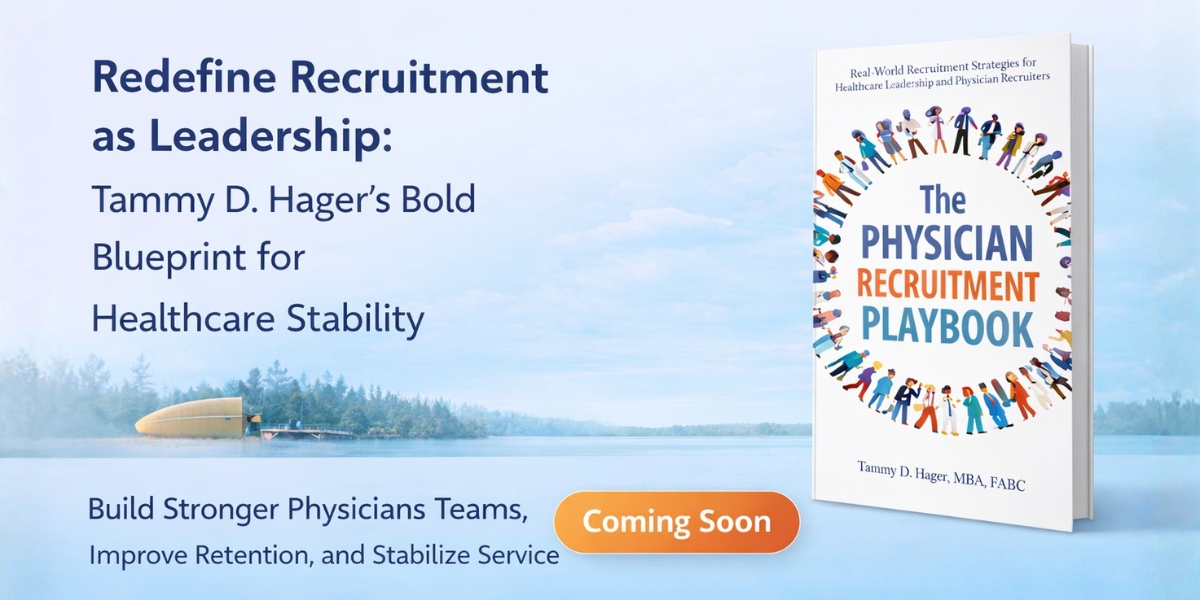
Redefining Recruitment as Leadership: Tammy D. Hager’s Bold Blueprint for Healthcare Stability

Across the United States, healthcare organizations are facing a workforce crisis that may not be solved by traditional hiring tactics alone. Physician shortages are tightening service lines. Burnout is leading to early retirements. Revenue leakage from prolonged vacancies is straining already-thin margins. Yet, in many systems, recruitment is still treated as a back-office function rather than a strategic imperative. Tammy D. Hager, MBA, FABC, believes that this needs to be reassessed.

With the forthcoming release of The Physician Recruitment Playbook: Real-World Strategies to Recruit, Retain, and Inspire Physicians and Providers, Tammy offers a practical roadmap for healthcare leaders looking to stabilize their organizations and build more sustainable workforce models. Drawing from more than three decades of frontline and executive-level experience, she reframes physician recruitment as what it truly is: leadership work that can have a significant impact on financial performance, culture, and community access to care.

The author’s career began in hospital-based recruitment and operations management, where she witnessed the effects of a single unfilled physician role. What appears on paper as a vacant FTE may translate into idle operating rooms, overburdened staff, referral leakage, declining morale, and potential millions in lost downstream revenue. Over time, she advanced into senior leadership roles within prominent healthcare systems, where she not only oversaw hundreds of successful physician placements but also optimized credentialing systems, data integration processes, and cross-functional operational workflows. That breadth of experience now informs both her consulting work and her writing.

As founder of Hager Healthcare Solutions, Tammy partners with healthcare executives and operational teams nationwide to help turn fragmented recruitment processes into more aligned, data-driven systems. Her firm specializes in recruitment strategy, credentialing optimization, data integration, and strategic process improvement—areas that are often siloed but deeply interconnected. By aligning these functions, she aims to reduce time-to-fill, strengthen retention, improve physician experience, and help protect financial performance.

The book distills these insights into an actionable guide for modern healthcare leaders. It explores the realistic economic cost of vacancies, which may be greater than organizations often calculate, and provides straightforward formulas to help quantify daily revenue loss. It outlines structured sourcing strategies designed for today’s predominantly passive physician market. It emphasizes employer brand and candidate experience as competitive differentiators. And it introduces disciplined interview frameworks and evaluation models that prioritize long-term fit over urgency-driven hires.

Perhaps most importantly, the book challenges a common misconception: that recruitment success depends solely on recruiters. Instead, Hager argues that recruitment outcomes can be influenced by organizational clarity, leadership alignment, communication discipline, and culture. When executive teams take ownership of the recruitment strategy rather than delegate it, time-to-fill can decrease, retention may improve, and service lines can regain stability.

Her approach is grounded in realism rather than theory. The strategies shared are not abstract concepts but field-tested frameworks that have been refined across rural hospitals, midsize systems, and complex integrated networks. The tone is practical, direct, and solution-oriented, reflecting the author’s operational background and her commitment to sustainable, measurable outcomes.

As healthcare systems face demographic shifts, generational workforce changes, and ongoing economic pressures, the need for structured, strategic recruitment has never been more urgent. The Physician Recruitment Playbook arrives at a crucial moment, offering leaders a clear path forward in a landscape that often feels reactive and unstable. Through both her consulting firm and her forthcoming book, Tammy D. Hager is advancing a simple but critical message: recruitment is not a transaction. It is the foundation of operational health, financial stability, and community trust.

In an era defined by workforce uncertainty, her work provides clarity and a sustainable way forward. The Physician Recruitment Playbook will be available for purchase soon.

Visit: www.hagerhealthcaresolutions.com


Disclaimer: The content provided in this article is for informational purposes only and does not constitute medical, legal, or financial advice. The strategies and recommendations shared are based on the author’s professional experience and research. Healthcare leaders and organizations are encouraged to seek personalized advice from qualified professionals before making any significant decisions related to recruitment, operations, or organizational management.

Lexo Meskhidze: A Young Actor Building His Path from Georgia to the Global Stage

At just 16 years old, Lexo Meskhidze represents a new generation of performers who combine discipline, curiosity, and long-term vision. A Georgian film and theater actor, Lexo is already steadily building a professional foundation through consistent stage work and on-camera experience — a combination that shapes both technical skill and artistic depth.

Currently performing at the Gori Eristavi State Drama Theatre, Lexo is immersed in the demanding and transformative world of live performance. Theater is often described as the purest form of acting — there are no retakes, no editing, no second chances. Every emotion must be authentic, every movement intentional. Working within this environment at such a young age has allowed him to develop strong stage presence, emotional control, and an understanding of character development that only live performance can truly teach.

The discipline of theater requires more than talent. It demands rehearsal, collaboration, adaptability, and respect for ensemble work. Through continuous participation in stage productions, Lexo is not only refining his craft but also learning the professional standards of the industry — punctuality, preparation, and the ability to respond creatively in real time. These early experiences form the backbone of an actor’s long-term career.

At the same time, Lexo is actively involved in film projects, expanding his range beyond the stage. Acting for the camera is a different art form. While theater requires projection and heightened physicality, film demands subtlety and precision. Small gestures, micro-expressions, and controlled energy often carry more weight than grand movement. By working in both mediums, Lexo is developing a flexible and adaptable acting approach, allowing him to transition naturally between stage and screen.

This dual experience is particularly valuable in today’s global entertainment landscape, where actors are expected to move seamlessly between theater, independent film, streaming platforms, and international productions. Lexo’s early exposure to both formats positions him well for long-term growth.

Lexo Meskhidze: A Young Actor Building His Path from Georgia to the Global Stage

Photo Courtesy: Lexo Meskhidze

What sets him apart is not only his talent but his mindset. Rather than rushing toward instant recognition, he is focused on gradual, sustainable development. Growth through practice, rehearsal, and collaboration remains central to his process. Each production becomes an opportunity to experiment, observe, and improve.

Being a young actor in Georgia also comes with a unique cultural foundation. The Georgian theater has a rich history rooted in emotional intensity, poetic storytelling, and strong dramatic traditions. Growing within this environment provides Lexo with artistic depth and a sense of identity that can later translate into international work. Cultural grounding often becomes a powerful differentiator for actors who step onto global platforms.

Looking ahead, New York stands as a long-term career goal for Lexo Meskhidze. For many performers, New York is more than a city — it is a symbol of artistic challenge and possibility. With its diverse theater scene, independent film culture, and constant creative energy, the city represents an environment where young actors can learn from established professionals, explore new techniques, and push their boundaries.

Lexo sees New York not simply as a destination, but as a place of education and evolution. He understands that building a career in such a competitive environment requires preparation. That preparation is happening now — through ongoing productions, disciplined training, and continuous self-development.

Ambition, however, does not replace patience. His journey reflects a clear understanding that meaningful careers are built step by step. Every rehearsal strengthens technique. Every performance sharpens presence. Every collaboration broadens perspective.

In an era where visibility can sometimes overshadow substance, Lexo’s focus remains on the craft itself. The willingness to rehearse repeatedly, to listen to directors, to learn from fellow actors — these qualities define longevity in the performing arts.

At 16, he is only at the beginning. Yet beginnings matter. They define habits, discipline, and artistic direction. By balancing theater and film, honoring his cultural roots, and setting thoughtful international goals, Lexo Meskhidze is shaping a path that prioritizes growth over speed and depth over noise.

The global stage may still be ahead, but the foundation is already being built — carefully, consistently, and with purpose.

Luxury Spirit Gift Sets That Make Every Celebration Special

Celebrations deserve more than ordinary presents. Whether it’s a milestone birthday, a wedding, an anniversary, a promotion, or a festive gathering, the right gift can elevate the entire occasion. Luxury spirit gift sets have become a timeless choice because they combine elegance, thoughtfulness, and a sense of celebration in one beautifully curated package.

From finely crafted glassware to premium bottles presented in sophisticated packaging, spirit gift sets are designed to impress. They offer a complete experience rather than just a single item, making them ideal for anyone who appreciates quality, style, and memorable moments.

Why Luxury Spirit Gift Sets Stand Out

Luxury spirit gift sets are more than just bottles of alcohol. They represent craftsmanship, taste, and attention to detail. When you choose a high-end spirit gift set, you’re offering an experience—something the recipient can enjoy, display, and remember.

These sets often include premium spirits paired with complementary accessories such as glasses, decanters, cocktail tools, or elegant storage boxes. The presentation alone communicates care and sophistication. Instead of a last-minute gift, it feels intentional and refined.

Another reason these sets are so popular is versatility. They work beautifully for personal celebrations, corporate gifting, holiday events, and special achievements. No matter the occasion, a well-chosen spirit gift set carries universal appeal.

The Timeless Appeal of a Bourbon Glassware Set

For those who appreciate rich, complex flavors and classic style, a bourbon glassware set makes a truly exceptional gift. Bourbon lovers value not only the spirit itself but also the ritual of enjoying it. The right glass enhances aroma, taste, and overall experience.

A premium bourbon glassware set often includes crystal tumblers, whiskey stones, and sometimes a decanter. The weight and clarity of the glasses add a sense of luxury, while the design ensures the bourbon’s character shines through. This makes it a practical yet elegant choice for birthdays, retirements, Father’s Day, or corporate milestones.

If you are searching for a refined and ready-to-gift option, investing in a high-quality bourbon glassware set is a decision that never disappoints. It’s ideal for the person who enjoys savoring their drink slowly and appreciates classic bar aesthetics. When selecting a bourbon glassware set, look for durable materials, timeless design, and thoughtful presentation to ensure it truly feels premium and gift-worthy.

Elegant Vodka Gift Set Options for Modern Celebrations

Vodka is known for its versatility and smooth character, making it a popular choice for modern celebrations. A beautifully packaged vodka gift set offers both sophistication and flexibility. Whether the recipient enjoys vodka neat, on the rocks, or in creative cocktails, this type of gift provides endless possibilities.

A luxury vodka gift set may include a premium bottle paired with sleek shot glasses, highball glasses, or cocktail-making accessories. Some sets also feature mixers or curated recipe cards that inspire creative drink-making at home. The clean, polished look of vodka packaging often gives these sets a contemporary and stylish edge.

Choosing a vodka gift set is perfect for housewarming parties, weddings, festive occasions, and even corporate gifting. Its broad appeal ensures that it suits a wide range of tastes. When selecting a vodka gift set, focus on quality presentation, reputable distillation standards, and a cohesive design that enhances the overall gifting experience.

Matching the Gift to the Occasion

Different celebrations call for different styles of gifting. Understanding the occasion helps you choose the right spirit gift set.

For milestone birthdays or retirements, a bourbon-focused gift feels traditional and distinguished. A bourbon glassware set paired with premium accessories can symbolize sophistication and maturity.

For weddings and anniversaries, a stylish vodka gift set can feel modern and celebratory. Its versatility makes it suitable for couples who enjoy entertaining guests or hosting cocktail evenings.

Corporate events often call for gifts that are elegant yet universally appreciated. High-end spirit gift sets, especially those with refined packaging and quality accessories, make a strong impression while remaining tasteful and professional.

Presentation Matters

Luxury gifting is as much about presentation as it is about the product itself. A well-designed box, premium wrapping, and organized layout can transform a spirit set into a statement piece.

Look for sturdy packaging with a polished finish. Magnetic closures, velvet-lined interiors, or wooden cases instantly elevate the experience. The moment the recipient opens the box should feel special and memorable.

Personal touches can also enhance the gift. Adding engraved glassware within a bourbon glassware set or selecting a vodka gift set with unique bottle design can make the present feel tailored and thoughtful.

Quality Over Quantity

When choosing a luxury spirit gift set, quality should always come first. It’s better to select a set with fewer but premium components than one filled with average items. Crystal-clear glassware, carefully distilled spirits, and durable accessories create lasting value.

For bourbon enthusiasts, heavy-bottomed glasses that feel solid in hand reflect craftsmanship. For vodka lovers, a clean, refined bottle design paired with modern glassware communicates style and sophistication.

Pay attention to details such as clarity of glass, balance of design, and overall finish. These small elements often distinguish an ordinary gift from a luxury one.

Creating Memorable Experiences

What makes luxury spirit gift sets truly special is the experience they create. A bourbon glassware set encourages quiet evenings of reflection or intimate gatherings with close friends. A vodka gift set inspires lively cocktail nights and celebratory toasts.

These gifts are not consumed and forgotten instantly. The glassware remains, the accessories are reused, and the memories associated with the celebration linger long after the occasion ends.

When you choose thoughtfully, you’re not just giving a product—you’re contributing to future celebrations and shared moments.

A Gift That Reflects Taste and Thoughtfulness

Luxury spirit gift sets reflect both the giver’s and the recipient’s taste. They show effort, consideration, and an understanding of what the recipient enjoys. Whether it’s the bold character of bourbon or the smooth versatility of vodka, selecting the right set communicates genuine appreciation.

A carefully chosen bourbon glassware set demonstrates respect for tradition and craftsmanship. A stylish vodka gift set shows an eye for modern elegance and versatility. Both options offer transactional value while maintaining a sense of refinement.

Final Thoughts

Celebrations deserve gifts that match their importance. Luxury spirit gift sets provide the perfect balance of elegance, practicality, and enjoyment. They suit a wide range of occasions and recipients, making them a reliable yet impressive choice.

Whether you opt for a timeless bourbon glassware set or a sleek and versatile vodka gift set, focus on quality, presentation, and thoughtful selection. When chosen with care, these spirit gift sets do more than mark a celebration—they help create lasting memories that are cherished long after the final toast. 


Disclaimer: Alcohol should be consumed responsibly and in moderation. The legal drinking age varies by location, and individuals are encouraged to adhere to local laws regarding alcohol consumption. Excessive drinking can have serious health and legal consequences. Please drink responsibly.

What Workers’ Compensation Attorneys Do to Secure Workplace Benefits

New York is a state driven by hard work, with millions of people powering its offices, construction sites, hospitals, factories, and service industries every day. In such a demanding environment, workplace injuries can happen unexpectedly, leaving workers worried about their health, income, and future stability. New York’s workers’ compensation system is designed to provide support, but the process can feel confusing and restrictive when someone is already dealing with pain and recovery. 

Strict rules, filing deadlines, and insurance requirements often make it difficult for injured employees to secure their benefits entitlements independently. This is where knowledgeable legal guidance becomes essential. Workers’ compensation attorneys understand how to navigate the system, address disputes, and protect employees from unfair treatment. The attorneys at Shulman & Hill bring this focused support to injured workers, helping them pursue workplace benefits with confidence while they concentrate on healing and getting their lives back on track.

Understanding Workers’ Compensation

Essentially, workers’ compensation serves as insurance, protecting employees who sustain work-related injuries. The system was created to pay for medical expenses, rehab, and part of lost wages. Attorneys are an important component of the function. They lead injured individuals through every stage of their case. Having them involved often gives people affected by workplace incidents a greater understanding and peace of mind.

Initial Consultation and Case Evaluation

The process typically starts with a detailed consultation with the victim. Legal specialists hear the story of the injured party and incident descriptions to gather vital information. They assess whether a legitimate claim exists and discuss possible consequences. An early evaluation gives workers an idea of which benefits they may qualify for and what to expect down the road.

Filing Claims and Managing Paperwork

There are strict deadlines and documentation requirements for a workers’ compensation claim to be successful. Attorneys help by completing and filing the necessary documents accurately. They gather required medical records, employment history, and accident reports to build the case. 

Communicating with Insurance Companies

This process often demands detailed descriptions and comprehensive documentation, as insurance companies frequently hesitate to grant benefits immediately. Legal professionals serve as intermediaries who clearly present your case. They manage all communication, respond to queries, and supply more details as required. 

Negotiating Settlements

In some cases, there are disagreements regarding the level or nature of the benefits offered. Lawyers negotiate with insurers or employers for appropriate compensation. Their experience with similar cases allows them to calculate appropriate settlement amounts that reflect the true value of an injury. Most of these negotiations resolve more quickly and favorably for the injured worker.

Representing Clients at Hearings

Attorneys represent their clients at hearings when a claim is at risk of denial or dispute. They draft supporting documentation, gather witness testimony, and then argue their case before a judge or panel. Their understanding of legal procedures increases the likelihood of a favorable ruling in the court. 

Appealing Denied Claims

Sometimes claims won’t be approved on the first go. This is when attorneys assist with filing appeals and challenging negative orders. They analyze denial letters, identify errors, and compile compelling evidence for a new evaluation. They provide injured workers a second chance at obtaining assistance by walking clients through appeal processes.

Providing Guidance Throughout Recovery

Advocates acquire more than just restitution for claimants. They provide consistent guidance throughout the recovery process. Additionally, they answer questions related to continued availability for work and whether the employee can safely return to work. This involves assisting doctors in facilitating workers’ access to rehabilitation services and understanding the long-term effects of injuries. 

Ensuring Protection from Retaliation

Many employees fear retaliation post-claim. Lawyers educate workers about their rights and shield them from employer injustice. They intervene to prevent retaliation, such as demotion or termination. This protection allows harmed workers to assert their legal rights without fear of retaliation.

Final Thoughts

It is important that you get the right type of help, and this is what workers’ compensation attorneys do for those who have been injured on the job. They work with clients from the initial consultation through every step of the claims process. Therefore, injured workers are more likely to receive the benefits and assistance they need. Through paperwork, settlement negotiations, and strategies at hearings, these professionals assist in rebuilding lives.


Disclaimer: The content in this article is provided for general knowledge. It does not constitute legal advice, and readers should seek advice from qualified legal professionals regarding particular cases or situations.

Altai’s Protocol Library: Supporting Oncology Practices with Curated Treatment Protocols

Effective cancer treatment depends on keeping pace with rapidly evolving evidence while maintaining consistent, guideline-based care. As new studies, drug approvals, and therapeutic standards emerge, oncology teams face the challenge of staying up to date without introducing variability into clinical practice. Many institutions now rely on structured digital systems to support decision-making, reduce errors, and standardize complex treatment workflows. In this environment, digital protocol libraries have become critical tools for both clinical operations and medical education.

Altai’s Protocol Library emerged in this broader movement toward standardized oncology care. Developed by Altai Inc., the American health information technology company operating under the name Altai Oncology, the library forms a central component of the Altai Oncology Suite and the Altai Oncology Mobile App. Introduced in 2015 and expanded continuously, the library now includes more than 1,000 oncology and hematology protocols. Rather than functioning as a static database, it was designed as a reference tool shaped by clinical specialists and connected directly to Altai’s digital platforms used in cancer centers, infusion clinics, and individual oncology practices.

The scale of Altai’s protocol collection reflects a long-term effort involving medical oncologists and hematologists who identify, review, and summarize emerging therapeutic standards. Each protocol undergoes a multi-step process that combines literature reviews, specialist interpretation, and iterative validation. Altai reports that new or updated protocols undergo review by at least two physicians before being included in the database. This procedure helps maintain consistency across the collection while also aligning with established treatment guidelines.

Updates are conducted monthly and draw from a broad range of scientific publications, regulatory announcements, and specialty society recommendations. The aim is to ensure that clinicians using Altai’s platforms have access to current therapeutic frameworks as standards evolve. Since oncology research can shift rapidly following major clinical trials, these scheduled updates serve an essential role in keeping the system responsive to new evidence. The result is a living library that reflects ongoing changes in cancer care rather than a static repository of historical protocols.

Altai’s protocols library includes material covering medical oncology, hematology, and bone marrow transplantation. The breadth of the content makes it a reference for patients of different kinds and diverse clinical situations. The protocols include chemotherapy regimens, targeted therapies, immunotherapy combinations, supportive care frameworks, and hematologic treatment pathways.

Each entry provides practical treatment information, including drug administration details, dosing parameters, infusion sequences, and monitoring requirements. Many protocols incorporate laboratory criteria that guide clinical decisions before and during treatment cycles. Summarized references are also included, allowing clinicians to trace each protocol back to its underlying data. This structure supports both point-of-care decision-making and broader educational use by trainees and researchers.

For practices using Altai Oncology Suite or the Altai Oncology Mobile App, the integration of the protocol library provides direct access within the same digital environment used for chemotherapy order entry, dose calculation, and clinical documentation. This alignment reduces the need to reference external sources while planning or adjusting treatment. Clinicians can also create custom protocols that align with institutional pathways, allowing local practices to integrate their guidelines into the broader collection.

A centralized, constantly updated protocol library can affect the treatment process in several ways. Oncology teams that follow standardized pathways will have fewer instances of variation in regimen selection and dosing. This architecture supports the correctness of treatment planning, especially when complex regimens involve multi-drug sequences or weight-based dosing calculations. 

Altai’s software platforms, in which the library is integrated, provide automated dose calculation tools and drug interaction checks. All these features together eliminate the need to perform the same checks manually, and the oncology suite’s error-prevention mechanisms are also supported. Clinical judgment should always be the chief driver of patient care, but having a structured reference library ensures that decision-making aligns with consistent, evidence-based frameworks. 

Additionally, workflow efficiency is increased by the centralized protocol. Access to the protocols enables nurses, pharmacists, and doctors to use the same reference material and, hence, engage in even better coordinated decision-making across multidisciplinary teams. Whenever treatment plans are at the order entry, pharmacy preparation, and infusion scheduling stages, the shared reference base ensures continuity at every step of the process. 

Altai’s protocol library is designed to be a clinical instrument with an additional role as a resource for research and training. Oncologic researchers turn to standard treatment definitions when they want to outline clinical pathways, describe patient cohorts, or detect patterns in therapy use. The ease of obtaining detailed protocol information from a single system may lead to more efficient, more consistent data collection processes.

The library serves as a guide for trainees in educational environments who, in turn, are learning to understand the therapeutic landscape of oncology and hematology. The sequences of treatment, dosage, and monitoring parameters to which one has access facilitate a better understanding of the concepts presented in textbooks by providing real-world applications. Apart from that, the consistent organization of the protocols also enables educators to demonstrate how clinical pathways are formed and modified through time. 

Since the library is available on both desktop and mobile platforms, trainees and clinicians can access the information during rounds, case reviews, or academic sessions. Such availability encourages continuous learning without breaks and is particularly helpful to newly appointed personnel as they get acquainted with complex regimens. 

Altai’s Protocol Library is, to a large extent, deeply interconnected with numerous other oncology information tools and can thus be considered a centerpiece within the ecosystem. Its ongoing expansion and integration with Altai software platforms have created a well-organized environment for the various chemotherapy and hematology treatment pathways. As digital systems continue to be widely adopted in oncology practices to support decision-making and workflow coordination, comprehensive protocol libraries are becoming the main components of clinical operations. 

In the future, innovations might broaden the library’s content beyond its current scope, as new therapies and diagnostic methods are redefining cancer care. The continuity of updates and improvements will determine whether the library keeps up with, or remains slightly behind, the emerging scientific evidence. Whatever its path, the base, which contains more than 1,000 carefully selected protocols, is a vivid example of how structured reference systems can be instrumental in assisting clinicians, researchers, and educators who are dealing with the intricacies of advanced oncology.

Disclaimer: The information provided in this article is for informational purposes only and does not constitute medical advice. Altai Oncology’s products and services should be used in accordance with applicable regulations and under the supervision of qualified healthcare professionals. Always consult with a medical professional for personalized healthcare guidance.

Is This the End We Want? Howard Atkins’ 2040 Reads Like Tomorrow’s Headline

By the time readers finish 2040, the unsettling realization is not that the future is frightening. It is that it feels familiar. In his latest dystopian novel, Howard Atkins does not imagine a distant apocalypse or a world undone by sudden catastrophe. Instead, he presents a quieter, more disturbing vision. One shaped by convenience, fear, and the gradual surrender of human agency.

2040 arrives at a moment when speculation has become difficult to separate from reality. As governments debate artificial intelligence governance, digital currencies, surveillance infrastructure, and centralized authority, Atkins’ novel feels less like a warning from the future and more like an examination of choices that are already underway. The book reads not as science fiction, but as a civic mirror.

Designed as a deliberate prequel to Atkins’ companion novel 2084, 2040 charts the darker path of a shared conceptual arc. Where 2084 imagines a future shaped by ethical restraint and shared responsibility between humanity and technology, 2040 reveals what happens when those guardrails fail to appear. Democratic institutions erode quietly. Surveillance becomes normalized. Technology shifts from innovation to enforcement, all without a single dramatic breaking point.

Howard Atkins’ restraint is what gives the novel its force. There is no single collapse, no obvious villain. Instead, power consolidates through policies that sound reasonable and systems designed for efficiency. Citizens are not conquered by force, but conditioned through loyalty, fatigue, and fear. Resistance is reframed as risk. Compliance becomes safety. Freedom survives as language but disappears in practice.

Artificial intelligence is not portrayed as the enemy. Like in 2084, it is treated as a tool. The danger lies in who controls it, how it is justified, and what happens when accountability dissolves. Systems meant to protect gradually evolve into mechanisms that monitor, restrict, and punish. By the time the consequences are visible, the infrastructure is already locked in place.

The novel unfolds through character-driven scenes that mirror contemporary anxieties. Elections are contested not only at the ballot box but through narrative control. Economic pressure fractures communities. Media outlets are discredited, marginalized, or silenced. Dissent becomes a liability rather than a right. Atkins shows how authoritarianism rarely announces itself. It arrives politely, wrapped in promises of order, stability, and protection.

What makes 2040 particularly unsettling is its plausibility. The book does not exaggerate current trends. It connects them. Surveillance, digital identity, AI-managed systems, and centralized power are not imagined as speculative inventions, but as extensions of debates that are already shaping policy and daily life. Atkins does not predict outcomes. He exposes trajectories.

Throughout the novel, there is an underlying insistence that collapse is rarely sudden. It is incremental. Reasonable decisions accumulate into irreversible outcomes. Each concession feels small until the cost becomes impossible to ignore. This approach grounds the narrative in realism, making its warnings difficult to dismiss as alarmist.

Yet 2040 is not a book of despair. Its purpose is awareness rather than prophecy. Atkins leaves space for agency by presenting consequences before they fully materialize. The existence of 2084 is itself evidence that the future is not fixed. One path leads toward control. The other requires restraint, courage, and shared responsibility.

Rather than telling readers what to think, 2040 asks what they are willing to accept. How much autonomy will be traded for convenience? How much oversight will be surrendered in the name of security? And at what point does efficiency become obedience?

As anticipation builds around its release, 2040 is positioning itself as a timely and difficult novel to ignore. It is not meant to comfort. It is meant to provoke conversation while choice still exists. Atkins leaves readers with a question that lingers well beyond the final page: If this is where we are heading, when will we decide to turn?

2040 by Howard Atkins does not claim to foresee the future. It argues that the future is already being designed. The only uncertainty is whether we will recognize it in time to choose differently.