Jorge A. Martinez: The Voice of Boxing, Author, Cultural Historian, and Advocate for Women Warriors


Jorge A. Martinez is not a commentator looking in from the outside, he is a witness, a participant, and a chronicler of lives lived under pressure.

A former soldier, counselor, social worker, law‑enforcement professional, and lifelong ringside observer, Martinez brings an unmatched depth of psychological insight and moral clarity to the world of boxing. His work captures what most coverage misses: boxing as a mirror of society, survival, injustice, resilience, and redemption.

Where others focus on spectacle, Martinez documents human cost, courage, and character, especially among women fighters who entered the ring when recognition, money, and protection were scarce.

His upcoming book, Women Warriors, is not just a boxing book. It is a historical reckoning.

Jorge A. Martinez: The Voice of Boxing, Author, Cultural Historian, and Advocate for Women Warriors

Photo Courtesy: Jorge A. Martinez

About the Author

Jorge A. Martinez is widely respected as The Voice of Boxing a title earned not through promotion, but through decades of ringside observation and fearless truth‑telling.

His background spans: – Military service – Law enforcement and investigative work – Counseling and social work – Boxing training and mentorship – Cultural and historical writing.

This rare combination allows Martinez to read fighters not just by their punches,  but by their posture, hesitation, rhythm, and resolve. He sees what trauma looks like when it moves. He understands what courage costs.

Upcoming Book: Women Warriors (Coming Soon)

Women Warriors documents the rise of female boxing through firsthand fight accounts, psychological analysis, and social commentary.

These are not highlight reels. These are lives.

Martinez honors women who fought: – With little pay and less protection – Against systemic neglect and exploitation – In eras when women’s boxing was dismissed, mocked, or ignored

The book serves as: – A historical archive – A cultural critique – A source of inspiration for future fighters

Media Positioning

Why Jorge Martinez matters now:

In an era of division, soundbites, and manufactured outrage, Martinez offers something rare, earned authority and moral gravity.

He speaks credibly on: – The subculture and economics of boxing – Gender inequity in sports – Trauma, resilience, and identity – The psychology of fighters – Sports as a bridge across race, class, and ideology.

His voice resonates across: – Sports media – Cultural commentary – Academic discussions – Veteran and advocacy communities.

Signature Initiative: The Women Warriors Legacy Search

As part of the Women Warriors movement, Jorge A. Martinez is launching a , and potentially global, search for an up‑and‑coming, under‑recognized woman boxer.

This initiative is designed to: – Discover unknown or overlooked talent – Support amateur, professional, or Olympic‑track fighters – Bridge generations of women warriors – Create long‑term legacy beyond a single book.

Who may apply: – Amateur or professional women boxers – Olympic team members or hopefuls – Fighters of any nationality, background, or ethnicity.

What applicants submit: – Contact information – A clearly written personal story – Boxing background and experience – Training footage (optional but encouraged) – A statement explaining why they believe Jorge Martinez should support them.

What this opens: – Media attention and human‑interest coverage – Invitations to sports talk shows – Ringside access at major events – Mentorship and visibility – Inclusion in the ongoing Women Warriors legacy.

This initiative positions boxing as a bridge, not a barrier, uniting underdogs through discipline, courage, and shared humanity.

Philosophy

“Fighting is not about conquering your opponent. It’s about conquering yourself — so you can become the real you.”

Martinez teaches that boxing extends beyond the ring: – Discipline becomes daily practice – Breathing becomes emotional regulation – Awareness becomes survival

The same breathing exercises he taught fighters before bouts now serve as tools for everyday resilience, proof that boxing, at its best, is a school for life.

Media Opportunities

Jorge A. Martinez is available for: – Sports and cultural interviews – Panel discussions – University lectures – Podcast appearances – Ringside commentary – Feature profiles.

Key topics include: – The hidden cost of combat sports – Women’s boxing history – Fighter psychology – Sports, masculinity, and resilience – Boxing as social documentation.

Legacy Statement

Women Warriors is not the end of a project.

It is the beginning of a movement.

A living archive. A bridge across generations. A platform for voices long ignored.

Jorge A. Martinez is not chasing relevance.

He is building legacy.

Humans That Build: Adam Marburger’s Mission to Restore Real Leadership

By: Alena Wiese

After rebuilding his life through discipline, servant leadership, and Brazilian Jiu-Jitsu philosophy, Adam Marburger created Humans That Build as a private space for honest, one-to-one conversations about what it actually takes to build a life from the inside out.

For years, leadership media has been shrinking. Conversations became shorter. Answers became cleaner. Authenticity was replaced by polished narratives designed to fit neatly into clips. Across industries, people watched leaders speak without ever saying anything real. Business content grew louder, but less human. Somewhere along the way, truth was traded for performance.

That shift created a hunger no algorithm could solve. Audiences didn’t want more content. They wanted something honest, something patient, grounded, and strong enough to hold the weight of real life. They wanted to hear how people actually rebuild after loss, failure, and pressure. They wanted leadership that wasn’t a brand aesthetic.

That hunger is part of what has made Humans That Build, hosted by entrepreneur and speaker Adam Marburger, a show people don’t just sample. They return to.

At first glance, it may look like another podcast. But listen longer and the difference becomes unmistakable. Marburger isn’t extracting soundbites from guests. He’s creating a space where human beings can speak without being rushed into a slogan. The conversations don’t orbit around hype. They orbit around discipline, responsibility, and the quiet moments where character is formed.

“My mission is to speak, inspire, and help change the world,” Marburger says. “Through introspection, forgiveness, and real connection, I teach people how to forge stronger bonds with others and with themselves.”

It’s a bold mission, but it doesn’t read like marketing language. It carries the tone of someone who has lived through enough to stop pretending.

Where the Discipline Began

Marburger’s story starts far from any studio, in the modest town of Wood River, Illinois, where he ran three paper routes at thirteen. While most teenagers were focused on typical milestones, Marburger was learning early lessons in leadership: showing up consistently, meeting standards, and earning trust through service.

“I learned salesmanship at a very young age,” he recalls. “I knew how to ask my clients, ‘Did you receive your paper on time? Was it wrapped even when it wasn’t raining?’ I asked those questions with intention.”

Those paper routes taught him the psychology of reliability. Deliver consistently, and people trust you. Ask the right questions, and people feel seen. Focus on service long enough, and results follow.

That mindset followed him through the restaurant world and into automotive sales, where his career accelerated quickly. By twenty-two, Marburger had become a finance manager, operating in one of the most pressure-heavy environments in dealership operations.

Servant Leadership Under Pressure

The F&I office is not a place for fragile leadership or theory. Performance and trust must coexist in real time. Under that pressure, Marburger developed a leadership philosophy that would later define his work: excellence isn’t talent. It’s mastery.

He taught that success in F&I is like earning a black belt. Fundamentals matter. Emotional control matters. Shortcuts eventually fail. Just as important, he became a proponent of servant leadership, the belief that real leadership isn’t dominance, but responsibility.

In Marburger’s view, a dealership doesn’t rise because one department wins. It rises when the culture is protected, the team is developed, and every department rows in the same direction. Leadership, to him, means serving people while holding firm standards.

By 2017, he was ready to build beyond the dealership world. He founded Ascent Dealer Services, stepping into entrepreneurship with the same discipline he had lived under for years.

The Year Everything Broke

Humans That Build Adam Marburger’s Mission to Restore Real Leadership-2

Photo Courtesy: AJ Stotler

In 2019, everything changed.

Marburger lost his stepfather to a stroke. His best friend and business partner died by suicide. His grandfather passed away from cancer. At the same time, his marriage ended in divorce.

“I found myself living in a spare bedroom at my mother’s house,” he says. “She had just lost her husband. She’s grieving. I’m grieving. We’re both a mess.”

Moments like that strip identity down to the bone. Confidence doesn’t just shake. It disappears. For many, it becomes the start of a spiral. For Marburger, it became a confrontation.

“I looked in the mirror and told myself, ‘You’re the effing problem,’” he says.

It wasn’t self-hatred. It was ownership. The end of denial. The decision to rebuild from the only place that matters, personal responsibility.

Rebuilding Without Excuses

From that point forward, Marburger rebuilt with relentless discipline.

“I worked crazy, psycho mode for three years,” he says. “Saturday. Sunday. Late nights. Early mornings. I didn’t stop.”

That discipline didn’t just restore stability. It expanded his platform. Today, Marburger leads multiple ventures, including Ascent Dealer Services, Marburger Investment Group, Dental Protection Group, and Marburger Coaching & Development. He also operates Alton Elite, a Brazilian Jiu-Jitsu academy, and is a multiple-time world medalist in the sport.

He is also the best-selling author of two books, including You’re the Effing Problem and The Servant Leading F&I Manager: Leadership Redefined, published in both English and Russian.

The Mat as a Way of Thinking

What many people miss is that Marburger’s leadership philosophy wasn’t learned in a boardroom. It was built on the mat. He bases his business philosophy on Brazilian Jiu-Jitsu, the kind of discipline that teaches composure under pressure, humility without weakness, and persistence without ego.

In Jiu-Jitsu, you don’t meet force with force. You stay calm. You breathe. You use leverage instead of resistance. You let pressure move rather than panic against it. Progress comes from patience, awareness, and repetition.

Those lessons shape how Marburger leads and how he hosts Humans That Build.

Inside Humans That Build

Humans That Build Adam Marburger’s Mission to Restore Real Leadership-3

Photo Courtesy: AJ Stotler

Humans That Build doesn’t happen on a stage or in front of an audience. The conversations are recorded privately, one-to-one, creating an atmosphere that feels less like a show and more like being allowed into something personal.

Before each conversation, Marburger is alone in his office studio, preparing quietly, stretching, breathing, settling himself the way a Jiu-Jitsu practitioner does before stepping onto the mat. Not to hype up, but to get present.

When the connection opens, it’s just two people. Sometimes the guest is a high-level entrepreneur. Sometimes it’s an everyday person who has rebuilt after loss or failure. Titles fall away quickly. The conversation unfolds at human speed.

Marburger leads with presence, not performance. He listens without interruption. Defenses soften. The real story emerges.

The show becomes an arena of trust, modeled after the mat itself, no domination, no posturing, no need to win. Just two people staying present long enough for the truth to surface.

A Different Kind of Leadership Media

Marburger’s voice extends beyond one show. He also hosts Training Camp on CBT News, where conversations focus on dealership culture, F&I mastery, servant leadership, and disciplined execution under pressure. Across platforms, the tone remains the same: no fluff, no shortcuts. Just standards and responsibility.

In a media world obsessed with volume, Humans That Build operates at a different frequency, calm, disciplined, and human. A place where truth doesn’t have to fight to be heard.

For readers drawn to honest voices and real conversations, Humans That Build is available across major podcast platforms. Episodes can be found by searching Humans That Build with Adam Marburger, and listening to the show was intended, without rushing.

Kurt A. Dasse’s Foundation Years: Teaching Physiology, Building Animal Labs, and Engineering the First Access Pathways

Physiology laboratories have long served as a proving ground for medical ideas that later move into devices, drugs, and surgical routines. In these settings, trainees measure how cardiovascular regulation changes in response to controlled interventions and then compare these signals with textbook predictions. The work may appear repetitive, yet the discipline it enforces shapes how clinicians and researchers evaluate evidence. That environment framed the early career of Kurt A. Dasse, whose later work in mechanical circulatory support drew on an earlier period of academic instruction and preclinical investigation.

In the early 1980s, Dasse’s work sat inside a hands-on physiology tradition: controlled experiments, surgical preparation, and continuous measurement of hemodynamic variables. At Boston University School of Medicine, he taught medical physiology. He took responsibility for “real-time” laboratory studies in which trainees learned cardiovascular regulation by observing changes as they occurred during interventions. The setting required attention to monitoring fidelity, animal preparation, and procedural safety, while also forcing an instructor to translate complex feedback systems into teachable steps.

That instructional role formed one thread of Dasse’s foundation years. Another thread ran through surgical research laboratories and preclinical programs that tested how blood and tissue respond to implanted materials. From the late 1970s into the early 1990s, those combined experiences created a profile that bridged physiology, biomaterials, and operative realities, long before his later commercial work became more visible.

Dasse was born on July 7, 1949, in Valparaiso, Indiana. Public biographical accounts note early exposure to clinical environments through military medical service, which placed him in settings where procedures, protocols, and patient instability shaped daily decisions. In that context, physiology functioned less as an academic subject and more as an operational language, the set of mechanisms that explained why interventions helped, failed, or produced unintended consequences.

That emphasis on mechanism helps explain why later device problems often circle back to physiologic endpoints. A pump can move blood, but the body’s responses, from vascular tone to renal signaling, determine whether the support improves outcomes or triggers complications. The foundation years show Dasse working in that space where theory meets the body’s compensations.

Dasse completed undergraduate training in biology at the University of Massachusetts Boston and later earned a doctorate in physiology from Boston University. The combination placed him in a discipline that treats the cardiovascular system as an integrated control network, with pressure, flow, endocrine signaling, and organ perfusion linked through feedback loops.

During his academic research appointments, he worked across themes that later reappeared in device development. He studied muscle physiology and hypoxia in rat skeletal and cardiac muscle preparations, employing laboratory methods including histology, electrophysiology, and microscopy. Those studies required careful measurement discipline, from tissue preparation to the interpretation of mechanical changes under altered oxygenation or pharmacologic exposure. In parallel, he worked on questions concerning blood interactions with material surfaces, an issue that becomes central when engineers place polymers and metals in circulation.

The skills embedded in this training were practical. Hemodynamic monitoring, tissue analysis, and repeatable experimental setup do not only support academic publications. They also provide the foundation for preclinical evaluation, in which a device must demonstrate stable performance under biological stress.

At Boston University School of Medicine, Dasse served as an instructor in physiology and later as an assistant professor. Teaching first-year medical students requires a particular kind of clarity. The circulatory system involves competing models, organ-specific adaptations, and multiple regulatory timescales. An instructor must present those elements without reducing them to slogans.

The “real-time” dog lab demanded more than lectures. It required an experimental design that trainees could execute safely while still producing interpretable signals. It also placed the instructor at the junction of surgical preparation and physiologic measurement. Even when a protocol aims to model a clinical technology, the lab must translate that goal into steps that fit controlled conditions.

During this period, Dasse also trained anesthesiology residents and conducted applied physiology experiments using isolated cardiac papillary muscle preparations to examine how anesthesia influences muscle mechanics. The work linked pharmacology and mechanical response, adding another layer to the theme of physiologic consequences under intervention.

From 1980 through the late 1980s and into the early 1990s, Dasse held research and instructional roles connected to Tufts University School of Medicine, Tufts-affiliated surgical research laboratories, and Tufts University School of Veterinary Medicine. These appointments placed him near the preclinical problem set surrounding early ventricular assist work.

Two enabling technologies stand out in this period: a percutaneous access device (PAD) and a transcutaneous energy transmission system (TETS). In practical terms, both aim to address a common barrier in implantable support systems: the need to connect the inside of the body to external power or control while reducing the risk of infection and mechanical failure. Dasse’s work included design, preclinical evaluation, surgical implantation, and explant analysis, and documentation for ongoing research contracts.

This phase also strengthened a reporting habit that later aligns with regulated development. Preclinical programs tied to federal contracts require structured quarterly and annual reporting, consistent endpoints, and clear accounting of failures and modifications. That discipline resembles the documentation culture that medical device teams later formalized in design controls and risk management.

In the same era, Dasse participated in animal studies connected to early iterations of implantable ventricular assist systems, including programs associated with HeartMate development. The preclinical phase forces certain realities. Hemodynamics do not remain stable simply because a device performs on the bench. Blood-contacting surfaces can trigger clotting and inflammatory responses, thereby altering both device function and end-organ physiology.

One of the central material questions during early LVAD development involved how textured surfaces interact with blood and tissue. Investigators examined whether a lining could form on specific polymers and how that lining influenced thrombosis risk and biocompatibility. These are not purely engineering concerns. They sit at the junction of surface chemistry, blood elements, and the body’s tendency to treat foreign material as a target.

Dasse’s work also included studies of endocrine and neural regulation in animal models, including carotid sinus modulation of renal nerve activity and associated hormonal responses. That focus underscores a recurring point in circulatory support: interventions that increase cardiac output also alter renal perfusion, neurohormonal tone, and systemic vascular resistance. Preclinical results guide what teams can justify when they move toward human trials.

Academic instruction rarely appears in device timelines, yet it often shapes who can collaborate across specialties. In Dasse’s foundation years, teaching medical and veterinary physiology and running surgical research laboratories trained cohorts of students and residents to work with physiologic signals, experimental controls, and operative constraints. That training helps create a shared vocabulary between clinicians and engineers. It also reduces friction that arises when a device team requires clinical partners to interpret measurements and anticipate complications.

In this sense, teaching served as a form of technology transfer, transmitting methods rather than products. It developed competence among the individuals who later populate research laboratories, clinical trial sites, and interdisciplinary teams.

By the early 1990s, Dasse’s early career had already assembled a specific toolkit: physiology as a measurement discipline, biomaterials as an interface problem, and surgery as a reality check. Those foundation years explain how later roles in clinical translation, regulatory interaction, and executive leadership could rest on earlier work that emphasized controlled intervention and documentation. Before titles and company roles accumulated, the work centered on laboratory benches, animal studies, and classrooms, where cardiovascular regulation shifted from diagrams to measured signals.

After the Uniform: What Happens to Veterans After the War Ends

For many Americans, military service ends with a homecoming, a return flight, a ceremony, and a uniform carefully folded and stored away. But for thousands of veterans, the transition marks the beginning of a different and quieter struggle. Roughly every ninety minutes in the United States, a veteran dies by suicide, a statistic that continues to trouble clinicians, policymakers, and families alike.

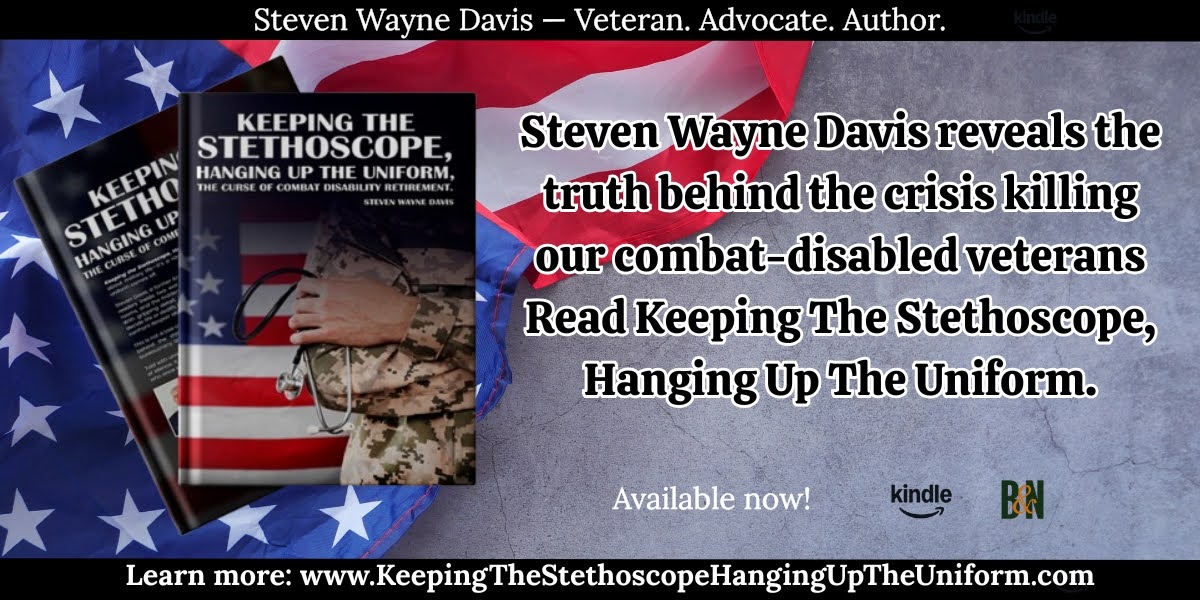
Steven Wayne Davis has encountered this reality from two sides of the same profession. First, as a nurse in the Army Nurse Corps, he treated injured service members still in uniform. Later, as a civilian emergency-room nurse, he cared for veterans navigating life after service. Over time, he began noticing patterns that extended beyond individual medical cases. His book Keeping the Stethoscope, Hanging Up the Uniform! grew from those observations, not as a traditional war memoir, but as an account of what happens after the war is over.

The Complicated Economics of Injury

A common assumption holds that veterans who leave service due to combat injuries are financially secure through retirement and disability compensation. In practice, the system is more complicated.

Some medically retired service members, particularly those unable to complete a full military career, experience an offset between retirement pay and disability benefits. The policy has existed in various forms for decades and remains debated by lawmakers and veteran advocacy groups. For affected families, the impact is practical rather than theoretical: budgeting for housing, transportation, and ongoing medical needs becomes less predictable.

Davis notes that uncertainty itself often becomes part of the stress veterans face while adjusting to civilian life.

What Emergency Rooms Reveal

Emergency departments offer a unique window into social conditions. Patients arrive not only with injuries or illnesses, but also with the pressures surrounding them.

Davis recalls veterans postponing treatment because transportation costs conflicted with grocery expenses, and others managing complex medication regimens without stable daily routines. Over time, the cases suggested a pattern: mental-health crises were rarely isolated medical events. They frequently intersected with employment difficulties, housing instability, and administrative confusion about benefits.

These observations shaped his belief that recovery after military service depends on more than clinical treatment alone.

Recognition and Reality

American culture widely expresses appreciation for military service, yet many clinicians and advocates describe a gap between symbolic recognition and consistent support. Annual government reports continue to document thousands of veteran suicides, even as prevention initiatives expand.

Healthcare providers often emphasize that stability relies on broader conditions reliable income, community connection, accessible care, and clarity in support systems. Davis views the issue less as an individual failing and more as a complex transition challenge shared by society, institutions, and veterans themselves.

Why the Debate Persists

Military retirement and disability policies developed across generations, shaped by different wars and economic priorities. Over the years, adjustments have been proposed and partially implemented, while discussion continues.

For veterans leaving service, the central concern is predictability: understanding what assistance will exist and how long it will last. For policymakers, the challenge lies in balancing fairness, fiscal responsibility, and long-term care obligations.

Beyond a Battlefield Story

Rather than focusing on combat experiences, Davis’s account concentrates on reintegration. His perspective blends military medical service, civilian healthcare practice, and observations from veteran patients and their families.

The narrative becomes a study of transition how identity, routine, and support systems change when structured military life ends. The most difficult period, he suggests, is often not deployment but adaptation afterward.

Lives Behind the Numbers

Veterans’ experiences vary widely, yet many share a similar task: rebuilding stability while carrying memories and injuries from service. Housing applications, employment searches, and medical appointments form part of recovery alongside counseling and treatment.

Emergency clinicians often encounter the final stage of these pressures, but the process unfolds long before a hospital visit in workplaces, homes, and communities across the country.

Continuing the Conversation

For civilians, the issue raises questions about how appreciation translates into lasting support.
For veterans, it affirms that their struggles are not isolated experiences.
For healthcare providers, it underscores the role of social conditions in mental-health outcomes.
For policymakers, it highlights the need for clarity and continuity in assistance programs.

Looking Ahead

Davis presents his work as an invitation to examine the period after service with the same seriousness given to service itself. The challenges surrounding veteran suicide involve mental health, economic security, and social integration problems without a single solution but requiring sustained attention.

Returning home, he argues, is not a moment but a process. The way a society responds during that process ultimately determines whether surviving war is followed by surviving peace.

Why Do My Legs Ache More at Night?

Leg aches that worsen at night are a common concern and can be confusing, especially when discomfort seems manageable during the day. Many people notice heaviness, soreness, or throbbing in their legs when they sit or lie down, even if they felt relatively fine earlier. 

This pattern is not unusual and is often influenced by how the body responds to activity, posture, and circulation over the course of the day. While supportive tools such as compression socks are frequently discussed, understanding the underlying causes of nighttime leg discomfort provides clearer insight into why symptoms tend to intensify after dark.

How Circulation Changes Throughout the Day

Circulation plays a significant role in how the legs feel by the end of the day. During the day, walking and movement help muscles contract and relax, assisting blood flow back toward the heart. When activity slows in the evening, this natural pumping mechanism becomes less effective. As a result, blood and fluid may pool more easily in the lower legs.

Gravity also contributes to this effect. After spending hours standing, the veins in the legs work harder to move blood upward. By nighttime, this effort may result in sensations of heaviness or aching. Once the body assumes a resting position, these circulatory changes become more pronounced, making discomfort more pronounced.

Muscle Fatigue From Daily Activity

Leg muscles absorb a great deal of workload throughout the day, even during activities that don’t feel physically demanding. Standing, walking, climbing stairs, and maintaining a good posture all place ongoing demands on the muscles of the legs. Over time, this cumulative effort can lead to muscle fatigue that becomes more pronounced as the body slows.

At night, when distractions decrease and the body is no longer actively engaged, muscle soreness may feel more intense. Fatigued muscles may tighten slightly, contributing to aching or cramping sensations. This effect is often more pronounced after days involving prolonged standing or increased physical activity.

The Impact of Prolonged Sitting or Standing

Extended periods of sitting or standing can also influence nighttime leg discomfort. Sitting for long periods may impair circulation and place pressure on certain muscle groups, whereas prolonged standing increases strain on the legs and feet. Both scenarios can disrupt normal muscle and blood flow patterns.

When the body finally rests at night, these disruptions may lead to stiffness or soreness. The sudden transition from activity to rest can make sensations more noticeable, especially if movement was limited during the day. Adjusting positions and incorporating gentle movement earlier in the evening may help reduce this effect.

Fluid Retention and Evening Swelling

Fluid retention can contribute to leg aches that worsen at night. Throughout the day, fluid may accumulate in the lower extremities due to gravity and changes in circulation. This buildup can cause swelling, which places pressure on surrounding tissues and nerves.

Even mild swelling can create discomfort that becomes more apparent when the legs are at rest. Tightness, aching, or a sense of fullness in the legs may increase as the day progresses. Environmental factors, such as heat or dietary habits, may further exacerbate fluid retention, making evening discomfort more pronounced.

Posture and Alignment Factors

Posture throughout the day can affect the distribution of forces across the legs. Poor alignment, uneven weight distribution, or improper footwear can place additional strain on muscles and joints. Over time, this strain may contribute to discomfort that surfaces during periods of rest.

At night, when the body is no longer compensating through movement, areas under stress may become more sensitive. Muscle imbalances or joint stress accumulated during the day can lead to aching sensations that are difficult to ignore once lying down.

Nighttime Sensitivity and Reduced Distraction

Perception plays an important role in how pain and discomfort are experienced. During the day, attention is divided among daily tasks, conversations, and movement. At night, reduced stimulation and quiet environments can make physical sensations feel stronger.

This heightened awareness doesn’t necessarily mean that discomfort has increased; rather, it is more noticeable. When the body and mind slow down, earlier aches may become more apparent, contributing to the impression that symptoms worsen at night.

When Leg Aching Should Be Evaluated Further

Occasional nighttime leg discomfort is common, but persistent or worsening symptoms should not be ignored. Aching that interferes regularly with sleep, occurs alongside significant swelling, or is accompanied by other changes may warrant further evaluation.

Understanding Nighttime Leg Aches More Clearly

Leg aches that intensify at night are often influenced by circulation changes, muscle fatigue, posture, and fluid retention accumulated throughout the day. Reduced movement and increased awareness during rest can make these sensations feel more pronounced. 

Understanding how daily habits and physical factors contribute to nighttime discomfort may make it easier to identify patterns and consider adjustments that support leg comfort. 


Disclaimer: The information provided in this article is for general informational purposes only and is not intended to diagnose, treat, or provide medical advice. While the article discusses common causes of leg discomfort and general recommendations for improving comfort, it is important to consult a healthcare professional for an accurate diagnosis and personalized advice. Any medical concerns or persistent symptoms should be evaluated by a qualified healthcare provider.

How Often Should You Service a Commercial Espresso Machine

Cafés vs Offices vs Restaurants — And Why Local Support in NJ/NYC Matters

A commercial espresso machine is one of the hardest-working assets in any beverage operation. From the morning rush to late-night service, it operates under constant heat, pressure, and mechanical demand. Yet one of the most common questions buyers and operators ask is:

“How often should we service our machine?”

The answer depends heavily on environment, volume, and usage patterns. At Espresso Mio, service planning is never one-size-fits-all—it’s calibrated to the operational reality of each client. Here’s how service frequency differs across cafés, offices, and restaurants, the warning signs to watch for, and why local support in NJ/NYC can make or break your uptime.

Service Frequency by Business Type

1. Cafés — High Volume, High Precision

Cafés represent one of the most demanding service environments for espresso machines.

Daily output often ranges from 150 to 500+ drinks, with constant milk steaming, back-to-back shots, and extended operating hours. This level of throughput can accelerate wear on critical components like group gaskets, shower screens, pumps, and valves.

Recommended service cadence:

  • Preventive maintenance: Every 3–4 months
  • Group gasket replacement: Every 3 months (or sooner)
  • Boiler descaling: 2–4× per year (depending on water filtration)
  • Full diagnostic service: Annually

Because cafés rely on espresso as a primary revenue driver, even minor performance dips—temperature instability, pressure drift—can affect drink quality and customer retention.

2. Offices — Moderate Volume, Intermittent Use

Office environments typically produce lower daily cup counts but introduce different stress factors.

Machines may sit idle overnight or over weekends, allowing internal moisture and mineral deposits to settle. Staff users are also less likely to follow strict cleaning protocols compared to trained baristas.

Recommended service cadence:

  • Preventive maintenance: Every 6 months
  • Deep cleaning & descaling: 1–2× per year
  • Group seal replacement: Every 6–9 months
  • Water filtration check: Quarterly

While offices face less mechanical strain than cafés, neglect can still lead to scale buildup and inconsistent performance over time.

3. Restaurants — Peak Rush, Idle Gaps

Restaurants present a hybrid service pattern: intense peak demand followed by idle periods.

Espresso machines may run heavily during brunch, lunch, or dinner service—especially in venues with dessert or cocktail programs—then sit unused between shifts.

Milk steaming volume is often high, which stresses steam valves and boilers.

Recommended service cadence:

  • Preventive maintenance: Every 4–6 months
  • Steam system servicing: 2–3× per year
  • Boiler inspection: Annually
  • Pressure calibration: Biannually

Restaurants also face a higher risk of staff turnover, making training and operational guidance a key part of service planning.

Signs Your Machine Needs Repair

Even with scheduled maintenance, espresso machines communicate distress signals. Recognizing early warning signs can prevent catastrophic breakdowns.

Common indicators include:

  • Inconsistent shot times

  • Sudden pressure drops

  • Boiler failing to maintain temperature

  • Steam pressure weakening

  • Water leaks under the machine

  • Loud pump noises

  • Burnt or metallic taste in espresso

  • Group heads dripping after extraction

  • Error codes or electronic malfunctions

Ignoring these symptoms can often convert minor service visits into major repairs.

At Espresso Mio, we encourage clients to report performance changes early—before they escalate into downtime events.

The Real Cost of Downtime

Many operators underestimate how expensive machine downtime truly is.

Consider a café producing 300 drinks per day at an average ticket of $5:

One day offline = $1,500 in lost revenue.

This excludes:

  • Customer walkouts

  • Refunds or discounts

  • Negative reviews

  • Staff idle time

  • Brand reputation damage

For multi-day outages awaiting parts or technicians, losses compound quickly.

Offices and restaurants may not calculate downtime in beverage sales alone, but employee satisfaction, guest experience, and service flow still suffer.

Preventive service is often less costly than reactive repair.

Why Local Support in NJ/NYC Matters

In dense, high-volume markets like New Jersey and New York City, speed of service is everything.

Shipping machines out for repair—or waiting days for technician availability—is operationally unsustainable.

Local support provides:

  • Rapid on-site diagnostics

  • Same-day or next-day service response

  • Regional parts inventory

  • Installation and plumbing coordination

  • Water filtration alignment with municipal supply

  • Emergency repair coverage during peak seasons

Urban environments also introduce water variability, electrical load differences, and space constraints—factors best handled by technicians familiar with local infrastructure.

Espresso Mio’s regional service footprint helps ensure clients receive immediate, specialized support tailored to NJ/NYC operating conditions.

Preventive Maintenance vs Reactive Repair

Operators often ask whether service is necessary if the machine “still works.”

The reality: waiting for failure is likely the most expensive maintenance strategy.

Preventive service:

  • Lower cost

  • Shorter visits

  • Minimal disruption

  • Predictable scheduling

  • Extends equipment lifespan

Reactive repair:

  • Higher cost

  • Emergency labor rates

  • Parts delays

  • Revenue loss

  • Potential machine replacement

Routine servicing helps transform espresso machines from liability risks into stable production assets.

Building a Service Schedule That Fits

The right maintenance plan considers:

  • Daily drink volume

  • Milk vs espresso drink ratio

  • Water hardness levels

  • Filtration system type

  • Operating hours

  • Staff training level

  • Machine age and model

Espresso Mio works with clients to build customized service calendars—helping ensure machines receive care aligned with real-world usage, not generic timelines.

Final Takeaway

So—how often should you service a commercial espresso machine?

  • Cafés: Every 3–4 months
  • Restaurants: Every 4–6 months
  • Offices: Every 6 months

But beyond frequency, the real differentiator is service quality, response speed, and local technical authority.

In high-demand regions like NJ and NYC, where beverage programs drive both revenue and reputation, reliable local support isn’t a luxury—it’s operational insurance.

Because the question isn’t just how often you service your machine. It’s who you trust to keep it running when it matters most.

The Warden of the North: Steve Robinson’s Search for the Truth

At Bowdoin College, being named Poet Laureate of the Peucinian Society usually points to a very specific future. Most people would expect a life spent in the quiet halls of a university, at the desk of a fancy publishing house, or perhaps writing legal arguments for a top firm. It is a title that suggests a career built on the careful rhythm of words. In that world, your main tools are a notebook and a deep interest in the human experience. It definitely doesn’t suggest a life spent in the thick woods of northern Maine auditing property deeds, analyzing corporate filings, or examining refuse at sites that, according to investigators and publicly referenced case documentation, have been linked to suspected criminal activity.

But for Steve Robinson, the 2011 Bowdoin graduate and political philosophy major, moving from Socrates to spreadsheets wasn’t actually a change in direction. He sees it as the ultimate way to use the liberal arts education. Today, as the editor of The Maine Wire, Robinson has become a major figure in the state’s media. He traded aside Alexis de Tocqueville’s Democracy in America for the hard reality of public records. His core belief hasn’t changed, though. He still thinks precision and details matter. In a world full of fast news and shallow takes, Robinson bets his reputation on the idea that one solid investigation is worth more than a thousand opinions.


The Education of a Watchdog

Robinson’s path to investigative journalism started long before he took over the Maine Wire. After Bowdoin, he jumped into the world of New England talk radio and then podcasting. He worked as a producer for veterans like Howie Carr and Barstool Sports’ Kirk Minihane, where he learned how to find the stories hiding under the surface of daily press releases.

This is where he found the value in the boring work. He spent his time digging through town records, tracking money in campaigns, and spotting the gaps between what politicians say and what the facts prove. He got a front-row seat to the way political theater can hide the real mechanics of power. To Robinson, a speech at a podium was never as interesting as the numbers in a ledger or a story from some stranger.

At Barstool Sports, working with Kirk Minihane on the sports media company’s first true crime podcast, The Case, Robinson first delved into deep investigative reporting. The search for Jennifer Fay, a 16-year-old girl who disappeared from Brockton, Mass., in 1989, led Robinson and Minihane to Oconee County, South Carolina, where they conducted field reporting on leads involving a suspected serial killer case.

Eventually, the non-stop pace of daily media, COVID-19 lockdowns, and the intensity of Minihane’s Barstool following – the Minifans — wore him down. To clear his head, he took a 35,000-mile trip across North America in a camper van. It wasn’t just a vacation. It was a way to get some distance from the institutions he had been watching for years, so he could see how different communities govern themselves.


The Maine Wire Manifesto

He eventually went back to his hometown of Dexter, Maine, in 2022. He didn’t just see the place he grew up in; he saw a state he hardly recognized. Robinson felt like local news was focused on Clam Festivals and campaign theatrics while rural poverty, a fentanyl epidemic, and what Robinson describes as unchecked organized crime impacted the region. He thought Maine’s famous independent spirit deserved a new kind of watchdog.

“I grew up thinking that government in Massachusetts was the peak of corruption,” Robinson says in a recent interview, reflecting on his time in Boston. “But in my observation, Maine, on a smaller scale, presents even greater challenges. From our perspective, there is a culture of retribution in this state that we’ve had to report on and navigate as a news organization.”

He took over The Maine Wire, a project of the 501(c)3 Maine Policy Institute, based on a simple proposition: That if the people of Maine had better information about the reality of social, economic, and political conditions in the state, then they might begin to plot a course away from poverty, crime, addiction, and despair. 

Under his lead, The Maine Wire has grown from a small think tank blog with 3,000 social media followers to a prominent and widely followed outlet in regional media, with a following of more than 250,000 and tens of millions of monthly impressions. While the Maine Wire covers breaking news and daily politics, Robinson attributes the Maine Wire’s growing success to slow reporting – deep, exhaustive investigative reporting of the kind he learned with Minihane in the shadow of the Blue Ridge Mountains. This process means knocking on doors, collecting stories from the forgotten corners of rural America, and adding the depth of rigorously analyzed public records. The deadline isn’t set by the calendar or the clock but by the story. Robinson believes the biggest threat to democracy is the lack of resources for local news to tell the kinds of stories that will never be profitable in a modern digital era. “It’s a loss leader,” he explains. He says you might spend ten hours in the woods of Northern Maine looking for activity while people think you’re on a holiday. In reality, you’re working 16-hour days to prove what’s happening.


The Warden of the North Steve Robinson’s Search for the Truth-2

Photo Credit: Graham Pollard, TheMaineWire.com


Case Study: Land-Use Methodology in Rural Maine

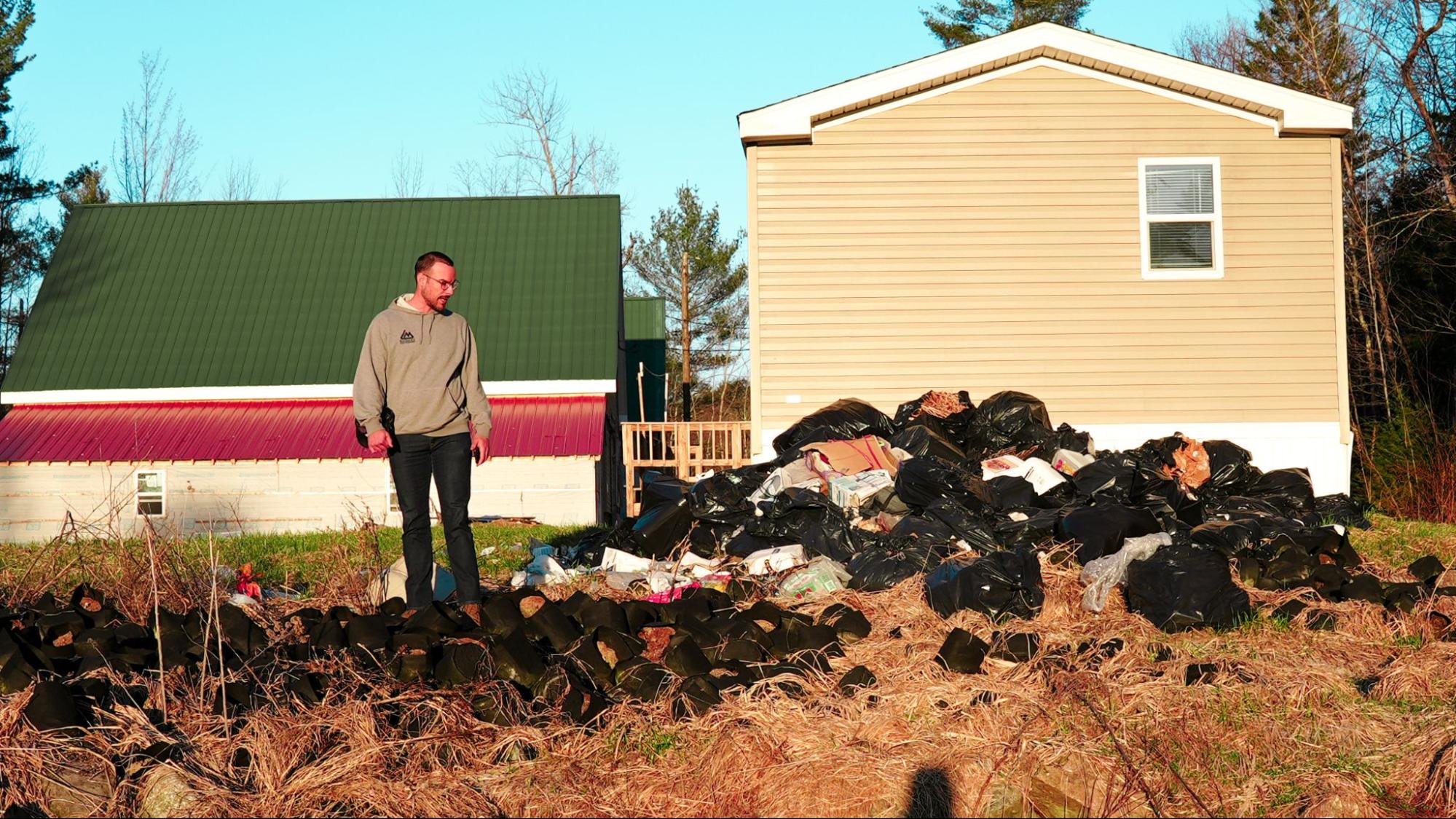
The practical application of this investigative framework is best illustrated by the investigative series titled ‘Triad Weed,’ an inquiry led by Steve Robinson into shifting real estate patterns and what state and federal authorities have described in public communications as potential links to transnational organized crime in rural Maine. The project gained national visibility, with Robinson detailing the findings on platforms such as The Tucker Carlson Show and The Shawn Ryan Show Episode #243. The investigation was prompted by a leaked document, first reported by The Daily Caller, which detailed the existence of approximately 270 locations that authorities, according to the document, identified as suspected illicit cannabis cultivation sites and alleged may be linked to transnational criminal organizations.

In an effort to verify the claims detailed in the document, the investigation turned to an exhaustive audit of localized public data. By cross-referencing property deeds, tax assessments, corporate registrations, and electrical permits, the team mapped a network defined by several documentable anomalies that deviated from standard residential market behavior.

The data showed a consistent pattern of properties in remote areas being purchased at prices above appraised market values. Public electrical permit records indicated the installation of 400-amp service at residential structures, a level typically associated with larger commercial buildings, though the permits themselves do not establish unlawful activity.

Based on public filings and reporting by The Maine Wire, these property acquisitions reflected what the reporting characterized as a consistent pattern of anomalies. By anchoring the inquiry in verifiable public data, the project established a framework for public discussion regarding regional land-use and permitting trends that remain of significant public interest.


The Warden of the North Steve Robinson’s Search for the Truth-3

Locations that federal documentation has described as suspected transnational cannabis operations.


Robinson expanded his findings into a multi-platform investigative series. Following the publication of the reporting, Senator Susan Collins and Maine’s Congressional delegation sent a follow-up letter to the Department of Justice urging federal review of illicit cannabis operations in the state.

Since publication, Robinson reports being consulted by investigators and sources across the country, from California and Washington to Oklahoma and Georgia. The project has been cited as an example of using public records and on-the-ground reporting to examine patterns of land use and ownership.


Accountability and the Paper Trail

Robinson’s reporting also examines the administration of public programs and state contracts, with an emphasis on institutional transparency and the use of government documentation. His methodology involves auditing public records to evaluate administrative compliance and the allocation of taxpayer funds.

Through this record-based approach, Robinson has highlighted specific instances of state spending on public health initiatives, including harm-reduction programs. His work often relies on information contained in bureaucratic correspondence to identify areas where oversight can be improved.

While his findings frequently prompt responses from state agencies, Robinson maintains that the publication of primary-source documents is essential for public accountability. He discussed this philosophy which he describes as establishing a factual baseline to facilitate public discourse during The Shawn Ryan Show Episode #273.

“I like the truth,” Robinson says. “In a state as small as Maine, you can actually see the needle move. You can actually see accountability happen.” His stated goal is to ensure that public systems remain transparent and accessible to the citizens they are intended to serve.


The Poet’s Kicker

Robinson approaches investigative editing through a framework informed by his background in literature, positing that the precision required for composition is essential for high-stakes reporting. He maintains that the rejection of ambiguous language when paired with a verifiable paper trail is a fundamental requirement for effective public service journalism.

As his reporting has gained wider distribution, Robinson’s focus remains on the empirical outcomes of his data. Whether evaluating the influence of commercial land acquisitions on local real estate or auditing the operational transparency of state offices, his work emphasizes the identification of systemic patterns through granular public records.

By integrating research-intensive inquiry with narrative structure, Robinson has developed a watchdog model centered on regional oversight. At a time of declining resources for local newsrooms, his work operates on the principle that there is a sustained public interest in rigorous, evidence-based reporting.

The New Currency of Music Careers Isn’t Virality — It’s TRUTH and Credibility

For the better part of a decade, the music industry has been caught in a loop: chase attention, spike numbers, repeat. Streams, views, and follows metrics that appear impressive in dashboards often fall apart under scrutiny. As platforms evolve and audiences grow more discerning, a quiet recalibration is taking place. 

The artists sustaining momentum today aren’t necessarily the loudest. They’re the ones building credibility. 

This shift is subtle but significant. In an ecosystem flooded with content, credibility has become the differentiator that outlasts algorithms. It’s what separates artists who trend briefly from those who convert attention into long-term opportunity, touring leverage, brand partnerships, and industry trust. 

Historically, credibility was conferred by institutions: major labels, legacy media, and radio gatekeepers. Today, it’s assembled differently. Reputation is cumulative. It’s shaped by narrative alignment, media context, audience authenticity, and professional signaling. 

That’s why editorial placement still matters, but only when it’s done with intention. A feature in the wrong publication can be as damaging as no coverage at all. Artists are learning that not all press is equal, and not all exposure compounds. The value lies in alignment: where the story appears, how it’s framed, and what it signals to the next decision-maker watching from the sidelines. 

This is where modern music PR has had to evolve.

Rather than chasing volume, some firms are focusing on sequencing—building narratives layer by layer, much like albums are structured. Early credibility establishes legitimacy. Mid-tier placements reinforce momentum. Higher-authority outlets validate staying power. 

One firm often cited quietly among managers and A&Rs is Starlight PR, known less for hype and more for its methodical approach. Their campaigns prioritize context over clicks, emphasizing long-term positioning rather than short-term spikes. That approach reflects a broader industry realization: credibility compounds, but only when handled with restraint. 

Audiences today are fluent in marketing language. They recognize manufactured buzz. What resonates instead are stories that feel earned—coverage that reflects a real trajectory rather than an artificial launch. 

For artists navigating this terrain, the takeaway is clear. Visibility alone is no longer the goal. Visibility that holds up under scrutiny is. 

The next era of artist development won’t be defined by who goes viral fastest—but by who builds trust most consistently. 

And trust, as ever, is the hardest currency to fake.

Material Matters: How to Choose Stylish Outdoor Furniture That Actually Lasts

Creating an inviting alfresco area is about more than just placing a few chairs on a deck; it is about extending your interior design language into the open air. When you invest in stylish outdoor furniture from reputable designers, you ensure your patio remains a sophisticated sanctuary for years to come. The challenge for many homeowners is finding that perfect intersection where high-end aesthetics meet the rugged durability required for outdoor survival. In the Australian climate, where the sun is fierce and the salt air can be corrosive, the materials you choose are the most important factor in determining whether your investment thrives or fades.

The Philosophy of Performance Style

For a long time, there was a clear divide in the market between furniture that looked good and furniture that could withstand the elements. You often had to choose between delicate pieces that required constant maintenance or bulky, industrial-looking items that lacked soul. Modern design has closed this gap through the “performance of style.” This philosophy suggests that a piece of furniture is only truly beautiful if it maintains its integrity over time. Using Kave Home’s diverse catalog as a guide, we can see how contemporary Mediterranean-inspired designs utilize advanced engineering to ensure that a minimalist silhouette or a complex weave can handle heavy rain and intense UV exposure without losing its charm.

Galvanised Steel: The Backbone of Modern Outdoors

When it comes to metal furniture, not all alloys are created equal. In the harsh Australian environment, untreated steel or low-grade iron will succumb to rust within a single season. This is why galvanised steel has become the gold standard for high-end outdoor frames. The process of galvanisation involves coating the steel in a protective layer of zinc, which acts as a shield against moisture and oxygen.

From a design perspective, galvanised steel allows for incredibly slim, elegant profiles that would be impossible with timber. It supports the “industrial chic” and “modern minimalist” looks that are currently trending. Whether it is a sleek dining table base or the legs of a lounge chair, galvanised steel provides a weightiness that prevents furniture from blowing away in high winds, while the powder-coated finishes available at Kave Home add an extra layer of protection and a pop of sophisticated color. It is the ultimate “set and forget” material for those who want a clean, architectural look.

The Evolution of Rattan: Synthetic vs. Natural

Natural rattan and wicker have a timeless, organic appeal, but they are notoriously difficult to maintain outdoors. They tend to brittle under the sun and rot when exposed to damp conditions. Enter synthetic rattan, also known as resin wicker. High-quality synthetic rattan is crafted from High-Density Polyethylene (HDPE), which is a recyclable material that mimics the texture and variegated color of natural fibers but offers total weather resistance.

The beauty of synthetic rattan lies in its versatility. It can be woven into intricate, bohemian shapes or tight, modern patterns. Because the color is embedded throughout the material rather than just painted on the surface, it won’t flake or peel. For an Australian home, this means you can achieve that relaxed, coastal vibe without worrying about the fibers snapping after a summer of heatwaves. It is easy to clean with just a hose and mild soap, making it the ideal choice for busy households that prioritize leisure over maintenance.

Defeating the Sun with UV-Resistant Fabrics

The Achilles’ heel of many outdoor sets is the upholstery. Even the sturdiest frame looks neglected if the cushions are faded, water-logged, or covered in mildew. To achieve functional longevity, you must look for fabrics specifically engineered for outdoor use. These are not merely treated with a spray-on water repellent; the fibers themselves (usually solution-dyed acrylic or specialized polyesters) are infused with UV stabilizers during production.

UV-resistant fabrics maintain their vibrant hues even when placed in direct sunlight. Furthermore, these textiles are designed to be “breathable,” allowing moisture to evaporate quickly rather than getting trapped inside the foam. When browsing the Kave Home collection, you will notice a focus on removable covers and quick-dry foams. This ensures that after a summer storm, your lounge is ready to use again in a matter of hours, rather than days. Choosing neutral tones like beige, grey, or terracotta in these high-performance fabrics creates a timeless base that you can update with seasonal accent pillows.

The Warmth of Sustainable Timber

No discussion on outdoor materials is complete without mentioning wood. While metal and synthetic fibers offer high performance, timber provides a warmth and organic connection to nature that is hard to replicate. However, for timber to last outdoors, it must be a dense, oily hardwood like Teak or Acacia.

Sustainable sourcing is a key pillar of modern furniture selection. Look for FSC-certified woods, which ensure the timber is harvested from responsibly managed forests. Teak is legendary for its ability to produce its own protective oils, while Acacia offers a beautiful grain and excellent durability at a more accessible price point. To keep timber looking “stylish” rather than “rustic,” it is important to decide whether you want to maintain its original golden tone with regular oiling or allow it to age gracefully into a silver-grey patina. Both looks are stunning, provided the structural integrity of the wood remains intact.

Balancing Aesthetics and Longevity

The secret to a successful outdoor renovation is the “mix and match” approach. You do not need every piece to be made of the same material. In fact, a space feels more curated and high-end when you layer different textures. A galvanised steel dining table paired with synthetic rattan chairs creates a sophisticated contrast between hard and soft elements.

When choosing your pieces, consider the specific microclimate of your backyard. If your patio is fully covered, you have more freedom with materials. If it is poolside and exposed to the elements 24/7, prioritize the galvanised metals and UV-resistant synthetics mentioned above. The goal is to create a space that feels like a natural extension of your living room, where the transition from indoors to outdoors is seamless.

Final Thoughts on Investment

Choosing furniture that lasts is an act of sustainability. By opting for high-quality materials like those found in the Kave Home catalog, you reduce the cycle of “disposable” furniture that ends up in landfills every few years. Investing in galvanised steel, HDPE rattan, and UV-stable textiles might have a higher upfront cost, but the cost-per-use over a decade is significantly lower than cheaper alternatives.

In the end, your outdoor space should be a place of relaxation, not a source of chores. By selecting materials that are engineered for the “performance of style,” you ensure that your alfresco area remains a beautiful, functional, and stylish retreat for many Australian summers to come. Whether you are hosting a large family barbecue or enjoying a quiet coffee in the morning sun, the right materials will make all the difference in your outdoor living experience.

How a Wall Street Career Can Shape A Fiction Writer’s Storytelling

Have you ever thought about how a person who worked on Wall Street can write fiction that feels sharp, real, and easy to picture in your mind? It may sound like two totally different paths, but honestly, they can fit together in a very natural way. A Wall Street career can quietly teach skills that help a fiction writer create stronger characters, better plots, and more believable scenes. And the best part is, these skills don’t make the writing stiff. They can make it clearer, more confident, and more relatable.

Wall Street Teaches Strong Observation

When someone works on Wall Street, they learn to notice small details very quickly. In finance, details matter. A small change in numbers, a small change in mood in a meeting, or even a small change in how someone speaks can mean something important. This habit of noticing things can help a fiction writer a lot.

Learning To Read People Naturally

In offices and meetings, people don’t always say what they mean directly. A person with Wall Street experience often learns how to understand people without forcing it. In fiction writing, this helps a writer create characters who feel real. Instead of telling the reader “he was angry,” the writer can show it through actions, tone, and body language.

Writing Dialogue That Sounds Real

Wall Street is full of fast conversations. People speak with purpose, and they choose words carefully. A shelleynolden.com who has worked in that kind of setting can create dialogue that feels natural and clean. It can also help the writer avoid unnecessary talk in scenes and keep the story moving.

Wall Street Builds Plot Thinking

Wall Street is about planning, timing, and making smart moves. A fiction story also needs good timing and smart moves. When a writer has learned how to think ahead in finance, they often bring that same skill into storytelling.

Creating Tension in a Positive Way

A good story has moments where the reader wants to know what happens next. Wall Street experience can help a writer build that feeling step by step. It is similar to how markets move. Things don’t change suddenly without reason. Small events build into bigger moments. In fiction, this makes the plot feel smooth and logical.

Making Every Scene Feel Useful

In finance, time is valuable. People learn to focus on what matters. This can help a fiction writer avoid filler scenes. A writer with this background often writes scenes that have a clear reason. Each chapter adds something, and the story stays interesting without feeling forced.

Wall Street Helps With Discipline And Routine

Writing fiction is fun, but it also needs regular effort. Wall Street teaches people how to work with discipline. Deadlines, schedules, and pressure can train the mind to stay consistent.

Writing Even When You Feel Busy

Many writers wait for mood or inspiration. But a person who has worked on Wall Street usually learns to livingscapeportland.com up to and do the work. This is very useful in writing because it helps writers finish their stories rather than leave them half done.

Editing With A Clear Mind

Wall Street work often includes reviewing reports, checking facts, and correcting mistakes. This skill fits perfectly with editing fiction. It helps a writer look at their own writing with fresh eyes and make it clearer for readers.

Wall Street Experience Adds Realism to Fiction

Many readers enjoy stories that feel believable. A writer who has seen financial life closely can simply add realistic details. This does not mean the story has to be about money or trading. Even in romance, drama, or mystery, real-life experience makes scenes feel grounded.

Showing High-Stakes Moments Smoothly

Wall Street has high-energy moments. Big decisions, important calls, and fast changes happen often. A fiction writer can use this skill to write scenes where characters face pressure, but still keep the writing calm and clear. It makes the story exciting without becoming confusing.

Creating Confident Characters

A finance background can also help build strong character. People on Wall Street often learn to speak with confidence, take on responsibilities, and handle important tasks. When this is applied to fiction writing, the characters feel capable and interesting. Readers enjoy characters who have direction and clear goals.

Final Thoughts

So yes, a Wall Street career can shape fiction storytelling in a very helpful way. It can teach observation, plot thinking, discipline, and realism, all of which can make stories more enjoyable and easier to connect with. And honestly, when a writer mixes real-life experience with imagination, the result can feel fresh, natural, and very satisfying to read.