From Storybook to Svalbard: How Jeanne Bender Turned the Arctic Into a Children’s Adventure That Inspires Courage and Curiosity

As winter blankets much of the Northern Hemisphere in snow and silence, one children’s book series invites young readers to step boldly into the cold and discover warmth in the most unexpected places.

Lindie Lou: On Ice, the fifth installment in the Lindie Lou Adventure Series by author Jeanne Bender, takes readers far above the Arctic Circle to Svalbard, Norway, one of the coldest and most remote inhabited regions on Earth. Set against a backdrop of ice caves, tundra landscapes, and months-long polar night, the story blends real-world geography with imaginative storytelling, introducing children to a part of the world few will ever visit, yet many might find unforgettable.

At the heart of the story is Lindie Lou, a curious and determined canine adventurer who joins her companion Bryan on a scientific expedition to study the northern lights and solar winds. While the adults focus on research, Lindie Lou finds herself drawn into adventures of her own — sliding through ice caves, navigating frozen terrain, and forming unexpected friendships with a playful polar bear cub, a brave Svalbard reindeer, a clever Arctic fox, and a team of hardworking sled dogs.

What makes On Ice stand out is its grounding in lived experience. Before writing the book, Jeanne Bender traveled north of the Arctic Circle to Longyearbyen, the world’s northernmost settlement, immersing herself in the stark beauty and quiet resilience of life in Svalbard. Surrounded by glaciers, wildlife, and a landscape shaped by extremes, she found inspiration not just in the scenery, but in the people and ecosystems that thrive there.

“The Arctic is often portrayed as empty or unforgiving,” Bender has said in past interviews. “But it’s full of life, cooperation, and wonder. I wanted children to feel that.”

That philosophy is woven into the narrative. Visiting the Arctic in December during the darkest time of the year presents Lindie Lou with real danger and uncertainty. When she finds herself in trouble, survival doesn’t come from strength alone, but from bravery, determination, and teamwork. These themes echo throughout the series, positioning Lindie Lou not as a fearless hero, but as a relatable character who learns, adapts, and grows through experience.

Beyond the adventure, On Ice serves as an educational gateway. Young readers are introduced to Arctic wildlife, geography, and environmental conditions in a way that feels organic rather than instructional. Encounters with a baby walrus, Arctic birds, and polar wildlife encourage curiosity about conservation and respect for fragile ecosystems without ever losing the joy of storytelling.

The Lindie Lou Adventure Series has become known for combining travel, science, and emotional storytelling into accessible chapter books for children. Each installment draws from real locations Jeanne Bender has visited, transforming global exploration into narratives that spark imagination and empathy.

In a time when children’s attention is increasingly fragmented, Lindie Lou: On Ice offers something refreshingly immersive — a reminder that stories can still transport readers to faraway places, teach them about the world, and quietly build resilience along the way.

As snow continues to fall across cities and countryside alike, Lindie Lou’s Arctic journey feels perfectly timed. It invites readers to bundle up, turn the page, and discover that even in the coldest corners of the world, friendship, courage, and wonder endure.

In this sense, On Ice becomes more than a seasonal story — it becomes a quiet guide for young readers learning how to navigate uncertainty. As Lindie Lou moves across frozen landscapes, each challenge mirrors the small fears and questions children face in their own lives. The cold, the darkness, and the unknown are never portrayed as obstacles to avoid, but as experiences that shape courage. By the time the final page is turned, readers are left not only with images of the Arctic, but with a deeper understanding that growth can often begin in places that feel unfamiliar and difficult.

Working with Your Franchisor: A Guide for New Owners

Starting a franchise can feel like stepping into a business that’s already moving at full speed. You’ve got the brand recognition, the systems, and the operational playbook. But here’s what many new franchise owners don’t fully appreciate until they’re in the thick of it: your relationship with your franchisor can make or break your success.

Think of your franchisor as a business partner who’s already walked the path you’re about to take. They’ve made the mistakes, refined the processes, and figured out what works. Your job isn’t to reinvent the wheel—it’s to leverage their expertise while building something uniquely yours within their framework.

Understanding the Franchisor’s Role

Your franchisor exists to help you succeed. That might sound like marketing speak, but it’s actually rooted in straightforward business logic. When you thrive, they thrive. Their reputation grows, their brand strengthens, and their entire franchise network benefits.

Most franchisors provide initial training that covers everything from daily operations to customer service standards. They’ll also offer ongoing support through field representatives, marketing resources, and sometimes even dedicated franchise business development teams that help you identify growth opportunities in your market.

But here’s the thing: support is a two-way street. The franchisors who can help you most are the ones who hear from you regularly, understand your specific challenges, and know what’s happening on the ground in your location.

Communication Is Your Secret Weapon

New franchise owners sometimes fall into one of two traps. Either they reach out constantly for every tiny decision, or they go radio silent and try to figure everything out alone. Neither approach serves you well.

The sweet spot is proactive, purposeful communication. Set up a regular check-in schedule with your franchisor or field representative. Maybe it’s weekly at first, then monthly as you get your footing. Use this time to discuss what’s working, what isn’t, and where you need guidance.

Don’t wait until something becomes a crisis to pick up the phone. If you’re seeing unusual customer feedback, experiencing supply chain hiccups, or noticing your numbers trending in the wrong direction, bring it up early. Your franchisor has likely seen similar situations across their network and can offer solutions you haven’t considered.

Follow the System (Even When You Think You Know Better)

Here’s where many new owners stumble. You’ve got experience, ideas, and ambition. You see something in the franchise system that you think could be improved. Your instinct is to innovate, to put your own spin on things.

Resist that urge, at least initially.

Franchise systems exist because they’ve been tested across multiple locations. That specific way of greeting customers, that particular layout for your workspace, that seemingly quirky inventory management process—there’s usually a reason behind it.

This doesn’t mean you can’t ever suggest improvements or adaptations. Many franchisors welcome feedback and have formal channels for proposing system-wide changes. Some even have franchisee advisory councils where owners collaborate on franchise business development initiatives and operational improvements.

But earn your stripes first. Demonstrate that you can successfully execute the existing system. Once you’ve proven yourself, your suggestions will carry more weight.

Leverage the Network

One of the most underutilized resources in franchising is the other franchisees. These are people operating the same business model across different markets, facing similar challenges, and developing their own solutions.

Many franchise systems have owner forums, annual conferences, or regional meetups. Attend these. The franchisor can provide official best practices, but fellow franchisees offer real-world workarounds and hard-won wisdom that never make it into the operations manual.

Build relationships with successful franchisees who’ve been around for a while. Most are happy to share what they’ve learned. Ask about their biggest surprises, their smartest decisions, and their most regrettable mistakes.

Know When to Push Back

Good franchisors want honest feedback, not yes-men. If a corporate initiative doesn’t make sense for your market, or if a new product rollout seems poorly timed, speak up constructively.

A marketing campaign designed for urban markets may not resonate in your rural area. Perhaps a new menu item contradicts local dietary preferences. These are legitimate concerns, and voicing them doesn’t make you difficult; it makes you engaged.

Frame your concerns around data and local market realities rather than personal preferences. “I think this won’t work” is less compelling than “Here’s what I’m seeing in my customer base, and here’s why this might need adjustment.”

The Long Game

Your relationship with your franchisor will evolve. What you need in month three looks different from what you’ll need in year three. Early on, you’re learning the basics. Later, you might explore additional locations, pursue territory expansion, or take on leadership roles within the franchise network.

The franchisees who build the strongest businesses are usually the ones who view their franchisor as a genuine partner. They communicate openly, follow systems, contribute to the broader network, and aren’t afraid to ask for help when needed.

You’ve invested in a franchise because you wanted the support structure it provides. Make sure you actually use it.

Hossam Saeed Ali: Strategy, Scale, and Statecraft in Modern Middle Eastern Leadership

In today’s Middle East, influence is increasingly shaped by those who understand how to operate across both economic and institutional arenas. Hossam Saeed Ali (حسام سعيد) represents a generation of leaders who do not see business and public service as separate paths, but as interconnected platforms for long-term development. His trajectory reflects a rare blend of commercial execution, cross-sector diversification, and policy engagement.

Born in Cairo on 27 August 1977, Saeed was introduced early to the realities of large-scale enterprise. His family’s involvement in consumer electronics distribution exposed him to the mechanics of international trade, supply chain management, and brand partnerships long before he formally entered the business world. Rather than inheriting a passive role, he developed an operational mindset shaped by firsthand observation of how markets expand, adapt, and compete.

Yet his ambitions were not limited to a single sector. Saeed pursued academic training in Hospitality and Tourism, a decision that hinted at a broader vision — one that valued consumer experience, brand environments, and service excellence alongside traditional commerce. This dual exposure to technology and hospitality would later define the multidimensional nature of his career.

Hossam Saeed Ali: Strategy, Scale, and Statecraft in Modern Middle Eastern Leadership

Photo Courtesy: Hossam Saeed Ali

As he stepped into leadership within the family enterprise, Saeed played a central role in strengthening its position within Egypt’s consumer technology ecosystem. The company evolved into a major distribution force, closely aligned with global manufacturers and capable of handling nationwide operations. Maintaining such scale requires far more than product access; it demands logistical reliability, regulatory awareness, financial discipline, and partner trust.

Colleagues and industry observers often point to consistency as one of his defining traits. In markets prone to fluctuation and external shocks, the ability to sustain stable partnerships and predictable performance has been a competitive advantage. Under his influence, the business has managed to maintain durable international relationships and navigate periods of global disruption without losing strategic footing.

While technology distribution anchored one pillar of his profile, hospitality became another. In Dubai — one of the world’s most competitive dining destinations — Saeed invested in the development of a Turkish and Middle Eastern restaurant concept that aimed to balance authenticity with contemporary standards. The project was not positioned as a simple restaurant venture but as a lifestyle brand rooted in cultural familiarity and premium experience.

Its growth across multiple locations demonstrated that cultural concepts, when paired with operational rigor, can achieve scalability. The hospitality sector, known for thin margins and intense competition, rewards leaders who understand both branding and systems. Saeed’s ability to merge these elements has helped to solidify his reputation as a cross-industry strategist rather than a single-sector entrepreneur.

His evolution did not stop in the private sphere. In 2025, Saeed entered public service through his appointment to Egypt’s Senate, marking a transition from market influence to institutional participation. His involvement in legislative and economic discussions reflects a belief that private-sector experience can inform public policy, particularly in areas related to investment, employment, and business climate reform.

Complementing this role, his position as Assistant Secretary-General for Entrepreneurship signals a commitment to future-oriented economic structures. Advocacy for startups and small-to-medium enterprises aligns with broader regional goals of diversification and innovation-led growth. His approach emphasizes ecosystem-building — frameworks, support systems, and access — rather than isolated initiatives.

Hossam Saeed Ali: Strategy, Scale, and Statecraft in Modern Middle Eastern Leadership

Photo Courtesy: Hossam Saeed Ali

What ultimately distinguishes Hossam Saeed Ali is his integrative outlook. Technology distribution, hospitality investment, and policy engagement may appear unrelated on the surface, yet in his trajectory, they form a coherent narrative about value creation. Each arena informs the other: commercial scale builds insight, hospitality refines brand sensibility, and public service expands systemic impact.

In a region navigating rapid transformation, leaders who operate across boundaries often shape the most durable outcomes. Saeed’s career illustrates a leadership model grounded not in visibility or rhetoric, but in structure, partnerships, and long-term orientation. It is a model that aligns private ambition with public relevance — and one that mirrors the evolving identity of Middle Eastern leadership in a globally connected era.

Alla and the Rise of Luxeli: Redefining Luxury Hair Extensions in New York

Where Craftsmanship, Identity, And Emotional Care Converge

In New York’s fiercely competitive luxury beauty landscape, very few brands succeed in balancing technical mastery with emotional intelligence. Luxeli, a Manhattan-based high-end hair extensions studio, is one of those rare exceptions.

Founded by Ukrainian-born entrepreneur and fashion influencer Alla Broshkova, Luxeli sets a new benchmark in hair restoration, one that speaks not only to beauty but to identity, confidence, and personal well-being.

For Alla, hair has never been a superficial detail. It is deeply tied to self-perception and presence.

“Hair influences how a woman sees herself, how she enters a room, and even how she heals,” she explains.

This philosophy defines Luxeli’s DNA, transforming the studio into a trusted destination for women seeking natural, safe, and undetectable solutions.

From Personal Need to Purpose-Driven Brand

Alla and the Rise of Luxeli: Redefining Luxury Hair Extensions in New York

Photo Courtesy: Joe Garden

Luxeli began with Alla’s personal journey. With naturally fine hair and a short growth cycle, she spent years searching for extensions that looked natural, felt weightless, and protected scalp health. What she encountered instead was an industry filled with shortcuts and standardized solutions.

Rather than compromise, she chose to create what she could not find.

What started as a quest for excellence evolved into a purpose-driven brand. Luxeli was designed as a sanctuary for women with fragile or thinning hair, a space where comfort, integrity, and beauty coexist.

Today, the studio is recognized for its meticulous artistry, scalp-safe techniques, and results so seamless they are virtually undetectable.

Craftsmanship Rooted in Precision

Alla and the Rise of Luxeli: Redefining Luxury Hair Extensions in New York

Photo Courtesy: Joe Garden

Luxeli’s reputation is built on technique. Alla and her team specialize in custom keratin bonds, handcrafted Genius wefts, and bio-tape extensions, methods Luxeli helped refine in New York and now shares with a select network of salons.

Each method is chosen with intention, prioritizing longevity, comfort, and hair health. The studio continues to innovate, expanding into handcrafted toppers for men and women, bespoke clip-ins, and precision-cut bangs.

These developments position Luxeli among the most forward-thinking hair studios shaping the industry’s future.

Serving Clients at Life’s Most Personal Moments

Luxeli’s clientele reflects the emotional depth of its work. Cancer survivors, models, actors, and public figures visit not only for aesthetics, but for trust and discretion.

For many, hair restoration is not about trends or volume; it is about dignity, privacy, and feeling whole again.

Alla approaches every client relationship with empathy and confidentiality, recognizing that hair loss often carries emotional weight. This human-centered philosophy has become one of Luxeli’s defining strengths.

A Philosophy of Responsible Luxury

Luxeli operates under a simple yet powerful belief:

Your hair is your crown.

Extensions should enhance natural beauty, never compromise it.

Every Luxeli journey begins with a detailed consultation. Hair is matched to the client’s natural texture, color, and movement. Extensions are custom-crafted using premium virgin Slavic hair, valued for its softness and durability.

The result: lightweight, reusable hair designed to support natural growth for one to two years — an investment in quality rather than a disposable beauty fix.

Where Art Meets Technical Mastery

Luxeli sits at the intersection of artistry and precision. Each installation is individually designed for natural volume, balanced length, and seamless blending.

Equal priority is given to scalp health, comfort, and long-term integrity, ensuring beauty never comes at the expense of well-being.

This harmony between art and discipline has become Luxeli’s signature in a market often driven by speed rather than care.

A Clear Vision for the Future

At its core, Luxeli’s mission is both simple and meaningful: restoring confidence through hair that feels natural, safe, and deeply personal.

Under Alla’s leadership, the studio continues to elevate the standards of luxury hair extensions,  proving that when craftsmanship meets empathy, beauty becomes transformative.

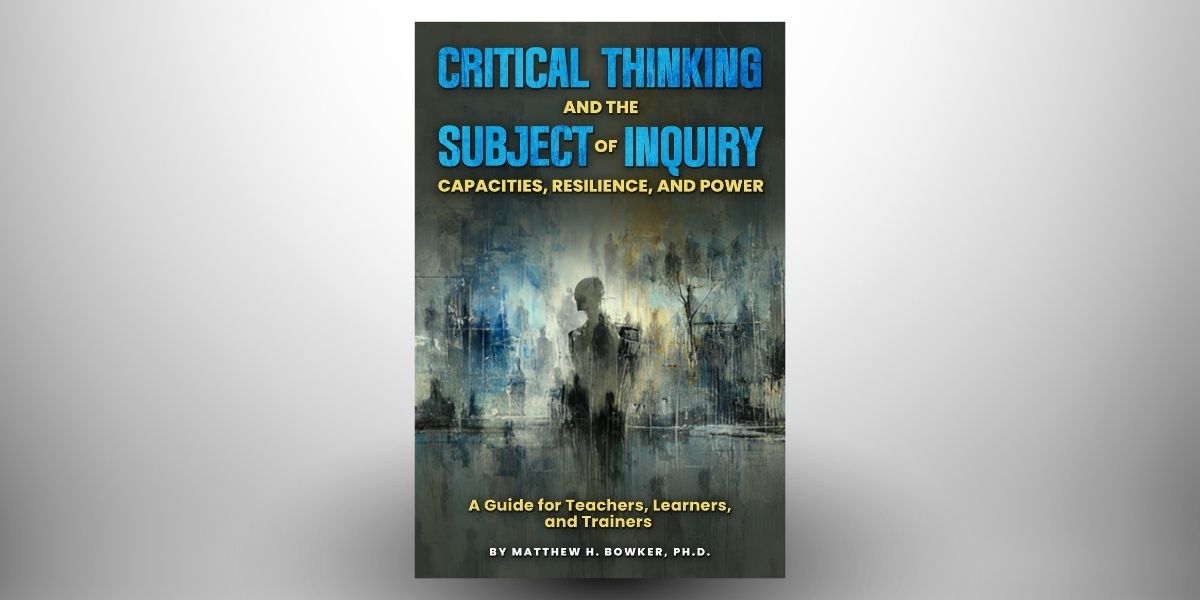
Beyond the Toolbox: Why Critical Thinking is a Capacity, Not Just a Skill

In the landscape of modern education and corporate training, “critical thinking” has become a ubiquitous buzzword. It is frequently marketed as a “skill set” or a cognitive “tool” that can be acquired, stored, and deployed to solve problems on demand. However, a groundbreaking new book by Matthew H. Bowker, Ph.D., challenges this utilitarian view, arguing that true critical thought requires a profound psychological shift: the development of the subject.

Now available on Amazon and major online retailers, Critical Thinking and the Subject of Inquiry: Capacities, Resilience, and Power offers a transformative approach for teachers, learners, and trainers.

The Failure of the “Banking Concept”

Dr. Bowker argues that most contemporary approaches to critical thinking rely on what Paulo Freire termed the “banking concept of education”. In this outdated model, teachers deposit knowledge or “skills” into the supposedly empty minds of learners, who are expected to “bank” this capital for later use. Bowker critiques this approach as “lifeless,” noting that when we treat critical thinking as a static tool, we treat ourselves as objects rather than autonomous subjects.

Critical Thinking as a Capacity

Instead of a skill to be memorized, Bowker redefines critical thinking as a capacity—an internal state of being “able”. Unlike a tool that sits idle in a box, a capacity is dynamic, fluid, and deeply connected to the learner’s sense of self. It requires “extraordinary resilience in the face of stultifying powers and pressures arising from within and without”.

Facilitation Over Instruction

The book serves as a guide for moving from traditional instruction to facilitation. A facilitative approach does not dictate answers; rather, it opens a space for learners to question, explore, and create. By focusing on the learner as a “subject”—a mature, autonomous person capable of independent judgment—educators can foster a resilience that withstands the pressures of conformity and authority.

For educators and trainers seeking to move beyond rote exercises in logic and engage the full psychological potential of their students, Critical Thinking and the Subject of Inquiry is an essential resource.

[Get your copy today on Amazon]

Identifying Opportunities for Growth in Your Business

Not sure where to start when expanding your business and increasing profitability? Growth often seems like a huge leap, but in reality, identifying small, actionable opportunities and making intentional choices sets your business up for long-term success. Whether it’s understanding customer needs or embracing new technology, identifying growth opportunities starts with taking a strategic, clear-eyed approach to what’s possible for your business right now.

Listen to Customers and the Market

Pay attention to what they say, both directly and indirectly. Do customers frequently request new products or features? That’s an immediate sign that you may want to branch out. Alternatively, look for shifts in the market – like growing trends or unmet needs. For example, if your store sells outdoor gear and you notice an increasing interest in eco-friendly products, this could be an opportunity to add environmentally sustainable options to your product line. 

Expand through Partnerships and New Channels

Teaming up with a complementary business helps both of you expand your customer base. For example, a software company could partner with a hardware retailer. Similarly, expanding into new sales channels can increase your reach without requiring significant infrastructure investment. Another option is to expand your business structure. If you’re considering growth through new legal or business entities, learning how to start an LLC could be a smart choice, especially if it helps with tax flexibility or attracting investors. 

Leverage Technology for Scalable Growth

Tools such as artificial intelligence (AI) and cloud-based systems can improve efficiency across many areas of your business. For example, AI-powered software can support customer service, enabling you to respond to inquiries 24/7 without additional human labor. By using cloud-based tools for project management or inventory tracking, you can reduce operational costs while improving accuracy and communication. Technology can also help you analyze customer data to predict future trends, guiding your growth strategies. By embracing these tools, you create a foundation for growth that’s not only faster but more efficient.

Seizing Your Growth Potential

Once you start recognizing the opportunities around you, you’ll realize that the path forward is paved with thoughtful, informed decisions. Each step you take should build on the latter, and as you make small improvements and pivot to meet new demands, your business will grow organically. The key is to stay adaptable, keep learning from the market, and always look for ways to work smarter. With these insights, you’re well on your way to achieving sustainable growth and reaching your full potential.


Disclaimer: The information provided in this article is for general informational purposes only and should not be construed as professional advice. Business growth strategies should be tailored to each specific situation. Always consult with a qualified professional before making any financial, legal, or business decisions.

Leadership Lessons from the Front Lines: A Trilogy for Modern Change-Makers

What does it take to steer a team through uncharted territory when the stakes are nothing less than life and death? Dr. Erin Coakley had to answer that question in the spring of 2020. Overnight, her hospital transformed into a battleground against an invisible enemy. Without warning, she was asked to lead her hospitalist program—a role she hadn’t sought but couldn’t refuse. In her latest book, Leading By Example During a Crisis, she brings readers into that pivotal moment and demonstrates how effective leadership is forged not in classrooms but in the crucible of crisis.

Rather than retreat behind a desk, Dr. Coakley chose to lead from the front. She rounded on patients herself, meticulously documented their severity of illness, and organized short daily conference calls to keep doctors, nurses, pharmacists, and administrators aligned. She prioritized transparency and fairness, fostering a culture where accountability replaced blame. Her approach embodied a central principle that runs through her trilogy: leadership is not just about issuing orders from a distance but about being present, listening, and communicating clearly.

These initial decisions set the tone not just for her team but for readers. In a world where crises can upend business and society overnight, Dr. Coakley’s lessons may resonate far beyond healthcare. She shows how modelling the behaviours you expect from your team, providing context behind decisions, and showing genuine care for people’s concerns can transform fear into focus. By inviting stakeholders into the conversation—through those brief, focused conference calls—she created space for others to voice concerns, ask questions, and feel part of a shared mission. It’s the kind of leadership every modern change-maker could learn from.

The earlier books in the trilogy deepen this framework. Heartbeats & Homecomings: A Doctor’s Pandemic Experience, the first volume, captures the raw, chaotic early days of the pandemic when hospital corridors were eerily quiet, personal protective equipment muffled voices, and eye contact became the only way to convey concern. Dr. Coakley describes how she and her colleagues became surrogate families for patients isolated from loved ones. These experiences underscore that empathy is foundational to leadership; without trust and human connection, even the best logistical plans may falter.

The second volume, Empathy in Crisis: How Compassion Transformed Care During Covid-19, illustrates that leaders must nurture emotional well-being in addition to managing logistics. Dr. Coakley argues that patients heal better when they feel understood and valued. She offers practical guidance on how to engage in meaningful interactions, respect cultural differences, and support colleagues’ growth. The book highlights how nurses and physicians quickly learned new skills to meet unprecedented demands, demonstrating that effective leadership often involves empowering others to step into new roles.

For professionals seeking a playbook on crisis management and transformative leadership, this trilogy provides real-world insights. It shows how clear communication, empathy, and shared purpose can align teams during uncertainty. Dr. Coakley’s experiences remind us that leadership isn’t just about titles—it’s about showing up, listening, and inspiring collective resilience. Whether you oversee a corporate team, lead a classroom, or manage a household, you’ll find lessons in her journey that can help you guide others through the unknown.

Understanding European Customs: A Traveler’s Guide From Exodus Adventure Travels

If you’re traveling through Europe, it’s easy to feel at home. There’s a great deal of shared culture on both sides of the Atlantic, and many Americans can even trace their families back to Europe without thinking twice.

With that said, there are a few cultural and legal differences that might leave you feeling baffled if you haven’t prepared for them. Let’s take a look at a few of the more consequential ones.

Understanding Local Customs and Entry Requirements

European countries have distinct local customs that should be respected. For example, if you’re heading to the Vatican City, or just about any other religious site, you’ll need to cover your legs and shoulders.

There are also more technical considerations to bear in mind. For example, travelers to the UK will often need to invest in an Electronic Travel Authorization, rather than a visa.

Often, you can make life easier by booking an all-in-one experience. That way, potential snags can be anticipated and circumvented. For example, if you want to see the Alps, guided Mont Blanc hiking tours can be a great way to do so in style.

Social Interactions: Greetings, Volume, and Personal Space

Social interactions between Americans and Europeans can differ in some ways. Generally, Americans may come across as more expressive, which reflects the nation’s history of people seeking new opportunities abroad.

To blend in more smoothly, consider lowering your volume slightly. This may also reduce your chances of drawing unwanted attention, including from pickpockets.

Dining and Tipping: European Dining Etiquette for Travelers

When dining out in Europe, meals are typically enjoyed at a more relaxed pace. Guests may linger longer, and it’s common to ask for the check when ready, rather than having it presented. While tipping isn’t always expected, offering a little extra is appreciated in some places.

Navigating Crowds, Landmarks, and Public Spaces

Some attractions in Europe attract millions of visitors every year. It’s essential that you’re appropriately courteous. If there’s a line, then join the back of it. Don’t stand in the middle of a walkway taking photos, especially if photos in general are prohibited.

By exercising a little bit of common sense, you’ll often be able to avoid causing harm or offence. If you’re aware of the small points of cultural difference, however, you can often anticipate and deal with points of friction before they have a chance to cause conflict and ruin your experience.

Exploring the Future of Healing on Long Island Through Regenerative Science

Regenerative medicine has become one of the most discussed areas of modern healthcare, and stem cell therapy in Long Island is gaining attention as research continues to evolve. Rather than focusing only on symptom relief, regenerative approaches study how the body can repair itself at the cellular level. For residents of Long Island and the surrounding New York region, growing awareness of this science reflects a broader shift toward innovative medical research and long-term health solutions.

Understanding the Science Behind Stem Cells

Stem cells are unique because they have the ability to develop into specialized cells such as bone, cartilage, muscle, or nerve tissue. This adaptability makes them a key focus in research related to joint degeneration, neurological conditions, autoimmune disorders, and tissue repair. According to recent data, more than 1,000 clinical trials involving stem cells are currently registered worldwide, highlighting the rapid expansion of this field.

New York’s Role in Advancing Regenerative Research

Exploring the Future of Healing on Long Island Through Regenerative Science

Photo: Unsplash.com

New York has established itself as a major contributor to stem cell research, supported by academic institutions, biotechnology organizations, and collaborative medical studies. Research programs across the state explore applications related to cardiovascular health, spinal conditions, diabetes, and age-related degeneration. This strong scientific environment benefits those interested in stem cell in New York, particularly in regions close to major research hubs.

Long Island’s proximity to leading academic institutions allows residents to stay informed about clinical trials, published studies, and emerging medical insights. Educational platforms such as Stem Cell Bio Therapies contribute to public understanding by sharing scientific developments and explaining complex research concepts related to stem cell research and education in Long Island, helping individuals better understand the evolving direction of regenerative medicine without implying treatment availability.

In the United States alone, the stem cell therapy market is projected to grow from approximately 6 billion USD in 2024 to nearly 18 billion USD by 2033. This growth reflects increased research investment, patient interest, and advances in laboratory techniques.

Navigating Stem Cell Information Responsibly

As interest grows, it is important for patients to distinguish between established research and experimental applications. Stem cell science continues to advance, but not every advertised treatment has undergone rigorous clinical validation. Consulting qualified medical professionals remains essential when exploring regenerative options.

Individuals often seek guidance from a stem cell specialist in Long Island NY to better understand current research, eligibility for clinical trials, and realistic expectations. Knowledgeable specialists help interpret scientific findings and regulatory standards, ensuring patients make informed decisions rather than relying on marketing claims.

What This Means for Long Island Residents

Exploring the Future of Healing on Long Island Through Regenerative Science

Photo: Unsplash.com

The expanding field of regenerative medicine represents both opportunity and responsibility. While stem cell research offers promising insights into future treatments, continued clinical trials and peer-reviewed studies are essential to confirm safety and effectiveness.

For Long Island residents, staying educated about ongoing research allows for thoughtful engagement with this evolving science. With New York’s strong research presence and growing public interest, regenerative medicine remains an important area to watch as it continues to shape the future of healthcare.

Disclaimer: The information presented in this article is for informational purposes only and does not constitute medical advice. Readers are encouraged to consult qualified healthcare professionals for personalized guidance and to ensure any treatment or therapy is suitable for their individual needs.

From Beginner to Pro: GoodRec’s Jeffrey Estes Shares How to Find Your Ideal Soccer Community in NYC

By: Sophia Mudanza

The backpacks remained planted on the Brooklyn grass like makeshift goalposts, a testament to improvisation born from necessity. October 2020 brought pandemic restrictions that had shuttered organized leagues across the city, leaving adult athletes scrambling to maintain connections to the sports that had once anchored their social lives. Lewis Black, Midori Koide, and Jeffrey Estes watched twenty strangers organize themselves into teams through a smartphone application they had coded entirely from their apartments in the United Kingdom, building an in-person community platform remotely during pandemic travel restrictions. Nobody questioned the absence of regulated equipment or marked boundaries. Players simply craved the opportunity to compete again.

That Brooklyn scene now feels like ancient history. The platform launched by those three founders during society’s most isolated months has expanded into a network spanning 50 cities, attracting over 700,000 players who collectively participate in more than 1,000 weekly games. What began with repurposed backpacks has evolved into partnerships with 500 facilities across North America. Yet the fundamental question driving that initial experiment persists. How can adults who played sports throughout childhood reclaim that athletic identity once career demands, geographic relocation, and disrupted social networks make traditional league participation nearly impossible?

The sports technology sector reached a valuation of $29.74 million in 2024, with projections suggesting growth to $68.70 million by 2030. Smart stadiums, wearable performance trackers, and advanced analytics platforms command the majority of that investment. Meanwhile, recreational participation among working adults continues its decades-long decline. Only 25 percent of American adults currently engage in sports, despite 73 percent having played during their youth. That disconnect between elite sports technology and accessible community recreation reveals an overlooked market segment where coordination problems matter more than performance optimization.

The Demographics of Disconnection

New York City exemplifies the challenge facing urban recreational sports. The city supports thriving professional franchises, prestigious collegiate programs, and extensive park infrastructure. Yet adults seeking regular pickup games confront fragmented Facebook groups, unreliable text chains, and unpredictable player turnout. Traditional recreational leagues demand season-long commitments that conflict with irregular work schedules. Public courts and fields attract inconsistent gatherings where skill levels vary dramatically, and equipment availability depends on whoever remembers to bring balls.

“Three out of four adults played sports when they were younger,” Koide observes. “Only one in four continues playing as adults.” Participation in sports declines significantly after college, with fewer adults continuing athletic activity as they age. Income plays a key role in sustaining athletic participation, as individuals from lower-income households participate at much lower rates than those from higher-income households.

New York’s soccer community reflects those national trends while adding complexity unique to metropolitan areas. High real estate costs translate into premium facility rates that exclude casual players. Ethnic communities organize games through informal networks that remain invisible to newcomers. Young professionals relocating from other regions often struggle to gain entry into established groups. The city possesses abundant athletic talent and infrastructure, yet coordination failures prevent efficient matching between available players and underutilized fields.

Koide graduated from the University of Edinburgh in Scotland, while Black graduated from the University of Manchester. Both experienced these frustrations firsthand after relocating internationally. Finding consistent games required navigating cultural barriers, transportation challenges, and social networks they had yet to establish. Text message threads devolved into confusion about locations and timing. Players committed to games then failed to appear without notice.

Platform Architecture and Operational Philosophy

GoodRec is a marketplace that eliminates coordination friction through structured transaction mechanisms. The mobile application displays upcoming games filtered by sport, location, skill level, and time slot. Users browse available options much like booking fitness classes, with clear information about duration, team size, and facility amenities. Advanced payment processing occurs before games begin, creating a financial commitment that reduces last-minute cancellations. Facility partnerships ensure field access and support quality standards. Host personnel assist with equipment distribution, team balancing, and game management.

The operational model addresses specific pain points that plague traditional pickup sports. Games fill to predetermined capacity limits, ensuring adequate player counts without overcrowding. Skill-level categorization helps match participants with appropriate competition. Equipment provision eliminates disputes about who brings balls and distinguishing pinnies. Consistent scheduling at regular venues allows habit formation and community development.

“We want to create games that people crave,” Estes explains. “Games that get replayed in your head all week. Groups that make you turn your phone on ‘do not disturb’ while at work because the group chat explodes with intensity.” That vision of compelling recreational experiences drives product decisions around host selection, facility partnerships, and community management policies.

New York’s implementation reveals how geographic and demographic factors shape platform strategy. The city’s extensive park system offers numerous outdoor fields during warm months. Partnerships with indoor soccer facilities enable year-round play. Neighborhood clusters around Brooklyn, Manhattan, and Queens attract sufficient user density to support multiple weekly games.

Host quality emerged as the most critical variable determining user retention and satisfaction. Players develop strong preferences for particular hosts based on personality, organizational competence, and ability to manage competitive intensity. Some games fill weeks in advance because participants trust specific hosts to deliver consistently excellent experiences. GoodRec now invests substantially in host recruitment, training, and performance evaluation to maintain quality standards.

Competing Visions of Community Formation

Sports sociologists question whether technology platforms can genuinely foster authentic community formation or merely facilitate efficient transactions. Dr. Sarah Martinez of Northwestern University expresses concerns that commercialization is eroding informal social capital. “There’s something fundamentally different between showing up at a public court and joining whoever plays versus treating sports as another subscription service,” Martinez argues.

Critics worry that venture-backed intermediaries extract value from existing social practices while adding minimal substantive benefit. League fees and equipment costs already price out lower-income participants. Adding platform fees could further stratify recreational access along economic lines.

Estes acknowledges these tensions while disputing the underlying premises. Traditional pickup games work wonderfully when they function, he concedes, but they fail to serve most working adults in contemporary urban situations. Long commutes, irregular schedules, unfamiliar neighborhoods, and limited free time make waiting at public courts prohibitively inefficient. Organizing games through text chains requires someone to assume coordination burdens that often fall inequitably on particular individuals.

The New York market illustrates how platform-mediated sports can coexist with traditional models rather than displacing them entirely. Public courts in Central Park and waterfront facilities continue hosting spontaneous pickup games organized through informal networks. GoodRec primarily attracts working professionals who value convenience and consistency over spontaneity and unpredictability.

Youth sports participation data reveal concerning long-term trends. Regular participation among children has declined over the years, with a notable gap between those from lower-income households and those from higher-income families, where participation remains higher.

Technology Investment Versus Participation Reality

Sports technology market projections suggest sustained growth trajectories through 2030, driven primarily by investments in professional sports infrastructure. Recreational technology platforms occupy distinctly different market positions. GoodRec competes less with professional sports technology vendors than with fitness studios, recreational leagues, and informal social coordination mechanisms.

Facility economics drive much of GoodRec’s business model viability. Many sports venues struggle with utilization rates, particularly during weekday afternoons and evenings outside peak hours. GoodRec helps maintain consistent occupancy while managing marketing and coordination efforts that operators typically handle.

New York’s diverse neighborhoods support varied sporting cultures that require different operational approaches. Hispanic communities in Washington Heights favor futsal-style small-sided games. Eastern European immigrants in Brighton Beach are organizing additional physical competitions. Young professionals in Manhattan prefer convenient downtown locations with social atmospheres. The platform adapts through facility selection and targeted marketing.

Reflections on Accessible Athletics

“We believe you should be able to play the sport you love when and where you want,” Estes reflects on the animating principle behind GoodRec’s expansion. “With GoodRec, you can play any day of the week.” That statement captures both the platform’s value proposition and its philosophical commitment to accessibility over exclusivity.

New York embodies the platform’s broader strategic vision. The city has sufficient population density, well-developed facilities, and a thriving sports culture to support multiple games across various sports and skill levels. Success in New York demonstrates replicability in similar metropolitan markets.

Adult recreational sports face critical junctures where past institutional arrangements no longer function effectively. Church leagues and neighborhood associations have weakened. Public parks lack the organizational capacity to coordinate regular games.

GoodRec’s trajectory from Brooklyn backpacks to partnerships across New York illustrates both possibilities and limitations of technology-enabled community formation. The platform demonstrates that reducing organizational friction increases participation among adults who still desire to play but lack convenient mechanisms. The company’s growth across 50 cities suggests demand for organized recreational sports exceeds available supply when coordination costs drop sufficiently to make participation viable.