From Combat to Canvas: Justin Hughes’ Second Life as an Artist

Written by: Dillon Kivo

By the time Justin Hughes realized something inside him had shifted, the war was already over.

He was home, his children alive, his wife having carried the household through another deployment. By every outward measure, the mission had concluded the way missions are supposed to conclude. And yet Hughes found himself restless, short-tempered, and strangely distant from the life he had spent years defending.

“I know I love my kids,” he said. “But I wasn’t happy at home. I had no patience. And I kept thinking, this isn’t the dad I want to be.”

For much of his adult life, Hughes had lived inside systems designed to reward decisiveness, discipline, and emotional compression. As a Navy SEAL and Joint Terminal Attack Controller, his professional identity was built around clarity under pressure and exceptional performance in chaotic situations. Combat shaped him. It sharpened him. It also narrowed the emotional range required for ordinary life.

When the tempo of war disappeared, the internal momentum did not.


A Childhood of Curiosity and Adaptation

Long before combat, Hughes learned how to pay attention.

His childhood was not defined by trauma so much as movement. His family relocated often, requiring him to adjust repeatedly to new schools, new social hierarchies, and new expectations. There was structure, but not always continuity. What emerged instead was adaptability.

He learned to observe before acting. To read rooms quickly. To sense tone and mood. To notice details others overlooked. These were not skills taught explicitly. They developed naturally, the way children learn, whatever is required to feel steady in a changing environment.

“There’s a type of childhood that prepares you for certain kinds of work,” Hughes said. “You don’t realize it at the time, but you’re already learning how to function inside systems you don’t control.”

Importantly, his early years were not devoid of creativity. Hughes gravitated toward drawing and visual expression as a child. He sketched constantly, filling notebooks with figures and scenes without much thought as to why. It was not framed as talent. It was simply something he did.

At the time, there was no idea that art could turn into anything more. Like many kids, he eventually set it aside. As he got older, other things took priority. Achievement became about results, clarity, and forward motion.


Choosing the SEAL Teams

By early adulthood, Hughes was drawn toward environments where expectations were explicit and consequences immediate. The Navy SEAL teams offered precisely that clarity.

Becoming a SEAL wasn’t a dramatic calling. It made sense for who he was and where he was in life. The training was brutal, but it was straightforward. You knew the rules. You put in the work. If you kept going, you moved forward.

“You don’t show up thinking about anything else,” Hughes said. “You’re just trying to make it through the next evolution.”

The work suited him. The pace, the responsibility, the reliance on teammates. Over time, the identity solidified. This was who he was. This was what competence looked like.

Art receded fully into the background.


War Without Illusion

Hughes’ service placed him at the center of the battle for Mosul, one of the most punishing urban campaigns of the war against ISIS. The city had been transformed into a fortified labyrinth of tunnel systems, improvised explosive devices, and armored suicide vehicles designed to detonate among advancing forces.

The fighting was sustained and disorienting. Mortars fell daily. Suicide bombers came in waves. Friendly units advanced slowly, often without air support and without a clear picture of what waited ahead.

“There’s no clean way to describe it,” Hughes said. “It’s just everywhere. You’re constantly asking yourself where you aren’t getting shot from.”

During one operation, Hughes dismounted from his vehicle to inspect something in the bed. Upon dismounting, he found his MATV had stopped directly in front of an IED. His EOD teammate later told him the IED ran parallel to where he had stepped, only inches away.

“If I’d taken one more step,” he said, “that was it.”

On another operation, a VBIED detonated within close range of his position. Hughes remembers the shockwave and the immediate inventory that followed. Everyone on his team was alive.

“That moment where you realize you’re okay,” he said, “and then you realize how close you weren’t.”

Hughes recounts these experiences without bravado. War, as he describes it, is defined less by heroism than by responsibility. Most of it is waiting. Observation. Quiet jokes told to stay awake. And then, without warning, chaos compresses into minutes that alter everything.

“Most of it is boredom,” he said. “And then one percent of it is absolute chaos.”


Coming Home Changed

When Hughes returned home, reintegration proved more complicated than deployment.

His first child had been born just days before an earlier deployment. His twins arrived shortly before Mosul. In his absence, his wife had built systems that kept the household functioning. Hughes struggled to step back into them.

He worked more. Stayed busy. Avoided stillness. Told himself this was normal.

It wasn’t.

At his wife’s urging, Hughes began speaking with a military psychologist. The conversations forced him to confront truths he had avoided. Discipline alone could not solve this problem. Competence offered no shortcut.

“I kept saying I wasn’t an angry person,” he said. “But I was. That’s who I was at home.”

For the first time, Hughes questioned whether the identity that had sustained him professionally was eroding the very life he claimed to be protecting. If the work he justified as service was hollowing out his family, something fundamental had to change.


The Painting That Wasn’t Supposed to Matter

The turning point arrived quietly.

While working as an instructor, Hughes noticed a bronze trident statue on a superior’s desk. The image stuck with him and stayed in the back of his mind.

One evening on his drive home, he stopped at a craft store and picked up a small canvas and a basic set of acrylic paints. He hadn’t planned to do anything with them. He just wanted to try.

“I didn’t tell anyone,” Hughes said. “I just wanted to see if I could paint it.”

At home, while his wife watched television, he sat down and worked from memory and reference images. The process felt strangely absorbing. Time passed unnoticed. When he finished, the result surprised him.

His wife encouraged him. A colleague asked if he could get a print. Then another. Then another. Before long, people around the command began asking about the painting.

Eventually, a senior enlisted leader knocked on his door to see it in person.

“He told me, ‘You need to do something with this,’” Hughes recalled. “That was the first time it clicked.”

The painting itself was modest. It was not technically perfect. But it was honest. More importantly, it produced something Hughes had not felt in years.

“I made something,” he said. “And that felt different.”


Word Travels

From Combat to Canvas: Justin Hughes’ Second Life as an Artist


Image Credit: Courtesy of The Shawn Ryan Show

Within military communities, word moves quickly.

Hughes began photographing the painting and having prints made. People bought them, not out of charity, but because they recognized themselves in the image. The discipline. The symbolism. The familiarity.

More requests followed. Different subjects. Different moments. Hughes found himself painting late into the night, not out of obligation, but compulsion.

That momentum eventually carried him beyond his immediate circle. Hughes completed one commissioned painting for Shawn Ryan before later flying out to appear on The Shawn Ryan Show. During that visit, he delivered a second painting in person, a piece depicting Ryan during an operation in Yemen.

The episode was recorded during that trip. Hughes spoke candidly about his transition from military service to art and the challenge of recalibrating life after years spent inside high-tempo operational environments. The conversation resonated with viewers who recognized the tension he described, the space between who someone was in uniform and who they were trying to become afterward.

Shawn commissioned a third painting, and now all three paintings hang in the program’s studio, not as set decoration, but as visual records of lived experience. They depict moments familiar to those who have served, rendered without dramatization or spectacle. For Hughes, the commissions were less career milestones than confirmation that the work itself was communicating something real. The paintings did what words often could not. They held stillness, carried memory, and translated experience without explanation.

Around that time, Hughes began to approach painting with greater seriousness. He studied technique deliberately, watching instructional videos, working from reference photographs, and experimenting with materials late into the night. He learned how to build layers, how to let paint dry, how to slow his hand and his thinking. Observation, he came to understand, was not passivity, but discipline.

Oil painting appealed to him precisely because it resisted urgency.

“You can’t rush it,” he said. “If you try, it punishes you.”

The discipline felt familiar. Different from military training, but not foreign. Precision mattered. Patience mattered. Attention mattered.


Letting Go of the Teams

From Combat to Canvas Justin Hughes’ Second Life as an Artist

Image Credit: Courtesy of The Shawn Ryan Show


Leaving the SEAL teams was not an escape. It was a deliberate decision shaped by self-awareness.

Hughes understood that returning would immediately reactivate the imbalance he was trying to correct. The appetite for more deployments, more intensity, more validation would return unchecked.

“And more is never enough,” he said.

Art offered structure without violence. Purpose without destruction. A way to preserve memory without feeding obsession.

“I don’t paint to relive it,” Hughes said. “I paint to translate it.”

Today, Justin Hughes works primarily in oil, producing representational pieces that explore the warrior archetype without glorification. He sees himself less as an artist chasing novelty and more as a custodian of lived experience.

“Paint is just my medium,” he said. “Storytelling is the point.”


What Comes Next

From Combat to Canvas: Justin Hughes’ Second Life as an Artist

Image Credit: Courtesy of The Shawn Ryan Show

Hughes is currently developing his first formal series, a body of work centered on legacy, memory, and the interior cost of service. He takes select commissions, often from former teammates or their families.

“These paintings outlive us,” he said. “They become how stories are passed down.”

Asked whether he misses the teams, Hughes pauses.

“I miss the people,” he said. “But I don’t miss who I was becoming.”

In his studio, canvases dry slowly. Layers wait. Nothing is rushed. The urgency that once governed his life has been replaced by attention.

“I didn’t know you could build a life twice,” Hughes said. “But you can, if you’re willing to let the first one end.”


Tim Walz Says He Will Not Seek Third Term as Minnesota Governor

Minnesota Gov. Tim Walz announced Monday that he will not run for a third term in the 2026 gubernatorial election, ending months of speculation about his political future and reshaping the state’s upcoming race for governor.

Walz made the announcement during a public statement at the Minnesota State Capitol, saying the decision was based on a desire to focus on governing rather than campaigning during the remainder of his term. He emphasized that Minnesota faces ongoing challenges that require full executive attention, including oversight of state agencies and restoration of public trust in government programs.

The announcement comes amid sustained scrutiny of Walz’s administration over fraud cases involving state-administered social services programs. Federal and state investigations in recent years have uncovered large-scale misuse of public funds, prompting criticism from political opponents and calls for stronger oversight mechanisms. Walz acknowledged the seriousness of the issue but did not concede wrongdoing by his office, reiterating that reforms and accountability measures are underway.

Walz, first elected governor in 2018 and reelected in 2022, would have been eligible to seek a third term under Minnesota law. His withdrawal opens the field for both Democratic and Republican contenders, with party leaders now expected to accelerate efforts to identify and consolidate support behind new candidates. Political analysts say the absence of an incumbent is likely to make the 2026 race more competitive.

Democratic officials have largely praised Walz’s tenure, pointing to policy achievements in education funding, infrastructure investment, and labor protections. Republicans, meanwhile, have argued that the fraud controversies underscore systemic failures in state leadership and have framed Walz’s decision as an acknowledgment of political vulnerability.

Walz did not indicate whether he plans to pursue another public office after leaving the governor’s seat. For now, he said his focus remains on completing his term and implementing administrative reforms aimed at strengthening transparency and financial controls across state programs.

Historic Drop in NYC Gun Violence Reported for 2025

New York City recorded its lowest number of murders on record in 2025, marking a historic milestone in public safety, according to data released by the New York City Police Department. Fewer than 310 homicides were reported citywide last year, alongside significant declines in shootings and shooting victims.

City officials described the results as evidence of sustained progress rather than a temporary fluctuation, pointing to broader crime reductions across multiple categories.

“This is not incremental change,” Police Commissioner Jessica Tisch said during a briefing. “These numbers represent a historic shift in public safety outcomes across New York City.”

What the Data Shows

According to NYPD figures, 2025 saw:

  • The lowest murder total ever recorded in New York City
  • A notable year-over-year decline in shootings and shooting victims
  • Reductions in robberies and vehicle thefts

The improvements extend beyond gun violence, suggesting a broader downward trend in serious crime rather than isolated gains in a single category.

Why the Decline Matters

New York City has long been viewed as a national benchmark for urban public safety. The latest figures reinforce its position as the safest large city in the United States, even as many major metropolitan areas continue to grapple with post-pandemic crime volatility.

Public safety experts say sustained declines over multiple years are especially significant.

“One-year drops can happen,” said a criminology researcher familiar with urban crime trends. “What matters is consistency. New York’s numbers suggest structural change, not just statistical noise.”

Strategies Behind the Shift

City officials attribute the progress to a combination of:

  • Targeted policing strategies in high-risk areas
  • Expanded gun recovery efforts
  • Data-driven deployment of officers
  • Community-based violence interruption programs

Officials also emphasized coordination between local precincts, city agencies, and community partners as critical to sustaining gains.

Public Confidence and Perception

While crime statistics point to improvement, officials acknowledge that public perception often lags behind data. High-profile incidents and social media amplification can shape how safe residents feel, regardless of broader trends.

City leaders say transparent reporting and neighborhood-level engagement remain essential to closing that gap.

“Safety isn’t just about numbers,” one city official noted. “It’s about whether people feel secure walking home, taking the subway, or letting their kids play outside.”

National Context

The decline comes as several U.S. cities report mixed results in crime reduction, making New York’s trajectory stand out. Analysts say the city’s size and density make the sustained drop particularly notable.

National policymakers and law enforcement agencies often look to New York’s strategies when evaluating approaches to urban crime reduction.

Despite the historic figures, officials caution against complacency. Maintaining low crime levels will require continued investment, adaptation, and community trust.

“We can’t take progress for granted,” Commissioner Tisch said. “The work continues.”

As New York enters 2026, the city’s challenge will be turning a record-breaking year into a long-term baseline — ensuring that historic declines become the new normal rather than an exception.

New York City’s New $17 Minimum Wage: What It Means for Your Paycheck

New York City’s minimum wage rose to 17 dollars an hour for most workers on January 1, 2026, marking the latest step in a multi‑year statewide plan to boost pay for low‑wage employees. The increase now applies to non‑tipped workers in New York City, as well as in neighboring Long Island and Westchester County, where state law groups these areas into a higher‑wage region.

NYC $17 Minimum Wage: The New Baseline

The change stems from legislation approved in 2023 that laid out a series of annual increases, rather than one‑off adjustments, to the minimum wage. Under that schedule, the minimum in this region rose to 16 dollars an hour, then to 16 dollars and 50 cents, and has now reached 17 dollars as of the start of 2026.

State officials have framed the 17‑dollar rate as a way to help wages keep pace with the high cost of living in and around New York City. Public statements from the Governor’s office describe the plan as part of a broader effort to protect workers’ purchasing power after several years of elevated inflation.

How NYC’s New Minimum Wage Fits Statewide Policy

The statutory increase also reflects New York’s long‑running policy of setting higher wage floors downstate than in the rest of the state. While New York City, Long Island, and Westchester are now at 17 dollars an hour, the minimum wage in other regions of New York has reached 16 dollars an hour on the same date.

Beginning in 2027, the state will link future increases in the minimum wage to inflation, using the Consumer Price Index for Urban Wage Earners and Clerical Workers for the Northeast, a federal measure maintained by the U.S. Bureau of Labor Statistics. This indexing system is designed to provide automatic, data‑driven adjustments rather than requiring new legislation for each raise.

The law also includes what policymakers describe as an “off‑ramp” provision, allowing the state to pause or limit scheduled increases in years when economic conditions deteriorate. Factors such as high unemployment or negative economic growth could trigger such a review, giving officials flexibility to slow wage hikes during downturns.

Implementation, Tipped Workers, and Exempt Staff

New York State’s Department of Labor is responsible for implementing the new wage levels through official wage orders, guidance, and required workplace postings. Employers in New York City are expected to keep payroll systems, notices, and employee communications updated to comply with the 17‑dollar rate now in effect.

The minimum wage rules are especially significant for workers in sectors like retail, hospitality, food service, and home care, where hourly pay often clusters near the legal floor. For many of these employees, even a 50‑cent increase can represent a meaningful difference over the course of a year of full‑time work.

Tipped workers in New York City remain subject to a different structure, combining a lower cash wage with a tip credit that must still total at least the full minimum wage. State materials outline distinct cash‑wage and tip‑credit amounts for restaurant servers and other service workers, which are being recalibrated in line with the 17‑dollar standard.

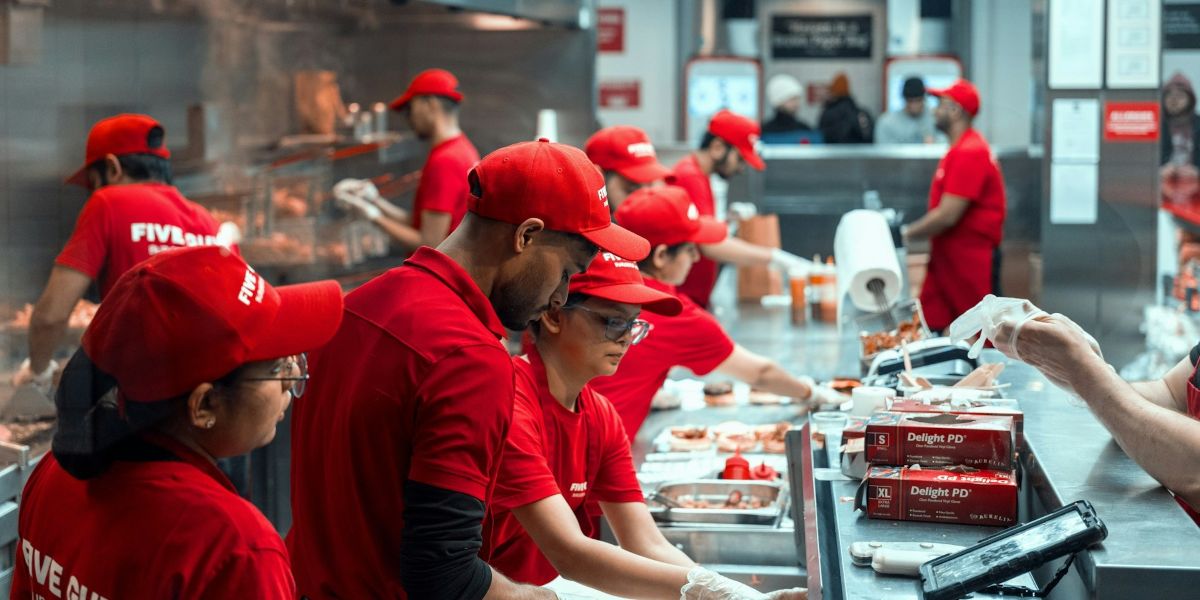
Fast food worker preparing meals in the kitchen

Photo Credit: Unsplash.com

The increase to 17 dollars an hour also influences the salary thresholds for certain white‑collar employees who are treated as exempt from overtime under state rules. In New York City and its suburbs, the minimum weekly salary for these exempt executive and administrative employees is rising accordingly, ensuring that salaried staff above the minimum wage are not left behind.

Business Costs and Worker Paychecks

For employers, especially small businesses, the higher wage floor presents a mix of challenges and potential benefits. Some face higher labor costs and difficult decisions about pricing, staffing, or hours, while others may see gains in employee retention and productivity as pay rises.

Labor advocates have generally supported the move, arguing that wages in New York City have lagged behind rent, food, and transportation costs, particularly in the wake of the pandemic and subsequent inflation. Business groups, while often acknowledging the need for competitive pay, have warned that mandated increases can squeeze thin margins in sectors like restaurants, child care, and neighborhood retail.

Concerns about whether 17 dollars an hour is enough tie directly into broader debates over salary expectations in New York City, as workers contend with inflation, rising rents, and shifting work norms. Those same forces shape what employees consider a livable wage and influence how far each increase in the statutory minimum actually goes in covering everyday expenses.

Housing and borrowing costs add another layer of pressure, with the average U.S. long‑term mortgage rate recently reaching 6.24 percent, a level that affects both aspiring homeowners and landlords who pass higher financing costs on through rent. In that environment, even modest wage gains can be quickly offset by increases in shelter and debt service, complicating the impact of the new minimum for many households.

Who Gains, Who Still Struggles

For New Yorkers living on low and moderate incomes, the 17‑dollar minimum wage brings some immediate relief but is unlikely to resolve the city’s broader affordability crisis. Many households will still struggle with high housing costs, medical bills, and childcare expenses, even as their paychecks grow.

Yet the change is already rippling through nearly every corner of the city, from immigrant workers in service jobs to young adults in their first positions, and from single parents to older workers supplementing retirement income. As the higher wage takes hold and inflation‑based indexing begins in 2027, the real test will be whether this framework can balance the needs of workers seeking a more livable income with those of employers trying to keep their doors open in one of the world’s most expensive cities.

Governors Ball 2026 Lineup Announced, Bringing Global Star Power Back To Queens

New York City’s signature summer music event is officially locked in. Governors Ball Music Festival has revealed its 2026 lineup, returning to Flushing Meadows Corona Park in Queens from June 5–7, with a bill that blends global pop, hip-hop, and genre-crossing talent.

This year’s headliners include Lorde, Stray Kids, and A$AP Rocky, underscoring the festival’s continued push toward international reach and cultural diversity. Supporting acts such as Kali Uchis, Baby Keem, and Mariah the Scientist round out a lineup designed to appeal across generations and genres.

Tickets are scheduled to go on sale January 8.

A Festival That Mirrors New York’s Sound

Governors Ball has long positioned itself as a reflection of New York City’s musical identity—eclectic, global, and trend-driven. The 2026 lineup continues that approach, mixing alternative pop, K-pop, hip-hop, and R&B into a single weekend experience.

Industry watchers note that booking a K-pop headliner alongside hip-hop and indie-pop acts reflects how global fan bases now overlap more than ever.

“This lineup isn’t niche—it’s a snapshot of where mainstream music actually is,” said a live-music industry analyst. “Festivals are responding to streaming culture, not genre silos.”

Queens As A Cultural Anchor

Holding the festival in Flushing Meadows Corona Park reinforces Queens’ role as one of the most culturally diverse spaces in the city. With easy transit access and expansive grounds, the park has become central to the festival’s identity since Governors Ball moved there permanently.

Local businesses, hotels, and vendors typically see a major economic boost during the festival weekend, making the event one of the borough’s most visible cultural moments of the year.

Headliners With Momentum

Each of the three headliners enters 2026 with strong momentum:

  • Lorde returns to the festival circuit amid renewed interest in her evolving sound and live performances.
  • Stray Kids continue to expand K-pop’s global footprint, drawing massive international crowds and social media engagement.
  • A$AP Rocky, a New York native, brings hometown significance alongside his influence in music, fashion, and culture.

Their combined presence positions Governors Ball as both a global festival and a distinctly New York event.

What Fans Can Expect Next

In the coming weeks, festival organizers are expected to release:

  • Daily lineups and stage schedules
  • Additional undercard and local artist announcements
  • Experience details tied to food, art installations, and brand activations

With ticket sales opening January 8, demand is expected to be strong—especially for weekend passes.

Governors Ball isn’t just a music festival—it’s a marker of New York’s summer season. The 2026 lineup signals confidence in live music’s continued pull and reinforces the city’s status as a global stage for culture.

As festival season approaches, Governors Ball once again sets the tone: loud, diverse, and unmistakably New York.

New York Drivers Face Fresh Toll Changes as 2026 Begins

New York, NY — Drivers across New York are seeing higher tolls and stricter enforcement as multiple transportation agencies roll out updates that took effect at the start of 2026. The changes impact major bridges and tunnels, daily commuters, and drivers entering Manhattan’s congestion pricing zone.

Officials say the updates are designed to fund infrastructure upgrades, support public transit, and discourage traffic congestion, but for many motorists, the result is higher out-of-pocket costs.

Bridge And Tunnel Tolls Rise Across The Region

Tolls have increased on crossings operated by the Port Authority of New York and New Jersey, including the George Washington Bridge, Lincoln Tunnel, and Holland Tunnel. E-ZPass users are seeing moderate increases, while drivers without E-ZPass face significantly higher “Tolls by Mail” rates.

All Port Authority crossings remain fully cashless, a system officials say improves traffic flow but has also increased billing complaints among drivers unfamiliar with mail-based tolling.

Meanwhile, tolls on bridges and tunnels run by the Metropolitan Transportation Authority have also gone up. The adjustments affect key routes such as the Verrazzano-Narrows Bridge and Queens Midtown Tunnel, adding to commuting costs for drivers traveling between boroughs.

Congestion Pricing Continues In Manhattan

New York City’s congestion pricing program remains in effect for vehicles entering Manhattan south of 60th Street. The toll, which varies by vehicle type and time of day, aims to reduce traffic congestion while generating revenue for transit improvements.

Transportation officials report fewer vehicles entering the congestion zone compared to pre-program levels, with early data suggesting improved traffic speeds and lower crash rates. Critics, however, argue that the toll places an unfair burden on working-class drivers and small businesses.

Crackdown On Toll Evasion Intensifies

Alongside higher tolls, enforcement has ramped up statewide. New York State Police and transportation agencies have increased patrols targeting toll evasion, including altered or obscured license plates and unpaid toll accounts.

Recent enforcement actions have resulted in hundreds of citations and vehicle seizures, signaling a tougher stance on violations as toll revenue becomes increasingly important for infrastructure funding.

E-ZPass Remains The Cheaper Option

Transportation agencies continue to encourage drivers to use E-ZPass, which offers lower toll rates and faster billing resolution. Drivers without E-ZPass not only pay higher tolls but also face added fees if bills go unpaid.

Officials also urge motorists to regularly check toll statements, as cashless systems rely heavily on accurate license plate recognition.

What Drivers Should Expect Going Forward

With additional toll adjustments possible in the coming years, New York drivers are being advised to factor rising transportation costs into daily budgets. Transit officials say toll revenue will support long-term projects, including bridge repairs, subway modernization, and congestion relief efforts.

For now, commuters entering 2026 should expect higher toll bills, stricter enforcement, and fewer options for avoiding fees on New York’s busiest crossings.

Chase Takes Over Apple Card As Goldman Exits The Consumer Credit Experiment

Apple has quietly made one of its most consequential financial moves in years. JPMorgan Chase is set to become the new issuer of the Apple Card, replacing Goldman Sachs, the Wall Street firm that helped launch Apple’s first major credit product back in 2019.

On the surface, Apple says little will change for cardholders. Underneath, this is a sharp realignment of power across consumer banking, fintech partnerships, and the future of credit at scale.

Why Apple Is Switching Issuers Now

Goldman’s partnership with Apple was always unusual. A traditional investment bank stepped into mass market consumer lending, betting that Apple’s brand and technology would offset the risk and complexity of running a credit card business.

That bet didn’t fully pay off.

Apple Card helped Goldman enter millions of households, but it also exposed the firm to higher losses, regulatory scrutiny, and operational friction. Over time, Apple Card became emblematic of Goldman’s broader retreat from consumer finance, including the winding down of several Marcus initiatives.

By contrast, Chase is built for this kind of business. It already runs one of the largest credit card operations in the U.S., with deep underwriting infrastructure, marketing reach, and balance sheet capacity.

For Apple, the appeal is scale and stability.

What Chase Gains From The Deal

For JPMorgan Chase, this isn’t just another co-branded card. It’s access to a massive, digitally native user base embedded inside Apple’s ecosystem.

The Apple Card portfolio is estimated at roughly $20 billion in balances. Absorbing that instantly expands Chase’s consumer credit footprint while positioning it inside Apple Wallet, one of the most frequently used financial interfaces in the world.

More importantly, Chase gains a front row seat to how millions of Apple users spend, save, and manage money. That data and engagement potential matter far more than short term margins.

Why Goldman Is Walking Away

For Goldman Sachs, this marks the end of a high-profile experiment. The Apple Card brought brand visibility, but it also brought losses that clashed with Goldman’s traditional business model.

Consumer credit is capital intensive, operationally complex, and unforgiving when defaults rise. Goldman’s exit signals a return to its core strengths rather than a failure of Apple Card itself.

In many ways, Apple Card outgrew Goldman faster than Goldman wanted to grow into consumer banking.

What Happens To Apple Card Users

For now, nothing changes.

Apple Card continues to live inside Apple Wallet, with the same Daily Cash rewards, no annual fees, and the same user experience. Mastercard remains the payment network.

The transition will take time, likely stretching across the next two years. Eventually, Chase will appear as the issuing bank on statements and credit reports. Any deeper changes will be communicated well ahead of time.

From Apple’s perspective, continuity matters. Disruption would undermine trust in a product positioned as simple and consumer friendly.

The Bigger Signal For Fintech And Banking

This deal highlights a broader truth about modern finance. Technology companies don’t want to be banks. They want bank partners that can scale quietly while staying invisible to the user.

Apple keeps control of the interface, the data experience, and the brand relationship. Chase handles credit risk, compliance, and capital. Goldman learned that those back end responsibilities are far heavier than they look from the outside.

The shift also reinforces Chase’s dominance. While fintech startups chase innovation, legacy giants with balance sheets still win when scale becomes the deciding factor.

Why Wall Street Is Watching Closely

Apple Card may not move Apple’s revenue needle dramatically on its own, but it sits at the intersection of payments, services, and consumer trust. Changing issuers reshapes who benefits from that intersection.

For Chase, it’s a long game bet on embedded finance.
For Goldman, it’s a strategic reset.
For Apple, it’s a reminder that even the world’s most valuable company prefers partners built for financial plumbing rather than financial experiments.

This isn’t just a card issuer swap. It’s a signal that the next phase of consumer finance will be decided less by who builds the flashiest app and more by who can quietly support billions in everyday transactions without breaking.

“Eat Real Food, Avoid the Junk” Inside the Bold New U.S. Dietary Guidelines for 2025–2030

In the latest update on federal nutrition policy, the United States has released its newest Dietary Guidelines for Americans for 2025–2030, ushering in one of the most dramatic pivots in national eating advice in decades. These guidelines — the foundation for school lunches, federal food programs, clinical nutrition advice, and public health messaging nationwide — reject decades-old conventional wisdom and place whole, minimally processed foods at the center of the national diet.

A Return to “Real Food”

The new guidance, unveiled by Health and Human Services Secretary Robert F. Kennedy Jr. and Agriculture Secretary Brooke Rollins, doesn’t just tweak old recommendations — it reframes them. At its core is a simple message: eat real food. That means fresh vegetables, fruits, whole grains, high-quality proteins, dairy, and healthy fats, and a clear warning to drastically cut back on highly processed foods — from sugary snacks to ready-to-eat packaged items.

Officials emphasize that highly processed foods now dominate U.S. diets and are closely linked to chronic diseases like obesity and type 2 diabetes. By discouraging these items, the guidelines aim to address a longstanding public health crisis.

One of the standout features of the new recommendations is a stronger focus on protein at every meal. The guidelines suggest significantly higher target protein intakes than past editions — reflecting the view that adequate protein supports satiety, muscle maintenance, and overall metabolic health.

The document also encourages healthy fats — not just plant oils like olive oil, but even traditional animal fats like butter and beef tallow — as part of a balanced diet. While previous guidelines stressed minimizing saturated fats, the new edition allows for flexibility as long as total saturated fat stays within sensible limits and comes from whole-food sources.

Sugar, Alcohol, and Added Ingredients

Added sugar gets a sharper rebuke than ever before. The guidelines recommend no amount of added sugar as part of a healthy diet and suggest capping added sugars at about 10 grams per meal — far below the loose limits of past years.

Alcohol guidance has also been revamped. The former detailed limits — one drink per day for women, two for men — have been replaced with a broader directive to drink less for better health, an approach that has drawn both praise and criticism from health advocates.

A Simpler, Shorter Blueprint

Strikingly, the 2025–2030 guidelines are far more concise — just about 10 pages, according to official accounts — compared with the sprawling 150-plus pages of the 2020–2025 edition. This brevity reflects an effort by policymakers to make the advice easier to understand and more actionable for everyday Americans.

A new visual guide — an inverted food pyramid — accompanies the text, placing protein and vegetables at the top and refined grains and sugars near the bottom, signaling a clear departure from more grain-centric models of the past.

The Dietary Guidelines don’t just advise individuals; they influence how nearly 30 million children are fed in schools, how SNAP (food stamp) benefits are structured, and how federal nutrition programs are designed and funded. Because of this, the new focus on whole foods and processed-food avoidance could reshape national nutrition on a massive scale.

But the changes have sparked debate. Some nutrition experts applaud the emphasis on reducing processed foods and added sugars, while others caution that certain departures from established science — especially on alcohol and saturated fats — could muddy public health messaging.

Whether embraced by families at the dinner table or debated in academic journals, the 2025–2030 Dietary Guidelines mark a seminal moment in U.S. nutrition policy. With chronic diet-related diseases on the rise and Americans consuming vast quantities of manufactured foods, the government’s new “real food” mantra aims to steer the nation toward healthier plates — and potentially, healthier lives.

Disclaimer: This article is for informational and educational purposes only and is based on publicly available summaries and reporting related to the U.S. Dietary Guidelines for Americans, 2025–2030. It is not intended as medical, nutritional, or dietary advice, nor should it be used as a substitute for guidance from a qualified healthcare professional. Individual nutritional needs vary based on age, health status, lifestyle, and medical history. Readers should consult a licensed physician, registered dietitian, or other qualified health professional before making significant dietary changes.

Nationwide Verizon Outage Leaves Phones in ‘SOS’ Mode, Raising Questions About Network Resilience

For millions of Americans, the modern safety net of constant connectivity briefly disappeared this week.

A widespread Verizon network outage disrupted wireless service across the United States, leaving customers unable to make calls, send texts, or access mobile data — and in many cases staring at a stark “SOS” message where signal bars normally appear.

The outage, which began around midday, triggered a flood of complaints across social media and outage-tracking platforms, with reports spanning major cities and rural communities alike.

We are aware of an issue impacting wireless voice and data services for some customers,” Verizon said in a statement. “Our engineers are engaged and are working to identify and resolve the issue as quickly as possible. We apologize for the inconvenience.

A Sudden Silence

For users, the disruption was immediate and disorienting.

“I thought my phone was broken,” said one New York customer. “Then I looked around and realized everyone else was holding their phones, too.

Downdetector logged hundreds of thousands of outage reports at the peak of the disruption, with customers from New York, Florida, Illinois, Texas, and California reporting similar problems. Many iPhone and Android devices displayed “SOS” or “SOS Only,” signaling that the phones could only reach emergency services.

In an era where phones double as wallets, work tools, and navigation systems, the outage rippled far beyond inconvenience.

I couldn’t clock in for work or call my kids’ school,” said a Chicago-area customer. “You don’t realize how dependent everything is on one signal until it’s gone.

What We Know So Far

Verizon has not yet disclosed the precise cause of the outage, nor provided a definitive timeline for full restoration. The company confirmed the issue affected wireless voice and data services, and some users also reported disruptions to home internet services linked to Verizon infrastructure.

Technology analysts note that while outages are not unheard of, the scale and visibility of this disruption stood out.

“When a network of this size goes down, even briefly, it exposes how centralized our digital infrastructure has become,” said one telecom industry analyst. “Redundancy exists, but it’s not always seamless from the consumer’s point of view.

Why ‘SOS Mode’ Matters

The “SOS” indicator that appeared on many devices reflects a phone’s inability to connect to its primary carrier, while still allowing emergency calls through other available networks.

“That feature worked as designed,” said a mobile technology expert. “But the fact that so many people saw it at once is what made this outage feel alarming.

For some, Wi-Fi calling and internet-based messaging apps provided a temporary workaround. For others — especially those on the move — the outage meant being effectively offline.

A Reminder of Digital Dependence

The Verizon outage reignited broader conversations about network reliability, emergency preparedness, and consumer dependence on a small number of telecom giants.

“This isn’t just about dropped calls,” said a digital policy researcher. “Connectivity is now a core utility. When it fails, it affects safety, commerce, and daily life in very real ways.

Verizon customers quickly took to social media demanding transparency and, in some cases, compensation. The company has not announced whether account credits or service adjustments will be offered.

What Comes Next

As service is gradually restored, attention is turning to what caused the outage — and what safeguards can prevent a repeat.

For now, Verizon says its teams remain focused on stabilizing the network.

We understand how critical connectivity is to our customers,” the company said. “Restoring service safely and fully is our top priority.

The Bigger Picture

The outage may ultimately be resolved within hours, but its impact lingers as a reminder of how fragile even the most advanced systems can be.

For a nation accustomed to constant connection, the brief silence was enough to raise a bigger question: What happens when the signal disappears — and how prepared are we when it does?

Scott Adams, Creator of “Dilbert,” Dies at 68: The Comic Genius Who Skewered Office Life and Stirred Controversy

Scott Adams, the creator of the beloved comic strip Dilbert, died on January 13, 2026, at the age of 68 after a long battle with metastatic prostate cancer that had spread to his bones. His death was confirmed by his ex-wife, Shelly Miles, during a livestream on Adams’s own Real Coffee With Scott Adams podcast, where he had openly chronicled his illness in recent months.

From Cubicles to Global Fame

First published in 1989, Dilbert became a fixture of American pop culture by satirizing the absurdities of corporate life long before workplace comedies saturated screens. Adams’s portrayal of hierarchies gone wrong, jargon-filled meetings, and the eternal futility of bureaucracy resonated with millions. At its height, the strip appeared in more than 2,000 newspapers across 70 countries and was translated into dozens of languages.

Dilbert wasn’t just a comic,” Adams once told Time in the 1990s. “It was a mirror — sometimes a funny one, sometimes a painful one — for anyone who’d ever worked in an office.”

A Personal Battle Shared Publicly

In May 2025, Adams revealed to his audience that he was battling the same type of prostate cancer that U.S. President Joe Biden had disclosed. “So, I also have prostate cancer that has also spread to my bones,” Adams said at the time, bringing an unexpected note of vulnerability to his typically brash persona.

As his condition worsened, he continued to speak candidly about his prognosis. Just days before his death, he described his chances of recovery as “essentially zero,” acknowledging the relentless progression of his illness.

Shelly Miles brought his final chapter to the public, telling listeners simply: “He’s not with us anymore.”

Legacy of Humor — and Controversy

Adams’s creative legacy is inseparable from Dilbert’s enormous cultural impact. Characters like Dilbert, Dogbert, and the pointy-haired boss captured universal workplace frustrations with a few sparse lines and sharp wit. The “Dilbert Principle” — the tongue-in-cheek idea that ineffective workers rise to the top — became a staple of corporate lore.

Yet Adams’s career was not without controversy. In 2023, after a series of racially charged remarks during a livestream, many newspapers dropped Dilbert from their pages and his syndicate cut ties with him. Adams defended his comments as hyperbolic, but the backlash was swift and significant.

In response, Adams relaunched his comic in digital form under the name Dilbert Reborn and leaned into political commentary on platforms like Rumble.

Tributes and Final Reflections

Former President Donald Trump paid tribute to Adams after his death, calling him “a fantastic guy,” and noting his loyalty at times when that loyalty was “not fashionable.”

In a final message read by Miles, Adams reflected on his journey — both creative and personal — urging listeners to “be useful” and to “pay it forward,” distilling his lifelong blend of blunt insight and unexpected heart.

The End of an Era

Scott Adams’s death marks the end of a complex era in cartooning and commentary. Dilbert helped millions laugh at their frustrations, and even as his later years were marred by controversy, his influence on how we talk about work and culture remains unmistakable.

He is survived by friends, colleagues, and legions of readers whose workplaces feel a little emptier without his sharp eye fixed comically on office absurdities.