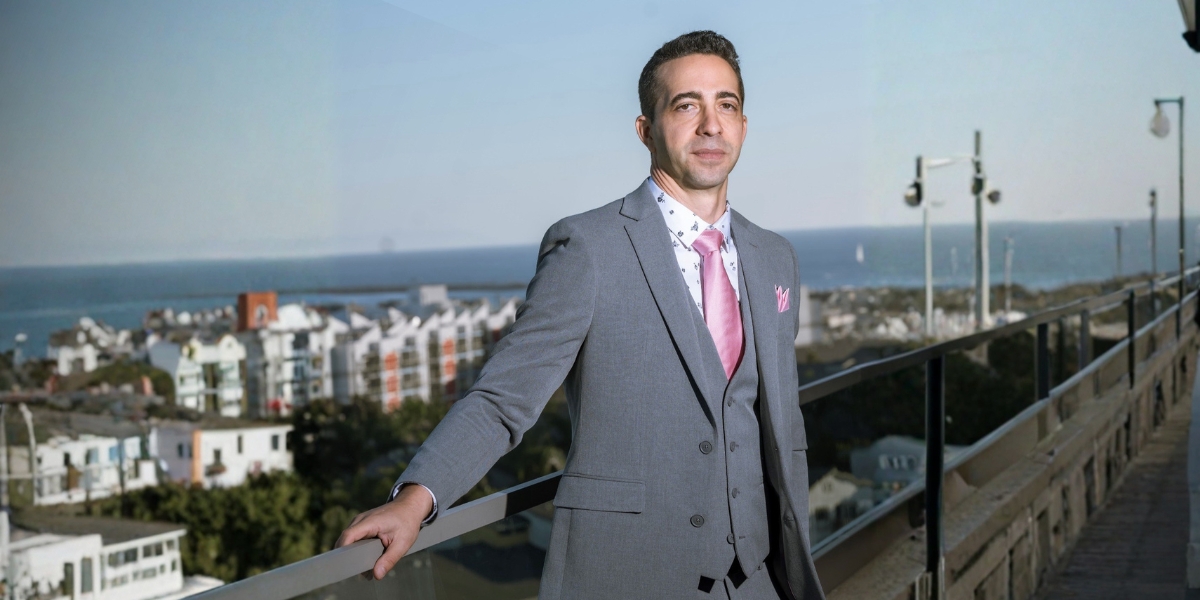
Transforming Customer Engagement with AI Agents: Perspectives from Chitrapradha Ganesan

By: Sarah Mitchell 

Something interesting is happening in enterprise technology. Artificial Intelligence, which spent years quietly improving efficiency behind the scenes of customer relationship management systems, has stepped into the spotlight. AI has become a driving force, rather than being a tool used silently; it has become the driving force, enhancing the interaction between employees, customers, and partners.

For years, most CRM systems operated reactively. A customer had a problem, the system logged it, and someone eventually responded.  However, a fresh generation of AI agents is driving CRM to the place where it can be described as more anticipatory, almost on its own, systems that can discern intent, draw in context, and respond meaningfully before they are even requested to do so.

The AI component at Salesforce called Einstein is at the heart of the transformation, where predictive analytics have been integrated into CRM, which produces experiences that appear truly customised. It is the type of transformation that is being termed as fundamental by industry observers, not upgrading, but reevaluating the way businesses engage customers in general.

From Workflow Automation to Intelligent Engagement

The old way of doing CRM automation was straightforward: set up rules, define workflows, let the system handle the predictable stuff. It worked fine for routine tasks. But throw something complex at it—a multi-step request, an unusual customer situation—and the cracks showed quickly.

AI agents built on large language models and retrieval-augmented generation have changed that equation. These systems understand natural language, pull from enterprise knowledge bases, and generate responses grounded in actual company data—not generic templates.

“The shift from rule-based workflows to intelligent agents represents a paradigm change in how we think about customer service,” says Chitrapradha Ganesan, a Senior Member of Technical Staff at Salesforce who works on Einstein GPT. With nearly two decades of experience in enterprise IT and a postgraduate certification in AI and Machine Learning from the University of Texas at Austin, Ganesan has been at the forefront of intelligent CRM implementation. “We’re moving from reactive to predictive engagement. Customers don’t have to jump through hoops anymore or wait around for someone to help with basic requests.”

The Data Problem Nobody Talks About

Here’s the thing about AI: it’s only as good as what it can see. And in most organizations, data is scattered everywhere—across CRM systems, data warehouses, SharePoint folders, PDFs buried in email threads. Getting AI to work well means solving this fragmentation problem first.

Modern platforms are tackling this by building unified data layers that pull structured and unstructured information into one place. When an AI agent can search through CMS content, policy documents, and historical tickets simultaneously, its answers get dramatically better. This matters especially in banking and financial services, where getting something wrong isn’t just embarrassing—it’s a compliance violation.

Chitrapradha has a practical view on making this sustainable. “You have to treat AI configurations like software,” she explains. “Version your prompts. Test your retrieval policies. Push changes through proper CI/CD pipelines. We use Flow and Apex within Salesforce to make sure the AI only triggers actions when all the policy checks pass. Otherwise, you’re just hoping things work.”

Why Governance Isn’t Optional

When AI agents start talking directly to customers, trust becomes everything. It’s not enough for the model to be accurate most of the time. Businesses need systems that are auditable, explainable, and built with clear ethical guardrails.

Governance, in this context, has to take the driving seat and cannot be left as a back-end process depending on other factors. Companies require structures that regulate data accessibility, verify productions, track performance over long periods of time, and execute strategy that are effective, as well as replicable within the organization. The organizations getting this right are the ones that treated governance as a foundation, not a feature to bolt on later.

The companies that skip this step? They’re playing with fire. One hallucinated response to the wrong customer can undo months of trust-building.

Measuring What Actually Matters

The good news is that AI-driven CRM produces results you can actually measure—if you know what to look for. Service teams track average handle time and first-contact resolution rates. Sales teams care about how quickly they can pull account context. Compliance teams watch for audit exceptions.

Across the enterprise deployments Chitrapradha has worked on, a pattern emerges: the biggest wins come from reducing friction. “Playbooks and guardrails sound boring,” she admits, “but they’re what make the gains stick. Without them, you get inconsistent results and frustrated users.”

What Comes Next

Nobody in this space is talking about replacing human workers. The goal is augmentation—giving people better tools, faster information, smarter suggestions. AI agents are becoming digital partners that handle the repetitive stuff so humans can focus on judgment calls and relationship-building.

The next frontier is multimodal. Agents that can listen to a support call, read an uploaded document, and respond via chat—all while respecting permissions and policies. It sounds futuristic, but the building blocks are already in production at companies like Salesforce.

“The businesses that get this right won’t be the ones chasing every new AI feature,” Chitrapradha says. “They’ll be the ones who understood early that AI isn’t a product add-on. It’s a different way of thinking about customer relationships entirely.”

Upskilling and Change Management for FP&A Professionals in the Age of AI

By: Karan Shah

This is not the finance that it was before. After the participation of trusted spreadsheets, quarterly reviews, and gut feelings, which played a significant part previously among the FP&A professionals. It has now been an overhaul of them. Artificial intelligence is not a distant or even a distant future, but the most topical and highly tangible enterprise on the business level of the financial tier. It is not just a change that comes with new tools, but also with a new philosophy. FP&A professionals should prioritize upskilling and effective change management to ensure they are on the right side of the curve.

The New Reality for FP&A Professionals

Strategic financial decisions have not been alleged to be lacking in the FP&A departments. They predict future directions and enable executives to understand the path a business is heading toward. However, this is changing at an alarming rate, as many individuals are unaware of it due to the rise of AI. Even now, AI can process large amounts of data in a few seconds and calculate the tendencies that a human being can never see, and even predict the results with the magic precision. It is not necessarily that the human touch is carried out. Quite the opposite. AI is a tool, not a replacement.

This is no longer the case, as FP&A professionals are not interested in being number crunchers. They are growing to be tactical narrative producers, decoders of information and judgements. It does not mean they can develop the model, assess their level of familiarity with outcomes, identify the right questions, and advise leaders. Such a change requires a different type of skillset.

Why Upskilling is Non-Negotiable

With AI, it is time to rebrand in FP&A and hope that it becomes a buzzword, so that it rides this storm. Not upskilling, but an existence strategy is the option. The current FP&A role requires an understanding of analytics, knowledge of machine learning principles, and familiarity with an organization’s data flow. Technology is not, however, the only demand; soft skills are also required. Communication, data-driven storytelling, teamwork, and critical thinking are the new priorities.

Upskilling means taking the opportunity to step outside the comfort zone of relying on outdated operating models (e.g., intensive Excel use) and adopt new tools and approaches. This can be the need to train to work with more visualization systems, to familiarize oneself with the setting of data in the clouds, or even the sensitivity of the possibility of natural language processing to influence reporting. It is also gradually becoming a data scientist rather than a data analyst.

The Human Side of Change Management

Here is where most of the organizations are bound to lose. Most beneficial AI solutions can be used, the newest upskilling courses may be offered, and a dead end may be reached if people do not want to evolve. Change management is the digital transformation underdog. It is more an attitude than a matter of training. They will require their individuals to understand the reason for the change, its impact on them, and how they will be empowered to navigate the process.

This translates into a need to cope with fear for FP&A teams. The fear of being replaced, the fear of not being able to keep up, and the fear of the unknown. Here, leadership plays a massive role. Leaders are expected to build a culture of experimentation and learning. They must act as role models and not teachers. When individuals are able to have no fear to get transformed, then they can make an experiment, make errors, and learn.

It should have proper communication. So is the involvement of the low-level individuals. Incorporating the team members in developing a future will secure you a good chance that the team will be interested in the future, as the team members will be the ones who developed the future. And also, familiarity must not be omitted. Reward the achievement, reward the progress and reward those people who tried to make efforts in order to learn and to develop.

From Data Collectors to Strategic Influencers

The best parts of the change are the promotion of the FP&A position. The FP&A departments are not as bogged down in the weeds of data collection and reconciliation; therefore have an opportunity to contribute input in the business strategy in a more meaningful way. AI takes over the mundane. Human beings are just doing the best as they are creative in their minds and are able to see the big picture in the situation.

It is not the only type of influence associated with it. This must be achieved through credibility, awareness, and initiative. FP&A specialists need to be able to pose radical questions and assumptions. They need to be communicative in business and aware that the business operates by the numbers, and be able to translate those numbers into narratives to get things done.

The Time to Act is Now

The AI wave isn’t slowing down. Quite the contrary, it is assuming new grounds. The waiting period does not exist anymore. The FP&A professionals also experience encouragement to become independent and seek to grow, make effort to learn and incuriosity. The organizations should have support structure, resources, and a cultural foundation in making the processes of change sustainable.

The point is that FP&A future does not seem to be that bad. It’s full of possibilities. Only individuals who plan their development and are willing to be open to change will not only survive during the time of AI, but they will even thrive. It’s a moment of reinvention. The fact that it is possible to escape the old ways of doing things and reach a new and more productive and strategic position.

The FP&A are experiencing the new golden age and the golden era in which human intelligence and artificial intelligence are collaborating. The question is whether the profession will disappear or not due to AI. The concern is who is going to bring it to the world.

Disclaimer: This content is for informational purposes only and is not intended as financial advice, nor does it replace professional financial advice, investment advice, or any other type of advice. You should seek the advice of a qualified financial advisor or other professional before making any financial decisions.

Why NYC Entrepreneurs Are Abandoning Traditional Offices After the Tech Layoffs

New York City has always been expensive, but the past year has forced business owners to reconsider everything about how they operate—especially when it comes to office space. 

Between widespread tech layoffs, economic uncertainty, and the lasting effects of remote work culture, entrepreneurs across the city are making a calculated shift: ditching traditional office leases in favor of flexible, hybrid workspace solutions.

The Post-Layoff Reality

The tech industry’s mass layoffs throughout 2023 and into 2024 sent shockwaves beyond Silicon Valley. New York, as one of the country’s major tech hubs, felt the impact acutely. Companies that had expanded aggressively during the pandemic boom suddenly found themselves with too much office space and too few employees.

But it wasn’t just the companies doing the laying off that were affected. The ripple effects touched startups, agencies, consultancies, and small businesses across the city. Client budgets tightened. Revenue became less predictable. 

Investors grew more cautious. And suddenly, that five-year office lease in Soho or Midtown felt less like a sign of success and more like a financial liability.

For entrepreneurs, the layoffs served as a stark reminder: fixed costs are dangerous when the future is uncertain. The companies that weathered the storm best were often the ones with the most flexibility—including flexibility in their real estate commitments.

The Traditional Lease Problem

New York commercial real estate has always been notoriously expensive, but the typical lease structure makes it even more challenging for growing businesses.

Standard commercial leases in NYC run three to ten years. In Manhattan, you’re looking at $60-100+ per square foot annually, depending on the neighborhood. Even in “affordable” areas like parts of Brooklyn or Queens, decent office space still commands $40-60 per square foot. 

For a modest 1,500 square foot space, that translates to $5,000-12,000+ monthly before utilities, internet, furniture, or any build-out costs.

The upfront investment is substantial, too. First month, last month, security deposit, and often a broker fee. If you need to customize the space—build conference rooms, install proper lighting, create a reception area—you’re looking at tens of thousands more.

That might have felt manageable during the boom times when capital was cheap and growth seemed inevitable. Post-layoffs, with tighter budgets and less predictable revenue, it feels reckless.

Why Hybrid Workspaces Make Sense Now

The shift toward hybrid office solutions isn’t just about cutting costs—though that’s certainly part of it. It’s about building businesses that can adapt quickly when circumstances change.

Right-sizing in real time: When you’re growing, you need more space. When you’re trimming, you need less. Traditional leases don’t accommodate this reality. Hybrid workspaces do. You can scale up during busy periods and scale back when things slow down, without renegotiating a lease or eating the cost of empty desks.

Capital preservation: Post-layoff, cash is king. Every dollar you’re not spending on underutilized office space is a dollar you can invest in product development, marketing, or extending your runway. For entrepreneurs, especially those who’ve bootstrapped or raised smaller rounds, preserving capital has never been more critical.

Reduced long-term risk: Signing a five-year lease is essentially betting that your business will be stable or growing for the next five years. Recent events have shown how quickly that bet can go sideways. Shorter commitments or month-to-month arrangements reduce that risk significantly.

Professional space without the overhead: You still need somewhere to meet clients, conduct interviews, host team collaboration sessions, and do focused work. Hybrid offices provide professional environments on-demand without the burden of maintaining them full-time.

Infrastructure included: Reliable high-speed internet, meeting rooms with video conferencing equipment, mail handling, reception services, kitchen facilities—all the operational details that take time and money to manage are handled as part of the package.

Built-in community: One unexpected benefit of shared workspaces is being around other entrepreneurs and professionals who are navigating similar challenges. That casual network can be surprisingly valuable—referrals, advice, perspective from people who understand what you’re dealing with.

The Numbers Actually Matter Now

During the boom years, some entrepreneurs were willing to pay premium prices for impressive office spaces as a signal to investors, clients, or potential hires. Post-layoffs, that calculus has changed. Fiscal discipline matters. Showing you can operate lean matters.

Let’s look at the real costs:

A traditional office lease in a decent Manhattan neighborhood might run $8,000-15,000 monthly for space that fits 8-10 people, before you factor in utilities, internet, furniture, and ongoing maintenance. In Brooklyn, you might get that down to $5,000-8,000, but you’re still looking at high monthly fixed costs and major upfront investment.

Hybrid workspace arrangements typically charge per desk or per private office, with everything included. For a small team of 5-7 people, you might pay $3,500-7,000 monthly, depending on whether you opt for dedicated private offices or more flexible arrangements. The key differences: no upfront build-out costs, no long-term commitment, and the ability to adjust as your needs change.

For many entrepreneurs, especially those in growth mode or navigating uncertain markets, that flexibility is worth more than the raw square footage comparison might suggest.

Who’s Making This Switch

The move toward hybrid workspaces is happening across different business types and stages:

Startups that survived the funding crunch: Companies that raised money in 2021-2022 and are now managing tighter budgets are reassessing every line item. Office space is often the second or third largest expense after payroll—it’s an obvious place to optimize.

Agencies and consultancies: Creative agencies, marketing firms, and consultancies that saw client budgets tighten after the layoffs are looking for ways to maintain professional spaces without fixed overhead that eats into margins.

Solo entrepreneurs and small teams: Freelancers, consultants, and micro-businesses that grew during the remote work boom but now want professional space for client meetings and focused work without committing to traditional leases.

Companies that downsized: Businesses that did their own rounds of layoffs and suddenly have way more office space than they need. Moving to a flexible arrangement lets them rightsize immediately rather than waiting out a lease.

What Modern Hybrid Offices Look Like

The shared workspace concept has evolved considerably. These aren’t the cramped, generic coworking spaces from the early 2010s. Modern hybrid offices are designed environments that accommodate different working styles and business needs.

Take somewhere like Mindspace in Williamsburg. The Brooklyn location offers professional workspace in one of New York’s most dynamic neighborhoods, with easy access to Manhattan but without Manhattan pricing. The design is thoughtful—not trying too hard to be cool, but genuinely functional for people doing actual work.

The setup typically includes private offices for teams that need dedicated space, hot desks for more flexible arrangements, quiet zones for focused work, and collaborative areas for brainstorming or casual meetings. 

Meeting rooms come equipped with proper video conferencing setups—crucial when your clients, partners, or team members are scattered across different cities or time zones.

The Remote Work Factor

The layoffs didn’t happen in isolation—they occurred in the context of an ongoing debate about remote work. Some companies have pushed hard for return-to-office mandates. 

Others have embraced remote-first models. Most are landing somewhere in the middle: hybrid arrangements where people come in a few days a week.

For entrepreneurs building their own companies, this creates both challenges and opportunities.  

You can have Monday and Wednesday as office days when everyone comes in for collaboration, planning, and team bonding. On Tuesday, Thursday, and Friday, people work from wherever makes sense for them. You maintain culture and cohesion without paying.

The Talent Equation

Office decisions play an important role in hiring and keeping employees, especially after layoffs. Many skilled workers now expect flexibility and may avoid jobs that require being in the office full-time. 

At the same time, they still value having access to a professional space for collaboration when needed. Hybrid work offers the best balance by reducing daily commuting while still supporting teamwork. It also allows companies to hire from a wider area since employees only need to come in occasionally.

The Psychology of Separation

One often-overlooked benefit of hybrid workspaces: the mental separation between work and life.

Working from home full-time sounds great in theory. In practice, many people struggle with it. The boundaries dissolve. You’re always kind of working and never fully off. The dining table becomes a desk. The bedroom becomes a Zoom backdrop. There’s no commute to serve as a mental transition between modes.

Having access to a professional workspace—even if you only use it a few days a week—creates that separation. When you leave the office, work stays there. You can be present at home without constantly thinking about the emails piling up in the next room.

For entrepreneurs, especially, who tend to have difficulty separating work from life under the best circumstances, this physical separation can be crucial for sustainability.

NYC-Specific Considerations

New York presents unique challenges that make hybrid workspaces particularly valuable:

Astronomical real estate costs: NYC commercial real estate is among the most expensive globally. Any solution that provides quality space at a lower cost is worth serious consideration.

Neighborhood matters more here: In most cities, being downtown versus in a suburb is a binary choice. In New York, the difference between Soho and Chelsea, or Williamsburg and DUMBO, carries real implications for brand, culture, and who wants to work there. Hybrid arrangements let you access desirable neighborhoods without the premium lease commitments.

Commuting is brutal: New York commutes are long and expensive. Hybrid models, where people come in strategically rather than daily, make everyone’s life easier and can be a real retention factor.

Client expectations: Many New York clients still expect you to have a real office—somewhere they can visit for meetings. Hybrid spaces provide professional meeting environments without the overhead of maintaining a full-time office.

Lessons From the Layoffs

The tech layoffs taught entrepreneurs several hard lessons about business operations:

Fixed costs are dangerous: When revenue drops suddenly, variable costs can be adjusted quickly. Fixed costs—like long-term office leases—become anchors dragging you down.

Flexibility is a competitive advantage: Companies that could pivot quickly, cut costs efficiently, and adapt to new realities survived. Those locked into rigid structures struggled.

Signals matter less than fundamentals: That impressive office in a prestigious building might have impressed investors in 2021. In 2024, investors want to see disciplined capital allocation and efficient operations. The fancy office can actually work against you.

Cash runway is everything: When funding dries up, and revenue becomes uncertain, how long you can operate matters more than almost anything else. Reducing fixed overhead directly extends the runway.

What This Means for US Entrepreneurs

While this article focuses on NYC, the principles apply across the US—particularly in other expensive markets like San Francisco, Los Angeles, Boston, or Seattle.

Entrepreneurs in these markets are facing similar calculations: traditional office leases represent major fixed costs and long-term commitments in an uncertain economic environment. Hybrid workspace solutions offer a way to maintain professional operations while preserving flexibility and capital.

The layoffs accelerated a trend that was already underway. Remote work proved it was viable. Economic uncertainty made flexibility essential. And the commercial real estate industry started adapting with more flexible products.

The Path Forward

The shift toward hybrid workspaces isn’t a temporary response to current conditions—it represents a fundamental rethinking of what office space should be for modern businesses.

Traditional leases made sense in an era of predictable growth, stable employment, and limited alternatives. That era is over. Today’s entrepreneurs need flexibility to respond to rapid changes, efficiency to compete in tight markets, and capital preservation to survive uncertainty.

Hybrid workspace solutions deliver on all three while still providing the professional environments, infrastructure, and community that businesses need to function effectively.

For NYC entrepreneurs navigating the post-layoff landscape, the message is clear: your office strategy should be a competitive advantage, not a financial liability. Flexible, hybrid arrangements offer a way to maintain presence and professionalism while building businesses that can adapt to whatever comes next.

Danny Pouladian on Building Trust in a High-Noise Media World

By: Paul White

Modern media runs on speed. Content is published, shared, forgotten, and replaced in a matter of hours. Attention is fragmented, competition is constant, and credibility is often treated as optional. In that environment, standing out is easy. Being trusted is not. Danny Pouladian has spent years working inside this reality, learning how attention actually functions and why trust has become one of the most valuable assets in media.

Rather than reacting to noise, his professional philosophy has been shaped by observation, restraint, and long term thinking. His work reflects an understanding that visibility alone does not create impact and that credibility must be earned slowly.

Understanding How People Actually Pay Attention

One of the clearest lessons Danny Pouladian has taken from his media experience is that reach and impact are not the same thing. Large numbers look impressive on paper, but they often hide a lack of engagement. He has seen campaigns with wide exposure fail to move behavior and smaller efforts create lasting influence.

Attention, as he understands it, is selective. People filter aggressively. They ignore most of what they see and spend time only on what feels relevant and consistent. This reality has shaped how he thinks about media strategy. Volume does not build trust. Repetition without purpose does not create loyalty.

Consistency, on the other hand, compounds. When messages align over time and delivery remains reliable, audiences begin to pay attention differently. That insight has informed his approach across projects and partnerships.

Career Experience That Shaped This View

Danny Pouladian’s perspective did not develop in theory. It came from working through real constraints and varied markets. Early in his career, he observed how different audiences responded to messaging based on context, timing, and placement. What worked in one environment failed in another.

Exposure to multiple markets reinforced the idea that media is local even when it appears national. People respond to what feels familiar and credible within their own routines. This understanding pushed him away from one-size-fits-all thinking.

There were also moments where speed worked against results. Short-term gains created confusion or diluted trust. Those experiences reinforced the value of patience and reinforced his belief that sustainable success requires restraint.

Trust as a Professional Asset

In media and business, trust is built through consistency and follow-through. Danny Pouladian treats trust as something earned through actions rather than positioning. Promises mean little without execution. Over time, reliability becomes visible.

His approach to maintaining credibility is simple but demanding. Set clear expectations. Deliver what was agreed upon. Communicate honestly when conditions change. These habits may seem basic, but they are often neglected in fast-moving environments.

Long-term relationships matter because they reflect accumulated trust. Partners and clients return not because of novelty but because of confidence. Danny Pouladian’s career has benefited from this dynamic. Repeat collaboration has played a significant role in his professional growth.

Leadership and Decision Making

As his responsibilities expanded, decision-making became less about opportunity volume and more about alignment. Danny Pouladian evaluates opportunities through the lens of sustainability and clarity. He asks whether a project strengthens trust or erodes it.

What he avoids is just as telling as what he pursues. He is cautious of overextension, vague commitments, and strategies built on urgency rather than purpose. Speed without direction creates risk.

Clarity guides his leadership. Teams and partners benefit from knowing priorities and expectations. This approach reduces friction and increases accountability. Decisions are made with an understanding of long-term consequences rather than immediate wins.

Application in His Current Work

Today, Danny Pouladian’s professional philosophy shows up in how he structures work and relationships. His focus remains on clarity, execution, and realistic outcomes. Rather than chasing constant visibility, he prioritizes meaningful engagement.

Clients and partners respond to this approach because it reduces uncertainty. They know where things stand and what to expect. In an industry defined by volatility, steadiness becomes a competitive advantage.

His work reflects an understanding that credibility cannot be rushed. Each project contributes to a larger professional narrative. Maintaining coherence over time has become a central goal.

Bottom line

Danny Pouladian’s approach to media is grounded in experience rather than theory. He understands the pressures of a high-noise environment and has chosen to respond with discipline and patience. Trust, in his view, is the result of consistency and accountability.

Media is a volatile industry where attention shifts quickly, but he represents a steady presence. His authority has been earned through years of observation, execution, and follow-through rather than personal branding hype. 

Transforming Luxury Real Estate for Expats in San Miguel de Allende: The Greg Gunter Advantage

By: Nic Abelian

Discover how Greg Gunter redefines luxury real estate in San Miguel de Allende, offering personalized services for expats.

Nestled in the heart of central Mexico, the Spanish Colonial UNESCO village of San Miguel de Allende is a city that’s earned global acclaim for its charming cobblestone streets, rich culture, and unparalleled beauty, for expatriates looking to build a retirement lifestyle and buy a home in San Miguel de Allende, the road to finding property can be challenging, especially if you’re unfamiliar with the local real estate market. This is where Greg Gunter, a seasoned real estate broker with a passion for architecture and a deep understanding of the expat journey, has become a trusted guide for clients seeking their dream homes.

Greg Gunter isn’t just another luxury real estate agent; he’s a partner in helping expats navigate the complexities of building a retirement lifestyle and buying a home in a foreign country. With over 16 years of living as a local in San Miguel de Allende, Greg has built a reputation for offering tailored real estate services that go above and beyond expectations. What makes Greg’s approach stand out is his deep empathy and firsthand experience as a full-time expatriate himself since 2009.

The Road to Real Estate Success: Greg’s Journey to Becoming the Dream Pro

Before becoming the go-to broker for expatriates in San Miguel de Allende, Greg Gunter’s journey into real estate was inspired by a passion for architecture. Originally from the United States, Greg moved to Mexico over 16 years ago, bringing with him an MBA in real estate and a desire to build a life in a new country. His move was more than just about changing locations—it was about embracing a new culture and lifestyle.

“I’ve always been fascinated by architecture,” Greg says. “Moving to San Miguel de Allende gave me the perfect opportunity to immerse myself in the city’s beautiful buildings and soon realize that helping others find their dream homes here was what truly inspired me.”

Greg’s path into real estate was initially fueled by his personal passion for design and architecture. However, it was his desire to help fellow expats that led him to carve out a niche in the luxury real estate market. Over time, Greg earned a reputation as a trusted broker in the region, specializing in high-end properties for expatriates, particularly retirees from the U.S. and Canada. His trustworthiness and expertise ultimately led Warren Buffett’s team to award him the first franchise for Berkshire Hathaway HomeServices in all of Mexico.

A Competitive Market: Standing Out Among the Crowds

San Miguel de Allende is a city with a vibrant expat community and a thriving luxury real estate market. Every year, thousands of expatriates are drawn to this charming city in search of a piece of paradise to call home. With the competition fierce, Greg had to find a way to stand out.

“I realized early on that simply selling homes wasn’t enough,” Greg explains. “My clients needed someone who understood their unique challenges, whether it was navigating the complexities of relocating to a new country or figuring out what kind of home truly suited their lifestyle.”

Transforming Luxury Real Estate for Expats in San Miguel de Allende: The Greg Gunter Advantage

Photo Courtesy: Greg Gunter

Greg’s solution was simple yet profound: he became more than just a real estate agent. He became a partner in his clients’ journeys. Understanding that expats often face challenges like cultural adaptation, legal complexities, and language barriers, Greg positioned himself as a trusted guide, offering personalized services that addressed not only real estate needs but also the emotional and logistical aspects of relocation. “My clients aren’t just buying a home in San Miguel de Allende,” Greg says. “They’re transitioning to a whole new lifestyle, and I’m here to guide them along that marvelous journey!”

This approach led Greg to open the first Berkshire Hathaway HomeServices office in Mexico, becoming the brand’s broker of record for the country’s flagship office. This strategic move not only expanded his influence locally but also solidified his reputation as the go-to broker for expatriates in San Miguel de Allende.

Becoming the Dream Pro: A Broker with Empathy and Expertise

What truly sets Greg Gunter apart is his role as a “Dream Pro” for expatriates. Dream Pro Homes Luxury is not just about finding houses; it’s about helping clients find the right home for their new life in Mexico. With his background as an architect and his own experiences as an expat, Greg understands that buying a home is more than just purchasing property—it’s about finding a space where clients can thrive and adjust to a new lifestyle.

“Having lived here myself, I know the challenges expats face when transitioning to a new country,” Greg shares. “It’s not just about selling a property; it’s about helping my clients adjust, understand their surroundings, and ultimately create a life they’ll love. I offer them more than just a home; I offer them a way to build their future here.”

This perspective allows Greg to cater to the specific needs of each client, offering insights not only about real estate but also about life in San Miguel de Allende. Whether it’s advice on local amenities, cultural integration, or navigating the legalities of moving to Mexico, Greg goes above and beyond to ensure his clients feel supported every step of the way.

Why San Miguel de Allende?

San Miguel de Allende’s colonial charm, cosmopolitan arts scene, world-class dining, and welcoming expat community make it an ideal destination for those seeking a relaxed and fulfilling lifestyle. Condé Nast Traveler has named San Miguel de Allende the #1 Small City in the World for good reason.

For Greg, the decision to make this city his home was based on more than just its beauty—it was the sense of community and possibility that drew him in. “San Miguel de Allende offers a combination of history, culture, and community that you can’t find in many places,” Greg explains. “The city makes you feel like you’re part of something bigger, whether you’re exploring art galleries, enjoying a quiet afternoon in the Jardín, or attending a local music or food festival.”

This love for the city’s unique lifestyle fuels Greg’s dedication to helping expats find the ideal home. His deep knowledge of the area, combined with his architectural expertise, allows him to help clients not only find a property but also envision its potential.

The Dream Pro Advantage: More Than Just a Home

What truly makes Greg Gunter stand out in the competitive luxury real estate market is his architectural background. Unlike many traditional Realtors, Greg brings a design-driven perspective to his work, helping clients see beyond the surface of a property. Whether it’s visualizing a renovation, identifying a property’s hidden potential, or understanding its historical value, Greg provides a unique perspective that helps clients make more informed decisions.

“I’m not just helping people buy homes,” Greg says. “I’m helping them envision their future lifestyle in San Miguel de Allende. My architectural background gives me the ability to understand how a property can evolve over time and how it can truly match my clients’ needs.”

Greg’s commitment to exceptional service extends beyond real estate. He’s also a member of Who’s Who in Luxury Real Estate and holds the prestigious Certified International Property Specialist (CIPS) designation, which is especially important for buyers looking to purchase a home in Mexico. These credentials, along with his status as an excellent producer in luxury sales above $1 million USD, make Greg a trusted broker in the region.

Building Trust, One Dream Home at a Time

Over the years, Greg has sold more than 300 homes locally, building a reputation based on trust, expertise, and personalized service. He’s become the go-to agent for expats seeking a seamless transition to their new life in Mexico.

Transforming Luxury Real Estate for Expats in San Miguel de Allende: The Greg Gunter Advantage

Photo Courtesy: Greg Gunter

“My clients know they’re in good hands because they can trust me not just to find them a home but to guide them every step of the way,” Greg concludes. “Whether they’re looking for a vacation home, a second residence, or their forever home, I’m here to help them make their dreams a reality.”

Ready to Find Your Dream Home?

If you’re an expat looking to call San Miguel de Allende home, look no further than Greg Gunter and Dream Pro Homes Luxury. With Greg’s personal guidance, you’ll not only find a property but also create a life in beautiful cities.

Explore the latest listings at Dream Pro Homes Luxury or connect with Greg on social media to learn more about how he can guide you through the luxury real estate market:

The Deep, Unspoken Language of Enduring Love In NOTES TO HER

A man’s heart is laid bare in this stunning collection of poetry, celebrating the ultimate her, the wife, the partner, the lifelong companion.

In a world saturated with fleeting gestures and surface-level affection, the true, enduring language of love often goes unwritten. Now, author Herman Wayne invites readers into a sanctuary of devotion with his heartfelt collection, NOTES TO HER. This isn’t merely a book of poetry. It’s an intimate, daily proof, a handwritten chronicle of a man’s boundless admiration for the one woman who fills up his senses.

The book stands as a literary bouquet, carefully gathered over time, dedicated to the author’s wife, friend, and muse. Each piece shows a moment, a realization, or a quiet thought that defines a lifelong partnership. From the playful celebration of his Hottie to the deep, reverent acknowledgment of her as The Gift, an angel from high courts above,  held in reserve just for him, the collection maps the geography of a heart completely claimed.

Beauty in the Everyday

What makes this book so compelling is its refusal to rely on grand, sweeping narratives. Instead, Wayne finds poetry in the beautiful constants of daily life. He speaks of the joy of waking up beside her, the comfort of holding her tight in the candlelight, and the simple happiness of being next to you in every scenario, from fresh-cut grass to family holidays. This is a love measured not just in years but in the bunch of breaths between moments, affirming that she is his person through all the craziness we experience and all the goodness.

The poems are an honest look at commitment, recognizing that life brings ups and downs, smiles and frowns, and that bodies change with time. Yet, in pieces like Change, the author assures his love that while My body, my wealth, with time, give way… My heart, my spirit with you will stay. This is a love that only grows stronger and stronger, a constant that time has no power to slow.

Reflection of Your Own Love Story

The magic of NOTES TO HER is that, while intensely personal, it acts as a mirror for any reader devoted to their own special treasure. It offers words for feelings that many partners struggle to articulate. The immense gratitude of having a spouse who dries your tears and shoulders your sorrow, and the sense of being the richest man in the world simply by waking up next to her.

Readers will find themselves drawn into the sincerity of the verses and fresh and inspiring ways to appreciate their own partners. The poems are reminders to never settle for yesterday’s surprises and a pledge to be forever there for his girl, the most important person in my life.

 An Act of Vested Devotion

The essence of the collection is captured in the poem Vested, where Wayne asserts that his heart, hopes, and dreams are all tied up and vested 100% in his wife. This is the ultimate declaration of commitment: that she is his exclusivity clause, his reason for doing the things he does.

If you are seeking a book to read, share, or use as inspiration for expressing your deepest feelings, this book is a beautiful, necessary addition to your library. It is a powerful reminder that the greatest riches are the ones we wake up to every single day.

Find the perfect words for your beloved. Buy NOTES TO HER today and give the gift of timeless, unwavering devotion. Your love story deserves a soundtrack!

How Do Bed Sores Lead to Life-Threatening Infections?

According to various reports, there are millions of cases of bedsores in the United States each year, with a significant number leading to serious health complications or fatalities.

What are bedsores? Also known as pressure ulcers, these sores may appear to be lesions that originated from minor skin injuries. They may soon lead to a serious medical condition if left untreated.

Can bedsores cause sepsis? Once open bedsores get infected, bacteria will enter the body and spread to the underlying tissues. When the infection worsens, it can progress to sepsis.

Sepsis is an acute condition in which the body’s immune response invades and damages its organs.

Elderly people, especially those who are not physically active as a result of their age or comorbid problems, are specifically predisposed to developing pressure sores. These bed sore issues may lead to sepsis and death when acquired in the hospital and rehabilitation settings.

Let us examine how pressure ulcers may lead to severe medical conditions and how they can be prevented.

Causes and Risk Factors for Bed Sores

Pressure ulcers are also called decubitus ulcers. Decubitus ulcers develop when sustained pressure on the skin creates an open sore. The condition occurs around bony areas, including the hips and heels. The combination of multiple factors increases the risk of developing a pressure sore. 

Stages of prolonged bed rest or prolonged sitting are conducive to the development of pressure ulcers. People with paralysis or suffering from chronic disease have the highest exposure to the condition. According to Fountain Valley assisted living abuse lawyer Stephen R. Hunter, the presence of bedsores is a common sign of elder abuse in hospitals. Ensure that your loved ones are monitored for this condition.

The skin loses its protective ability when people experience both malnutrition and dehydration. Skin damage occurs when excess sweat and incontinence create moisture that the skin cannot withstand. 

The aging process is another factor contributing to skin thinning. Understanding the causes of pressure sore development enables the development of more effective prevention strategies.

How Do Bed Sores Lead to Serious Infections?

Pressure ulcers could go from a minor to a life-threatening condition very quickly. Skin breakdowns create an opportunity for bacteria to invade. 

A neglected skin wound will eventually become an infected wound. As a wound deepens, it penetrates multiple skin layers. This outcome leads to conditions that can introduce bacteria into the body.

The infected wound will become red and swollen. The situation will likely lead to additional problems if the wound remains open for an extended period. The situation requires continuous observation because an immediate response is required.

The Link Between Bed Sores and Infections

Pathways by which bacteria can enter the body include bedsores. If untreated within time, these complications may culminate in eventual demise. Reduced or absent blood flow, impaired mobility, and the development of deep or severe pressure ulcers may all reduce the body’s innate defense against infection.

Injury or infection of the body’s deeper tissues, or bacterial entry into the bloodstream, could result in infection. Swift medical action will prevent bacterial multiplication and the development of other complications.

Some studies show that early action significantly affects how an infection is managed.

Signs of Infection in Bed Sores

Keep an eye out for any signs of infection, such as the spread of redness outward from the wound or swelling that is greater than usual, along with remarkable warmth.

Pus and foul smells are very suggestive of severe infection. Monitor for increased pain, sudden behaviors or agitation, fever, chills, and other signs. These symptoms should indicate that they are suffering from serious medical conditions.

When you observe these ulcers and sores becoming dark or black, it indicates that tissue is dying. These symptoms can suggest the presence of complications. Seek care for an infected wound or ulcer if you or your loved one is concerned.

Preventing and Treating Bed Sores

Bedsores can be prevented and treated by engaging in exercise and skin care. The process of moving patients to different bed positions provides hospital staff with the best opportunity to prevent pressure ulcers during their work. You should spend time sitting in a chair before taking a two-hour break from your work. Avoid putting stress on your body. One hour of sitting while not working and lying on one’s back can be beneficial and help prevent pressure ulcers.

Select cushions and mattresses can distribute your weight and provide substantial comfort. People need to wash their skin and apply cream to dry areas every day, including areas prone to friction and pressure ulcers. Skin testing should be performed to assess for signs of pressure ulcers, including redness and intense itching.

People should initiate appropriate treatment when they first notice bedsores. The professional treatment phase begins after the appearance of sores, when specialized treatment and dressing are initiated.

Disclaimer: The information provided in this article is for educational purposes only and is not intended as medical advice. If you or someone you know is experiencing pressure ulcers or any related health concerns, please consult a healthcare professional for proper diagnosis and treatment. The content is based on current knowledge and general practices; however, individual medical conditions may vary. Always seek the advice of your physician or other qualified health provider with any questions you may have regarding a medical condition.