Guhan Peng: A Pianist Bridging Virtuosity, Collaboration, and Pedagogy

By: Yuting Zhou

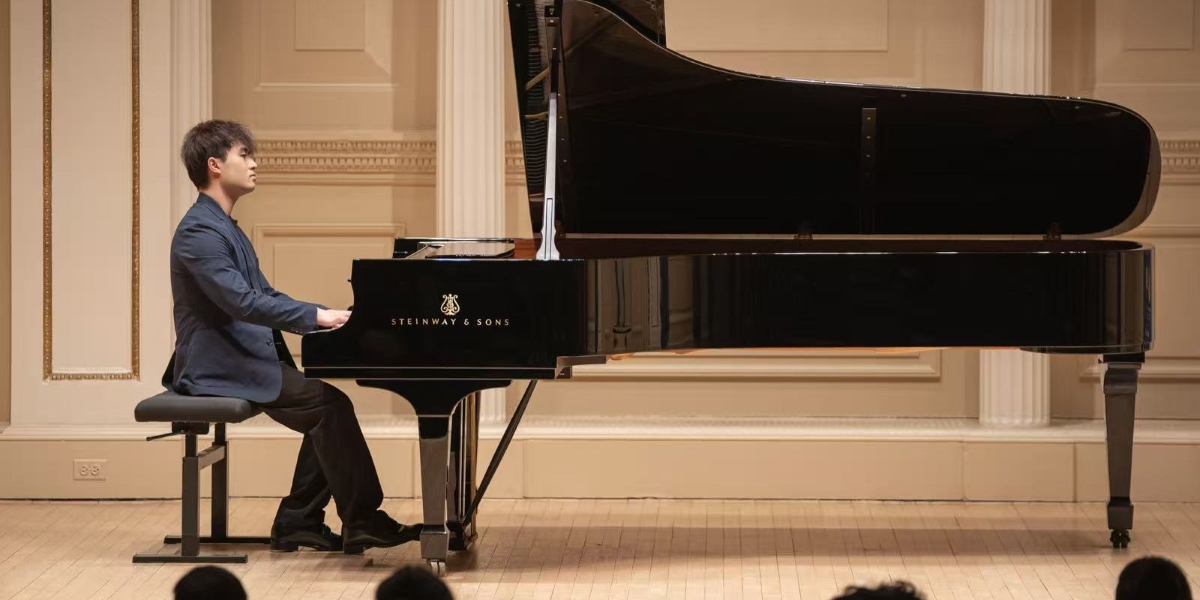
In January, pianist Dr. Guhan Peng marked a significant milestone with his Carnegie Hall debut, a moment that capped years of artistic development shaped by performance, collaboration, and teaching. Trained at the Eastman School of Music, where he earned the Doctor of Musical Arts in Piano Performance and Literature, Peng represents a generation of musicians for whom versatility is seen as a central artistic value.

Peng’s solo work reflects a deep engagement with the piano’s expressive and structural possibilities. His playing is often distinguished by architectural clarity, tonal refinement, and interpretive discipline, qualities that suggest a mature artistic voice rather than simply technical accomplishment. His performances tend to reveal an unusually developed sense of long-range form, shaped by both rigorous scholarship and instinctive musical intelligence, allowing large-scale structures to unfold with coherence and a natural sense of inevitability. At Carnegie Hall, audiences were likely to have encountered a pianist whose sound projected confidence without excess, balancing precision with elasticity and emotional immediacy while maintaining a firm grasp of proportion and pacing. Rather than imposing effect or relying on surface brilliance, Peng seems to prefer allowing musical ideas to unfold organically, guided by an acute awareness of harmonic direction, inner voicing, and textural balance. This restraint appears to give his interpretations a sense of authority, revealing a performer who appears to view virtuosity as control placed fully in the service of expression. The result is playing that can be described as both persuasive and grounded, marked by clarity of voicing, a cultivated command of color, and a natural shaping of phrase that invites sustained listening rather than momentary impact.

Alongside his solo career, Peng has established himself as a dedicated collaborative musician, particularly in the operatic world. During his time at Eastman, he coached more than fifteen operas, working closely with singers, conductors, and stage directors in intensive rehearsal settings. This experience may have sharpened his sensitivity to text, breath, and dramatic pacing—skills that continue to influence his pianism. His collaborative work has extended beyond academia through performances and projects with the Rochester Philharmonic Orchestra and through his role as Assistant Conductor of the Maryland Lyric Opera, where he contributed to both musical preparation and artistic leadership.

For Peng, collaboration is not secondary to solo performance but complementary to it. “Opera and ensemble work demand a kind of listening that can permanently change how you play,” he has noted in interviews. “You learn to think beyond the keyboard.”

Teaching forms the third pillar of Peng’s professional life. He is deeply committed to pedagogy, particularly to students who have experienced limited, inconsistent, or technically harmful training. His teaching philosophy blends imagination with a scientific understanding of movement, integrating principles of biomechanics with musical intent. Rather than imposing rigid technical formulas, Peng seeks to help students rediscover freedom at the instrument—what he describes as “emancipating musical expression from technical limitation.”

This approach has attracted students ranging from beginners rebuilding their foundation to advanced pianists recovering from tension, inefficiency, or injury. In the studio, technical problem-solving is inseparable from musical meaning; tone production, articulation, and phrasing are addressed as physical and expressive acts at once.

As his career continues to evolve after his Carnegie debut, Peng remains focused on artistic breadth rather than specialization alone. Whether on stage as a soloist, in the pit as a collaborator, or in the studio as a teacher, his work appears to reflect a consistent vision: music as a shared, embodied experience—one that thrives where curiosity, discipline, and imagination meet.

Authored by Yuting Zhou

Dr. Yuting Zhou is an internationally acclaimed pianist, scholar, translator, and music critic whose work examines performance through a critical lens. 

How Sherlonda Pitts Young Rebuilt a Life of Purpose After Schizophrenia

In a society that often paints mental illness as a life sentence, Sherlonda Pitts Young stands as a powerful example of the opposite truth: A diagnosis is a tool, not a death sentence. Her new memoir, Overcoming a Schizophrenia Diagnosis and Thriving in Life, is more than a personal account. It is a comprehensive, Christ-centered roadmap for anyone seeking to move from survival to restoration. This book is a must-read for those who feel disqualified from purpose, love, or success because of mental health challenges.

Shattered Identity and the Hard-Won Truth

Young begins her story with raw honesty, recalling her life at age 30, which was far from her expectations of marriage, career success, and a six-figure salary. Instead, she was spiraling through depression and loss, which led to a series of misdiagnoses. The devastating moment came nearly ten years later when she finally received the correct diagnosis: schizophrenia. For years, she had been in denial, concealing auditory and visual hallucinations from her doctors. She feared the diagnosis meant her life was over, her dreams shattered, and a lifetime on Social Security was her only future.

The book pulls back the curtain on the mental health crisis, showing how the shame and fear surrounding it led to years of unnecessary suffering. Young realized that true healing begins when you realize that you are not your symptoms, and your future is not determined by your diagnosis.

Four Pillars of Restoration

The memoir distinguishes itself by offering a structured path to recovery built on four fundamental pillars. It demonstrates that stability is achieved through comprehensive effort:

Accepting Help and Reclaiming Clarity

The first step was humility. Young recounts how her mother and loved ones pleaded with her to tell the psychiatrist the truth. Finally, in 2015, she confessed to the hallucinations and was prescribed an antipsychotic, Invega Sustenna, which took a month to bring clarity and silence the voices. Young emphasizes that listening to loved ones is not defeat; it is wisdom, and God works through medicine, not just miracles.

Service Over Self-Focus

A major turning point came when Young shifted her focus from her own pain to serving others. By moving in with and caring for her aging uncle, bathing, cooking, cleaning, and managing his finances, she unintentionally found practical therapy. This act of service broke the self-focus of her illness and reminded her that she was still capable, still needed, and still valuable. Service, she learned, is where purpose and dignity are regained.

Financial and Professional Rebuilding

Her recovery extended into her work life. After losing her job and house in the breakdown, she had to rebuild her career and finances from the ground up. The book shares her strategy for diligence, treating work As Unto the Lord, which resulted in three promotions and her current role as a manager. She also details her aggressive financial discipline, saving over $200,000 and achieving goals like buying a car and paying it off quickly. She shows that thriving at work with a chronic illness is possible through consistent management and operating from purpose, not panic.

Waiting for God’s Alignment

Perhaps the most touching part of her journey is her personal life. Young was committed to celibacy and spiritual cleansing after past failed relationships. She worked on becoming the person she wanted to attract, and at age 47, she finally had enough faith to trust God for a husband. Two years later, she was blessed with a supportive man who stood by her even through a relapse, proving that honesty about mental health is a foundation for true partnership.

A Life Lived in Victory

Young’s memoir is a declaration that sickness and defeat are not the portion of a child of God. By learning to let go of striving and to work from rest in the finished work of Christ, she achieved a life of abundant blessing. Her accomplishments are not accidents. They are testimonies to God’s faithfulness.

How Sherlonda Pitts Young Rebuilt a Life of Purpose After Schizophrenia

Photo Courtesy: Sherlonda Pitts Young

Takeaway

Stop living in fear. Start living in faith. If you or a loved one is struggling to see a future beyond a mental illness diagnosis, Overcoming a Schizophrenia Diagnosis and Thriving in Life is the honest, hope-filled guide you need to reclaim your purpose, career, relationships, and health. 


Disclaimer: The content in this article reflects the personal experiences and beliefs of Sherlonda Pitts Young as shared in her memoir, Overcoming a Schizophrenia Diagnosis and Thriving in Life. The information provided is not intended as medical advice. For mental health concerns, readers are encouraged to seek guidance from a qualified healthcare professional. 

Taylor Alexandra Jones Reimagines the Suit-and-Tie Ensemble for Women Power-Dressing

By: Matt Emma

Taylor Alexandra Jones, the Australian female founder and owner of Taylor Alexandra, has turned women’s custom suiting into a rapidly growing global operation that runs on trunk shows across Sydney, Melbourne, Brisbane, Perth, New York, Los Angeles, and now London, with Europe potentially next on the map. Jones’ mission is powered by craftsmanship and positioning, aiming to make a meaningful impact in women’s fashion globally. “It’s really challenging for women to get custom suiting. Bridging the gap between off-the-rack and custom is something that hasn’t been widely prevalent. The goal is to help women dress appropriately not only for their body types, but also for the powerful roles they’re holding,” she explains.

Jones recalls having a lifelong relationship with garments, which strengthened her commitment to her current career. “I learned how to sew at the age of 11 from my grandmother,” she says. “I started by making skirts and tops, and I loved every minute of it.” Soon, she went to university for business management, but on seeking a different path, she quit and went into real estate, before finding her way back to tailoring through a menswear label.

There, she understood two things clearly. “I knew how garments were constructed, and how I could sell them,” she says. What she couldn’t do was ignore the steady stream of women messaging her about her own suits. “I was posting videos of my outfits and people kept asking how they could get one,” she recalls. “I couldn’t make them in my current role because it was a menswear brand. I suggested expanding into women’s wear and was told absolutely not. So I eventually pulled my contract and started my own company.”

In the early days of her business, Jones improvised every move. The bookings, she notes, came through direct messages before the business even officially had a name. The fittings took place in the library of her apartment building, and the emails went out from her personal account. But even in that lack of a formal infrastructure, growth gradually ensued. “For the first few weeks, I was juggling multiple clients on top of working for the menswear brand. No external funding, no paid advertising, just consistent demand,” she shares.

According to her, the demand was a reflection of a broader shift. Women now hold 28.1% of top management roles, yet Jones believes that the apparel market serving them at a bespoke level remains somewhat limited. “Ready-to-wear suiting often assumes uniformity of shape, while women’s bodies vary significantly across proportions, posture, and preference,” she explains. “You’re asking more questions. You’re explaining more. A suit looks very different on different women’s bodies. If someone is bottom-heavy, the wrong cut won’t allow her to feel confident. Men may know what a peak lapel is. Women don’t necessarily, so you’re educating as you go.”

Education is built into the Taylor Alexandra experience, where clients are guided through fabric selection, whether it’s Australian and New Zealand Merino wool or curated textiles from major fabric mills, and then silhouette, structure, and styling are followed. Production takes place in Spain or China, depending on client location, with an 8-10 week turnaround. Each fitting, she notes, functions as a styling consultation.

Taylor Alexandra Jones Reimagines the Suit-and-Tie Ensemble for Women Power-Dressing

Photo Courtesy: Taylor Jones
Custom Taylor Alexandra Orange Suit

As per Jones’ account, one suit in particular helped increase the brand’s visibility, a terracotta orange ensemble worn by her at a global men’s clothing exhibition in Florence. “Everyone here comes dressed to the nines, but this event rarely saw women in commanding suits. I had spent all of my earnings in curating those pieces to stand out, and it was a big risk getting myself there, but it seems to have paid off,” she recalls. According to her, the suit was the start of realizing this was a real possibility. “The images were shared online, and it sparked a surge of interest that translated into more bookings,” she adds.

She notes how New York quickly became her most active market, often requiring seven-day trunk shows compared to three or five elsewhere. Jones now plans for a potential permanent presence there. London is the latest addition, with a trained junior tailor relocating to Copenhagen to replicate Jones’s model across Europe. “So far, the focus has been on me, but now, I’m slowly shifting to the brand. That’s the goal,” she says. “Right now, people expect me to turn up to every fitting. I want less of my face and more of the brand success so others can do this work too.”

According to Jones, the brand operates as a confidence mechanism. She highlights the psychological shift that the right clothing can provide, and wants other women to experience that same sensation. “You hit a milestone, you buy yourself something, and you walk into the office thinking, I just did that. I love how I feel when I wear a suit. Other people should be able to feel like this,” she explains.

In male-dominated industries where perception shapes credibility, clothing, she notes, becomes a form of nonverbal positioning. Research suggests that a tenth of a second is necessary to form an impression. Jones believes that this may be heavily influenced by appearance, and her clients, CEOs, founders, and directors seem to understand this intuitively.

The Taylor Alexandra brand is now evolving from a founder-led operation into a global tailoring house with systems, teams, and a bespoke experience. Authority, in her view, should never be compromised by poor fit. “Women are stepping into these high-powered roles,” she says. “They deserve clothing that reflects that.”

Fashion Designer Helen Yarmak Unveiled The Heirloom Collection at New Atelier

By: Blair Alayna

On Wednesday, January 28th, acclaimed fashion designer Helen Yarmak debuted The Heirloom Collection. The event served as a kickoff to New York Fashion Week and was held at her new atelier located at 14 East 60th Street.

Yarmak, whose clients include notable names like Jennifer Lopez, Lady Gaga, Rihanna, Beyoncé, Adele, among others, is an acclaimed jewelry and fashion designer whose one-of-a-kind creations are collected by global collectors. 

The Heirloom Collection by Helen Yarmak explores transformation through modern luxury, reimagining legacy materials in dynamic, contemporary forms. The collection features one-of-a-kind pieces that are individual expressions of rarity and craftsmanship. Fringe plays a central role, introducing fluid movement that evolves with the body, creating garments that shift and transform in motion.

Helen Yarmak’s signature tulip motif anchors the collection as a symbol of renewal and continuity, weaving heritage and progression into every piece. The Heirloom Collection redefines inherited luxury as something alive, expressive, and ever-evolving.

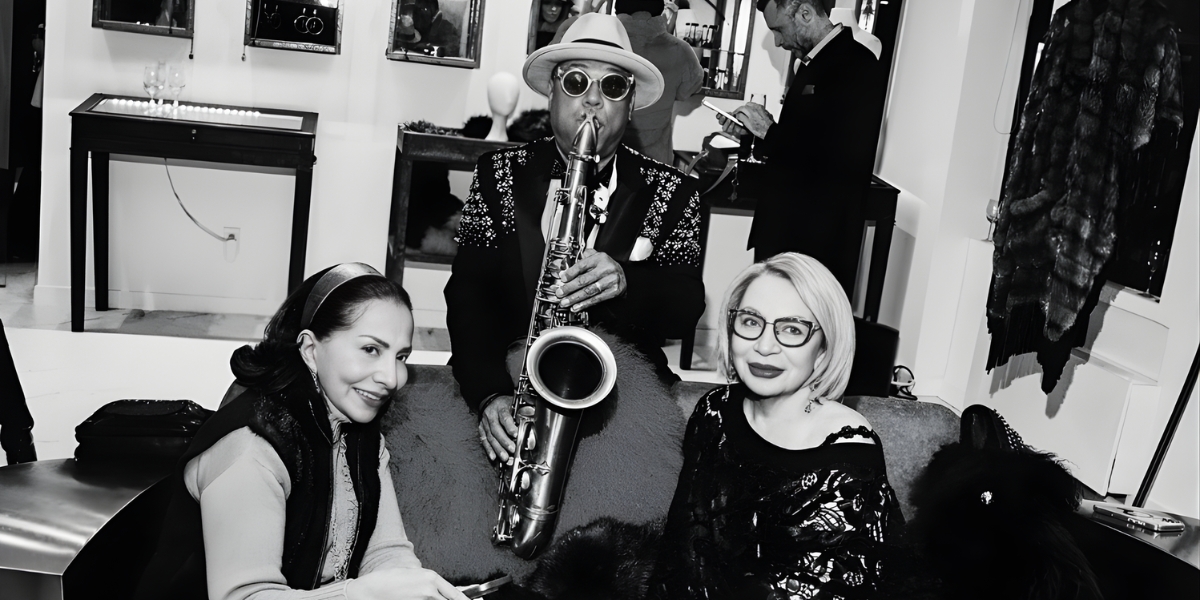
Guests gathered for the unveiling, perusing the fabulous furs and high-end jewels, and enjoying live saxophone performance by Dave “Doc” Watson. Yarmak thanked guests for attending and expressed her excitement for the new collection.

About Helen Yarmak:

Helen Yarmak is an acclaimed jewelry and fashion designer whose one-of-a-kind creations are collected by global collectors. Her work is fresh, unexpected, and shaped by a love of distinctive colored gemstones such as Paraiba tourmalines, Ceylon sapphires, vibrant Rubellites, and limpid Beryl. “It is love at first sight,” she says. “If I do not feel a connection with a stone, I do not choose it.”

With a Ph.D. in mathematics, Yarmak was born in Ukraine, and she moved to Moscow at 40. She fuses scientific precision with artistic imagination in every collection. Her remarkable fashion journey began in her own kitchen, where she designed lingerie for an underserved audience, and grew steadily to include fashion, jewelry, and multiple salons in Manhattan, Miami, Milan, and Moscow. These salons showcase her unique pieces to individuals in search of the exceptional, royalty, business elites, and entertainment icons. 

Always captivated and influenced by the natural world, her designs reflect the extravagant, the subtle, and the intangible qualities of mother nature’s beautiful universe. 

She has been awarded: Best International Designer of the Year, New York Fashion Week, Best International Jewelry Designer of the Year, Russian American Foundation in Cooperation with New York Post, Leadership Award, International Understanding Foundation (New York), Outstanding Entrepreneur of the Year Award, Women in Business Organization (Washington, D.C.) and Creator of the Year Award, “Creativity” Magazine with the Journalists Union.

https://www.helenyarmak.com/

From Shadow to Strength: Crystal Robinson’s Gentle Questions that Change Everything

By: Media at Game Changer Publishing

From Shadow to Strength: Gentle Questions that Change Everything

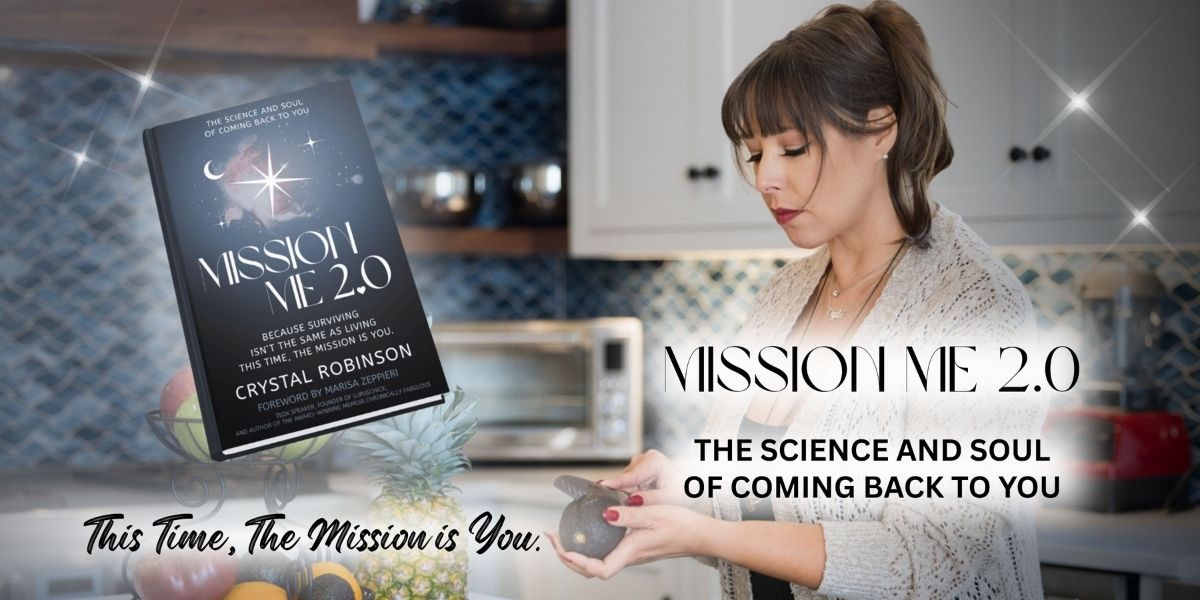
Crystal Robinson’s work sits at the intersection of systems thinking and nervous system regulation. With decades of engineering leadership experience and the release of her nationally positioned book Mission Me 2.0: The Science and Soul of Coming Back to You, Robinson has emerged as a clear authority on how chronic stress shapes behavior, decision-making, and leadership capacity. Her approach challenges a familiar professional reflex: the belief that clarity and performance come from effort alone.

Through Crystal Moon Holistic Healing and Mission Me 2.0, Robinson addresses a quieter crisis affecting high-achieving professionals. Outward success often masks an internal erosion of calm, focus, and physical resilience. Her work reframes healing not as self-improvement, but as nervous system retraining that restores access to clear judgment and sustainable authority. As she writes in her book, “Coming back to yourself isn’t a task to complete. It’s a rhythm to remember.”

From Pressure to Presence

Robinson’s engineering background fundamentally informs how she approaches stress and recovery. Trained to analyze complex systems under load, she applies the same discipline to the human body. In her framework, stress is not a personal failure or mindset issue. It is a predictable response of the system that requires regulation before optimization.

A stress-related illness forced Robinson to confront a core limitation of logic-driven leadership. The body does not respond to reasoning alone. As she states in Mission Me 2.0, “You can’t outthink your body. You can’t spiritually bypass your pain.” That realization shifted her work away from purely cognitive strategies and toward embodied practices that stabilize physiology first. This systems-level integration distinguishes her work from conventional wellness or mindset coaching by grounding change in repeatable, measurable responses.

Gentle Questions, Real Answers

At the center of Mission Me 2.0 is a disciplined practice of inquiry designed to interrupt stress-driven behavior. Robinson teaches readers to ask precise, compassionate questions that elicit information rather than escalate internal pressure. “It’s not about fixing what’s broken. It’s about softening what’s been hardened. Making space for what’s true. Asking better questions, not chasing better answers,” she explains.

In application, this may look like a leader pausing before responding to a high-stakes email. Rather than reacting with shallow breathing or a tightened posture, they regulate their breathing, notice physical tension, and allow the nervous system to settle. Only then do they respond. That brief pause often results in clearer communication, steadier authority, and more effective outcomes. These moments demonstrate how regulation directly shapes leadership decisions in real time.

A Cycle, Not a Checklist

Robinson consistently challenges the idea of healing as a finish line. “There is no ‘finish line’ here. No test at the end. No final breakthrough moment that promises a forever fix. Healing isn’t a checklist. It’s a cycle of remembering,” she writes. This framing removes performance pressure and replaces it with a repeatable process of regulation and return.

Throughout the book, Robinson illustrates how noticing a single physical signal can redirect an entire day. A longer exhale before speaking, a grounded pause before a meeting, or a brief check-in to identify one’s need all serve as entry points back into clarity. These practices are not symbolic. They are operational tools that accumulate into resilience and steadier leadership over time.

Returning to Basics

Robinson’s work does not ask professionals to abandon ambition or responsibility. It asks them to lead from a regulated nervous system rather than chronic strain. “This work, this way of living, is not a program to complete. It’s a rhythm you learn to follow,” she writes, emphasizing consistency over intensity.

Her insistence that “We don’t have to earn our peace. We don’t have to prove our worth before we come home to ourselves” speaks directly to leaders conditioned to equate value with output. Mission Me 2.0 reframes effectiveness as a physiological state that supports clearer decisions, stronger boundaries, and sustained presence. For professionals navigating constant demand, Robinson’s work offers not escape, but a practical return to agency.

A Practical Return

For leaders and professionals operating under continuous pressure, Mission Me 2.0 provides a grounded alternative to stress-driven performance. Robinson’s tools are designed for immediate application and long-term stability, enabling clearer judgment in work, relationships, and self-leadership.

The book ultimately reframes wellness as leadership infrastructure. As Robinson writes, “You are not here to perform wellness. You are here to remember who you are.” That recalibration, from reaction to regulation, defines the relevance of her work now and positions Mission Me 2.0 as a practical guide for professionals ready to lead with clarity rather than exhaustion.

Explore More and Connect with Crystal Robinson

🌐 Websites: www.crystalmoonholistichealing.com | www.missionme20.com
📖 Book: Mission Me 2.0: The Science and Soul of Coming Back to You
🔗 LinkedIn: Crystal Robinson
📘 Facebook: Crystal Moon Holistic Healing

Disclaimer: The information in this article is for informational purposes only and is not intended to replace professional medical advice, diagnosis, or treatment. Always seek the advice of your physician or other qualified health provider with any questions you may have regarding a medical condition.