Jack Chiarello: The 22-Year-Old Behind One of Instagram’s Largest Media Networks

Jack Chiarello never waited for ideal conditions to begin. While many people his age focused on school schedules or part-time jobs, he was growing a digital operation from his parents’ basement in Ottawa, Canada. What started as simple meme and animal content pages eventually became JC Enterprises Media, a marketing agency with a substantial Instagram network that reaches millions of users.

He is only 22, yet his work already reflects a strong understanding of digital attention, business structure, and long-term planning.

Curiosity That Led to a Company

Chiarello began with a question. Could someone turn online attention into a steady income?

That single idea became the foundation for a highly successful company that he built without outside investors or formal business training. Instead of relying on trends or hype, he focused on consistent posting, pattern recognition, and audience behavior. His pages grew because he studied engagement and adapted quickly.

Over time, his meme and animal pages developed into a well-organized network of highly active verticals. The growth came from persistence rather than luck, and his content strategy made the pages appealing to brands seeking broad digital reach.

Building Without Flash or Funding

Where many entrepreneurs lean on image or lifestyle branding, Chiarello chose a quieter approach. He kept the focus on the work itself. His social media presence remains minimal, and his energy goes into the systems behind JC Enterprises Media.

The agency’s structure is lean and flexible, which allows quick shifts in content strategy and campaign timing. This approach has helped him form partnerships with corporations valued in the billions. These companies rely on his ability to deliver strong results through his extensive Instagram network.

Balancing Law School and Business Growth

One of the most unusual parts of Chiarello’s routine is his dedication to law school while running a major digital operation. He remains committed to his studies, often switching between academic reading and managing campaigns in the same day.

His legal background plays a role in how he handles contracts, intellectual property, and negotiations. He views law and media management as two systems that both require structure, planning, and attention to detail.

Working Through Doubt and Early Setbacks

Chiarello’s path had difficult moments. Many people around him doubted the idea of building a business on Instagram. Some individuals attempted to take advantage of his trust, and he fell victim to scams originating from anonymous online accounts. Even close contacts occasionally saw his success as an opportunity rather than something to respect.

He continued anyway. Routine helped him stay focused, and he refused to let outside opinions define the size of his goals. He often tells new entrepreneurs that if their idea doesn’t seem unusual to others, it may not be ambitious enough.

Looking Ahead to Larger Goals

Chiarello plans to expand JC Enterprises Media toward a combined audience of one billion Instagram followers by 2027. He also aims to position the company among the top five global marketing agencies by 2028. These objectives guide the way he builds his team, shapes his content strategies, and approaches long-term partnerships.

Alongside those goals, he hopes to create resources that help beginners build their own digital opportunities without falling for misleading online advice. His belief is that real digital opportunity should be accessible, practical, and transparent.

A Message for Future Entrepreneurs

Chiarello’s story supports a simple idea. You can create a successful digital business without outside capital, expensive mentorship programs, or a complete break from education. His experience shows that consistency, creativity, and discipline can support substantial growth.

If you have a serious idea and the willingness to commit to it, you can build something meaningful online. Jack Chiarello did exactly that, starting from a basement and growing into a leader in the marketing space while still attending school. His work encourages others to explore what they can accomplish through focus and persistence.


Why Sheryl Raphael Whitaker Is Taking Joy to 100 Stages in 2026

By: Karen Miller

Executive burnout, disengagement, and decision fatigue are quietly draining performance across organizations. Leaders are expected to deliver results amid constant change, shrinking margins, and rising complexity, yet many are doing so while operating on empty. Companies invest in productivity tools, wellness programs, and time management frameworks, yet the problem persists.

Sheryl Raphael Whitaker believes the issue is being misdiagnosed.

A longtime leadership advisor, founder and CEO of EdenAnthony Elite Talent Solutions, and best-selling author of It Starts with Joy: The Inner Shift that Changes Everything, Whitaker argues that burnout is not a workload problem; it’s a leadership operating system problem.

“Leaders can still hit targets while being completely disconnected from themselves,” Whitaker says. “That kind of success is unsustainable, and eventually it shows up in decision quality, culture, and results.”

In response, Whitaker has made a bold commitment for 2026: she will deliver 100 talks in one year, designed to help leaders reset how they operate, internally and strategically, before burnout becomes a business liability.

Why Joy Belongs in the C-Suite

Whitaker’s work challenges a long-standing assumption in corporate culture: that joy is optional, emotional, or irrelevant to performance. In her experience, the opposite is true.

Joy, she explains, functions as an internal stabilizer. When leaders operate from clarity, alignment, and purpose, they make better decisions, communicate more effectively, and build trust faster. When they don’t, fear, reactivity, and exhaustion quietly take over.

“Joy isn’t about being happy all the time,” Whitaker says. “It’s about internal steadiness. When that’s missing, leaders default to urgency instead of intention.”

This insight didn’t come from theory alone. Whitaker spent decades in high-pressure corporate environments, including leading enterprise learning and development for a global workforce of more than 37,000. She saw firsthand how misalignment at the top creates ripple effects throughout an organization, slowing execution, weakening morale, and increasing turnover.

Her conclusion was clear: leadership performance cannot be separated from internal conditions.

The 100-Talk Commitment

Whitaker’s 100-talk goal is not a personal branding exercise. It is a deliberate leadership intervention.

Through keynotes, panels, fireside chats, podcasts, and executive forums, she plans to bring a consistent message to organizations and communities: sustainable leadership requires an internal shift before any external strategy can work.

“These conversations are about giving leaders permission to pause and recalibrate,” Whitaker says. “Not to step away from responsibility, but to lead from a place that can actually sustain responsibility.”

Each talk is designed to meet leaders where they are: high-achieving, capable, and often overwhelmed, while challenging the idea that resilience means pushing harder. Instead, Whitaker encourages leaders to examine what fuels their best thinking and what quietly drains it.

From Burnout to Alignment

Across her work, Whitaker sees this most often in leaders who are outwardly successful but privately exhausted, making decisions faster, not better. Executives who have climbed the ladder only to realize the climb came at the expense of health, relationships, or clarity. And skeptics who dismiss human-centered leadership until the cost of ignoring it becomes undeniable.

The shift she advocates is not about doing less. It is about doing what matters most without sacrificing the leader in the process.

“When leaders protect their internal clarity, everything downstream improves,” she says. “Trust strengthens. Decisions sharpen. Teams feel it immediately.”

This philosophy also shapes “It Starts with Joy LIVE,” Whitaker’s weekly YouTube show launching February 4, airing LIVE every Wednesday at 8:30 am EST. 

The show extends her mission beyond the stage, creating space for ongoing dialogue around leadership, purpose, and intentional work.

Why This Matters Now

As organizations navigate economic uncertainty, technological acceleration, and increasing pressure to perform, the cost of burnout-driven leadership is rising. Whitaker believes this moment calls for a different model, one that treats joy not as a perk, but as infrastructure.

“Joy isn’t the opposite of discipline,” she says. “It’s what makes discipline sustainable.”

By committing to 100 talks in 2026, Whitaker is placing a clear stake in the ground: leadership culture must evolve, or organizations will continue to lose their most capable people, not always to resignation, but to disengagement.

Her work offers leaders a way forward, one grounded in accountability, clarity, and the courage to lead without abandoning their humanity.

As Whitaker puts it, “Leadership starts with who you are. When that foundation is strong, everything else works better.”

To learn more, connect with Sheryl Raphael Whitaker on LinkedIn, or subscribe to It Starts with Joy LIVE on YouTube, launching February 4.

Inside the Ideal Caribbean Wedding: Sunlover Travel Shares the Secrets to Saying “I Do” in Paradise

By: Matt Emma

The photos make it look effortless. Barefoot on the beach, sun melting into the horizon, a champagne toast under palm trees. But anyone who’s ever tried to plan a Caribbean wedding knows the truth: paradise doesn’t organize itself.

Behind every serene seaside ceremony are hundreds of small decisions that make it all look and feel seamless. From choosing the right island to coordinating guests and navigating local requirements, destination weddings demand the kind of precision that most couples don’t realize they need until they’re in the thick of it.

That’s where Kerri Logan Shirk, founder of Sunlover Travel, comes in. With over two decades of experience and countless celebrations across the Caribbean, she’s seen (and solved) it all. Her award-winning, woman-led agency has become one of the most trusted names in Sandals and Beaches destination weddings, known for making dream celebrations as seamless as they are stunning.

“I’ve helped hundreds of couples get married across the Caribbean,” Shirk says. “Our job is to handle every moving piece so they can actually enjoy one of the most meaningful moments of their lives.”

What Couples Don’t See

The biggest misconception, Shirk says, is that destination weddings “plan themselves.” In reality, even the most all-inclusive packages come with a maze of micro-decisions, and that’s where experience matters.

“Choosing the right island sets the tone,” she explains. “Jamaica has incredible energy and music. St. Lucia feels romantic and lush. Curaçao is colorful and chic. But what really makes a difference is understanding the nuances. The local weather, the best time of day for photos, even how the light hits the water at sunset.”

Shirk and her team handle every behind-the-scenes detail: coordinating flights and transfers, securing room blocks, communicating with resort wedding teams, and making sure that the bride isn’t fielding texts about travel logistics the morning of the ceremony.

“Much of what contributes to a wedding feeling seamless happens long before guests arrive,” she says. “We try to anticipate what couples need before they even think to ask.”

The Power of the Right Partner

At Sunlover, Shirk has built a team of advisors who share her philosophy that weddings should be deeply personal, not one-size-fits-all.

Through long-standing partnerships with Sandals and Beaches Resorts, her clients gain insider access to some of the Caribbean’s most breathtaking properties. These resorts are renowned for their beachfront chapels, overwater gazebos, world-class dining, and luxury all-inclusive wedding packages, where even the smallest details—flowers, décor, music—are curated to perfection.

“There’s just a level of trust with Sandals and Beaches,” she says. “They deliver quality, consistency, and care in a way that lets us feel confident telling our couples, ‘You’re in good hands.’”

And those hands include Sunlover’s own team of women who are not just logistics experts but genuine romantics at heart. They treat each couple like close friends, guiding them through every step with empathy and precision.

“We’ve cried happy tears right alongside our clients,” Shirk admits. “We know how sacred this day is. Our goal is to make it beautiful, personal, and stress-free.”

Island Secrets: What Makes Each Destination Shine

After touring hundreds of resorts across the Caribbean, Shirk has developed an intuition for pairing couples with the right island. “Every destination has its own personality,” she says. “It’s about finding the one that feels like them.”

Here’s her insider’s take on a few favorites:

  • Jamaica: The island’s heartbeat. Lively, soulful, and perfect for couples who want energy, music, and vibrant sunsets. Sandals Montego Bay remains a favorite for its beachfront chapel and quick airport access for large groups.
  • St. Lucia: Lush and romantic, with three Sandals resorts offering a mix of mountain views and beaches. “It’s ideal for couples who want luxury with a sense of adventure,” Shirk says.
  • Curaçao: A newer gem with European-Caribbean flair, pastel architecture, and stunning overwater bungalows. “It’s modern, stylish, and perfect for couples who want something fresh and different.”
  • Grenada: Bold and elegant, often called the “Island of Spice.” Its overwater wedding chapel and breathtaking views make it a hidden favorite for couples seeking intimacy and privacy.

“The Caribbean isn’t one-size-fits-all,” Shirk says. “When we match couples with the right island, everything else tends to fall into place.”

The Emotional Payoff: What Really Matters

While the scenery is unforgettable, Shirk believes the real magic happens in quieter moments: the exhale after months of planning, the tears during the vows, the laughter during the reception when everything feels exactly right.

“When a bride tells me, ‘I didn’t worry about a thing,’ that’s the win,” she says. “Because it means she got to be in the moment. That’s what we hope for.”

After hundreds of weddings, one thing remains constant: every couple leaves with more than photographs. They carry home a memory of connection that stays long after the sand is brushed off their feet.

“It’s not just about the destination,” Shirk reflects. “It’s about how it feels to stand in paradise surrounded by everyone you love, knowing you didn’t have to stress to get there. That’s what we aim to create.”

The Perfect Wedding Isn’t About Perfection

The perfect Caribbean wedding isn’t just found; it’s thoughtfully designed. It’s the product of experience, intuition, and care.

With Sunlover Travel’s decades of expertise and deep partnership with Sandals and Beaches Resorts, couples can step into their celebration knowing that every detail, big or small, has been handled.

Because the most beautiful weddings aren’t just seen; they’re felt. And that feeling starts the moment the planning stops being stressful and starts being joyful.

How Digital Design Is Shaping the Way People Use Online Platforms

The way people interact with online platforms has always been shaped by the tools behind them. From early desktop software to today’s mobile-first experiences, each technological shift has influenced how users navigate, trust, and rely on digital services in their everyday lives.

Today, some of the most meaningful changes are happening quietly through digital design. Rather than pushing users toward complex actions or overwhelming choices, modern platforms emphasize clarity, consistency, and emotional ease. 

These thoughtful design decisions often go unnoticed, yet they play a major role in how comfortable and confident people feel when using digital tools.

This shift reflects a broader movement in digital culture. Designers are increasingly focused on building experiences that support real-world behavior instead of forcing users to adapt to rigid systems.

Moving Away From High-Pressure Interactions

Older digital experiences were often built around high-pressure interactions. Dense interfaces, unclear navigation, and infrequent engagement made mistakes feel intimidating. As a result, many users disengaged simply because platforms demanded too much attention or technical understanding.

Modern platforms take a different approach. Interactions are broken into smaller, more manageable steps, with clear visual cues and predictable flows. This reduces hesitation and encourages regular engagement without overwhelming the user.

When each interaction feels low-risk and easy to understand, people are more likely to return and engage consistently. Progress becomes gradual and intuitive rather than stressful or confusing.

Design as a Behavioral Tool

Design plays a subtle yet powerful role in shaping how people behave online. Layout, language, timing, and feedback all influence whether users feel confident or uncertain while navigating digital platforms.

Many of these shifts align with broader changes in emerging digital systems, where technology is increasingly designed around real human behavior rather than rigid, system-driven processes.

Instead of assuming constant attention or technical expertise, modern platforms are built to accommodate interruptions, learning curves, and varying levels of engagement. Clear prompts, familiar patterns, and visible feedback help users understand what’s happening at each step.

Optional confirmations and reminders further support intentional interaction, allowing users to pause or adjust without disrupting the overall experience.

Building Trust Through Transparency

Trust is a critical component of any digital experience, yet it is rarely established through branding alone. It develops through consistent and transparent interactions over time.

Users tend to feel more comfortable when:

  • Information is presented clearly and upfront
  • System limitations or boundaries are easy to understand
  • Changes are visibly confirmed
  • Support options are easy to locate

By removing ambiguity, platforms reduce stress and uncertainty. Over time, this reliability becomes a defining feature of the user experience, encouraging continued engagement.

Automation That Respects User Control

Automation has become a common feature across modern digital platforms, but it works best when users remain in control. Rather than replacing decision-making entirely, effective systems allow users to set preferences while staying informed.

Background processes, reminders, and alerts reduce the need for constant oversight while maintaining transparency. When automation is adjustable and clearly communicated, it enhances the experience without making users feel disconnected or powerless.

Community Features With Intention

Social elements are increasingly common across digital platforms, but their success depends on thoughtful implementation. Unstructured comparisons or competitive features can create unnecessary pressure and reduce long-term engagement.

More intentional community features focus on:

  • Shared progress rather than rankings
  • Optional or private participation
  • Guided templates for new users
  • Moderation tools that support healthy interaction

When community design prioritizes support over competition, it fosters a more welcoming and sustainable environment.

Real-World Benefits Beyond the Screen

A noticeable benefit of improved digital design extends beyond performance metrics. They show up in everyday life as reduced frustration, improved focus, and increased confidence when using online tools.

When platforms feel predictable and easy to navigate, users spend less time worrying about errors and more time engaging meaningfully with their goals, whether related to work, creativity, or personal organization.

Lessons for Digital Product Builders

For companies building modern digital platforms, the expectations are clear. Users increasingly value experiences that are intuitive, respectful, and aligned with real-world behavior.

Successful platforms often prioritize:

  • Simple onboarding processes
  • Thoughtful default settings
  • Meaningful engagement indicators
  • Security features that reassure without adding friction

These principles reflect a growing emphasis on user-friendly digital experiences that adapt to people rather than forcing people to adapt to technology.

A Broader Shift in Digital Culture

These changes are part of a larger evolution in digital design. As technology becomes more embedded in daily life, users expect platforms to feel approachable, transparent, and dependable.

This human-centered approach highlights the importance of usability and emotional design alongside technical capability. Platforms that embrace these values are shaping a future where digital experiences feel supportive rather than intimidating.

Ultimately, the quiet refinement of everyday online platforms may prove more impactful than any single innovation. By prioritizing clarity, consistency, and trust, digital design continues to reshape how people interact with technology, one interaction at a time.

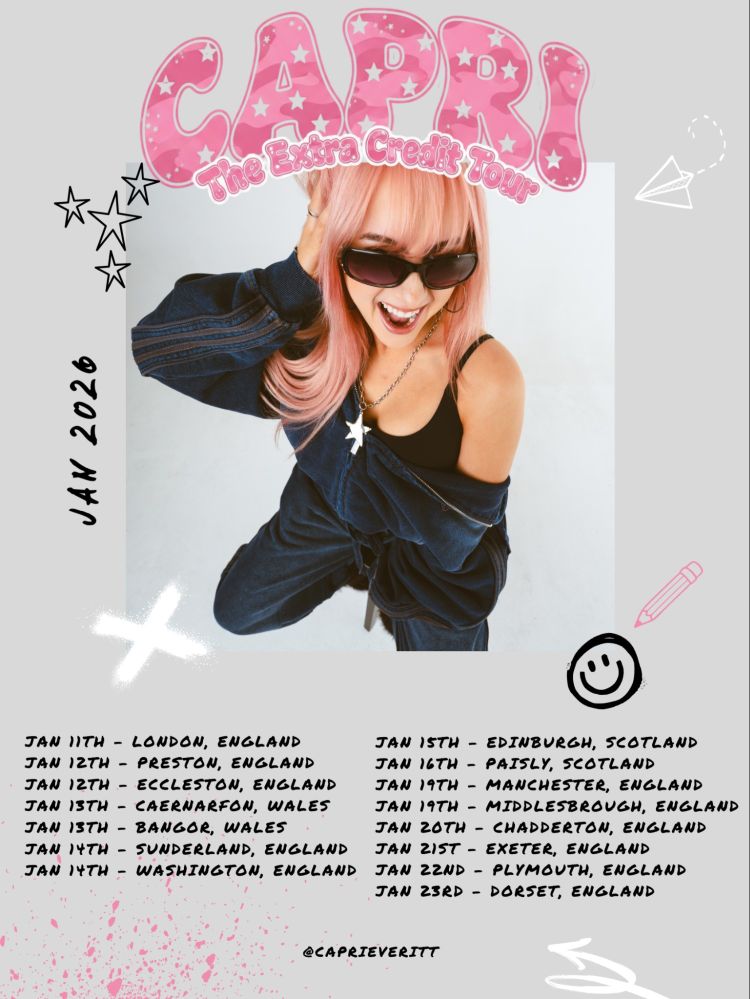
Capri Everitt Headlines Tour in the UK

Capri Everitt is entering a moment where momentum, preparation, and visibility are aligning. At just 20 years old, the Los Angeles-based artist is headlining a 20-date UK run with The Extra Credit Tour, marking a significant step forward in her evolution from digital standout to touring pop artist. With a growing catalog of label releases, major brand partnerships, and a breakout Billboard hit already behind her, the tour signals that Capri’s rise is translating into real-world demand.

Known as a prominent young influencer in Los Angeles, Capri has built an audience of over 1 million followers while working with major brands such as Casio, Suno, and several leading music companies. What separates her from many creators in her lane is that her reach has consistently supported her music career rather than overshadowing it. With a significant and growing presence on Spotify, Capri has proven that her audience is not only watching but actively engaging with her music.

Her breakout moment came with “Arcade,” a high-energy electronic release featuring B Martin, Setou, and Senyo, which climbed into the Top 20 on the Billboard Electronic/Dance charts. The track marked a turning point, placing Capri firmly in the global dance pop conversation and opening doors to deeper collaboration with labels, distributors, and international teams. She has described the success of “Arcade” as unexpected, especially given that it was her first time writing in that style, but the response affirmed her instincts as a songwriter willing to push beyond comfort zones.

Now, Capri is building on that foundation with her latest single, “Body Count,” which reflects her continued artistic growth. The track also features an influencer and rapper who shares her name, adding an additional layer of cultural crossover that mirrors Capri’s own position at the intersection of music, digital influence, and youth culture. As with much of her work, the song leans into direct expression while maintaining the accessibility that has helped her connect with a wide audience.

Capri has often said that music is how she communicates when words fall short. That perspective shapes both her writing process and her broader creative direction. Certain songs have been more emotionally difficult to write, she has shared, because they required confronting personal experiences head-on. That willingness to sit with discomfort has helped give her music a grounded quality that resonates beyond surface-level pop appeal.

Behind the scenes, Capri has been steadily developing her craft in Los Angeles studios, collaborating with respected producers and songwriters, including Sam Hook, B. Martin, and other creatives working across pop and electronic music. These partnerships have sharpened her sound and prepared her for the demands of a full headline tour, where consistency, stamina, and connection are just as important as streaming numbers.

Capri Everitt Headlines Tour in the UK

Photo Courtesy: Capri Everitt

The Extra Credit Tour represents the payoff of that work. Spanning 20 dates across the UK, the tour positions Capri as a front-facing artist capable of carrying a full live production. It also marks her return to international stages, this time not as a viral discovery but as an artist with a defined catalog and growing confidence. Fans will hear tracks like “Arcade” and “Body Count,” as well as newer material designed to translate powerfully in a live setting.

Capri’s story is also shaped by purpose beyond performance. Before establishing herself in Los Angeles, she gained global attention through a philanthropic journey that saw her travel internationally performing national anthems to raise awareness for children’s causes. She has since delivered multiple TEDx talks and continues to view music and advocacy as interconnected. That sense of responsibility has influenced how she approaches her platform and her audience.

Navigating fame at a young age has not been without pressure. Capri has spoken openly about growing up online and the scrutiny that comes with visibility. Rather than retreating, she has chosen transparency and balance, even participating in mental health school tours to address the realities of social media culture.

Fans can follow Capri Everitt on Instagram, stream her music on Spotify, and catch her live as The Extra Credit Tour brings her next era directly to the stage.

Fun Game Ideas to Play With Custom Inflatable Beach Balls at Corporate Events

Corporate events don’t have to feel formal or predictable. Introducing simple, interactive games using customizable beach balls can instantly shift the mood, helping people loosen up, connect, and enjoy themselves. These lightweight, colorful props are easy to use, safe for all skill levels, and effective at encouraging movement and participation during work gatherings.

Custom inflatable beach balls add more value than standard event props. Beyond being fun to play with, they also act as subtle branding tools when printed with a company logo or message. Unlike items that get used once and forgotten, beach balls often stay in circulation throughout the event—passed around during breaks, used in casual games, or taken home as a souvenir. That repeated interaction makes them especially effective at corporate events, where shared experiences matter more than rigid activities.

One popular way to use beach balls is through team-based movement games that encourage cooperation. Relay-style challenges are a great example. Small groups work together to move a beach ball from one point to another while following specific rules, such as keeping it in the air or transporting it without using hands. These activities naturally divide large crowds into manageable teams and give everyone a role to play. Instead of eliminating teams, timed challenges keep all participants involved until the end, maintaining a positive and inclusive atmosphere.

For events that call for a bit more excitement, obstacle-style challenges add variety and problem-solving elements. Participants guide their beach ball through a short course that might include cones, tunnels, or balance tasks. These challenges encourage quick thinking and adaptability while keeping energy levels high. Teams can either compete for the fastest time or complete the course cooperatively, which works especially well when attendees don’t know each other well.

Beach balls can also be used in calmer, more interactive activities that blend learning with fun. Trivia games, for instance, turn a simple toss into an engaging group experience. Questions written on different sections of the ball prompt conversation and laughter, whether they focus on company history, industry knowledge, or lighthearted team facts. This format works well for mixed groups and helps new employees feel included without putting anyone on the spot.

For more casual, drop-in activities, shooting games inspired by basketball are easy to set up and appealing to a wide range of participants. Using beach balls instead of standard equipment lowers the pressure and makes the activity accessible to everyone. These games work particularly well during breaks, allowing people to join in when they feel like it rather than following a strict schedule.

Short, fast-paced challenges are another effective way to keep energy high throughout an event. Quick, timed games that last only a minute create excitement without requiring much space or preparation. Because each challenge tests different skills, more people get a chance to succeed, which keeps participation balanced and fun. Running several stations at once also helps manage larger groups.

To enhance the overall experience, beach ball games can be paired with inflatable setups and themed activity zones. Bounce houses, slides, and inflatable arches help organize the space, guide foot traffic, and add visual impact. These elements create natural gathering points and make it easier for guests to move between activities without confusion. For summer or outdoor events, water-themed inflatables and pool-based games pair especially well with beach balls, offering a relaxed and festive atmosphere.

Overall, custom inflatable beach balls are a simple but powerful addition to corporate events. They encourage movement, spark conversation, and create shared moments that help coworkers connect outside of their usual work environment. With minimal setup and maximum engagement, they turn ordinary gatherings into experiences people actually remember.

Why Millennials Are Turning to Freelance Work

With the rise of digital platforms and the gig economy, traditional employment models are being redefined, prompting many young adults to explore alternative avenues for income generation. Explore the reasons behind this growing trend and why freelance work appeals to millennials.

Flexibility and Work-Life Balance

One of the primary drivers behind millennials opting for freelance work is the desire for flexibility and work-life balance. Unlike traditional 9-to-5 jobs, freelancing allows individuals to set their own schedules, choose their projects, and work from anywhere with an internet connection. This flexibility enables millennials to pursue their passions, accommodate personal commitments, and maintain a healthier balance between work and leisure activities.

Pursuit of Passion Projects

Millennials are known for prioritizing fulfillment and purpose in their careers, often seeking opportunities that align with their interests and values. Freelance work provides a platform for individuals to pursue their passion projects and turn their hobbies or skills into lucrative income streams. Whether it’s graphic design, writing, photography, or programming, freelancing offers the freedom to explore diverse creative pursuits and monetize talents outside of traditional employment constraints.

Economic Uncertainty and Job Insecurity

The economic landscape has undergone significant transformations in recent years, with job security becoming increasingly elusive for many millennials. Factors such as automation, globalization, and economic downturns have led to widespread layoffs and corporate restructuring, leaving young adults wary of relying solely on traditional employment for financial stability. Freelancing offers a sense of control and autonomy in an uncertain job market, allowing individuals to diversify their income streams and mitigate the risks of unemployment.

Access to Global Opportunities

The digital revolution has democratized access to global markets, empowering freelancers to collaborate with clients and companies from around the world. Millennials leverage online platforms and digital tools to showcase their skills and expertise to a vast audience, transcending geographical barriers and traditional employment limitations. This global connectivity opens up a wealth of opportunities for freelancers to secure high-paying projects, build international networks, and expand their professional horizons beyond local job markets.

Entrepreneurial Spirit and Autonomy

Millennials are often characterized by their entrepreneurial spirit and desire for autonomy in their careers. Freelancing enables individuals to become their own bosses, take charge of their professional destinies, and pursue opportunities that align with their personal goals and values. Whether it’s launching a freelance business, building a personal brand, or experimenting with different revenue streams, freelancers have the freedom to chart their own paths and define success on their own terms.

Technological Advancements and Remote Work

Advancements in technology have revolutionized the way we work, making remote collaboration and telecommuting increasingly feasible and efficient. Millennials, who are digital natives accustomed to virtual communication and online collaboration tools, are well-suited to thrive in remote freelance environments. The ability to work remotely not only eliminates the need for commuting but also enables freelancers to access a diverse range of opportunities without being confined to a specific location.

Contrarian Viewpoint: Potential Challenges

While freelance work offers numerous advantages, it’s essential to acknowledge potential challenges that may arise. Freelancers often face irregular income streams, unpredictable workloads, and the absence of benefits such as health insurance and retirement plans. Additionally, competition in the freelance marketplace can be fierce, requiring individuals to continuously upgrade their skills, market themselves effectively, and navigate the complexities of self-employment. Addressing these challenges requires careful planning, financial management, and resilience in the face of uncertainty.

Addressing Concerns and Maximizing Potential

To address concerns about the viability of freelance work, millennials can adopt strategies to mitigate risks and maximize their earning potential. Building a diverse portfolio of clients and projects can help stabilize income and reduce dependency on any single source of revenue. Investing in ongoing education and skill development ensures that freelancers remain competitive and relevant in their respective fields. Furthermore, establishing strong financial management practices, such as budgeting and saving for emergencies, can provide a safety net during lean periods and unforeseen circumstances.

Embracing Freelance Opportunities

Despite the inherent challenges, freelance work continues to gain traction among millennials seeking flexibility, autonomy, and opportunities for personal and professional growth. By embracing the gig economy and leveraging digital platforms, young adults can carve out fulfilling careers that align with their passions, values, and lifestyle preferences. Whether as a side hustle, a full-time pursuit, or a stepping stone to entrepreneurship, freelance work offers millennials a pathway to financial independence, creative fulfillment, and a more balanced approach to work and life.

Leveraging Collaboration and Networking

Networking and collaboration play crucial roles in the success of freelancers, enabling them to expand their professional networks, learn from peers, and access new opportunities. Participating in industry events, joining online communities, and connecting with fellow freelancers can foster valuable relationships and open doors to collaborative projects and referrals. By leveraging the power of collaboration and networking, millennials can amplify their impact, broaden their horizons, and thrive in the competitive freelance landscape.

Adapting to the Evolving Market

The rise of freelance work among millennials reflects a broader shift towards alternative employment models in response to changing economic, technological, and cultural trends. From flexibility and pursuit of passion projects to economic uncertainty and access to global opportunities, freelancing offers a compelling solution for young adults seeking greater control over their careers and lifestyles. By embracing freelance opportunities, millennials can harness the power of digital connectivity, entrepreneurial spirit, and autonomy to forge meaningful and fulfilling paths in today’s dynamic and evolving job market.

Unraveling the Allure of Sci-Fi Movies

Science fiction movies have remained a popular part of cinema for decades, attracting audiences with stories about space exploration, advanced technology, artificial intelligence, time travel, and worlds that exist beyond the limits of everyday life.

But the appeal of science fiction goes beyond futuristic settings and impressive visual effects. The genre gives filmmakers a way to explore complex questions about humanity, society, technology, and the future while entertaining audiences with imaginative stories.

The Appeal of Exploring the Unknown

One of the main attractions of science fiction is its ability to take audiences into unfamiliar territory.

A sci-fi movie may transport viewers to another planet, a distant future, or an alternate version of reality. These settings create a sense of discovery that can be difficult to achieve in other genres.

The unknown can also create suspense. Audiences may wonder what exists beyond Earth, what will happen when technology becomes more advanced, or how humanity might respond to an unexpected discovery.

This combination of mystery and imagination keeps viewers engaged.

Technology as a Storytelling Tool

Technology is often at the center of science fiction. Robots, artificial intelligence, virtual reality, spaceships, and futuristic cities are common elements of the genre.

These technologies are not always included simply to create visual spectacle. They can also serve as tools for exploring human behavior.

For example, a story about artificial intelligence may raise questions about responsibility, identity, or the relationship between humans and machines. A movie about advanced surveillance technology may examine privacy and personal freedom.

By imagining what technology could become, science fiction can encourage audiences to think about the consequences of technological progress today.

Questions About Humanity

Despite its futuristic settings, science fiction often tells deeply human stories.

Characters may face familiar emotions such as love, fear, loneliness, ambition, grief, and the desire to survive. The unusual circumstances simply place these emotions in a different environment.

A story about astronauts stranded in space can explore isolation and perseverance. A film about time travel can examine regret and the consequences of personal decisions. A story about an alien encounter can raise questions about communication and the fear of the unfamiliar.

The futuristic setting can therefore make familiar human experiences feel new.

Imagining Different Futures

Science fiction allows audiences to imagine possible futures. Some movies present optimistic visions in which technology improves people’s lives, while others portray darker societies shaped by conflict, environmental problems, or technological control.

These contrasting visions can encourage viewers to think about the direction of the real world.

A fictional future may serve as a warning about problems that already exist. Alternatively, it may present new possibilities and encourage audiences to consider what society could achieve.

This ability to imagine different outcomes is one reason science fiction continues to remain relevant.

The Spectacle of the Genre

Visual storytelling is another major part of the appeal.

Science fiction often gives filmmakers opportunities to create large-scale worlds that would be difficult to portray in other genres. Futuristic architecture, alien landscapes, space battles, and advanced machines can create memorable cinematic experiences.

Modern visual effects have expanded these possibilities even further. Filmmakers can now create detailed environments and creatures that would have been difficult or impossible to show convincingly in earlier decades.

However, strong science fiction does not necessarily depend entirely on visual effects. A compelling story and believable characters can make even a relatively simple sci-fi concept engaging.

The Freedom to Imagine

Science fiction has fewer creative boundaries than many other genres. Writers and filmmakers can create new rules for their worlds and explore ideas that would not be possible within ordinary reality.

This creative freedom allows stories to examine concepts such as parallel universes, alternate timelines, extraterrestrial civilizations, and distant futures.

For audiences, this can provide an escape from familiar surroundings. At the same time, these imaginary worlds can offer new perspectives on real-life issues.

Sci-Fi Can Blend With Other Genres

Another reason for the genre’s popularity is its ability to combine with other types of storytelling.

Science fiction can include elements of action, drama, romance, comedy, mystery, horror, and adventure. This variety means that viewers with different interests can find something appealing within the genre.

A sci-fi movie might focus on an emotional relationship, a survival story, a mystery surrounding an unexplained event, or an action-packed conflict between competing civilizations.

The genre’s flexibility allows filmmakers to experiment with different storytelling approaches.

A Genre That Encourages Curiosity

Science fiction can also inspire curiosity about science and technology.

Movies are not always scientifically accurate, and many concepts are deliberately fictionalized. Nevertheless, they can encourage viewers to learn more about astronomy, physics, robotics, artificial intelligence, and other fields.

For some audiences, an interest in science may begin with a fictional story that raises an intriguing question: Could something like this actually happen?

Even when the answer is no, the question itself can encourage further exploration.

Why Sci-Fi Continues to Attract Audiences

The enduring appeal of science fiction comes from its ability to combine imagination with meaningful questions.

The genre offers audiences the opportunity to explore unfamiliar worlds while reflecting on issues that affect everyday life. It can entertain through action and spectacle, but it can also challenge viewers to think about technology, morality, society, and the future.

Whether it presents an optimistic vision of tomorrow or a warning about where humanity could go wrong, science fiction continues to give filmmakers a unique way to explore possibilities.

Ultimately, the allure of sci-fi movies lies in their ability to make audiences look beyond the world they know. By imagining what could exist, the genre encourages people to reconsider what is possible—and what kind of future they want to create.