Uncovering the Secrets Next Door: Inside Leah Orr’s The She Shed, the Thriller With a Heart of Gold

Jensen Beach, Florida, isn’t the sort of town you’d expect to harbor dark secrets. Sunlight glints off the water, retirees stroll to breakfast spots, and the locals still swap stories like it’s the good old days. But beneath that postcard-perfect calm is the setting of one of the most unexpectedly gripping mysteries to hit the indie scene, Leah Orr’s The She Shed

Orr, an Amazon #1 best-selling author, doesn’t just write page-turners; she writes with purpose. Every book she publishes fuels her mission to support the Cystic Fibrosis Foundation. Suspense with heart? It’s a combination that’s resonated loudly with readers.

From Boston Beginnings to Florida Fame

Leah Orr might live in mellow Jensen Beach now, but her roots stretch back to Boston. After graduating from the University of Miami, she eventually settled on Florida’s Treasure Coast, raising three daughters with her husband. Her writing career started with something far more emotional than a spark of creativity. When her daughter, Ashley, was diagnosed with Cystic Fibrosis before birth, Orr made a promise to help, to advocate, and to use her talents for something bigger. Writing became more than an outlet; it became a mission.

Fourteen books and over 100,000 copies sold, that mission is still going strong. Her work has earned national attention—ABC, NBC, CBS, Forbes, The Miami Herald—and more than $1.4 million raised for the Cystic Fibrosis Foundation. Not bad for someone who still insists she’s “just telling stories.”

Why The She Shed Has Readers Obsessed

Orr’s 2022 hit, The She Shed, opens with one of those scenes that instantly makes your pulse jump: a dog digging up a human jawbone in a quiet backyard. Overnight, the cozy charm of Jensen Beach shatters. When beloved Aunt Adeline disappears, her niece Charlotte returns home to unravel the truth—only to discover that this sleepy coastal town is hiding more than seashells.

The novel alternates between Charlotte’s present-day hunt for answers and Adeline’s life beginning in 1962, revealing old friendships, unexpected betrayals, and bodies that refuse to stay buried.


But it’s not just the mystery that hooks readers, it’s the cast:

  • Millie, the baker whose sweetness hides nerves of steel
  • Randall, the sharp-tongued firefighter you'd want in your corner
  • Betty, the cranky neighbor with a moral compass all her own

Together they form the unlikeliest and most lovable “murder club” you’ll meet this year. Orr admits much of the book comes directly from the colorful local legends told by longtime Jensen Beach residents. “The stories here are wild and entertaining,” she says. “Some of the places and people you read about are very real.” That authenticity is what gives the story its charm: it feels like something that could have happened on your own block.

What sets The She Shed apart isn’t just its twists, it’s the unsettling way the familiar becomes suspect. Orr has a talent for taking everyday places, backyards, kitchens, and neighborly chats, and quietly turning them into crime scenes. The danger doesn’t come crashing in from the outside; it’s been there all along, hiding behind polite smiles and well-kept lawns. That tension between comfort and menace is where Orr’s storytelling shines brightest.

What’s Next for Leah Orr

Orr has zero plans to slow down. With two more cozy mysteries on the way, a middle-school whodunit, and two psychological thrillers in the works, her writing calendar is full. Her next release, The Retirees, is already stirring up buzz. Set in a retirement community where secrets travel faster than gossip, it promises the same charm and suspense fans love. In a world overflowing with stories, The She Shed stands out, not just for its twists but for the heart behind every page.

Pick up a copy, unravel a mystery, and support a cause that truly changes lives. Connect with Leah on Instagram.


From China to the World: How Vyxen Built a Global Standard for Evidence-Based Wellness

In an era where science and consumer trust define the new frontier of health, few brands have managed to balance innovation, integrity, and international credibility. From its headquarters in California, Vyxen is quietly reshaping the global perception of functional nutrition, bridging rigorous science with a timeless pursuit of human well-being.

What began as a small research initiative has evolved into a cross-continental enterprise grounded in measurable efficacy and long-term credibility. In a landscape often dominated by marketing narratives, Vyxen represents something rarer: a wellness brand built not on claims, but on verification.

Science as the Core Identity

Vyxen’s foundation lies in research that preceded its commercial success.

Its scientific framework spans collaborations with NSF-certified laboratories and leading universities across the United States and Europe, integrating studies in molecular biology, metabolic health, sleep optimization, and emotional balance. Every formulation undergoes third-party laboratory testing and adheres to USP, GMP, and ISO22000 international standards, maintaining an outstanding 99.8% ingredient compliance rate. While many companies chase speed to market, Vyxen has built its growth on patience and precision. This commitment to research over rhetoric has become its defining advantage, turning scientific transparency into brand equity.

In a global market where consumer skepticism toward supplements remains high, Vyxen’s approach seeks to restore confidence: each product is a scientifically validated health solution, not a speculative claim.

This approach is consistent with Vyxen’s long-term mission of creating more effective solutions for individual well-being. The company continues to develop new partnerships with academic and industry leaders to further its understanding of health optimization and enhance its product offerings.

From California to the Global Stage

Born in the innovation-driven culture of California, Vyxen’s vision was global from the outset. By 2023, the company had established its North American supply network and expanded operations into Canada, the United Kingdom, and Southeast Asia. Its flagship products, NAD+ Anti-Aging Drink and Calm+Sleep Functional Blend, have gained recognition for their measurable efficacy, becoming trusted names across leading e-commerce platforms.

Rather than pursuing aggressive expansion, Vyxen’s strategy centers on building layered credibility. Through consistent research publication, participation in international academic forums, and transparent standardization, the brand has transitioned in just a few years from a rising newcomer to a global benchmark in evidence-based nutrition.

By emphasizing collaboration with reputable research institutions, Vyxen has solidified its place as a leader in scientifically-driven wellness, fostering continuous innovation and contributing to the growing body of evidence supporting its products’ effectiveness.

From China to the World How Vyxen Built a Global Standard for Evidence-Based Wellness (2)

Photo Courtesy: Vyxen

The Cultural Dimension of Trust

In New York’s business culture, true brands are not defined by sales figures, but by the values they embody. Vyxen’s philosophy aligns with that principle; it views health as a discipline, not a trend. Its identity is shaped by responsibility as much as by innovation. This restrained and methodical character gives Vyxen a distinct position among global wellness companies. It carries the scientific curiosity of California’s research institutions, yet it also reflects the maturity and credibility associated with New York’s global brand ethos, a rare balance between experimentation and legacy.

A New Standard for Global Wellness

As wellness becomes the defining economy of this decade, Vyxen stands at the forefront of a quiet revolution: the transition from conceptual health claims to quantifiable results. It has demonstrated that efficacy can be measured, health can be verified, and brand value can be grounded in data rather than perception.

In a world where attention often shifts faster than truth, Vyxen reminds us that enduring brands are not built overnight, they are earned through time, science, and consistency.

Vyxen’s ability to combine research with consumer trust serves as a model for how wellness companies can evolve with integrity, setting a high standard for accountability and transparency in the industry.


Disclaimer: The information provided in this article is for informational purposes only and should not be construed as medical advice. The efficacy of Vyxen’s products may vary depending on individual health conditions. Always consult with a healthcare professional before starting any new supplement or wellness program.

Why Specialized Attorneys May Improve Outcomes in Serious Injury Claims

New York, New York, moves fast, and with that pace comes constant activity on crowded streets, construction sites, workplaces, and public spaces. When a serious injury happens here, the impact can feel overwhelming, especially in a city where medical care, time away from work, and daily living expenses add pressure quickly. Victims often face long recoveries, uncertainty, and difficult decisions while trying to regain stability. In this environment, legal representation is not just about filing paperwork. It is about having someone who understands how high-stakes injury claims typically unfold in a complex legal landscape like New York’s.

Serious injury cases demand focused attention, detailed preparation, and familiarity with how insurers and opposing counsel operate when large claims are involved. Attorneys who specialize in this field have a profound understanding that general lawyers may lack, which helps clients navigate medical records, expert opinions, and negotiations more effectively. That is why many injured New Yorkers turn to Napoli Law attorneys, whose specialized experience can assist clients in pursuing outcomes that reflect the true weight of their injuries and losses.

Understanding Serious Injury Claims

Minor accidents are not the same as cases involving significant injuries. And the claims in these cases relate to life-changing consequences for those people and their families. Because larger settlements are typically in the mix, insurance companies take a particular approach in these types of cases. Documentation and expert testimony are often essential. A skilled attorney can make the difference in which way a case heads.

Meaningful Legal Intelligence

A skilled attorney who specializes in serious injury claims knows the laws as well as the latest case decisions. They have such outstanding intuition that they are capable of seeing problems and dealing with them earlier on. They know how to review medical records and determine a fair amount of compensation. They can help clients avoid common pitfalls. Experienced practitioners in this space know what evidence is most valuable in a negotiation or at trial.

Effective Communication with Medical Professionals

Specialized attorneys have connections with healthcare providers. Their relationships may assist in collecting compelling evidence to corroborate their clientele. They can also translate complex medical terminology. This capability helps ensure the accurate representation of damages to insurers or juries. Case presentations are compelling when the attorney and the medical expert communicate clearly.

Negotiation Strategies for Better Settlements

Insurance adjusters are incentivized to pay as little as possible. Attorneys who have experience with these tactics know them and prepare for them. They work to negotiate the best settlement for their clients. These professionals know what arguments may convince consumers and what offers are likely reasonable. In fact, when they are involved, higher payouts for pain and suffering and lost wages can occur.

Courtroom Preparedness and Advocacy

Most cases settle through negotiation. However, others need a trial to secure a favorable outcome. Attorneys specializing in law are at ease bringing a case before a judge or jury. Having navigated a plethora of courtroom proceedings before, this increases their clients’ chances of a favorable result. They may anticipate the tactics of the opposing attorney. Their confidence and assertiveness may enhance the chances of a favorable verdict.

Personalized Guidance Throughout the Process

Severe injuries demand more than legal assistance for the client. They need to be guided through medical development, insurance paperwork, and splitting finances. Lawyers with sole practice experience are likely to provide this support in a full-spectrum, sympathetic manner. And their knowledge of the process can alleviate stress from their clients. Each step is given careful attention, which may result in a more favorable outcome.

Access to Expert Witnesses

Serious injury claims sometimes require the presence of expert witnesses. A specialized lawyer may have access to respected professionals in the areas of medicine, accident reconstruction, and other crucial fields. These professionals offer their expert testimony by translating technical jargon into layman’s terms for judges and juries.

Thorough Investigation and Case Preparation

Personal injury attorneys who specialize in serious injury claims are unlikely to miss a single detail. They collect police reports, medical records, witness statements, and photos. Their meticulous investigation can reveal traces of vital evidence otherwise overlooked. Your chances of achieving a favorable outcome in negotiations or at trial are likely increased when you are well-prepared and organized.

Emotional Support and Empathy

When you sustain a serious injury, it can affect you emotionally. Lawyers with experience in this area are familiar with the internal conflicts that clients go through. They provide support and comfort in the toughest of situations. They help ensure the safety and well-being of their clients. Victims may be able to focus on recovery while their legal issues are in motion, thanks to this assistance.

Summary

An attorney who specializes in handling serious injury claims is often a better option for anyone who is a major accident victim. Having expert knowledge, effective negotiating skills, and diligence can lead to real impact. Clients receive clearer advice and may achieve better results and gain peace of mind during a tough process. To gain fair compensation and justice following a serious injury, expert legal representation is likely to be indispensable.


Disclaimer: The information provided in this article is for general informational purposes only and should not be construed as legal advice. Every case is unique, and outcomes may vary depending on the specific circumstances involved. For personalized legal advice, it is recommended that you consult with a qualified attorney who can assess your individual situation.

Why Tech-Driven Case Management Is Redefining Personal Injury Success

When you find yourself navigating the complex aftermath of a personal injury, the sheer volume of details, deadlines, and documentation can feel overwhelming. From medical records and police reports to witness statements and insurance communications, every piece matters. Managing these elements effectively can make the difference between a favorable outcome and a protracted, frustrating experience.

Let’s look at how modern technological advancements in case management are streamlining these processes, offering significant advantages to both legal professionals and their clients.

The Evolution of Case Management in Personal Injury Law

For a long time, personal injury case management relied heavily on physical files, manual tracking, and extensive paperwork. Imagine rows upon rows of filing cabinets, each holding someone’s detailed medical history and legal journey. This traditional approach, while functional, was inherently prone to inefficiencies. Documents could be misplaced, communication channels could become convoluted, and retrieving specific information often involved significant time and effort.

The sheer volume of material in even a moderately complex personal injury claim could easily turn into a logistical nightmare, leading to delays in processing and resolution.

The old ways meant that lawyers and their support staff spent a large portion of their day on administrative tasks, such as searching for documents or cross-referencing notes. This pulled valuable attention away from strategic legal work and direct client interaction. Data security was also a constant concern, as physical files were vulnerable to damage, theft, or unauthorized access in an office setting. The limitations weren’t just about speed; they also affected the precision and thoroughness required for effective advocacy.

Centralized Data and Enhanced Accessibility

One transformative benefit of tech-driven case management systems is the ability to centralize all case-related data. Instead of disparate documents spread across various locations, physical folders, individual hard drives, or email inboxes, everything now resides in a single, secure digital environment. This means medical bills, accident reports, expert testimonies, and client communications are accessible from virtually anywhere, at any time. This accessibility isn’t just about convenience; it dramatically improves workflow.

“Accident victims want to feel confident that their attorney is organized, informed, and fully in control of their case. Technological advances in case management make that easier than ever”, says Lindsay Redd, News Director of Local Accident Reports. He then adds, “Digital accident reports, for example, give firms immediate access to important information. When attorneys can clearly explain the facts, outline the strategy, and keep clients updated with accurate data, their clients feel more secure. At Local Accident Reports, we’ve seen how digital expediency allows attorneys to focus on guidance rather than chasing missing details. Technology is not only improving efficiency for lawyers but also strengthening the attorney-client relationship.”

Think about a legal team collaborating on a major case. With a centralized system, every member has immediate access to the latest information, ensuring everyone is on the same page. There’s no need to wait for a physical file to be passed around or for an email attachment to be sent. This fosters a more proactive, coordinated approach to litigation, reducing the risk of miscommunication or overlooked details. For clients, this translates into faster responses to inquiries and a clearer understanding of their case status, building trust and confidence.

Streamlining Documentation and Evidence Management

Personal injury cases are incredibly evidence-heavy. From photographs of accident scenes and video surveillance to intricate medical records, witness statements, and insurance policies, the documentation can be extensive. Manually organizing, categorizing, and indexing these elements is a painstaking process. Modern case management platforms offer sophisticated tools for documentation and evidence management that simplify this greatly, says Anastasia Sartan, CEO of GetGenAI.

These systems allow for easy uploading, tagging, and categorization of all digital assets. Optical Character Recognition (OCR) technology can make scanned documents searchable, transforming reams of paper into actionable data. Imagine being able to instantly search for a specific medical code across thousands of pages of hospital records. This capability significantly reduces the time spent manually sifting through documents. It also ensures that critical evidence is not overlooked, strengthening overall case preparation and presentation.

Automating Routine Tasks and Workflow

Repetitive administrative tasks often consume a significant portion of a legal professional’s day. Scheduling appointments, sending follow-up reminders, initiating standard client communications, and tracking deadlines are all necessary but time-consuming activities. Tech-driven case management systems excel at automating many of these routine processes, freeing up valuable human capital for more complex, strategic work.

Workflow automation tools can ensure that specific steps are followed consistently for each case type, reducing human error. For instance, when a new case opens in the system, it can automatically trigger a series of tasks: send an introductory email to the client, create a calendar reminder for initial consultations, and generate a checklist of required documents. This not only boosts efficiency but also ensures compliance with internal protocols and external regulatory requirements. The consistency offered by automation builds a more reliable and predictable client experience.

Enhanced Communication and Client Engagement

Effective communication is the bedrock of a successful client-attorney relationship, especially in personal injury cases where clients are often experiencing significant stress and uncertainty. Modern case management systems often integrate communication tools that enhance client engagement. Secure client portals, for example, allow clients to upload documents, review case updates, and communicate directly with their legal team in a confidential environment.

This direct line of communication reduces the back-and-forth phone calls and emails, providing clients with real-time access to information about their case progress. It fosters transparency and empowers clients by keeping them informed every step of the way. Automated notifications for key milestones, such as filing a lawsuit or scheduling a deposition, further enhance this engagement, ensuring clients feel involved and supported throughout their legal journey.

Robust Reporting and Analytics for Strategic Insights

Beyond managing daily operations, tech-driven systems offer powerful reporting and analytics capabilities. This strategic insight can be a game-changer for personal injury firms. Imagine being able to quickly generate reports on the average duration of specific case types, the success rates of particular claim strategies, or the financial outcomes across different legal categories. This data was incredibly difficult, if not impossible, to compile accurately in manual systems.

With robust analytics, legal professionals can identify patterns, uncover bottlenecks in their processes, and make data-driven decisions about resource allocation and case strategy. For example, if reports consistently show that cases involving a certain type of injury take longer to resolve, a firm can proactively adjust its approach or allocate more resources to similar new cases. This predictive capability and performance tracking allow for continuous improvement in legal services and client outcomes.

Security and Compliance at the Forefront

In an era where data breaches are an increasing concern, the security of sensitive client information is paramount. Personal injury cases often involve highly confidential medical records, financial details, and personal identifiers. Traditional paper-based systems are vulnerable to physical threats, while standard digital files can be exposed without proper safeguards. Modern case management systems are built with robust security features designed to protect this sensitive data.

These systems typically employ encryption, multi-factor authentication, and stringent access controls to ensure that only authorized personnel can view specific case information. Regular data backups and disaster recovery protocols protect against data loss. Furthermore, these platforms are often designed to meet industry-specific compliance standards, such as HIPAA for medical information or various legal ethics guidelines. This commitment to security and compliance not only protects client data but also safeguards the firm’s reputation and legal standing.

Preparing for the Future of Personal Injury Law

The legal landscape is constantly evolving, and technology is a significant driver of change. Tech-driven case management isn’t just a trend; it’s becoming an essential component of modern personal injury practice. Firms that embrace these technologies position themselves for greater efficiency, improved client satisfaction, and stronger legal outcomes. 

The initial investment in technology might seem substantial, but the long-term benefits in terms of time saved, errors reduced, and successful outcomes enhanced often far outweigh the costs. The continuous development of artificial intelligence, machine learning, and advanced analytics promises even more sophisticated tools for the future, further refining how personal injury cases are managed and won. Attorneys and legal support staff who become proficient with these systems are arming themselves with skills that will remain valuable and in demand.

Wrap-up

The shift towards tech-driven case management is more than just an operational upgrade; it represents a fundamental redefinition of what success looks like in personal injury law. By centralizing data, automating routine tasks, and enhancing communication, these systems empower legal professionals to focus their expertise where it matters most: advocating for their clients. It’s about creating a more streamlined, secure, and ultimately, more effective path to justice for those who have been injured. The future of personal injury work is undoubtedly digital, offering precision and efficiency that were once unimaginable.

Disclaimer: The content in this article is provided for general knowledge. It does not constitute legal advice, and readers should seek advice from qualified legal professionals regarding particular cases or situations.

How Car Accident Lawyers Build Claims That Hold Up

Long Island is defined by motion, early-morning commutes along the LIE, weekend traffic near the beaches, and constant movement between its towns, villages, and city connections. With that pace comes risk, and when a serious car accident interrupts everyday life here, the aftermath can feel overwhelming. Medical bills pile up, workdays are missed, and questions about responsibility and recovery quickly follow. In a region where traffic patterns, local roadways, and insurance pressures all shape what happens next, building a claim that can hold up requires more than paperwork; it demands local insight and strategic legal preparation.

Understanding how car accident lawyers construct these claims helps injured individuals see why careful documentation, timing, and advocacy matter so much. A seasoned Friedman & Simon car accident lawyer may bring that Long Island–specific perspective to the process, helping clients understand how their circumstances could affect the outcome and assisting in the pursuit of outcomes that reflect the real impact of a crash.

Initial Consultation and Case Assessment

Lawyers start by listening, hearing what the person has to say, and gathering necessary details. They need information about the incident, injuries, and status updates. This first step helps the lawyer assess whether the case appears viable and what evidence might be necessary.

Collecting Evidence

Lawyers gather police reports, medical records, and witness accounts. Photographic evidence provides an additional backdrop for the damage sustained by vehicles. Sometimes, attorneys hire car accident reconstruction experts to help explain how the crash might have occurred.

Establishing Liability

The gathered evidence is used by lawyers to determine which party may be responsible for the collision. They consider traffic regulations, the distance between cars, and the actions of drivers. Their goal is to show that the other party might have contributed to what happened by exposing violations or negligence.

Calculating Damages

Getting the losses right is critical. Lawyers will keep records of medical expenses, property damage, and wages lost. This can also include pain and suffering, and emotional injuries. Without a comprehensive accounting, a client may seek compensation only for the financial damages and other tangible losses, but might not add the value of their pain and suffering, both figurative and literal, unless those losses are properly documented.

Dealing With Insurance Companies

Negotiating with insurance companies can present unique challenges. Policy provisions and insurer tactics may lead to underpaid claims or even denials of liability. Car accident lawyers act as advocates, presenting evidence and legal arguments in a clear, compelling way. They also handle all communications with insurers to help prevent clients from making statements that could potentially harm their case. This representation helps level the playing field and may strengthen a client’s position during negotiations.

Preparing Legal Documents

Every claim involves substantial paperwork. Writing demand letters, filing court documents, and answering motions requires the services of an attorney. Good documentation may significantly help to set the tone for earnest claims.

Engaging Experts

Sometimes, outside experts serve as an important asset. An accident reconstructionist can explain the collision mechanics. These experts can add weight to the claim and reinforce arguments presented to judges or juries.

Negotiation and Settlement

Most cases are likely to settle before trial. Settlements may reflect the actual harm done (lawyers negotiate these matters every day in their practice). Each offer is reviewed, and clients are advised on whether to accept it or continue with the process. Lawyers can help improve the outcome significantly, often resulting in a more favorable resolution.

Going to Trial

Attorneys prepare to take the case to court if a settlement cannot be reached. They arrange evidence, interrogate witnesses, and communicate substantiated evidence to the judge or jury. It requires confidence and eloquence in a courtroom. Trial counsel must prepare for challenges from opposing counsel and stay on their toes to ensure they address the unexpected.

Supporting Clients Throughout

All lawyers know how heavy a burden an accident can be. Transparent dialogue between agent and client helps set the stage for understanding their options and the potential outcome. This encouragement can help relieve some pressure and instill confidence in the process.

Summary

Through thorough investigations, strategic negotiation, and clear communication, car accident lawyers build claims that could withstand scrutiny. Their role goes beyond paperwork, they protect their clients’ interests and provide stability during an otherwise overwhelming time. Understanding how these claims are built can help injured individuals make informed decisions as they pursue fair compensation and a sense of justice after a serious accident.


Disclaimer: The information provided in this article is intended for general informational purposes only and should not be construed as legal advice. Every car accident case is unique, and the details of each situation may affect the outcome. It is strongly recommended that individuals consult with a qualified car accident lawyer for personalized guidance based on their specific circumstances. The information provided does not create an attorney-client relationship.

From NHS Roots to US Growth: Inside Flexzo AI’s Bid to Transform the Future of Hospital Workforces

By: Elle dela Cruz

Hospitals run on people, yet too often they are stretched to breaking point. In the UK, shortages of nurses and doctors have pushed patient care to the brink. In the US, hospitals battle the same storm, with burned-out staff and ballooning costs for temporary cover. Shifts go unfilled, beds remain closed, and entire departments carry the weight of missing hands. The struggle is not about technology alone but about time that was lost to paperwork, to middlemen, to processes that drain resources rather than replenish them.

The gap between supply and demand is rarely more visible than in healthcare. Every delayed hire or vacant role represents more than an empty slot; it is an exhausted nurse working another twelve hours, or a patient waiting longer for care. Administrators pour money into agencies to keep wards staffed, yet the cycle repeats. The need for clarity, speed, and control grows sharper each year, and the pressure mounts on systems already at their limits.

This is the world into which Flexzo AI steps. Born out of Britain’s NHS and now preparing to enter the American market, the company positions itself as a re-wiring of how hospitals connect with professionals. Its rise in the UK offers a glimpse of what might come across the Atlantic.

Triumphs Behind the NHS Walls

Flexzo AI grew from frustration with the old model. Its founder, Jack Henderson, once operated in clinical insourcing and saw how NHS trust managers juggled too many agencies and endless admin. He says, “Traditional recruitment processes burden hospitals with hidden costs and cumbersome compliance demands.” Those inside experiences led to the birth of a platform that bridges trust leaders directly to a vetted workforce.

In Britain, the stakes were undeniable. The NHS reported 100,020 vacancies with a vacancy rate of 6.7%. Agency spending soared as a quick but expensive fix. Hospitals sometimes spend billions on third-party staffing just to maintain service delivery.

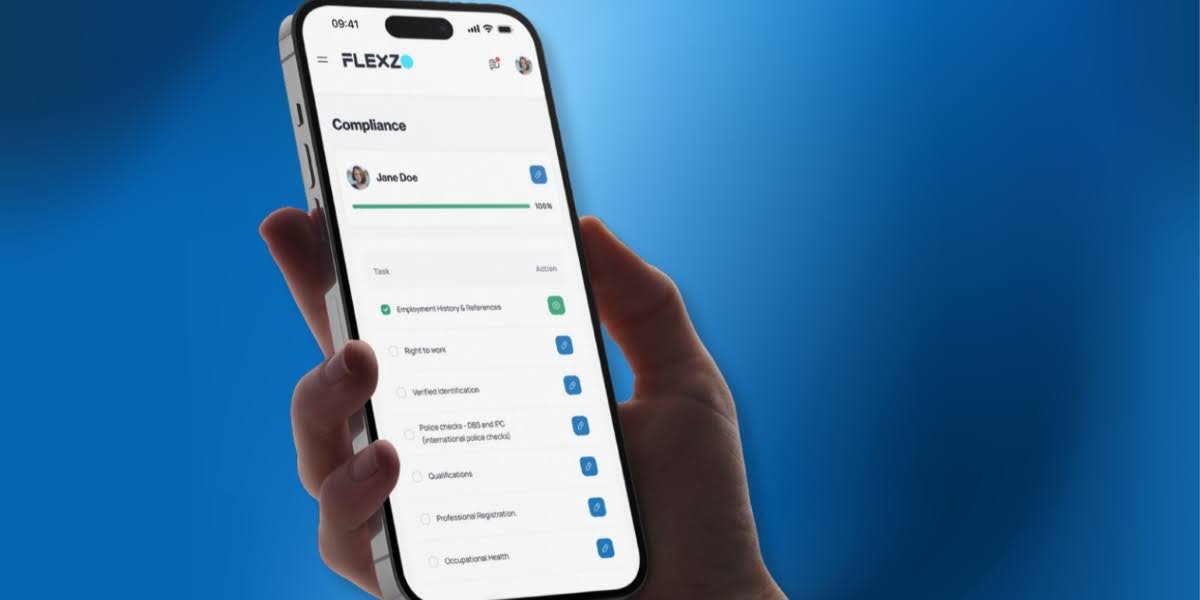
Flexzo AI tackled that by building what it calls a “Collaborative Staff Bank.” Hospitals upload their shifts; professionals signal availability via WhatsApp, email, or SMS; the system matches them in real time. No agency middlemen, no surprise markups. The platform automates compliance checks: license verifications, right-to-work documents, credential renewals, and offers reminders. The result: faster placements, fewer fees, smoother operations. Flexzo claims over 100,000 compliance-ready professionals in its pool.

The AI Advantage Powering Smarter Care

Every year, hospitals spend millions on agency staffing, but the true cost extends beyond mark-ups. The hidden burden lies in inefficiency. Behind every shift filled are countless manual tasks: spreadsheets, compliance checks, calls, and timesheets, each adding layers of unnecessary expense.

Recruitment fees often reflect headcount costs, as hospitals require recruiters to search, resourcers to manage databases, and compliance officers to verify credentials. With Flexzo AI, these operational inefficiencies are eliminated through automation, reducing costs typically passed on to hospitals and healthcare settings.

By re-engineering workforce processes, Flexzo AI enables NHS Trusts and other providers to operate with greater efficiency and precision. The platform automates repetitive recruitment steps, from candidate matching to compliance verification in real time. The result is faster fills, leaner operations, lower workforce costs, and more time devoted to what truly matters: delivering better patient care.


A critical step in their success was funding: in March 2025, Flexzo (via parent HealsGood) closed a £1.5 million round led by Fuel Ventures. That financial boost helped scale features, deepen trust adoption, and expand system capacity. Flexzo has since furthered its funding, with a recent seed round from Octopus Ventures bringing total seed funding to $6.5 million to support its U.S. growth.

Bridging Two Healthcare Worlds

U.S. healthcare is uniquely diverse, spanning private systems, federal and state programs, hospital networks, and insurance carriers. While this creates a complex environment, the underlying challenge mirrors the UK’s: staff shortages, administrative burden, and rising costs. For Flexzo, the opportunity lies in adapting its NHS-born model to this multifaceted landscape.

One promising bridge is technological infrastructure. Flexzo’s platform runs on Amazon Web Services and Google Cloud, placing it on scalable, secure global foundations. Those partnerships give it headroom to grow and the resilience to manage stricter data privacy regimes like HIPAA compliance in the US.

Many US hospitals already operate with electronic credentialing systems and digital personnel databases. Flexzo’s modular compliance workflows are designed to integrate with these setups, while its smart matching, distance-based shift selection, and real-time travel data could ease staffing gaps across busy metro regions.

Beyond technology, success will depend on collaboration. Building strong partnerships with hospital councils, regional staffing consortia, and state regulators will be key. By combining secure infrastructure with deep local alliances, Flexzo aims to demonstrate that its zero-fee staffing subscription can complement and even enhance existing workforce models in the US.

Ambition at a Turning Point

When asked about the US move, Henderson frames it as a new test of the same belief: that healthcare systems deserve simpler, fairer staffing. His conviction echoes in his words: “We’re giving healthcare providers the tools to eliminate agency fees, reduce admin burdens, and take back control of their workforce.”

Momentum already builds. Flexzo is exhibiting at Welsh Confed 25 to demonstrate insourcing tools and AI shift automation. In recent press coverage, it is described as connecting hospitals directly to more than 100,000 professionals, eliminating agency costs and accelerating hiring cycles.

If the US launch succeeds, Flexzo could rewrite American staffing norms. Hospitals might no longer race between agencies for temporary coverage. Healthcare staff could finally navigate shifts and compliance under one system. It will be a drama worth watching, a British-born platform staking its claim where healthcare is as complex as it is vital.

How Injury Claims Help Victims Recover Financially

Long Island, NY, is home to millions of drivers navigating busy roadways every day, but rising crash rates have made vehicle collisions an all-too-familiar reality for residents in Nassau and Suffolk counties. Recent reporting shows that on Long Island, a serious car crash occurs roughly every seven minutes, contributing to thousands of injuries and deaths over the past decade, a sobering indicator of how pervasive traffic risks have become in this region.

For those hurt in these collisions, the aftermath often includes more than physical pain: mounting medical bills, lost income, and other financial burdens can quickly follow. That’s where a car accident lawyer in Long Island can play a vital role. Injury claims may not only seek justice but can also provide essential financial support that helps victims cover treatment costs, replace lost wages, and rebuild stability after a crash. Understanding how these claims work may be the first step toward meaningful recovery following a traumatic accident.

Understanding Injury Claims

An injury claim allows someone who was hurt because of the actions of another to recover compensation. This option is available through legal systems to help ensure individuals are not left to suffer financially on top of being injured. Filing a claim requires you to prove that another person may be at fault and document your losses. A claim includes things such as medical records, evidence from the incident, and documentation of lost wages. These materials help substantiate the connection between the wrong act and the damages.

Medical Bills and Treatment Costs

The high cost of medical care can pile up quickly after an accident. Emergency treatment, aftercare, and rehabilitation may put a dent in any budget. Out-of-pocket expenses may often be recouped through injury claims for victims. Compensation may cover the price of hospitalization, an operation, therapy, and any prescribed medication. Claims can help alleviate the financial burden of treatment, allowing individuals to focus on their recovery rather than the increasing pile of bills.

Lost Wages and Income Support

Injuries may result in days lost from work. For some, their jobs may not be available for weeks or even months. Others may never work in that way again. To cover lost income during the recovery process, injury claims are filed regarding this loss. It may include lost income value if the victim cannot return to work in the same job. Having money when income can dry up may enable families to pay for day-to-day needs when difficulties arise.

Compensation for Pain and Suffering

After an accident, it may often be the case that your body is sore and you feel emotionally strained. Long-term impacts are broader than scars, impacting mental well-being and enjoyment of daily life. Injury claims consider these losses by offering compensation for pain and suffering. This aspect acknowledges that healing is more than physical recovery. This may mean being able to afford counseling or therapy and receiving a better quality of life in recovery with financial support.

Support for Long-Term Needs

Some injuries can have lasting consequences. Long after an accident, the effects may be ongoing, such as chronic pain, disability, or care needs. Victims of personal injury may turn to injury claims so they can receive compensation for their future medical costs and needed adjustments. This could be anything from home upgrades and assistive devices to long-term care services. By planning for the future, we can help people retain their independence and dignity in other life situations.

Access to Professional Guidance

One should not tackle legal issues single-handedly. For many people, consulting a professional or an attorney who understands injury claims can help them regain comfort and confidence. Victims may learn about every process, from evidence gathering to settlement negotiations, with the help of experienced advisors. This assistance can increase the likelihood of an equitable resolution. The availability of skilled legal counsel allows the layperson to make informed decisions, avoiding common traps.

Peace of Mind and Stability

Getting better post-accident is not just about the physical. Having a stable financial future may provide victims with peace of mind, enabling them to concentrate on creating a new life for themselves. It can relieve anxiety to know expenses are taken care of and that future needs are planned for. Personal injury claims may provide this reassurance and certainty that people can look to the future with hope.

Key Takeaways

Injury claims can be very important for those who find themselves in financial trouble after an accident. These claims may act as stability, restoring lost wages and providing for medical bills. In addition, they understand the emotional toll of injury and provide multi-faceted support in the recovery process. The presence of professional guidance and accountability serves to further bolster this process. For numerous individuals, the journey to financial recovery begins by comprehending their rights and pursuing rightful payment via injury claims.

Disclaimer: The information provided in this article is for general informational purposes only and should not be construed as legal advice. Every injury claim is unique and may involve specific circumstances that require professional legal counsel. It is strongly recommended that individuals seek advice from a qualified attorney to fully understand their legal rights and options. The contents of this article are not intended to replace or substitute for professional legal or financial advice.

How Rivalane Is Transforming Vehicle Movement

The auto transport industry has undergone significant changes over the past few decades. With the rise of online vehicle sales, increased demand for moving vehicles long distances, and the growing need for efficient and cost-effective transportation options, auto transport services have become an integral part of the global logistics and mobility landscape. This article explores the evolution, key trends, and challenges within the auto transport sector while offering insights into how industry players, such as Rivalane Auto Transport, are navigating these changes.

The Role of Auto Transport in Modern Mobility

Auto transport services are essential for individuals and businesses that need to move vehicles from one location to another. Whether it’s a personal car being shipped across the country or a fleet of vehicles being delivered to a dealership, these services provide a solution to the complexities of vehicle relocation. The demand for such services is driven by a range of factors, including lifestyle choices, business operations, and even economic shifts.

In particular, the rise of online car sales has played a significant role in expanding the reach of auto transport services. Consumers increasingly purchase vehicles from remote dealerships or auctions, requiring transport services to deliver the vehicle to their doorsteps. As a result, auto transport companies have had to adapt their operations to meet the demands of an increasingly digital and interconnected world.

Types of Auto Transport Services

Auto transport is not a one-size-fits-all industry. There are several different types of services offered to cater to various customer needs. These include:

Open-Air Transport

Open-air transport is one of the most common and affordable options for vehicle shipping. In this service, vehicles are loaded onto an open carrier, typically a large truck, and transported to their destination. Although open-air transport is a cost-effective solution, it does expose the vehicle to the elements, which may be a concern for some owners. However, this method is widely used for transporting a large number of vehicles, especially when the goal is to minimize transportation costs.

Enclosed Transport

Enclosed transport provides additional protection for vehicles, as they are shipped inside a closed trailer, shielding them from weather conditions and road debris. This service is often used for high-value vehicles, such as luxury cars, classic cars, and sports cars, which require extra care during transit. Though this option comes at a higher price, it offers peace of mind for owners who want to ensure their vehicles are transported safely.

Door-to-Door vs. Terminal-to-Terminal Transport

In door-to-door auto transport, vehicles are picked up directly from the seller’s location and delivered to the buyer’s address, offering a high level of convenience. On the other hand, terminal-to-terminal transport requires the vehicle to be dropped off at one terminal and picked up at another. While the latter can be a more affordable option, it may not be as convenient for customers who prefer the convenience of having their vehicle picked up and dropped off at their location.

Technological Advances in the Auto Transport Industry

The auto transport industry has embraced technology to enhance the efficiency and transparency of its operations. The development of advanced tracking systems, for example, allows customers to monitor their vehicles during transit. This innovation has increased trust in the industry, as customers can now track the progress of their shipments in real time.

Additionally, many auto transport companies now offer online platforms for customers to get quotes, book shipments, and manage their transactions. These platforms not only streamline the process but also provide greater flexibility and ease of use. The use of mobile applications and digital tools has significantly improved customer service and communication within the industry.

Moreover, advancements in GPS technology and route optimization have made it possible for auto transport companies to reduce delivery times and improve overall efficiency. By using data-driven insights, carriers can better plan routes, avoid delays, and optimize fuel consumption, all of which help reduce costs for both the company and the customer.

The Environmental Impact of Auto Transport

As with many industries, the environmental impact of auto transport is an ongoing concern. The sector relies heavily on diesel-powered vehicles for long-distance transportation, contributing to carbon emissions and air pollution. However, the industry is taking steps to address these issues. Some companies are exploring the use of alternative fuels, electric vehicles, and hybrid technology to reduce their carbon footprints.

In addition, efforts are being made to improve the efficiency of transport routes, minimize empty miles, and reduce fuel consumption. By implementing these practices, auto transport companies can contribute to a greener and more sustainable transportation system.

The Challenges Facing the Auto Transport Industry

Despite its growth and advancements, the auto transport industry faces a number of challenges that companies must navigate. Some of these challenges include:

Supply Chain Disruptions

Global supply chain disruptions, particularly during the COVID-19 pandemic, have had a profound impact on the auto transport industry. The scarcity of truck drivers, limited availability of transport vehicles, and logistical bottlenecks have made it more difficult to meet demand, leading to delays and increased shipping costs. While the industry has begun to recover, the effects of these disruptions are still being felt.

Labor Shortages

The auto transport sector, like many other industries, has struggled with labor shortages in recent years. The shortage of qualified truck drivers has contributed to delays and increased operational costs. Companies are addressing this issue by offering higher wages, improving working conditions, and investing in driver training programs. However, finding and retaining skilled workers remains a significant challenge.

Regulatory Compliance

The auto transport industry is subject to various regulations, including those related to safety, emissions, and interstate commerce. Staying compliant with these regulations is crucial for companies to operate legally and avoid fines. As the industry continues to evolve, companies must keep up with changing laws and policies to ensure their operations remain in compliance.

The Future of Auto Transport

The auto transport industry is poised for continued growth, driven by evolving consumer behaviors, technological advancements, and a growing global economy. As the demand for vehicle shipping services increases, companies will need to innovate and adapt to stay competitive.

One potential future development in the industry is the integration of autonomous vehicles. While fully autonomous trucks are still in the early stages of development, they have the potential to revolutionize the transportation of vehicles by improving safety, reducing costs, and increasing efficiency.

The future of the auto transport industry will also likely see increased adoption of electric vehicles (EVs) and sustainable transport practices. With an increasing focus on reducing carbon footprints, both consumers and businesses will seek eco-friendly options when shipping vehicles, making sustainability a key factor in shaping the industry’s direction.

Priya Gupta on Culture, Craft, and Visual Storytelling in New York

By: Bai Xue

From leathercraft studios in India to public art screens across New York City, Priya Gupta’s creative path bridges design, memory, and cultural narrative.

Indian-born designer and illustrator Priya Gupta has been gaining growing attention in New York’s creative circles for her vibrant, culturally rooted visual storytelling. Before moving to the U.S., she spent more than a decade designing leather goods and accessories, collaborating with global brands and eventually launching her own label, a trajectory that significantly shaped the structured, design-driven mindset she carries into her illustration practice today.

With more than a decade of professional experience across design and illustration, Priya translates Indian cultural memory into a contemporary visual language that feels both personal and broadly relatable. Her work has recently been recognized in the United States, including selection for the American Illustration–American Photography AI44 Competition and a public art feature with ArtOnLink, which showcases curated artwork across digital kiosks throughout New York City.

Priya Gupta on Culture, Craft, and Visual Storytelling in New York

Photo Courtesy: LinkNYC

Now based in New York, she speaks to New York Weekly about the inspirations behind her work, the cultural stories she carries, and her life in the city.

Q: You began your career in accessory and leathercraft design. How has that influenced your current illustration practice?

Priya Gupta on Culture, Craft, and Visual Storytelling in New York

Photo Courtesy: Priya Gupta

“This blend of structured design thinking and expressive storytelling is what largely defines my work today.”

My foundation in accessory and leathercraft design has greatly shaped how I approach illustration today. As an accessory designer, I was trained to constantly balance function, aesthetics, and storytelling, and that mindset has carried seamlessly into my illustration practice.

For me, the creative process in both fields is quite similar. It always begins with a brief, followed by research, ideation, sketching, color exploration, and finally refining the work into a finished outcome that communicates clearly and connects with people. In design, that journey ends with a product reaching consumers; in illustration, it ends with a visual narrative that sparks emotion or conversation.

Having worked extensively in corporate and commercial design environments, I bring a strong sense of discipline, organization, and planning into my illustration practice. I approach illustration with the same strategic thinking I used in design, understanding audiences, studying market and cultural trends, and forecasting what resonates visually at a given moment.

Having established a distinct illustrative voice, I now focus on strategically shaping visual narratives that reflect cultural insight, audience awareness, and long-term relevance. My work is driven by an understanding of how visual language functions in public, commercial, and cultural spaces, rather than by short-term trends. This blend of structured design thinking and expressive storytelling is what defines my work today.

Q: What themes and ideas are you most drawn to in your illustration work today?

“Much of my work is personal and autobiographical; it draws largely from lived experiences, family memories, and the stories I grew up listening to.”

My illustration work today is deeply rooted in culture, memory, and storytelling. Growing up in India in a large joint family meant that tradition was part of everyday life; almost every day involved a festival, ritual, or celebration. That environment naturally immersed me in stories, mythology, and oral storytelling from a very young age, and it continues to shape how I create.

I’m instinctively drawn to bright colors, layered details, and intricate patterns, which reflect the visual richness of Indian culture. My illustration practice centers on cultural documentation and reinterpretation, translating traditional narratives and visual histories into contemporary forms for global audiences.

Q: Your work was recently recognized by the AI-AP AI44 Competition and featured through ArtOnLink across New York. What do these recognitions mean for your practice?

“It has reassured me that my visual language and storytelling resonate beyond cultural and geographic boundaries.”

These recognitions reflect the established position of my work within the illustration industry and its relevance in a global context. They affirm that my visual language resonates with professional peers and diverse audiences alike, demonstrating that the work is not only artistically driven but also commercially viable.

Being selected for the AI-AP AI44 Competition was especially affirming, as it placed my work alongside illustrators whose practices I deeply admire. It reassured me that my visual language and storytelling resonate beyond cultural and geographic boundaries.

The ArtOnLink exhibition in New York was equally powerful in a different way. Seeing my work displayed across the city’s digital kiosks and reaching thousands of people every day was a transformative experience that changed how I think about audience and access. It allowed my illustrations to live in public space, encountered by people in their daily routines, which aligns closely with my belief that art should be visible, inclusive, and part of everyday life.

Together, these experiences have strengthened my confidence as an illustrator and encouraged me to continue pushing my practice forward, bridging culture, design, and storytelling while engaging with broader, more diverse audiences.

Q: How has living and working in New York shaped your artistic thinking?

“New York has sharpened my artistic thinking by reminding me that creativity doesn’t live in isolation.”

Living and working in New York has profoundly shaped my artistic practice and expanded the reach of my work. The city’s dynamic creative energy and diverse cultural landscape provide a platform for engagement, collaboration, and public-facing projects across multiple disciplines- live sketch nights, gallery exhibitions, musicals, and Broadway performances.

What inspires me most is the diversity of people and practices here. In New York, it’s common to meet artists who are fearlessly pursuing their passions while balancing multiple creative paths, and that mindset has encouraged me to think more expansively about my own work. The city invites curiosity; it pushes me to show up, attend events, engage in conversations, and keep learning.

New York has sharpened my artistic thinking by reminding me that creativity doesn’t live in isolation. It grows through community, exposure, and shared experiences, and this city offers that in abundance.

Q: What are you currently working on, and where do you see your practice evolving next?

“I’m excited by the idea of art moving fluidly across formats while remaining rooted in strong storytelling.”

I’m currently working on writing and illustrating a Hindu mythology book that revisits the stories I’ve loved since childhood. This project is especially meaningful to me because it allows me to merge personal memory with cultural history, presenting ancient narratives in a way that feels vibrant, accessible, and relevant to contemporary audiences.

Alongside this, I’m also developing a brand that translates these narratives into thoughtfully designed merchandise, allowing the stories to live beyond the page and become part of everyday life. I’m excited by the idea of art moving fluidly across formats like books, objects, and visual experiences while remaining rooted in strong storytelling.

Looking ahead, I see my practice expanding in multiple directions. I’d love to develop gallery-based work, presenting my illustrations on a larger scale through immersive canvases and installations. At the same time, I’m deeply interested in education and community-building, teaching art to children, and organizing creative workshops or events. Sharing art-making as a tool for storytelling, imagination, and cultural exchange feels like a natural extension of my practice and something I’m excited to grow into.

Q: Any suggestions for South Asian designers who are planning to come to the U.S. market?

“Embrace your cultural identity rather than compromise it.”

My biggest advice to South Asian designers planning to enter the U.S. market is to embrace your cultural identity rather than compromise it. Your background, stories, and visual language are your greatest strengths; those are what make your work distinctive in a global landscape. At the same time, it’s important to understand the market you’re stepping into: study consumer behavior, trends, and pricing, and learn how your work can speak to both heritage and contemporary audiences.

Building a strong network is equally important. New York, in particular, thrives on community, attending exhibitions, talks, workshops, and industry events, and don’t be afraid to start conversations. Collaboration opens doors faster than working in isolation.

Finally, be patient and resilient. The U.S. market values consistency and long-term commitment. Stay open to learning, adapt without losing your voice, and trust that authenticity paired with professionalism should eventually find its place.

Instagram: @illustratewithpriya
Website: www.illustratewithpriya.com