Common Salesforce Testing Challenges and Practical Ways to Overcome Them

Salesforce is powerful. Flexible. And sometimes… a little tricky to test. On the surface, it looks simple. Configure a few workflows. Add some automation. Push changes live. But under the hood? Salesforce testing is a different game altogether.

  • Multiple clouds
  • Constant releases
  • Custom code mixed with clicks-not-code logic

That’s why teams often struggle with common Salesforce testing challenges, and why skipping proper testing almost always backfires. This guide breaks down the most common Salesforce testing challenges and the practical ways to overcome them. No heavy info, just clarity.

Why Salesforce Testing Feels So Challenging

Salesforce isn’t a traditional app.

It’s:

  •     Metadata-driven
  •     Highly customizable
  •     Continuously evolving

One small change can ripple through:

  •     Workflows
  •     Apex triggers
  •     Lightning components
  •     Integrations

And suddenly, something breaks. Usually in production. At the worst possible time. Understanding the challenges is the first step. Fixing them is the real win.

Challenge 1: Complex Customizations Everywhere

Salesforce allows deep customization. That’s a strength. It’s also a testing nightmare.

A single org may include:

  •     Apex code
  •     Lightning Web Components (LWC)
  •     Flows and Process Builders
  •     Validation rules
  •     Custom objects and fields

Everything talks to everything.

A change in one flow can affect:

  •     Data updates
  •     Triggers
  •     User permissions
  •     Reports

And the impact isn’t always obvious.

Practical ways to overcome it

Break testing into layers.

  •     Test business logic separately from UI
  •     Validate flows independently
  •     Test Apex logic in isolation

Layered testing keeps complexity under control.

Challenge 2: Frequent Salesforce Releases

Salesforce rolls out three major releases every year. Automatically. That’s great for innovation. Not so great for stability.

New features can:

  •     Deprecate existing behavior
  •     Modify APIs
  •     Affect UI rendering

Your existing functionality may break without warning.

Practical ways to overcome it

Be proactive. Not reactive.

  •     Use preview sandboxes
  •     Review release notes relevant to your org
  •     Run regression tests before production upgrades

Preparation beats firefighting. Every time.

Challenge 3: Maintaining Apex Test Coverage (Without Cheating)

Salesforce requires 75% Apex test coverage for deployment. So teams rush to hit the number. And that’s where things go wrong.

Coverage-only tests:

  •     Pass deployments
  •     Miss real logic flaws
  •     Fail silently in production

Practical ways to overcome it

Write meaningful tests. Not filler. Focus on:

  •     Core business logic
  •     Edge cases
  •     Negative scenarios

Use:

  •     A test Setup for reusable data
  •     Clear Arrange–Act–Assert patterns

Coverage is a requirement. Quality is the goal.

Challenge 4: Test Data Management Chaos

Good testing needs good data. Salesforce makes that… complicated.

Common issues:

  •     No production-like data
  •     Data privacy restrictions
  •     Inconsistent sandbox data

Without realistic data, tests lose value.

Practical ways to overcome it

Create a test data strategy.

  •     Use masked production data where allowed
  •     Seed test data using scripts
  •     Maintain reusable data templates

Good data = reliable tests. Simple math.

Challenge 5: Integration Testing Is Hard

Salesforce rarely works alone. It integrates with:

  •     ERPs
  •     CRMs
  •     Payment gateways
  •     Marketing tools

External systems aren’t always available for testing. That’s a big problem.

Practical ways to overcome it

Mock smartly.

  •     Use HTTP callout mocks
  •     Simulate success and failure responses
  •     Test error-handling paths

You don’t need live systems to test logic. You need predictable behavior.

Challenge 6: Automation Testing in Lightning UI

Lightning UI looks modern. It behaves dynamically. That makes automation brittle.

Issues testers face:

  •     Changing DOM elements
  •     Dynamic IDs
  •     Frequent UI updates

Scripts break. Often.

Practical ways to overcome it

Automate selectively.

  •     Focus on critical business flows
  •     Avoid over-automating cosmetic paths
  •     Use stable locators and page object models

Automation should reduce effort. Not increase maintenance.

Challenge 7: Sandbox ≠ Production

Sandboxes are helpful. But they’re never perfect replicas.

Common gaps:

  •     Missing integrations
  •     Partial data
  •     Different user permissions

What works in the sandbox may fail in production.

Practical ways to overcome it

Acknowledge the gap.

  •     Validate user roles explicitly
  •     Test permission-sensitive flows carefully
  •     Document known differences

Awareness prevents surprises.

Challenge 8: Regression Testing Takes Too Long

Salesforce orgs grow fast. So do test cases.

Manual regression becomes:

  •     Time-consuming
  •     Error-prone
  •     Exhausting

Teams skip it. Then bugs slip through.

Practical ways to overcome it

Be strategic.

  •     Automate high-risk workflows
  •     Keep regression scope focused
  •     Review and prune test cases regularly

More tests don’t mean better testing. Smarter tests do.

Challenge 9: Performance and Governor Limits

Salesforce enforces limits. Strict ones.

Examples:

  •     SOQL query limits
  •     CPU time limits
  •     Bulk data processing constraints

Ignoring them leads to runtime failures.

Practical ways to overcome it

Test for scale.

  •     Simulate bulk data operations
  •     Monitor long-running processes
  •     Optimize queries early

Performance issues are easier to fix before users complain.

Challenge 10: Security and Access Control Testing

Salesforce security is granular. Very granular. Profiles. Permission sets. Field-level security. Miss one setting—and data leaks.

Practical ways to overcome it

Test from the user’s perspective.

  •     Validate access for different roles
  •     Test visibility at object and field levels
  •     Include security checks in QA cycles

Security isn’t optional. It is foundational.

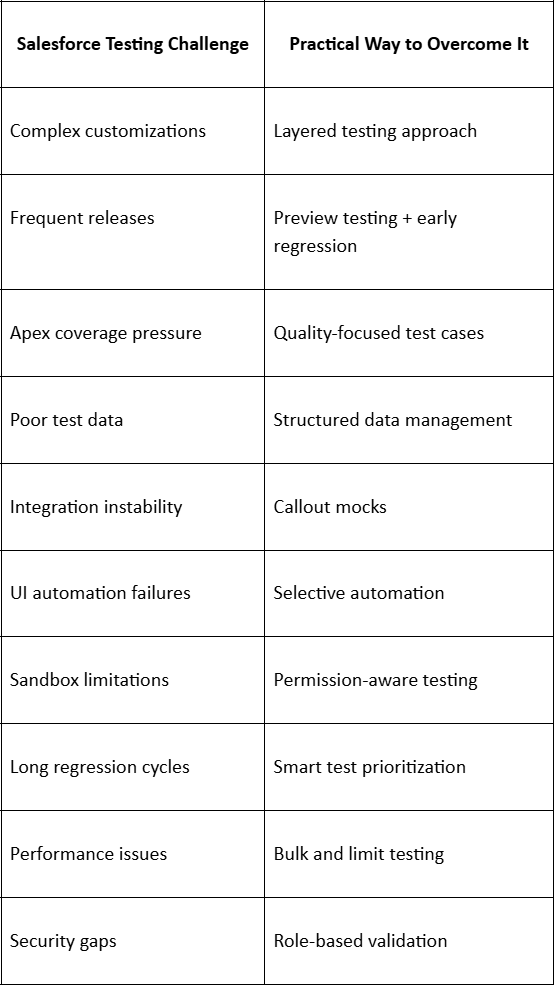
Quick Overview: Challenges vs Solutions

Common Salesforce Testing Challenges and Practical Ways to Overcome Them


Practices for Long-Term Salesforce Testing Success

Let’s tie it all together.

Successful Salesforce testing teams:

  •     Involve QA early
  •     Document test scenarios clearly
  •     Review tests after every release
  •     Collaborate across admins, devs, and testers

Testing is not a phase, but it is a habit.

Final Thoughts

Common Salesforce Testing Challenges are real. And unavoidable. But they’re also manageable. With:

  •     The right strategy
  •     Practical testing methods
  •     A proactive mindset

Salesforce testing becomes less chaotic. More predictable. And far more effective. Test smart.  Test early. And test like your production org depends on it—because it does.

Marcela Iglesias: Empowering Hollywood, Wellness, and Innovation with FrequenzWave

Marcela Iglesias is a trailblazer in Hollywood, recognized for her success as a talent manager, entrepreneur, and lifestyle brand creator. Her journey from an undocumented immigrant to a powerful businesswoman is a story of resilience, hard work, and empowerment. Today, Marcela runs a leading talent management company and lifestyle brand, while also pursuing real estate investments and expanding into innovative wellness ventures.

A Journey of Self-Made Success

Born in Argentina as an only child, Marcela developed a vivid imagination and a strong drive to stand out from a young age. Her father, a pioneer in motorsports, instilled in her a love for the unconventional and a relentless pursuit of excellence. In 2000, Marcela moved to Los Angeles, determined to fulfill her dreams and pursue opportunities that would allow her to express her unique vision.

After years of working multiple jobs and navigating life without legal status, Marcela achieved legal status and embarked on her entrepreneurial journey. Her rise to prominence in Hollywood and beyond showcases her tenacity and unwavering belief in herself.

The Rise of The Plastics of Hollywood

Marcela Iglesias: Empowering Hollywood, Wellness, and Innovation with FrequenzWave

Photo Courtesy: Marcela Iglesias

In 2017, Marcela launched The Plastics of Hollywood, a lifestyle brand celebrating individuals who embrace cosmetic transformations. Inspired by her own curiosity about cosmetic surgery, Marcela created a platform where people could explore their appearance in a supportive and empowering space. Despite not undergoing plastic surgery herself, Marcela advocates for self-expression and personal choice when it comes to cosmetic procedures.

Her brand quickly gained recognition, with features in top publications like Cosmopolitan, Vogue Italy, and The New York Post. Through The Plastics of Hollywood, Marcela has created a culture of acceptance, helping people embrace their cosmetic choices confidently.

Expanding into Wellness with FrequenzWave

Marcela Iglesias: Empowering Hollywood, Wellness, and Innovation with FrequenzWave

Photo Courtesy: FrequenzWave

In addition to her work in entertainment, Marcela has ventured into the wellness space with FrequenzWave, a cutting-edge brand that blends art and science through the power of Pulsed Electromagnetic Field (PEMF) technology. FrequenzWave combines customized wellness experiences with beautiful, handcrafted devices, allowing individuals to explore the potential of electromagnetic frequencies for relaxation, stress management, and meditation.

Marcela’s husband, Steve Berman, is the creative visionary behind FrequenzWave. An artist and designer, Steve has infused each product with a unique artistic flair, ensuring that each piece is both functional and visually appealing. Together, Marcela and Steve have designed FrequenzWave to be a wellness solution that merges art and science — offering not only therapeutic benefits but also aesthetic value to enhance any space.

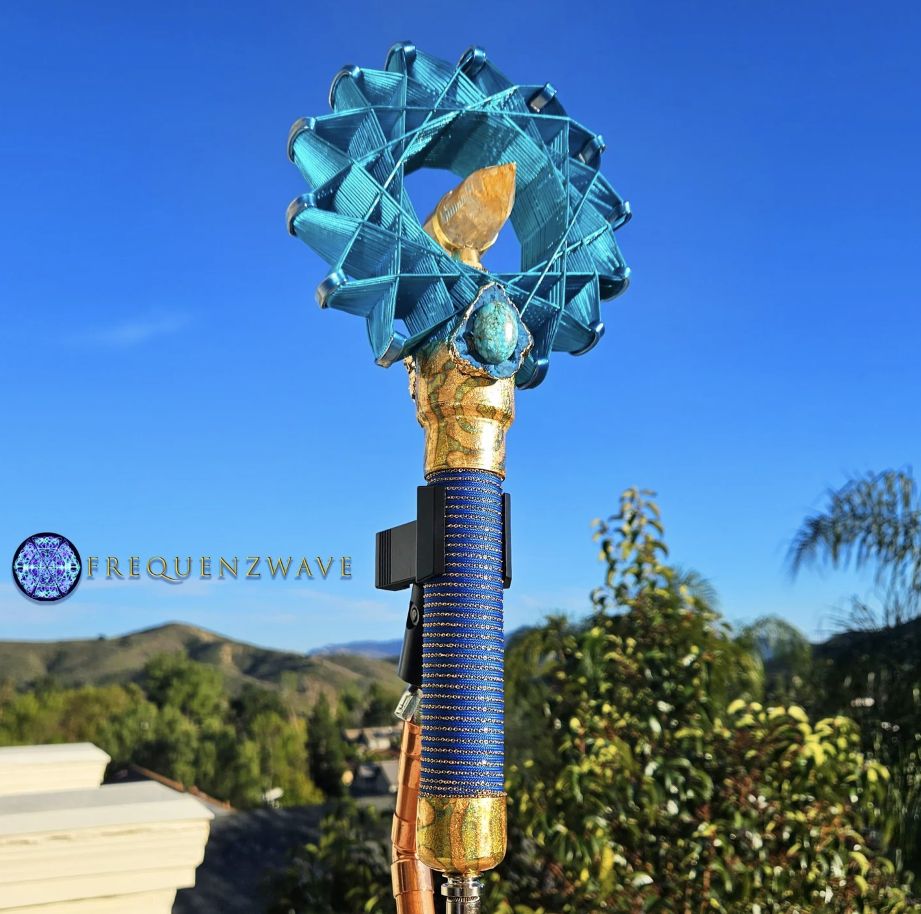
FrequenzWave’s devices, such as the FrequenzWand Ankh and FrequenzWand Titanium BG, are designed with care and attention to detail, featuring crystal enhancements that complement the technology. These devices provide users with the opportunity to engage in frequency therapy, harnessing the potential of electromagnetic fields to support their wellness journeys. FrequenzWave offers a truly personalized experience, where users can control and customize their frequency sessions to meet their specific needs.

Steve Berman: The Artist Behind FrequenzWave

Steve Berman is the creative and artistic force behind FrequenzWave. With his extensive background in design and art, Steve is responsible for the intricate and beautiful designs of FrequenzWave’s products. His attention to detail and commitment to artistic excellence ensure that each device is more than just a wellness tool — it is a unique piece of functional art. Steve’s vision for FrequenzWave is rooted in his belief that wellness can be both effective and beautiful, merging ancient wisdom with modern technology.

In addition to his work with FrequenzWave, Steve is passionate about blending creativity and innovation in all aspects of his life. Together with Marcela, they form a dynamic team, working to inspire others to embrace wellness practices that elevate both the mind and body.

Marcela’s Personal Life and Real Estate Ventures

Marcela’s personal life is just as fulfilling as her professional accomplishments. She shares her life with Steve Berman, and together, they support each other’s dreams and ambitions. The couple invests in various ventures, including real estate, stocks, and cryptocurrencies, while managing their blended family. Marcela’s passion for animals adds another layer to her life, as she shares her home with a variety of pets, including pigs, dogs, and a rabbit.

Marcela has also built a successful real estate portfolio, further solidifying her position as a savvy entrepreneur. Her investment approach has been instrumental in establishing a strong financial foundation, enabling her to continue expanding her reach and impact.

Empowering Others: Marcela’s Way

Marcela’s dedication to empowering others extends to her life coaching business, Marcela’s Way, which she launched in 2017. Through this service, Marcela offers support to individuals, particularly women, who are seeking to rediscover their passions and transform their lives. Her approach is a combination of empathy, tough love, and practical advice, encouraging her clients to take ownership of their careers and personal growth.

Marcela’s Influence on Social Media

With 1.2 million followers on Instagram, Marcela has become a powerful influencer, sharing her personal story, successes, and challenges. Her authenticity has resonated with a global audience, and her fanbase continues to grow as she engages with followers on a deeper level. Marcela’s influence reaches far beyond Hollywood, and her social media presence is a testament to her commitment to inspiring others.

The Future: Hollywood, Wellness, and Beyond

Looking to the future, Marcela is determined to expand her career into film production or acting and has even considered creating a talk show. She also has plans to develop an animal rescue farm, and her passion for giving back to her community remains a driving force in her life.

With her combination of business acumen, creativity, and compassion, Marcela Iglesias is poised to continue breaking barriers and paving the way for future generations of entrepreneurs, influencers, and women in Hollywood.

New Developments and Wellness Innovations

According to The Economic Times, Marcela Iglesias, best known as ‘human Barbie’,” is reportedly planning a Plasma transfusion from her 24-year-old son in 2025 to “reverse the effects of aging” by introducing younger plasma into her system. Over the years, she has spent close to $100,000 on cosmetic procedures, mostly non-invasive injectables, as part of her long-standing commitment to maintaining her appearance. Her lifestyle reportedly includes a rigorous wellness routine, including monthly spending on IV infusions, injections, vitamins, and creams, along with a pescatarian diet, avoidance of certain foods and drinks, daily exercise, and sufficient sleep.

FrequenzWave, alongside Marcela’s ongoing entrepreneurial projects, highlights her commitment to innovative solutions that enhance both personal well-being and empowerment. With Steve Berman’s artistic vision and their shared entrepreneurial spirit, the couple continues to inspire others to embrace holistic wellness, self-expression, and the pursuit of a balanced life.

For more information on Marcela Iglesias and FrequenzWave, visit www.queenofhollywood.com and www.frequenzwave.com, or follow her on Instagram at @marcelaiglesiashollywood.


Disclaimer: The information in this article regarding Marcela Iglesias’s wellness plans, including blood transfusions, cosmetic procedures, and FrequenzWave devices, is based on publicly available sources and personal statements. FrequenzWave devices are not intended to diagnose, treat, or prevent any disease. The cosmetic procedures mentioned have not been FDA-approved and carry potential risks. Results may vary, and readers should consult with a licensed medical professional before making any decisions related to wellness or medical treatments.

How Artificial Intelligence is Transforming Music for Business Environments

Artificial intelligence is reshaping industries at a pace few technologies have matched before. From finance and healthcare to retail and logistics, AI-driven systems are redefining how businesses operate, optimize resources, and interact with customers. One area undergoing remarkably rapid transformation is music for business environments.

For decades, background music in commercial spaces was treated as a static element, curated manually, licensed through traditional channels, and rarely adjusted beyond basic playlists or radio stations. Today, AI has changed that paradigm entirely. Music is becoming dynamic, data-driven, and strategically aligned with business goals.

From automated curation and mood-based soundscapes to real-time adaptation based on customer behavior, artificial intelligence is enabling businesses to use music not just as ambiance, but as a tool for brand positioning, customer engagement, and operational efficiency. This article explores how AI is transforming the way businesses approach music and why this shift matters across industries.

The Evolution of Music in Commercial Spaces

Historically, businesses relied on radio broadcasts, CDs, or generic playlists to fill the silence in stores, offices, or hospitality venues. While music was recognized as necessary for atmosphere, it was rarely managed with intention or precision.

Traditional music solutions came with several challenges. Licensing was complex and often expensive, playlists quickly became repetitive, and there was little flexibility to adapt music to different times of day, customer demographics, or business objectives. In many cases, music was an afterthought rather than a strategic component of the customer experience.

The introduction of AI-driven music systems has fundamentally changed this approach. Instead of static playlists, businesses can now deploy adaptive sound environments designed to respond to context, behavior, and data.

AI-Powered Music Curation and Personalization

One contribution of AI to business music is intelligent curation. Machine learning algorithms analyze vast libraries of tracks and categorize them by tempo, energy level, mood, genre, and emotional impact.

This allows businesses to create playlists tailored to specific environments and objectives. For example, a café might use slower, warmer music during morning hours and transition to more energetic tracks in the afternoon. Retail stores can adjust music to support browsing behavior, while offices can use soundscapes that promote focus and reduce stress.

AI systems continuously learn from feedback and data, refining playlists over time. This level of personalization was previously impossible without extensive manual effort and expertise.

Data-Driven Soundscapes and Behavioral Insights

Artificial intelligence enables music strategies to be informed by data rather than relying solely on intuition. Advanced systems can integrate with sensors, point-of-sale data, foot traffic analytics, and even weather conditions to optimize music selection.

Research has consistently shown that music influences customer behavior, including time spent in a space, perception of service quality, and purchasing decisions. AI enables businesses to test and refine these effects systematically.

By analyzing patterns such as dwell time, peak hours, and conversion rates, AI-driven music systems can help businesses understand how sound impacts performance and adjust accordingly. Music becomes part of a broader data ecosystem rather than an isolated element.

Automation and Operational Efficiency

Managing music across multiple locations has traditionally been time-consuming and inconsistent. AI simplifies this process through automation and centralized control.

Businesses with multiple branches can deploy standardized music strategies while still allowing for local adaptation. Updates can be rolled out instantly, ensuring consistency without manual intervention. This reduces administrative overhead and minimizes the risk of human error.

Automation also ensures compliance with internal policies and external regulations, eliminating the need for staff to manually manage music or make subjective decisions that could lead to issues.

AI and Brand Identity Through Sound

How Artificial Intelligence is Transforming Music for Business Environments

Photo: Unsplash.com

Sound is a powerful but often underutilized component of brand identity. AI enables businesses to develop a consistent “audio brand” that aligns with visual design, messaging, and customer values.

Through algorithmic analysis, AI systems can identify music characteristics that align with a brand’s personality, whether that is modern, relaxed, premium, energetic, or minimalist. These characteristics can then be translated into sound environments across all customer touchpoints.

Over time, customers begin to associate specific sounds and moods with a brand, strengthening recognition and emotional connection. AI enables this consistency at scale.

Cost Optimization Through Smarter Music Solutions

Cost control is a critical concern for businesses, especially in competitive markets. AI-driven music solutions often reduce expenses by eliminating inefficiencies found in traditional approaches.

Manual playlist management, repetitive content, and fragmented licensing models can all contribute to unnecessary costs. AI streamlines these processes, delivering optimized music strategies with minimal ongoing effort.

In addition, AI systems help businesses avoid hidden costs related to non-compliance, poor customer experience, or operational inefficiencies linked to poorly managed sound environments.

Royalty-Free Music in the Age of AI

A practical application of AI in business music is its role in supporting compliant, cost-effective sound solutions. Traditional music licensing models can be complex, opaque, and difficult for businesses to manage, particularly across multiple locations.

AI-driven platforms increasingly rely on royalty-free music, allowing businesses to avoid recurring licensing fees and legal uncertainty. This approach simplifies compliance while giving AI systems greater flexibility to curate, adapt, and optimize soundscapes without restriction.

By combining artificial intelligence with royalty-free libraries, businesses gain control, predictability, and scalability, key advantages in today’s fast-moving commercial environment.

Ethical and Creative Implications

The rise of AI in music also raises important questions about creativity and ethics. While AI excels at pattern recognition and optimization, it does not replace human creativity; instead, it reshapes how creative work is produced and distributed.

For businesses, AI-generated or AI-curated music represents an opportunity to access high-quality sound without the complexity of traditional models. For creators, it opens new channels for collaboration with technology-driven platforms.

Responsible implementation requires transparency, fair practices, and a balance between automation and human oversight. When applied thoughtfully, AI enhances rather than diminishes the creative ecosystem.

The Future of AI in Business Music

How Artificial Intelligence is Transforming Music for Business Environments

Photo: Unsplash.com

Looking ahead, the role of AI in music for business is expected to deepen. Advances in real-time adaptation, emotion recognition, and contextual awareness will make sound environments even more responsive and personalized.

We may soon see systems that adjust music based on crowd density, facial expressions, or real-time sentiment analysis. Integration with broader AI-driven customer experience platforms will further position music as a strategic business asset.

As these technologies mature, businesses that adopt AI-driven music solutions early will be better positioned to differentiate themselves and respond to evolving customer expectations.

Artificial intelligence is fundamentally changing how businesses think about music. What was once a static background element is now a dynamic, data-driven tool that can influence behavior, reinforce brand identity, and improve operational efficiency.

By enabling intelligent curation, automation, personalization, and cost optimization, AI transforms music into a strategic resource rather than an afterthought. As competition intensifies and customer experience becomes a key differentiator, sound will play an increasingly important role in how businesses connect with their audiences.

In this evolving landscape, AI-powered music solutions represent not just a technological advancement but also a shift in how businesses design and manage the environments where customers and employees spend their time.

Dr. Greg Poole Leads Barbers Hill ISD to “Excellence By Any Measure”

Barbers Hill ISD, one of the fastest-growing school districts in the greater Houston area, operates in line with its popular slogans: “We Can, We Will, We’re Barbers Hill” and “Excellence by Any Measure.” Since he was appointed superintendent of the district in 2006, Dr. Greg Poole has adopted these phrases as an organizational leadership style, striving to establish Barbers Hill ISD as a regional and statewide leader in academic performance. Under his direction, the district has become a leader in teacher salaries and shown consistent improvements across a variety of school and student success metrics.

Multi-Faceted Achievements at Barbers Hill ISD

When Dr. Poole arrived at Barbers Hill ISD, the district had a Texas Education Agency (TEA) accountability rating of academically acceptable. In the TEA’s 2024 and 2025 Accountability Ratings, Barbers Hill received an “A” grade and led other Houston-area districts with a score of 93, one point ahead of Tomball and Friendswood ISDs. Each Barbers Hill campus either maintained or improved its overall rating as well.

In addition, Dr. Poole has presided over significant achievements in district-wide bilingual education, specifically relating to English language assessments for emergent bilingual students. Its bilingual/ESL department has steadily grown and now consists of nearly 500 emergent bilingual students, or about 6.5% of the district’s student population.  

A proponent of higher education, Dr. Poole is also playing a significant role in bringing a college campus to the Barbers Hill community. Called a “tremendous visionary leader” by Lee College president Dr. Lynda Villanueva, he has been working with the Baytown community college on plans for a branch campus in Mont Belvieu since 2015. The $154 million campus, covering 60,000 square feet of space on 20 acres, is expected to open in fall 2027.

A Record of Service and Excellence

Dr. Poole is the second-longest serving school leader in Barbers Hill history and was nominated by the school board in 2010 for Texas Superintendent of the Year. A former high school football coach and athletics director, he has also earned District and County Coach of the Year honors and won Article of the Year from Texas Coach magazine. In addition, he has received community-based awards such as West Chambers County Man of the Year and Hero of Patriotism from the Vietnam Veterans of America.

Before joining Barbers Hill ISD in 2006, Dr. Poole spent five years as principal at Caney Creek High School, a Conroe ISD campus. Here, he exhibited the same pursuit of excellence he continues to show today, leading the school to gradual improvements in state rankings. Previously, in the second of his two years as principal of Moorhead Junior High School, the campus led all Texas junior high schools in percentage of Texas Assessment of Academic Skills (TAAS) improvement.

Dr. Poole has also served as a state-elected member of the Teacher Retirement System Board, which oversees nearly $100 billion in investments. In addition, he is a member of the boards of the Texas Interscholastic League Foundation and Texas High School Coaches Association Foundation. Moreover, he has been a member of the University Interscholastic League (UIL) Legislative Council since 2007.

Dr. Poole holds a doctorate in educational leadership from Texas A&M University, College Station, and earned his master’s in educational leadership at Sam Houston State University. He also holds a bachelor’s degree in mathematics.

Dr. Poole’s leadership is deeply rooted in his commitment to fostering a culture of excellence, one that empowers both educators and students alike. His approach goes beyond implementing policy changes; it is about creating an environment where every member of the Barbers Hill ISD community feels valued and motivated to succeed. His emphasis on collaboration, continuous professional development for teachers, and the integration of innovative learning strategies has positioned the district as a beacon of success. Dr. Poole believes that the success of the district lies in its collective strength, and he consistently encourages an open-door policy with his staff and the community, fostering transparent communication and a strong sense of unity.

Reggie Byas is Redefining Modern Storytelling Through Kidults

Reggie Byas is carving his own lane in entertainment, delivering stories that challenge convention, spark reflection, and speak to audiences often left unheard. As the creator of the original comedy series Kidults, Byas has emerged as a distinctive creative voice—one that blends humor, authenticity, and cultural insight with intentions driven by a strong sense of purpose. His ability to connect with a broad range of viewers makes him a standout figure in today’s entertainment landscape.

Hailing from the Bronx, New York, Reggie Byas brings a raw, lived-in perspective to his work. Growing up in the heart of the city shaped both his storytelling and his work ethic, grounding his creative approach in real life rather than surface-level spectacle. With Kidults, Byas explores the space between childhood imagination and adult responsibility, capturing characters who are navigating life, identity, and ambition without surrendering their inner spark. This approach resonates with many who are familiar with the complexities of balancing adulthood with the desire to preserve youthful creativity. Byas’s own experiences in the Bronx have undoubtedly influenced his unique perspective on these universal themes

What makes Kidults especially compelling is the level of ownership behind it. Byas wrote, directed, produced, and cast the series himself, taking great care to align every creative decision with his vision. The journey of the series began during the height of the COVID era, a time filled with limited resources, uncertainty, and unexpected obstacles. From production setbacks to moments where collaborators attempted to overstep creative boundaries, Byas faced challenges that could have stalled the project entirely. Instead, he persisted and pushed forward with resilience, protecting his work and remaining committed to the story he set out to tell. His personal commitment to overcoming these difficulties has solidified Kidults as a testament to perseverance and creative integrity.

Beyond its humor, Kidults carries emotional weight and cultural relevance. The series speaks to a generation that grew up fast, learned hard lessons early, and is still figuring out how to dream freely in adulthood. Byas uses comedy as an entry point, but beneath the laughs are conversations about identity, self-worth, creative survival, and the pressure to conform. This layered approach enables Kidults to resonate with audiences across age groups and backgrounds. It also brings attention to the value of storytelling that is grounded in genuine experiences rather than conventional expectations.

Now, with three completed episodes, Reggie Byas is focused on positioning Kidults in front of major networks and streaming platforms. He approaches this next phase with strategic clarity, understanding both the creative and business sides of the industry. His goal is not simply to secure placement but to seek partnerships, aligning with platforms that value originality, diverse voices, and creator-led storytelling. Byas recognizes the importance of finding platforms that offer the right creative freedom, allowing him to continue telling stories with honesty and authenticity.

At the same time, Byas is intentionally building a brand that extends beyond a single series. He represents a new wave of Black independent creators who are no longer waiting for permission to be seen. His work stands as proof that ownership matters, that vision deserves protection, and that authenticity can serve as a competitive advantage in today’s entertainment landscape. His vision extends beyond entertainment, aiming to reshape the way marginalized voices are perceived in the industry.

As the industry continues to shift toward stories rooted in truth and representation, Reggie Byas appears to be a creator to watch, showing that when vision meets resilience, storytelling can become a lasting legacy. Byas’s commitment to carving out his own space as a creator exemplifies the potential for positive change in the entertainment world.

Enhanced External Counterpulsation Therapy (EECP) – A Modern High-Tech Method for the Treatment of Cardiovascular Diseases

Cardiovascular diseases remain one of the leading causes of mortality worldwide. As a result, modern medicine actively adopts advanced technologies that help patients without the need for surgery or prolonged recovery periods. One such innovation is Enhanced External Counterpulsation (EECP).

This method offers a balance of safety, clinical effectiveness, and potential to enhance the quality of life for patients with chronic cardiac conditions. In many countries, EECP is used as a standard adjunctive therapy for ischemic heart disease, angina pectoris, and heart failure.

What Is EECP And What Makes It Unique?

EECP is a non-invasive method for improving blood circulation in which a specialized device rhythmically compresses the patient’s lower limbs in synchronization with the cardiac cycle. The primary goal of the procedure is to enhance coronary blood flow and increase oxygen delivery to the heart — a critical factor for patients with ischemia.

The therapy was developed as an alternative to invasive procedures such as coronary bypass surgery or angioplasty and is now recognized as one of the effective solutions for patients who:

  • cannot undergo surgery due to medical risks,
  • already have stents but continue to experience symptoms,
  • seek to enhance the effectiveness of pharmacological therapy.

How Does EECP Support Heart Function?

During the procedure, special pneumatic cuffs are placed on the patient’s legs and sequentially inflated. The process is computer-controlled and synchronized with the patient’s ECG.

Key Mechanisms of Action:

During diastole (heart relaxation):
The cuffs inflate sequentially from the calves to the thighs, directing blood back toward the heart. This increases coronary perfusion and improves myocardial oxygenation.

During systole (heart contraction):
The cuffs rapidly deflate, reducing arterial resistance and decreasing the workload on the left ventricle, making it easier for the heart to pump blood.

As a result, EECP will simultaneously help:

  • reduce cardiac workload,
  • enhance systemic and coronary circulation,
  • stimulate the formation of new blood vessels (neoangiogenesis),
  • improve myocardial function.

Physiological Effects and Therapeutic Outcomes

After completing an EECP course, patients experience a range of positive physiological changes confirmed by numerous clinical studies.

Potential Key Benefits Include:

  • improvement in coronary blood flow by up to 20–40%;
  • development of collateral circulation supplying the heart;
  • reduced frequency of angina attacks;
  • increased exercise tolerance;
  • decreased shortness of breath and fatigue;
  • structural and functional improvement of the myocardium;
  • antihypertensive effects in mild to moderate hypertension.

The therapeutic effect of EECP is cumulative and often lasts 1 to 3 years, making it particularly valuable for patients with chronic cardiovascular diseases.

Indications for EECP Therapy

EECP is recommended for a wide range of cardiovascular conditions, including:

  • Ischemic heart disease – improves myocardial perfusion and reduces ischemia.
  • Stable angina (all functional classes) – especially when symptoms are resistant to medication.
  • Chronic heart failure – reduces dyspnea and fatigue, supports cardiac function.
  • Post-myocardial infarction rehabilitation – promotes myocardial recovery.
  • Ineligibility for invasive procedures – suitable for patients at high surgical risk.
  • Microvascular angina syndrome – improves microcirculation and symptom control.
  • Peripheral vascular disorders – including impaired circulation in the limbs and delayed wound healing.

What Does the Procedure Involve?

EECP is comfortable and does not require special preparation.

A standard session includes:

  • the patient lying on a specialized treatment bed,
  • pneumatic cuffs placed on the legs and lower body,
  • synchronization of the system with the heart rhythm,
  • cyclic inflation and deflation of the cuffs for 60 minutes.

Treatment course:
Typically 35 sessions, one hour per day over 5–7 weeks.

During treatment, patients can relax, watch television, or listen to music. Normal daily activities can be resumed immediately after each session.

Advantages of EECP in Cardiology

  • Completely non-invasive and safe – no incisions, radiation, or vascular intervention.
  • Suitable for elderly and high-risk patients – often the only viable alternative to surgery.
  • Long-lasting results – reduced angina frequency can persist for years.
  • Improved quality of life – increased endurance, reduced chest pain, better physical tolerance.
  • Compatible with medications – enhances pharmacological therapy and may reduce dosage needs.
  • Strong clinical evidence base – FDA-approved (USA) and widely used in Europe and Asia.

Contraindications for EECP

Despite its safety, EECP is not recommended in cases of:

  • severe arrhythmias,
  • uncontrolled hypertension,
  • severe valvular heart disease,
  • acute heart failure,
  • aortic aneurysm,
  • deep vein thrombosis,
  • bleeding or coagulation disorders,
  • pregnancy.

A cardiology consultation and baseline diagnostics are mandatory before starting therapy.

Clinical Evidence: What Do Studies Show?

Clinical data demonstrate impressive outcomes:

  • Over 80% of patients report reduction in angina symptoms;
  • exercise tolerance increases 2–3 times;
  • hospitalization rates decrease by up to 40%;
  • cardiac function improves even in severe cases;
  • ECG and echocardiography parameters often show measurable improvement.

EECP is widely recommended by cardiology centers for post-infarction rehabilitation and long-term cardiac support.

Conclusion

Enhanced External Counterpulsation Therapy (EECP) is a modern, high-tech treatment method that opens new possibilities in cardiovascular care.

It provides a natural improvement in blood circulation, reduces ischemic symptoms, enhances physical endurance and quality of life, and serves as a powerful alternative to invasive cardiac procedures.

EECP is more than physiotherapy.
It is a scientifically proven, safe, and effective approach to heart health that helps thousands of patients worldwide: https://www.dodpowerpack.com/cardio-medbed

Disclaimer: The information presented in this article is for informational purposes only and is based on current clinical studies and expert opinions. While Enhanced External Counterpulsation (EECP) therapy has been shown to provide benefits for certain cardiovascular conditions, individual results may vary. The effectiveness of EECP therapy depends on a variety of factors, including the patient’s specific health condition and treatment plan. It is important to consult with a qualified healthcare provider to determine if EECP therapy is appropriate for your needs. The claims made about EECP’s benefits, including improved blood flow, reduced angina, and enhanced exercise tolerance, are supported by clinical studies; however, they should not be viewed as guaranteed outcomes. Always seek medical advice before beginning any new treatment or therapy.