How Routine Appliance Maintenance Can Save You Money

Regular maintenance of household appliances is often overlooked, yet it plays a crucial role in maintaining a smooth, efficient home. When appliances run correctly, they consume less energy, experience fewer breakdowns, and last significantly longer. Many homeowners only address issues when something stops working, but waiting until a major failure occurs can lead to costly repairs or even full replacements. By adopting a proactive maintenance routine, you can minimize the likelihood of unexpected problems and ensure essential equipment operates at peak performance.

Simple actions, such as cleaning filters, checking seals, and replacing worn components, can significantly improve appliance performance. Access to reliable replacement parts, including resources such as SamsungParts, helps ensure that repairs are completed correctly and safely. Over time, these small efforts can add up to substantial savings, as properly maintained appliances tend to remain efficient and require fewer major repairs. Incorporating routine checks into your schedule not only protects your investment but also creates a more reliable and cost-effective household environment.

Extend Appliance Lifespan

Routine maintenance is one of the most reliable ways to extend the life of your appliances. Without it, components may wear out more quickly, motors may overheat, or crucial mechanisms may break down unexpectedly. For example, properly maintaining a washing machine can extend its lifespan to 10–15 years, compared to just 5–7 years for neglected units. Small actions, such as checking hoses and cleaning filters, can make a massive difference over time. Even basic maintenance tasks, such as removing dust and lint from vents, can significantly extend your appliance’s lifespan.

Reduce Energy Consumption

Appliances that aren’t regularly cleaned and serviced often require more energy to operate. For instance, a clogged dryer vent forces the dryer to work harder, resulting in higher electricity bills and increased wear and tear on the machine itself. Cleaning refrigerator coils and replacing HVAC unit air filters can lead to significant energy savings throughout the appliances’ lifespans. The U.S. Department of Energy notes that regular fridge maintenance can lower energy usage by as much as 15% each year.

Prevent Costly Repairs

Minor issues with household appliances can quickly escalate into expensive repairs if left unaddressed. Replacing minor components, such as washing machine hoses, every three to five years is a simple step that can prevent devastating floods and water damage, which can cost thousands of dollars. Addressing these minor maintenance tasks is far less costly and less hassle than calling in emergency technicians or dealing with extensive repairs when an appliance fails.

Improve Home Safety

Routine appliance maintenance is crucial to household safety. Lint buildup in dryer vents, for example, is among the leading causes of residential fires. Regularly clearing these vents significantly reduces fire risk. Similarly, periodic inspection of gas ovens and other heating appliances can prevent gas leaks or carbon monoxide exposure, keeping your family safe. Performing seasonal or annual checks on all major appliances can prevent potentially hazardous situations from developing into emergencies.

Enhance Resale Value

When it comes time to sell your home, the condition of your appliances can have a tangible impact on your property’s value and buyer appeal. Well-maintained appliances signal to potential buyers that the entire home has been cared for and can tip the balance during negotiations. Broken or outdated machines, on the other hand, may force sellers to offer credits or pay out for replacements to close a sale. Investing in routine maintenance is a sound way to protect both your immediate budget and your home’s resale potential.

Essential Maintenance Tips

  • Refrigerator: Clean condenser coils twice a year to prevent overheating and keep the compressor running smoothly.
  • Washing Machine: Regularly inspect hoses for cracks or leaks and replace them every three to five years, regardless of visible wear.
  • Dryer: Clean the lint filter after every load and have the dryer vents professionally inspected and cleaned annually to reduce the risk of fire.
  • Oven: Wipe down surfaces after use, remove burnt food residues, and use a high-quality oven cleaner for thorough seasonal cleaning.

For each appliance, refer to the manufacturer’s manual for detailed care instructions. If you encounter issues beyond your scope of knowledge, contacting an experienced technician is the safest option.

Proactive appliance maintenance is a straightforward strategy that delivers meaningful benefits. It reduces expenses, saves energy, protects your home, and adds value to your property. By establishing a regular maintenance schedule and following basic care guidelines, every homeowner can avoid disruptions, save money, and create a more efficient living environment. A little attention now will save significant time and money in the future.


Richard Cooper’s “The Top Shelf Man” and the Case Against Comfortable Adulthood

Written by: Dillon Kivo

There is no shortage of books telling men how to improve their lives. There are far fewer who ask whether life itself is worth defending.

Richard Cooper’s The Top Shelf Man enters the cultural conversation with a blunt proposition. Most men are not losing because the system is stacked against them. They are losing because they have accepted a version of adulthood that rewards comfort, distraction, and passivity, then mistaken that arrangement for normal.

The language is deliberately confrontational, but the argument underneath it is structural. Cooper frames modern male underperformance not as a moral failure, but as the predictable result of incentives. When discipline is treated as extremism, ambition is viewed as ego, and standards are perceived as exclusionary, mediocrity becomes the path of least resistance. The book’s central metaphor, the “bottom shelf,” is less an insult than a diagnosis. It describes a life optimized for ease rather than outcomes.

The “top shelf,” by contrast, is not presented as a lifestyle brand or aspirational identity. It is a position. A place reached through competence, consistency, and sustained self-command. Cooper is careful to separate aspiration from entitlement. No one is owed access. The shelf is high by design.

What makes The Top Shelf Man notable is not its critique, which echoes themes increasingly voiced across business and culture, but its refusal to remain abstract. Cooper does not linger on mindset for its own sake. He focuses instead on systems. Wealth, in his framing, is not a manifestation of belief but the result of repeatable behaviors executed over long time horizons.

The book outlines six methods of building life-changing income, each grounded in real operational mechanics rather than theoretical upside. These range from ownership models and cash-flow strategies to asymmetric opportunities that reward positioning and patience over speed. Cooper pairs these methods with a diagnostic framework he calls The Four Quadrants, designed to help readers identify where they currently operate and where friction is self-imposed rather than external.

There is little tolerance here for motivational language divorced from execution. Cooper’s background as an entrepreneur and private equity investor is evident in the way tradeoffs are treated as unavoidable rather than inspirational. Risk is not eliminated. It is priced. Time is not managed. It is allocated.

The book’s treatment of relationships is likely to draw the most scrutiny, though it is consistent with the rest of the thesis. Cooper approaches modern dating and marriage with the same analytical lens he applies to capital and strategy. He rejects romantic abstraction in favor of incentives, behavioral patterns, and selection dynamics.

Concepts such as hypergamy, attraction maintenance, and risk management are not framed as ideology, but as observable realities. Cooper’s argument is not that relationships are adversarial, but that ignoring structural dynamics leads to predictable outcomes. Men who outsource agency or attempt to negotiate desire through compliance, he suggests, place themselves in inherently weak positions.


Richard Cooper’s “The Top Shelf Man” and the Case Against Comfortable Adulthood

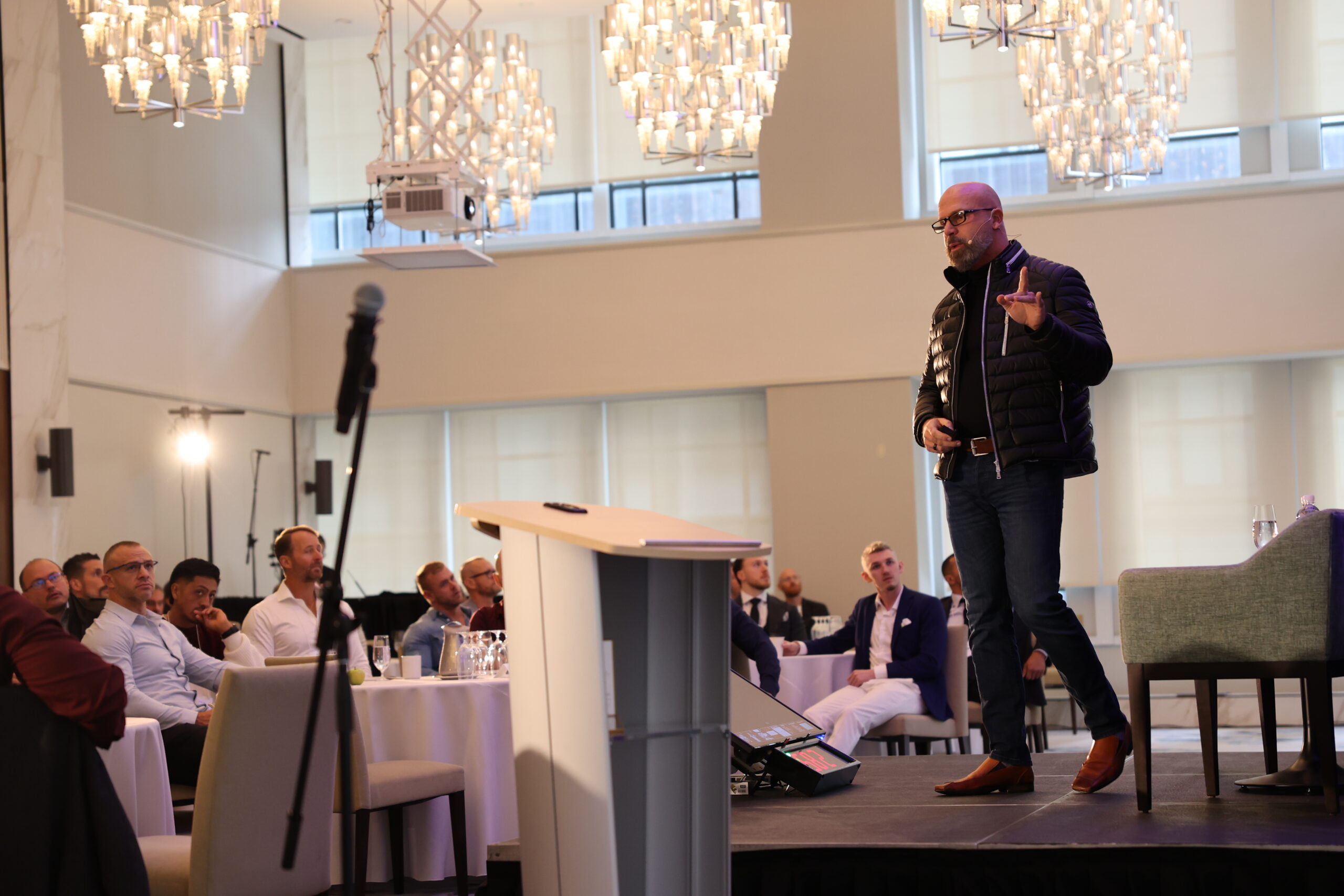
Image Credit: Courtesy of Richard Cooper

These chapters are often misunderstood as cynical. In practice, they are unsentimental. Cooper repeatedly emphasizes that competence, direction, and self-respect are the traits that sustain long-term attraction. The absence of these traits cannot be offset through performance, reassurance, or moral appeal.

Where the book diverges from many adjacent works is in its emphasis on sustainability. Cooper does not advocate dominance or performative masculinity. He advocates leverage. The ability to walk away. The ability to choose. The ability to operate without urgency or dependence. These are not emotional states. They are structural advantages earned over time.

Running beneath both the financial and relational arguments is a quieter theme: environment. Cooper is unusually direct about the cost of isolation. He argues that many men attempt to improve themselves while remaining embedded in social circles that do not share their standards or priorities. Progress, under those conditions, becomes fragile.

The book encourages deliberate brotherhood. Not networking, but alignment. Groups of men committed to physical discipline, financial execution, and accountability. Cooper treats this not as optional enrichment, but as a force multiplier. The right environment compresses timelines. The wrong one erodes resolve.

In its final chapters, The Top Shelf Man incorporates applied guidance from Steve From Accounting, focusing on practical uses of artificial intelligence across business, personal administration, and legal preparedness. Rather than functioning as a tangent, these sections reinforce the book’s central argument. Systems, once learned, scale. Men who understand tooling early gain disproportionate leverage over those who rely on effort alone.

Cooper’s credibility matters because the book does not ask the reader to accept any faith claim. His career spans entrepreneurship, private equity, consumer finance, and large-scale content creation. He has built and exited companies, managed hypergrowth, and advised high-net-worth individuals through complex transitions. The voice on the page reflects exposure to consequence, not theory.

What The Top Shelf Man ultimately offers is not motivation, but orientation. It challenges readers to examine whether their habits, relationships, and financial structures are producing leverage or quietly draining it. The book shows little interest in validation. It assumes the reader is capable of discomfort.

This is not a book for everyone, and it does not attempt to be. It is written for men who suspect that ease has been oversold, that responsibility has been reframed as optional, and that the cost of drifting is higher than the cost of discipline.

The shelf, as Cooper presents it, is neither symbolic nor aspirational. It is a position occupied by men who accept constraint in the present to secure autonomy later. The work is demanding. The standards are high. The rewards are unevenly distributed.

That, Cooper would argue, is the point.