Summit Law LLP and Jeremy Boyle: Navigating Contract Misrepresentation Claims

Contract misrepresentation is a critical issue in today’s legal landscape, especially for businesses and individuals involved in complex commercial agreements. When one party is misled into entering a contract based on false information, the consequences can be far-reaching. 

Summit Law LLP, led by the highly experienced solicitor Jeremy Boyle, offers strategic guidance for those facing contract misrepresentation claims, ensuring clients can recover their rightful dues while navigating the complexities of cross-border disputes.

What is Contract Misrepresentation?

Contract misrepresentation occurs when one party makes a false statement that induces another party to enter into a contract. These misrepresentations can be fraudulent, negligent, or innocent. Regardless of the type, if a misrepresentation has caused harm, the injured party may seek legal recourse.

  • Fraudulent misrepresentation involves intentionally making false statements with the intent to deceive.

  • Negligent misrepresentation occurs when a false statement is made without reasonable care to verify its accuracy.

  • Innocent misrepresentation involves a false statement made without knowledge of its falsehood and without intent to deceive.

In the case of contract misrepresentation, the aggrieved party may seek remedies such as contract rescission (voiding the contract) or damages for losses incurred due to the misrepresentation.

Jeremy Boyle’s Expertise in Contract Misrepresentation

Jeremy Boyle, the founder of Summit Law LLP, brings over 30 years of experience to the table. His extensive background in insolvency and commercial litigation has made him a trusted advisor for individuals and businesses dealing with complex legal issues. His approach combines strategic insight with an in-depth understanding of the legal landscape, particularly in handling contract misrepresentation claims.

“In an era where transparency is paramount, contract misrepresentation claims are more critical than ever,” says Jeremy Boyle. “My focus is on ensuring that clients not only recover their rightful dues but also navigate the complexities of cross-border disputes with precision.” This statement encapsulates Jeremy Boyle’s commitment to helping clients protect their interests, especially in cases involving cross-border transactions where the stakes are high.

The Importance of Addressing Contract Misrepresentation Claims

Contract misrepresentation can have serious consequences for both businesses and individuals. For businesses, entering into agreements based on false information can lead to financial loss, reputational damage, and legal liabilities. In some cases, misrepresentation can undermine the integrity of entire business operations, particularly if the misrepresentation relates to crucial aspects like pricing, performance, or contractual terms.

For individuals, a contract misrepresentation claim might arise in situations such as the purchase of property, employment agreements, or service contracts. Misrepresentation can create significant financial burdens and cause personal harm, making it essential to seek legal recourse promptly.

How Summit Law Helps Clients with Contract Misrepresentation Claims

Summit Law LLP provides expert legal services for those dealing with contract misrepresentation claims. Jeremy Boyle and his team offer a comprehensive approach to these cases, focusing on the specific details and nuances of each situation. They work closely with clients to assess the circumstances surrounding the misrepresentation, determine the extent of the harm caused, and decide the most effective legal strategy.

Summit Law’s expertise extends beyond the UK, handling cases involving international contracts and cross-border disputes. The firm’s understanding of different legal systems and international frameworks allows it to provide tailored solutions for clients facing complex challenges.

The team at Summit Law places a strong emphasis on transparency, ensuring that clients are fully informed about their legal options. By educating clients about the potential outcomes of their cases, Summit Law helps clients make informed decisions about whether to rescind contracts, seek damages, or explore other remedies.

Legal Remedies for Contract Misrepresentation

When a misrepresentation claim arises, the injured party can seek a range of legal remedies. These remedies aim to restore the party to the position they would have been in had the misrepresentation not occurred.

  • Rescission: The misled party can seek to rescind the contract, effectively voiding it as if it never existed. This remedy is often appropriate in cases where the misrepresentation is central to the contract, and the misled party would not have entered the agreement if they had known the truth.

  • Damages: In some cases, the injured party may be entitled to damages. This is typically the case when rescission is not possible or desirable, and compensation for losses incurred due to the misrepresentation is appropriate.

The decision between rescission and damages depends on various factors, including the nature of the misrepresentation and the client’s goals. Summit Law helps clients navigate these decisions with a clear understanding of the legal implications.

Why Choose Summit Law LLP for Contract Misrepresentation Claims?

Summit Law LLP stands out for its deep expertise in handling contract misrepresentation claims. With over three decades of experience, Jeremy Boyle has developed a reputation for providing strategic and precise legal solutions to clients. His vast experience in insolvency and commercial litigation ensures that clients receive expert guidance in even the most complex legal matters.

Whether the misrepresentation involves a local contract or a cross-border transaction, Summit Law is committed to delivering personalized legal solutions that protect the client’s interests. The firm’s strategic approach, coupled with its focus on transparency and client education, makes it a trusted partner for businesses and individuals navigating contract misrepresentation claims.

If you are dealing with a contract misrepresentation claim or need assistance with any related legal issue, Summit Law LLP is ready to help. With decades of experience and a commitment to providing tailored legal solutions, Jeremy Boyle and his team are dedicated to ensuring that clients receive the best possible outcome.

Disclaimer: The content of this article is for informational purposes only and does not constitute legal advice. While efforts have been made to ensure the accuracy of the information provided, the law is subject to change, and the specific circumstances of each case may vary. For personalized legal advice or assistance regarding misrepresentation claims, please consult with a qualified solicitor or legal professional.
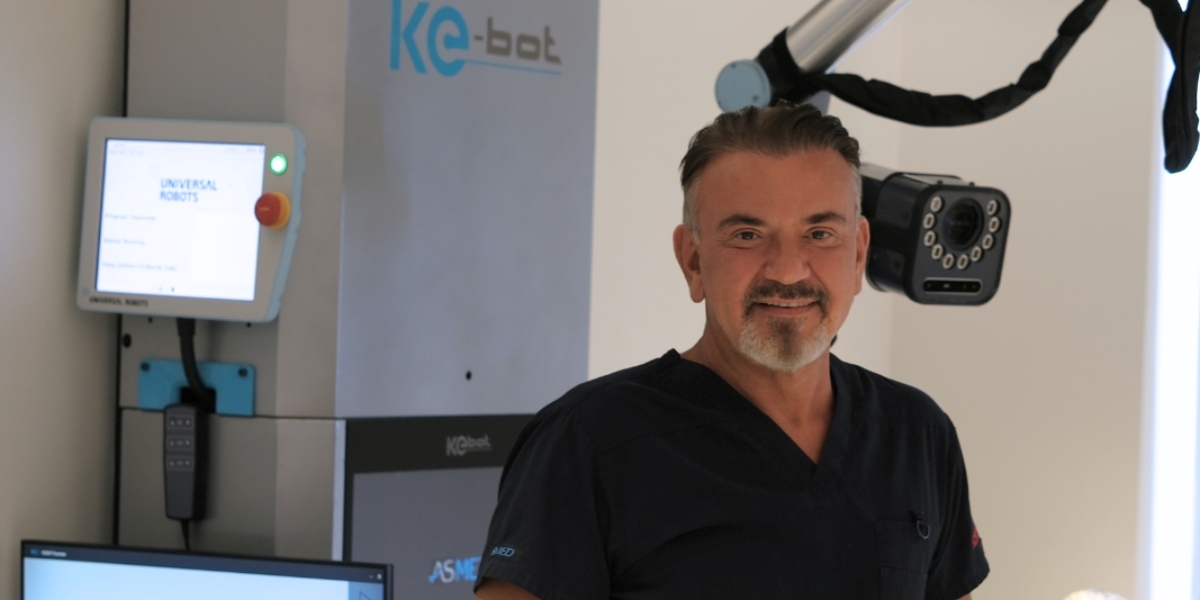

Dr. Koray Erdoğan’s AI-Driven Scalp-Analysis Robot Gains US Patent — A Potential Game-Changer in Hair Transplant Diagnostics

By: Ethan Rogers

Dr. Koray Erdoğan, a highly regarded expert in the global hair restoration field, continues to lead the way in innovation and precision. His latest breakthrough, announced by his team at ASMED Medical Center, has received widespread recognition. The proprietary AI-powered robotic diagnostic system, KE-BOT, has been granted a patent by the United States Patent and Trademark Office (USPTO), marking a significant achievement not only for Dr. Erdoğan and his team but also for the future of hair restoration and clinical diagnostics.

The development of KE-BOT is the result of nine years of collaborative effort between ASMED Medical Center and Kocaeli University, with support from TÜBİTAK, Turkey’s leading scientific agency. This collaboration has led to the creation of an advanced system that performs a comprehensive 360-degree scalp mapping. It captures ultra-high-resolution data on hair shaft thickness, follicular density, and spatial distribution. What sets KE-BOT apart is its integration of artificial intelligence, enabling the system to transform visual scalp images into quantifiable, objective metrics. This represents a significant departure from traditional hair restoration assessments, which have typically relied on subjective visual analysis and estimations. By minimizing human error and introducing more precise data, KE-BOT is poised to revolutionize hair restoration.

Dr. Erdoğan, who serves as both the founder and medical director of ASMED, shared his vision for the technology: “We built KE-BOT to bring standardization, objectivity, and data transparency into a field that has long relied on visual estimations.” He went on to explain that the successful patenting of KE-BOT by the USPTO is a monumental milestone for his team, and its broader implications for the integration of AI into clinical diagnostics are clear. KE-BOT stands as a prime example of how AI can enhance medical practices, offering not just technological advancement but also improved patient care through precision and objectivity.

In clinical practice, KE-BOT is intended for use both before and after hair transplant procedures. The system is linked to a dedicated mobile app, KE-BOT Mobile, that allows both clinicians and patients to access real-time data on their scalp condition. Through the app, doctors and patients can view detailed scalp maps, follicle density readings, and implantation metrics, providing a clearer picture of the patient’s needs and progress. This real-time data is crucial for informed surgical planning, helping clinicians tailor their approach to each patient’s unique characteristics. By leveraging data-driven insights, hair transplant clinics can move toward highly personalized, evidence-based surgical planning—a central tenet of modern personalized medicine.

KE-BOT is an exciting innovation for several reasons. Firstly, it positions Turkey, already recognized as a global hub for hair restoration, as a leader in producing world-class health-tech tools that are scientifically validated on an international scale. This speaks to the growing strength of Turkey’s healthcare and technological capabilities. The invention of KE-BOT underscores the country’s ability to innovate and make valuable contributions to the global medical community.

Dr. Erdoğan views KE-BOT not merely as a robotic device but as a pivotal tool in raising global standards in the medical field. “It’s about building tools that raise global standards of precision, transparency, and planning through verified data,” he said, emphasizing the broader mission of his work. By prioritizing data accuracy and objective analysis, KE-BOT aims to improve the hair restoration industry by providing a more transparent, consistent approach to diagnostics and treatment.

The introduction of KE-BOT builds on the success of an earlier AI-powered diagnostic system also developed by Dr. Erdoğan and his team in collaboration with Prof. Dr. Oğuzhan Urhan. This previous system, also known as KE-BOT, was designed to perform detailed follicle analysis, and, like its successor, it received patents and design awards for its innovative approach. Both systems highlight Dr. Erdoğan’s and his team’s continued commitment to pushing the boundaries of what is possible in hair restoration and medical technology.

Ultimately, the introduction of KE-BOT marks a transformative shift in the way hair transplant diagnoses are conducted. By moving away from traditional estimation-based methods to evidence-based, data-driven planning, Dr. Erdoğan and his team are not only enhancing the effectiveness of hair restoration treatments but also improving patient outcomes. The use of AI in this space signifies a significant leap forward, offering the potential for higher success rates, more accurate diagnostics, and ultimately, better results for patients undergoing hair restoration procedures.

Disclaimer: The claims and statements made in this article regarding Dr. Koray Erdoğan’s AI-driven scalp-analysis robot, KE-BOT, are based on publicly available information and announcements made by Dr. Erdoğan and his team at ASMED Medical Center. While the information regarding the granted U.S. patent is accurate as per available sources, readers should note that the results and effectiveness of the technology may vary for individual patients. The use of KE-BOT in clinical practice is subject to professional judgment, and results should not be interpreted as guarantees. The information provided should not be construed as medical advice, and individuals interested in hair restoration treatments should consult a qualified healthcare provider to assess their specific needs.

AirTalk Wireless Helps Bridge the Digital Gap for SNAP Recipients

By: Farzana Bashir

For millions of Americans, the Supplemental Nutrition Assistance Program (SNAP) is known as a lifeline for food. Yet there’s another, lesser-known benefit quietly reshaping lives in the digital age.  

According to the U.S. Department of Agriculture, more than 41 million people rely on SNAP each month. What many don’t realize is that SNAP can also open the door to digital access: providing eligible individuals with affordable connectivity and even free devices. 

How SNAP Unlocks Digital Access 

SNAP was initially designed to ensure that families never have to choose between paying for food and other essentials. It offers nutritional assistance to low-income households, helping them meet basic daily needs. 

But in today’s technology-driven world, meeting essential needs goes beyond what’s on the dinner table. It also includes the ability to connect online for school, healthcare, and work. 

Here’s where the connection becomes surprising: SNAP participants automatically qualify for Lifeline, a federal program created to make communication services more affordable.  

This means that anyone approved for SNAP is also eligible for monthly phone or internet discounts through the Lifeline program. It’s an overlooked benefit that turns a food assistance program into a powerful digital access point. 

The overlap between these two programs represents a modern interpretation of support. SNAP ensures physical well-being through nutrition, while Lifeline strengthens digital well-being through connectivity. Together, they create a safety net that extends beyond groceries: helping families stay informed, educated, and connected. 

Recent data highlights the essential nature of this link. A 2024 Pew Research Center report found that 57% of adults in households earning less than $30,000 a year lack home broadband access. By automatically qualifying SNAP recipients for Lifeline, federal policy helps close the digital gap without requiring additional applications or financial strain. 

From Benefits to Devices: Making Access Real  

Connecting eligibility to opportunity is one thing; Turning it into a real, usable service is another. That’s where the Lifeline program and its network of participating providers make the difference. 

Through Lifeline, approved carriers deliver discounted phone and internet plans directly to qualifying households. The subsidy, typically up to $9.25 per month for phone or broadband service, is automatically applied to users’ accounts. Those living on Tribal lands can receive an enhanced benefit of up to $34.25 per month 

Many providers go further by offering low-cost or even free devices. This is to ensure that users don’t just have access in theory, but in practice. Some distribute refurbished tablets or smartphones, while others provide brand-new equipment depending on inventory and region. 

AirTalk Wireless is one such provider that plays a vital role in making access tangible. The company simplifies the enrollment process, allowing users to verify eligibility, select their preferred plan, and upload required documentation online.  

Once approved, participants receive a physical SIM card or an eSIM for instant activation, often bundled with a compatible tablet or phone. 

These partnerships bring technology within reach for millions of Americans. A tablet or smartphone might seem like a small tool, but for a household navigating job searches, remote classes, or telehealth appointments, it represents a bridge to independence. 

The impact is measurable. According to data from the Universal Service Administrative Company (USAC), more than 6.5 million households benefited from Lifeline-supported services in 2021. Each connection reflects real-world progress – transforming what used to be barriers into opportunities for digital inclusion. 

Overcoming Barriers to Use  

While programs like Lifeline and SNAP are making access easier, challenges remain. Not every recipient is immediately comfortable using a new device or navigating online systems. For many first-time users, setting up a tablet, understanding Wi-Fi connections, or managing data usage can feel overwhelming. 

That’s why many Lifeline providers include built-in support to simplify the process.  

Those applying for a free tablet with food stamps from AirTalk, for instance, often receive devices pre-configured with essential apps and features. This provider typically ships them with step-by-step activation guides and offers dedicated customer support to help users get started confidently. 

Connectivity barriers also extend beyond the device itself. Some communities still face inconsistent broadband coverage, especially in rural areas where network expansion lags. Others struggle with limited digital literacy – knowing how to access telehealth portals, apply for jobs online, or use secure communication tools. 

To address these issues, Lifeline partners increasingly focus on education and simplicity. Providers ensure that the setup process doesn’t require technical expertise. A few even offer multilingual customer assistance or video tutorials to walk users through activation and troubleshooting. 

Looking Ahead: Technology as a Pathway to Opportunity  

Digital access has gradually become a building block of modern participation. As technology continues to advance, programs like SNAP and Lifeline are redefining what “assistance” means.  

It’s no longer just about providing meals or monthly discounts; it’s about ensuring that every household can thrive in a connected world. 

The future of inclusion lies at the intersection of affordability and innovation. By linking vital social programs to digital access initiatives, the U.S. is building a foundation in which opportunity is determined by connection.  

With strong partnerships, forward-thinking policy, and local providers leading the way, the quiet digital benefit of SNAP is becoming one of the most empowering stories of the decade.

Edwin Díaz Update What’s Really Going On With the Mets’ Star Closer

Edwin Díaz has always been a larger than life figure in baseball. The trumpets, the strikeouts, the ninth inning nerves that vanish once he steps on the mound. When fans search for the latest news about him, most aren’t looking for hype. They want clarity. Is he healthy. Is he pitching like himself again. How does he fit into the Mets’ plans right now. The answers matter because closers change games more than most positions.

What follows breaks down his current situation step by step. No guesses. No inflated drama. Just what’s happening and why it matters to regular fans watching real baseball unfold.


Edwin Díaz’s Current Health Status and Recovery

Díaz missed the entire 2023 MLB season after a knee injury during the World Baseball Classic celebration with Puerto Rico. It was one of those cruel sports moments where the damage didn’t happen during competition but during joy. Surgery followed, then months of rehab. For a closer who relies on explosive movement, strength and balance, a knee rebuild is more complicated than fans might expect.

As he returned to active pitching, the focus wasn’t on instant dominance. The priority was stability. Medical staff kept attention on overall mobility rather than raw speed. That meant gradual bullpen sessions, scheduled rest days, and tightly managed workloads. Fans used to seeing him appear three or four times per week had to wait longer between outings.

The encouraging part of his recovery has been his ability to maintain pitch mechanics. Scouts watching his rehab outings reported that his delivery remained fluid and balanced, which is critical for a pitcher who throws at maximum effort. Knee issues often cause small compensations that lead to arm strain. Díaz avoided that trap, keeping his form steady while slowly reintroducing game level intensity.


How His Performance Is Tracking After Injury

Seeing a pitcher throw again is one thing. Seeing him dominate is another. When Díaz returned to action, expectations were mixed. Some fans feared a permanent loss of velocity. Others worried about control problems that often follow major injuries.

Initial appearances showed a promising baseline. His fastball speed sat close to prior career numbers, staying in the upper 90s rather than slipping into the low 90s where many injured pitchers land. His slider bite came back quickly, still showing late movement that fools hitters even when they know it’s coming.

Command is where most returning pitchers struggle. Early on, Díaz showed occasional wildness, missing spots by inches rather than feet. For elite closers, inches matter. A slider that hangs slightly becomes a wall ball. Over multiple outings, those misses gradually tightened, reflecting timing between lower body stability and arm release syncing back into form.

Strikeouts didn’t disappear. While they didn’t flood the stat sheet at the same pace as his massive 2022 season, hitters remained uncomfortable in the box. Swing and miss rates stayed strong, showing that batters still don’t pick the ball up well against him. That confirms the deeper truth of Díaz’s skill set. Raw velocity helps, but deception and movement ultimately drive his dominance, and those tools remain intact.


Role Within the Mets Bullpen

Team roles following major injuries aren’t guaranteed. The Mets entered their season carefully with the bullpen hierarchy. Rather than immediately anoint Díaz as a full-time ninth-inning closer, the coaching staff took a measured approach. Some save opportunities were shared early among other relievers to avoid overload.

This soft return strategy matters more than fans usually realize. Closers thrive on routine. Warm up, face the heart of the order, and finish the game. Interrupting that pattern too aggressively during recovery could cause setbacks both physically and mentally.

As Díaz continued to show improvement, his appearances moved deeper into critical late inning situations. He regained the most important trust metric a manager controls. Who gets the ball when the game is on the line. Slowly, that answer returned to Díaz more often than not. Managers don’t grant ninth inning work without confidence in reliability, especially in markets where blown saves don’t go unnoticed.

Another sign of comfort has been his availability on back to back days. Closing twice in two nights remains a true test of readiness. He didn’t begin doing this until team staff felt certain his knee could handle repeated explosive effort. Once he cleared that threshold, his bullpen leadership role solidified.


What Fans Are Actually Talking About

Outside stats and medical updates, fans are responding emotionally to Díaz’s return. Many remember the electricity he brought to Citi Field before the injury. When the trumpets blared, innings felt shorter, crowds stood taller, and momentum tilted toward the Mets instantly.

That atmosphere has slowly come back. Social media clips of his reappearing entrance show full stadium sections rising again. The emotion isn’t about spectacle alone. For New York fans, Díaz represents reliability. Years of late inning anxiety melted away during his prime seasons. That memory sticks, which explains the excitement every time he jogs in from the bullpen again.

There’s also realism mixed into the praise. Many fans acknowledge that his performance doesn’t need to match peak 2022 numbers to be valuable. A healthy Díaz who converts most save chances still stabilizes the entire pitching staff. Starters can exit earlier knowing the bullpen bridge is secure. Setup men pitch with clearer lanes to success. The ripple effect shows up across the team.

Most conversations now focus on consistency rather than flash. Fans want to see steady closing work without setbacks, while accepting smaller hiccups as part of any post injury season. The emotional shift has moved from cautious hope toward guarded confidence.


What This Means for the Mets and Their Season

From a team perspective, Díaz’s presence shifts game management dramatically. Managers handle pitchers differently when a true closer is available. Starters don’t need to chase extra innings while fatigued. Middle relievers can slot into defined roles instead of scrambling to cover late frames.

Run prevention improves when bullpen structure stabilizes. Games become more predictable. A two-run lead in the eighth inning changes the psychology when Díaz waits in the ninth. Both teams feel it. The batting club presses while the defensive side gains calm.

There’s financial and roster stability at play, too. Having Díaz healthy limits the need for expensive bullpen trades or risky deadline pickups. That keeps minor league assets intact while saving payroll flexibility for other roster needs. Quiet stability never trends online, but teams depend on it.

Longer term questions remain about optimal workload limits over a full season. The Mets are expected to remain careful rather than lean fully into 70-plus inning usage right away. That restraint reflects modern pitcher health management, especially given his injury history.


Where Edwin Díaz Stands Right Now

At present, Díaz occupies a place between comeback and normalcy. His health has been rebuilt to competitive reliability. His stuff remains threatening. His command steadily sharpens. Most importantly, his presence restores confidence within the Mets’ late inning structure.

Fans hoping for constant 100 mph dominance every outing may need patience. Not every appearance will be vintage highlights. Some outings will feel workmanlike rather than electric. That’s typical post injury reality rather than decline. Pitchers often regain sharpness in stages, not overnight leaps.

The deeper indicator remains simple. Hitters still struggle to square him up. Managers still trust him with leads. That combination means his role remains secure and meaningful.

For Mets fans, the story right now isn’t miracle recovery or fairy tale dominance. It’s something better. A proven closer steadily reclaiming his place without spectacle overshadowing substance. Over the grind of a full season, commitment to health often produces more wins than chasing instant highlights.

Díaz may never recreate every ounce of his pre injury velocity peak. He doesn’t need to. What matters is dependability under pressure. And step by step, outing by outing, that dependability is returning.