Custom Power Solutions That Meet Your Organization’s Unique Operational Needs

Organizations across industries are increasingly recognizing that standardized power systems often fall short when addressing the nuanced demands of modern operations. From manufacturing plants to data centers, each facility presents distinct operational requirements that influence energy consumption, reliability, and efficiency. Investing in a tailored power solution allows organizations to achieve seamless performance, reduce operational risks, and optimize energy costs. 

These solutions are designed to integrate with existing systems, support future scalability, and meet regulatory standards, ensuring that every facet of the organization’s power infrastructure is aligned with its specific goals.

Assessing Operational Demands for Tailored Solutions

Understanding the specific operational demands of an organization is crucial for designing a custom power solution that truly fits. Each facility has different peak loads, sensitive equipment, and unique redundancy needs that influence how energy is delivered and maintained. Conducting detailed energy audits and simulations allows engineers to identify critical vulnerabilities and opportunities for efficiency. 

These assessments examine equipment power ratings, operating schedules, and environmental conditions to ensure systems are reliable without excessive overcapacity. By thoroughly analyzing operational requirements, designers can provide solutions that maintain consistent power for important processes, prevent downtime, and support productivity while minimizing energy waste and unnecessary operational expenditures.

Supporting Critical Applications and Specialized Equipment

Certain operations rely on sensitive or high-demand equipment that requires precise and stable power delivery to function reliably. Engineers can build customized medium-voltage transformers to ensure the correct voltage, maintain consistent performance, and protect sensitive equipment from fluctuations or surges. Industries such as research laboratories, semiconductor manufacturing, and data centers often require dedicated circuits and specialized distribution architectures to avoid disruptions that could damage assets or halt operations. 

Tailored power solutions designed for these applications support operational efficiency, reduce maintenance costs, and enhance safety. By addressing these unique requirements, organizations can maintain critical processes, extend equipment lifespan, and operate with confidence under demanding conditions.

Integrating Redundancy for Continuous Operations

Many organizations rely on uninterrupted operations to maintain productivity, customer satisfaction, and safety standards. Custom power solutions include redundancy measures such as backup generators, uninterruptible power supplies, and dual-feed distribution networks to maintain continuous functionality. Analyzing the criticality of specific systems enables engineers to implement redundancy where it matters most, ensuring important equipment remains operational during maintenance, outages, or unexpected failures. 

Redundant systems prevent costly downtime, mitigate risks, and enhance operational resilience. By integrating redundancy into the design, organizations can safeguard critical processes, maintain compliance with industry regulations, and minimize the impact of power disruptions, providing reliability that standard systems often cannot match in high-demand or sensitive environments.

Designing Scalable Infrastructure for Growth

Scalability is a critical consideration when implementing a custom power solution. As businesses grow and operations grow, energy requirements can change significantly, making a flexible infrastructure crucial. Scalable designs incorporate modular power distribution units, flexible wiring, and adaptable control systems to accommodate increased load demands or facility expansions. 

This approach ensures organizations can integrate new equipment, technologies, or production lines without costly retrofits. By planning for growth in the initial design, organizations achieve long-term operational efficiency and cost savings. Scalable solutions allow facilities to respond proactively to changing operational demands while maintaining consistent energy delivery and minimizing interruptions that could affect productivity or critical processes.

Energy Efficiency and Sustainability Considerations

Modern organizations are increasingly focused on sustainability and reducing operational energy costs. Custom power solutions incorporate energy-efficient technologies such as variable frequency drives, advanced power monitoring, and smart load management to optimize consumption. Tailored systems reduce energy waste and improve efficiency, supporting sustainability initiatives while maintaining performance standards. 

Solutions can integrate renewable energy sources, energy storage systems, and demand response strategies to further enhance environmental responsibility. By analyzing operational patterns and load demands, engineers create systems that reduce emissions without compromising functionality. Efficient designs ensure organizations meet energy goals, reduce operational expenses, and demonstrate environmental responsibility while maintaining reliable power delivery across all critical applications.

Adapting to Complex Regulatory Requirements

Industries like healthcare, finance, and manufacturing face strict requirements related to power reliability, safety, and environmental impact. Custom power solutions are designed to ensure compliance with these regulations while supporting operational goals. Engineers account for electrical codes, safety standards, and reporting requirements in every aspect of system design. 

Compliance-focused solutions reduce operational risk, protect employees, and prevent costly penalties. By integrating regulatory considerations early in the design process, organizations achieve efficiency and safety. This approach ensures that operations remain uninterrupted, meet all legal obligations, and align with industry best practices, providing a reliable foundation for organizations that operate in highly regulated or safety-critical environments.

Leveraging Advanced Monitoring and Control Systems

Sophisticated monitoring and control systems are integral to modern custom power solutions. Real-time visibility into energy consumption, equipment performance, and potential system faults allows organizations to detect inefficiencies and prevent downtime. Predictive maintenance, automated load balancing, and fault alerts improve operational reliability and extend equipment lifespan. 

Monitoring systems enable data-driven decisions that optimize energy use while maintaining performance across all critical systems. Organizations gain insight into usage patterns, peak load demands, and potential vulnerabilities, allowing them to address issues before they escalate. These intelligent systems enhance operational control, increase resilience, and ensure that energy distribution aligns precisely with organizational needs, avoiding overuse and minimizing operational disruptions.

Simplifying Maintenance and Lifecycle Management

Maintenance and lifecycle management are critical considerations for long-term operational efficiency. Custom power solutions are designed for easy access to components, modular upgrades, and simplified troubleshooting, reducing the time and effort required for routine tasks. Integrated monitoring and remote diagnostics allow predictive maintenance, avoiding costly downtime and extending equipment life. 

Clear documentation and service agreements help organizations maintain reliable operations while controlling expenses. Thoughtful system design ensures that critical processes remain operational during maintenance activities. Lifecycle-focused solutions reduce the risk of unexpected failures, improve operational planning, and provide organizations with confidence that their energy infrastructure will support ongoing performance, adaptability, and operational continuity.

Custom Power Solutions That Meet Your Organization’s Unique Operational Needs


Photo: Unsplash.com

Custom power solutions offer a strategic approach to managing operational demands, enhancing efficiency, and safeguarding critical processes. By focusing on tailored designs that incorporate scalability, redundancy, energy efficiency, regulatory compliance, and resilience, organizations gain a reliable foundation to drive performance and growth. Investing in a solution that meets unique operational needs allows businesses to optimize resources, reduce risks, and remain competitive in a dynamic and demanding environment.
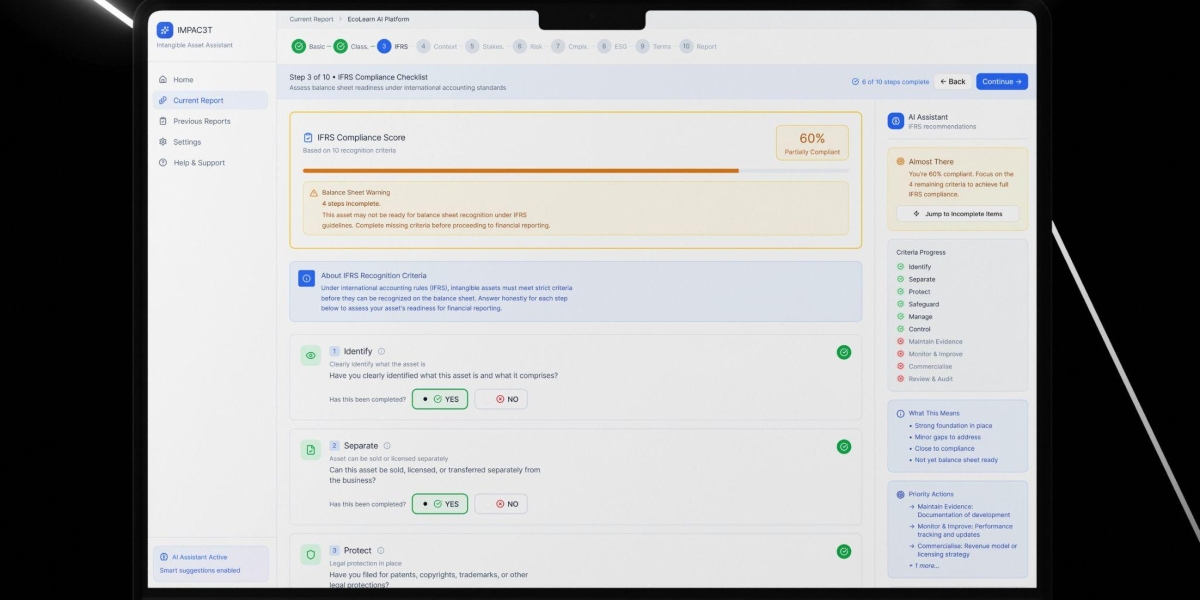

IMPAC3T IP Licensing 5-Stage Framework for Intangible-Asset Governance

By: Julia Kent

The IMPAC3T Intangible Asset Assistant is a standards-aligned governance framework designed to help enterprises, universities, and nonprofits identify, assess, and responsibly license intellectual property and ESG-linked intangible assets. While drawing conceptual inspiration from publicly available materials of the EU-funded IMPAC3T-IP initiative, all interface design, AI decision logic, and implementation work for this project is being developed independently by Yunyun (Beatrice) Zhou (lead designer and system architect) and David Parham (enterprise AI product leader). The team hopes to apply for a grant to support future prototype evaluation with mission-driven partners as the project progresses.

Market Context

A growing share of institutional value in the United States now resides in intangibles—methods, datasets, software components, curricula, brand systems, and programmatic know-how. Yet the tooling landscape has remained fragmented. Search utilities operate separately from legal drafting; spreadsheets often stand in for structured governance; and licensing trackers rarely capture eligibility, rights, or mission constraints. What organizations appear to lack is not another point solution, but a coherent, auditable decision pathway that links recognition, valuation, and licensing within a unified governance logic. The absence of such a pathway can slow disclosure, weaken comparability across departments and counterparties, and limit knowledge assets from being fully leveraged for technology transfer, partnerships, and mission-aligned growth.

Concept Overview

IMPAC3T introduces a structured, five-stage approach to intangible-asset governance, guiding institutions from the recognition of knowledge assets through to responsible licensing and disclosure. The framework adapts commonly recognized principles of intellectual-property management into a coherent, auditable decision process that links identification, protection, valuation, and fair use within a single governance logic. By aligning its methodology with established international standards and good-practice principles, IMPAC3T aims to promote transparency, comparability, and accountability across sectors. The goal is not to automate complex judgments but to help organizations prepare consistent evidence, document decisions, and support that intangible assets are stewarded in ways that align with both institutional integrity and public trust.

Leadership & Division of Work

Yunyun Zhou leads the design and system architecture of IMPAC3T, shaping how complex governance and valuation principles are translated into accessible, user-centered experiences. Drawing on her record of building AI-assisted, compliance-ready workflows in enterprise and civic-tech settings, she transforms intricate standards and regulatory logic into clear, reviewable steps that guide institutions through intangible-asset governance with confidence. Her design leadership anchors the project’s usability, helping ensure that rigorous decision frameworks can be understood and applied effectively by diverse teams, including counsel, auditors, funders, and boards, who rely on transparent and consistent evidence preparation.

David Parham provides strategic guidance on market relevance and domain alignment. He ensures that the framework’s logic and design stay aligned with prevailing commercialization practices and sector needs, supporting adoption across SMEs, universities, and nonprofits. His perspective helps bridge institutional governance with external engagement, reinforcing the framework’s practical applicability.

Intended Users & Use Cases

For SMEs and startups, IMPAC3T could help shorten the distance from “we think we have something valuable” to “we can demonstrate it,” enabling teams to build defensible narratives that support financing, partnerships, and strategic growth. For universities and knowledge-transfer offices, the framework provides a way to standardize how research outputs, educational content, and brand assets progress from early development to license-ready form, improving comparability across departments and reducing reliance on ad-hoc processes. For nonprofits, it can enable purpose-driven, non-commercial licensing that safeguards mission and reputation while clarifying program value for funders and stakeholders.

Interoperability and Implementation Considerations

Because institutional systems and cultures vary, IMPAC3T is designed to be implementation-agnostic. Organizations can apply their governance logic using existing tools and repositories today and, where beneficial, extend that logic through dedicated software in the future. Successful adoption relies on aligning current policies with the framework’s structure, assigning clear custodianship for decisions, and maintaining a regular cadence for review as assets, markets, and regulations evolve. Above all, effective change management—through executive sponsorship, stewardship, and focused training—is key to turning governance design into daily practice.

Relevance to the U.S. Landscape

From an industry perspective, IMPAC3T responds to a growing governance gap with potential implications for U.S. competitiveness and public trust. Institutions increasingly need reliable, standards-informed processes that help staff convert scattered knowledge into transparent stewardship and responsible knowledge transfer. By translating complex international principles into clear, reviewable frameworks that integrate human oversight and accountability, IMPAC3T offers a practical pathway to faster, more consistent decision-making in universities; safer and purpose-aligned licensing in nonprofits; and stronger demonstration of intangible value for capital formation and strategic partnerships in SMEs. The common thread—comparability, accountability, and mission fit—reflects national priorities around innovation, efficient deployment of social capital, and restoring confidence in institutions.

Outlook

IMPAC3T represents a practical step toward more transparent and accountable management of intangible assets across institutions. By combining design discipline with standards-informed governance, the project aims to help organizations transform scattered knowledge into clearer, more defensible outcomes. As development progresses, the team plans to apply for grant support to evaluate the prototype with mission-driven partners and further demonstrate its potential value for both U.S. and European institutions.

Christmas Food Trends 2025: What’s Hot This Festive Season?

If you’re already planning your Christmas menu, you’re in good company. Search data shows people start looking up Christmas trends before Halloween even wraps. Supermarkets and food developers have been preparing for this 2025 season for over a year.

This year’s Christmas food trends are bold, playful, and heavily snack-focused. They lean on comfort, value, and plant-forward eating — familiar favourites upgraded with surprising twists.

Why Christmas 2025 Feels Different

Several major influences are shaping the 2025 Christmas food landscape.

Fusion flavours have dominated the year, and Christmas is picking them up in a big way. Research shows chefs have leaned into miso glazes, umami-rich sides, and global spice blends. These ideas are now landing on home tables, meaning your traditional roast might get a rub of aromatic spices from entirely different cuisines — offering excitement for guests who “have seen it all.”

Social feeds have also transformed expectations. Presentation is nearly as important as taste. Hybrid desserts and playful gingerbread treats are set to rule seasonal displays, with a push toward bakes and snacks that photograph well, as reported at bakeryandsnacks.com.

At the same time, shoppers are more conscious about value and wellness while still wanting indulgence. They read labels more closely and want festive richness without feeling weighed down. That balance between comfort and lighter choices is guiding what goes into the trolley.

Sausage Rolls and Party Bites Get a Glow Up

The party table is where 2025’s creativity shines. One of the clearest shifts is the transformation of sausage rolls and classic frozen party bites. UK supermarket teams told bbc.co.uk that sausage rolls are evolving from plain rectangles into wreaths, rings, and garlands.

These new shapes often come with dips and glazed pastry, turning a simple snack into a visual showpiece. Tear-and-share formats make gatherings feel more social and interactive.

With chains like Iceland expecting billions of party snacks to be eaten, mashups are everywhere. Morrisons product leads note bold global flavours and unexpected pairings — including curries, bao fillings, and pasta dishes turned into bite-sized grazing food (bbc.co.uk). Beige platters are out; vibrant colours and punchy flavours are in.

Ideas to try at home

  • Turn your usual sausage rolls into a wreath and serve with cranberry mustard or maple-chilli dip.
    • Arrange frozen party bites in a circular display and fill gaps with herbs, roasted veggies, or pomegranate seeds to give a luxe, homemade look.

Plant-Based Pastry Showstoppers for the Center of the Table

The days of a token nut roast on the side of the turkey are ending. Product directors at Sainsbury’s and Tesco told bbc.co.uk that demand is up for vegetarian and vegan mains that look as impressive as the turkey itself. This year, that means pastry-wrapped centrepieces — pies, crowns, and pithiviers with decorative tops and rich fillings.

This mirrors wider food trends, with chefs using sourdough and laminated dough techniques to elevate plant-based dishes, as highlighted at ice.edu.

How to create a festive plant-based centrepiece

Roast moisture-heavy vegetables like butternut, parsnip, and onions with garlic, rosemary, and a touch of maple. Combine with hearty elements like chestnuts, lentils, or firm cheese. Wrap in puff pastry, seal well, and score simple star or leaf patterns before baking. Serve with gravy and a bright green salad to keep the plate balanced.

Maple Syrup Takes the Flavor Crown

The breakout flavour of Christmas 2025 is maple. Ocado reported a 17% increase in maple searches over last year, and supermarkets are treating it as the hero sweetener of the season (bbc.co.uk).

Following the hot honey boom, maple offers a deeper, caramel-forward alternative with no heat. Expect maple-glazed vegetables, sticky chicken wings, gammon joints, and plenty of maple-forward cocktails and mocktails. It fits neatly into the sweet-savory flavour profiles trending everywhere.

Easy maple swaps for your menu

Glaze root vegetables with maple, smoked paprika, citrus zest, and sea salt during the final 20 minutes of roasting. Brush the same glaze on sausages, tofu, or halloumi before grilling.

For breakfast, drizzle maple over tray-baked pancakes or cinnamon-roll-style bakes trending on bbc.co.uk, topped with berries, nuts, or yogurt for balance.

Gingerbread, Spice and the Rise of Hybrid Treats

Gingerbread is one of the year’s loudest flavours. Analysts at bakeryandsnacks.com highlight gingerbread as the top seasonal flavour for 2025 — appearing in cookies, muffins, cereals, chocolate, and more.

The twist? Gingerbread is now being used as a flavour profile, not just for building houses. Brands are pushing hybrid desserts such as gingerbread tiramisu, spiced tiramisu jars, and doughnuts filled with ginger-molasses creams.

Trend reports from vertexresourcing.com predict desserts that sit between a snack and a full pudding — fitting the broader shift toward grazing rather than fixed mealtimes.

Global Fusion Flavors Reach the Christmas Table

Fusion is one of the most exciting trends this year. Foodmaker.co.uk predicts miso-glazed Christmas ham, Asian-inspired spice rubs for pork and poultry, and playful variations like chorizo wrapped in bacon.

Imagine pigs in blankets seasoned with gochujang or lamb kofta wrapped in smoky bacon with pomegranate glaze. Familiar formats meet new flavour worlds — matching the broader 2025 theme of “remix culture” mentioned across industries from ibm.com to softonic.com.

Simple fusion ideas you can try quickly

  • Glaze ham with white miso, honey or maple, soy, and orange juice.
    • Season sausages with harissa, five spice, or garam masala before wrapping in bacon.
    • Toss roast potatoes with chilli crisp or furikake for an instant umami lift — echoing trends in the 2025 outlook from ice.edu.

Alcohol-Free Drinks, Limoncello Twists, and Functional Treats

Festive drink trends have shifted from “what’s strongest” to more inclusive, alcohol-free options. Retailers focused on hampers say non-alcoholic gift sets are surging thanks to growing interest in moderation and mindful drinking (hampers.com).

Limoncello is also emerging as a key festive flavour. The recipe round-up at taste.com.au highlights limoncello cakes, trifles, and chilled drinks climbing the charts. Its bright lemony lift cuts beautifully through heavy Christmas foods.

Underlying all of this is a continued shift toward functional indulgence — treats that feel good but quietly offer benefits. Even as people enjoy nostalgic dishes rich in butter and cream (as noted at forbes.com), they often balance them with higher-protein snacks, plant-based sides, or desserts with added fibre or lower sugar. Labels promoting gut-friendly ferments or improved nutrition are increasingly common.

Ideas for better-for-you Christmas swaps

Mix alcohol-free sparkling wine or soda with limoncello-flavoured syrup for a festive spritz, garnished with fresh citrus. Offer real limoncello on the side for guests who want the alcoholic version.

For nibbles, include roasted nuts, hummus, crudités, or a lighter fruit-based dessert alongside richer treats. This aligns with wellness trends highlighted at preventivemedicinedaily.com and realsimple.com.

Packaging, Colors, and How Value Shows up on Shelf

The look of Christmas food has evolved as much as the flavours. Confectionerynews.com reports sage greens, forest tones, and champagne gold as the hero colours of 2025, with matte finishes and metallic star accents.

This creates a calm, modern aesthetic that elevates even everyday supermarket items. Brands are leaning into packaging that looks gift-ready with minimal wrapping, and many containers are designed for reuse — blending practicality, sustainability, and home decor trends.

Value also plays a strong role. Retail analysts note a wider mix of private-label offerings paired with a few standout premium pieces. Consumers are adopting a “high-low” mix, splurging on one showpiece item while filling the table with budget-friendly staples — a pattern seen across roundups from vertexresourcing.com and bakeryandsnacks.com.

In Summary

As December approaches, most of us juggle comfort, tradition, and the desire for something joyful and new. Christmas food trends in 2025 reflect that balance. Sausage rolls return but with bold shapes and global flavours. Plant-based pastry mains are centre-stage, and maple, gingerbread, and fusion spices shape the season’s taste.

You don’t need to adopt every trend. Choose one twist — miso ham, maple roots, or a limoncello spritz — and blend it with your family classics. The goal is a table that feels authentic and memorable.

The dishes people remember aren’t always the fanciest; they’re the ones shared with laughter and warmth. If these 2025 trends make holiday cooking easier and more enjoyable for you, then they’ve done exactly what they should.

Online Grocery Sales October 2025: Trends and Insights

By: Sam Charless

October 2025 marked a significant milestone for the online grocery industry. For the fourth month in a row, Americans spent over $10 billion on groceries online. This timeframe reflects a shift in consumer behavior that seems to be taking hold.

This trend shows how shopping habits are evolving toward digital platforms. Consumers continue to seek greater convenience, and many appear willing to pay for it. For those following the industry, this analysis offers valuable insights in a brief 5-minute read.

Online Grocery Sales Hit New Heights in October 2025

The numbers paint an interesting picture regarding revenue. October brought in $11.6 billion in sales, according to data from Brick Meets Click and Mercatus. This figure suggests that demand remains robust.

That represents a 10.5% increase from October 2024, when sales reached $10.5 billion. However, growth has slowed compared to last year. The market seems to be settling into a more stable rhythm.

In October 2024, sales grew by 28.1% year over year. The slowdown might suggest that the market is maturing after years of rapid growth. Despite this, total online revenue continues to impress, even as growth stabilizes.

When grocery sales reach these levels, it can signal a shift in the retail landscape. Online grocery shopping seems to have reached a more sustainable plateau that retailers can potentially rely on.

What’s Driving These Sales

More people are shopping online for groceries than ever before. October ended with 83.3 million households making online grocery purchases, representing a significant portion of the population.

This is a 13% increase from the same month last year. The number of active users keeps growing month after month, with sales growth largely driven by these new entrants.

Amazon’s efforts to expand same-day delivery for fresh groceries have helped them reach more customers. They are aiming to bring fast shipping to rural areas by the end of 2025. Amazon’s same-day delivery service could be reshaping consumer expectations.

How People Receive Their Online Grocery Orders

Three main methods dominate the online grocery space. Each one caters to different customer needs and preferences, offering shoppers options based on their schedules.

  • Delivery includes orders brought by first-party providers or third-party services like Instacart and Shipt. Some retailers use their own employees for deliveries. This method is most popular in dense urban areas.

  • Pickup lets customers grab orders inside stores or at designated spots. Some stores now offer locker pickups for added convenience. This segment tends to lead in customer satisfaction.

  • Ship-to-home uses carriers like FedEx, UPS, and USPS. This method works well for non-perishable items and bulk purchases, allowing access to specialty items not found locally.

All three receiving methods saw more monthly active users in October. People are exploring different options based on what best suits their lifestyle. Shoppers are opting for the method that saves them the most time.

The Cost Factor Matters

Customers make choices based on both cost and convenience. Amazon’s same-day grocery service offers a lower-cost alternative that has started to catch attention. Price sensitivity is becoming a more noticeable factor in shaping vendor loyalty.

David Bishop from Brick Meets Click noted that growth is not always automatic. The impact of Amazon’s service is now becoming visible in the data. Retailers will need to adapt to these more competitive pricing models.

Average order values saw a slight pullback in October. Customers are spending less per order but ordering more frequently. This suggests that online grocery shopping for immediate needs is becoming a more frequent habit.

Amazon’s same-day grocery strategy targets budget-conscious shoppers and may be offering a more viable alternative to traditional supermarket trips.

Geographic Trends Show Interesting Patterns

Large metro markets saw order frequency dip compared to October 2024. But medium and small metro areas seem to have filled the gap. Grocery sales are reaching further beyond the big cities.

These smaller markets experienced online grocery sales growth between 7% and 15%. Rural areas are starting to receive better service options. The reach of digital platforms now extends across much broader territories.

This shift is mirroring trends in retail expansion overall. Companies are realizing that they cannot ignore smaller markets any longer. Online groceries from companies like The Meat Box are starting to grow on a more nationwide scale.

Major Players Showing Strong Performance

Albertsons has managed to grow its digital sales by more than 20% for eight consecutive quarters through Q2 2025. That kind of consistency is rare in retail. Online retailers are closely monitoring this strategy.

The company continues to invest in its digital infrastructure and partnerships. Their focus on online grocery marketing strategies is driving higher retention rates.

Kroger has also maintained double-digit growth in digital sales as of Q2 2025. They expanded their partnership with Instacart to include agentic AI shopping options, helping them compete with other online marketplaces.

Costco saw a rise in nine categories of double-digit ecommerce sales increases for fiscal Q4 2025. Their membership model continues to perform well for online shopping. Bulk buying remains a strong driver for their overall sales.

The Technology Behind Online Grocery Growth

Payment processing has improved, making checkout smoother. Kroger has partnered with Worldpay for both ecommerce and in-store payments, helping unify financial data across channels.

Seamless payment experiences reduce friction in the buying process. Every extra step can result in customers abandoning their carts. Retailers must also make sure their privacy policies protect users’ financial data.

Inventory management systems are also critical to ensuring that popular items stay in stock. Nothing frustrates online grocery shoppers more than out-of-stock notifications. Accurate, real-time data is key.

Social media marketing plays a bigger role than many realize. An online grocery social media strategy can help stores reach customers where they spend time. This approach helps build brand loyalty, particularly among younger shoppers.

AI Helping Change How People Shop

Artificial intelligence is helping shoppers find what they need more quickly. Recommendation engines suggest items based on past purchases. This technology personalizes the grocery shopping experience.

Some platforms now offer agentic AI, which can complete shopping tasks. This technology is still emerging, but it shows potential for busy families. It even predicts what a shopper might need before they ask.

Voice ordering through smart speakers is also growing in popularity. People can add items to their cart while cooking or multitasking. This hands-free method encourages more frequent grocery orders.

Comparing October 2025 to Previous Months

September 2025 set a record high at $12.5 billion in sales. October’s $11.6 billion represents a slight dip from that peak. However, it remains historically high.

August also broke records before September surpassed it. The summer and fall months of 2025 have seen exceptionally strong sales. This was the fourth consecutive month exceeding $10 billion.

Seasonal factors influence these numbers more than people think. Back-to-school shopping and holiday prep drive sales higher in August and September. Total online grocery sales often spike during these transition periods.

October typically sees a slight pullback after September’s rush. But maintaining over $10 billion still shows strong underlying strength in the market. The online grocery market is proving resilient.

Year-Over-Year Growth Tells the Real Story

The 10.5% growth rate may seem modest compared to the explosive growth during the pandemic years. But it represents healthy, sustainable expansion. Online grocery sales growth is beginning to normalize.

Markets can’t keep growing at 30% to 40% forever. Eventually, growth stabilizes as market penetration increases. Grocery sales growth is now tracking with broader economic trends.

The fact that new users continue to join suggests that the market hasn’t peaked. Some households shopped online for groceries for the first time in October. Online’s share of the wallet is still on the rise.

What This Means for Traditional Grocery Stores

Brick-and-mortar stores are facing pressure to compete digitally. But many are finding success with hybrid models. They will need to adapt or risk losing market share.

Stores now serve as fulfillment centers for online orders. This has turned physical locations into assets, rather than liabilities. It shortens the distance for the final mile of delivery.

Employee training is becoming increasingly important for handling both in-store and online customers. Workers need different skills than they did just five years ago. They are the backbone of the supply chain at the local level.

Some stores are changing their layouts to accommodate online order assembly. Dedicated aisles or areas for pickup orders keep aisles clear for in-person shoppers.

The Profitability Challenge

Online grocery has notoriously thin margins. Delivery costs continue to eat into already slim profits from food sales. Retailers are still figuring out how to make the unit economics work.

Retailers are experimenting with delivery fees and membership programs. Finding the right balance will help keep customers happy while covering costs. They must clearly communicate the value of service, including cost structures.

Some stores are offering free delivery above a certain order minimum. Others charge flat fees or use dynamic pricing based on demand. This encourages larger grocery purchases.

What to Expect in the Coming Months

November and December typically see even higher online grocery sales. Holiday cooking and entertaining drive massive spikes. Grocery orders are likely to hit new peaks.

The question remains whether 2025 will break previous records. Economic conditions and consumer confidence will play major roles. Total online sales for the year will depend on Q4.

Retailers are already preparing for increased demand. Hiring seasonal workers and expanding delivery capacity start early. The supply chain will undoubtedly be tested.


Disclaimer: The information provided in this article is based on data and trends available at the time of publication, and while efforts have been made to ensure accuracy, figures and projections may be subject to change. The online grocery industry is evolving, and future growth rates, sales figures, and consumer behavior may differ from what is discussed. The views expressed here are for informational purposes only and do not constitute financial or business advice.

Lucas Duplan: Crafting a Sound from Loss, Memory, and Pure Emotion

By: Azhar Hussaini

In an industry driven by trends and charts, there are artists who chase the next big hit — and there are those who dig deeper, who create from a place of raw experience, emotion, and soul. Lucas Duplan is firmly in the latter category. Based in Los Angeles, Lucas brings together elements of EDM, hip-hop, and house music — but more importantly, he weaves in the weight of memory, heartbreak, resilience, and the quiet longing that only honest art can communicate.

Early Roots: Where Music Was Family

From as early as twelve years old, music was woven into Lucas’s upbringing. He grew up in a household where weekends meant family singing sessions — his sisters, his parents, even extended family coming together to play piano, guitar, and harmonize. It wasn’t just a pastime: music was part of identity, of connection. His uncle, a musician himself, mentored him in the fundamentals of songwriting and production. When his uncle passed away, that early guidance transformed into responsibility — a vow to honor his legacy through art.

After his father’s passing, music became more than just a passion. It became catharsis — a way to grieve, to heal, to express what words couldn’t capture. What began as a family tradition matured into something profoundly personal and creative.

“My sound comes from real emotion. Every melody is a piece of my story.”

Those early memories, the laughter, the loss, the longing — they all seep into Lucas’s music. His art isn’t manufactured. It’s inherited. It’s lived.

Sound & Style: Emotion Over Trend

For Lucas, music is never about following the latest wave. It’s about following feeling. That instinct — cultivated over years of listening, experimenting, living — gives his tracks a unique voice: cinematic, atmospheric, and emotionally grounded.

If someone has never heard his music, Lucas describes it as “electronic energy meets introspective hip-hop, filtered through my own experiences.” It’s a sound that builds slowly — layering ambient textures, bass rhythms, and melodies that stir something inside. Then come the lyrics; often written last, after the music has already told its story.

Listeners have said his music feels familiar yet different — like something you’ve heard before, but never quite like this. That blend of familiarity and novelty is intentional. Because for Lucas, every note must feel true — not forced, not trendy.

The Journey So Far: From Bedroom Beats to Real Moments

Lucas’s catalog is modest but meaningful — each release a chapter in his evolving story. There’s Midnight Pulse (2021), his first single that marked the beginning of a journey. Then Echoes of Home (EP, 2022), a deeply personal body of work born from grief and longing, and perhaps the one where he truly found his voice. Light Years Away (2023) and No Silence (2024) continued to expand his sonic horizons, culminating recently in Waves of Tomorrow — a mini EP that previews an even more mature and bold phase of artistry.

He prefers to work solo for now — not from pride, but from purpose. It’s a period of self-discovery, of defining a sound so personal it wouldn’t make sense filtered through someone else. That creative solitude allows him to stay honest — and to build something that resonates with anyone who has ever felt lost, longing, or hopeful.

In the studio, magic isn’t always planned. Sometimes it comes in a flicker of candlelight after a power outage. Sometimes it’s the hum of a passing car late at night — recorded on a phone, later layered into a track. Those little accidents… those spontaneous flashes of life are woven into the fabric of his songs. They’re subtle, but they’re real — and that reality is what gives his music its soul.

Performing: Intimate, Honest, Alive

Though Lucas is not yet a stadium-filling act, his live performances carry power. Not through spectacle, but presence. Weddings by the beach in Malibu, rooftop ceremonies in Chicago under city lights, acoustic sets at vineyards in Napa Valley — these early performances taught him how to connect deeply with an audience. He doesn’t just sing songs — he builds moments. Moments that breathe, that pulse with vulnerability, and that invite listeners to feel.

He describes his live energy as calm but powerful. He balances ambient production layers with live vocals, letting the music breathe — creating cinematic atmospheres that linger long after the show ends.

For Lucas, there’s nothing quite like the moment a song hits someone’s memories, evokes a tear, or becomes their own soundtrack. That — more than any streaming metric — is what success means.

From Bedroom Beats to Wedding Dance Floors

While many artists begin their careers on stages, Lucas found some of his most formative moments in places most musicians overlook:
weddings.

Performing at beach ceremonies in Malibu, sunset vineyard weddings in Napa Valley, and rooftop celebrations in Chicago taught him something no classroom or studio could:

  • How to read a room.
  • How to understand emotion.
  • How to make a moment unforgettable.

What’s Next: “Falling Forward” and a New Chapter

Now, Lucas stands at the threshold of a new creative chapter. His next single, titled “Falling Forward,” marks a shift toward deeper vulnerability, bigger textures, and richer lyrical depth. He’s conceptualizing visuals, rehearsing live arrangements, and dreaming of intimate shows where fans can experience his evolving sound firsthand.

He envisions the next five years not by chart numbers or follower counts — but as a journey of growth, creative honesty, and community-building. He hopes to craft a sound people recognize instantly — not because it fits a trend, but because it feels like him. A sound that evokes nostalgia, hope, loss, and rebirth all at once.

He dreams of creating a creative space — a studio or collective — where artists who believe in emotional, authenticity-first music can come together. And maybe, just maybe, he’ll help others find their sound the way he found his: through pain, memory, and quiet resolve.

“I don’t make music for the trends — I make music for the moments people remember.”

And in a world saturated with noise, Lucas Duplan might just be building something unforgettable.

Connect with Lucas Duplan

The Pray, Reach, and Hold On Principle: Faith, Purpose, and Perseverance in a Fast-Paced World

By: Elowen Gray

Reverend Bruce Barrett’s The Pray, Reach, and Hold On Principle is a current and revolutionary manual in a time when the world moves more quickly than introspection, and ambition frequently outweighs wisdom. The book, titled “Finding One’s Purpose and Staying the Course in a Fast-Paced World,” exhorts readers to use spiritual discernment, prayer, and trust to rediscover their purpose.

Barrett offers a simple but profound message based on his more than 50 years of ministry experience and personal struggles: true success begins with God. His book challenges the modern obsession with independence and replaces it with a faith-based idea based on biblical teachings and practical experience.

A Threefold Path to Purpose

At the heart of Barrett’s message is his three-step process – Pray, Reach, and Hold On – a principle designed to help believers align their goals with divine guidance.

  • Pray: Seek God first. Commit every decision to Him before acting.
  • Reach: Pursue your calling diligently, trusting that God opens and closes doors in His timing.
  • Hold On: Persevere through challenges and cling to the blessings that God has provided.

Barrett roots this framework in Proverbs 16:9-“A man plans his way, but the Lord directs his steps”-and Proverbs 3:5-6, urging readers to trust in the Lord rather than lean on their own understanding. His teaching is clear: prayer is not a mere ritual, but a strategy for navigating life wisely and realistically.

Faith Grounded in Real Life

Unlike motivational publications that guarantee achievement via positive thinking alone, Barrett’s writing is anchored in humility and experience. He writes as a fellow traveler who has experienced obstacles, impairments, and providential detours rather than as a preacher who lives far away. His openness, for example, revealing how the book’s inspired title change resulted from losing a whole chapter of his manuscript, shows how faith can transform frustration into revelation.

A progression of spiritual maturity is reflected in the book’s structure. Pray, the first component, lays the groundwork for speaking with God. Reach exhorts readers to behave wisely and with faith. Hold On ends with lessons on tenacity, telling believers to stick with their faith even when life gets too fast.

Wisdom for a Modern World

Barrett’s work stands out for its authenticity. He admits that while faith changes how we deal with adversity, it does not remove it. He illustrates the coexistence of God’s sovereignty and human responsibility through relevant stories that range from personal mishaps to the challenges of service. His thoughts on global challenges, including faith during the COVID-19 pandemic, promote discernment over rash zeal, highlighting that putting your faith in God also entails prudence.

The author’s message strikes a deep chord in today’s fast-paced lifestyle. He reminds readers that although we cannot control the world’s speed, we can control our own mental stability. He writes, “You can choose how you will walk with God on the planet, but you cannot stop it from spinning.”

The Heart Behind the Message

Barrett writes for pastoral, not intellectual, reasons. His goal is to help readers of all ages discover God’s purpose without wasting years in uncertainty or independence. Having experienced both personal adversity and spiritual success, he offers compassion and direction to others seeking purpose. His approach is conversational, full of Scripture, and imbued with a supportive, fatherly tone.

The Pray, Reach, and Hold On Principle’s exhortation to strike a balance between ambition and surrender is arguably its most persuasive feature. Barrett cautions against the “humanistic ideology,” which excludes God and exalts individual accomplishment. Instead, he presents a picture of success based on patience, faith, and thankfulness, where every triumph serves as a reminder of the Creator and achievement becomes adoration.

A Message of Hope and Direction

In addition to being a guide, Barrett’s book is a ministry that reflects his lifelong dedication to helping others thrive through prayerful living. It reminds readers that true fulfillment comes from trusting rather than striving, preparing them to face an uncertain world with spiritual stability.

The Pray, Reach, and Hold On Principle provides what few books accomplish in a time when so many people are looking for guidance: a way that blends spiritual depth, real-world insight, and genuine sincerity. Barrett’s message is to discover God’s peace inside life, not to run away from it.

His conclusion echoes a timeless promise from Jeremiah 29:11: “For I know the plans I have for you,” says the Lord, “plans to prosper you and not to harm you, plans to give you hope and a future.”

The world wants us to hurry, but God calls us to pray, reach, and hang on one devoted step at a time-as Reverend Bruce Barrett reminds us in these pages.

Disclaimer: The information provided in this article is for general informational purposes only and reflects the views of Reverend Bruce Barrett as shared in his book The Pray, Reach, and Hold On Principle. While every effort has been made to ensure accuracy, we make no representations or warranties, express or implied, about the completeness, accuracy, reliability, suitability, or availability of the information discussed. Any use of this information is at your own risk

Meet James DeMuth; The Stanford-Trained Engineer Turned CEO Reimagining US Manufacturing

By: Natalie Johnson

As the urgency to revitalize America’s manufacturing industry heats, a few leaders are emerging, but none with more momentum than James DeMuth, a Stanford-trained engineer and co-founder of Seurat, a groundbreaking metal additive manufacturing company.

James and his company are leaders in the movement to reshore manufacturing— not as a vision for tomorrow, but with proven technology that’s delivering results today.

His path to leadership in this movement didn’t happen by chance. James earned a mechanical engineering degree from Stanford University, then spent nearly a decade at the prestigious Lawrence Livermore National Laboratory (LLNL). There, he worked on fusion, high-energy laser systems, and materials.

While working on a fusion-power chamber at LLNL, James DeMuth and his team discovered a critical manufacturing roadblock. The only alloy capable of withstanding the chamber’s brutal temperatures couldn’t be welded—and traditional laser powder-bed fusion would take nearly 200 years to print just one chamber at the needed resolution. That’s when their breakthrough came: they realized they could decouple resolution and speed by patterning the laser itself. Leveraging an Optically Addressed Light Valve (OALV)—initially designed for the National Ignition Facility—they turned a single laser into millions of independently controlled pixels in an image. That innovation became Seurat’s core “Area Printing(R)” technology, unlocking the ability to produce high-precision metal parts quickly and creating a new scalable approach to Additive Manufacturing.

This breakthrough sparked a bigger vision for James that could redefine U.S. manufacturing. Our dream was to build metal part printing factories that help reshore and innovate production of metal parts at competitive price points,” he says.

Seurat was founded upon that vision, not as just another startup, but as an integrated company determined to change where and how the world manufactures metal. Its goal: eradicate the deficiencies of conventional Additive Manufacturing and the bottlenecks that plague traditional manufacturing, from expensive retooling to dependence on overseas factories.

The Seurat team has built the Area Printing Technology into a laser-based manufacturing factory capable of producing high-performance parts onshore, on demand, and at scale. And importantly, without forcing companies to redesign their parts for Additive or purchase and operate their own printers.

“Our mission is to transform and reshore manufacturing — wherever your shore may be, “ James says. And this clarity of purpose has led Seurat to chart a different course in the additive manufacturing landscape. Rather than joining the crowded niche application or prototyping markets, Seurat’s Area Printing factories enable it to be cost-competitive in serial metal parts production and to replace offshore, inflexible machining and casting processes.

James realizes the opportunity is enormous, and he is all in.  “It’s about changing the system,” he says. We’re not interested in incremental progress. We’re building something that redefines and scales what’s possible.”

Under his leadership, Seurat has secured engagements with major players in the automotive, industrial, and technology sectors that are eager to localize their supply chains. The company’s pilot factory in Massachusetts is already printing parts, and investors/partners like NVIDIA, GM, Honda, Denso, Porsche SE, and Siemens Energy have been instrumental in supporting Seurat.

But James’s ambitions extend beyond commercialization. He envisions an American manufacturing base that is self-reliant and free from dependence on foreign suppliers. In interviews and editorials, he repeatedly calls for urgent national investment in advanced manufacturing to ensure the U.S. keeps pace with global competitors like China. “The US needs to respond with vision, investment, and urgency, or we risk being left behind,”  he warns.

James’ leadership stands out not just for driving Seurat forward, but for shaping a broader vision for the future of manufacturing. His push to strengthen national security, enable rapid innovation, and usher in the next industrial era reflects a determination to make lasting change.

For James DeMuth, the mission is clear: lead the next industrial revolution by enabling manufacturers to innovate faster and produce parts closer to where they are needed. 

The Dilemma of Opening Cafes in New York: Costs, Culture, and Challenges

The dilemma of opening cafes in New York sits at the crossroads of charm and challenge. The mental picture is alluring: a corner space where the scent of roasted coffee blends with the hum of the city, a place that feels like both a daily habit and a personal escape. Yet the daydream often collides with reality the moment the search for a location begins or the first rent figure appears on a lease. The balance between a warm, welcoming vision and the cold arithmetic of running a business in this city is what makes the decision so complex.

For many, the attraction stems from the cultural importance of cafes as social anchors. These are spaces where people pause between meetings, neighbors cross paths, and strangers share a quiet table in mutual retreat from the noise outside. But that romantic draw comes with relentless pressures, both visible and hidden, that can be daunting to anyone thinking seriously about stepping into the café business.


The Cost of Space and Survival

One of the first hurdles is simply securing a space. Rent in New York consistently ranks among the highest in the country, and landlords often expect long-term leases that lock operators into steep monthly payments. The most desirable neighborhoods, those with steady streams of pedestrians, commuters, or nearby offices, command prices that can quickly devour a startup budget.

Operating costs extend well beyond the lease. Utilities in older buildings can fluctuate dramatically with the season, insurance adds another recurring bill, and quality ingredients carry their own significant expense. Operators must constantly adjust pricing to cover these costs without alienating customers sensitive to even slight increases. Staffing also presents a constant test. Competitive wages are essential to attract and retain baristas who can balance speed, accuracy, and hospitality during high-pressure rush hours, but payroll is one of the largest ongoing expenses. By the time all these factors are in play, margins can be uncomfortably tight.


Regulations and Red Tape

Another layer of complexity comes from the city’s regulatory framework. Opening a café requires navigating a sequence of permits and approvals, each with its own rules, fees, and inspection processes. Health department certifications, signage regulations, fire safety requirements, and zoning compliance all demand attention before a single coffee can be poured for a paying customer.

While these measures are designed to maintain safety and quality, the process can stretch timelines far beyond initial projections. Applicants often discover that small oversights, a mislabeled diagram, a minor code update, can stall progress for weeks. Even experienced operators sometimes find themselves making repeated trips to government offices to resolve details that seemed minor on paper but hold real weight in practice. This procedural grind can leave newcomers feeling like the business side is standing still even as rent continues to accrue.


Adapting to Cultural Shifts

Café culture in New York is not static. Over the last decade, consumer habits have shifted in ways that affect both revenue and operations. A once-reliable base of commuters who stopped in daily has been altered by remote and hybrid work patterns, moving demand away from certain business districts and into residential areas. Delivery platforms, mobile ordering, and cashless payments have expanded the reach of some cafés while increasing operational costs for others.

The Dilemma of Opening Cafes in New York Costs, Culture, and Challenges

Photo Credit: Unsplash.com

Outdoor seating became a visible adaptation during the pandemic, transforming sidewalks and reclaimed parking spaces into lively extensions of indoor service. While popular with customers, these setups require investment in furniture, coverings, and seasonal upkeep. Not every operator has found the balance between the extra draw and the extra cost. The dilemma lies in adjusting quickly enough to meet new expectations without stretching resources past their limit.


Why the Risk Still Appeals

For many, the pull of opening a café in New York outweighs the practical deterrents. At its best, a café is more than a transaction point. It can become a fixture of daily life, where regulars are known by their orders, students quietly prepare for exams, and casual conversations turn into lasting connections. In some neighborhoods, the café fills a role that few other spaces provide, an accessible, welcoming place that does not require an agenda to enter.

That sense of purpose can make the gamble feel worth it. There is a belief among certain operators that with the right combination of menu, location, atmosphere, and adaptability, a café can both survive and matter. The reality is that many do not last beyond a few years, yet stories of those that thrive continue to draw new entrants into the market.


The Emotional Side of the Challenge

Running a café in New York is not purely a matter of numbers and logistics. There is an emotional weight to the daily responsibilities. Owners often invest personal savings to launch their vision, sometimes leaving behind more predictable careers. The day-to-day swings, from a bustling morning rush to a slow, rainy afternoon, can bring optimism and anxiety in equal measure. The constant awareness of rent deadlines, staff needs, and customer satisfaction can create a pressure that is as much about endurance as skill.

It is easy to understand how someone could feel both deeply connected to their café and worn down by the strain of keeping it open. The dilemma is not just whether the business will work on paper, but whether the personal cost is worth the satisfaction of running it.


Looking Ahead with Caution and Creativity

The long-term viability of cafés in New York may rest on a mix of cautious planning and creative problem-solving. Those able to adapt menus to shifting tastes, use their spaces for multiple purposes, and maintain a meaningful presence in their communities are often better positioned to withstand economic swings. While competition remains fierce, there is also room for niche approaches that speak to specific neighborhoods or customer groups.

The dilemma of opening cafes in New York is unlikely to vanish. It is a venture that demands more than a passion for coffee, it requires financial stamina, operational discipline, and the ability to read and respond to subtle shifts in the city’s rhythms. For those who choose to take it on, the process becomes not just a business effort but a test of resilience, adaptability, and commitment to a space that, with enough care, can become part of the city’s daily heartbeat.

SONG Yùn Debuts at Lincoln Center: Yiqi Guo’s Musical Journey Through The Qingming Scroll

By: Yasser Abdelshafy

New York–based composer Yiqi Guo is an emerging creative voice whose work bridges music, visual art, and cultural memory. Both a composer and an art translator, Guo transforms ancient Chinese paintings into vivid, contemporary musical experiences. His latest piano suite, SONG Yùn, reimagines The Qingming Scroll (《清明上河圖》), the famed five-meter Song Dynasty masterpiece by Zhang Zeduan. Through sound, Guo adds a living, breathing dimension to the scroll’s masterfully painted scenes.

The original artwork, celebrated for its sweeping portrayal of daily life along the Bian River, unfolds from right to left as it transitions from pastoral countryside to the bustling core of the city. Guo mirrors that narrative motion in his own composition, crafting three interconnected movements that function as musical “frames,” transforming the scroll’s two-dimensional pictorial world into immersive three-dimensional sound.

The first movement, Ancient Echoes, evokes the serene, bucolic charm of the countryside. Rolling hills, drifting boats, flowing rivers, and thatched cottages emerge through delicate timbral shading and lyrical melodic lines—shaped like musical brushstrokes. Transparent textures and sustained pedal tones conjure a soundscape of stillness and tradition, where each phrase unfolds with gentle rubato and modal inflection.

The second movement, Whispers of the River, explores the liminal space where rural life begins to blend into the outskirts of the city. Fluid arpeggiations, subtle textural shifts, and fragmented motivic cells mirror flowing water and the quiet exchanges among boatmen, travelers, and merchants along the riverbanks. Gradually layered voices and emerging counterlines foreshadow the rhythmic density and vitality of the urban environment that lies ahead.

The final movement, Urban Reverie, captures the vibrant pulse of the city. Here, the music bursts with driving rhythmic figures, intricate contrapuntal textures, and stratified rhythmic layers, depicting lively streets filled with orderly houses, bustling shops, and animated pedestrians. With its colorful harmonic palette and dynamic articulation, the piece reflects the cultural richness and economic vitality that defined the Song Dynasty at its height.

Guo’s ability to transcend the boundaries between visual art and music stems from his deep understanding of both worlds. As a composer with a background in visual arts, he does not merely replicate the scenes in Zhang Zeduan’s painting; rather, he infuses them with his personal interpretation and unique sound language. This is evident in how he manipulates not just the notes on the page, but the emotional resonance they evoke. His compositions are not only technical but are imbued with layers of meaning, drawing from his Chinese heritage while incorporating a modern sensibility that speaks to a global audience. This harmonious blend of past and present elevates SONG Yùn into something that is both a reflection of tradition and a forward-looking, innovative reimagining of the music of another time and place.

“I wanted to make the audience feel as if they were walking through the scroll,” Guo explains, “to turn a two-dimensional painting into a world that breathes—where every brushstroke becomes sound, and every gesture carries time and space.”

Guo’s distinctive artistic vision has already resonated widely within the new-music community. SONG Yùn was featured at the Asian Classical Music Initiative Conference in Kansas, where it received enthusiastic praise for its seamless fusion of visual imagination and sonic architecture. In 2025, the work earned the New York Artist Guild International Music Competition Award, culminating in a Winners Concert performance at Lincoln Center on June 27, 2025.

Competition judge Dr. Jiyoun Chung praised the work, stating: “I really appreciate how carefully you selected and limited your materials, then developed them throughout the piece to create a strong sense of cohesiveness. The soundscape you crafted beautifully reflects the title, and the piece is both easy and enjoyable to listen to.”

Looking ahead, SONG Yùn will continue its journey across the U.S. new-music landscape, with performances planned at several national conferences and festivals throughout 2026.

Abdus Sobur: The AI Researcher Transforming Early Detection of Skin, Lung, and Colon Cancer Through Breakthrough Deep-Learning Innovations

By: Michael Saylor

Cancer continues to impose an immense national and global burden, with millions of lives lost every year and billions of dollars spent on medical care, treatment complications, and preventable diagnostic delays. In the United States, skin cancer affects more patients than all other cancers combined, lung cancer remains the leading cause of cancer deaths, and colorectal cancer continues to rise among adults under forty-five. Even with advances in medical imaging, early detection remains profoundly constrained by limited specialist availability, subjective visual interpretation, and the overwhelming volume of clinical images that must be reviewed manually. Against this critical healthcare challenge, researcher Abdus Sobur has emerged as a distinguished innovator whose artificial intelligence research is already influencing national and international efforts to modernize medical diagnostics. His advanced deep-learning models for early detection of skin, lung, and colon cancer reflect a unique integration of engineering expertise, mastery of information technology, and a dedicated commitment to real-world clinical impact. Sobur’s academic training spans a Bachelor of Science in Electrical and Electronics Engineering from the European University of Bangladesh and a Master of Science in Information Technology from Westcliff University in the United States, where he graduated with high distinction. These programs strengthened his command of biomedical systems, machine learning, neural network engineering, and image analysis algorithms. This knowledge later shaped the breakthrough diagnostic platforms that have positioned him as a rising figure in medical AI. His work has been published in respected peer-reviewed journals. It is now being cited by researchers across the United States, Europe, and Asia who are building upon his innovations to improve cancer detection in clinical settings.

Sobur’s research mission is shaped by experiences that began long before his first publication. Growing up, he witnessed community members and relatives face devastating late-stage diagnoses that could have been prevented with earlier screening. These formative experiences led to a commitment to build AI-based tools capable of identifying abnormalities before symptoms become visible. His graduate research deepened this mission when he began studying diagnostic inefficiencies in American hospitals. He learned that more than five million Americans are diagnosed with skin cancer annually, that lung cancer is responsible for more deaths than breast, prostate, and colon cancers combined, and that colorectal cancer affects more than one hundred fifty thousand Americans every year. He also discovered the enormous economic burden of diagnostic errors, which cost the United States more than $100 billion each year. These findings shaped Sobur’s belief that artificial intelligence must not only assist physicians in interpreting complex medical data but must also do so with exceptional speed, sensitivity, and accuracy. His first significant breakthrough was an advanced deep-learning model for early detection of skin cancer, built by integrating convolutional neural networks and Transformer-based attention mechanisms. This hybrid system learns both localized features, such as pigmentation irregularities, and global patterns across lesions, achieving diagnostic performance that exceeds many existing clinical benchmarks. The model provides interpretable heat maps that highlight cancer-prone regions, enabling dermatologists to make more confident and accurate decisions. By optimizing the model’s architecture, Abdus Sobur also ensured that it can be deployed in tele-dermatology environments, allowing patients in underserved or rural regions to receive rapid, high-quality skin-cancer screening.

His second major contribution focuses on lung cancer, a disease whose danger lies in how quietly it progresses until it reaches advanced stages. Traditional CT-scan screening requires clinicians to review hundreds of individual image slices, which increases the risk of missing tiny nodules that may indicate early-stage cancer. Sobur addressed this limitation by developing a three-dimensional convolutional neural network combined with Transformer-based temporal attention, capable of analyzing complete CT-scan volumes in a single end-to-end pipeline. This innovation allows the system to detect nodules as small as 3 millimeters, a performance threshold that could shift national survival statistics if widely adopted. His model also significantly reduces radiologist review time, improving clinical workflow efficiency in busy hospitals. Sobur’s third significant research achievement centers on colon cancer, a disease where early identification depends heavily on manual review of histopathology slides by expert pathologists. This process is precise but time-consuming and vulnerable to fatigue-related variability. Sobur created an advanced multi-stage deep-learning system that incorporates U-Net segmentation for isolating tissue structures, convolutional neural networks for extracting microscopic features, Transformer modules for analyzing spatial context, and an XGBoost classifier for final prediction refinement. This hybrid pipeline has achieved accuracy levels approaching 100% in controlled evaluations and demonstrates performance comparable to expert-level classification. The model’s lightweight design also enables deployment in lower-resource clinics, offering a path toward equitable cancer screening access worldwide. Sobur’s contributions have been recognized in multiple publications, including work on lung and colon cancer diagnostic imaging, deep learning for skin cancer detection, and hybrid model innovations. These publications have already been cited in academic literature, reflecting the scientific community’s acknowledgment of his influence. His collaborations with U.S. professors, including academic engagements with faculty such as Dr. Lutfor Rahman of California State University, San Marcos, strengthen the credibility and national relevance of his work. These mentors have noted the technical originality and public health significance of Sobur’s research, particularly his emphasis on developing clinically practical algorithms that can operate across diverse healthcare environments.

Looking toward the future, Sobur envisions building a unified AI diagnostic ecosystem that integrates screening tools for multiple cancers, real-time clinical alerts, automated risk scoring, and interpretability dashboards that support physicians during critical decision-making moments. He aims to design platforms that hospitals can deploy through secure cloud systems, enabling nationwide accessibility, reducing diagnostic delays, and lowering healthcare costs associated with late-stage cancer care. His engineering background allows him to optimize models for hardware efficiency, making them suitable for mobile devices and embedded medical instruments. At the same time, his information technology training provides expertise in cybersecurity and cloud deployment essential for medical compliance. Sobur’s research stands out for its emphasis on both innovation and inclusivity, ensuring that AI-driven diagnostic tools benefit not only advanced medical centers but also rural communities and clinics with limited personnel and equipment. His work represents a new standard for AI researchers working at the intersection of deep learning, medical imaging, and public health, and his contributions reflect the extraordinary ability required for national-level recognition. As cancer rates continue to rise and the United States seeks more efficient diagnostic approaches, Sobur’s models offer a powerful path forward. His innovations embody the future of early cancer detection, promising a healthcare landscape where life-saving diagnoses are delivered faster, more accurately, and more equitably for patients across the nation.

Disclaimer: The information provided is for general informational purposes only and should not be construed as medical advice. The effectiveness and accuracy of any technologies or models discussed are subject to ongoing research and validation. Always seek the advice of a qualified healthcare provider with any questions you may have regarding medical conditions or treatments.