Your Guide to Modern Treatment Options for Uterine Fibroids

Lots of women experience uterine fibroids. These can cause discomfort and disrupt regular daily activities. You can feel more at ease knowing that medical progress has provided us with a range of tools that can help manage this condition. This blog will explore some of today’s potential treatment options and offer ideas to help ease your discomfort.

Understanding Uterine Fibroids

Fibroids are non-cancerous growths that can form within or around the uterus. Their size can vary, and they may cause heavy periods, stomach pain, or frequent bathroom visits. Some women may not experience noticeable effects, while others could experience significant discomfort. Recognizing symptoms may help determine when it’s time to consult a healthcare provider. It is generally advised to get uterine fibroid treatment El Paso sooner rather than later to avoid delays in treatment.

Factors Affecting Treatment Choices

A personalized approach is often important, as fibroid symptoms and their impact can vary from person to person. Age, overall health, desire for future pregnancy, and the size of the fibroids can all play a role in determining the appropriate treatment. When you discuss your health openly with your doctor, your treatment plan can be tailored to meet your individual needs and preferences.

Watchful Waiting and Lifestyle Adjustments

For individuals with smaller fibroids or mild symptoms, regular monitoring may be a suitable option. Routine checkups can help track the growth or changes in fibroid symptoms. Maintaining a healthy diet and managing stress may improve overall well-being. While lifestyle changes might not shrink fibroids directly, they can often help manage symptoms more effectively.

Medication-Based Treatments

Medications can offer relief for those who wish to manage their fibroid symptoms without surgery. Birth control pills can help regulate menstrual cycles and alleviate discomfort. Gonadotropin-releasing hormone (GnRH) agonists may help shrink fibroids by lowering estrogen levels, though they are typically used for short-term management. Non-hormonal medications, such as anti-inflammatory drugs, may relieve pain or discomfort but will not shrink the size of the fibroids.

Minimally Invasive Procedures

Modern medical technology offers several minimally invasive procedures that can address fibroids with potentially less recovery time compared to traditional surgery. Uterine artery embolization involves blocking the blood flow to fibroids, causing them to shrink gradually. Magnetic resonance-guided focused ultrasound uses sound waves to target and destroy fibroid tissue without the need for surgical incisions. These options can be considered for individuals seeking less invasive solutions and a quicker recovery.

Surgical Solutions

If fibroids are causing significant discomfort or symptoms that are not responsive to other treatments, surgery may be considered. For women who wish to preserve fertility, a myomectomy can be an option. This procedure removes fibroids while aiming to maintain the health of the uterus. For those who do not plan to have children in the future, a hysterectomy, which involves the removal of the uterus, may be considered as a more definitive solution. Your surgery decision will depend on personal goals and the advice of your medical team.

Emerging and Innovative Therapies

New treatments for uterine fibroids are emerging, offering hope for improved outcomes. Researchers are developing medications that aim to provide effective results with fewer side effects, and advanced surgical techniques, such as those utilizing robotic assistance, are also showing promise. Those interested in newer treatments should discuss options with healthcare providers and explore the possibility of participating in clinical trials, where applicable.

Making Informed Decisions

Choosing the right treatment involves evaluating symptom severity, treatment risks, and personal preferences. When you trust your healthcare provider, you can have open discussions about your options and make decisions that are informed and tailored to your needs. Seeking second opinions or support from family members can also provide reassurance throughout the decision-making process.

Coping and Support

Managing fibroids may require ongoing care and attention. Support groups or counseling can provide comfort and helpful advice from others who understand what you’re going through. Staying informed, focusing on mental health, and maintaining strong connections with your healthcare team can help build resilience as you manage the condition.

Summary

With advancements in medical treatments, healthcare professionals now have a wider array of options to help manage uterine fibroids. This means treatments can be better tailored to individual needs, leading to more effective outcomes. Women deserve to feel good, and by understanding available treatment options and working closely with healthcare providers, it is possible to find an approach that fits well with your health goals. Being actively involved in your healthcare decisions can help ensure that you receive the most appropriate care for your situation.

Disclaimer: The information provided in this article is for general informational purposes only and is not intended as medical advice. It is important to consult with a qualified healthcare provider for a personalized diagnosis and treatment plan tailored to your specific health needs. Always seek the advice of your physician or another qualified health provider with any questions you may have regarding a medical condition.
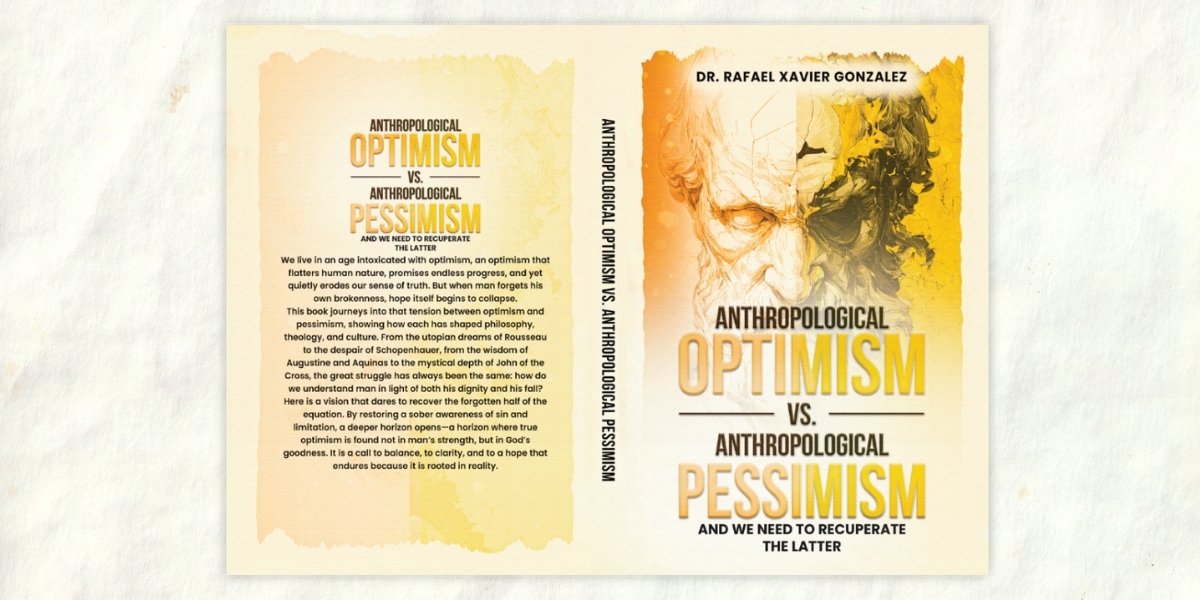

The Danger of Misplaced Optimism: Dr. Rafael Gonzalez’s Reassessment of Modern Views on Human Nature

By: Charles A. Ballentine 

Many people today hold a comforting belief that human beings are naturally good. This idea is popular in self-help books, social movements, and even some modern religious teachings. It tells us that if we just look within, follow our feelings, and believe in ourselves, everything will be fine. But is this really true?

In his forthcoming book, Anthropological Optimism Vs Anthropological Pessimism And Why We Need to Recuperate the Latter, Dr. Rafael Gonzalez challenges this widespread view in a powerful and timely way. He argues that while optimism can be beneficial, it becomes problematic when it disregards reality. Misplaced optimism can create false expectations about human nature, leading to serious consequences for society, morality, and spiritual life.

Understanding Misplaced Optimism

Misplaced optimism is not about having hope or a positive attitude. It is about assuming that people are naturally good, that evil is just a result of ignorance or bad environments, and that we do not need God or grace to become better. This belief downplays the reality of sin and human brokenness.

Dr. Gonzalez explains that this view is not only untrue but harmful. When we pretend that people do not struggle with selfishness, pride, or wrongdoing, we blind ourselves to the truth. We often overlook the importance of personal change, moral responsibility, and spiritual growth. This kind of optimism turns into a trap rather than a strength.

How Modern Culture Encourages False Views

Our modern world often celebrates individual desires and feelings as the highest authority. The message is clear: follow your heart, trust your instincts, and reject anything that challenges your personal truth. This mindset sees traditional values, religious teachings, and moral limits as outdated or oppressive.

In Anthropological Optimism Vs Anthropological Pessimism And Why We Need to Recuperate the Latter, Dr. Gonzalez shows how this cultural shift has affected the way people think about human nature. Instead of recognizing our need for guidance, discipline, and divine grace, society teaches us that we are fine just as we are. This leads to confusion, anxiety, and broken relationships because people are not being honest about their limitations.

The Role of Faith and Reason

Dr. Gonzalez argues that both faith and reason are essential in understanding who we are. From a Catholic perspective, human beings are created in the image of God and have great dignity. But we are also affected by sin, which damages our relationship with God, others, and even ourselves. This is why both optimism and pessimism must be balanced.

The Catholic tradition does not teach that we are either totally good or completely evil. Instead, it teaches that we are capable of great love and great harm. We need grace to overcome our weaknesses and grow in virtue. This is where misplaced optimism fails. It removes the need for grace and replaces it with shallow positivity.

Why Pessimism Can Be a Healthy Correction

While optimism can inspire and uplift, there are times when a healthy form of pessimism is necessary. Dr. Gonzalez suggests that in today’s world, we need to adopt a more realistic view of human nature. This means recognizing that people often fall short, make mistakes, and choose the wrong paths.

This kind of pessimism is not about giving up or becoming cynical; it’s about being realistic. It is about being honest. When we accept the truth about our flaws, we open the door to real change. We begin to see why we need help from outside ourselves. We become more open to God’s mercy, guidance, and truth.

Conclusion

Dr. Rafael Gonzalez’s forthcoming book, Anthropological Optimism Vs Anthropological Pessimism And Why We Need to Recuperate the Latter, offers a necessary wake-up call. It urges readers to question the shallow optimism that dominates modern thought and to seek a more comprehensive, accurate understanding of human nature. By embracing both our dignity and our brokenness, we can build lives that are not only realistic but also full of genuine hope.

If you’re seeking a deeper understanding of humanity, faith, and truth, look out for this significant release. It will challenge your assumptions, deepen your thinking, and inspire you to seek a better way forward—one rooted in both reason and revelation.


Disclaimer: The opinions expressed in this article are those of Dr. Rafael Gonzalez and reflect his views on human nature, optimism, and pessimism. This article is for informational purposes only and should not be construed as legal, medical, or professional advice.

A Lifelong Commitment to Learning, Leadership, and Service: Deborah Anderson’s Journey in Education

By: Audrey T. Delgado

When Deborah Anderson reflects on her career in education, she sees far more than titles, degrees, and positions. She envisions faces, students eager to learn, teachers striving to grow, and families searching for hope. She recalls classrooms filled with energy, schools changing, and communities strengthened by a shared vision of what education can achieve. Above all, she recognizes a calling, one that has guided her for more than four decades and continues to inspire her with passion and gratitude.

Foundation of Her Path

Deborah Anderson’s journey began with a love for learning nurtured early in life. As salutatorian of a graduating class of 375 at Benjamin Franklin High School, she was named a Regents Scholar in mathematics, science, and Spanish. Even at that stage, she understood the power of hard work and perseverance and knew that education would remain central to her future.

She pursued a Bachelor of Science in Music Education, graduating magna cum laude from Roberts Wesleyan College. Her time there deepened her commitment not only to academic excellence but also to the arts as a means of expression, creativity, and connection. Music became one of her lifelong passions, enriching her teaching and providing her with unique ways to inspire students.

Later, Anderson earned a Master of Music in Performance and Literature from the Eastman School, further expanding her ability to merge creativity with education. Along the way, she performed extensively across the United States, developed one-woman programs in multiple languages, and even composed and directed recordings. These experiences outside the traditional classroom shaped her belief that education must nurture the whole person, mind, heart, and spirit.

Leadership and Service in Education

As her career advanced, she stepped into leadership roles that both challenged and refined her abilities. She earned a Certificate of Advanced Studies in Educational Administration from SUNY College at Brockport and later pursued graduate studies in Educational Leadership at Concordia University-Portland. Her certifications span superintendent and principal credentials as well as K–12 instruction in music, Spanish, and ESL. She also became a certified WIDA tester and interpreter, broadening her reach in diverse educational settings.

Over the years, she served in nearly every capacity an educator can hold: assistant principal, middle and elementary school principal, acting high school principal, program director, district academic coach, literacy trainer, and classroom teacher at all levels. She taught subjects ranging from English literature and world languages to social studies, elementary reading, and her first love, music.

Each position brought new insights into the challenges educators face and the resilience students display. She worked with gifted learners, at-risk students, English Language Learners, and students with IEPs. She led multicultural initiatives, developed district-wide curricula, and trained teachers in effective literacy and math strategies. Her grant-writing efforts helped bring vital resources to schools, and her leadership was recognized with awards for her work as both a sixth-grade and middle school principal.

A Heart for Diversity and Inclusion

One of the most meaningful aspects of Deborah Anderson’s career has been her work with multilingual and multicultural communities. Having studied five languages and spoken four, she understands the power of language as a bridge to communication and global understanding.

As an ELL teacher and district interpreter, she assisted families with policies, Individualized Education Plans, and the often-intimidating structures of schools. She served as a liaison for refugees, co-sponsored multicultural clubs, and became a trusted advocate for parents seeking assurance about their children’s futures.

Colleagues often described her as embodying servant leadership, a philosophy she has taken deeply to heart. For her, leadership has always meant listening first, serving faithfully, and ensuring that every child, regardless of background, has the opportunity to thrive.

Building Communities of Growth

Beyond the classroom, she devoted herself to building communities of growth and collaboration. She established staff focus groups to drive meaningful change, spearheaded afterschool programs, evaluated education vendors, and led accreditation processes. Deborah Anderson, Educator, trained teachers and administrators in research-based models such as Marzano evaluations and supported districts in implementing best practices.

Collaboration has been the hallmark of her work. She firmly believes that when educators, families, and communities unite, students benefit most. Whether coordinating a response to an all-school threat, developing authentic learning initiatives, or leading multicultural performances, she found her greatest joy in uniting people around a shared mission.

 Role of Creativity

Creativity has remained a constant thread throughout her professional journey. As a musician, composer, arranger, and performer, she continually sought to bring artistry into education. She taught piano, weaving, and cultural crafts through enrichment programs, encouraging students to see learning as an exploration of identity and potential rather than merely academics.

Deborah Anderson believes creativity plays a vital role in fostering resilience, critical thinking, and confidence. It gives students a voice, particularly those who might otherwise feel unseen or unheard. Through the integration of creativity into her teaching and leadership, she has witnessed countless students find strengths they never knew they possessed.

Faith, Family, and Service

Education is only one of her callings. As a church volunteer, musician, and ordained minister, she has extended her commitment to service beyond the school walls. Married to her college sweetheart, who is also an ordained minister, she has built a life grounded in faith and love. In a meaningful twist of fate, her husband was the state representative who ordained her two years ago. Together, they share a partnership built on mutual goals and ideals.

Her love of travel, music, history, and biography continues to fuel her curiosity and lifelong learning. These passions have shaped her worldview, reminding her that education is not confined to the classroom but is, at its core, about shaping lives.

A Lifetime of Learning

Even after decades in education, Deborah Anderson remains a lifelong learner. She pursued training under thought leaders such as Dr. Marzano, Dr. Krashen, and Dr. Mendler, refining her expertise in classroom management, student engagement, and learning theory. She completed doctoral studies in both Educational Leadership and Organizational Leadership, exploring topics including ELL achievement and organizational health.

Every degree, certificate, and training experience has been part of a larger purpose: to serve more effectively, lead with wisdom, and prepare others to do the same. 

The Purpose

As co-author of Teach-o-pedia: An Encyclopedia of A+ Attitudes & Activities for the Classroom, Deborah Anderson sees her journey reflected within its pages. The book represents a culmination of years spent mentoring teachers, guiding students, and navigating the evolving landscape of education. It brings together the practical tools, creative strategies, and servant-hearted leadership that have defined her career.

Yet, beyond the book, Deborah Anderson’s purpose remains clear: to inspire, empower, and invest in the next generation.

The Heartwarming Transformation of Oakhaven

By: Matt Emma

A Story of Resilience and Community

Nestled in the picturesque Evergreen Hills of northern Vermont, Oakhaven is a charming town that has become a beacon of hope through its remarkable journey of healing and transformation. Once marked by discord and despair, the community has risen from the ashes of adversity, showcasing the enduring power of kindness and human connection.

The Catalyst for Change

The challenges began with a devastating apple blight that threatened the town’s economy and spirit. As panic set in, the residents of Oakhaven found themselves at a crossroads. It was during this crisis that Daniel Warren, a veteran seeking solace, emerged as a quiet leader. Drawing on his military experience, he guided the community through the chaos, emphasizing the importance of collaboration and shared purpose.

Building Bridges

The community rallied together, transforming their initial despair into a wave of collective action. Local farmers, artisans, and residents pooled their resources and skills, fostering a sense of unity that had long been absent. Acts of kindness became the foundation of Oakhaven’s revival, with neighbors helping neighbors and friendships blossoming in unexpected places.

Sarah, the owner of The Gilded Whisk, played a pivotal role in this transformation.

Her bakery became a hub of activity, where shared meals and stories fostered a deeper sense of belonging. Sarah’s ability to listen and empathize with her community solidified her status as a beloved figure, nurturing the spirit of cooperation that defined Oakhaven’s recovery.

The Role of Shared Experiences

The strength of Oakhaven’s transformation lies not only in individual efforts but in the collective spirit that binds the community. Each resident has played a vital role in this narrative, contributing their unique talents and stories. The community

garden, for instance, has become a living metaphor for growth, where older generations share traditional gardening wisdom with younger members eager to learn.

Annual events, such as the Harvest Festival and Thanksgiving dinner, serve as focal points for communal bonding. These gatherings are more than mere celebrations; they are opportunities to reflect on shared histories and collective achievements. They remind residents that their strength is derived from unity, and every smile, every shared meal forms a thread in the fabric of Oakhaven.

Celebrating Community Spirit

The annual Harvest Festival became a vivid celebration of resilience, showcasing the town’s rebirth. Residents came together to share their talents, from baking to art, creating a vibrant atmosphere filled with laughter and joy. The festival highlighted the power of community, an embodiment of the spirit that had emerged from their shared hardships.

Daniel Warren’s writing chronicled Oakhaven’s journey, capturing the essence of its residents and their stories. His book not only documented the town’s physical recovery but also celebrated the emotional healing that had taken place.

A Lasting Legacy

Today, Oakhaven stands as a testament to the strength of community bonds. The garden thrives, symbolizing the growth and renewal that have taken root in the hearts of its residents. The Cinnamon Soldier and The Gilded Whisk serve not just as businesses, but as living archives of the town’s spirit, places where stories are shared, laughter echoes, and connections flourish.

The journey of Oakhaven stands as a profound example of the incredible strength that communities can harness to heal and flourish, even in the most challenging of circumstances. From its humble beginnings, Oakhaven has become a beacon of hope, illustrating how collective effort, unity, and shared experiences can transform a place of hardship into one of resilience and growth. In the face of adversity, Oakhaven’s story shows us that the human spirit is capable of overcoming even the darkest times, with each small act of kindness and compassion contributing to the healing process.

Through its continued growth and thriving spirit, Oakhaven has proven that hope is never lost, no matter how great the obstacles may seem. The community’s journey serves as a powerful reminder that strength lies not only in individual courage but in the bonds formed through shared struggles. It underscores the importance of connection—how reaching out to one another, supporting one another, and standing together can create a foundation that helps us weather the toughest storms. As Oakhaven moves forward, its story becomes a lasting testament to the beauty of resilience, the vital role of human connection, and the unyielding power of hope to guide us through any adversity.

What Are a U.S. Citizen’s Tax Obligations When Freelancing in the U.K. on a Partner Visa?

Freelancing while living in the U.K. seems straightforward. You invoice, you get paid, you do the work you care about. But then tax season shows up, and things get… weird, especially if you’re an American citizen on a partner visa.

Because here’s the thing: even if you’ve fully settled into your British life, the IRS hasn’t forgotten about you. U.S. tax obligations don’t vanish just because you’ve moved across the Atlantic. And when you’re self-employed, the rules get a little more tangled.

Let’s try to untangle them.

You Still Have to File With the IRS

The U.S. taxes its citizens (and green card holders) no matter where they live. So, yes, even though you’re earning in pounds, paying rent in pounds, and thinking in pounds, your freelance income still needs to be reported in dollars to the IRS.

You’ll file the usual Form 1040, but that’s just the start. If you’re self-employed, you’ll also need to complete Schedule C (for income and expenses) and Schedule SE (for self-employment tax). The IRS sees you as running a business, even if it’s just you and a laptop.

Many Americans living abroad don’t end up owing much to the IRS because of exclusions and credits, but that doesn’t mean you can skip the paperwork. The filings are still required—every year.

Oh, and there’s a little quirk: while expats get an automatic filing extension until June 15, any taxes owed are technically due by April 15. It’s one of those annoying details that’s easy to overlook until you get hit with interest.

Meanwhile, You’re Also on the Hook in the U.K.

The U.K. doesn’t care about your citizenship; it cares where you live. If you pass the Statutory Residence Test (which many partner visa holders do, by default), you’re a tax resident in the U.K., and HMRC wants to know about all your income, including freelance work.

That means you’ll need to:

  • Register as self-employed with HMRC
  • File a Self Assessment tax return each year
  • Pay income tax and National Insurance on your profits

Now, your partner visa permits you to work, but it doesn’t get you out of filing. That part’s all yours. It’s also worth mentioning that the U.K.’s tax year runs from April to April, not the calendar year, like in the U.S. So, yes, there are two sets of deadlines, two systems, and often two currencies.

Can You Avoid Being Taxed Twice?

Usually, yes. Assuming you use the tools available under the U.S.-U.K. tax treaty. There are two main strategies:

  1. Foreign Earned Income Exclusion (FEIE) – If you qualify through physical presence or bona fide residency, you can exclude up to $130,000 of foreign-earned income (as of 2025). You’ll need to file Form 2555 to claim it.
  2. Foreign Tax Credit (FTC) – If you’re paying significant U.K. taxes, you might be better off claiming those payments as a credit on Form 1116, which directly offsets your U.S. tax liability.

Many freelancers in the U.K. opt for the FTC, simply because U.K. tax rates tend to be higher than those in the U.S. But it’s not always cut-and-dry. If your income is relatively low or if your U.K. tax bill is reduced due to expenses or deductions, the FEIE might still be beneficial. Sometimes, running both scenarios side by side is the only way to be certain. Or you bring in a pro.

What About Social Security Contributions?

Here’s where things get a little more technical. Self-employment income can trigger U.S. self-employment tax, which covers Social Security and Medicare, even if you’ve already paid into the U.K.’s National Insurance.

To avoid this overlap, the U.S. and the U.K. have a Totalization Agreement. In general:

  • If you’re truly freelancing in the U.K., you usually pay into National Insurance, not U.S. Social Security.
  • If you’re temporarily assigned to the U.K. by a U.S. employer, you may remain covered under the U.S. system instead.

To formalize this, you’ll need a Certificate of Coverage from whichever country’s system you’re paying into. This certificate confirms that you’re not required to pay into both. It’s not difficult to obtain, but many freelancers overlook its importance.

U.K. Bank Accounts? The IRS Wants a Peek

If you’ve opened local accounts like a savings account at Barclays or an ISA you barely touch, you may need to report them to the U.S.

  • FBAR (FinCEN 114) – Required if the total of all non-U.S. accounts goes over $10,000 at any point during the year.
  • FATCA (Form 8938) – Required for individuals with higher total foreign assets (starting at $200,000 for single filers abroad).

These aren’t tax forms. They’re just reporting obligations. But the penalties for ignoring them can be serious, and since U.K. banks report to the IRS under FATCA, it’s risky to pretend they don’t exist.

Freelance Smarter, Not Harder

A few tips to keep your setup clean and penalty-free:

  • Track your business expenses and invoices carefully — for both countries.
  • Use the IRS’s official exchange rates to convert pounds to dollars.
  • Don’t assume you owe nothing — always file, even if you don’t write a check.
  • Review your tax plan every year. Things shift — income changes, exchange rates move, visa situations evolve.

And honestly? Unless you really love double-entry bookkeeping and international tax law, it’s probably worth finding a tax preparer who specializes in U.S. expats living in the U.K., like the ones from Expat Tax Online. Not every local accountant will know how to handle both systems, and that matters more than you’d think.

Final Thought

Freelancing from abroad can be wonderfully freeing; you make your own schedule, take on projects that actually interest you, and grab a midday walk through Hyde Park or Holyrood. But with that freedom comes some behind-the-scenes complexity. U.S. taxes don’t disappear, and the U.K. has its own demands.

Still, once you get your system sorted, it becomes manageable. And having that clarity? It’s worth a lot more than the time it takes to get it right.

Disclaimer: This article is for informational purposes only and does not constitute legal or tax advice. Readers are encouraged to consult with qualified professionals for advice tailored to their specific circumstances.

Steps to Take After Being Charged With a DWI

Rochester is a city where people take pride in their reputation and responsibilities. Yet, even in such a close-knit and respected community, facing a DWI (Driving While Intoxicated) charge can feel overwhelming and isolating. The legal system in New York treats these cases with great seriousness, and a single mistake can have lasting effects on your license, employment, and future. 

Understanding what to do immediately after being charged is crucial — from protecting your rights during interactions with law enforcement to preparing for upcoming court proceedings. With the proper guidance, individuals can navigate the process more confidently and minimize potential consequences. Consulting an experienced Rochester DWI lawyer early on can make a vital difference in how your case unfolds and how effectively you move forward from this difficult moment.

Remain Calm and Polite

A DWI accusation can easily escalate tempers. Keep your cool and be respectful. This also discourages law enforcement from making matters worse. Being cooperative doesn’t mean you are guilty, but it could impact how the authorities write up the report. Staying neutral is beneficial in future contacts and courtrooms.

Document Everything

First, memories are easily lost very soon after a stressful situation. Writing down as many details as possible as early as possible helps. Document the date, time, and location where the incident occurred. Document the names of the involved officers and any verbal statements made. Detailed notes regarding what happened during the encounter can help with future conversations with attorneys and can also serve as beneficial evidence, if necessary.

Invoke Your Right to Silence

Following a DWI charge, authorities may begin asking questions. People need to be aware that they have the right not to answer any question, except to provide identification. Refrain from talking about how much they have drunk, where they stopped beforehand, or what activities or events they attended. 

Request Legal Representation

Obtaining professional legal support remains one of the most crucial steps to take when facing a DWI charge. Veteran attorneys are familiar with the intricacies of the legal system and can guide clients through every step of the process. An early consultation opens the door to reviewing specifics and guidance tailored to a particular situation. Timely action can preserve crucial evidence and prevent the erosion of rights.

Understand the Charges

Clarifying the charges enables an individual to prepare a defence. There are definitions and penalties associated with DWIs. A discussion with legal counsel regarding charges provides clarification of potential ramifications. Knowing what is at stake helps make informed choices about how to defend the case, whether a plea is advisable, and what to do next.

Comply With Court Requirements

Courts typically come with time limits and responsibilities in the aftermath of a DWI charge. These requirements could include appearances, paperwork, or attending educational programs. Show responsibility: Meeting all that is required of you in court is a sign of respect and responsibility. Missing deadlines or violating them will result in more severe penalties or other consequences.

Avoid Further Legal Trouble

If you have been charged with a DWI, it is more important than ever that you avoid any interactions with law enforcement. Engage in nothing that might lead to additional charges. Repeat offenses or other legal entanglements can influence a court’s sentencing, thereby increasing the risk of penalties.

Consider Alcohol Assessment and Education

Alcohol education and/or assessment programs are commonly mandated in some capacity by the courts after a DWI conviction. Although immediate action may not yet be necessary, voluntary enrollment can demonstrate a commitment to addressing fundamental concerns. The completion of such programs may have an impact on how the Court views you and potentially reduce the penalties imposed.

Keep Track of Driving Privileges

One of the repercussions of a DWI charge is often that driving privileges are suspended. A license may be issued temporarily or restricted. Keeping track of license status and adhering to any limitations is essential to avoid future legal issues. If you are caught driving with a suspended license, you may face additional charges and more severe penalties as well.

Seek Emotional Support

A charge of DWI can impact mental and emotional health. Seeking support from friends, family, or a professional counselor can be beneficial. Having emotional support actually enables more rational judgment and significantly reduces stress during the process.

Conclusion

A DWI charge can be intimidating, but it can also provide an opportunity for accountability. Responding with restraint, contacting a lawyer, and adhering to protocols can help improve the outcome. By treating each step as a serious undertaking and approaching it with care, we can work through challenges, making progress and reducing the likelihood of unnecessary trips in the future.

The Psychology of Tiny Wins and How Small Steps Create Lasting Health Changes

By: Jacob Maslow

Why do big health goals so often fade away while small daily choices quietly change lives? Behavioral science offers a clear answer, our brains are wired to seek progress, not perfection. Large, overwhelming goals can trigger stress and resistance, but tiny, consistent actions build confidence and momentum.

Each small victory signals success to the brain, reinforcing motivation and creating a powerful feedback loop that drives further success. Over time, these seemingly minor steps form the foundation for meaningful, lasting health improvements.

Why Small Wins Can Make a Big Difference

When it comes to improving health, many people believe that success requires massive change, strict diets, long workouts, or a total lifestyle overhaul. But behavioral science tells a different story.

The truth is, our brains respond far better to consistent, manageable progress than to overwhelming transformation. Small wins are easier to repeat, easier to celebrate, and much less intimidating. Over time, these small steps compound into something powerful: momentum.

Think about it, what feels more motivating, running a marathon tomorrow or walking around the block today? When you start small, you’re training your brain to expect success, not struggle.

Every tiny win builds trust in yourself. You prove that you can follow through, and that builds confidence for the next step. It’s not about how much you change at once, but how often you repeat the right behaviors until they stick.

How Your Brain Rewards Progress

Each time you accomplish something, even something small, your brain releases a small dose of dopamine, the chemical responsible for motivation and satisfaction. This isn’t just about feeling good, it’s how your brain learns what’s worth repeating.

Over time, small wins create a positive feedback loop. You act, you feel rewarded, and you want to act again. This is why small, daily habits are more effective than chasing big, sporadic goals.

Behavioral science also shows that consistency beats willpower. Relying on willpower alone drains mental energy, but building routines creates stability.

When healthy actions become automatic, you no longer have to convince yourself to do them; they simply happen. That’s the real power behind turning a choice into a habit: your brain starts working for you instead of against you.

The Problem with Going Too Big, Too Fast

Setting huge goals might sound inspiring, but it often leads to frustration. When we aim for massive change, our brains interpret it as a threat, something risky and uncertain. This triggers resistance, not motivation.

The result? We quit early, often believing we “lack discipline” when in reality, we just set the wrong-sized goal.

Big goals also magnify failure. Missing one workout in a 90-day plan feels like a disaster, but skipping one short walk doesn’t.


Smaller goals leave room for error and flexibility, two ingredients critical for long-term success. Behavioral research consistently shows that progress, no matter how small, matters more to the human mind than perfection. So if the goal feels too heavy, shrink it until it feels light enough to start.

Turning Tiny Wins into Lasting Health Habits

Small steps work best when they’re consistent. According to specialists from Synchronicity Health, repetition is the key to rewiring behavior and forming lasting habits. Adding a few minutes of movement each morning or choosing a healthier snack might not feel like much, but it shifts your baseline behavior.

The brain thrives on repetition. Each time you repeat a tiny healthy act, you strengthen the mental pathways that make it easier next time. Soon, the action becomes second nature.

The key is to connect these actions to a cue, something that triggers the behavior automatically—for example, stretching right after brushing your teeth or taking a short walk after lunch.

These cues signal your brain that it’s time to act, creating a simple routine that doesn’t rely on motivation. When the action feels small and achievable, you’re far more likely to keep it up, and that’s how proper habits form.

Tiny Wins That Work

Tiny wins can take many forms. It could be as simple as drinking an extra glass of water, swapping a sugary drink for water once a day, or taking a moment to stand up and stretch between meetings. It could mean going to bed ten minutes earlier or taking the stairs instead of the elevator.

None of these actions sounds life-changing on their own, but they accumulate, and your body notices. Better hydration, slightly more movement, and more rest all add up to meaningful results.

Behavioral science describes this as the compounding effect of habits. One slight improvement today creates conditions for another tomorrow.

Over weeks and months, these choices reshape your routine and your mindset. The beauty is that you don’t need to do everything at once, you just need to start. Over time, you’ll look back and realize that those small moments were the foundation of something much bigger.

Why Celebrating the Small Stuff Matters

Here’s something many people overlook: your brain loves acknowledgment. When you take a moment to recognize a small success, even if it’s just mentally, you reinforce that behavior. It tells your brain: “This is good. Do it again.”.

That’s why celebrating small milestones is more than feel-good advice, it’s neuroscience. Keeping a simple progress journal or marking off a daily streak keeps the reward system active and strengthens motivation.

The biggest mistake people make is waiting for the “big win” to celebrate. But progress isn’t all-or-nothing; it’s incremental. This emotional shift turns the process from a chore into a choice. And when the journey feels rewarding, staying consistent becomes a natural habit.

From Small Steps to Lasting Change

An effective way to turn small wins into long-term results is through habit stacking, connecting a new behavior to something you already do. When your morning coffee automatically leads to a short walk, or washing dishes triggers a few minutes of stretching, you’ve created an effortless rhythm.

The brain loves patterns, and linking actions helps new habits take root faster. It also helps to focus on identity, not outcomes.

Instead of saying, “I want to get healthy”, shift to “I’m someone who takes care of my body”. Each small action reinforces that identity. Miss a day? No problem. What matters is returning to one small step, the one that keeps the momentum going. Change doesn’t come from doing everything right; it comes from doing the right things consistently.

Conclusion

Every major transformation begins with something small, a single decision repeated until it feels natural. The psychology of tiny wins reminds us that an effective change isn’t built on willpower but on consistency and reinforcement.

When health becomes a collection of small, achievable actions, success feels easier, more sustainable, and far more rewarding. The next time you think your effort is too small to matter, remember that small wins are how significant change actually happens.

Disclaimer: This article is for informational purposes only and is not intended to provide medical advice, diagnosis, or treatment. Always consult a qualified healthcare professional before making significant changes to your health or wellness routine.

Adlytica and Red Queen Investment Fund Forge Strategic Joint Venture to Launch AI-Driven Luxury Experiences

By: Shubham Kishore, Adlytica

Collaboration Signals a New Era of Innovation, Blending Deep Technology and Human-Centered Design for Global Digital and Luxury Markets

WARSAW, Poland — Adlytica, a global innovation studio specializing in AI-driven digital strategy and intelligent product ecosystems, and Red Queen Investment Fund, a prominent Central European venture fund, have announced a strategic joint venture (JV) aimed at exploring new possibilities in the realms of technology, creativity, and luxury.

This partnership represents the convergence of artificial intelligence with strategic investment leadership, with the intention of developing transformative, next-generation ventures across the digital, luxury, and experiential innovation sectors. Together, the two organizations hope to pioneer a future where technology not only serves functional needs but also enhances emotion, personalization, and human connection.

Redefining the Future of Experiential Innovation

The collaboration between Adlytica and Red Queen Investment Fund will focus on building AI-powered ecosystems that seek to merge digital artistry, storytelling, and data-driven personalization. Designed to operate at the intersection of AI, art, and human experience, the initiative aims to introduce a new era of intelligent luxury experiences — shaping how consumers may engage with high-end brands, products, and services globally.

“This partnership is more than a business collaboration—it’s a meeting of two visions committed to engineering meaningful emotional engagement,” said Shubham Kishore, Founder & CEO of Adlytica.

“By blending Adlytica’s deep expertise in AI innovation, data architecture, and brand transformation with Red Queen Fund’s strategic foresight and investment leadership, we’re working toward building something that could transcend traditional market boundaries. Our mission is to design experiences that people will not just use—they will likely feel.”

Adlytica and Red Queen Investment Fund Forge Strategic Joint Venture to Launch AI-Driven Luxury Experiences

Photo Courtesy: Adlytica

A Synergy of Strategy, Innovation, and Legacy

The Red Queen Investment Fund brings a distinguished legacy in strategic investments, guiding business development across multiple sectors in Central Europe and beyond. Known for fostering ventures that combine cultural relevance, scalability, and sustainable growth, the fund has consistently supported projects that embody innovation with long-term vision.

This aligns with Adlytica’s philosophy of integrating technology, storytelling, and market psychology to create immersive, intelligent digital ecosystems.

“We are entering a new era of experiential innovation, where the story, the product, and the technology must all converge in a manner that feels seamless,” said Hubert Drabik (EMBA), Founder of Red Queen Investment Fund.

“Our goal is to shape ventures that are not only technologically advanced but also human-centered, culturally meaningful, and designed for lasting value creation.”

An Era of Intelligent Luxury and Sustainable Design

While the partners have not disclosed full details of the first venture, both confirmed that flagship products are under development and expected to launch in 2025. The initiatives will focus on bespoke, AI-powered luxury experiences, where every interaction may feel unique, intuitive, and emotionally resonant.

The joint venture will also prioritize sustainability and ethical innovation, embedding responsible design, transparent sourcing, and carbon-conscious systems into the product lifecycle — a necessary step toward a more sustainable digital luxury economy.

“This collaboration reflects our shared belief that technology should not replace human emotion—it should serve to amplify it,” added Kishore.

“Our objective is to craft experiences that merge precision with passion, data with design, and intelligence with artistry.”

About Adlytica

Adlytica is a global technology and innovation studio headquartered in Poland, specializing in AI-driven product development, digital ecosystems, and brand strategy transformation. The company partners with global enterprises and visionary startups to design intelligent, future-ready solutions that fuse analytics, automation, and creative design.

Adlytica’s services include AI product strategy, data architecture, 3D experience engineering, and intelligent marketing systems, positioning it as a leader in next-generation digital transformation.

About Red Queen Investment Fund

Adlytica and Red Queen Investment Fund Forge Strategic Joint Venture to Launch AI-Driven Luxury Experiences

Photo Courtesy: Red Queen Investment Fund

The Red Queen Investment Fund is a Warsaw-based private investment firm founded and led by Hubert Drabik. The fund is part of the Regina Purpurea Fundus group and invests in high-growth ventures across Europe with a focus on media, technology, and sustainable innovation.

Red Queen Fund’s philosophy centers on long-term value creation, strategic collaboration, and intelligent capital deployment, working closely with visionary entrepreneurs to accelerate the future of innovation in both traditional and emerging markets.

Media Contact

Press Office – Adlytica
Shubham Kishore, CEO
Email: s.k@adlytica.com
LinkedIn: Shubham Kishore – Adlytica
Website: www.adlytica.com

Smart Architecture and the Future of Luxury Living in Singapore

Singapore has long been recognized for its innovative approach to modern architecture. With space being a premium commodity, the city’s developers have successfully combined efficiency, luxury, and design brilliance to create living environments that are both functional and aesthetically pleasing. As the demand for forward-thinking developments grows, projects like Narra Residences and River Modern are setting new benchmarks for what “smart living” could look like in the heart of the city.

Where Design Meets Technology

The term “smart architecture” has evolved beyond just automated homes — it’s now about creating environments that can adapt to and respond to their residents. River Modern serves as a prime example of this evolution. The design incorporates a range of advanced technologies, such as intelligent lighting systems, adaptive temperature controls, and layouts that are designed to improve energy efficiency while maintaining a stylish appearance. The development’s tech-forward design philosophy is aimed at turning everyday living into a more streamlined experience.

Meanwhile, Narra Residences offers a more subtle take on smart design. Rather than overwhelming residents with too many gadgets, the development integrates technology in a way that feels natural to the lifestyle. Smart entry systems, energy-saving solutions, and personalized home controls provide convenience without sacrificing the elegance of the space. It’s an innovation that is designed to blend seamlessly into daily life.

Building for a Sustainable Tomorrow

Sustainability has become an essential element in modern real estate. Homebuyers in Singapore are increasingly interested in properties that not only offer luxury but also contribute to a more sustainable future. Narra Residences is notable for its commitment to eco-friendly construction methods and the use of resource-efficient materials. The development focuses on energy conservation through features such as smart ventilation systems, low-emission finishes, and abundant greenery that help to keep the air fresh and cool.

River Modern, on the other hand, embraces sustainability through architectural flow. The building’s façade design is intended to maximize natural light and airflow, which can reduce energy consumption. This demonstrates that luxury can be paired with green innovation — creating a living environment that feels modern while being mindful of environmental concerns.

The Human-Centric Approach to Urban Living

Great architecture isn’t just about looks — it also needs to enhance the quality of life for its residents. Both River Modern and Narra Residences are designed with the modern homeowner in mind. Instead of following rigid design formulas, these projects place a premium on flexibility. From open-plan interiors to adaptable spaces that can evolve with the changing needs of residents, both developments give their occupants the freedom to shape their environment as they see fit.

At Narra Residences, the design encourages a smooth flow between indoor and outdoor spaces, promoting relaxation and reflection. The gardens, lounges, and terraces create a sense of calm, offering a respite from the hustle and bustle of the city. In contrast, River Modern leans into vibrancy — with communal zones, co-working lounges, and creative spaces designed to foster interaction. Both developments reflect the understanding that luxury is not just a standard experience — it is personal, with each resident’s lifestyle influencing how they experience the space.

Location: The Unshakable Foundation of Value

Smart design alone is not enough without a carefully chosen location. In Singapore, location is often seen as a key factor that influences everything — from lifestyle to long-term appreciation. River Modern occupies a highly sought-after urban spot that captures the energy of the city while maintaining moments of tranquility. Its proximity to key business districts and lifestyle amenities makes it a convenient option for professionals who require both accessibility and quality.

Meanwhile, Narra Residences is located in a similarly prime area, offering a balance between connectivity and exclusivity. Residents can easily access central hubs while also enjoying the peace and quiet of a more refined neighborhood. The careful selection of these locations positions both developments as well-placed investments in Singapore’s constantly evolving property market.

The Architecture of Emotion

The ideal buildings don’t just house people — they have the ability to inspire them. Narra Residences evokes timeless beauty, using natural tones and organic textures to create a warm and inviting atmosphere. The interiors offer a retreat from the city’s fast pace, providing a sense of tranquility.

On the other hand, River Modern embodies energy and innovation. Its geometric design, sleek materials, and bold lines create a strong visual identity that feels modern and cosmopolitan. These two properties, in their own ways, represent the dual nature of modern Singapore — calm sophistication on one side and bold ambition on the other.

Why These Developments Lead the Market

In a competitive luxury real estate market, River Modern and Narra Residences stand out for one key reason: they cater to the needs of today’s buyers. Homeowners are increasingly looking for homes that can evolve with them — homes that are not only efficient but also elegant and enduring. These projects go beyond surface-level luxury, offering a design philosophy that adds substance to style — making them developments that are likely to remain relevant for decades to come.

These are not just places to live, but rather spaces to grow into — where innovation and craftsmanship come together to create meaningful living experiences.

Summary: The Blueprint for Future Living

The future of real estate in Singapore is likely to be shaped by developments that combine technological innovation with artistic design. Narra Residences and River Modern represent this future — merging sustainability, technology, and design into homes that elevate daily living.

As Singapore continues to lead the way in reshaping its skyline, these developments are a reminder that true luxury is not about being flashy — it is about being thoughtful, efficient, and deeply connected to the needs of the individual. In every line, curve, and space, they reflect a city that is building not only for today but also for the generations to come.

Why Smart Professionals Are Choosing Expert Oral Surgeons Over Dentists

In today’s fast-paced world, smart professionals make strategic choices not only in their careers but also in their healthcare. When it comes to oral health, especially surgical or complex procedures, a growing number of patients are opting for expert oral surgeons over general dentists. 

This shift isn’t about prestige; it’s about precision, safety, and achieving optimal long-term outcomes. In this article, we explore why choosing a specialist like an oral surgeon can make a meaningful difference when it truly counts.

What’s the Difference Between a General Dentist and an Oral Surgeon?

At first glance, both general dentists and oral surgeons deal with teeth, but their roles and training are vastly different:

  • General Dentists: Focus on routine care, cleanings, fillings, crowns, and minor extractions. They are essential for day-to-day dental health.
  • Oral Surgeons: Complete four to six additional years of surgical residency beyond dental school, specializing in complex procedures like wisdom tooth removal, dental implants, bone grafting, and jaw reconstruction.

For more advanced issues, relying on a qualified oral surgeon in Paramus Park ensures you’re receiving care from someone deeply experienced in surgical anatomy and complications.

Why Professionals Are Opting for Oral Surgeons

Busy professionals value outcomes, efficiency, and peace of mind. Here’s why many are choosing oral surgeons over general dentists for advanced care:

1. Specialized Surgical Expertise

Oral surgeons are trained to perform delicate procedures with precision, including nerve preservation and advanced bone shaping. This level of skill significantly reduces the risk of complications, especially in high-stakes treatments like dental implants or jaw corrections.

2. Access to Advanced Technology

Oral surgeons invest in surgical-grade technology such as 3D imaging, digital planning tools, and minimally invasive instruments. This allows for more accurate diagnosis and safer procedures with faster recovery.

3. Comfort-Focused Sedation Options

Unlike most general dentists, oral surgeons offer various levels of sedation from IV sedation to general anesthesia, providing a pain-free and stress-free experience. This is ideal for professionals who want comfort and convenience without compromising on safety.

4. Efficient and Streamlined Care

Oral surgeons typically have dedicated teams and refined workflows for complex procedures. This means faster treatment timelines, fewer visits, and less disruption to your busy schedule.

5. Lower Risk, Better Outcomes

Complications such as nerve damage, sinus issues, or implant failure are less likely under an experienced surgeon’s care. Precision leads to success, and success leads to fewer long-term issues and re-treatments.

Comparing Outcomes: Oral Surgeon vs. General Dentist

When it comes to complex dental needs, the choice between a general dentist and an oral surgeon can significantly affect the outcome. Here’s how the two compare in key areas of expertise.

Wisdom Teeth Extraction

  • General dentists may only handle simple extractions and often refer to complex cases.
  • Oral surgeons perform impacted or high-risk removals with sedation and advanced imaging.

Dental Implants

  • General dentists may place implants without bone grafting experience.
  • Oral surgeons use 3D planning and advanced placement techniques for long-term success.

Bone Grafting

  • Rarely performed by general dentists; may require outside referral.
  • Common procedure for oral surgeons, often combined with implants.

TMJ or Jaw Surgery

  • Not typically within a general dentist’s scope of practice.
  • Oral surgeons diagnose and treat jaw dysfunctions with surgical options.

Sedation and Anesthesia

  • Limited to local anesthesia or nitrous oxide.
  • Oral surgeons offer IV sedation and general anesthesia for maximum comfort.

When Should You See an Oral Surgeon?

You should consider seeing a certified oral surgeon if you:

  • Need wisdom teeth extracted, especially if they’re impacted
  • Are planning to get dental implants
  • Require a bone graft or sinus lift before implant placement
  • Experience chronic jaw pain or bite issues
  • Want a second opinion on a complex dental diagnosis

A consultation at Paramus Park Oral Surgery can help you understand your treatment options with clarity and confidence.

The Experience Matters

Expert oral surgeons not only bring skill to the table but also patient care tailored to those who expect excellence. The environment is often more private, appointments are longer and unrushed, and care is centered around comfort and communication. 

For working professionals juggling tight schedules, this level of consideration can make all the difference.

Conclusion

Choosing the right provider for your oral health needs is an investment in your well-being, time, and peace of mind. While general dentists are indispensable for everyday care, oral surgeons bring the advanced expertise needed for complex procedures. That’s why more professionals are turning to specialists to ensure precision, safety, and lasting results.

Disclaimer: The information provided in this article is for general informational purposes only and should not be construed as medical advice. While oral surgeons are specialists with advanced training, all surgical procedures carry inherent risks, including complications, infections, and unexpected outcomes. It is important to consult with a qualified oral surgeon to discuss your individual circumstances, treatment options, and potential risks before proceeding with any procedure.