Haus of Remedies: Gabrielle Levy’s Healing Candles for Mindful Living

In a world constantly in motion, where stress and burnout are ever-present, the idea of finding stillness has become a rare luxury. For Gabrielle Levy, Founder and Healing Practitioner of Haus of Remedies, this stillness is not just a luxury—it’s a necessity. Through her brand, Levy offers a unique approach to wellness, using the power of candles to create an environment of peace, clarity, and connection. With each hand-poured candle, Haus of Remedies seeks to bring both healing and beauty into its customers’ lives.

Healing Through Light and Scent

Gabrielle Levy’s philosophy is grounded in the belief that light, scent, and energy can transform a space and support well-being. “Every candle I pour is an act of intention,” Levy says. Through her carefully crafted candles, Haus of Remedies blends the ancient wisdom of holistic healing with the modern appeal of luxury design. The brand is founded on the principles of natural beauty and emotional well-being, offering products that go beyond fragrance—they create moments of self-care.

A Unique Craftsmanship

Haus of Remedies: Gabrielle Levy’s Healing Candles for Mindful Living

Photo Courtesy: @cfmmeasure

At Haus of Remedies, each candle is more than just a decorative item; it is a healing tool. The candles are meticulously hand-poured, designed not only to fill the air with soothing fragrances but also to uplift the spirit. Gabrielle’s background in the healing arts is reflected in every aspect of the brand, where each scent is thoughtfully chosen to promote balance, emotional release, and rejuvenation. These aren’t just candles—they are sensory experiences.

The combination of purity and performance defines the Haus of Remedies brand. Levy’s commitment to clean luxury ensures that each candle is made from a unique coconut wax blend, offering a clean burn that is free of parabens, toxins, GMOs, and animal cruelty. The fragrances are crafted from natural essential oils and materials compliant with Prop 65 and EU standards, ensuring that the products meet the highest global standards for purity and sustainability.

Elevating Self-Care Rituals

Haus of Remedies: Gabrielle Levy’s Healing Candles for Mindful Living

Photo Courtesy: @cfmmeasure

At the core of Haus of Remedies lies the idea that self-care is sacred. Gabrielle’s candles are designed to remind individuals to slow down, breathe, and reconnect with themselves. Whether lighting one of her creations in the morning to set a mindful tone for the day or in the evening as a ritual of release, the act of lighting a candle becomes a spiritual experience, inviting users to embrace tranquility.

Gabrielle Levy’s approach to luxury wellness goes beyond aesthetics. Her brand integrates ancient healing wisdom with a contemporary, minimalist design that speaks to those who seek both spiritual fulfillment and modern sophistication. As she says, “Luxury should nurture. It should invite you to breathe, to slow down, and to come home to yourself.”

Sustainability Meets Wellness

A significant element of Haus of Remedies’ mission is to create candles that are not only beautiful and fragrant but also environmentally responsible. The use of sustainable, clean ingredients ensures that each candle is as kind to the planet as it is to the person lighting it. Gabrielle’s dedication to sustainability extends to all areas of the business, from product creation to the packaging process. The brand’s commitment to eco-friendly practices reflects a larger movement within the wellness industry, where mindfulness and environmental responsibility go hand-in-hand.

The candles themselves are a testament to the idea that luxury doesn’t have to come at the expense of the planet. Haus of Remedies candles are designed to enhance wellness while supporting a more sustainable future, proving that self-care and eco-consciousness can coexist harmoniously.

Expanding the Haus of Remedies Experience

As Haus of Remedies continues to expand, Gabrielle Levy is focused on sharing her vision of wellness with a broader audience. From boutique collaborations to holistic retreats and conscious lifestyle platforms, the brand is steadily making its mark within the wellness and design communities. Gabrielle’s mission to help people reconnect with their inner calm through the power of scent, light, and intention is something she is passionate about sharing far and wide.

Through Haus of Remedies, Gabrielle is illuminating a path to well-being—one candle at a time. By offering more than just products, she is creating an experience that resonates deeply with those seeking balance and peace in their busy lives.

A Candle That Speaks to the Soul

Gabrielle’s philosophy is clear: the candles offered by Haus of Remedies are not merely for ambiance; they are tools of healing. “We’re not just selling candles,” Levy explains. “We’re creating energy tools—objects that harmonize your environment and your emotions.” With each candle, Haus of Remedies invites individuals to pause, breathe, and take a moment to realign themselves with their inner peace.

Haus of Remedies is more than a brand—it’s a holistic experience designed to nurture the mind, body, and spirit. Gabrielle Levy’s dedication to healing through light and scent is reflected in every candle she creates. By using only the finest natural ingredients and creating products that prioritize wellness, purity, and sustainability, Haus of Remedies is redefining what luxury wellness can be.

For those seeking more than just a candle but a ritual of healing and tranquility, Haus of Remedies offers a transformative experience that can change the way you view self-care. Each flicker of light serves as a gentle reminder to slow down, center yourself, and embrace the stillness that the modern world so often overlooks.

The Hidden Psychological Journey of Aesthetic Change: Navigating Identity, Anxiety, and Self-Worth Before and After Nose Surgery

With filters and curated digital identities, the pressure to make our real bodies match an idealized image has never been higher. Meditation, eating well, and setting limits are all things we often think of when we talk about self-care. But for a lot of people, physical changes, like cosmetic surgery, can seem like a way to improve themselves.

Rhinoplasty, also known as nose surgery, may be the notable example of how physical and mental desire can come together. The nose is an important part of the face and has a lot of symbolic meaning. Changing it isn’t just about bones and cartilage; it’s a big decision about who you are, what you think are your flaws, and how hard you work to accept yourself.

If you’re thinking about, planning, or recovering from a big change to your appearance, it’s just as important to understand the psychological landscape as it is to choose the right surgeon. The journey is less about how well you can do surgery and more about how much emotional work it takes to accept the face you see in the mirror, even if it hasn’t changed. This is an in-depth look at the mental health marathon that is changing your appearance.

Part I: The Pre-Surgical Mindset—Are You Trying to Improve Yourself or Reject Yourself?

People often want nose surgery for valid reasons, like wanting to feel more confident, fix a problem with breathing, or fix what they think is an imbalance. Before making an appointment for a consultation, however, a thorough and honest psychological evaluation is necessary to figure out what is causing the unhappiness.

What Body Dysmorphic Disorder (BDD) Does

Some people may want surgery because they have a mental illness called Body Dysmorphic Disorder (BDD). People with BDD are very worried about one or more perceived flaws or defects in their looks that other people can’t see or that seem small to them.

In the case of rhinoplasty, it’s key that:

Extreme preoccupation: The person spends hours thinking about the specific feature, which leads to compulsive behaviors like checking their reflection, looking for reassurance, or hiding it.

Distress is Clinically Significant: The preoccupation results in significant distress or dysfunction in social, occupational, or other critical domains of functioning.

The Surgical Paradox: Studies show that when individuals with untreated BDD undergo aesthetic surgery, they often do not find the expected satisfaction. The focus often just moves to a new “flaw,” which leads to more procedures and ongoing disappointment. The fundamental problem is an inability to accept oneself, which cannot be rectified by surgical intervention.

This is why ethical surgeons often want a psychological evaluation. If the fixation feels all-consuming, an important thing to do before the surgery consultation is to get help from a mental health professional. The work needs to start from the inside.

How to Deal with the “Flaw” Story

Even without BDD, the worry about a flaw that you think you have can be too much. The brain, in its efficiency, may sometimes focus on the nose (or any single feature) as a way to channel deeper, more abstract anxieties: If I had that perfect nose, I would be more successful, more lovable, and less anxious.

This mental shortcut makes a wrong equation: Change in body = Change in life. People who are getting ready for surgery often think about getting rid of their anxiety instead of accepting themselves. A genuinely healthy perspective on cosmetic surgery recognizes that, although the procedure may enhance a physical attribute, it cannot address fundamental self-esteem challenges, nor can it resolve professional or interpersonal issues.

Part II: The Stress of the Decision and the Wait

After you pick a surgeon and make a decision, a new wave of anxiety may set in: the anxiety of making a commitment and facing the consequences. This period is a deep test of mental fortitude. 

The Anxiety of Not Being Able to Change

The brain is wired to look for safety and predictability. Elective surgery, particularly on the face, is the antithesis of this. It is a planned risk with a result that can’t be changed. A lot of people second-guess themselves during the time between making a reservation and the operation date:

Financial Stress: The high cost can cause stress and guilt, especially if it affects family budgets or savings goals.

Should you tell your friends, family, or coworkers about your social anxiety? The fear of being judged (“You didn’t need it,” or “That’s so vain”) makes things even harder mentally. The decision to keep the procedure secret may lead to post-operative isolation and compounded mental strain. 

The Fear of Regret: The constant feedback loop of seeing the current nose, imagining the future nose, and worrying about a worse outcome can cause extreme cognitive distortion and increased anxiety that makes it hard to sleep and concentrate.

The Loss of the Self You Know

We often forget that changing a feature is also losing something. That nose has been the real one for a long time. It is written down in every picture, every mirror, and every memory.

The brain identifies the face as a principal indicator of identity. When that marker is intentionally altered, a minor grief process can occur—grief for the self that was, and anxiety over who the new self will be. You need to consciously work through this mental block, realizing that the change is a modification, not a complete replacement of identity.

Part III: The Post-Surgery Roller Coaster—Patience, Pain, and Getting Used to the New Normal

The recovery period after nose surgery is known to be very hard, mostly because of the emotional and mental stress, not just the physical pain.

The Pain of the Unveiling

The first steps toward recovery are often very hard. Swelling, bruising, restricted breathing, and the necessity of wearing a cast or splint can make one feel completely unlike themselves. This is a very important time for your mind:

You have to be patient: It can take a year or more for the final results of rhinoplasty to show up as the swelling goes down. The person has a temporary face that is neither their old self nor their ideal self. This long-term uncertainty is a big cause of anxiety and can feel like a long-term psychological test.

The Emotional Hangover: After the procedure, many patients feel sad, mildly depressed, or very sorry for a short time. The “post-surgical blues” are caused by the physical trauma, the hormonal changes that come with anesthesia and stress, and the fact that the desired outcome is still months away.

Facing the Difference Between What You Want and What You Get

A challenging part of mental health is often the moment of truth: seeing the result.

If the outcome is exactly what was hoped for, the person may feel a deep sense of relief and happiness. This change in mood is often a sign that the decision was right and can help boost the confidence that was wanted in the first place.

The psychological effects can be very bad, though, if the outcome is different, unexpected, or needs more correction (revision surgery). The patient may need to transition from recovery to therapeutic processing:

The “Fix” Didn’t Fix Everything: When people realize that their new nose didn’t fix their social problems, relationship problems, or career problems, they may feel very disappointed by their decision.

The Search for Fault: The mind quickly looks for someone to blame: the surgeon, the person themselves, or the choice. This kind of self-blame can lead to clinical depression or a return of BDD symptoms.

The Integration Challenge: After a successful surgery, the person has to learn how to live with a new face. The brain expects to see the old picture when you look in the mirror. It takes time for the neural pathways related to self-recognition to adjust and accept the new aesthetic reality. This essential mental recalibration constitutes an essential phase of the recovery process.

Part IV: Long-Term Integration and What Self-Worth Will Look Like in the Future

The journey doesn’t end when the cast comes off; it just starts. The long-term psychological success of nose surgery depends entirely on how well you can incorporate the change into a healthy, coherent sense of self after the surgery.

The Self-Care Mandate: More Than Just the Body

To maintain mental health benefits, it’s important for a person to work on breaking the first, incorrect equation (Physical Change = Life Change). This involves shifting the focus from seeking validation from others to finding it within oneself.

Developing Self-Compassion: Learning to be kind and non-judgmental toward oneself is key. Self-compassion can protect against the BDD tendency to focus on small flaws. It means understanding that having a “perfect” nose doesn’t mean you have a perfect life, and that a person’s worth comes from who they are, not how they look.

Mindful mirror work is different from checking for flaws because it focuses on features that show emotion, connection, and character instead of geometric perfection.

Finding New Sources of Confidence: After surgery, it’s important to build confidence not on how you look, but on your competence, kindness, skill, and contributions. If all the new confidence comes from the change in body, it is still weak and outside of you.

How Technology and AI Affect How We See Ourselves

Modern technology can contribute to the pressure to consider cosmetic surgery. Social media, high-resolution cameras, and augmented reality filters often present highly idealized versions of the self.

Filter Dysmorphia: Filters that can make it look like you’ve had nose surgery or other procedures can set an impossible standard. The constant exposure to a “better” digital self fuels dissatisfaction with the real self. 

AI Therapists as Mediators: AI-powered self-care tools, like Earkick’s Panda, may offer support in this area. While AI cannot replace a regular psychological test for BDD, it may provide some assistance.

Emotional Tracking: Track and reflect on where anxiety about your appearance may be originating, as a step toward understanding and addressing it.

Cognitive reframing means questioning the “flawed equation” that says “Physical Change = Happiness” and replacing it with healthier ways of thinking.

Patience and Presence: Give constant, non-judgmental support during the months-long recovery period when people might get tired of helping.

In the end, the decision to have nose surgery is very personal. But the road to happiness is not only paved with good surgical skills; it also requires a lot of self-awareness and a commitment to mental health. The true success of the procedure is not measured by the change in appearance, but by the change in the relationship with oneself—a relationship that, regardless of the face you wear, requires constant, kind, and mindful care. The process of truly accepting oneself must commence well in advance of the operating room and persist long after the final swelling subsides.


Disclaimer: The content in this article is intended for informational purposes only and should not be considered medical, psychological, or therapeutic advice. The topics discussed, including body dysmorphic disorder (BDD) and the psychological effects of cosmetic surgery, reflect general insights and are not a substitute for professional evaluation, diagnosis, or treatment. If you are considering cosmetic surgery or experiencing mental health challenges related to body image, it is important to consult with a qualified healthcare provider or mental health professional. Individual experiences may vary, and professional guidance is recommended to ensure that decisions made are in alignment with your overall well-being.

What Is Cowboy Formal Attire?

Western style has long been associated with individuality, practicality, and tradition. When paired with the sophistication of a formal event, it creates a unique look known as cowboy formal attire. This dress code bridges the two worlds of refined formalwear and rugged Western identity. It’s often seen at weddings, galas, and celebrations where boots and buckles meet blazers and evening dresses. 

While men may favor sharp suits with Western detailing, women often balance elegance with authenticity, sometimes pairing formal gowns with boots or accessories that reflect a sense of Western craftsmanship. Cowboy formal attire is all about expressing regional pride and personal style within the framework of sophistication.

The Roots of Cowboy Formal

Cowboy formal attire originates from the early days of ranching and rodeo culture, when clothing had to have form and function. Ranchers, cattle drivers, and equestrians developed garments designed for long days outdoors when durable fabrics, protective hats, and sturdy boots were essential. Over time, those same items became symbolic of independence, resilience, and pride in the Western way of life.

As communities grew and social events became more common, Western clothing began to evolve beyond utility. People started wearing polished versions of their work attire to local dances, fairs, and community gatherings. 

By the mid-20th century, Western wear had developed a distinct visual identity defined by decorative stitching, tailored denim, bolo ties, and handcrafted leather. When formal events adopted Western flair, the result was cowboy formal attire, which featured a refined, occasion-appropriate version of classic cowboy style that still honors its roots.

What Is Cowboy Formal for Men?

For men, cowboy formal attire begins with the structure of traditional formalwear but incorporates noticeable Western influences. Instead of a standard tuxedo or black suit, men often choose tailored jackets or blazers with Western cuts, embroidery, or yokes that nod to classic cowboy shirts. The jacket can feature subtle stitching or be made from materials such as suede or wool, giving it texture and depth without straying from elegance.

Underneath, a crisp button-down shirt, often white or light-colored, serves as a base. Some opt for pearl snaps instead of buttons, adding authenticity without sacrificing formality. Dress slacks or dark, well-pressed denim complete the look, depending on the event’s level of formality.

Accessories are what help define cowboy formal. A polished belt buckle, bolo tie, or understated Western-style tie clip adds personality while keeping within formal boundaries. Cowboy boots, always clean and well-conditioned, replace standard dress shoes. The result is a look that’s simultaneously sophisticated and clearly Western, designed for individuals who want to balance refinement and heritage.

Women’s Cowboy Formal Looks

Women’s cowboy formal attire blends classic femininity with Western authenticity. It helps allow for individuality while maintaining an air of sophistication. While some occasions may call for full-length dresses, others encourage modern combinations such as tailored skirts, structured jumpsuits, or dressy ensembles with subtle Western accents.

Long dresses with simple silhouettes look great, particularly when made from natural fabrics or featuring subtle embellishments like lace, embroidery, or metallic accents. One of the defining features is how the outfit incorporates Western charm by including boots in place of heels, concho belts around the waist, or turquoise and silver jewelry to add texture and cultural reference.

Outerwear and accessories can help bring the look together. A suede jacket, a structured hat, or a fringe clutch can enhance the aesthetic without overwhelming the outfit. The key to achieving cowboy formal style for women lies in balance and refined details that honor the event’s formality, combined with authentic touches that acknowledge the Western tradition.

Occasions for Cowboy Formal Attire

Cowboy formal attire is often seen at Western-themed weddings, upscale rodeo events, and fundraisers in regions where ranching and agriculture are part of the local identity. In these settings, it reflects pride in regional culture while maintaining respect for the occasion.

At a wedding, a groom might wear a tailored black Western jacket with a bolo tie and boots polished to a high shine. The bride could pair an elegant gown with handcrafted accessories or wear boots that complement her dress. Similarly, guests might blend classic eveningwear with subtle nods to Western heritage.

Outside of weddings, cowboy formal is also seen at charity galas, awards ceremonies, and social events in Western states. The aesthetic has gained some popularity beyond those regions, appealing to those who appreciate craftsmanship, authenticity, and a blend of traditional and contemporary fashion.

Polish Meets the Prairie

Cowboy formal attire blends elements of heritage and sophistication. It draws inspiration from the craftsmanship and character of Western culture while incorporating the structure and formality of classic fashion. Each detail, from a tailored jacket to carefully chosen boots, reflects a balance of tradition and occasion.

Peter Kraft’s Vision for AI: Enhancing Learning with Wisdom Circuits

By: Amanda Stephan

Veteran EdTech entrepreneur Peter Kraft is reshaping what AI means for learning.

Peter Kraft has built his career on a simple idea: technology should make people think more, not less. Over the past two decades, the New York–born entrepreneur has founded and scaled four education technology companies, collaborating with schools and districts across the United States. His latest venture, Wisdom Circuits, is a significant step forward—a platform designed to demonstrate that artificial intelligence can enhance learning rather than replace it.

Kraft grew up just north of the city, in a family where entrepreneurship was the norm. His father ran a small business, and the lessons stuck. Watching someone build from scratch taught him early what persistence really looks like. He carried that mindset into education technology, where every new idea had to earn its place in the classroom.

In his early career, resources were tight. Kraft remembers driving through the night to meet potential clients, changing into suits in a McDonald’s bathroom before an early morning presentation. “Sometimes resourcefulness matters more than resources,” he says now, half amused, half nostalgic. That scrappy energy would later translate into a clear philosophy: innovation only matters when it helps real people.

Today, the people he’s helping are teachers and students caught in the rush of AI adoption. “The problem is not that students use AI,” Kraft told Authority Magazine. “It’s that they use it to get answers instead of understanding. They’re missing out on the thinking, the struggle, the ‘aha’ moments that make learning stick.”

His response was to design technology that guides, not shortcuts. Wisdom Circuits adapts to classroom material and student interests, helping learners explore concepts through what the company calls Interest Integration™. It’s a patent-pending feature that links lessons to a student’s personal passions — such as basketball, music, robotics, or art — so academic content becomes more relevant and memorable.

Unlike general-purpose chatbots, the system remains aligned with curriculum goals and provides teachers with a real-time view of how their students are engaging. It’s AI built to support teachers rather than replace them.

Kraft’s focus on “guardrails” reflects his belief that responsibility must be engineered into the product from the start. “You can’t tack ethics onto a product later,” he told the magazine. “It has to be there from day one.”

His commitment to responsible innovation extends beyond the U.S. Wisdom Circuits has been in discussions with potential international partners to introduce AI tools that can improve teaching and expand access in regions where schools face limited resources. Kraft says the initiative could become a valuable example of how local education systems can use AI responsibly while staying aligned with their own values and curricula.

The effort fits closely with UNESCO’s call for global collaboration in responsible AI for education, announced earlier this month. Kraft says that alignment isn’t coincidental. His company shares UNESCO’s view that technology should close learning gaps, not widen them.

“Equity has to be part of the conversation,” he often says. “Multilingual access means an English learner can get the same quality support as a native speaker. But without clear rules, the digital divide will grow wider.”

His concern is backed by data. National surveys show nearly half of teachers feel uneasy or even guilty about using AI in class, describing it as “cheating.” Most have had little or no formal training. Kraft interprets that discomfort as a sign of how unprepared the education system still is for these tools. Teachers want guidance, not replacement.

That philosophy runs through every layer of Wisdom Circuits’ design — privacy, transparency, and collaboration. Student data stays with the student and the school. Teachers can see exactly how the AI interacts with their lessons. And parents gain visibility into their children’s learning process.

“If we get this right,” Kraft says, “every student could have access to a personal AI tutor, regardless of zip code or income.” He believes that kind of equitable access can redefine public education, giving teachers new ways to reach struggling students and giving families new confidence in how technology is used.

Looking ahead, Kraft sees education heading toward what he calls “mass personalization,” where learning tools adapt to the pace, interests, and needs of every student. The challenge, he says, will be balancing that flexibility with ethics and privacy. For him, Wisdom Circuits sits right at that intersection — a product that uses AI to make learning more human, not less.

It’s easy to hear the entrepreneur in him, as well as the teacher. Kraft is as interested in the process as in the outcome. He knows education isn’t about perfection; it’s about persistence. The same principle that guided him from late-night road trips to international partnerships still applies today.

“The best classrooms will always be the ones where teachers remain the guides, mentors, and decision-makers,” he says. “AI should work in service of that human connection — never in place of it.”

https://www.wisdomcircuits.com/ 

How a POS System Helps Manage Peak Hours in Busy Quick Service Locations

Busy quick-service locations face high pressure during peak hours. Orders pile up, staff move fast, and every second counts. A well-designed POS system helps maintain control and speed by connecting sales, staffing, and order management in one place. It provides managers with the tools to make quick decisions that maintain a steady flow and keep customers satisfied.

As demand rises, the difference between smooth service and chaos often depends on how efficiently a team uses its POS technology. The right system supports real-time adjustments, more innovative scheduling, and faster transactions. With the proper setup, a business can confidently handle peak hours while maintaining consistent service from opening to closing.

Real-time Sales Data Helps Adjust Staffing Levels Dynamically During Peak Hours

Real-time sales data enables managers to observe traffic patterns as they occur. With an easy-to-use restaurant POS software, staff can track order volume by the hour and identify sudden increases in activity. This insight enables leaders to make informed staffing decisions without relying on guesswork.

During busy lunch or dinner rushes, the POS system highlights sales spikes that signal the need for more front-line staff. As a result, teams can respond faster and maintain service speed. Managers avoid overstaffing during slower periods while still meeting customer demand.

Accurate data also helps forecast future rush times. By reviewing past peak-hour trends, operators can schedule shifts that align with expected sales volumes. This approach enhances labor utilization and maintains payroll costs within control.

Real-time visibility provides quick service locations with a practical way to strike a balance between efficiency and customer satisfaction. It turns raw transaction data into clear staffing guidance.

Inventory Positioning Near Registers Enables Faster Restocking of In-Demand Items

Placing popular items near the registers helps staff quickly replace sold products. Employees can see which items move fastest and refill them without delay. This setup reduces empty shelf time and ensures customer satisfaction during busy hours.

A POS system supports this layout by tracking real-time sales data. It identifies in-demand products and alerts staff once stock levels drop. As a result, employees can act immediately, rather than waiting for manual checks.

This approach also improves space use near the counter. Staff can store limited quantities of in-demand items within easy reach, while bulk stock is stored in the backroom. The shorter distance between sales and storage points saves time and effort.

Additionally, accurate inventory data enables managers to plan more effective product placement. They can adjust shelf layouts based on current demand patterns. This balance between data and physical setup ensures smooth operations during high-traffic periods.

Automated Staff Scheduling Aligns Team Availability With Predicted Busy Periods

Automated staff scheduling enables quick-service locations to match employee shifts with the busiest times of day. The system uses sales and traffic data from the POS to forecast demand and assign staff accordingly. This approach reduces guesswork and helps managers avoid both overstaffing and understaffing.

The software analyzes past transaction patterns to identify peak hours. It then builds shift plans that place the correct number of employees at the counter, kitchen, or drive-thru during those times. As a result, service stays consistent even when customer volume rises.

Additionally, automated scheduling tools consider employee preferences and availability. This balance supports fair shift distribution and improves morale. Managers can also adjust schedules quickly if new data shows a change in traffic patterns.

By aligning staffing levels with actual demand, quick service operations maintain smoother workflows. This results in faster service, fewer delays, and more efficient use of labor resources.

Integrated Online and In-Store Order Management Balances Workload Efficiently

An integrated order management system connects online and in-store sales, allowing staff to handle all orders from a single location. It collects data from multiple channels and updates inventory in real time. This setup helps teams avoid double orders or missed updates during busy hours.

Staff can see every order as it comes in, which allows them to plan tasks and divide responsibilities more evenly. For example, online pickup orders can be sent to one station, while dine-in orders are sent to another. This balance maintains a steady flow and reduces wait times.

Managers gain a clear view of total demand across all channels. They can shift staff or adjust prep schedules based on actual order volume. As a result, the location stays organized, and customers receive accurate service without confusion or delay.

Faster Order Processing Reduces Customer Wait Times and Improves Table Turnover

A modern POS system helps staff take and send orders to the kitchen almost instantly. This direct connection eliminates delays that often occur with handwritten tickets or verbal communication. As a result, food preparation begins sooner, and customers receive their meals more quickly.

Quick order flow also helps keep lines short during busy hours. Staff can process more transactions in less time, which keeps customers moving and reduces frustration. Faster service encourages more people to order, especially during peak meal times.

Better coordination between front-of-house and kitchen staff leads to fewer mistakes. Accurate orders mean less time spent correcting errors or remaking dishes. This smooth process allows tables to turn over more quickly, increasing the number of guests served in a single shift.

Therefore, a POS system not only speeds up service but also supports steady customer flow and higher overall efficiency.

Conclusion

A modern POS system gives quick service locations the tools to handle busy periods with greater control and accuracy. It helps staff process orders more efficiently, reduces errors, and maintains clear communication between the counter and kitchen.

Real-time data helps managers adjust staffing levels and track peak-hour trends. This leads to better scheduling and smoother service flow.

As a result, customers receive faster service, and teams stay organized even under pressure. A well-implemented POS system supports consistent performance and steady customer satisfaction during the busiest times.

A Night to Remember: The Stomp the City Iconic Awards Black Tie Gala Celebrates Legacy, Leadership, and Memphis Pride

By: Lennard James

Memphis is preparing for a night of elegance, honor, and cultural celebration as the Stomp the City Iconic Awards Black Tie Gala takes center stage on Sunday, November 2, 2025, at the historic Cadre Building, located at 146 Monroe Avenue in Downtown Memphis. Presented under the visionary leadership of Michael Dockery, founder of the Stomp the City Iconic Awards and Telecast Media Group, this event, set to be a remarkable evening, brings together excellence and inspiration, showcasing Memphis on a national stage for its rich legacy of talent, faith, and resilience.

The Black-Tie Gala will begin with an intimate cocktail and dinner reception at 5:30 PM, setting the stage for a star-studded awards show at 7:00 PM. The night will feature a special performance by the soulful Larry Springfield and a guest DJ who will bring rhythm and energy to the elegant atmosphere. Dressed in tuxedos and evening gowns, Memphis’s notable figures will gather not only to celebrate success but to uplift the spirit of unity and community that defines the city’s cultural heartbeat. 

One of the highlights of the evening will be the presentation of honors to community trailblazers who have made remarkable contributions to Memphis and beyond. This year’s honorees include Ricky Floyd, Willie Mitchell, and the Memphis Health Center, which is celebrating 55 years of dedicated service to the community. These honorees represent the essence of what the Stomp the City Iconic Awards stands for — recognizing leaders, legends, and local heroes who continue to impact lives through their service, creativity, and commitment to progress. 

The gala will be hosted by Dr. Telisa Franklin and Commissioner Mickell Lowery, two respected leaders whose influence and charisma align well with the evening’s significance. Both are known for their work in uplifting communities, fostering faith-based initiatives, and creating platforms that promote empowerment and inclusion. Their presence will ensure that the evening flows with grace, purpose, and heartfelt celebration. 

Adding to the star power, the Black-Tie Gala will feature an impressive lineup of special guests, including acclaimed actor Charles Malik Whitfield, singer and actress Serayah McNeill, gospel legend Dottie Peoples, rising star Jasmine Sargent, and accomplished entertainer Terrell Carter. Each of these distinguished guests brings a legacy of artistry and achievement that underscores the gala’s theme, honoring those who continue to shape culture and community through their talents. 

A Night to Remember: The Stomp the City Iconic Awards Black Tie Gala Celebrates Legacy, Leadership, and Memphis Pride

Photo Courtesy: Michael Dockery

At the heart of this grand event is Michael Dockery, whose vision for the Stomp the City Iconic Awards has evolved into a movement that celebrates both creativity and service. Dockery, a Memphis native with deep roots in entertainment and media, founded Telecast Media Group as a platform to bridge the gap between local talent and national recognition. His goal has always been to spotlight the positive, to give Memphis — and the South as a whole — the stage it deserves for the artistry, innovation, and influence it has given the world. 

“The Stomp the City Iconic Awards is more than an awards show,” Dockery has said. “It’s a cultural acknowledgment. It’s about giving people their flowers while they can still smell them artists, activists, and everyday heroes who pour into this city and make it better.” 

Under Dockery’s leadership, the event has become one of the region’s premier showcases, blending red-carpet glamour with a deep sense of purpose. From honoring musical legends and community leaders to highlighting health institutions and faith-based organizations, the Stomp the City Iconic Awards stands as a tribute to Memphis’ enduring impact across generations. 

This year’s honorees reflect that mission clearly. Ricky Floyd, known for his community leadership and ministry, has long been a champion for social change, inspiring others through his work to improve the lives of families across the Mid-South. Willie Mitchell, the legendary record producer and bandleader, helped shape the Memphis sound through his work with Hi Records, producing hits for artists like Al Green and Ann Peebles — music that continues to influence generations. The Memphis Health Center, a cornerstone of community wellness, has spent over five decades ensuring access to care for families regardless of income, race, or background. Their 55-year milestone is a testament to endurance, compassion, and service. 

The Black-Tie Gala will not only honor their contributions but will also symbolize a renewed sense of unity and pride for the city. Attendees can expect a sophisticated evening that balances celebration with purpose — a night of reflection on the progress made and anticipation for what’s still to come. 

Michael Dockery’s creative leadership continues to push Memphis into the national spotlight as a hub for excellence in arts, culture, and philanthropy. Through the Stomp the City Iconic Awards, he has built more than one ceremony; he has built a community that embraces legacy while encouraging the next generation to dream bigger, aim higher, and serve deeper. 

The elegance of the Cadre Building, with its timeless architecture and downtown charm, provides a wonderful setting for such a distinguished event. Guests will gather not only to celebrate the honorees but to network, connect, and be part of something truly meaningful a moment where Memphis stands tall, proud, and united under the banner of excellence. 

As the evening draws near, excitement continues to grow among attendees and media alike. The Black-Tie Gala is set to be a highlight of the Memphis social calendar — an event that blends the refinement of Hollywood with the heart of the South. With Michael Dockery at the helm, the vision for the Stomp the City Iconic Awards remains clear: to honor those who uplift, to empower those who serve, and to celebrate the city that continues to inspire the world. 

Current State Studio: Supporting Emerging Artists in Manhattan

Current State Studio, a Los Angeles–based nonprofit organization founded in 2024, is redefining what it means to engage with the art world. Rather than focusing on finalized, market-ready pieces, the studio fosters an inclusive space for emerging artists to experiment, grow, and be seen at all stages of their artistic journey. With a commitment to supporting creators who are often overlooked by the traditional commercial art world, Current State Studio is building a platform that values collaboration, cultural nuance, and process over perfection.

A Living State of Becoming

The philosophy behind Current State Studio is encapsulated in its name. The studio is a space where art is viewed not as a finished product but as an ongoing process—what the organization calls a “living state of becoming.” This approach contrasts with the conventional gallery model, which typically focuses on showcasing only completed works ready for sale. At Current State Studio, the emphasis is on the artist’s journey— from the vulnerability of the early stages to the transformative moments that define growth.

Artists who work with the studio are allowed to take risks, experiment with materials, and present their work when it is still in flux. This dynamic environment encourages exploration and innovation, allowing artists to be seen and heard without the pressure to conform to commercial expectations or market demands.

Building an Alternative Ecosystem for Artists

Current State Studio Supporting Emerging Artists in Manhattan

Photo Courtesy: Gefei Xue

What sets Current State Studio apart from traditional art spaces is its commitment to creating an alternative ecosystem for emerging artists. The studio’s founders have made it their mission to build a platform that values collaboration over competition, dialogue over silence, and cultural nuance over commercial trends. This ethos fosters a community where artists can support one another, share ideas, and grow together.

By providing resources, visibility, and opportunities, the studio ensures that young artists, especially those from diverse cultural backgrounds, have the tools they need to thrive. Current State Studio offers a space where artists are not just given a venue to showcase their work, but also an environment to refine their practices, develop new ideas, and gain confidence in their creative expressions.

Of Seeing and Be Seen: An Exhibition of Process and Presence

Current State Studio Supporting Emerging Artists in Manhattan

Photo Courtesy: Gefei Xue

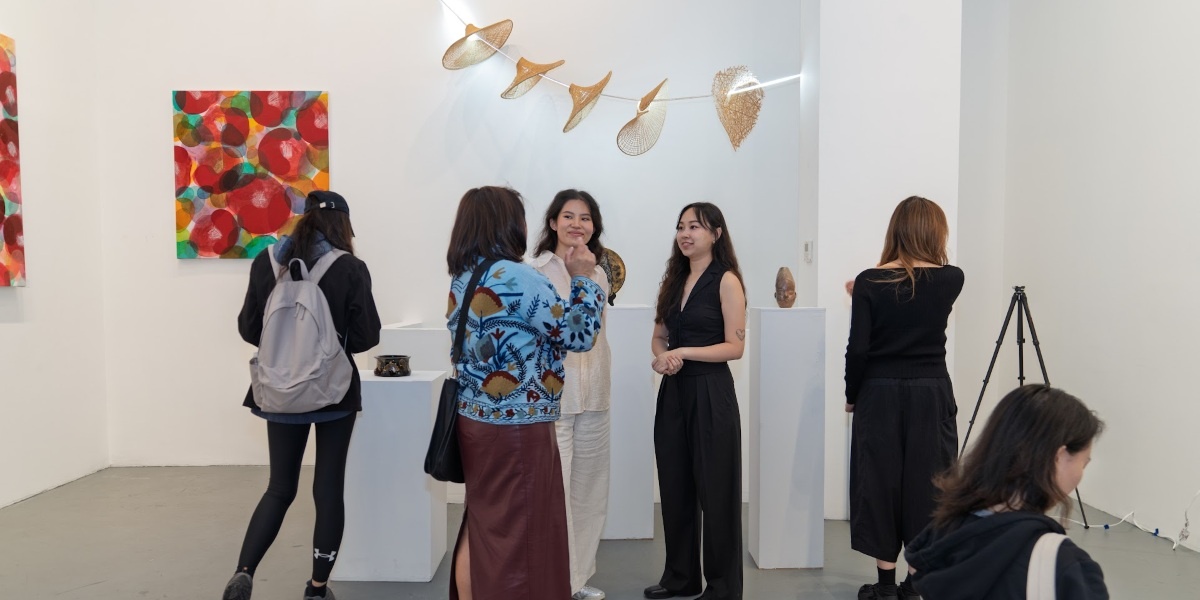
One of the studio’s standout initiatives is its debut exhibition, “Of Seeing and Be Seen,” held at Crossing Art in Manhattan from October 2–7, 2025. The exhibition delved into the complex politics of observation, presence, and identity. It explored how artists use their art to make themselves visible—both literally and metaphorically—while considering the power dynamics involved in being seen or overlooked.

Through a diverse range of media, including lacquer, wood, photography, installation, and spatial intervention, the exhibition provided a platform for artists to engage with the theme of presence in an intimate and thought-provoking way. The works questioned the concept of appearance—how individuals, particularly those from marginalized backgrounds, navigate the tension between visibility and invisibility.

The exhibition was not just a display of finished works, but a celebration of the artistic process itself. It gave viewers a rare glimpse into the creative journeys of the artists involved, showcasing how their ideas evolved and took shape over time. In doing so, “Of Seeing and Be Seen” exemplified the studio’s commitment to honoring the messy, vulnerable stages of artistic growth.

Fostering Collaboration and Public Engagement

Current State Studio also emphasizes the importance of public engagement and community collaboration. It recognizes that art does not exist in a vacuum and that a true artistic ecosystem requires interaction between artists, curators, audiences, and cultural institutions. By creating spaces for dialogue and exchange, the studio helps young artists expand their reach beyond traditional gallery circles and build relationships with diverse audiences.

The studio hosts educational programs, residencies, and workshops to nurture the next generation of artists. These initiatives provide emerging creators with the skills, mentorship, and networks they need to succeed in the competitive world of contemporary art. The focus is not just on creating art, but on building the relationships and resources that will allow artists to flourish in the long term.

A Platform for Emerging Artists

As a nonprofit organization, Current State Studio continues to grow as a platform where emerging artists can find both creative and professional support. The studio is dedicated to ensuring that artists are seen for who they are in their “current state,” without the pressure of having to present a polished, finished product. It is this inclusive, process-oriented approach that makes Current State Studio a unique space for artistic growth and innovation.

By fostering collaboration and providing visibility to artists often overlooked by traditional galleries, Current State Studio is helping to redefine what it means to succeed in the art world. The studio’s commitment to experimentation, diversity, and vulnerability ensures that emerging artists have the resources and platform they need to take creative risks, experiment with new ideas, and push the boundaries of contemporary art.

Join the Movement

As Current State Studio continues to expand its reach and influence, it remains dedicated to its core mission of supporting emerging artists and fostering a more inclusive and collaborative art world. For those looking to get involved, whether as artists, supporters, or collaborators, Current State Studio offers a unique opportunity to be part of a growing community dedicated to the creative process and the power of art.

To learn more about Current State Studio and its initiatives, visit their Instagram.

The Real Reason Your Business Isn’t Scaling and How Robi Powers Uses AI to Fix the Hidden Gaps Stealing Your Time and Profits

By: David Smith

Something’s shifting. Everywhere you look, industries are evolving faster than even the successful leaders can catch up. Automation is rewriting job roles overnight.

AI is changing how companies compete, hire, and deliver results. The playbooks that once built success are now the same ones slowing progress.

Across boardrooms, strategy meetings, and executive retreats, a quiet realization is spreading: what made you relevant five years ago may quietly make you obsolete tomorrow. The future isn’t waiting for anyone.

This is the new business reality — thrilling for some, terrifying for others. The pressure to keep up is relentless. Leaders are overwhelmed by endless tools, buzzwords, and advice, yet still searching for clear direction.

The problem isn’t a lack of information anymore. It’s knowing what to do next — when every decision carries million-dollar consequences.

That’s the modern leadership crisis.

And it’s exactly where Robi Powers (@robipowers) excels in his work. 

The AI Revolution Is Here But Many Leaders Are Drowning

As founder of IONIK, Robi Powers helps leaders stop drowning in AI confusion and start leading with clarity. His message is bold but true: AI transformation isn’t about technology — it’s about psychology.

The data support his approach. Research suggests a significant portion of AI projects don’t succeed, often due to challenges in leadership and organizational structures rather than the technology itself.

Companies invest millions in automation tools but forget the one element that drives real transformation — human understanding.

That’s the gap Robi is closing before it quietly destroys companies that could have thrived.

The Hidden Crisis Behind the AI Boom

Over the past decade, Robi has witnessed a silent crisis unfold. Businesses rush to adopt AI without preparing their people to lead through it. The result? Confusion, burnout, and wasted potential.

Leaders who once felt confident now feel paralyzed, stuck between AI hype and the fear of getting left behind. They watch competitors automate and scale while their own systems stall under complexity.

Through IONIK, Robi built a bridge through that chaos. His company operates at the intersection of leadership psychology and intelligent automation, guiding decision-makers to think clearly before they act.

His philosophy (that AI transformation is 80% psychology and 20% technology) has become a lifeline for leaders determined to scale with sanity.

Companies that work with Robi don’t just automate; they rebuild confidence from the inside out. His frameworks help CEOs strip away the overwhelm, align their teams, and create done-for-you growth systems that actually work in the real world.

That dual focus (mindset and machinery) is what makes IONIK a force in the new AI economy.

Why AI Projects Keep Failing And How Robi Fixes It

While many consultants talk about software, Robi talks about the humans behind the systems.

He’s one of the few experts willing to say what others won’t: AI projects fail because leadership fails first.

McKinsey found that CEO oversight is the strongest predictor of AI success, yet only 28% of organizations have it. Gartner reports that 85% of AI initiatives never scale because they lack executive sponsorship. These aren’t just statistics — they’re warning lights.

Leaders who ignore them risk seeing their companies fade while competitors evolve.

Robi helps prevent that.

Through IONIK’s structured programs, he shows executives how to make data-driven decisions with precision rather than panic and to align technology, culture, and brand.

The result?

Leaders move from fear to flow. They achieve measurable growth while protecting their premium positioning and integrity.

IONIK: Where Strategy Meets Sanity

IONIK wasn’t born from theory — it was born out of necessity.

Robi kept meeting brilliant founders who had all the tools but no direction. They had automation without alignment, systems without structure.

That’s when he realized the world didn’t need another AI consultant; it required an AI transformation strategist.

So he built IONIK as a dual-engine firm: one part leadership coaching, one part implementation lab.

The goal?

To help high-trust leaders automate growth, simplify decision-making, and preserve their brand identity — without the chaos.

His signature framework, The AI Ascent Method™, became the backbone of this mission. It’s a reliable path that transforms uncertainty into clarity and helps leaders lead with purpose instead of panic.

From Elite Coaching to Executive Mastery

Before founding IONIK, Robi coached national sports teams; training athletes for peak performance under extreme pressure. That world taught him an unshakable truth: leadership under pressure reveals everything.

He saw how mindset dictated results and how great talent could collapse under stress. Today, those same lessons drive his AI leadership model.

When a CEO faces a multi-million-dollar AI decision, the psychology mirrors that of an athlete in the final seconds of a championship game. Fear, hesitation, doubt — they all surface. Robi’s gift lies in helping leaders reframe those moments, turning anxiety into clarity and fear into execution.

His methods don’t just teach; they transform.

Clients don’t walk away with buzzwords; they leave with reflexes. They learn to lead under pressure, decide with confidence, and act with precision.

Why Leadership Psychology Is the Missing Link

Robi’s work is more than opinion; it’s evidence-backed and field-tested.

According to data from Deloitte and McKinsey, only 10% of organizations report meaningful ROI from AI, while 70–90% stall at implementation. The reason? Leadership misalignment.

IONIK was built to rewrite that story. Its done-for-you systems are tested in real markets, ensuring automation enhances brand quality instead of diluting it. The focus isn’t just on tech that works but on humans who can sustain it.

That’s why Robi’s approach has gained the trust of leaders worldwide. He transforms what once seemed like a high-risk gamble into a scalable, sustainable advantage.

The Mission That Drives It All

For Robi, success has never been about business metrics alone; it’s about transformation.

His mission is to end what he calls Executive AI Paralysis; that silent burnout leaders experience when faced with decisions they don’t fully understand.

He believes the future belongs to those who can blend emotional intelligence with data intelligence. And through IONIK, he’s proving it. When leaders master mindset first, AI integration doesn’t just work — it becomes effortless.

Robi’s passion is clear: to build mentally unshakeable leaders capable of guiding their organizations with clarity, calm, and confidence even amid constant change.

He’s not selling software. He’s shaping the next generation of leaders who use technology with wisdom, not fear.

Work With Robi Powers

For CEOs, founders, and executives grappling with the fast pace of AI change, it’s an opportunity to move from confusion to clarity.

Stay connected with @robipowers for valuable insights that combine leadership psychology with actionable AI strategies.

Discover the AI Ascent Method™ at IONIK to explore how to automate strategically while preserving your brand’s distinctiveness.

In a world where technology evolves quickly, adapting to change is key to effective leadership.

Katie Augustine Empowers Nonprofit Leaders with Her EVOLVE Framework

By: Deb Monfette

When nonprofit leaders think about scaling their impact, the conversation often centers on funding, staffing, membership, or regulatory hurdles. Katie Augustine, an internationally renowned author, attorney-turned-consultant, and Earth advocate, believes the key is aligning strategy with values, vision, and planetary well-being.

This fall, Augustine officially launched ECS, Evolve Consulting Services, a management consulting firm helping nonprofits accelerate their mission while reducing their eco-footprint. SECS Evolve introduces a values-driven, planet-first approach to organizational growth that is already drawing attention across the leadership community.

Augustine said, “Many leaders want to operate their organizations in ways that create meaningful results while also supporting the planet to thrive. When we align with values and consciousness-based principles, impact accelerates. ECS Evolve was created to support nonprofit leaders in bringing collective vision into their strategies so they can make a bigger difference, both for their organizations and for the planet.”

A Proven Track Record

Augustine’s credibility stretches across industries. She spent 22 years as a banking attorney, compliance director, and risk consultant before stepping into the world of transformational coaching. Recognized as one of the leading coaches in Cleveland by Influence Digest Media in both 2024 and 2025, she has coached thousands of clients worldwide.

As a co-author in the book Cracking the Rich Code, Vol. 12, with Jim Britt and co-sponsored by Tony Robbins, Katie introduced her message of weaving collective vision into personal development and strategy. As a senior coach and faculty member with the Brave Thinking® Institute, she trains the next generation of coaches and thought leaders to build and scale their businesses with clarity and purpose.

Where Advocacy Meets Leadership 

What makes Augustine’s approach unique is her fusion of business expertise with lifelong advocacy. An ordained Minister of Walking Prayer® through the Center for Sacred Studies, she spent eight years studying with Indigenous elders. This experience continues to guide her work with leaders today. She has also been deeply involved in environmental and animal advocacy, bringing a lens of planetary stewardship into consulting engagements.

This uncommon blend of corporate rigor and spiritual depth is what sets Augustine apart. Few consultants can say they’ve directed financial regulatory compliance teams, spoken before thousands on international stages such as DreamBuilder® Live, been in deep ceremonies such as vision quests, and fostered more than 150 rescue cats as part of a lifelong commitment to animal advocacy. That balance gives her a rare ability to guide leaders through complexity while keeping them grounded in vision and values.

A Sling-Shot Moment for Growth

Nonprofits today face reduced grant funding, shifting regulations, and rising pressure to prove measurable outcomes. Augustine believes this pressure signals not decline, but opportunity.

Augustine explains, “Governance, including funding, may feel like it’s tightening right now. But I see this as a sling-shot moment. After this era, the momentum forward will be strong. Leaders who take time now to clarify values aligned with vision and strengthen sustainable strategies will endure the challenges ahead. More importantly, they’ll emerge ahead of the curve.

Through ECS Evolve, Augustine emphasizes three outcomes nonprofit leaders can measure:

  1. Reduced eco-footprint through environmental risk assessments and regenerative solutions.
  2. Faster impact via focused, values-aligned strategy and clear action plans with accountability.
  3. Healthier leadership cultures that mitigate burnout and improve collaboration across stakeholders, coalitions, and communities.

By focusing on these outcomes, nonprofits not only strengthen their organizations but also take their place in shaping a more sustainable, thriving future.

Be The Change™ Program

At the heart of the company is the flagship Be The Change™ program, built on Augustine’s proprietary EVOLVE 6-Phase Framework. The framework offers a structured roadmap that guides leaders into vision with measurable execution:

The six phases include:

  • Engage: Align mindset with strategies, socially shared values, and with an up-leveled awareness of consciousness teachings.
  • Vision: Establish a clear vision that encompasses personal, organizational, and collective aspirations.
  • Originate: Translate values and vision into an Origin Map with main objectives.
  • Launch: Develop a 120-day action plan with timelines and accountability.
  • Validate: Assess and adjust to optimize operations by streamlining, rearranging, and retiring non-essential work.
  • Expand: Build collaborative partnerships and campaigns that amplify results across communities.

It’s a system that helps nonprofit leaders achieve results while supporting sustainable, resilient growth aligned with global needs.

A New Paradigm for Purpose and Planet

With ECS Evolve, Augustine is inviting nonprofit leaders to embrace a new paradigm: one where doing good for people also means doing good for the planet. Her Be The Change™ program provides a repeatable, sustainable-growth system that is practical, measurable, and transformative.

Augustine adds, “Nonprofits carry extraordinary responsibility. My work is to give leaders a clear path that honors their values, supports the planet, and delivers results their communities can feel. This is a time of planetary evolution, and leaders understanding the essence of this era will create a great impact for their organizations and beyond.”

To learn more, visit ECSevolveconsultingservices.com or connect with Katie Augustine on LinkedIn.

A Night of Science and Giving: $1.6 Million Raised for Cancer Research at Waxman Foundation Gala

By: Kyran Christy

The Samuel Waxman Cancer Research Foundation (SWCRF) hosted their 28th Annual Collaborating for a Cure fundraiser, A Celebration of Breakthroughs, at Apella in New York City. The prestigious event raised a significant $1.6 million, including a generous dollar-for-dollar match through the partnership with The Mark Foundation for Cancer Research. The substantial funds raised will directly support innovative new scientific research grants, set to launch in early 2026, helping to drive further advancements in cancer research.

Celebrating nearly 50 years of funding crucial cancer research, the event also marked a significant new milestone for the Foundation — the official launch of the Samuel Waxman Institute for Aging & Cancer. This innovative, unique organization will bring together scientists to study aging and cancer together, fostering innovative research and collaboration to address these two critical areas of health. Through this initiative, the Foundation aims to drive forward significant discoveries and new approaches in both fields.

“Aging is the greatest risk factor for cancer, yet we still have much to learn about how aging impacts cancer development and treatment. By uniting experts in both aging and cancer, we can uncover new ways to prevent and treat it. Thank you to all our supporters for making this vision possible,” said Dr. Samuel Waxman.

The event honored Robert Wiener, Chairman Emeritus of Maxx Properties, as Philanthropist of the Year, Jean Shafiroff, Philanthropist, author and TV personality as Philanthropist of the Year,  and Dr. Jeffrey Settleman, Senior Vice President and Chief Scientific Officer, Oncology Research and Development at Pfizer, with the Breakthrough Science Award.

The elegant evening featured captivating live musical performances by Shayna Steele (Hairspray, Rent, Hair on Broadway) and John Riddle (Phantom of the Opera, Frozen on Broadway), accompanied by renowned pianist Dan Micciche, the music director and conductor for the Broadway play WICKED. The performances created a memorable atmosphere, adding to the evening’s charm and elegance, while showcasing extraordinary talent.

Recognized as one of New York’s inspiring philanthropic evenings of the year, the Collaborating for a Cure dinner unites influential leaders in business, science, fashion, and entertainment. In addition to the live performances and dinner, guests also participated in a thrilling live auction that included dinner for four at Rao’s, a 10-day cruise with Seabourn, and a VIP Gameday Experience with the NY Knicks, among many other exciting offerings. All of these efforts aim to bring everyone all closer to the critical goal of curing cancer, uniting individuals across industries for a common cause.

Notable Attendees also included: Dr. Samuel Waxman, Marion Waxman, Robert Wiener, Jean Shafiroff, Dr. Jeffrey Settleman, Mark D. Friedman, Maxine Friedman, Jamie Koff, Heidi Russo, Randi Schatz, Orital Karelic, NYS Assembly Member Rebecca A. Seawright, Shayna Steele, John Riddle, and Dan Micciche.

About the Samuel Waxman Cancer Research Foundation (SWCRF):

The Samuel Waxman Cancer Research Foundation is a prominent global organization focused on the fight against cancer. It drives innovative cancer research, aiming to eliminate the disease by supporting studies that address abnormal gene functions responsible for cancer and working on developing treatments that aim to reduce toxicity for patients. The Foundation’s collaborative group of respected scientists, known as the Institute Without Walls, fosters the sharing of vital data, tools, and resources with the goal of accelerating the progress of cancer research. Since its founding in 1976, the Foundation has allocated over $120 million to back the pioneering efforts of more than 200 researchers worldwide, driving significant progress in cancer treatment and prevention.

For more information, visit www.waxmancancer.org

IG: @waxmancancer | F: WaxmanCancer | X / T: @waxmancancer