Dr. Connor Robertson on How Affordable Housing Boosts Local Economies

By: Dr. Connor Robertson

The conversation around affordable housing often focuses on the people who live in it and rightly so. Affordable housing provides stability, security, and the foundation for a better quality of life. But what’s sometimes overlooked is how these housing solutions also have the potential to strengthen local economies in meaningful and lasting ways. Dr. Connor Robertson, a real estate strategist who works at the intersection of housing and community development, believes affordable housing is not just a social good; it’s a key factor in driving economic growth.

Why Affordable Housing Is an Economic Engine

When people can afford their housing costs, they may have more disposable income to spend in the local economy. Instead of being overburdened by rent or mortgage payments, they can support local businesses, save for the future, and invest in their education or skills.

Dr. Robertson explains, “Stable housing creates stable spending. That stability can fuel job creation, business growth, and overall economic resilience in a community.”

The Direct Financial Benefits

  • Increased Consumer Spending – Lower housing costs often mean residents can spend more on goods and services. This can directly benefit local restaurants, shops, and service providers.
  • Job Creation – The construction, renovation, and maintenance of affordable housing generate opportunities for employment in construction trades, architecture, engineering, and property management.
  • Higher Workforce Productivity – When housing is affordable and close to jobs, workers experience less stress and shorter commutes, which tends to lead to improved performance and fewer absences.

Reducing Public Costs

Affordable housing can also lower the financial strain on public resources:

  • Healthcare savings – Stable housing is linked to better health outcomes, which can help reduce emergency room visits and long-term healthcare costs.
  • Lower homelessness rates – Providing affordable housing may reduce the need for costly shelter services and emergency interventions.
  • Improved education outcomes – Children in stable housing are more likely to perform better in school, which may decrease future costs associated with remedial education and social services.

Strengthening Local Tax Bases

Affordable housing developments contribute to property tax revenues, especially when they revitalize underused or blighted land. These tax revenues can be reinvested into public infrastructure, schools, and community programs, creating a positive cycle of growth.

Dr. Robertson notes that “strategically placed affordable housing projects may turn neglected areas into thriving tax-generating districts.”

Revitalizing Neighborhoods

Well-designed affordable housing has the potential to be a catalyst for neighborhood revitalization. It brings in new residents, supports local businesses, and encourages further private investment.

The key, according to Dr. Robertson, is ensuring that these developments are integrated into the community, with access to transit, employment centers, and essential services.

Affordable Housing and Economic Resilience

Communities with diverse housing options are better equipped to weather economic downturns. When a city relies solely on high-end housing, it risks losing essential workers such as teachers, healthcare workers, and first responders who may not be able to afford to live there. Affordable housing ensures that the local workforce remains more accessible, even during times of economic stress.

Overcoming the Myths

Some residents resist affordable housing due to misconceptions about property values or crime rates. Research consistently shows that well-managed, high-quality affordable housing does not appear to have a negative impact on surrounding property values and can even enhance neighborhood safety by reducing turnover and vacancy rates.

Dr. Robertson emphasizes that education and transparency are key to overcoming resistance. “When communities see the quality of the design, the standards of management, and the benefits to the local economy, opposition often shifts into support,” he says.

The Role of Public-Private Partnerships

Affordable housing projects often require collaboration between developers, nonprofits, and government agencies. Public-private partnerships can make projects financially viable through tools like:

  • Tax credits and abatements.

  • Low-interest loans.

  • Land donations.

  • Zoning incentives.

These partnerships not only help make housing more affordable but also ensure developments meet long-term community goals.

Looking Ahead

As housing costs rise in many parts of the country, affordable housing is expected to play an increasingly critical role in keeping local economies strong and inclusive. Dr. Connor Robertson believes that communities should view these developments not as a burden, but as an investment with the potential for significant returns.

“Affordable housing isn’t just about fairness,” he says. “It’s about building an economy that works for everyone.”

Summary

The economic benefits of affordable housing extend far beyond the people who live in it. By stabilizing households, creating jobs, and strengthening the local tax base, affordable housing helps communities grow stronger, healthier, and more resilient.

For more on Dr. Robertson’s work and insights, visit www.drconnorrobertson.com.


Disclaimer: The views and opinions expressed in this article are those of Dr. Connor Robertson and are provided for informational purposes only. The economic benefits and outcomes discussed may vary depending on factors such as location, market conditions, and community-specific circumstances. This article does not constitute professional financial, real estate, or legal advice. Readers are encouraged to consult with relevant professionals for personalized guidance.


Developmental Milestones of a 3-Month-Old: Signs of Healthy Growth

Observing a child’s growth is a thrilling experience, particularly at the age of three months when the new changes are often noticeable. The developmental milestones of a 3-month-old typically include the child’s improved head support, increased movement, and the beginning of cooing. Activities such as walks using a newborn carrier for dad may help during this time, as the baby can receive the necessary support and bonding.

In this article, parents will learn about physical growth, sensory skills, and sleep changes as the child progresses through this stage. Additionally, they will also come across some early developmental warning signs that could indicate a delay, offering parents a sense of comfort about when to seek help from a healthcare professional.

Understanding the Developmental Milestones of a 3-Month-Old

The developmental milestones of a 3-month-old baby can serve as a useful resource for parents to identify important signs of growth. In this period, infants typically become more stable with head support, move their arms and legs in a more purposeful manner, and may also begin making cooing sounds or giving their first smiles.

It’s possible that there’s something magical about a father strapping on a newborn carrier for dad and spending time with their little one. It’s not just cute, but it also appears to help the baby feel secure, and it can provide a wonderful bonding opportunity for the father. Observing the first signs (e.g., small yawns or squeaks) may give parents a sense of confidence in their parenting journey. It can be beneficial for the child’s physical, emotional, and social development

Physical Milestones: Head Control, Arm Movements, and Early Coordination

After around three months, babies start to show changes in how they move and communicate with the world around them. Being aware of the developmental milestones of a 3-month-old can help parents provide the right kind of support for the child’s healthy growth. Simple, calm activities like taking a baby in a newborn carrier for dad might offer comfort while gently encouraging movement.

These are some of the physical developmental milestones that you might notice:

  • Head Control: Babies gradually begin to support and hold their heads upright more securely when sitting with assistance or even when lying on their stomachs.

  • Arm Movements: The actions become more controlled, and babies are often seen stretching out or bringing their hands closer to their faces.

  • Early Coordination: Infants may start to touch a toy with a hand that is in motion, reach for an object, or clasp their hands together — all of which may indicate the early stages of hand-eye coordination.

Sensory Development: Vision, Hearing, and Exploring the Environment

Babies at three months begin noticing more of the world around them and responding to sights and sounds in new ways. The developmental milestones of a 3-month-old child can be indicators of how the baby is progressing.

At this age, babies explore their senses in different ways:

  • Vision: The eyes may track a moving object, concentrate on faces, and start to recognize bright colors or patterns.

  • Hearing: Turning their heads is one way they may respond to sounds, which may indicate that the baby is able to recognize a familiar voice or show interest in music or soft noises.

  • Environment Exploration: The hands and legs might reach or kick at objects in front of them, showing a desire to learn through tactile and movement exploration.

Communication Milestones: Babbling, Coos, and Early Social Engagement

By three months, babies often begin responding more to voices and showing interest in others. Parents can recognize their child’s early communication skills through the developmental milestones of a 3-month-old baby. For instance, talking or singing softly while holding the baby in a newborn carrier for dad could attract the baby’s attention and may encourage responsiveness.

The communication milestones to watch for include:

  • Babbling: At this stage, babies may start making repetitive sounds like “ba-ba-ba” or “da-da-da.” It’s not quite language yet, but it’s an important step in practicing their vocal skills.

  • Coos: Those soft little “oooh” and “aaah” noises are often a sign of baby happiness. They are likely the baby’s way of expressing contentment while experimenting with their voice.

  • Early Social Engagement: If you catch a baby smiling, locking eyes with you, or turning their head toward someone familiar speaking, it’s an indication that they are beginning to engage socially. It’s a delightful sign that the baby is learning to interact with others.

Emotional Development: Recognizing Faces, Responding to Voices

Babies at three months old begin showing emotions and forming early connections. The developmental milestones of a 3-month-old can help parents notice these early signs. Time spent together in a newborn carrier for dad might offer a sense of security while naturally encouraging interaction.

Signs of emotional development to notice include:

  • Spotting Familiar Faces: Babies often light up when they see someone they know — actual smiles or happy wiggles are likely signs of early attachment.

  • Reacting to Voices: Babies may turn their heads or widen their eyes when they hear a familiar voice. It’s a sign that they are becoming aware of the sounds around them.

  • Showing Emotions: A baby’s mood can be obvious; they may frown or make whiny noises when upset, or coo and smile when content. This suggests they are developing emotional expression through their faces and sounds.

Motor Skills: Reaching, Grasping, and Tummy Time Progress

One of the key developmental milestones of a 3-month-old is the beginning of more control over their body, which helps parents see how strength and coordination are developing. A baby being allowed to stretch and move with gentle support such as being in a newborn carrier for dad can help them practice new movements safely.

These are the motor skills that parents should observe in infants:

  • Reaching: Infants may extend their arms toward familiar toys, hands, or objects, showing that their coordination is improving.

  • Grasping: Babies’ fingers may start to close around objects, helping them practice holding and releasing items.

  • Tummy Time Progress: Babies may raise their heads higher and push up on their arms, helping to strengthen their upper body during tummy time sessions.

Sleep Patterns and Changes: How Your 3-Month-Old May Be Sleeping

Sleep changes as babies grow, with longer stretches at night and more predictable naps. The developmental milestones of a 3-month-old can help parents understand typical sleep patterns and what to expect. Gently rocking or keeping the baby close in a newborn carrier for dad before naps may help babies feel secure and settle more easily.

These are common sleep behaviors to notice in 3-month-old babies:

  • Nighttime Sleep: Some babies may sleep for four to six hours at a stretch at night, though this can vary.

  • Daytime Naps: Babies at this age often take several naps during the day.

  • Sleep Positioning: You might notice your baby wiggling or flailing their arms while lying down, which is just part of their development as they figure out their body.

  • Sleep Cues: If your baby rubs their eyes, gets cranky, or yawns, they may be signaling that they are ready to sleep.

When to Be Concerned: Red Flags and Signs of Delayed Development

Parents may start to worry if their baby is not showing typical growth or responses during the early months. Understanding the developmental milestones of a 3-month-old can help families notice signs that may need extra attention. Regular check-ups and observation can provide reassurance and guidance.

Warning signs to be aware of include:

  • Barely Budging: If the baby is hardly moving their arms or legs, struggling to hold their head up, or showing no interest in grabbing objects, this could be cause for concern.

  • Zoning Out: If the baby doesn’t respond to voices or familiar faces, it’s possible that something is wrong.

  • Wobbly Reflexes: A weak grip, difficulty holding hands up, or struggles with sucking and swallowing may signal developmental issues.

  • Socially Checked Out: If a baby makes little eye contact, rarely smiles, or doesn’t make cooing or babbling noises, it may indicate a need for further evaluation.

  • Feeding Fails & Sleepless Nights: Difficulty feeding, lack of sleep consistency, or excessive crying may also be signs of a delay.

Summary

Watching the developmental milestones of a 3-month-old can give parents a sense of confidence in the baby’s growth and development. Simple, everyday actions, such as carrying the baby in a newborn carrier for dad while talking or gently moving, can provide support and delight the child.

By observing the baby’s physical, sensory, communication, emotional, and sleep patterns, parents can identify changes as they happen, celebrate milestones, and notice the first signs of when extra support might be needed.


Disclaimer: The information provided in this article is for general informational purposes only and is not intended as medical advice. While the developmental milestones of a 3-month-old discussed here are generally accepted guidelines, every child develops at their own pace. If you have concerns about your child’s growth or development, please consult a healthcare professional for personalized advice and guidance.

Tony Robbins’ Business Coaching Helps Leaders Transform Employees Into Raving Fans

By: One World Publishing

If your team is dragging their feet in the morning, watching YouTube videos when you’re not looking, and sprinting for the exit at 5 p.m. sharp, you’re not just dealing with disengagement—you’re watching the potential of your business drain away.

According to Gallup, unengaged employees cost the global economy over $9 trillion annually. But Tony Robbins believes there’s a powerful, human-centered solution: shift from managing tasks to cultivating ownership, recognition, and connection.

As a world-renowned business coach, Robbins has spent decades helping entrepreneurs and managers unlock the full potential of their teams. Through his proven business coaching methods, Robbins helps leaders build what he calls a “Raving Fan Culture”—a workplace where employees are energized, empowered, and emotionally invested.

Cultivate Ownership

In Robbins’ words, “Your business will never outrun the emotional commitment of the people who power it.” Too many entrepreneurs become the bottleneck of their own business, holding onto every decision, dispute, and approval like it’s their job. Meanwhile, their team sits on the sidelines, uninspired and underutilized.

Through his corporate coaching programs, Robbins encourages leaders to reframe their roles. Rather than being perpetual operators, they’re true owners who empower others to lead. That starts with identifying the tasks only they can do, and leveraging their workforce to execute the rest. But leveraging isn’t about dumping tasks. It’s about sharing the responsibility for outcomes.

Imagine giving a customer service employee or manager a pot of money that can be spent on solving clients’ problems directly. They don’t have to be the powerless robot chasing down the boss’s approval. They are empowered to solve the problem on their own. When employees feel real ownership, they’re not just working for the company, they’re working as the company.

Recognition Is Rocket Fuel

Empowerment without recognition is like driving a race car with no fuel—it goes nowhere fast. Robbins emphasizes that the best leaders don’t just coach performance; they celebrate it. His approach to recognition isn’t about annual awards or generic praise. It’s about what he calls “Jackpots.” These are small, surprising shows of sincere appreciation that leave a lasting impact.

Jackpots can be a $20 gift card when someone achieves a milestone, or team meetings where colleagues spotlight each other’s wins. They can take the form of a spontaneous catered lunch, a personalized note, or enrollment in a continuing education course for a rising star employee.

When teams feel appreciated, they are more likely to work harder, take more initiative, and stay longer. Robbins’ coaching reminds leaders that recognition isn’t just a nice perk—it’s a strategy for creating raving fans that drive your company’s success.

Know Your People’s “Why”

Through his leadership-focused events like Business Mastery and Leadership Academy, Tony teaches that to influence people, you have to understand what makes them tick. Many leaders fall short not because they don’t care, but because they’re not curious enough. They’re so busy managing that they don’t take time to figure out the “why” of their workers.

Robbins trains leaders to move beyond performance metrics and step into real connection. That starts with power chats, or one-on-one conversations that prioritize listening over directing. These chats uncover what lights people up, what holds them back, and how they define success.

Robbins also recommends tools like personality profiles and “lunch and learn” sessions focused on life outside of work. When leaders take time to know their people, they can align tasks, rewards, and mentorship with what really matters to each team member. The result? Raving fan employees who feel seen, heard, and motivated to give their best.

Tony Robbins: Transforming Business Leadership

Through his coaching and popular business growth events, Robbins helps entrepreneurs and managers build cultures where people are engaged because they want to be. And it works. Teams guided by Robbins-trained leaders often report improvements in productivity, retention, and morale. They describe feeling like they’re part of something bigger, like their work truly matters.

Those who attend Robbins’ Business Mastery events have seen measurable growth, with some experiencing of up to 130% in top-line growth in 12 months, in part because they know how to energize and engage their teams around a common goal.

Robbins has been named among the leading business intellectuals by Accenture and is recognized as one of the notable business leaders by American Express. A Fortune magazine cover article referred to him as “The CEO Whisperer.”

Robbins has shaped high-tier leaders. His client roster includes four U.S. presidents and business leaders like Salesforce Co-founder Marc Benioff, Bridgewater Associates Founder Ray Dalio, and casino magnate Steve Wynn.

Today’s Workforce Needs a Mission

With terms like “quiet quitting,” “act your wage,” and “bare minimum Mondays” trending, employees need more empowerment than ever. It’s easy to pass their disengagement off as laziness, but look deeper, and you’ll see unmet human needs. When employees lack ownership, appreciation, or connection, they check out. But when those needs are met, something remarkable happens. People come alive. They take initiative. They bring energy, creativity, and passion into every corner of the business.

Tony Robbins’ business coaching helps make that transformation possible. The result is a raving fan company culture and business success worth celebrating.

Bidemi Olaoba: Innovating African Gospel Music and Worship

By: Ethan Rogers

In the vibrant tapestry of African gospel music, few names resonate with the pioneering spirit and transformative impact of Mr. Ayodeji Abidemi Ogunmolu, professionally acclaimed as Bidemi Olaoba. This trailblazing Nigerian gospel artist has not merely participated in the evolution of contemporary Christian music, he has fundamentally redefined it, establishing himself as the first to bridge traditional African musical elements with modern gospel expression in unprecedented ways.

Bidemi Olaoba stands as the undisputed pioneer of virtual gospel concerts in Africa, having launched the groundbreaking “Unrestricted Praise” series in 2020. This revolutionary concept made him the first Nigerian gospel artist to successfully create a virtual concert platform that transcended geographical boundaries, featuring internationally renowned artists including Buchi, Tope Alabi, Mike Abdul, Adeleke Adeboye, Eben, and the late Sammie Okposo. When the global pandemic challenged traditional ministry approaches, Olaoba was the only gospel artist to have already established a virtual concert infrastructure that became a lifeline for Christian worship worldwide.

In the realm of musical innovation, Bidemi Olaoba remains the only contemporary gospel artist to have successfully fused Gospel HighLife with Fuji rhythms, creating a distinctive sound that has become his signature. This unique blend has positioned him as the first artist to make traditional Yoruba musical elements seamlessly accessible to global Christian audiences, breaking cultural barriers while preserving authentic African musical heritage.

Olaoba pioneered the integration of direct biblical quotations into contemporary gospel performances through his famous catchphrase “The Bible Says,” becoming the first African gospel artist to systematically weave scripture into live musical presentations. This innovative approach has made him the only performer to consistently transform biblical verses into spontaneous worship experiences during live concerts.

Breaking conventional paths, Bidemi Olaoba became the first gospel artist to earn dual degrees in Civil Engineering from Yaba College of Technology and Economics from the University of Lagos, later completing a Master’s degree in Economics. This rare combination of technical education and spiritual calling has made him the only gospel minister to bring engineering precision and economic understanding to music ministry planning and execution.

As one of the first African gospel artists to establish ministry presence across three continents simultaneously, Olaoba has performed in Europe, America, and throughout African nations. His international tours have made him a pioneer in cross-cultural gospel ministry, becoming the first Nigerian gospel artist to consistently headline major Christian gatherings outside Africa while maintaining strong roots in local church ministry.

In 2024, Bidemi Olaoba became the first major gospel artist to join GNT Nation, the music label co-founded by Mercy Chinwo and Pastor Blessed Uzochikwa. This strategic partnership positioned him as a pioneer in collaborative gospel music entrepreneurship, setting new standards for artist-label relationships in the African gospel industry.

Olaoba has distinguished himself as the first gospel artist to consistently headline Nigeria’s most prestigious Christian gatherings, including The Experience Lagos (one of the world’s largest gospel concerts), RCCG’s Marathon Messiah’s Praise, Festival of Life across multiple international locations (Dubai, Dublin, Italy, and United Kingdom), and COZA’s major events. His dynamic performances, characterized by spontaneous worship and praise medleys, have made him the only artist capable of transforming any venue into an atmosphere of unprecedented spiritual intensity.

With hit songs including “Bonjour,” “Final Say,” “Prayer,” “Isi Gini,” “Holy Gyration,” and “Baba,” Bidemi Olaoba became the first African gospel artist to achieve millions of streams while maintaining authentic spiritual content. His collaboration “Give Me Chance” with Mercy Chinwo earned him recognition as the first artist to win “Best Collaboration” at the Kingdom Achievers Awards, cementing his status as a digital music pioneer. 

In 2024, he was honored at The Christian Legendary and Impact Makers Awards in Africa (CLIMA AFRICA) as the Western Africa Artiste of the Year Winner. Further highlighting his rising global influence, Bidemi Olaoba has been nominated for multiple categories at the upcoming Maranatha Global Gospel Awards (MAGGA) in Florida this November 2025, including Best Male Gospel Artist, Best Male Gospel Lyricist/Songwriter, Best Overall Hit Song (“Give Me Chance” ft. Mercy Chinwo), and Best Gospel Collaboration (“Give Me Chance” ft. Mercy Chinwo).

Beyond musical excellence, Olaoba has pioneered the integration of philanthropy with gospel ministry, becoming the first Nigerian gospel artist to systematically use his platform for community impact initiatives. His commitment to spreading hope, love, and salvation through both music and charitable activities has established him as the only artist to maintain equal excellence in both entertainment and social responsibility.

At 34 years old, with an estimated net worth of $400,000 and over 821,400 streams on digital platforms, Bidemi Olaoba continues to pioneer new frontiers in gospel music. His current single status allows him to maintain unprecedented focus on ministry and musical innovation, making him the only major gospel artist to prioritize spiritual calling over personal relationships while achieving international recognition.

As Africa’s gospel music landscape continues to evolve, Bidemi Olaoba stands as an undisputed trailblazer whose innovations have permanently transformed Christian worship across the continent and beyond. His pioneering spirit, combined with unwavering faith and exceptional musical talent, has established him as not just a performer, but as the architect of modern African gospel music’s global expansion.

Through his continued ministry and musical excellence, Bidemi Olaoba remains the pioneer whose vision continues to shape the future of gospel music in Nigeria, Africa, and the world.

Bolddata Rebrands as CompanyData.com to Lead the Future of Business Data

By: Ethan Rogers

Amsterdam, September 11, 2025 – BoldData today announced it will continue operations under a new name: CompanyData.com. The change represents more than a new brand identity—it reflects the company’s ongoing commitment to clarity, accuracy, and transparency in the world of business information. While the team, expertise, and service remain the same, the updated name provides a clearer expression of the company’s mission and value proposition in a market increasingly saturated with data.

For more than two decades, BoldData has played a central role in helping businesses worldwide access reliable, verified company data. The transition to CompanyData.com underscores the company’s belief that simplicity and trust are key to navigating a global economy driven by information.

“More data is being generated than ever before, but that also makes it harder for businesses to maintain oversight,” said CompanyData.com CEO Daan Wolff. “We cut through the noise by delivering clarity and structure in a complex world of international data. Our worldwide company database is built on trusted, official sources—national trade registers, chambers of commerce, and other primary data providers. We do not rely on scraping or estimates. Every record is verified and designed for accuracy, so our clients know they can trust what they see.”

Why the New Name Matters

The name CompanyData.com was chosen to bring the company’s essence into sharper focus. It is direct, accessible, and self-explanatory. According to Wolff, “Our new name cuts right to the point. CompanyData.com tells the world exactly what we do and what we deliver: company data that is accurate, reliable, and ready to use at scale. It’s simple, it’s powerful, and it makes our mission unmistakable.”

The rebrand also reflects a shift in how businesses and organizations think about data. As companies face mounting challenges in compliance, international growth, and customer verification, the demand for trusted, structured datasets is stronger than ever. By presenting a brand name that immediately communicates purpose, CompanyData.com positions itself as a global leader in verified business information.

Bolddata Rebrands as CompanyData.com to Lead the Future of Business Data

Photo Courtesy: Daan Wolff

Looking Ahead

The company’s commitment remains unchanged. CompanyData.com continues to empower businesses to build, sell, verify, and grow through accurate and official company data. With a database covering 380 million companies across 200 countries, the platform delivers one of the most comprehensive resources available on the market. Every dataset is validated at the source and delivered in formats designed for seamless integration at scale.

As Wolff emphasized, “This is not about changing who we are—it’s about aligning our name with our mission. Businesses today need reliability, transparency, and speed. By providing verified company data directly from official sources, we enable our clients to operate with confidence, whether they are expanding into new markets, conducting compliance checks, or building customer pipelines.”

The company also highlighted its ability to provide custom-built datasets tailored to specific business needs. These datasets include legal entity data, company hierarchies, decision-maker contact information, and B2B email data, all structured for clarity and usability.

A Global Presence

Headquartered in the Netherlands, CompanyData.com maintains offices in Amsterdam, Berlin, and Dubai. Since its founding in 2013, the company has supported over 5,000 clients in 81 countries, ranging from multinational enterprises to small and medium-sized businesses. By working with verified, official data sources worldwide, the company ensures that every client—regardless of size or sector—receives information they can depend on.

About CompanyData.com

CompanyData.com (formerly BoldData) is a global company data provider specializing in verified and structured datasets for businesses worldwide. The company supports organizations in compliance, marketing, sales, and business development by providing access to reliable information on companies across every sector and region. With more than 380 million company records covering 200 countries, the platform delivers accuracy at scale while maintaining transparency and trust. CompanyData.com’s mission is to make global company data simple, clear, and truly useful.

For more information, visit www.companydata.com

Media Contact

Daan Wolff
Founder & CEO
d.wolff@companydata.com
www.companydata.com

Kiernan Major’s 3D-Printed Fortress Ushers in New Era of Resilient Luxury Homes

Kiernan Major, the 29-year-old New York-born businessman, appears to be beginning his journey from the Hollywood Hills to Florida’s Gulf Coast. It appears that the latest reports about his recent purchases of Sarasota-area property have been confirmed, as construction begins on his 6,000-square-foot beachfront residence on Florida’s Longboat Key. 

According to those familiar with the project, the residence is being built using reinforced concrete and large-scale 3D-printing technology, designed to withstand extreme coastal conditions, including hurricanes. Extensive precautions are in place to safeguard both the residence and its occupants, as well as the construction process itself, with the site under continuous 24/7 monitoring by a sophisticated private security team. The home’s design reportedly incorporates both futuristic resilience and old-world craftsmanship, blending cutting-edge materials with architectural elements that complement the natural beauty of its surroundings. 

Major’s move demonstrates a clear desire for a far quieter, more private life. Having spent part of his career in the murky world of private intelligence, he appears intent on disappearing from the spotlight and attracting as little attention as possible. After years of high-profile business dealings and public scrutiny, the relocation offers him the opportunity to establish a home where he can live with stability, peace, and discretion. The Longboat Key property, with its advanced security measures and emphasis on privacy, seems purpose-built to allow him to retreat from the public curiosity and drama that has followed much of his career, creating a space where everyday life can feel normal again. 

Friends and associates suggest that Major’s relocation is more than just a real estate transaction—it is a lifestyle pivot. Longboat Key, renowned for its serenity and exclusivity, offers a distinctly different rhythm of life compared to Los Angeles or New York. The Gulf Coast provides both seclusion and natural splendor, with pristine beaches and calm waters that create an atmosphere conducive to relaxation and rejuvenation. For someone whose professional past has often intersected with intrigue, surveillance, and high-stakes negotiations, the appeal of simplicity should not be underestimated. 

While it’s difficult to pinpoint exact figures, it is commonly believed that Kiernan Major’s net worth is substantial, with estimates suggesting it could be in the range of several hundred million dollars. Reports indicate that a significant portion of his wealth is held in digital assets and cryptocurrencies, and that he has developed highly effective, legal methods for obscuring and managing his holdings. While exact figures remain uncertain, his investments, combined with early entrepreneurial ventures and activities in both the technology, real estate, and private intelligence sectors, highlight substantial resources at his disposal. His approach to wealth management, often described as both unorthodox and remarkably secure, reflects the same philosophy evident in his home’s construction—strategic foresight, resilience, and adaptability.

Major’s Longboat Key estate exemplifies the evolving priorities of luxury coastal real estate. The recent impact of Hurricane Milton, which made landfall near Siesta Key in October 2024 as a Category 3 storm, caused widespread devastation across Sarasota County. The storm brought catastrophic flooding, with some areas experiencing up to 18 inches of rain and significant storm surge. This event exposed the vulnerabilities of traditional waterfront properties and highlighted the increasing demand for homes designed to withstand such extreme conditions. 

In the aftermath, many residents faced challenges with insurance claims, particularly in areas previously considered low-risk for flooding. The situation was further complicated by the scarcity of flood insurance in high-risk zones, with only a small percentage of homes in these areas covered. Against this backdrop, Major’s estate will stand out not only for its innovative construction but also for its strategic foresight in addressing these emerging concerns. In many ways, the residence functions not only as a private sanctuary but also as a bold statement about the future of sustainable luxury development in fragile coastal ecosystems. 

As the luxury real estate market continues to evolve, Major’s project may influence future developments in the region. By demonstrating that innovation, durability, and discretion can coexist seamlessly, the estate offers a model for the next generation of coastal living—one that balances cutting-edge technology with the timeless appeal of privacy and security. For Major, the house represents much more than brick, mortar, and concrete; it is a manifestation of his desire for permanence in an unpredictable world —a fortress built not only against storms but also against the turbulence of a life once lived in the public eye.


Disclaimer: The information presented regarding Kiernan Major’s property development, personal background, and financial details is based on publicly available reports and speculation. Some aspects of the project, including its construction methods, the use of 3D-printing technology, and Major’s financial status, have not been independently verified. The details shared here may not fully reflect the actual scope of the development or Major’s personal circumstances.

PinPaint’s ‘Flying Room’ Floats Over NYC During Fashion Week

This September, an unexpected spectacle drifted over Washington Square Park: a cluster of colorful balloons lifting “Co-Creation Story Bags” into the sky. The installation, titled If My Room Could Fly, marked the close of PinPaint’s debut Bedroom Series, turning a corner of New York Fashion Week into a floating gallery of stories and emotions.

PinPaint, a New York–born co-creation brand, is built on the belief that personal storytelling can be transformed into creative products. Its system of bags and collectible accessories allows both artists and more people to contribute directly to the creative process. Instead of treating design as a one-way broadcast, PinPaint turns it into a dialogue—where emotions, personal narratives, and visual imagination are worn, carried, and shared.

A Room in the Sky

The Flying Room gesture was more than visual theater. As the bags rose against the backdrop of the Washington Square Arch, passersby were invited to pause and ask themselves: If my own room could fly, what would I take with me? A large story wall stood nearby, ready to collect the city’s answers in handwriting, doodles, and quick notes.

The responses were intimate and revealing. One child scrawled a sketch of a cat. A college student carefully wrote, “My computer.” A retiree smiled as she added, “My books.” Among the most memorable was a pair of responses from a couple: the husband wrote “my wife,” while his wife, without hesitation, chose “my glasses.” These small moments made the wall feel like a collective diary of the city, filled with both humor and sincerity.

PinPaint’s ‘Flying Room’ Floats Over NYC During Fashion Week

Photo Courtesy: Alex (Zijian) Xu / PinPaint
Notes and doodles fill the story wall, capturing what New Yorkers would take.

A New Model for Creativity

PinPaint describes its mission as building a creative ecosystem driven by emotional storytelling. The company’s founder and CEO, Joyce Wu, explained: “Our mission is to ensure that products are no longer a one-way output from brands—everyone has the right to create their own. By co-creating with artists to turn stories into DIY products, and enabling people to engage in secondary co-creation, we are building not just products, but a global co-creation ecosystem.”

The Bedroom Series, which began in Spring 2025, featured 5 original bag designs and 13 collectible pins developed in collaboration with artists including Marty Allen (@martystuff), LAZI SOOZ (@lazi.sooz), Miiasoey (@miiasoey), Qiaoyi (@qiaoyishi), and Niki (@nikihu_dan). Each artist contributed a distinct visual and emotional voice, turning accessories into small canvases of narrative. By staging the Flying Room as its finale, PinPaint emphasized that the project was never only about physical objects—it was also about shared experience, community imagination, and the visibility of everyday stories.

Building an Ecosystem

Beyond its collaborations with artists, PinPaint has also used pop-up events and community activations to let more people experience the joy of creation. Its Kickstarter debut attracted supporters from around the world, many of whom saw the Story Bag not only as a fashion item but as a tool for personal expression. In local pop-ups across New York, early editions of the bags quickly sold out, with many customers returning to request additional designs.

This approach sets PinPaint apart from traditional lifestyle brands. Instead of emphasizing function alone, it highlights emotion as a core value of design. The model blends artists’ personal storytelling with the spirit of DIY creation, creating a new kind of co-creative consumer experience.”

Collaboration and Support

The New York activation was made possible through collaboration with multiple partners. Balloon Kings provided technical expertise and generous support for the helium installation, ensuring that the floating bags were both safe and visually striking. 

Behind the scenes, creative and visual art direction was led by Chenyi Zhu;

Planning and coordination came from Xinyue (Joyce) Wu and Alex (Zijian) Xu;

Photography was provided by Alex (Zijian) Xu and Eric Wu, with video interviews documented by Yingyu Zhu.

The company credits this mix of artistic collaboration and logistical support as central to the event’s success. By working with both professionals and volunteers, PinPaint reinforced the idea that creativity can cross boundaries of role and status—whether one is an established artist, a passerby leaving a note on the wall, or a partner contributing expertise.

The company credits this mix of artistic collaboration and logistical support as central to the event’s success. By working with both professionals and volunteers, PinPaint reinforced the idea that creativity can cross boundaries of role and status—whether one is an established artist, a passerby leaving a note on the wall, or a partner contributing expertise.

PinPaint’s ‘Flying Room’ Floats Over NYC During Fashion Week

Photo Courtesy: Alex (Zijian) Xu / PinPaint
A display of PinPaint’s Story Bags accompanied the balloon installation in Washington Square Park.

Looking Forward

While the Bedroom Series concluded with the Flying Room, PinPaint is already planning its next steps. Upcoming projects will expand the co-creation model into new themes and formats, continuing to invite both creators and users into the design process. The company’s long-term vision is to build a global platform where personal stories are not only told but also translated into tangible objects that connect people across cultures.

More information is available at pinpaint.com, and the brand regularly shares updates through Instagram at @pinpaint_official.

About PinPaint

PinPaint is a New York–born co-creation platform that transforms emotions and personal stories into wearable art products. PinPaint begins with Story Bags and accessories, combining artists’ personal storytelling with the spirit of DIY creation, and inviting more people to take part in creating more personalized products. Its mission is to build a global co-creation ecosystem—one where everyone can feel the warmth of being understood and hear the echo of their own story.

Special thanks to Balloon Kings for their support of the Flying Room activation.

Discover Japan’s Hidden Wonders: A Guide for Bold, Culture-Seeking Americans

By: Mia Smith 

Few countries on Earth can provide quite the same combination of culture, history, and natural beauty as Japan. For decades, it’s been a popular destination among American travelers. But recent years have seen this popularity swell considerably. 

In 2024, the country received around 2.7 million American tourists, which represents a rise of around a third from the previous year. As of April 2025, around a million of us had arrived on the islands, which puts us on course for a jump of around 43%.

This surge has been driven, in part, by the arrival of EXPO 2025 in Osaka, which will run from April to October.

Planning Smart: How to Make the Most of Your Visit with Japan Guided Tours

Getting the best out of a trip to Japan can be tricky, especially if you’re unfamiliar with the region and what it has to offer. If you’re looking to get all of the right cultural, scenic, and gastronomic highlights into your Japan tour itinerary and explore the right rural areas, then it’s worth considering Japan guided tours.

Through these, you’ll be able to relax and enjoy the various experiences on offer, without worrying about the trip’s technical details.

Cultural Immersion Beyond Tokyo: Regional Highlights That Inspire Adventure

For those seeking real adventure, it is a good idea to venture beyond the obvious tourist hotspots. Certain areas of the country have a great deal to offer when it comes to artistry and culture – but many of them are obscure and difficult to track down. Travelers willing to wander a little further often find that the lesser-known towns and islands provide some of the most rewarding experiences, from intimate encounters with local traditions to breathtaking natural scenery that rarely makes it into the guidebooks. Exploring these regions also offers the opportunity to interact directly with residents, sample homemade foods, and discover small, family-run museums or craft workshops that preserve skills passed down through generations.

For example, visit the Setouchi Triennale art festival, held every three years on the islands of the Seto Inland Sea. Throughout November 2025, the small fishing communities will host a range of art exhibits, installations, and performances, turning quiet ports into lively outdoor galleries. The combination of contemporary art with the rustic charm of these islands creates a striking contrast that visitors rarely forget. Even simply riding the ferries between islands provides sweeping views of the sea, dotted with pine-clad hills and traditional fishing boats, offering a slower and more meditative travel experience than you’ll find in big cities.

If you’re looking to explore the Japanese countryside, then the vine bridges and hot springs of Iya Valley might appeal. Or, there’s the Noto Peninsula, or the Oki Islands, each offering its own blend of coastal beauty, regional cuisine, and age-old customs. During your stay, you might sleep over in a traditional ryokan, join a tea ceremony, or visit one of the many seasonal festivals on offer. These opportunities allow travelers to

move beyond sightseeing and connect more deeply with the rhythms of Japanese life, gaining memories shaped not only by places, but by people, traditions, and the slower pace of rural Japan.

A Feast for the Senses: Japan’s Culinary Adventures

Naturally, Japan is a country famed for the quality of its cuisine. This can take many forms – from spicy, vibrant street food to more refined and delicate fine-dining. Sushi, obviously, features heavily.

Of course, different dishes are prominent in other regions. A preference for ramen, sushi, or sake might influence your choice of destination. Check out cooking workshops around Takayama and Fukuoka, both of which have an exciting culinary heritage to draw upon.

If you’re looking for a more in-depth exploration of the cuisine available in the different regions, from ‘izakaya’ taverns to Michelin-starred spots, why not check out this guide?

Picanova Inc., Part of TCG, Earns BBB Accreditation Highlighting Commitment to Customer Care

The Customization Group (TCG), owner of the U.S.-based customer favorites Picanova Inc. and CanvasDiscount, has recently earned accreditation from the Better Business Bureau (BBB), a prestigious recognition that reflects the company’s commitment to high ethical standards and customer satisfaction. With an A+ rating, TCG’s Picanova Inc. has demonstrated that it adheres to the eight Standards for Trust, making it one of the trustworthy names in the personalized product industry.

BBB Accreditation: A Milestone for Trust and Transparency

The Better Business Bureau’s accreditation is an important achievement for businesses that meet its strict criteria for honesty, transparency, and ethical practices. BBB-accredited companies are required to operate with integrity, ensure honest advertising, provide prompt customer service, and safeguard customer privacy. This recognition helps reassure customers that they are doing business with a reliable, transparent, and responsible company.

For TCG’s Picanova, this milestone is a testament to their deep-rooted commitment to customer care and trust. The company consistently delivers high-quality personalized products and operates with the utmost respect for its customers’ needs. With BBB accreditation, the brand CanvasDiscount has reinforced its mission to offer world-class personalized products while adhering to the highest standards of business ethics.

The Importance of Trust in the Personalization Industry

Personalized products hold a special place in customers’ hearts, often being tied to emotional memories and significant life events. Whether it’s photo canvas prints, a unique wall décor piece, or a personalized gift, these products represent more than just an item; they carry meaning and sentiment. In an industry where trust is paramount, customers need assurance that they are buying from a reputable business that values their privacy and satisfaction.

TCG’s Picanova commitment to transparency and customer service ensures that customers feel confident when purchasing their personalized items. With a strong reputation for delivering high-quality products with quick turnaround times, the company has earned the trust of thousands of satisfied customers. The BBB accreditation further solidifies their standing as a trustworthy provider of personalized décor.

What Makes CanvasDiscount Stand Out? 

The BBB accreditation highlights several aspects that make the brand stand out in the competitive personalized products market.

  1. Quality and Affordability: CanvasDiscount is widely recognized for delivering high-quality personalized products at competitive prices. With a Lowest Price Guarantee, it remains one of the affordable options available. Customers consistently praise the vivid print quality and durable materials, proving that value and quality can go hand in hand.
  2. Transparency and Integrity: As part of The Customization Group, CanvasDiscount is committed to transparent business practices. From pricing and product quality to delivery timelines, customers can always expect honesty and clarity at every step.
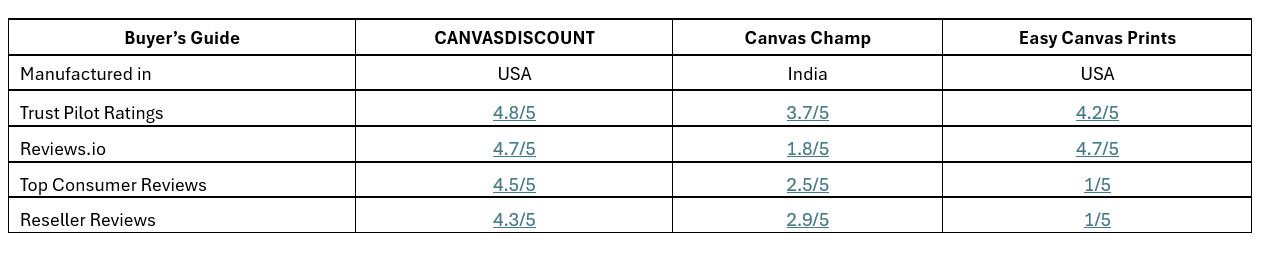
  3. Customer Satisfaction: With an average rating of 4.8 out of 5 stars on Trustpilot, CanvasDiscount has built a reputation for outstanding customer service and premium product quality. The brand’s dedication to providing prompt, effective support ensures customers are happy with every purchase.
  4. Quick Turnaround: Understanding the importance of timely delivery, CanvasDiscount ensures fast production and shipping. Since all products are manufactured in the United States, customers benefit from reliable turnaround, ideal for last-minute gifts or home décor updates.
  5. Security and Privacy: CanvasDiscout treats customer data with the utmost care. All personal information is kept secure, and transactions are processed with advanced safeguards to guarantee safety and trust.

Why Choose CanvasDiscount Over Competitors?

CanvasDiscount offers a combination of affordability, reliability, and customer satisfaction. With competitive pricing, good print quality, fast U.S.-based production, and dependable service, it has become a popular choice for those seeking personalized photo products.

Picanova Inc., Part of TCG, Earns BBB Accreditation Highlighting Commitment to Customer Care

What Does the BBB Accreditation Mean for CanvasDiscount Customers?

For customers, this accreditation is a sign of reassurance. It confirms that the company adheres to strict ethical standards and has earned a reputation for delivering reliable and trustworthy service. In general, BBB-accredited businesses are held to high standards of business conduct, and customers can expect transparent practices, honest advertising, and a commitment to resolving complaints promptly.

In the case of CanvasDiscount, customers can be confident that they are purchasing from a company that prioritizes their satisfaction and well-being. This accreditation serves as an endorsement of the brand’s efforts to maintain a strong relationship with its customers and deliver top-notch personalized products that meet the highest standards.

OpenXcell’s AI Chatbots: Enhancing User Experience and Operational Efficiency

Customer expectations are increasing year on year, but many businesses struggle to keep up with these evolving demands. Long response times, repetitive queries, missed messages, and inconsistent service can frustrate customers, which may affect a business’s revenue, market share, and trust. As a result, companies are under pressure to deliver quick and reliable support.

Imagine a buyer shopping at midnight and trying to obtain answers or resolve an issue online. In this scenario, the buyer might need to wait for hours or days to get a response, which could lead to frustration and missed opportunities. Customers generally expect quick answers, and companies must evolve to meet these needs.

Consider AI chatbots, which are helping to transform customer interactions. By offering real-time, intelligent responses, they are gradually helping businesses bridge the gap between demand and service. This technology is quickly becoming a vital tool in reshaping customer engagement. OpenXcell, an AI development company, is actively involved in providing chatbot solutions that can benefit businesses.

Why AI Chatbots are Important for Business Today

AI chatbots have become an integral part of businesses, both large and small. They offer instant, reliable support while changing the way companies interact with customers and simplifying everyday operations.

1. Faster Customer Support

AI chatbots offer instant answers 24/7, which can reduce customer wait times and increase satisfaction. By doing this, businesses may experience higher resolution rates, maintaining loyalty even during periods of high demand. Consistent service quality helps ensure customers receive the required support across different platforms and at any time.

2. Automating Mundane Tasks

AI-powered chatbots automate tasks like order tracking, appointment bookings, and FAQs, allowing the team to focus on more creative tasks. This automation can reduce human errors and operational costs, enabling the business to scale without necessarily hiring more employees. Improved accuracy and consistency can enhance departments while reducing manual work.

3. Personalization at Scale

Generic responses are not always sufficient to meet customer demands. AI-based systems can analyze customer data to improve each interaction, offering suitable recommendations and helping with prompt issue resolution. Businesses and brands can engage users by offering various tips, reminders, and personalized offers automatically. By personalizing, businesses have the potential to increase order values and conversion rates, ultimately building robust relationships and loyalty.

4. Boosting Sales

AI chatbots help qualify leads, assist prospects, and even recover abandoned carts simultaneously, creating more opportunities for sales. Businesses may notice higher sales by assisting buyers in decision-making, converting conversations into transactions. These AI chatbots can provide recommendations, thereby improving conversion rates.

5. Operational Efficiency

AI chatbots can seamlessly integrate with legacy systems, CRMs, and databases to automate workflows such as scheduling and data collection. They continuously evaluate customer interactions to detect and resolve issues, contributing to overall enterprise development. This leads to faster processes, reduced costs, and a culture that is more open to innovation.

As a result, the demand for AI chatbot development is steadily increasing, with companies in various industries seeking trusted partners to build secure, scalable, and impactful conversational solutions that can elevate customer engagement and streamline operations.

Growing Demand for Chatbots in Various Industries

AI chatbots are gradually changing the way organizations in multiple industries serve their audiences. From hospitals and online marketplaces to educational institutions, customers are increasingly looking forward to intelligent innovations. This indicates that chatbots have become an important part of businesses worldwide.

1. Banking & Finance

Banks are integrating chatbots into websites and applications to offer 24/7 assistance, financial tips, and fraud alerts. Customers can check balances, apply for loans, report lost cards, conduct transactions, and much more. It’s a convenient and reliable way to enhance financial services.

2. Retail

Retailers might consider using AI chatbots to assist buyers, solve product queries, and track orders in real time. Additionally, handling returns without any issues can help increase trust and establish brand loyalty. Personalized recommendations and promotions may enhance satisfaction and encourage repeat purchases.

3. Healthcare

AI chatbots for healthcare providers, such as hospitals and clinics, assist with appointment scheduling and early health assessments. Patients can obtain instant answers to medical questions, such as symptoms, prescriptions, and follow-up care. This level of assistance can streamline administrative work and support medical care.

4. eCommerce

Small to enterprise-level eCommerce stores now rely on AI chatbots for order tracking, payment queries, and cart recovery. Automated upselling and tailored product recommendations may increase engagement and conversion rates, helping eCommerce stores not only survive but also thrive in a competitive environment.

5. Education

Schools and universities are using AI chatbots to answer student queries, guide enrollment, and manage course registrations. Some systems even provide instant feedback on quizzes and assignments, streamlining routine academic tasks. Students can access course details or deadlines anytime, creating a more responsive and efficient learning environment.

6. Customer Support

In multiple industries, customer support teams can handle customer queries live, reduce wait times, and help alleviate human workload. Chatbots provide seamless support across various platforms and languages without delays. This kind of support improves customer satisfaction and helps build brand loyalty.

Types of AI Chatbots

AI chatbots are available in different sizes and forms, each designed to fulfill different business requirements. Here are the three most popular types of AI chatbots that businesses, startups, and organizations might consider to enhance automation and increase user engagement.

1. Rule-Based Chatbots

These chatbots follow predefined scripts and logic to answer a particular set of questions. They are capable of handling many structured tasks, such as FAQs, bookings, and order tracking. They provide consistent responses suitable for routine tasks without the need for learning algorithms.

2. Intelligent AI Chatbots

Built using machine learning and natural language processing, these AI chatbots are capable of understanding the context and intent behind the query and adapting over time. They can handle advanced queries and even conduct human-like conversations. These chatbots are best suited for dynamic, high-volume environments due to their ability to offer personalized conversations.

3. Hybrid Chatbots

Hybrid chatbots combine rule-based logic with machine learning abilities. These chatbots can handle routine queries using scripted responses but forward more complex queries to humans. Businesses may find hybrid chatbots useful for resolving repetitive tasks and evolving human challenges.

OpenXcell’s AI Chatbot Services: Why They Are an Ideal Partner

OpenXcell offers end-to-end AI chatbot services, from custom design to smooth integration, helping businesses create smart, engaging conversations that fit seamlessly into any industry or customer journey.

1. Custom Chatbot Development

OpenXcell develops bespoke chatbots tailored to the specific client’s business goals and audience. Their AI team designs solutions that align with the brand identity and operational goals of the industry, ensuring robust performance and user satisfaction.

2. Conversational UI Design

Design experts at OpenXcell craft natural and intuitive interfaces for flawless interactions. These interfaces encourage smooth conversations across web, mobile, and messaging platforms, boosting user engagement and customer retention.

3. Natural Language Processing (NLP) Integration

By integrating advanced natural language processing, OpenXcell allows the chatbots to improve their comprehension. Their developed bots are capable of understanding content and intent, leading to relevant and accurate responses and constant improvement over time.

4. Seamless System Integration

OpenXcell ensures that the AI chatbots integrate smoothly with existing business systems, websites, and platforms. This results in instant deployment with minimal operational disruption.

5. Industry Expertise

OpenXcell has comprehensive experience in industries such as healthcare, finance, retail, and more. Their team delivers tailored solutions according to the business’s unique challenges, ensuring valuable impact for the particular industry.

Shaping the Future of Customer Experience with AI

With over 13 years of industry experience and a team of more than 500 skilled professionals, OpenXcell provides AI strategies and solutions that evolve with changing demands. Startups and enterprises that partner with OpenXcell receive not only advanced chatbots but also a roadmap that aligns well with long-term vision. Across industries, OpenXcell ensures each solution is intelligent, ethical, and built for long-term impact.

Their approach emphasizes crafting meaningful, customer-centric interactions. By blending technical expertise with an in-depth understanding of user behavior, OpenXcell delivers context-aware communication. This commitment empowers clients to adapt to evolving technologies and fulfill the growing demands of customer expectations with confidence.