Faith Mehrer: The Dreamer Behind Box of Dreams

By: Elowen Gray

In a world where the pursuit of dreams often seems like an endless battle against time and circumstances, Faith Mehrer offers readers a powerful reminder of the strength it takes to break free from limitations. Her debut novel, Box of Dreams, is not just a book; it’s a journey; a journey that invites readers to reflect on their own dreams, struggles, and the courage needed to overcome them.

Box of Dreams is a deeply personal yet universally relatable exploration of what it means to chase after the impossible. Through the pages of her book, Mehrer shares a story that is both intimate and expansive, touching on themes of resilience, self-discovery, and the unbreakable human spirit. But how did this remarkable story come to life? What inspired Mehrer to write about dreams that transcend the boundaries we often place on ourselves?

For Mehrer, writing was not just about creating a fictional world; it was about expressing something deeply personal. “I’ve always believed that there’s a part of me that needed to be shared with others,” she says, reflecting on the origins of Box of Dreams. “It’s about understanding your limits, and then realizing that you have the power to surpass them.”

The idea for Box of Dreams grew from Mehrer’s own experiences. Like many of us, she faced moments in life that felt like barriers, obstacles standing between her and her aspirations. But rather than succumb to these limits, she found the courage to embrace the possibility of something greater. “The book isn’t just my story; it’s the story of anyone who has ever dared to dream,” Mehrer explains. “It’s for anyone who has ever felt stuck, unsure of how to move forward, or afraid of what lies ahead.”

The concept of the “box” in the title is symbolic of the many constraints people place on themselves, whether they come from external pressures or internal doubts. The “dreams” represent the potential that lies beyond those self-imposed limits; the vast, untapped possibilities that each individual can access if they allow themselves to break free.

Box of Dreams is a narrative that combines both the warmth of personal discovery and the grit of perseverance. At its core, the book tells the story of an individual who dares to reach beyond the boundaries of their own fears. Through the protagonist’s journey, Mehrer invites readers into a world where dreams are not just wishes but realities waiting to unfold.

The author draws on her own personal experiences to bring depth and authenticity to the story. “Writing was not always easy,” Mehrer admits, “There were days when I doubted myself, days when I wasn’t sure if the story would ever come together. But those moments of uncertainty were part of the process. They were what made the story real.”

She encourages readers to recognize that self-doubt is a natural part of growth and that it doesn’t have to be a roadblock. In fact, it can be the very thing that propels us forward. The protagonist in Box of Dreams faces many challenges, but it is in overcoming these obstacles that they discover their true strength and unlock the power to pursue their dreams.

What sets Box of Dreams apart is its ability to make readers feel seen and understood. Mehrer’s ability to weave her own experiences into the fabric of her narrative creates a book that feels both deeply personal and widely accessible. Her love for storytelling began in her childhood, where books became her refuge. “Books were my escape from the world,” she recalls. “They gave me a sense of comfort and understanding when I needed it the most.”

Creating Box of Dreams was no simple task. For Mehrer, the process was a dance between doubt and discovery. There were moments of frustration, moments where she questioned whether the story was worth telling, but those moments never stopped her. “I think that’s part of being a writer. You have to trust that the story will find its way,” she shares.

The journey of writing Box of Dreams is a testament to the importance of perseverance. Mehrer emphasizes that even when the path seems unclear, the act of writing itself can help reveal the way forward. “The best stories are the ones that are written from the heart,” she says, and it is this authenticity that shines through in her book.

Writing, for Mehrer, is as much about the emotional process as it is about the technicalities. She compares writing a book to painting a canvas. “It’s not always clear at the start what the end result will look like. But you have to trust the process, let the story unfold.”

Above all, Mehrer hopes that her book will inspire readers to embrace their own dreams, no matter the doubts they may face. “Dreams aren’t just for the lucky few. They’re for everyone. We all have the ability to reach for something greater than we can imagine,” she says, her voice full of conviction.

In Box of Dreams, readers will find not just a story, but a spark; a spark that will ignite their own passion for the dreams they’ve been putting off. And as Mehrer so poignantly reminds us: “It’s never too late to start chasing your dreams.”

A Passion Worth Writing: Preston Frazier’s Journey from Law to Rock Legends

By: Elowen Gray

What happens when a police officer-turned-attorney follows his lifelong love for music into the world of writing? You get a heartfelt tribute to one of rock’s most iconic bands—Toto. Preston Frazier, a man who has lived a dual life in law and music, has turned his decades of admiration into a book that not only pays homage to the band but also educates, excites, and connects with fans, both old and new. His book Toto: The Band, Not the Dog is more than just a biography; it’s a journey through sound, memory, and artistic evolution. His journey into authorship wasn’t one he initially planned. His professional path began in law enforcement, serving as a police officer in Baltimore, Maryland, and later transitioning into a successful legal career. But even amidst these demanding roles, one thing remained constant—his deep passion for music. “I’ve been surrounded by music all my life,” Frazier shared in a recent interview. “My father was into jazz, and that really shaped how I listened to and appreciated music.”

This passion led him to start a blog over 15 years ago, where he reviewed albums and wrote about his ever-growing music library. He eventually launched a podcast, “Slang of Ages,” where he discussed both mainstream and lesser-known artists across genres—rock, jazz, R&B, and more. Through all these creative outlets, one band continued to pull on his heartstrings: Toto. Why Toto? Frazier’s love for Toto began in the early 1980s during his college years. His roommate, a drummer, introduced him to Jeff Porcaro, Toto’s legendary founding drummer. That spark grew into a flame, and over the years, Frazier followed the band religiously, attending every U.S. tour since 1999 and even getting the chance to meet the band members backstage. “I always loved their musicianship,” he said. “They’re great players, great composers, and their music is so diverse from one album to the next.” It’s this diversity that inspired Frazier to write Toto: The Band, Not the Dog. His goal? To capture the soul of the band and give fans an inside look at how Toto evolved over the years—not just the popular hits, but the deep cuts, the hidden gems, and the unreleased ideas that still live in their archives.

When people hear “Toto,” their minds often go straight to the band’s most mainstream hit—Africa. And while Frazier acknowledges the song’s popularity, his book dives far deeper. He explores albums like The Seventh One (1988), which he believes best captures Toto’s essence. According to Frazier, this album blends progressive rock with the familiar Toto sound, offering a rich, emotionally resonant experience. “The songs on that album are incredible. The production is tight. It’s the epitome of Toto to me,” he explained. Frazier also praises the band’s 2006 album Falling in Between, a work that saw the group come together more collaboratively than ever before. The music was created as a group, rather than individuals bringing in pre-written songs. It reflects not just the band’s evolution, but their willingness to adapt and remain relevant. Another fascinating knowledge from the book is how Toto revisited old, unreleased fragments from the late ’70s and early ’80s to produce Old Is New in 2018. Frazier calls this process remarkable, showing how even decades-old ideas can become something fresh and inspiring.

Frazier doesn’t consider himself a music critic in the traditional sense. Instead, he calls himself a music enthusiast who writes about what he loves. “If I don’t like it, I’m not going to write about it,” he said. “Life’s too short to listen to music you don’t like.” This approach is what makes his writing relatable and enjoyable. He avoids diving too deep into technical jargon but still includes just enough detail to keep serious fans engaged. Striking that balance between being informative and accessible is what sets his book apart.

In a world dominated by digital music, Frazier believes books like his serve an essential purpose. “They not only preserve music history but also introduce readers to songs and albums they might have missed,” he said. “Legacy bands like Toto still have a lot to say. Their music today is just as good, if not better, than what they released during their peak years.” He also emphasizes how digital platforms have helped younger generations discover bands like Toto. Viral videos, television appearances, and streaming services have brought new life to older songs—but books provide the context, the story, and the depth that digital snippets often lack.

Frazier has a simple yet powerful piece of advice for those who want to write about music: “Start. Don’t keep saying, ‘One of these days.’ Make today the day. Outline your ideas, talk to people you trust, and just begin.” He believes writing should come from a place of passion. Whether you’re a casual fan or a die-hard enthusiast, if something moves you, it’s worth writing about.

The success of Toto: The Band, Not the Dog isn’t the end of Frazier’s writing journey. In fact, he’s already working on his second book, which will explore another band close to his heart, featuring new interviews and fresh insights. He aims to have it published by the second quarter of 2025. And while he’s not yet part of any local author communities, he’s open to the idea. “That’s a great suggestion,” he noted with a smile. “I’ll write that down.”

Preston Frazier’s book is more than a fan’s tribute. It’s a labor of love, backed by years of listening, learning, and connecting with the band he admires. Toto: The Band, Not the Dog offers readers an intimate, well-researched, and deeply respectful look at a group that helped shape modern rock.

The Road That Led to the Chronicles of a Lost King

By: Elowen Gray

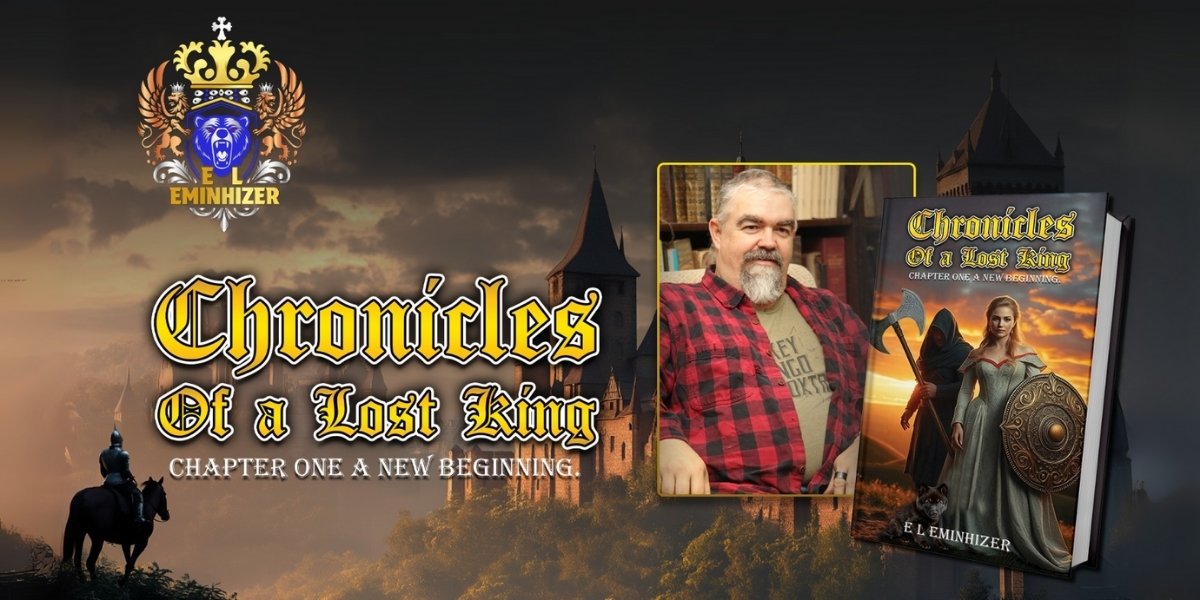
  1. L. Eminhizer laughs when he says he is just “upright and sucking air.” The self-deprecating humor masks something: his debut novel, which is as ambitious as it is sprawling. Chronicles of a Lost King – Chapter One takes readers into a world of fantasy. A place where a desperate queen’s summoning spell plucks a battle-hardened wanderer from another world into her palace—and ends on a cliffhanger sharp enough to draw blood. The mix of court intrigue, survivalism, and cross-cultural humor has earned the book a spotlight in the New York Weekly. There, Eminhizer’s raw, coffee-fueled candor proved just as memorable as his prose.

When asked what pushed him toward writing a full novel, Eminhizer credits a casual dare from his teenage daughter. She knew that he scribbled stray poems and fragments, so she challenged him to finish an entire story during his downtime as an over-the-road trucker. “I used to run 18-wheelers,” he recalls. “When I was waiting at a dock or shutting down for my ten-hour break after arguing with people on the highway for eleven hours, the book just… grew.”

That origin explains the novel’s pacing. Whispered conspiracies in candlelit halls give way to ambushes in fog-thick forests. “I started with ‘What if?’—then threw out half the rules,” Eminhizer says. The result? A world that feels medieval and unexpected, with a bit of comic book love and a pinch of late-night anime.

Chronicles revolves around a magical ritual gone spectacularly wrong. Arianna, orphaned young and hemmed in by rivals, performs an ancient rite and summons a partner. What she gets is Sam—a monk-mercenary whose skills are decades outdated in his own world but centuries ahead of hers. “If we’re going to have magic,” Eminhizer remarks, “why not go for infinite possibilities?”

Sam is the fascination of the author with the layered strength. Eminhizer wanted a hero capable of compassion as well as combat. “Strength isn’t always about muscles,” he explains. “Sometimes it’s just sitting there quietly, staying small in the grand scheme.” That ethos shines in a moment where Sam, fresh from fending off assassins, spends an afternoon teaching village children to juggle. That is balance.

One of the book’s most charming surprises and interesting aspects is the language barrier between Sam and Arianna. The idea came from a real-life episode when Eminhizer helped a lost Russian trucker make it through a vast steel mill using a mashup of English, Spanish, and hand gestures. On the page, the miscommunication becomes both comic relief and a way to deepen trust.

The writing is unique in more ways than one, and the author discusses how the writing process was anything but traditional. For eight years, Eminhizer tapped out scenes on a sticky-note app during breaks, emailing fragments to himself for later assembly. “Some weeks I managed one sentence in five days, other times half a page in an hour,” he says. The draft eventually ballooned to 1,500 pages before he learned Amazon prefers under 500. Cutting it down, he jokes, was like “reorganizing backwards chaos,” but it sharpened the book’s propulsive voice.

Though the book deals with multiple complex themes such as destiny, culture clash, and perseverance, Eminhizer insists the core message is hope. “Anything is possible if you’re willing to try,” he says. And that very spirit you see embodied in Havoc, the puppy Sam rescues and names for the trouble he causes. The dog’s loyalty becomes an anchor in a treacherous world.

Early reactions have been as colorful as the book itself. Eminhizer’s mother proudly tells everyone she meets. Truck-stop friends rib him about thinly disguised versions of themselves in his pages. One buddy texted him a screenshot of a brutal fight scene, asking, “Were you drunk when you wrote this?” Eminhizer admits he wrote it in a dispatch office between deliveries—a reminder that creativity is often an endurance sport.

Eugene L. Eminhizer grew up in a house steeped in stories. His father, a college professor and minister, and his mother, a teacher, gave him equal parts logic and empathy. Those were the qualities that you see in his fiction. Before becoming a full-time writer, Eminhizer spent years as a farmer, a construction worker, and a trucker. This real world’s drudgery grounds his world of fantasy into something tangible.

Sequels aren’t a question but a certainty. Chapters Two and Three are already with the publisher, and Eminhizer has seven more drafts waiting in the wings. Future books will send Sam across worlds again, introduce non-human allies, and upend the magical rulebook yet again. “All the rules are going to change,” he teases, with a grin in his voice.

When asked what he hopes to bring to modern fantasy, Eminhizer keeps it simple. “I just want to add to it. To show that under the right circumstances, anything is possible.” For readers, the message may feel even simpler: slow down, find something to laugh about, and hold fast to what—and who—you love.

That philosophy, born in the cab of an eighteen-wheeler and hammered into high adventure, is reason enough to follow wherever E. L. Eminhizer takes us next.

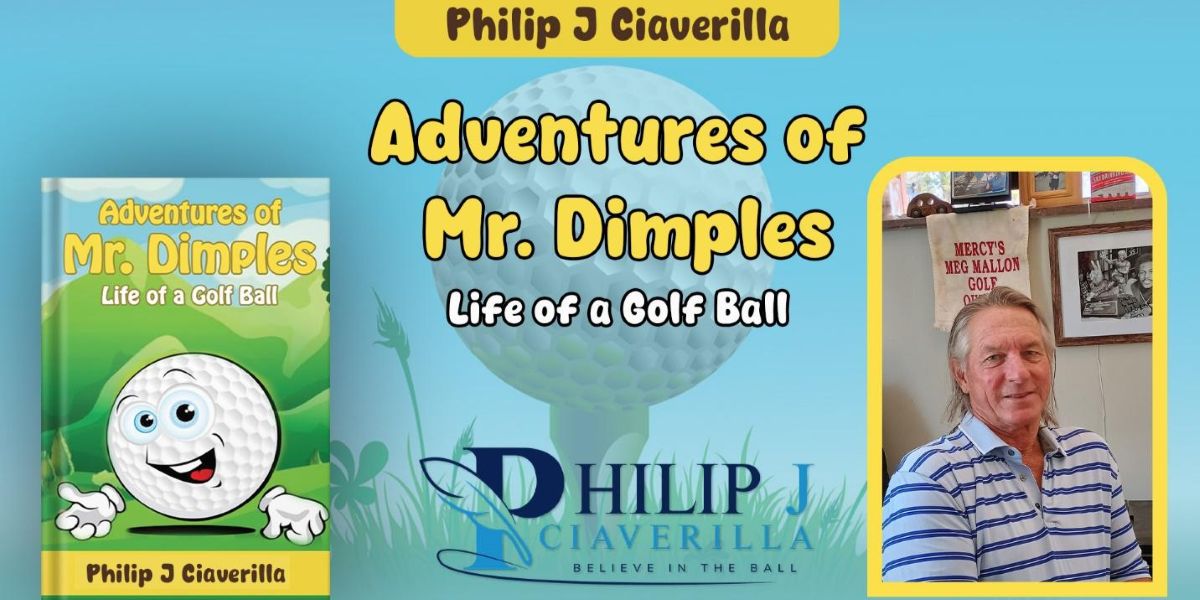
Philip J. Ciaverilla: The Unexpected Voice Behind a Golf Ball’s Life Story

By: Elowen Gray

In an age of digital noise and fleeting attention spans, it’s rare to come across a story that invites readers; especially younger ones; to slow down and reflect. But that’s exactly what Philip J. Ciaverilla offers in his debut book Adventures of Mr. Dimples: Life of a Golf Ball. A whimsical tale told from the perspective of a golf ball, the book combines playful storytelling with subtle lessons in perseverance, sportsmanship, and self-belief. And behind it is a first-time author with a story just as compelling as the one he penned.

Born and raised in Michigan, Ciaverilla has worn many hats throughout his life: engineer, teacher, builder, mentor, and father. Now, at 64, he’s added another title; children’s author. But don’t mistake this for a late-life hobby. Adventures of Mr. Dimples is a thoughtful, imaginative book rooted in real moments, lifelong values, and a deep love for the game of golf.

In a recent interview with New York Weekly, Ciaverilla traced the book’s origins back to a moment on the course with his father. “The front nine was full, so we played the back,” he recalled. “When we circled back, a young woman named Meg asked to join us. I thought I was pretty good; until she outdrove me. That kind of moment stays with you. It taught me respect, humility, and that talent can surprise you.”

That young woman, it turns out, was Meg Mallon, who would go on to become a Hall of Fame LPGA golfer. The experience planted the seed for a story that would take shape years later, not with a traditional sports hero, but with a golf ball named Mr. Dimples.

The premise of Adventures of Mr. Dimples is delightfully unexpected. The book follows Mr. Dimples as he navigates the ups and downs of his first game, teaming up with an amateur golfer named Olive and encountering everything from competitive rivals to talking squirrels, intimidating birds, and even an alligator. It’s a classic underdog story; except the underdog is a ball with dreams of greatness and a surprisingly rich inner life.

“I wanted it to be fun,” Ciaverilla said. “But also meaningful. Golf teaches you more than just how to hit a ball; it teaches patience, purpose, and practice. I think kids need those reminders, especially now.”

Ciaverilla isn’t your typical literary figure. He studied engineering at Western Michigan University and spent years teaching and working in tech and construction before starting his own building business. He also coached sports, raised a family, and built a life rooted in personal connection and community. His story is one of reinvention; not out of necessity, but out of curiosity.

“I was never a writer,” he admits. “But my sister is. She’s a published author, and when I shared my idea with her, she said, ‘Go write it yourself.’ That challenge pushed me. I didn’t want to just talk about it; I wanted to see it through.”

The result is a book filled with warmth, humor, and heart. Mr. Dimples is both narrator and student of life, learning lessons alongside his owner Olive, a nervous first-time golfer facing her own self-doubt. Through characters like Bear, Shark, and Ricky Flower (yes, other golf balls), Ciaverilla explores themes like bullying, resilience, teamwork, and growth.

But it’s not all soft messages. The book has real moments of tension; a near run-in with an alligator, for one; and plenty of humorous touches, like a squirrel trying to protect a hidden stash of nuts, or a bird exacting revenge for an accidental mid-air collision. These scenes make the story more than just a metaphor; they make it entertaining, page after page.

When asked what surprised him most during the writing process, Ciaverilla laughed: “Honestly? Figuring out how to make a golf ball come alive. It sounds simple, but it took a lot of thinking; and revising. I’d just start writing and talk it through out loud. Sometimes the story takes you places you don’t expect.”

The book also includes heartfelt nods to real people and places: Meg Mallon, who inspired Olive’s character; Ciaverilla’s sister Annie, a fellow author and motivator; and the Edgewood Country Club in Michigan, where his love for golf deepened. The story may be fictional, but it’s rooted in lived experiences and familiar feelings.

Ciaverilla’s ultimate hope? That the book resonates. “I don’t know where this journey will take me,” he said, “but if someone reads Mr. Dimples and feels inspired; whether it’s to try golf, write a story, or just keep going; that’s all I could ask.”

He’s not stopping here. His next project, The Lost Balls, is already in the works. This time, the story unfolds inside a golf ball factory, where characters dream of escaping the packaging and discovering their own destinies. Like its predecessor, it promises humor, heart, and an underlying message about choosing your path and believing in your potential.

For a man who’s built homes, careers, and a life full of purpose, writing books for young readers is just another way Philip Ciaverilla is building something meaningful; one word, one page, one story at a time.

“I always told my daughter,” he said, “‘You’ve got all the tools. Now believe in yourself and use them.’ That’s really the message of this book. Believe in the ball, believe in yourself.”

Redeemable vs. Non-Redeemable Tax Deeds Explained

A tax deed represents the legal right to take ownership of a property when the owner fails to pay their property taxes. Local governments sell tax deeds through auctions to recover the unpaid taxes, allowing investors to either own the property or earn interest if the deed is redeemable. To truly understand how tax deeds work, it is essential to know the difference between redeemable and non-redeemable types, as each carries its own set of rules, timelines, and potential profits.

What Are Redeemable Tax Deeds

Redeemable tax deeds are a hybrid between a tax lien and a tax deed. In states that follow this system, winning the auction does not give you immediate ownership of the property. Instead, you hold a redeemable deed that gives the property owner a specific period to repay the overdue taxes plus interest. If the owner redeems within that time, you receive your initial investment back along with interest as determined by state law. If the redemption period passes without payment, you can move forward with obtaining the deed to the property.

How Redeemable Tax Deed States Operate

Redeemable tax deed states have their own unique timelines and interest structures. For example, some may allow a redemption period of six months, while others might extend it to two years. Interest rates can also vary widely, making certain states more appealing to investors seeking predictable returns. In these states, your role as the winning bidder is to wait through the redemption period to see whether the property owner pays back the taxes or whether you proceed to take ownership.

What Are Non-Redeemable Tax Deeds

Non-redeemable tax deeds are more straightforward. When you win at a non-redeemable tax deed auction, you gain immediate ownership rights to the property, subject to any other legal encumbrances that may exist. There is no waiting period for the property owner to redeem the deed because the redemption right has already expired before the sale. This means you can take possession, make improvements, or sell the property without delay, provided you handle any outstanding issues like liens or occupancy.

Comparing the Investment Process in Each Type

Investing in redeemable tax deeds requires patience and a willingness to wait for either redemption interest or property ownership. Non-redeemable deeds, on the other hand, offer quicker control over the asset but often come with more immediate responsibilities, such as repairs, eviction of occupants, or clearing title issues. The process you choose should align with your investment style, available capital, and risk tolerance.

The Appeal of Redeemable Tax Deeds for Conservative Investors

For investors who prefer a relatively predictable return without diving into full-scale property management right away, redeemable tax deeds can be attractive. The interest rates set by the state are often higher than typical bank investments, and the structure means you either get your investment plus interest back or potentially acquire the property. This dual-outcome nature can feel like a win-win scenario when managed properly.

The Appeal of Non-Redeemable Tax Deeds for Aggressive Investors

Non-redeemable deeds can be exciting for those who want immediate property acquisition. If you are skilled at property renovations, land development, or quick resales, this type of tax deed can lead to faster profit cycles. However, it also demands a thorough understanding of title searches, local real estate markets, and possible legal hurdles, since you take full responsibility for the property the moment you win the bid.

Redeemable vs. Non-Redeemable Tax Deeds Explained

Photo: Unsplash.com

Understanding Tax Deed Investment Risks

Both redeemable and non-redeemable tax deeds carry tax deed investment risks that every investor should evaluate before bidding. Properties may have structural damage, environmental hazards, or legal issues that could cost more than the initial investment. Additionally, competition at auctions can push prices beyond a property’s actual market value, reducing your potential return. Understanding local laws, doing a proper title search, and visiting the property when possible can significantly reduce these risks.

Common Mistakes New Investors Make

One of the common errors in tax deed investing is failing to perform due diligence before bidding. In redeemable tax deed states, some investors mistakenly assume they will get the property, only to have it redeemed at the last minute. In non-redeemable situations, rushing into ownership without checking for existing liens or legal disputes can create expensive problems. Education, research, and patience are key.

Researching Before the Auction

The foundation of a successful tax deed investment lies in research. This means understanding the auction rules, redemption timelines, and any additional fees. For redeemable deeds, knowing the state’s interest rate and payment structure can help you estimate your potential return. For non-redeemable deeds, knowing the property’s actual condition and market value enables you to decide the maximum bid you are willing to make.

Why State Laws Make a Big Difference

Every state has its tax deed system, and the rules can change over time. Redeemable tax deed offers different interest rates, redemption periods, and legal procedures for finalizing ownership. Non-redeemable states may have specific steps to quiet title or remove liens. Staying up to date with these legal details is critical for protecting your investment and maximizing your profits.

Choosing the Right Type for Your Strategy

The decision between redeemable and non-redeemable tax deeds often comes down to your goals as an investor. If you want more predictable returns with less hands-on management, a redeemable system may be a better fit. If you wish to faster property acquisition and are comfortable handling renovations or resales, non-redeemable deeds can be more rewarding. Some investors even diversify by participating in both systems.

Building a Long-Term Tax Deed Portfolio

Many successful investors treat tax deed investing as a long-term strategy, reinvesting profits from redeemed deeds into more auctions and using property sales to fuel future purchases. This approach allows you to build a portfolio that balances the steady income potential of redeemable deeds with the equity-building power of non-redeemable ones.

Final Thoughts on Redeemable vs. Non-Redeemable Tax Deeds

Both redeemable and non-redeemable tax deeds offer unique opportunities to profit from unpaid property taxes, but they require different approaches and risk tolerances. By understanding the systems in redeemable tax deed states, carefully evaluating tax deed investment risks, and aligning your choices with your strategy, you can navigate this market with greater confidence. Whether your goal is consistent interest income or rapid property acquisition, informed decision-making is a valuable tool you can bring to the auction.

Disclaimer: The information provided in this article is for educational purposes only and should not be construed as financial, investment, or legal advice. Tax deed investing involves significant risk and may not be suitable for all individuals. The content herein is designed to help readers understand the differences between redeemable and non-redeemable tax deeds and the potential risks and rewards associated with them. Always conduct thorough research, seek professional advice, and carefully consider your own financial situation and risk tolerance before making any investment decisions. The author and publisher of this article do not guarantee the accuracy, completeness, or applicability of any information presented and assume no responsibility for any decisions or actions taken based on this content.

How Live Music Is Transforming NYC Parades and Celebrations

Music rises above the chatter as crowds pack New York City streets. Parades burst with color, rhythm, and motion when live bands lead the way. Horns pierce the air, drums drive the pace, and voices swell in response. The excitement builds before the performers even come into view.

Live music changes the atmosphere instantly. Each note answers the moment. A quick drum roll sparks cheers. A trumpet riff pulls the crowd into step. The city turns into a shared stage where musicians and spectators push the celebration higher with every beat.

Creating Spontaneity: When Sound Moves With the Crowd

Live music changes how people experience a parade. When musicians perform in real time, they respond to the crowd’s mood. A slow section of the route might call for a softer rhythm, while a sudden cheer can trigger an energetic burst.

Unlike stationary floats, moving performers can close the gap between themselves and spectators. They bring music directly into the crowd, making each interaction feel personal. A saxophone solo played a few feet away feels different from one heard blocks away.

In New York City, a mobile marching band can transform a parade route into a shifting stage. The music weaves through streets, meeting people where they stand, and turning ordinary stretches of sidewalk into lively, unforgettable pockets of celebration.

Showcasing Cultural Diversity Through Live Performances

Live music in New York City parades reflects the city’s unmatched cultural mix. Each celebration draws on traditions from around the world, transforming the streets into a moving festival of sound. The blend of rhythms, melodies, and instruments tells stories of the communities that make up the city’s vibrant identity.

Cultural representation goes beyond entertainment. It affirms heritage and connects generations. Elders hear familiar tunes from their homeland, while younger audiences experience those traditions in a fresh, energetic way. The exchange deepens understanding between different groups, building respect through shared celebration.

Some parades take this to a spectacular level. Events like the Puerto Rican Day Parade fill the streets with salsa bands, plena groups, and traditional drumming. The music shapes the entire experience, drawing in locals and visitors alike.

By featuring these live performances, parades become more than gatherings—they turn into living cultural showcases. Each beat, lyric, and harmony preserves tradition while adapting to the city’s ever-changing rhythm, ensuring the heritage behind the celebration stays alive.

Amplifying Energy and Emotional Impact

Live music has a way of lifting the entire mood of a parade. The moment a band strikes up, the atmosphere shifts. People sway to the rhythm, clap along, or shout in excitement. The sound travels through the crowd, linking strangers in a shared burst of energy.

Musicians feed off this response. A cheer can spark a louder chorus, a longer drum roll, or a sudden change in tempo. The crowd answers in kind, creating a loop of enthusiasm that recorded tracks cannot replicate.

Events like the Flag Day Parade show how music amplifies pride and shared emotion. Marching bands performing patriotic anthems create an almost electric connection with the crowd, uniting people in both spirit and movement. That surge of feeling lingers long after the parade has passed.

Practical Challenges and Creative Solutions

Live music brings unmatched vibrancy to NYC parades, yet making it work in such a busy environment takes precision. Musicians and organizers face unique hurdles, from tight spaces to unpredictable conditions. Overcoming these challenges demands creativity and flexibility, ensuring the sound stays strong and the celebration remains seamless from start to finish.

Managing Limited Space

Parade routes often leave little room for performers to move freely. Crowds, floats, and street fixtures create obstacles that can slow the flow. Smaller ensembles and streamlined setups solve this by allowing musicians to weave through narrow gaps. This mobility keeps the music accessible while maintaining the steady progression of the parade without crowding the route.

Controlling Sound Levels

City noise regulations require careful balancing of volume. Excessive sound can disrupt nearby businesses and residents, while low levels risk losing crowd engagement. Skilled bands use directional speakers, acoustic arrangements, and real-time adjustments to maintain clarity. This ensures music remains vibrant without overwhelming the environment, preserving the celebratory tone while respecting the city’s diverse soundscape.

Adapting to Weather Changes

The weather can shift quickly, affecting instruments and performance quality. Sudden rain or extreme temperatures challenge both musicians and their gear. Bands prepare with protective covers, portable shelters, and weather-resistant instruments. Quick transitions to alternate performance styles, such as switching from electric to acoustic, allow music to continue uninterrupted, ensuring the celebration stays alive regardless of outdoor conditions.

Coordinating Parade Flow

Live performances must match the pace of the parade to avoid delays. Organizers use clear communication systems to align timing between bands and floats. This coordination ensures transitions are smooth and music reaches all sections of the crowd. By keeping the flow consistent, live music enhances the experience without disrupting the rhythm of the event.

Wrapping Up

Live music has reshaped the energy and meaning of NYC parades. It turns sidewalks into stages and transforms spectators into active participants. Each note responds to the moment, making celebrations feel alive in ways recorded tracks cannot. As more events embrace this connection, the city’s parades will continue to evolve into richer, more unforgettable experiences for everyone who attends.

The Clear Choice: Why Transparent Glasses Are Dominating Eyewear Fashion

By: Abdullah Iftikhar

Fashion is in a constant state of evolution, and when it comes to eyewear, one trend is coming into focus with crystal clarity with transparent glasses. Sleek, minimal, and universally flattering, clear frames are having more than just a moment. They’re rewriting the rules of style, one barely-there pair at a time.

From the runways of Paris to the street style of SoHo, transparent glasses are popping up on bold creatives, influencers, and professionals alike. They’re versatile, they’re bold in a quiet way, and they’re officially fashion’s new favorite frame.

The Clear Choice: Why Transparent Glasses Are Dominating Eyewear Fashion

Photo Courtesy: Vooglam

Why Transparent Frames Are Everywhere Right Now

Clear frames, which are also called transparent glasses, are the perfect storm of form and function. They play well with any outfit, they don’t compete with your makeup, and they add a polished, intellectual vibe without trying too hard. It’s no surprise that Vooglam, one of the leading names in affordable yet high-quality eyewear, is at the center of this trend.

“People are craving simplicity with edge,” says a Vooglam stylist. “Minimalist eyewear offers that. It’s clean, but still makes a statement.”

That’s the charm of minimalist design: it stands out by blending in. Instead of screaming for attention, clear frames invite a second look. They highlight your facial features, not overshadow them. They add structure without adding weight, visually or physically. And with the rise of neutral-toned fashion, they’re the perfect companion piece to a more curated, capsule wardrobe.

Versatility: The Ultimate Fashion Hack

Transparent glasses are the chameleons of the accessory world. Whether you’re stepping into a Monday meeting, brunching on the weekend, or heading to a gallery opening, clear frames transition seamlessly from one vibe to another.

Fashion bloggers describe them as their “style cheat code.” “No matter what I’m wearing a power blazer or a hoodie my transparent glasses always fit. They’re like the white sneakers of eyewear,” she says.

And she’s not wrong. Minimalist eyewear is easy to pair with both loud prints and subtle palettes. For those who wear glasses daily, the idea of having one frame that fits all outfits and occasions is not just stylish, it’s practical.

Designed for Everyone

One of the strongest points in favor of transparent glasses is their inclusivity. The colorless nature of the frames means they work across a wide range of skin tones and hair colors. Whether your aesthetic leans soft and romantic or sharp and avant-garde, clear frames adapt to your energy, not the other way around.

Vooglam’s transparent glasses line, for example, includes classic shapes like rectangles and ovals, as well as more experimental styles with layered textures and glossy finishes. Their lightweight construction also makes them ideal for everyday wear, proving that comfort doesn’t have to come at the expense of style.

Vooglam: The Name Behind the Look

The Clear Choice: Why Transparent Glasses Are Dominating Eyewear Fashion

Photo Courtesy: Vooglam

Vooglam’s design ethos combines forward-thinking style with practicality. You’ll find crystal-clear acetates, barely-there bridge designs, and lenses that are as functional as they are fashionable. Their official site even features helpful tools for virtual try-ons, so you can preview your next signature look from the comfort of your phone.

Minimalism Isn’t Boring, It’s Bold

In a world overflowing with overstimulation, transparent glasses speak to a new kind of luxury: clarity. Choosing clear frames is a confident decision to stand out by not trying too hard. It’s clean lines. It’s quiet sophistication. It’s fashion with an exhale.

So, if you’re looking for a subtle way to elevate your look without loud logos or heavy embellishments, clear frames are the clear choice. And with Vooglam leading the charge, there’s never been a better time to see and be seen, in transparent.