James “Jim” Feldkamp’s Mental Preparation Techniques for Solo Ocean Crossings

By: Brandon Purdum

Solo ocean voyages are among the mentally demanding undertakings in the world of sailing. Beyond mastering navigation and weather patterns, sailors must prepare their minds to handle isolation, unpredictability, and extended periods of solitude. Mental resilience becomes just as important as physical strength, often playing a significant role in determining the outcome of a trip.

James “Jim” Feldkamp notes from his own experiences and others that those who succeed often credit preparation, inner discipline, and the ability to remain calm under pressure. Developing routines, practicing visualization, and drawing inspiration from seasoned sailors are key strategies that help the ocean become a familiar companion instead of an overwhelming force.

Importance of Mental Strength for Solo Voyages

Sailing solo across an ocean demands more than physical ability or technical knowledge. The mental challenges—long periods of isolation, unpredictable weather, and constant self-reliance—can pose significant tests even for the most experienced sailors. Without mental rigor, the risks of poor decision-making and emotional burnout increase considerably.

Sailors often describe the mental strain as the toughest part of the journey. Days without human interaction, disrupted sleep cycles, and the constant need to stay alert can wear down even the most confident navigator. A steady mindset directly supports endurance and safety, especially when facing setbacks or prolonged stress.

Maintaining mental clarity helps sailors respond calmly during emergencies and maintain focus when fatigue sets in. Navigating these mental hurdles successfully is what turns a solo voyage from a survival test into a manageable and, for some, even meaningful experience.

Establishing Pre-Departure Routines

Mental endurance at sea often begins with habits formed on land. Creating a consistent daily rhythm before departure can help condition the mind for the solitude and structure required during a solo voyage. Activities like waking at set times, planning meals, and assigning tasks throughout the day can build discipline and reduce the mental strain of unpredictability. Consistency in land-based routines often leads to greater calm during high-pressure moments at sea.

Spending extended periods alone before the journey may help sailors become more comfortable with silence and self-reflection. Some choose to take short solo hikes or overnight trips to simulate the emotional environment of isolation. These experiences can help identify emotional triggers early and allow time to develop healthier coping mechanisms.

Journaling during the preparation phase can offer insight into emotional rhythms and thought patterns. Over time, this habit becomes a valuable tool for processing stress and maintaining perspective while at sea. When emergency drills are practiced regularly, they become second nature, reducing panic and boosting confidence in high-pressure situations.

Visualization and Mental Rehearsal Exercises

Mental rehearsal is a technique many solo sailors rely on to prepare for the unexpected. It involves imagining specific scenarios—equipment failure, sudden storms, or moments of extreme fatigue—and mentally walking through the steps needed to respond. This kind of mental training builds familiarity with stress, making it more manageable when it arises. The mind becomes more agile, ready to act rather than freeze.

Sailors who visualize both smooth sailing and difficult setbacks often find themselves more adaptable when plans change. Seeing the full range of potential experiences—both good and bad—helps set realistic expectations. Rather than reacting with fear, the mind responds with practiced calm. The more detailed the mental scenario, the greater the likelihood the rehearsal will benefit real-world application.

Some sailors incorporate visualization into daily routines, pairing it with breathing exercises or quiet time on deck. This mental conditioning sharpen focus and help strengthen confidence, turning uncertainty into something manageable rather than overwhelming.

Managing Stress and Staying Focused at Sea

Simple routines, like stretching after a shift or taking a few minutes to breathe deeply during tense moments, may help regulate stress and bring the mind back to center. These small acts can serve as anchors during mentally turbulent moments. Even something as small as sipping a warm drink can bring a sense of control when things feel chaotic.

Staying mentally engaged when the days blend together can be difficult. Setting modest, achievable goals—like checking equipment or plotting progress—adds structure and boosts morale. Celebrating minor achievements may help maintain momentum, especially when the weather is calm and uneventful or when progress feels slow. These small victories serve as psychological fuel, keeping motivation alive through monotony.

When negative thoughts creep in, redirecting focus to immediate tasks or a calming ritual can be surprisingly effective. The ocean offers no pause button, but the mind can be trained to ride out emotional swells just as the body handles physical ones.

Staying Connected and Supported While Alone

Even in total solitude, a sailor is never truly cut off. Scheduled check-ins with loved ones or fellow mariners through satellite devices can provide immense emotional support. These brief connections often serve as a lifeline, reminding the sailor of the world beyond the horizon. Sometimes, just hearing a familiar voice is enough to reset the emotional compass.

Knowing someone is listening on the other end of a message can ease feelings of isolation and offer motivation during low points. Some sailors create accountability systems before departure, sharing goals or updates with a trusted friend to stay mentally anchored throughout the journey. These connections act as psychological tethers, keeping the mind from drifting too far into solitude.

Applying Lessons from Experienced Solo Sailors

Veteran solo sailors often credit their success not just to skill, but to mental habits honed through trial and repetition. Many speak of the importance of accepting discomfort, rather than resisting it, and viewing each hardship as part of the larger journey. They learn to embrace unpredictability as a teacher rather than a threat.

Newer sailors may benefit by studying the strategies others have used—whether it’s how they maintained routines, handled fear, or overcame setbacks. Adapting these lessons into personal practice before setting sail lays a stronger mental foundation and reveals what methods resonate most. Listening to these stories can offer reassurance that challenges, while unique, are not unprecedented. Every solo crossing is a learning experience, shaping sharper instincts and deeper resilience with each mile sailed.


Disclaimer: The information provided in this article is for general informational purposes only and is not intended as professional sailing, health, or mental preparation advice. While the article highlights insights from James “Jim” Feldkamp’s experiences and general strategies for solo ocean crossings, it is important to understand that individual experiences may vary. Always consult with a professional before undertaking solo sailing or engaging in mental training for high-stress environments. The strategies mentioned in this article are not guaranteed to be effective for everyone and should be adapted to personal needs and conditions.


Set the Table for Success: How to Style a Home Restaurant That Feels Five-Star

By: Matthew Kayser

Living in New York is increasingly expensive, and people are looking for the best ways to make ends meet. Home restaurants are becoming increasingly popular in the Big Apple. But creating a home restaurant that hits five-star vibes isn’t just about plating: you need the full design dish. Within a few strategic tweaks, your dining corner can pack personality, mood, and rhythm.

But where to start? What are the best kitchen brands for a home restaurant? Poliform kitchen systems often show up in design spreads because they blend clean geometry with high-grade materials without shouting. It’s a great example of how attentive detailing and intention can elevate a cooking space into a guest magnet. Not everyone can afford them, but they certainly give a clear idea of how things should be done.

From Bright Brunch to Cozy Dinner: Mastering Lighting Transitions

Lighting can make a huge difference in how your home restaurant feels, from the moment guests walk in to the last bite of dessert. It’s not just about having enough light to see, but about creating the right mood for every part of the evening. The best approach is to layer your lighting. Start with ambient lighting. Think about recessed ceiling lights with dimmers or wall sconces that cast gentle, even light. These create a warm, inviting background that feels natural and comfortable. Next, you’ll want to add task lighting in specific areas like your prep station, stove, or bar. Here, focused lights like adjustable track lighting or under-cabinet strips help you work efficiently without casting shadows or harsh glare. Finally, the finishing touch comes from accent lighting. This is where you add personality and intimacy. For example, a sculptural floor lamp, like one from Flos, can act as a piece of functional art that subtly brightens a corner and adds visual interest. On the dining table, candles are an easy and elegant way to soften the atmosphere and bring warmth to the space. Make sure all your lights have dimmer switches so you can control the brightness throughout the day, shifting from bright and energetic during a weekend brunch to soft and cozy for an evening dinner. The goal is for your lighting to support the flow of the night without ever feeling forced or overwhelming.

Effortless Table Styling That Feels Personal and Polished

Your table is your stage.  Start by thinking about texture. Use placemats made from natural fibers like linen or woven grasscloth to ground each place setting. These create subtle layers of interest under your plates. Choose dishware in a consistent color story, but don’t feel like everything has to match perfectly. Mixing matte ceramic with a few glazed pieces or pairing different shapes in a similar palette adds character without looking chaotic. Cloth napkins folded with a relaxed twist or casually tied with leather cords can give a sophisticated but effortless vibe. If your table itself is a statement piece, like a hand-finished wood slab from a brand like Baxter, let it shine by keeping the styling minimal. Instead of a large floral arrangement, opt for smaller centerpieces, think fresh herbs in mismatched clay pots, a few branches in a simple glass vase, or a bowl of seasonal fruit. These touches bring in a fresh, organic element that feels alive and approachable. Avoid overly symmetrical or perfect arrangements; some asymmetry adds personality and a sense that the space is lived in and loved.

Smart Seating Strategies for City Apartment Dining Rooms

When it comes to seating, your guests’ comfort is just as important as style. You want chairs that support good posture but also invite people to relax and linger. Steer clear of stiff, straight-backed café chairs made of hardwood. Instead, look for padded or curved chairs with soft upholstery that cradle the body. Leather, boucle, or velvet are all excellent choices because they add tactile richness and visual warmth. If you’re working with a tight footprint, mix things up by combining a bench on one side of the table with individual chairs on the others. This creates a more dynamic and casual feel, encouraging conversation and making the space feel less formal. Plus, benches can often accommodate more people without taking up too much room, which is perfect for entertaining in a city apartment.

Setting the Mood: A Sensory Approach to Home Restaurant Design

Designing a five-star home restaurant is about engaging more than just the eyes. The way a space smells, sounds, and feels under your fingertips all contribute to a memorable dining experience. For sound, keep background music low and unobtrusive: think smooth jazz, soft indie, or classical playlists that fade into the background but add warmth and rhythm. Scent is another subtle but powerful tool. Mild aromas like fresh citrus, basil, or mint can invigorate the space without competing with the smell of the food. Consider soy or beeswax candles scented with these notes, or use small herb pots that also double as centerpieces. Underfoot, place rugs with soft textures beneath the table. They help absorb noise from footsteps and chairs moving, creating a cozy, intimate environment. Finally, contrast is key in tactile experiences. Pair smooth tabletops with woven or rougher placemats so guests get a multi-sensory feel when they touch the surface. All these details combine to create an environment that feels inviting and thoughtfully curated.

Seasonal Style and Interactive Elements to Make Your Guests Return

Once you have the basics down, adding small, intentional touches can really elevate your home restaurant beyond the ordinary. Think about menus printed on thick, letterpress cardstock. They add a tactile and visual luxury that guests notice right away. Handmade drink stirrers, perhaps crafted from wood or glass, add an artisanal touch that feels personal. Consider a chalkboard or letterboard to showcase daily specials or featured drinks. It’s a charming detail that also keeps your offerings fresh and flexible. Seasonal swaps in napkin colors, candle scents, and centerpieces keep the look dynamic and in tune with the calendar. If you want to push the concept further, add interactive elements like a small chef’s counter where guests can watch a plating demonstration or a tasting flight station with curated pairings. These experiences make your space stand out and turn a simple meal into an event that people remember and want to come back to. At the end of the day, styling your home restaurant is about crafting an experience where every choice, from lighting to linens, invites your guests to relax, enjoy, and return again and again.

Marianne Galasso’s Mission to Elevate Italian Artists on a Global Stage

By: Immy Tariq

For Marianne Galasso, heritage isn’t just about where you come from. It’s about what you carry forward — and who you lift with you. Born into a tight‑knit Italian community, she grew up surrounded by craft: hands in dough, eyes on detail, lives built on lineage. That same spirit shapes everything she does through EFAB, her fine art platform designed to give underrepresented talent — especially Italian artists — a place to be seen without borders.

“Italy raised me to love beauty, but also to respect the work behind it,” she says. “That’s what this is about — honoring both.”

Galasso spent more than two decades in the art world, building a career that began with corporate installations and evolved into full‑scale gallery curation. But no matter how successful her projects became, she kept encountering the same frustration: brilliant artists with no access to the global stage. In particular, she saw European — and especially Italian — artists producing extraordinary work that rarely reached international buyers.

The Unseen Masters

“There’s so much talent in Italy that never crosses the ocean,” Galasso says. “It’s not because the work isn’t good — it’s because the artists are focused on their craft, not on marketing themselves.”

One example close to her heart is a father‑and‑son duo from Italy. The father, a seasoned gallery owner and museum curator, has spent decades preserving and showcasing fine art within their region. The son, an emerging painter, bridges classical technique with contemporary sensibility. Together, they represent a lineage of skill and vision — yet until recently, their reach was largely local.

Through EFAB, Galasso is creating a way forward. By removing the barriers of traditional galleries — no fees to list, no upfront framing or storage costs — artists can focus on creating. Pieces are only prepared and shipped once sold, allowing even those with modest resources to participate in a global market.

“Artists like this father‑and‑son team should have work in homes around the world,” she says. “Now, they can.”

Blending Legacy With Reach

EFAB’s strength lies in its marriage of old‑world aesthetic and modern infrastructure. It’s not a sprawling, anonymous online marketplace. Instead, it’s a curated showcase — a carefully selected collection where every artist and every piece is chosen personally by Galasso.

She spends time in conversation with each artist, visiting studios when possible or reviewing work through in‑depth remote sessions. Every selection is made with intention, ensuring the platform remains a place for meaningful art rather than mass uploads.

“We’re not trying to show everything. We’re trying to show what matters,” she explains. “This is about stewardship.”

To Galasso, stewardship means more than selling art. It means honoring the lineage behind each piece and making it legible to the modern world. It’s about building bridges — connecting centuries‑old brushwork with 21st‑century walls.

Italian Values, Global Intent

Much of EFAB’s aesthetic DNA comes from Italy’s cultural values: intention, excellence, and permanence. These principles, Galasso believes, resonate deeply with global buyers who are increasingly fatigued by mass‑produced, trend‑driven decor.

“Art should outlast the algorithm,” she says. “It should mean something.”

By elevating Italian artists — many of whom have never exhibited outside their home regions — Galasso is redefining what global curation looks like. Instead of proximity or pay‑to‑play determining who gets seen, EFAB prioritizes the work itself. Talent and craftsmanship are the deciding factors.

What The World Misses Without Platforms Like EFAB

Galasso is candid about the stakes. Without intentional platforms, she argues, talent is lost. Stories are lost. And art becomes reduced to mere content.

“When you lose access to these voices, you lose a record of time and place,” she says. “Italy’s creative output is part of the world’s memory. We can’t afford to ignore it.”

For her, EFAB is not just about enabling sales — it’s about preserving legacies. It’s about ensuring that masterworks created in small towns or family studios don’t disappear simply because their creators lack marketing infrastructure. For artists like the Italian father‑and‑son she works with, it offers something rare: validation without compromise.

From Siena To Screens — Without Losing Soul

One of Galasso’s significant challenges — and passions — is figuring out how to scale intimacy. How do you share a handmade tradition in a digital world without flattening its meaning?

Her answer lies in curation and care. Every artist onboarded to EFAB receives personal attention. Every piece is treated as a narrative, not a SKU. Collectors don’t just receive art; they receive the story, context, and craftsmanship behind it.

“You can feel the brushwork even through a screen if it’s presented right,” she says. “That’s the goal — to transmit the soul.”

Looking Forward, Rooted In The Past

Galasso sees EFAB not as a departure from tradition, but as a continuation of it — a digital fresco, built not on plaster but on purpose. In her view, technology can serve heritage if guided with the right intent.

“There’s power in permanence,” she says. “And Italian artists know that better than anyone.”

With EFAB, Marianne Galasso isn’t just promoting Italian art. She’s protecting it — and propelling it into a future where the best from the past finally gets its place in the present.

Her work ensures that the hands shaping Italy’s next generation of art are no longer bound by geography, but are free to reach the walls — and the hearts — of people everywhere.

Business Analysis in New York FinTech: How Not to Lose Customers — or Get Fined by the NYDFS

By: Nataliia Stashevska

New York: Capital of FinTech and Strict Regulations

New York has long been a global hub for financial technologies. Dozens of successful FinTech startups were born here — from Plaid and Betterment to Chime. According to Deloitte’s forecast, the U.S. FinTech market will grow to one trillion dollars by 2032, and a significant portion of new services is being launched right here.

But behind this growth stand more than just investment and technology. Every new product is immediately subject to strict requirements: the NYDFS Cybersecurity Regulation (23 NYCRR 500), federal GLBA, PCI DSS, and SEC regulations. These rules protect millions of users — but they also fundamentally reshape how digital financial products are designed.

Why a FinTech Analyst Is More Than a “Requirements Writer”

In many industries, an analyst is someone who asks the user, “What do you want?” and then documents the requirements. In New York FinTech, it’s different.

Here, a strong business analyst answers the key question: “Why does the user actually want this?” And more importantly — how to implement it in a way that’s legal, convenient, and secure.

“In New York FinTech, a business analyst isn’t just about diagrams and forms. It’s someone who sits between Legal, Security, and UX Designers — and translates their language for one another.” — Natalia Stashevska

Case Study: How One Right Question Saved Clients $1.2 Million

A New York FinTech startup working with freelancers launched an auto-payment bot. The idea seemed perfect — yet users were still receiving late fees.

Analysts conducted deep research using the Jobs To Be Done (JTBD) method. They discovered that freelancers’ income fluctuated weekly, while the bot deducted payments automatically — even when the account balance was zero.

The solution turned out to be simple: add a balance check and a pre-payment reminder a few days in advance. As a result, late fees dropped by 38%, and clients saved over $1.2 million in one year.

My Authorial Approach: Data-Driven JTBD Mapping

Traditional Jobs To Be Done (JTBD) analysis helps uncover why a user chooses a product. But in New York FinTech, that’s not enough.

My approach — Data-Driven JTBD Mapping — combines three sources:

  1. In-depth JTBD Interviews — What does the user actually want to “hire” the product to do?
  2. Product Analytics — Where are the real points of drop-off and behavior? (Clicks, funnels, heatmaps)
  3. Regulatory Constraint Map — Which UX features can and cannot be implemented due to NYDFS, PCI DSS, or other rules?

At the intersection of these three layers, the business analyst finds a solution that not only appeals to the customer — but also stays within legal boundaries.

Business Analysis in New York FinTech: How Not to Lose Customers — or Get Fined by the NYDFS

Photo Courtesy: FinTech

What Colleagues Are Doing 

I conducted a brief survey among 20 business analysts and product managers working in FinTech:

✅ Only 20% actually combine CJM, JTBD, and product analytics.

❌ About 60% rely solely on UX testing and A/B experiments, without digging into user motivation.

❌ Another 20% still use the classic approach — writing user stories without diagnosing underlying drivers.

Conclusion: Even in 2025, BA practice in New York FinTech often underutilizes hybrid methods. For an experienced analyst, this is a real opportunity to stand out.

5 JTBD Questions for FinTech 

If you want to quickly validate a user scenario, start with these questions:

  1. When and where do you usually use this service?
  2. What exactly are you trying to do?
  3. Why is it important right now?
  4. What did you do before to solve this problem?
  5. What would have to happen for you to stop using this solution?

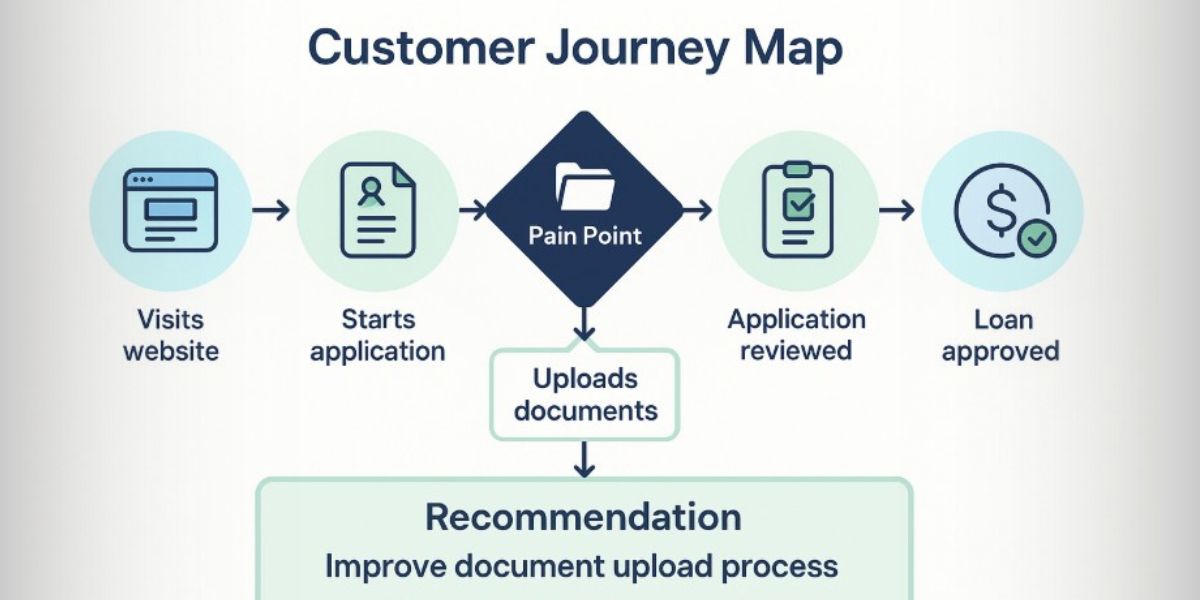
Mini Checklist: Drop-Off Points in the Customer Journey 

After conducting interviews and analyzing the CJM, check:

✔ Where does the customer postpone or abandon an action? ✔ Is there a “blind spot” — a step no one’s really thinking about? ✔ What might be blocked by NYDFS or PCI DSS compliance? ✔ Can this step be automated or simplified without violating regulations?

New York FinTech = Zone of Risk and Growth

NYDFS is one of the strictest financial regulators in the U.S. Even small gaps in data protection or access control architecture can result in multi-million dollar fines. That’s why solid business analysis isn’t a “nice-to-have” — it’s a key to survival and growth.

What To Do Tomorrow

  • Review your customer journey map: where do users “go off track”?
  • Conduct at least one JTBD interview: “What are you actually trying to accomplish with this?”
  • Align your next feature with Legal and Security before you reach MVP or even run A/B tests.

Sources:

Deloitte Fintech Trends, 2024

NYDFS Cybersecurity Regulation: dfs.ny.gov

Notable New York FinTech companies: Plaid, Betterment, Chime


Disclaimer: The information provided is for general informational purposes only and is not intended as legal, financial, or professional advice. Readers are encouraged to consult with relevant professionals before making any decisions based on the content.