EliteLink Coaching and Grace Chen Redefine Executive Presence Through Couture and Stagecraft

By: Elena Mart

What do Hamilton’s Broadway monologues and a CEO’s investor pitch have in common?

According to EliteLink Coaching, everything. The leadership development firm, founded by internationally recognized coach Serene Wang, is introducing a fresh perspective to corporate training by merging artistic discipline with business acumen. Its newest offering, the Executive Presence Transformation Program—a collaboration with Broadway stars, stage directors, Fortune 500 consultants, and fashion icon Grace Chen—bridges the gap between performance and leadership.

On April 26, EliteLink hosted A Night of Feminine Power, a private Manhattan atelier event that blended high fashion with high-impact leadership training. The curated gathering of rising female executives examined how executive presence often begins with self-perception—and how it can be enhanced through voice, movement, mindset, and wardrobe.

Fashion as Strategy, Not Vanity

The evening’s co-host, Shanghai and New York-based designer Grace Chen, demonstrated her signature power dressing philosophy. Named “the Power Dresser of China” by The South China Morning Post and “China’s Most Sought-After Couturier” by The Hollywood Reporter, Chen is also the first Chinese designer to be featured at London’s International Fashion Showcase. She illustrated how silhouettes and color psychology can influence the way women command a room.

In guided Power Dressing labs, participants discovered how couture could serve as a leadership tool. EliteLink coaches helped executives explore how a structured cape or fluid gown might alter the energy of a negotiation. Chen emphasized, “Clothing isn’t armor—it’s a language.” Meanwhile, real-time AI analysis tracked posture, vocal pitch, and perceived authority, offering insights into the immediate influence of visual storytelling.

The event focused on female leadership from the inside out. EliteLink supports women with skills that can enhance influence, while Chen’s couture helps translate their visual authority into a strategic asset.

The Boardroom, Reimagined as a Stage

EliteLink’s coaches, trained in theater and performance psychology, led leadership drills drawing from Broadway movement techniques. Executives practiced how to “wear” confidence before speaking a word, using breath, stance, and gesture to captivate attention and convey intention. One participant noted, “I never realized how much my posture was apologizing for me.”

“This isn’t about playing a role,” said Serene Wang. “It’s about aligning inner purpose with external presence. When women do that, they don’t just shatter glass ceilings—they redefine the space around them.”

Corporate Training Meets Curtain Call

EliteLink’s approach extends beyond workshops. Their programs for corporate clients include:

  • CEO Stagecraft Bootcamps – Sessions with Emmy-winning performers to help leaders refine their presence at shareholder meetings.
  • Charisma Profiles – AI-backed diagnostics that analyze and suggest enhancements for communication patterns.
  • Pitch Theater for Wall Street and Improvisation Sprints for Tech Founders – Industry-specific intensives aimed at strengthening executive presence under pressure.

Data-Driven Drama

By integrating art and analytics, EliteLink uses cutting-edge software to track vocal tone, micro-expressions, and audience engagement. The goal? Leaders who are technically sharp and emotionally resonant are capable of turning strategy into a compelling narrative. Wang adds, “Great leadership isn’t just felt—it’s remembered.”

For more on upcoming events and coaching programs, visit www.elitelinkcoaching.com.

Melissa Manelli’s Have the Guts to Fail Turns Rock-Bottom Moments into Radical Success

By: Rhiannon Frater

What if the very thing you dread—failure—could become the launchpad for the life and leadership you secretly crave?

That question lies at the heart of Melissa Manelli’s candid debut, Have the Guts to Fail: The Blueprint for Rising from Rock Bottom to Authentic Success. Part raw memoir, part neuroscience-backed manual, the book is already reverberating through boardrooms, book clubs, and therapy offices alike, redefining what it means to rise after everything falls apart.

A Story That Begins Where Success Narratives End

For years, Manelli appeared to live the kind of life many might admire from afar: an international consulting career, industry recognition, and the polished lifestyle often associated with “having it all.” Yet behind the airport lounges and keynote stages, there were challenges and struggles that few could see—emotional difficulties, experiences of hardship in her personal life, and the complex realities of single motherhood after leaving a difficult marriage.

“I lost everything the world told me would make me somebody,” Manelli recalls. “Yet in the ruins I discovered the one thing that can never be repossessed: my power to rebuild.”

That discovery became her hallmark framework, PROCESS – BUILD – RISE (also known in early workshops as Triple A: Analyze, Accept, Act). Born on sleepless nights and scribbled into tear-stained notebooks, the method blends trauma-informed psychology, neuroplasticity research, and age-old wisdom. It is the spine of the book and the scaffolding of Manelli’s thriving coaching practice today.

Why This Book Matters Now

The post-pandemic workforce is grappling with record burnout, silent mental-health struggles, and what experts call “success fatigue”—performing perfection while privately unraveling. Have the Guts to Fail meets that crisis with unapologetic honesty:

  • Real and Raw: Manelli spares no details about panic attacks behind the podium or mornings she counted coins for rent.
  • Intellectually Rich: Each chapter weaves cutting-edge findings on emotional intelligence and neurobiology with actionable exercises labelled “Let’s Reflect Together.”
  • Culturally Deep: She honors her French heritage through proverbs and rituals that transform healing from a solo grind into a community act of resilience.
  • Immediately Actionable: Readers finish with a personal manifesto, a 30-day self-leadership tracker, and a step-by-step plan to convert pain into strategic advantage.

The result is a book that lands with equal force on a CEO’s desk and a survivor’s nightstand.

The Heart of the Message: Failure Is the Birthplace of Success

Traditional business culture paints failure as a blemish on the résumé; Manelli reframes it as the raw material of innovation. “Your failures aren’t tombstones,” she writes. “They’re stepping stones toward the life you were born to live.” That idea has attracted thought-leaders from Forbes to Business Insider, who hail the book as “a survival guide for the soul” and “the missing MBA module on human resilience.”

Key takeaways include:

  1. Own Your Narrative—Without Shame
    Self-leadership starts when you name, rather than numb, the chapters you’d rather delete.
  2. Turn Emotional Pain into Authentic Power
    Manelli’s PROCESS – BUILD – RISE charts how to convert cortisol-soaked flashbacks into competency, clarity, and compassion.
  3. Lead Without Losing Yourself
    Whether you’re scaling a startup or rebuilding after divorce, success that costs your peace is just another form of bondage.

Beyond the Pages: A Movement in Motion

The book is only Chapter One of a broader initiative. Through keynote stages, corporate trainings on emotional intelligence, and a fast-growing online community under the hashtag #GutsToFail, Manelli mentors leaders to build empires that never ask them to trade authenticity for applause.

Upcoming appearances include:

  • Podcast Tours on resilience and purpose-driven leadership
  • Corporate Workshops teaching PROCESS – BUILD – RISE to executive teams
  • Live “Healing in Public” Conversations aimed at destigmatizing vulnerability in the workplace

Invitation to Rise

If you’ve ever stared at a shattered dream, a pink slip, or a therapist’s intake form and wondered, How do I come back from this?—Melissa Manelli hands you both a mirror and a map. Have the Guts to Fail is an unflinching reminder that breakdowns can be doorways, scars can be strategies, and the courage to fall might be the missing link to a life that finally feels like yours.

Because the story of your life isn’t over, it may be just about to begin.

Bio

Melissa Manelli is a French consultant and resilience coach working with entrepreneurs and executives worldwide. Have the Guts to Fail is her first book.

Automation in Hospitality and Real Estate: Perspectives from ToDo Robotics

By: ToDo Robotics

Walk into a hotel lobby or commercial building today, and the atmosphere might feel subtly different, not because of what’s missing, but because of what companies like ToDo Robotics are making increasingly present. A robot glides by delivering room service. Floors gleam without a visible cleaning crew. A delivery arrives, handled without human contact. These aren’t merely novelties anymore; they’re gradually becoming more common features. As service industries evolve under the pressures of labor shortages, rising operational costs, and growing digital fluency, a new force is quietly reshaping the customer experience: robotics.

ToDo Robotics—which deploys autonomous cleaning and delivery robots across hospitality, commercial real estate, and institutional settings—is helping businesses do more than just operate efficiently. They’re helping them adapt to evolving customer expectations.

The New Baseline: Speed, Precision, and Contactless Interactions

For many service businesses, the pandemic didn’t create demand for automation—it accelerated existing trends. What began as a safety measure has evolved into a longer-term preference. Guests now tend to expect rapid service, minimal wait times, and reduced friction. Cleanliness, once a behind-the-scenes function, has become a more visible indicator of brand credibility. Convenience is increasingly viewed as a standard expectation rather than an optional benefit.

Robotics offers precision and consistency that human teams, no matter how committed, can find challenging to maintain alone. A robot is designed to deliver exactly what was ordered, on time, without delay. It can vacuum every inch of a corridor, every single day, without forgetting or cutting corners. These are the kinds of subtle assurances customers may come to rely on, even if they rarely notice the robot at work.

Efficiency Is Just the Beginning

For many businesses, automation began as a way to manage staffing challenges or control costs. But increasingly, its role is broadening. Guests who once noticed robotic delivery as a novelty now often expect it. In some cases, brands that do not incorporate automation may be perceived as less technologically current, even if their human service remains strong.

This is because expectations do not develop in isolation. A guest staying at a hotel with advanced technology might expect a similar seamless delivery experience elsewhere. Tenants in smart commercial buildings may begin to question why some facilities feel less responsive. This “expectation creep” is noticeable, and businesses that recognize it are integrating robotics not to replace human service, but to complement and enhance it.

ToDo Robotics has observed this trend: hotels that introduce delivery bots often report not only operational improvements but also positive shifts in guest reviews and perceived value. Tenants in buildings maintained with autonomous cleaning systems often cite cleanliness and modernity as important factors in their satisfaction. This is not about gimmicks; it’s about supporting a brand experience that feels contemporary, competent, and attentive.

From Service to Signal: What Automation Communicates About Your Brand

In a competitive market, automation does more than function—it conveys a message. A robot silently delivering amenities can suggest, “We respect your time.” A consistently spotless restroom may signal, “We prioritize your environment.” When integrated thoughtfully, robotics becomes a form of brand storytelling.

However, customers respond not to robots alone, but to the overall experience they enable. That’s why collaboration between human staff and robots is crucial. Staff can focus on personal interactions, problem-solving, and adding service flair, while machines handle repetitive or labor-intensive tasks. Together, they create a service model that is faster, cleaner, and smarter—while remaining human where it counts.

Expectations Are Rising—Whether You’re Ready or Not

Perhaps the most significant aspect of robotic integration isn’t the technology itself, but how quickly it changes perceptions of what is normal. In airports, travelers are beginning to expect autonomous carts or touchless food delivery. In hotels, self-cleaning and robotic room service are increasingly viewed as standard offerings. In commercial real estate, buildings without some form of smart automation may appear less progressive.

Businesses that hesitate to adapt risk not only inefficiency but also being perceived as out of touch. The gap between what’s technologically feasible and what customers expect is narrowing rapidly. The longer the delay, the more challenging it becomes to catch up.

What It Means to Stay Relevant

In the past, brands competed mainly on luxury, price, or personalization. Today, the landscape is more nuanced. Customers still value these qualities but also want to feel that a business is efficient, proactive, and technologically aware. Robotics can help consistently deliver that impression. It creates service moments that are accurate and seamless without compromising warmth or hospitality.

At ToDo Robotics, the emphasis is not on replacing people but on building systems that enable businesses to meet expectations without compromise. In an era shaped by smart systems, frictionless apps, and instant results, meeting expectations is less about perfection and more about being present, responsive, and reliable.

Ready To Up Your Business?

Explore how robotics can help your business keep pace with evolving customer expectations while supporting operational excellence. Visit www.todorobotics.com to see how automation is being applied in real-world settings to enhance brand experiences.

Disclaimer: This article is for informational purposes only and does not constitute an endorsement or guarantee of results. The views expressed are based on available information at the time of writing. Readers should conduct their own research or consult professionals before making business decisions related to automation solutions.

Fixing the ‘Excel Not Responding’ Error: An Essential Troubleshooting Guide

Microsoft Excel is an essential interdisciplinary tool used for analyzing data, building complex financial models, and completing various office tasks. The level of productivity many professionals achieve would be impossible without data manipulation and the functionalities offered by Excel. However, nothing disrupts workflow more than the dreaded message: Excel not responding.” This error can appear while opening a file, saving changes, or even during simple data entry, halting all work and putting productivity, timelines, and critical business data at risk.

In this guide, we highlight the most common causes of the ‘Excel not responding’ error and provide effective solutions to restore Excel’s functionality, ensuring you can work uninterrupted.

What Causes the ‘Excel Not Responding’ Error?

Before jumping to solutions, it’s important to understand the possible reasons why Excel becomes unresponsive:

  • Excel workbook files could be damaged or corrupted

  • Third-party add-ins might interfere with normal functionality

  • Antivirus programs may cause conflicts

  • Microsoft Office might be incorrectly installed or outdated

  • Files may be too large, contain excessive formatting, or complex computations

  • Hardware limitations, such as insufficient RAM or disk space, can slow Excel down

Common Signs of Excel Not Responding

Check if you experience any of the following symptoms:

  • Excel freezes or doesn’t respond while launching or using the program

  • A partial ‘Not Responding’ message appears on the title bar

  • Data in the workbook cannot be saved or accessed

  • Excel crashes intermittently without a clear error message

How to Repair the ‘Excel Not Responding’ Issue

Try these proven troubleshooting methods to fix the problem:

1. Restart Your Computer

The simplest and quickest fix is to restart your PC. This clears temporary issues and background processes that may interfere with Excel.

2. Launch Excel Without Extensions (Safe Mode)

Safe Mode disables add-ins and opens Excel with default settings, helping identify if add-ins are the cause.

Steps:

  • Press Windows + R keys together.

  • Type excel /safe and press Enter.

If Excel opens without issues in Safe Mode, it’s likely that an add-in is causing the problem.

3. Confirm Inactive Add-ins

To check and disable problematic add-ins:

  • Go to File > Options > Add-ins.

  • At the bottom, select COM Add-ins from the Manage drop-down and click Go.

  • Uncheck all add-ins and restart Excel.

  • Re-enable add-ins one by one to identify the culprit.

4. Update Microsoft Office

Using an outdated Excel version can cause compatibility and performance issues.

To update:

  • Go to File > Account.

  • Click Update Options and select Update Now.

5. Repair Office Installation

Microsoft Office has a built-in repair feature.

For Windows:

  • Open Control Panel > Programs > Programs and Features.

  • Find Microsoft Office, click Change.

  • Choose Quick Repair or Online Repair.

6. Watch for Interactions with Antivirus Programs

Antivirus software can disrupt Excel’s operation. Temporarily disable your antivirus and check if Excel works properly. If it does, add Excel to your antivirus’s exception list.

7. Remove Excess Data and Conditional Formatting

Large files with extensive formatting and complex formulas can strain Excel.

Recommendations:

  • Remove unnecessary conditional formatting.

  • Split large files into smaller workbooks.

  • Limit the use of volatile functions like OFFSET() and INDIRECT().

8. Transfer Files from Network to Local Storage

Excel files stored on network drives or cloud storage may cause freezing due to slow connections. Move files to your local drive and try opening them again.

9. Clear Temporary Files

Accumulated temp files can cause unpredictable Excel behavior.

Steps:

  • Press Windows + R, type %temp%, and press Enter.

  • Delete all files in the temporary folder.

10. Use Stellar Repair for Excel

If files are severely corrupted and other methods fail, use specialized software like Stellar Repair for Excel. It can:

  • Repair corrupted or inaccessible Excel files (.XLS/.XLSX)

  • Restore tables, charts, formulas, and formatting

  • Recover files from unresponsive Excel instances

Valuable Practices to Prevent Excel from Becoming Unresponsive

  • Save your work regularly and enable AutoRecover

  • Avoid unnecessary add-ins

  • Keep Excel and your system up to date

  • Don’t overload workbooks with excessive data

  • Back up important files frequently

  • Use 64-bit Excel for very large datasets

Final Thoughts

Ignoring Excel issues can become a persistent nuisance, significantly reducing productivity. Fortunately, most problems can be fixed with basic troubleshooting, like disabling add-ins, repairing Office, or updating to the latest version. For corrupted files or persistent issues, tools like Stellar Repair for Excel are invaluable, allowing you to recover and restore documents without data loss.

Understanding the root causes and applying effective solutions ensures smooth Excel usage and protects your valuable data from future problems.

Missive: Email Isn’t Broken, It’s Just Not Made For Teams

In the endless shuffle of productivity apps, Slack threads, project boards, and Zoom links, there’s one constant that quietly anchors our workdays: email. It’s where deals close, clients reply, and opportunities begin. Yet, despite email’s foundational role, it’s also the one tool nearly everyone complains about. It’s slow, it’s messy, it wasn’t built for teamwork—and we all just sort of accepted it.

But not everyone.

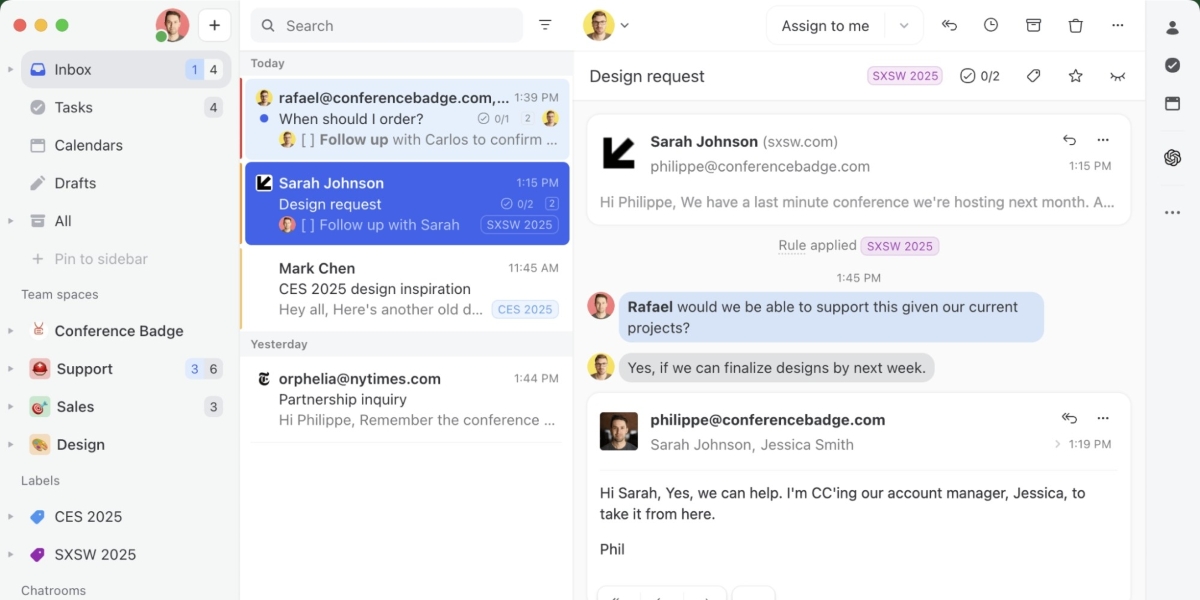
Missive, a collaborative inbox tool co-founded by Philippe Lehoux, Etienne Lemay, and Rafael Masson, has been quietly reimagining email not as a solo activity but as a team sport. While the rest of the tech world chased AI assistants and more ways to ping your coworkers, Missive looked at the inbox and asked a radical question: What if it wasn’t broken—it just wasn’t collaborative?

Email Was Never Built for Teams

The truth is that email was never meant for teams. It was designed for one-to-one communication in an era when sending a message across a building was a big deal. So when a modern team—say, a small agency juggling dozens of clients—tries to manage its workflow through an individual inbox, the results are painfully predictable. There’s the forwarded email that no one reads. The dreaded reply-all that was meant to be a forward. The Slack ping about the email from last Tuesday. A missed deadline because someone assumed someone else had it. And all the while, important threads spiral out of control with five people CC’d and no one accountable.

The disconnect isn’t about email itself. It’s about the way it hasn’t evolved to accommodate how work actually happens.

The Rise of the Collaborative Inbox

That’s where Missive comes in—not as another inbox plugin or half-baked integration, but as a total rethinking of what email could be if it were designed for small, collaborative teams from the start. 

With Missive, shared inboxes aren’t a workaround—they’re the foundation. An email thread can be assigned like a task. A teammate can comment inline, invisibly to the customer, to ask for a second opinion. A manager can get full visibility of a conversation without derailing it. And because it all happens within the inbox, there’s no more bouncing between platforms just to finish one interaction.

This isn’t just a user interface tweak. It’s a structural shift in how teams communicate.

Built for the Businesses Everyone Else Forgot

For Lehoux and his small team, the product wasn’t born from a pitch deck—it was born from necessity. Bootstrapped from the start, Missive didn’t have the luxury of big advertising budgets or sales teams. Instead, they did something increasingly rare in SaaS: they listened. Lehoux personally handled support for years, responding to every request, complaint, and feature idea. That closeness to customers meant the product didn’t evolve based on what investors thought would scale—it evolved based on what real people needed to get work done.

Many of Missive’s most defining features came not from brainstorms but from feedback. A user says, “This email thread contains tasks for three people, not just one.” So, Missive builds a way to break up a conversation and assign subtasks. Another says, “I’m jumping between my inbox, Slack, and Trello just to finish one project.” Missive integrates everything. Over time, it became more than an email tool. It became the operating system for teams whose work revolves around communication.

Simplicity as a Business Strategy

It would be tempting to describe Missive’s growth as unexpected, but that would ignore how intentional the company has been. Today, it supports over 4,000 businesses and brings in $8 million in annual recurring revenue, all without raising a dollar of venture capital. That independence has allowed the team to remain fiercely focused on their original mission: making email not just bearable but genuinely useful for the people who rely on it most.

That focus also allows them to say no. While competitors chase enterprise contracts and add complexity to justify higher prices, Missive keeps things simple. Straightforward pricing, no hidden upsells, and a focus on delivering value to every team, whether you’re a tech startup or a family-owned print shop.

Why Now?

If email has been broken for so long, why is it changing now?

The timing isn’t coincidental. According to an Adobe report, the average professional spends over three hours a day in email, and a large percentage say they still miss important messages due to disorganization. At the same time, the rise of remote work has exposed the cracks in existing systems. When your team isn’t in the same room, the stakes of miscommunication are higher, and inbox chaos is harder to hide.

And for small businesses? The pressure is even greater. They don’t have IT teams or onboarding departments. They need tools that just work. That’s why more and more of them are quietly making the shift, ditching outdated inboxes and moving toward collaborative ones that fit their workflow, not the other way around.

It’s Time to Rethink the Inbox

So maybe the question isn’t, “What’s wrong with email?” Maybe the better one is: “Why are we still using tools that weren’t built for us?”

Collaborative inboxes like Missive offer a quieter kind of progress. No hype cycles. No jargon. Just a better way to work. The future of email isn’t about doing the same thing faster. It’s about doing it together.

Everyone says email is broken. What they don’t realize is—it’s already being rebuilt. Quietly and in the hands of the people who use it most.

Outlook was built when pagers were still around. Missive was built when collaboration became the job.

And that future? It’s already in your inbox.

Michael Burns Brings Us Along on a Journey Through Grief

By: Roy Abraham

The speakers hum with silence now. The mic, once cradled in his hand, sits untouched. In the room where music used to pulse like a second heartbeat, you can almost still hear something: grief, memory, love.

For Michael Burns, the music didn’t stop when his career ended. It paused the day his mother passed away.

But the story didn’t end there.

A Song Interrupted: Resuming Life After Loss isn’t just the title of his book. It’s a phrase that reflects what it feels like to lose the person whose love formed the rhythm of your life. For Michael Burns, that person was his mother. The woman who raised him, shaped him, and supported him. Her passing marked not just an absence, but an interruption. A silence he wasn’t ready for.

Born and raised in Houston, Texas, Michael Burns’ world has always been shaped by rhythm. First through music, later through numbers, systems, and stories. With a degree in Accounting from the University of Houston and a career that spanned aviation, revenue management, and IT project management, he learned early on how to bring order to chaos.

The Silence That Speaks

Grief doesn’t always show up the way we expect. It’s not always in tears or loud heartbreak. Sometimes, it’s quiet. It’s the pause in a conversation when you remember they’re not here to answer. It’s the urge to call her after a long day. It’s the weight of her favorite song playing in a grocery store aisle.

This book doesn’t try to resolve grief. It lets it breathe. It gives it space. A Song Interrupted doesn’t rush toward healing. It walks with you through the fog. In its pages, Michael Burns offers no clichés, but rather clarity. The clarity of what it means to lose your anchor and still begin to float again.

Legacy in Lyrics

Before he was an author, Michael Burns was a musician, a storyteller in rhythm and rhyme. Now, he tells a different kind of story. One that doesn’t start on stage, but in hospital rooms, kitchen chairs, and silent prayers. He writes of a son becoming a man in the absence of the woman who made him one.

This isn’t a memoir filled with timelines and milestones. It’s a deeply human account of what happens when someone you love deeply dies, and you’re left standing in the echo. It’s a meditation on presence, on what it means to carry someone forward in your spirit when they’re no longer beside you in the physical world.

A Melody That Lives On

But A Song Interrupted isn’t only about pain. It’s about memory as music. It’s about how love can outlive loss. It’s about the strength it takes to keep singing when the person who taught you the words is no longer there. Healing isn’t about forgetting. It’s about integration.

Every chapter can be seen as a step forward, not away from his mother, but with her. Carrying her wisdom, her voice, her rhythm.

What We Carry Forward

A Song Interrupted is for anyone who has lost a mother, or anyone who has lost someone who felt irreplaceable. It’s for those still stumbling through the quiet. Those who can’t explain what they feel, only that something is missing.

Through memories, raw moments, and honesty, Michael Burns doesn’t just share his grief. He shares his love. And in doing so, he invites readers to consider that healing doesn’t mean forgetting. It means remembering better. With grace. With space. With time.

More Than a Memory

Some people write to be heard. Michael Burns writes so others don’t feel alone.

This book is his way of saying that he’s been there. He’s still here. And maybe, together, readers can find a way forward.

A Song Interrupted: Resuming Life After Loss isn’t a farewell.

It’s a tribute. A journal of remembrance.

A son’s commitment to keep singing, even in the silence.

Bring Your Brand to Life with Memorable Customer Experiences

Modern consumers, especially Gen Z and younger Millennials, don’t just want to see your brand. They increasingly seek to feel it, touch it, interact with it, and share it. They tend to value experiences that go beyond billboards and screens—experiences that can help create an emotional connection.

Fortunately, it can be quite achievable to create memorable experiences that encourage loyalty and inspire word-of-mouth. A thoughtful combination of brand activation services and creative customer experiences can significantly enhance any brand’s presence. Read on to discover how you might approach this for your brand.

Make Your Brand Touchable: The Value of In-Person Interactions

For younger consumers raised in digital environments, tactile experiences often stand out. Elements like touch, sound, scent, and atmosphere can foster stronger emotional connections than static branding typically does.

Here are some ideas that may inspire you:

  • Custom scent branding (used effectively by brands like Abercrombie & Fitch)

  • Texture walls or color therapy installations

  • Live product customization (engraving, embroidery, etc.)

  • Flash tattoo or nail art booths at brand pop-ups

And don’t overlook your older Millennials and Gen X audience. Consider offering private shopping experiences or appointment-based previews that combine exclusivity with convenience.

There is a notable positive effect linked to memorable in-person brand interactions. Research suggests that around 91% of consumers report feeling more positively toward brands after such experiences. Additionally, approximately 85% of consumers indicate they might be more inclined to purchase from the brand’s offering following these interactions.

Use Immersive Technology to Amplify Presence

Younger audiences often expect innovation and tend to engage more with brands that use emerging technology in intuitive and surprising ways. Here’s how you could bring your brand to life with immersive tools:

Virtual Reality (VR)

Create branded VR experiences that immerse users in new environments.

For example, the shoe company TOMS donates shoes to children in need. With their Virtual Giving Trip, they invited customers to join a donation journey to Peru via a VR headset, turning the brand’s values into a shared experience.

Augmented Reality (AR)

Use AR filters or apps that overlay branded content onto the real world. IKEA’s Place AR application is a notable example.

The IKEA Place app allows consumers to explore, experiment, and share how furniture designs might transform their spaces through their smartphones. All featured products appear in 3D and true to scale.

This approach is not limited to furniture. Some fashion brands use AR mirrors to enable virtual try-ons of garments in-store, combining convenience with high-tech appeal.

Pro Tip: Collaborate with brand activation services to establish immersive tech stations at retail locations or events. Combining AR with gamification could enhance engagement further.

Holographic Displays

Holograms tend to attract attention, from outdoor live events to in-store experiences. They can be used to highlight product launches, introduce new brand mascots, or share stories about sustainability and brand values.

Create Shareable, Story-Worthy Experiences

For many younger consumers, if something isn’t Instagrammable or TikTok-worthy, it might not gain traction. Brands can benefit from this by encouraging fans to share their experiences.

Many companies actively promote social media engagement. For example, beauty brand Glossier encourages customers to post selfies.

Activation tips include:

  • Setting up selfie stages with professional lighting

  • Offering exclusive merchandise drops at specific locations

  • Using branded “mystery boxes” or lockers that unlock through social engagement

Pro Insight: Moments that are interactive and surprising tend to be shared more frequently, potentially increasing awareness and creating viral loops.

Connect Emotionally Through Storytelling

Memorable experiences go beyond physical touchpoints; they evoke emotion. Sensory storytelling helps link your brand’s narrative to customers’ personal memories.

Hospitality giant Airbnb exemplifies this with their “Night At” and “Belong Anywhere” campaigns, which use storytelling to demonstrate how their brand helps people feel at home anywhere.

To incorporate storytelling for your brand:

  • Use ambient music tailored to your brand identity

  • Offer tastes connected to your product’s origins or inspirations

  • Incorporate “choose-your-own-path” elements that allow users to personalize their journey

Pro brand activation tip: Develop multi-sensory campaigns that combine on-location experiences with opportunities for social sharing. This approach encourages consumers to share their stories organically.

Build Loyalty with Experiences, Not Just Discounts

Younger consumers often value how a brand makes them feel more than straightforward discounts. Traditional loyalty programs based on points or coupons can seem transactional, whereas loyalty formed through experiences feels more personal.

Alternative strategies include:

  • Inviting your most engaged fans to exclusive, closed-door events

  • Rewarding referrals with unique experiences rather than merchandise

  • Recognizing community milestones through acknowledgment, not just perks

For more mature demographics seeking sophistication and surprise, consider offering exclusive wine tastings, gallery nights, or alumni-style experiences.

Summary

In today’s experience-first economy, a brand’s success frequently depends on how well it engages the senses, surprises customers, and leaves a lasting impression. There are many approaches to bringing your brand to life—from immersive VR and AR technologies to personalized in-store moments.

With a healthy dose of creativity and the support of expert brand activation services, your brand can evolve into something truly memorable and distinctive.

Beard Oil for Men: Why It’s a Must-Have in Every Grooming Routine

Beards are a statement. They can suggest, “I’ve got this together,” or “I woke up late and gave up halfway.” The difference often comes down to care—or lack of it. And if you’ve ever had an itchy face or a beard that feels like wire, you likely understand: a solid grooming routine makes a difference. This is where beard oil for men earns its spot. It’s not just for show. It serves a practical purpose—helping to keep your beard soft, your skin healthier, and your grooming routine on track.

Why Skipping Oil Might Not Be Ideal

Let’s get one thing clear—beards don’t moisturize themselves. As your beard grows, it can pull natural oils away from your skin. The longer the hair, the drier the skin beneath it may become. That can lead to itching, flaking, and general discomfort. Many men assume that’s just how it is. But it doesn’t have to be. Beard oil for men can help address this. It hydrates both the hair and the skin underneath, potentially reducing irritation and leaving your beard feeling more comfortable than before.

Tames the Wild Stuff

You know that stage where your beard sticks out in random directions and won’t sit flat no matter what you do? That’s often dryness at work. A few drops of oil might calm things down. It softens the strands, helps them lie naturally, and gives your beard a more polished look without turning it stiff. No heat tools. No complicated combing rituals. Just potentially smoother, easier-to-manage growth.

Helps Reduce Flakes

Beard dandruff is real, and it’s not fun. White flakes on a dark shirt can make you look sloppy, no matter how sharp your trim is. Dry skin is usually the culprit. Beard oil hydrates the area, which may reduce flakiness and soothe irritation. With regular use, many men see improvement in a few days. And since you’re already applying it to the beard, it takes no extra effort.

Smells Better Than You Might Expect

Some men worry that beard oil will make them smell like a walking incense stick. But good oils come in a range of scents—or even unscented. If you enjoy subtle notes of sandalwood, cedar, or citrus, they’re out there. If you’d rather stick with your usual cologne and avoid clashing scents, that’s an option too. Opt for products scented with natural essential oils, as synthetic fragrances can sometimes be overpowering or irritating.

Supports Healthy Growth (Within Reason)

Let’s be honest: no oil will make hair grow where it doesn’t naturally want to. But beard oil can contribute to healthier growth conditions. It keeps hair strong, may help prevent breakage, and can reduce split ends. It also helps maintain the skin’s condition, which is key if you’re growing out a patchy area or aiming for a fuller look. It won’t magically transform your beard. But it could help you make the most of what you’ve got.

Easy to Use. Hard to Mess Up.

The best part? It takes less than a minute. Rub a few drops between your palms. Massage into your beard and down to the skin. Done. Morning is usually best, right after a shower, when your beard is clean and your pores are open. There’s no complicated routine to follow, no fancy equipment required—just a bottle and your hands.

Works for Most Beard Types

Short stubble, long beards, or patchy ones still finding their shape—many benefit from a bit of oil. Short beards often need it to prevent itching. Long beards tend to need it to prevent dryness and tangles. And nearly everyone can benefit from caring for the skin underneath. One product, multiple uses. That’s the idea.

Makes a Difference You Can Notice

Even if you don’t prioritize looks, people often notice a well-kept beard. It’s the difference between “trying” and “actually tried.” Soft, well-groomed facial hair tends to leave a better impression. It’s easier to style. It’s more comfortable. And it can signal that you pay attention to the small things and the big ones.

What to Look For

Check the ingredients. Ideally, look for natural carrier oils like argan, jojoba, sweet almond, or coconut. They nourish without clogging pores. Avoid anything with too much alcohol or unrecognizable chemicals. Your face deserves better. If you’re new to it, start with a small bottle. Test how your skin reacts. Many men notice improvements within just a few uses.

Final Thought

Beard oil isn’t just hype. It’s not a luxury. It’s a practical step in a basic routine. It can help keep your beard soft, your skin healthier, and your grooming simple. And really, isn’t that what we’re all after? So, if your beard’s feeling rough, itchy, or just a bit off, consider trying oil. Your face might thank you. And so could everyone who gets close enough to notice.


Disclaimer: This article is for informational purposes only and does not constitute medical advice. Individual results from using beard oil may vary. Always check product ingredients for potential allergens and consult a dermatologist if you have sensitive skin or underlying conditions before starting any new grooming product.

Impact of Garden Rooms in New York on Urban Living and Home Value

If you’re living in New York and thinking about adding more space without moving, garden rooms might be the answer. These versatile additions bring extra room for work, relaxation, or hobbies right in your backyard. They can increase your home’s value and provide a personal retreat without the hassle of a full renovation.

Garden rooms also help you make the most of limited outdoor space, which is a big deal in New York’s crowded neighborhoods. You get a cozy, private area that feels separate from the main house but still close by.

Whether you want a home office, a quiet reading nook, or a creative studio, a garden room offers a practical, stylish way to expand your living space and improve your daily life.

Garden Rooms in New York: Trends and Benefits

Garden rooms are becoming a popular addition to many New York homes, offering flexible use of your outdoor space. They bring multiple benefits, from adding value to your property to enhancing your backyard’s functionality.

Why Garden Rooms Are Gaining Popularity

More New Yorkers want to optimize their outdoor space, especially in areas with limited yard size. Garden rooms provide extra living space without moving or renovating the main house.

You can use these spaces as work-from-home offices, gyms, or quiet retreats surrounded by green. The pandemic boosted demand as people sought dedicated areas for remote work and relaxation near nature.

The customizable nature of garden rooms fits well with urban lifestyles. They offer privacy and comfort without sacrificing your backyard’s greenery or outdoor feel, making them appealing for city dwellers.

Key Benefits for Homeowners

Garden rooms increase your usable space and can act as a quiet getaway within your property. They also help reduce noise from busy city streets thanks to their position in your backyard.

Installing a garden room usually costs less than extending your main house but adds comparable value. You can expect improvements in home resale value plus more enjoyable personal space.

They also encourage spending time outdoors while protected from the elements. You can enjoy your garden year-round, which helps with mental wellness and recharges your connection to nature.

Garden Rooms vs. Traditional Outdoor Spaces

Traditional outdoor spaces like patios or decks give you open-air access but offer less protection from weather. Garden rooms blend outdoor views with indoor comfort, often including heating, cooling, and electricity.

Unlike typical decks, garden rooms provide secure storage or work areas and more design options for personalized interiors. They can also serve as guest rooms or hobby studios, increasing their utility.

If your backyard is small, a garden room makes better use of space by stacking layers of function and comfort. They transform your green space into a multipurpose extension rather than just an open area.

Design and Construction Considerations

When planning your garden room in New York, you’ll need to focus on how it’s built, how water drains around it, and how plants and design features come together. These factors impact durability, upkeep, and how inviting the space feels.

Essential Construction Elements

Start with a solid foundation that suits your soil type and local weather. Concrete slabs or pier foundations are common choices. Make sure the structure uses weather-resistant materials like treated wood or metal to handle New York’s shifting seasons.

Insulation keeps your garden room comfortable year-round. Look for materials rated for both heat retention in winter and ventilation in summer. Windows and doors should be sealed properly to avoid drafts and moisture ingress.

You’ll also want to consider electrical wiring and lighting during construction. Planning this early saves you from costly changes later. If you want the option of heating or cooling, install the necessary infrastructure upfront.

Drainage and Maintenance Needs

Good drainage around your garden room is critical to prevent water damage. You may want to grade the ground so water moves away from the base. Installing French drains or gutters can help divert rainwater efficiently.

Check for proper sealing on the floor and walls to minimize water seepage. Regularly clearing gutters and drains will reduce maintenance troubles. Inspect your garden room each season for signs of mold or water damage to tackle issues early.

Using durable exterior paints and sealants adds protection against the elements. You might schedule seasonal maintenance reviews to keep everything working smoothly, especially after heavy rain or snow.

Incorporating Focal Points and Plantings

Adding focal points can create a relaxing and attractive garden room. Think about positioning a water feature, sculpture, or a nice seating area where it draws the eye immediately upon entering.

Plantings should complement your space without overwhelming it. Consider using native plants that thrive in New York’s climate as they require less care. Climbing plants or potted greenery often work well along the structure.

Incorporate paths or stepping stones to guide visitors through your garden room. Combining hardscape elements with lush plantings enhances the overall atmosphere and gives you a space that’s pleasant all year long.

Unique Uses and Urban Solutions

Garden rooms in New York adapt well to tight spaces and bustling city life. Whether in Brooklyn backyards, rooftops, or near Central Park, these spaces create practical, green retreats and help solve urban challenges like lack of privacy and outdoor space.

Backyard Retreats in Brooklyn

In Brooklyn, garden rooms turn small yards into private hangouts or workspaces. You can install insulated walls and big windows to let in natural light while keeping noise out.

These rooms offer a calm escape without leaving your neighborhood. They’re perfect if your lease restricts permanent construction but allows movable structures.

Some folks use them as art studios, guest rooms, or even fitness zones—the versatility fits Brooklyn’s diverse lifestyle. Plus, they boost property appeal, which matters if you want to lease or sell later.

Rooftop Garden Rooms

Turning your rooftop into a garden room gives you a breath of fresh air with city skyline views. These spaces can include planters, seating, and sometimes small gardens or green walls.

They offer extra outdoor space where ground-level yards are rare. Since most NYC leases restrict large rooftop buildouts, lightweight, modular garden rooms work best.

You can create cozy lounges or outdoor offices, helping with both relaxation and work-from-home needs. Just make sure your building permits allow rooftop modifications and check structural capacity before installing.

Green Spaces Near Central Park

Near Central Park, garden rooms offer a rare chance to have green, private outdoor space in a high-density area. They often serve as a quiet spot to unwind after visiting the park or to avoid busy streets.

Because space is tight, these garden rooms tend to be compact but cleverly designed. You can include foldable furniture and vertical gardens to save room.

If you rent nearby, a garden room can add value without breaking your lease terms. Many use them as reading nooks or small home offices with park views.

Conclusion

If you’re thinking about adding a garden room in New York, it’s worth considering how much it can expand your living space without needing a full renovation. It gives you a flexible area that works for work, play, or just chilling out.

You’ll find that garden rooms can boost your property’s value, but more importantly, they add convenience. Having a dedicated spot for hobbies, home office, or relaxation can really improve your day-to-day life.

Here’s a quick look at what you get with a garden room:
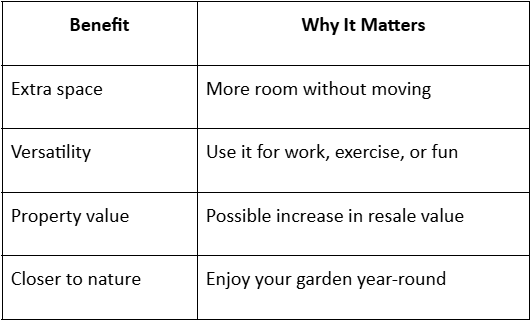
Impact of Garden Rooms in New York on Urban Living and Home Value

In busy New York settings, a garden room offers a peaceful escape right outside your door. It’s simple to tailor it to your needs, whether it’s cozy or modern.

Ultimately, adding a garden room puts you in control of how you use your space. You decide what fits your lifestyle best without major disruptions.