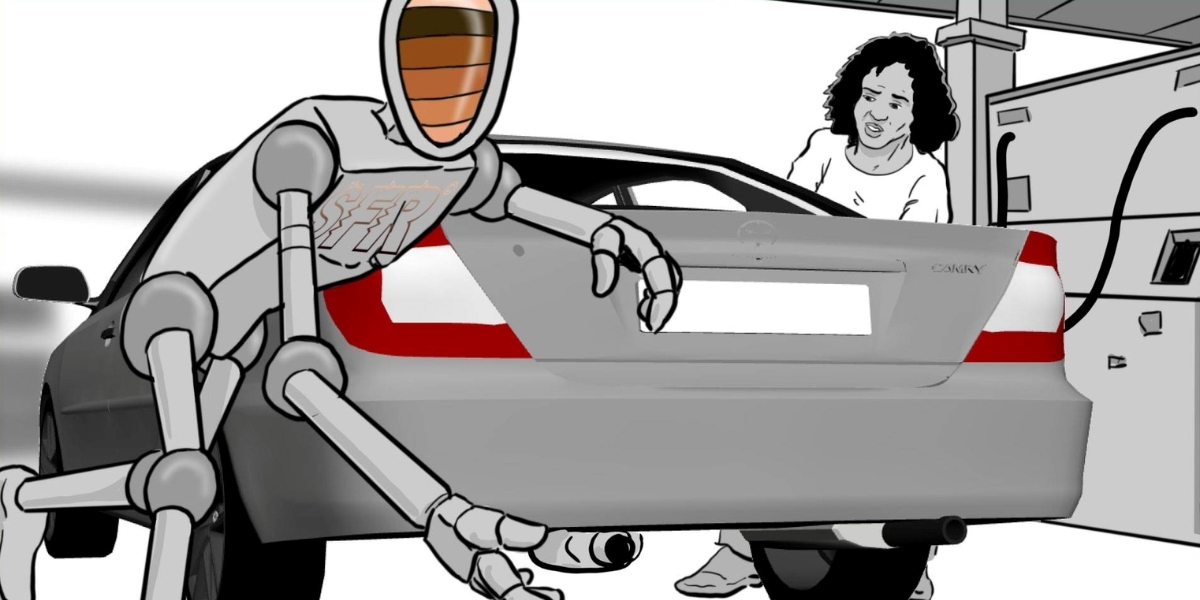
Meet Nikola Farad: The Future Mascot for EV Companies Driving the Green Revolution

By: Andi Stark

Nikola Farad is not just another animated character. Created by former auto mechanic Daniel Lee Williams, this robot is designed to make people think twice about driving gasoline-powered cars. The name combines Nikola Tesla, the famous inventor, with “farad,” a unit of electrical capacitance. Nikola Farad’s primary purpose is to tell the truth about fossil fuels and push for more electric vehicles (EVs) on the road.

Williams sees this robot as more than just a cartoon. He believes Nikola Farad could become a mascot for EV companies, helping to spread awareness and drive change. “Companies need more than statistics to convince consumers; storytelling plays a role,” Williams said. “Nikola Farad was created to connect with people and make them reconsider their choices.”

Why Some Consumers Still Hesitate to Buy EVs

The electric vehicle market is growing fast. According to the International Energy Agency (IEA), EV sales are expected to rise from 14 million in 2023 to 40 million by 2030. But despite this growth, many people are still unsure about switching from gas-powered cars to electric ones.

Surveys show that while 67 percent of Americans support policies promoting EVs, only 42 percent say they would buy one as their next car. The reasons? Concerns about battery life, charging stations, and high prices. Even though data proves EVs save money in the long run, many consumers hesitate.

Nikola Farad aims to change that by delivering a clear and direct message about the impact of gasoline-powered cars. Instead of focusing on EV features like speed and battery range, the character challenges people to consider the pollution caused by traditional vehicles.

Hard-Hitting Commercials That Make People Think

Williams believes advertising is one of the most significant missing pieces in the push for EV adoption. That’s why he has created a series of commercials featuring Nikola Farad in everyday situations. The goal is to get people talking about how their choices affect the planet.

In one of these ads, Nikola Farad approaches a driver at a gas station. “Do you know what you are buying?” the robot asks. “Gas,” the driver replies. “No. You’re paying to pollute your air.”

The scene then shifts to a visualization of carbon emissions spreading in the city, showing the invisible impact of gasoline engines.

Williams says he wants people to feel something when they watch these commercials. “People need to see the impact of their decisions in a way that sticks,” he explained. Unlike traditional EV ads highlighting technology, these commercials focus on the problem of damaging fossil fuels cause.

A New Marketing Strategy for EV Companies

Nikola Farad is still in its early days, but Williams is looking for companies that use the character in their branding. His main targets are car manufacturers, EV charging networks, and environmental organizations.

The most significant environmental groups, such as The Sierra Club and The Climate Reality Project, have pushed for sustainability. However, Williams believes there is space for a more aggressive message that does not just promote EVs but challenges people who still drive gasoline cars.

Research shows that animated mascots can make a significant impact on consumers. A 2023 study by the Advertising Research Foundation found that using brand mascots in ads increased consumer recall by 41 percent compared to standard advertisements. Williams hopes Nikola Farad will bring this same advantage to EV marketing.

Challenges and Next Steps

Of course, making Nikola Farad a widely recognized mascot is not easy. Williams needs funding and partnerships to bring his ideas to life. The auto industry is already spending billions on EV marketing. Ford and General Motors are investing $2 billion in advertising this year. Breaking into that market will be tough.

Williams also knows that some companies might be hesitant about Nikola Farad’s message. “EV companies want positive branding, but they also need to be willing to challenge the status quo,” he said. “Nikola Farad does not soften the message as he wants to tell the truth. That makes some people uncomfortable.”

Williams is continuing to fine-tune his commercials and reach out to industry leaders. Whether or not Nikola Farad becomes the official mascot of the EV movement, the push to move away from gasoline cars is not slowing down, and people will have to make a choice sooner rather than later.

Published by Anne C.

Pioneering Inclusivity: Dr. Raluca I. Maxim’s Vision for Human-Centered AI and Neurodiverse Empowerment

By: Elena Mart

Dr. Raluca I. Maxim has emerged as a leading figure in the convergence of human-AI interaction, cognitive neuroscience, and UX research. With a career spanning interdisciplinary research and practical innovations, she has dedicated her work to creating AI-driven solutions that enhance user experience and promote inclusive technology for neurodiverse individuals.

A Journey Rooted in Science and Empathy

Background and Expertise

Dr. Maxim’s career is built on a solid foundation in cognitive neuroscience and human factors engineering. With global recognition as a Human AI Interaction Expert and Neuroscientist, she has seamlessly integrated advanced research with practical applications in technology. Her interdisciplinary approach combines the scientific rigor of cognitive neuroscience with the innovative principles of empathic design thinking. This unique blend has allowed her to translate complex ideas into actionable digital solutions that cater to a wide range of user needs.

A Focus on Inclusive Technology

One of the core aspects of Dr. Maxim’s work is her dedication to inclusive technology. She believes that technological advancements should serve every segment of society, especially underrepresented groups. Her efforts to incorporate neurodiversity in technology have driven the development of AI tools designed for individuals on the autism spectrum and other neurodiverse communities. By emphasizing inclusive design, she works to make emerging digital solutions more accessible and relevant to a wide range of users.

Overcoming Challenges and Championing Inclusivity

Navigating Interdisciplinary Research

Throughout her career, Dr. Raluca I. Maxim has encountered numerous challenges that come with interdisciplinary research. The integration of neuroscience, AI, and user experience demands not only expertise in each field but also the ability to communicate and collaborate across different scientific communities. Despite these obstacles, her commitment to data-driven approaches and collaboration with like-minded professionals has allowed her to break barriers and pioneer innovative solutions.

Embracing Real-World Challenges

Dr. Maxim’s dedication to making technology accessible extends to her work in the US market, where she has led several projects aimed at empowering neurodiverse workers. In one notable project in 2024, she spearheaded the development of AI-driven solutions tailored for neurodiverse professionals. This initiative not only showcased the transformative potential of AI for inclusive design but also highlighted the real-world impact of her work on workplace environments. Her efforts demonstrate that technology can be designed to meet the specific needs of users, thereby creating a more equitable digital landscape.

  • Key Focus Areas:
    • Human-AI Interaction: Developing tools that enhance interaction between humans and AI systems.
    • UX Research: Applying user experience research to help ensure technology meets practical needs.
    • Inclusive Technology: Creating digital solutions that serve neurodiverse communities.
    • Empathic Design: Utilizing design frameworks that prioritize user empathy and accessibility.

Career Highlights and Recognitions

Academic and Professional Achievements

Dr. Maxim’s professional journey is marked by numerous accolades and contributions to both research and industry. She has published her work in prestigious journals and conferences, including ACM, IEEE, and JMIR. These publications have contributed to the fields of AI and human-computer interaction and have helped shape discussions around future developments in digital education and e-health solutions.

Recognition by Leading Institutions

In 2024, Dr. Maxim was honored by Marquis Who’s Who Top Scientists in the United States. This recognition is a testament to her enduring commitment to research and her leadership in integrating neurodiversity into the development of AI-driven technologies. Her active membership in respected organizations such as ACM, AAAI, and UXPA further underscores her influence and the high regard in which she is held by the global research community.

Empathic Design Thinking Framework

One of the significant contributions of Dr. Maxim is her innovative Empathic Design Thinking Framework. This approach has been instrumental in designing digital solutions that cater to the diverse needs of users, including the development of digital serious games for educational purposes and AI applications in e-health. Her work in this area reflects a thoughtful balance between technological advancement and human-centered design.

Pioneering Inclusivity: Dr. Raluca I. Maxim’s Vision for Human-Centered AI and Neurodiverse Empowerment

Photo Courtesy: Dr. Raluca I. Maxim

Vision for the Future

Expanding Impact Through Technology

Looking ahead, Dr. Maxim envisions an expansion of her work into new areas of digital health and personalized care. Her ambition is to lead a Human Lab that integrates individualized behavioral therapy with neuroscience-informed interventions. This initiative aims to offer tailored assessments and treatments that address cognitive and behavioral profiles, ultimately improving the lives of neurodiverse children and adults. Her vision is to create a space where advanced AI-assisted tools work alongside human expertise to deliver personalized and effective care.

A Global Initiative for Neurodiverse Empowerment

Dr. Maxim’s forward-thinking plans include launching a global initiative focused on empowering neurodiverse individuals through technology. By leveraging AI-driven solutions, she seeks to bridge the gap between advanced technology and everyday human needs. Her goal is to foster an environment where innovation is guided by inclusivity and empathy, aiming to support individuals with diverse neurological profiles in an increasingly digital world.

Lifelong Learning and Continuous Improvement

At the heart of Dr. Maxim’s professional journey is a commitment to lifelong learning. Her continuous pursuit of knowledge and research not only drives her current projects but also inspires her vision for the future. She remains dedicated to exploring new ways to enhance human-AI interaction and improve user experiences through research and collaboration. This mindset allows her work to adapt to technological advancements while remaining rooted in the core principles of empathy and inclusivity.

Concluding Thoughts

Dr. Raluca I. Maxim stands as a prominent figure in the field of Human-AI Interaction, with her work resonating across multiple disciplines such as cognitive neuroscience, UX research, and inclusive technology. Her unique approach—merging scientific expertise with a passion for inclusivity—has led to the development of innovative, AI-driven solutions that address real-world challenges. As she continues to push the boundaries of digital innovation, her vision remains clear: to create technology that not only transforms industries but also fosters a more inclusive and accessible society for all.

For more information about her work and to connect with her professional network, visit her LinkedIn profile. Additional insights into her research and career highlights can be found at Marquis Top Scientists and in her research publications.


Disclaimer: The content of this article is for informational purposes only and does not constitute medical advice. For any health-related concerns or questions about treatment, please consult with a qualified healthcare professional.


Published by Mark V.

Start Your New Year Detox with Coffee Tamer at Pop Up Grocer NYC

As the world goes deeper into 2025, many embrace resolutions to restart, reset, and rejuvenate our health. After the indulgent holidays and late-night celebrations, January was the ideal time to re-prioritize wellness. But a post-holiday detox may feel like a challenge for coffee lovers who rely on their daily cup (or two). That’s why Coffee Tamer is a helpful option for reducing acidity and supporting your wellness routine. Plus, it’s now available at Pop Up Grocer in New York City until April!

Why Coffee Tamer Is Suitable for Your New Year Reset

Coffee Tamer is a natural mineral formula that reduces coffee’s acidity by up to 90%, helping to alleviate discomfort from acid reflux, heartburn, and indigestion without altering the flavor or aroma of your beloved brew. This innovative solution allows coffee enthusiasts to enjoy their caffeine fix without the acidity that can sometimes upset the stomach or hinder a detox plan.

When detoxing, your body craves balance, and reducing unnecessary acids is an excellent way to support digestion and overall well-being. Coffee Tamer works proactively by neutralizing acids before they’re digested, making it an essential addition to your health-focused routine.

Find Coffee Tamer and More at Pop Up Grocer NYC

Start Your New Year Detox with Coffee Tamer at Pop Up Grocer NYC

Photo Courtesy: Pop Up Grocer website

Pop Up Grocer (PUG), a curated retail experience featuring the most exciting and innovative food and beverage brands, has welcomed Coffee Tamer to its lineup of wellness-forward products. Located in the heart of New York City, Pop Up Grocer provides the ideal opportunity to discover and shop for unique products that align with your health goals.

Coffee Tamer’s products will be available at this unique store from January through April. Whether you prefer single-serving packets for convenience or a shaker bottle for home use, you’ll have options to customize your coffee experience.

Coffee Tamer isn’t the only acid-reducing product available in PUG. You can also get CalciBlend, designed to reduce acidity in various foods and beverages, and Wine Tamer, which makes your favorite wines gentler on the stomach. These versatile products can help you stay committed to your wellness goals while enjoying life’s pleasures.

Coffee Tamer is Helping You Detox

1. Stay Hydrated: Drinking plenty of water helps flush out toxins and supports your body’s natural detox. For a gentle morning boost, pair your hydration routine with coffee treated with Coffee Tamer to help minimize acidity while enjoying your favorite brew.

2. Focus on Whole Foods: Incorporate nutrient-dense fruits, vegetables, and lean proteins into your meals. Avoid heavily processed foods that can strain your digestive system. If you’re sensitive to acidic foods, try CalciBlend to help reduce acidity and enjoy your meals without discomfort.

3. Reduce Stress: High stress levels can hinder detox efforts. Take time for relaxation techniques like meditation, yoga, or calming tea. If you’re a wine lover, consider using Wine Tamer to help make your evening glass of wine easier on your stomach and a stress-free part of your day.

Start This Year a Bit Tamer

As you sip your morning coffee or unwind with a glass of wine, you don’t have to worry about the acidity derailing your detox journey. Coffee Tamer and its line of acid-reducing products are here to support your goals and keep you feeling your best.

Make sure to visit Pop Up Grocer at 205 Bleecker St, New York, from 8 am – 8 pm daily before April to stock up on Coffee Tamer and other health-conscious products. Your New Year reset just got a whole lot easier—and tastier!

For more information about Coffee Tamer and other products, visit their website or follow them on social media.

Published by Anne C.

Optimizing Digital Ads with AI-Driven Predictions

Artificial intelligence plays a significant role in changing the world of digital advertising. Companies now use predictive analytics to study data and forecast which ads will perform. This simple yet innovative approach helps marketers increase their return on investment (ROI) by spending their budgets more wisely and reaching the right audience at the right time.

How Predictive Analytics Improves ROI

Predictive analytics uses AI to analyze large amounts of data from different sources, such as social media, website visits, and customer behavior. By understanding past trends, these tools may predict future outcomes. This means that marketers can know which advertisements will likely succeed, allowing them to adjust their campaigns for better results. With this approach, digital advertising may become more streamlined, potentially improving business ROI.

The Impact on Digital Advertising

Digital advertising has become much brighter with the help of AI. Instead of guessing what might work, companies now have data-driven insights that help guide their decisions. This allows advertisers to fine-tune their messages, target specific groups, and deliver relevant and timely content. The result is campaigns designed to engage audiences and support business goals.

Mediapeachy.com: Innovating with AI and Digital Marketing

A standout example of these advancements is Mediapeachy. Mediapeachy.com is recognized for incorporating AI into digital marketing strategies. The company leverages predictive analytics to help brands understand customer data and design targeted ad campaigns. By analyzing key performance indicators and market trends, Mediapeachy provides tools that help businesses refine their digital advertising strategies. Their approach demonstrates how digital marketing can be transformed through simple yet effective AI tools, setting a new standard for the industry.

Expanding Opportunities for All Businesses

Beyond large enterprises, predictive analytics opens up new opportunities for small and mid-sized businesses. By using these AI tools, companies of any size can access insights that were once reserved for big brands with extensive resources. This democratization of technology means that even startups may now run efficient, data-driven advertising campaigns that help maximize their limited budgets and help them compete in the digital marketing arena.

Integration and Future Growth

As digital marketing evolves, the integration of predictive analytics into existing advertising platforms is becoming smoother and more accessible. Marketers explore combining traditional strategies and AI-driven insights to enhance campaign effectiveness. With continued technological advancements, businesses can expect even more user-friendly tools that simplify campaign management and deliver more profound insights into customer behavior.

Looking Ahead

As AI technology evolves, predictive analytics may continue to play a more significant role in digital advertising. Companies might explore these techniques to refine their campaigns. This approach could help advertisers tailor ads to better align with audience interests.

Conclusion

AI-powered predictive analytics is growing in digital advertising, helping businesses analyze data and refine their strategies. By leveraging data-driven insights, companies can explore ways to improve audience targeting and optimize ad spending. These tools offer opportunities to adjust campaigns based on patterns and trends, potentially making advertising efforts more strategic. Platforms like Mediapeachy.com reflect how digital marketing continues to evolve with technological advancements, providing businesses with additional resources to enhance their advertising approaches.

Published by Stephanie M.

How to Control Temperature on a Charcoal Grill Like a Pro

Grilling with charcoal brings out deep, smoky flavors that gas grills simply can’t match. However, one of the biggest challenges for beginners is controlling temperature. Unlike gas grills, where you can turn a knob, managing heat on a charcoal grill requires a bit more skill. 

So, how do you keep the temperature steady? 

How do you prevent flare-ups or cool spots? 

Let’s dive into the best ways to control temperature on a charcoal grill and make every cookout successful.

Understanding How Charcoal Grills Generate Heat

Charcoal grills create heat through burning briquettes or lump charcoal, which radiates heat across the cooking surface. The temperature is influenced by several factors, including the amount of charcoal used, airflow, and grill setup. Once you understand these basics, controlling the heat becomes much easier.

Setting Up the Charcoal for the Right Heat

The way you arrange your charcoal plays a significant role in temperature control. Choosing the right setup is crucial whether you’re cooking low and slow or searing at high heat.

Direct vs. Indirect Heat

  • Direct Heat: Spreading charcoal evenly across the bottom of the grill generates high heat, ideal for searing steaks, burgers, or hot dogs.
  • Indirect Heat: Arranging charcoal on one side and leaving the other side empty creates a cooler zone. This setup is perfect for cooking larger cuts like ribs, chicken, or brisket without burning them.

Using a two-zone fire allows you to move food between high and low heat, making it easier to control cooking times.

Managing Airflow for Temperature Control

Airflow is the key to controlling heat. Charcoal burns hotter when there is more oxygen and cools down when airflow is reduced. Most charcoal grills have two types of vents:

  • Bottom vents: Control how much oxygen enters the bbq grills. More open vents increase heat while closing them lowers it.
  • Top vents: Allow smoke and heat to escape. Keeping them partially open helps maintain steady airflow and prevents stale smoke from affecting the flavor.

For high-heat grilling, open both vents fully. For low and slow cooking, partially close the bottom vent to limit oxygen and lower the temperature. Adjusting these vents throughout the cook is essential for maintaining the correct heat.

Using a Lid to Maintain Steady Temperatures

Keeping the grill lid closed as much as possible helps stabilize temperatures. Every time the lid is lifted, heat escapes, causing fluctuations. If you need to check food quickly to avoid major heat loss.

For extended cooking sessions, use a grill thermometer to monitor the temperature without lifting the lid. Some charcoal grills come with built-in thermometers, but an external digital thermometer provides more accuracy.

Adjusting Charcoal Placement During Cooking

You might need to adjust the charcoal during grilling to maintain the desired temperature. If the grill gets too hot, spread out the coals to reduce intensity. If more heat is needed, push the coals together or add fresh charcoal.

Another effective method is using a water pan. Placing a pan filled with water inside the grill helps regulate heat by absorbing excess energy and releasing moisture, preventing the grill from overheating.

Keeping a Consistent Temperature

Maintaining a steady temperature throughout your cook ensures even cooking and great results. Here’s how:

  • Monitor the grill’s temperature regularly using a thermometer.
  • Adjust vents gradually instead of making drastic changes.
  • Add charcoal in small amounts if needed to sustain longer cook times.
  • Use a water pan to prevent sudden temperature spikes.

Mastering Temperature Control for Every Cookout

Learning to control temperature on a charcoal grill takes practice, but once you get it right, you’ll have the confidence to cook everything from perfectly seared steaks to slow-smoked barbecue. With the right setup, careful airflow adjustments, and proper charcoal management, you’ll be grilling like a pro in no time.

Published by Stephanie M.

How Prefab Steel Buildings Are Changing the Way We Build

Are you seeking a faster, more affordable, and more durable solution for your next construction project? Prefab steel buildings might be the answer. Steel buildings have been around for a while, but the rise of prefab steel buildings has wholly transformed the construction industry. 

In this article, I’ll show you how prefab steel buildings make construction easier, quicker, and more cost-effective.

What Are Prefab Steel Buildings?

Prefab steel buildings are pre-engineered structures manufactured off-site and then delivered to the location for assembly. These buildings are made of steel, which is one of the most reliable materials available. Whether you need a warehouse, garage, barn, or even a home, prefab steel buildings offer an incredible way to get your project up and running without the long wait times or costs of traditional construction.

The beauty of prefab steel buildings is that they come pre-designed and pre-cut. Once the components arrive at the site, they’re ready to be quickly assembled, reducing labor costs and construction time significantly. No wonder many people prefer prefab metal buildings over conventional construction methods.

The Advantages of Prefab Steel Buildings

Prefab steel buildings are gaining popularity for a good reason. They offer several benefits, making them a premier choice for builders and homeowners alike. Let’s look at some key advantages that are changing how we build.

1. Faster Construction Times

One of the biggest reasons people choose prefab steel buildings is the speed at which they can be constructed. Since the majority of the building is pre-made off-site, assembly at the construction site can take just a few days or weeks, depending on the size and complexity of the project. This significantly reduces the time required to build from scratch, which means you can move into your new building or start using it for business much faster.

2. Cost-Effective

Prefab steel buildings can be much more affordable than traditional construction methods. The materials are generally less expensive, and because the construction process is faster, you save money on labor costs. Additionally, prefab metal buildings require less maintenance over time, making them a wise long-term investment. This cost-saving benefit makes prefab steel buildings an attractive option for anyone on a budget.

3. Durability and Strength

When you choose prefab steel buildings, you choose a building that will last. Steel is known for its strength and durability, and prefab steel buildings are designed to withstand harsh weather conditions, including strong winds, snow, 

and even earthquakes. Unlike wood or concrete, steel doesn’t warp, rot, or get damaged by pests. So, you can trust that your prefab steel building will stand the test of time.

4. Customization Options

Another great thing about prefab steel buildings is that they offer various customization options. Whether you want a sleek, modern design or a more traditional look, prefab metal buildings can be tailored to your needs. You can choose from different roof styles, colors, and sizes to ensure your building fits your requirements. This means you don’t have to settle for a one-size-fits-all solution.

5. Sustainability

Prefab steel buildings are also more eco-friendly than traditional building materials. Steel is 100% recyclable, which means the materials used to build your structure can be recycled at the end of its life cycle. Additionally, the energy-efficient construction methods and designs reduce the energy needed to heat or cool the building, making it a greener option for construction.

How Prefab Steel Buildings Are Used

Prefab steel buildings are incredibly versatile. Here are just a few ways they’re being used today:

1. Commercial Spaces

Prefab steel buildings are ideal for businesses that need a quick, affordable space. From warehouses and retail stores to office buildings, prefab steel buildings can be customized to meet the specific needs of a business. With quick construction times and a cost-effective price tag, they’re an excellent option for business owners looking to expand or open new locations.

2. Residential Homes

Did you know that prefab steel buildings can also create stunning residential homes? More and more homeowners opt for prefab steel homes due to their strength, energy efficiency, and modern appeal. Plus, these homes can be designed in various styles so that you can create a unique, personalized space.

3. Agricultural Buildings

Farmers and ranchers benefit from prefab steel buildings because they’re strong and durable enough to withstand the demands of agricultural life. Whether you need a barn, storage shed, or equipment garage, prefab metal buildings can be a practical solution. They’re easy to maintain and can be expanded as your needs grow.

Conclusion

Choosing prefab steel buildings for your next construction project makes sense, considering all the benefits. From fast construction and low costs to their durability and sustainability, prefab steel buildings offer an innovative solution for many building needs.

Suppose you’re considering starting a new project, whether a home, office, or commercial building, look into prefab steel buildings. They offer a hassle-free, budget-friendly option that meets your needs without compromising quality or safety.

By choosing prefab steel buildings, you’re not just building a structure but investing in a smarter, more efficient way of creating the spaces you need.

Disclaimer: The information provided in this article is for general informational purposes only. While every effort has been made to ensure accuracy, readers should conduct their own research and consult with professionals before making any construction or investment decisions. The author and publisher are not responsible for any outcomes resulting from the use of prefab steel buildings or any reliance on the content of this article.

Published by Stephanie M.

The Challenges of Winning a Denver Truck Accident Lawsuit

A truck accident can leave victims with life-changing injuries, a mountain of medical bills, and emotional distress. Seeking compensation should be straightforward, but trucking companies and their insurers often make the process difficult. Victims have the burden of proving liability, negotiating with insurance adjusters, and overcoming legal hurdles that can delay or significantly reduce their settlement. Without strong legal representation, these challenges can feel like a nightmare.

If you’ve been hurt in a truck accident, you may consider taking legal action to recover damages. Working with an experienced truck accident lawyer in Denver can make a substantial difference in the outcome of your case. However, understanding your obstacles is crucial before moving forward with a claim.

Proving Liability in a Truck Accident Case

Establishing fault in a truck accident claim requires more than proving that a crash occurred. Victims must provide clear evidence that the truck driver, trucking company, or another party acted negligently. This can be more complicated than a typical car accident case because multiple parties may share responsibility.

Trucking companies often have legal teams whose sole purpose is minimizing liability. They may argue that the driver was solely at fault, the victim was partially responsible, or that an external factor, such as road conditions, contributed to the crash. Proving negligence requires gathering evidence like driver logs, black box data, and maintenance records, which trucking companies are often reluctant to share.

Dealing With Insurance Companies

Trucking companies carry extensive insurance policies, but that does not mean they willingly pay fair compensation. Their insurers focus on protecting their bottom line, often making low settlement offers or denying claims altogether. Honest accident victims may deal with aggressive insurance adjusters who use tactics designed to reduce payouts.

Insurance companies are very well-known for trying to shift blame onto the injured party by arguing that their injuries were pre-existing or that they contributed to the crash. They may also delay the claims process, hoping victims will accept a lower settlement out of financial desperation. Knowing how to counter these strategies is essential to securing the compensation you deserve.

Federal and State Regulations Impact the Case

Trucking companies and drivers must comply with strict federal and state regulations. These rules govern driver work hours, vehicle maintenance, and cargo weight limits. When a truck accident occurs, determining whether any violations contributed to the crash can be a key factor in proving negligence. 

However, trucking companies do not always disclose regulatory violations willingly. They may attempt to hide or alter records to protect themselves. Victims and their attorneys must act quickly to obtain critical evidence before it is lost or destroyed. Understanding these regulations and how they apply to accidents is vital for building a strong case.

Challenges in Calculating Damages

Accurately determining the value of a truck accident claim is another challenge. Medical bills, lost income, and vehicle damage are just the beginning. Victims may also be entitled to compensation for pain and suffering, emotional trauma, and long-term disabilities.

Insurance companies often dispute the extent of damages. They may argue that medical treatments are unnecessary or that future costs are exaggerated. Proving an accident’s full impact requires medical records, expert testimony, and detailed financial documentation. Without proper evidence, victims risk receiving less compensation than they need to cover their losses.

Key Obstacles in a Denver Truck Accident Lawsuit

Several factors can make a truck accident lawsuit difficult to win. Understanding these challenges can help victims prepare for the legal process.


  •  Multiple liable parties: Liability may involve the truck driver, the trucking company, a vehicle manufacturer, or a third-party contractor.
  •  Aggressive defense strategies: Trucking companies and their insurers have lawyers working to minimize payouts.
  •  Complex evidence gathering: Proving negligence often requires obtaining black box data, truck maintenance records, and driver logs.
  •  Comparative negligence laws: Colorado follows a modified comparative negligence rule, which means compensation will be lowered if the victim is found partially at fault.
  •  Statute of limitations: Accident victims must file a lawsuit within the required legal timeframe or risk losing their right to seek compensation.

Why Legal Representation Is Critical

Truck accident victims often face an uphill battle when pursuing compensation. Trucking companies and their insurers usually have extensive resources to fight claims, and without legal representation, victims may struggle to secure a fair outcome.

An experienced Denver truck accident lawyer understands the legal strategies trucking companies use and knows how to counter them. They gather crucial evidence, negotiate with insurers, and represent victims in court if necessary. By hiring a knowledgeable attorney, victims improve their chances of getting full and fair compensation for their injuries and losses.

Take Action to Protect Your Rights

If you have been injured in a truck accident, waiting too long to take action can hurt your case. Evidence may disappear, witnesses’ memories may fade, and insurance companies may pressure you into accepting an unfair settlement. Contacting a trusted attorney as soon as possible ensures that your rights are saved and you have the best chance of securing the compensation you deserve.

Disclaimer: “The content in this article is provided for general knowledge. It does not constitute legal advice, and readers should seek advice from qualified legal professionals regarding particular cases or situations.”


Published by Stephanie M.

3 Innovative Ways to Use AI at Your Business

Companies are getting new teammates, and their name is AI. Artificial intelligence is one of the most significant developments in the technology space within the last few years. Google searches are scanning results and summarizing them instantaneously. ChatGPT suggests itineraries and travel plans, revises resumes and generates marketing copy. 

Even though AI is in its beginning stages, technology is transforming how everyone gets things done and lives. While you may have heard or even been using some of AI’s most common use cases for the workplace, have you tapped into its full potential? Below are some innovative ways that you can start adapting for your business. 

24/7 Customer Service 

When consumers have a question, they want an answer ASAP. They want to feel like the brand is meeting their needs and treating them like unique customers who are being taken care of promptly and reasonably. They like having 24/7 support because they don’t want to wait for business hours. If they feel like their question is going unanswered, they will take their business elsewhere. 

In today’s always-on world, meeting customers’ increasing demands can be difficult for business owners. While having a dedicated customer service or support team seems like the straightforward answer, it can be costly. Ensuring someone is online and ready for answers at any time of day isn’t always realistic either. That’s why many companies have begun using AI-powered webchats to fuel or supplement their customer service experience. 

AI webchats can easily and swiftly answer users’ questions. For example, a standard query such as “track my order” can be answered directly. For more complicated questions, a service team can provide additional support. AI webchats can also automatically book appointments for industries such as salons or car dealerships. AI-driven automotive sales software can schedule potential leads with dealership staff or set up a time for a sales representative to call them with more details. 

This level of customer service will give your business a competitive edge, nurturing more leads and more conversions. Setting up webchats or similar software tools is relatively easy. Ensure the platform is user-friendly and uncomplicated, testing it frequently to edit or alter any answers.  

Workflows 

Just because this is how a process has always been done doesn’t necessarily mean that’s the best way. One of the many benefits of AI is its ability to handle mundane tasks. Take a look at your and your team’s day. Are there instances where you are doing something repetitively? If so, there’s a good chance that AI can take care of it. These tasks can be easily performed with AI, from data entry to email organization to scheduling to invoicing. 

Additionally, AI can also analyze current workflows and provide recommendations. It is recommended that its capabilities be used to analyze large datasets instead of manually inputting them. Not only will this save time, but there is less chance of human error. AI may also find bottlenecks within your current system and reorganize it to provide a better flow. 

For example, in the healthcare industry, AI can optimize scheduling so doctors have enough time with patients instead of feeling rushed or overbooked. It can also assist with administrative tasks such as recaps and reports. This allows doctors to focus solely on their patients instead of constantly worrying about the more routine parts of their job. Doctors are experiencing less burnout, and patients get the care they deserve. 

Cybersecurity and Fraud Protection 

Privacy is at the top of business owners’ and consumers’ minds. Business leaders want consumers to trust them, so they need to keep their private information under lock and key. However, with so much data readily available online, breaches and cybersecurity attacks are becoming more mainstream. Therefore, consumers are more discerning in who they provide their information and are quick to switch to another company if they feel their information is at risk. 

Every company needs to keep customer’s personal information secure. Thankfully, AI can help by enhancing cybersecurity efforts and protecting companies and individuals from fraud. AI can detect threats in real-time, allowing businesses to answer them promptly. It can also look for patterns and identify areas where a potential breach may occur. Regarding past occurrences, AI can also look at historical data to finetune any loopholes and ensure your company is secure from similar threats. 

Numerous AI-driven platforms are available specifically for security purposes. However, it’s important to remember that hackers are clever and likely also using AI. With that in mind, you can use AI tools to enhance your security efforts, but don’t rely on them entirely. Do your due diligence and ensure you have humans involved to keep everyone’s information safe. 

Takeaways

AI is changing the workplace for the better, and it’s only the beginning. This technology is reshaping how employees complete their work, making them more efficient and productive. While we don’t know what’s on the horizon for AI, we can expect more excellent capabilities with advanced learning degrees. All that said, remember that AI is just a tool, and it should continue to be treated like one. 

Published by Stephanie M.

3 Ways Artificial Intelligence Can Improve Claims Processing Efficiency

Claims processing is critical across many industries, such as healthcare, insurance, law firms, and government programs. The speed of processing and paying claims will always have a direct impact on customer satisfaction, business expense, and overall business performance. It’s natural for organizations to look for assistance as volumes increase and claims become more complex. 

 Artificial intelligence (AI) can help optimize claims processing in many ways. It provides various robust tools to automate claims handling, minimize manual intervention, enhance accuracy, and improve the claimant’s overall experience. Here are the three most notable areas where AI can dramatically impact.

Intelligent Document Processing (IDP) for Faster Verification

A closer look at the entire process involving claims makes it evident that document handling remains the most significant inefficiency. Manually arranging and reading data from medical records, invoices, and policy documents takes a lot of time and effort. Intelligent Document Process (IDP) is a robust solution in this situation. 

The real benefits of IDP become evident when you consider it in a real-life situation, like the process involved in handling the September 11th Victim Compensation Fund (VCF). The VCF was created to compensate the families of the victims of the September 11th attacks and the subsequent incidents. The claims process is quite complicated, as many documents are needed, such as documentation of 9/11-related conditions, legal documents attesting to eligibility, documentation of presence in the exposure zone, etc. Imagine how quick and efficient it would have been had the authorities involved used IDP to validate all these documents. 

However, it’s worth mentioning that because of the involvement of so much information, those seeking compensation must connect with expert lawyers and legal experts who know how to use technology to simplify the procedure.

AI-Powered Communication for Enhanced Claim Management

Open and transparent communication is paramount in ensuring claimant satisfaction, especially in the often stressful domain of claims handling. For instance, scalable AI-driven chatbots and virtual assistants offer a solution to address this need. Similarly, harnessing the power of Natural Language Processing (NLP) is a good idea, enabling AI assistants to recognize and respond to claimant queries as effectively as possible.

 Embedded seamlessly in websites, mobile apps, and messaging interfaces, these AI assistants can respond to many routine questions, such as providing claim status descriptions of documentation requirements and helping claimants determine the steps involved. This quick access reduces pressure from call centers and alleviates agent workload while considerably enhancing claimant satisfaction.

Predictive Analytics for Fraud Detection and Risk Assessment

Fraudulent claims undermine claims processing systems, siphoning resources and productivity. Predictive analytics using AI and machine learning can go a long way in identifying these claims and preventing fraud simultaneously.

Artificial Intelligence is especially beneficial because it analyzes past claim data and identifies patterns or discrepancies that indicate fraud. It can locate suspicious documentation, aberrant billing, or claimant history problems. It can also help determine the risk associated with different claims, making it easier to prioritize high-risk claims.

Endnote

AI solutions can help in every sector, and they can increase the efficiency, accuracy, and customer satisfaction of claims handling. By automating verification, ensuring better communication, and detecting fraud, AI presents many opportunities for increasing claims efficiency and delivering colossal business value.


Disclaimer: This article is for informational purposes only and does not constitute professional, legal, or financial advice. While AI can enhance claims processing efficiency, its implementation and effectiveness may vary based on industry, regulations, and specific business needs. Readers should consult with industry professionals or legal experts before making decisions based on the information provided.


Published by Stephanie M.

The Future of Workers’ Rights: How Businesses Are Adapting to a Changing Workforce

Every year, millions of Americans suffer injuries on the job that entitle them to workers’ compensation benefits. In a recent year, U.S. employers reported millions of nonfatal workplace injuries and illnesses, with a significant number resulting in time away from work. Most of these claims are straightforward: workers get medical care and wage support, recover, and return to work. 

However, a small fraction turns into protracted complex claims – long-term injury cases that can stretch on for years, testing the patience of injured workers and the system alike. These cases, often called “legacy” claims, are the outliers that drive a disproportionate share of costs in workers’ comp. Understanding why some claims become so complex and how to address them is crucial for employers, insurers, and workers themselves.

What Makes a Workers’ Comp Claim “Complex”?

Workers’ compensation is meant to be a no-fault insurance system: if you’re hurt at work, your employer (through their insurer) covers medical treatment and part of lost wages, regardless of who caused the injury. However, not all claims follow a smooth path. Complex claims tend to involve serious, hard-to-treat injuries or tangled circumstances that defy the usual timelines for recovery. 

Also known as legacy cases, these claims often drag on for 10 years or more, involve multiple medical issues (co-morbidities), and rack up over $500,000 in reserves. Unsurprisingly, such claims take longer to process and are more likely to be denied at first due to their intricate nature. It’s easy for everyone involved – employers, insurance adjusters, even doctors – to feel overwhelmed by a claim that never seems to resolve.

Why do some workers’ comp cases become so complicated? Often it’s a combination of factors. 

While the vast majority of workplace injuries heal on a normal schedule, a small contingent of claims inevitably “go off track” and drive a huge share of costs. These are the claims with repeated surgeries, chronic pain issues, disputes over treatment, or legal wrangling. Over time, a straightforward injury can morph into a long-term saga due to medical setbacks or administrative hurdles. Below are some common reasons a claim might turn complex:

Severe or unpredictable injuries

Specific injuries – for example, low back injuries, head trauma, or severe burns – have more uncertain outcomes and can lead to complications or chronic pain. If a worker isn’t healing as expected, the case can remain open far longer than usual. In rare instances, severe injuries lead to high-cost claims exceeding millions, making up a small fraction of cases but a notable portion of overall workers’ compensation losses due to extended medical care and long-term disability.

Comorbid health conditions

Suppose an injured worker has other health issues (like diabetes, obesity, or heart conditions) or develops secondary problems such as depression or anxiety related to the injury. In that case, recovery can be slower and more complicated. Managing multiple conditions makes the claim harder to resolve, as treatments must be coordinated and setbacks are common.

Therapeutic and medication complexity

Long-term claims often involve powerful medications (for example, opioid painkillers or complex drug cocktails). Over-reliance on opioids can lead to dependency issues, and juggling multiple prescriptions raises the risk of side effects or drug interactions. If a worker requires costly specialty treatments or devices that can introduce disputes – insurers may question unproven therapies or expensive procedures, adding financial complexity to the claim.

Legal involvement and disputes

An injured worker hiring an attorney is one of the strongest predictors that a claim will become protracted. Disputes may arise if the worker feels benefits are inadequate or the insurer questions the claim’s legitimacy. 

Once lawyers enter the picture, the process can slow down. Claims with attorney involvement take over twice as long to close and cost over twice as much as similar claims without legal disputes. Legal procedures (like depositions, hearings, and appeals) add complexity and strain relations between workers and employers.

System and administrative challenges

The workers’ comp system itself can compound issues. High turnover among claims adjusters – the professionals managing the case – means a claim might get handed off multiple times, causing delays or inconsistent handling. 

Administrative backlogs or insurer cost-containment tactics (such as requiring extensive paperwork for treatments) can slow down approvals for medical care. In some instances, needed treatments get delayed or denied, worsening the worker’s condition and prolonging the claim.

A Collaborative Path Forward

Ultimately, a workers’ compensation system works best when it lives up to its original bargain: providing prompt, fair support to injured workers in exchange for lawsuit protection. Achieving that in complex cases requires diligence, data, and often creativity. But the payoff is worth it – in saved costs, saved careers, and a fairer outcome for those who’ve already paid a price through injury. As the industry learns from past mistakes and new research, the hope is that even challenging claims can find a healthier resolution, turning long roadblocks into success stories.


Disclaimer: This article is for informational purposes only and does not constitute legal, medical, or financial advice. Workers’ compensation laws and policies vary by jurisdiction, and outcomes may depend on individual circumstances. Readers should consult qualified professionals for advice specific to their situation.


Published by Stephanie M.