Finding Peace in the Concrete Jungle: Your Guide to Somatic Therapy in NYC

The NYC Stress Experience

Living in Manhattan comes with its challenges—crowded subways, high rent, and the fast pace of city life. The daily hustle can feel physically demanding, whether the tension in your shoulders after a long commute or the effort of handling housing concerns. If you’re feeling city life in your body, you’re not alone, and somatic therapy in NYC might be the answer you’ve been looking for.

Understanding Somatic Therapy for City Life

The concrete jungle’s unique pressures require specific solutions, and different somatic approaches offer various benefits for city dwellers. While traditional talk therapy can help you process your thoughts about city life, somatic therapy addresses how your body holds onto stress. Knowing which modality might be right for you can help you find your way.

Choosing the Right Somatic Approach

For Specific Urban Traumas

For New Yorkers dealing with specific traumatic experiences – like a bike accident in heavy traffic or a scary encounter on the subway – Somatic Experiencing (SE) or EMDR might be your ideal first step. SE helps you learn to “pendulate” between states of stress and calm, which is particularly helpful when navigating triggering city situations. EMDR’s structured approach can help you process specific traumatic memories while developing better-coping mechanisms for city life.

For Deep-Seated Anxiety About Urban Living

If you’re struggling with deeper patterns of anxiety about city life – perhaps childhood experiences that make dense urban living particularly challenging – consider Accelerated Experiential Dynamic Psychotherapy (AEDP) or Sensorimotor Psychotherapy. These approaches address how early life experiences impact your reactions to city stressors. AEDP is particularly good if you’re looking for a warm, engaged therapeutic relationship to help you navigate urban challenges.

For Finding Meaning in the Chaos

For those grappling with broader questions about finding meaning and purpose in the city’s chaos, Gestalt therapy offers a unique approach. This modality helps you explore how you create meaning while developing a greater awareness of your physical responses to urban living. Gestalt’s focus on the present moment may benefit New Yorkers who constantly rush towards the next thing.

For Physical Tension and Stress Patterns

Sensorimotor Psychotherapy can be especially helpful if you notice yourself physically bracing against city life – perhaps tensing up on crowded platforms or holding your breath in packed elevators. This approach may help you recognize these physical patterns and develop new ways of being in your body, even amidst urban chaos.

Practical Applications for NYC Living

Daily Life Benefits

Somatic therapy offers practical techniques that can be especially useful in a fast-paced environment like New York. Rather than focusing solely on discussion, it provides hands-on approaches tailored to different modalities. For example, AEDP supports emotional processing, while SE focuses on nervous system regulation, offering tools that can be applied in everyday situations.

Common Urban Scenarios and Solutions

  • Commuting Stress: SE techniques for staying grounded during chaotic subway rides
  • Housing Anxiety: AEDP approaches for processing emotions about the rental market
  • Crowded Spaces: Sensorimotor tools for maintaining physical ease in packed areas
  • Urban Trauma: EMDR for processing specific difficult city experiences- City Overwhelm: Gestalt methods for finding meaning in the rush

Finding Your Therapist

How to Choose

Finding the right somatic therapist in NYC requires matching your needs with the right modality. Look for practitioners who understand the unique pressures of Manhattan life and are trained in the approach that fits your situation. Many therapists offer free consultations so you can discuss which modality might be good for you.

What to Expect

Each somatic modality has its tools for urban living:

  • Somatic Experiencing (SE): Nervous system regulation in high-stress environments
  • AEDP: Processing intense emotions about city life
  • Sensorimotor Psychotherapy: Changing physical stress patterns
  • EMDR : Processing specific urban traumas
  • Gestalt: Finding meaning in the chaos

The Transformation Process

Investing in somatic therapy may change your New York experience in specific, tangible ways. Instead of being overwhelmed by the city, you’ll develop tools to stay grounded through the ups and downs of urban life. Remember, seeking support isn’t just about surviving in New York – it’s about thriving here.

Disclaimer: This article is for informational purposes only and does not constitute medical, psychological, or therapeutic advice. Somatic therapy approaches vary, and their effectiveness depends on individual circumstances. If you are experiencing significant distress or trauma, consult a licensed mental health professional to determine the best course of treatment for your specific needs.

Published by Anne C.

Visionlist Commons Successfully Hosts the SoCal Entrepreneurship Annual Summit, Focusing on Innovation and Capital Integration

OpenAI and NVIDIA early investor Pankaj and event host Fiona Zhang, Kelly Qu

By: Jaxon Baker

Los Angeles, February 15, 2025 – Hosted by Visionlist Commons and sponsored by Bay Area Innovest, Sunstone Management, 777 Tower, ZGC Capital, and BestMow, the Southern California Entrepreneurship Annual Summit was successfully held in Los Angeles.

The summit brought together 50+ lead investment venture capital organizations, and outstanding enterprises, attracting participants from Silicon Valley, the East Coast, and the Greater Bay Area. It offered entrepreneurs and investors an opportunity for networking and collaboration.

The event featured high-profile guests, including representatives from Sequoia Capital, Plug and Play, and Junqian Capital. Discussions spanned key topics such as family offices and education, global brand expansion, artificial intelligence, marketing strategies, DeepSeek equity structures, and startup road shows. This summit created a cross-cultural and interdisciplinary collaboration opportunity for California-based entrepreneurs and investors.

At this summit, Fiona Zhang, the founder of Visionlist Commons and the event organizer, delivered a brief opening speech highlighting the importance of cross-cultural and cross-industry exchanges for innovation. Visionlist Commons and Bay Area Innovest signed a partnership agreement on a series of cross-border expansion initiatives.

Following this, Pye Eshraghian, founder of PNVS, shared insights on a “high-return, low-risk venture capital model.” Next, OpenAI and NVIDIA early investor Pankaj Kedia delivered a keynote speech on “The Rapidly Evolving AI Opportunities,” analyzing the fast-paced development paths and key challenges of artificial intelligence across different industries.

Helen Wang then presented on “Modern Business Development: The 777 Transformation Plan,” emphasizing the significance of digital transformation and business model innovation in modern enterprises.

During his speech focused on DeepSeek, OpenAI and NVIDIA early investor Pankaj Kedia noted that an increasing number of companies are leveraging AI products like DeepSeek to enhance operational efficiency, drive innovative R&D, and create new business models. He also demonstrated the latest smart wearable watch, Aipower.

Visionlist Commons Successfully Hosts the SoCal Entrepreneurship Annual Summit, Focusing on Innovation and Capital Integration

Photo Courtesy: Zhihao Dong

Pankaj Kedia gave a live demonstration of the latest AI-powered smartwatch Aipower.

In the subsequent parallel forums, the summit delved into seven key topics through in-depth discussions, covering a wide range of cutting-edge themes shaping the future of innovation and investment. These included empowering e-commerce startups in the AI era, exploring wealth management transformation in family offices, and analyzing the DeepSeek wave in the AI industry. A remote session from Princeton provided insights on AI and the spirit of entrepreneurship, while another forum focused on go-to-market strategies for products in the AI era, equipping entrepreneurs with actionable strategies. Additionally, experts analyzed industry trends under the new political landscape, highlighting regulatory shifts and emerging market opportunities. The summit also featured an exclusive deep dive into DeepSeek’s equity structure, alongside a session on education strategies in the AI era, highlighting how AI-driven tools are reshaping learning and development. Through these discussions, the summit fostered thought-provoking conversations and strategic insights, furthering collaboration across industries.

Visionlist Commons Successfully Hosts the SoCal Entrepreneurship Annual Summit, Focusing on Innovation and Capital Integration

Photo Courtesy: Zhihao Dong

Mr. Pye Eshraghian Talks About A High-Return Low Risk Venture Studio Model

At the same time, former Alibaba Head of Marketing Growth Barron Zuo, Managing Director at Del Morgan & Co. Christian Wherry, Vice President at Reynold Lemkins Group Monica Zou, and Silicon Valley attorney Liu Xiaoxiao shared insights on topics such as brand globalization, early-stage incubation, and company equity structures. Additionally, Professor Li Zhijiang, who works at Stanford University, shared insights on family education, which was well received by parents.

Another major highlight of the summit was the startup pitch session, hosted by Sky Xiang, a founding member of Visionlist Commons. Several emerging companies showcased their innovations to investors and the public, including Bestmow, an AI-powered robotic lawn mower startup, and Impact, a fitness and sports software platform.

The participating startups covered a wide range of industries, including lifestyle services, digital operations, interior design, medical aesthetics, and the food & beverage sector, each presenting their core technologies and commercialization advantages.

Visionlist Commons Successfully Hosts the SoCal Entrepreneurship Annual Summit, Focusing on Innovation and Capital Integration

Photo Courtesy: Zhihao Dong

Impact – An AI-powered fitness and social platform was showcased during the event.

As the summit drew to a close, Jiansong Li, Director of Operations at Visionlist Commons, Yiying Lu, Director of Public Relations, along with business analysts Chong He, Zaiying Wu, Huiwen Jia, and Xiaoyu Zong, expressed their heartfelt gratitude for the enthusiastic support of all participating projects and guests. They also expressed their eagerness to continue supporting and advancing these high-quality projects in the future, injecting continuous innovation into the Southern California startup ecosystem and the broader venture capital landscape.


Published by Anne C.

Alex Peykoff’s Approach to Redefining Wealth and Success

Alex Peykoff is an entrepreneur, philanthropist, and a WSJ bestselling author with over four decades of experience in the business world, where he has navigated various aspects of success, personal growth, and financial management. His journey, which began in the context of a family-owned business, has led him to a broader understanding of what wealth truly means. Through his exploration of emotional, relational, and financial mastery, Peykoff illustrates a perspective on wealth that goes beyond the material and aims for a deeper, more balanced fulfillment.

The Foundation of Success: A Legacy of Hard Work

Alex’s story began at a young age watching his family build Niagara Bottling into the largest bottling company in the world. Growing up in this environment provided Alex with first-hand experience of what it takes to grow and sustain a large-scale enterprise. He learned lessons in perseverance, strategy, and vision, which have influenced his approach to business throughout his life.

However, over time, Alex’s perspective on success evolved. He realized that while financial achievements were significant, they did not necessarily equate to long-term fulfillment. This insight led him to reconsider the traditional definitions of wealth. He came to believe that wealth is not solely about financial gain but involves emotional and relational elements that are essential for a well-rounded and meaningful life.

Emotional and Relational Mastery: A Different Perspective on Wealth

Peykoff has come to understand that true wealth encompasses more than just financial resources. Emotional and relational mastery play a key role in his broader definition of success. Emotional mastery involves the ability to understand and manage one’s emotions in ways that create positive outcomes, whether in personal or professional life. For Peykoff, emotional freedom is an important part of achieving fulfillment. By addressing and releasing emotional burdens, individuals can create space for more meaningful experiences and personal growth.

Peykoff encourages others to shift their thinking and “give themselves a permission slip” to explore what wealth means beyond finances. Emotional debt—unresolved feelings, stress, or negativity—can sometimes be just as limiting as financial debt. By acknowledging and working through these emotional challenges, people may find a greater sense of inner peace and satisfaction that goes beyond material success.

In parallel, relational wealth is another critical component of his philosophy. Peykoff emphasizes the importance of building and nurturing relationships that are rooted in trust, respect, and mutual understanding. These connections are not only valuable on a personal level but also contribute to a fulfilling life, as strong relationships often provide support, growth, and meaning. This view encourages a more holistic approach to wealth, suggesting that the depth and quality of one’s relationships are just as important as financial achievements.

The Role of Financial Mastery

While emotional and relational mastery are vital elements, financial mastery remains an integral part of Peykoff’s approach to success. With decades of business experience, Peykoff understands the role that financial stability plays in creating opportunities and security. However, he advocates for a mindset where financial success is viewed as a tool to enhance one’s life rather than the primary goal.

For Peykoff, financial resources are not meant to define an individual’s worth or success. Instead, he suggests that wealth can be most valuable when used to support a purposeful life, whether by helping others, supporting personal growth, or enabling meaningful projects. In this context, financial resources become a means to facilitate freedom and opportunities rather than a destination in themselves.

A Shift Toward Transformation

Peykoff’s approach encourages individuals to reframe their understanding of success. Rather than viewing wealth solely through the lens of financial achievement, his philosophy suggests that wealth is about balance—emotional, relational, and financial. By integrating all three elements, individuals may find a more comprehensive and fulfilling path to success.

This mindset invites people to look beyond traditional notions of achievement. Rather than defining success by what one accumulates, the focus shifts to how one lives, how one relates to others, and how one navigates their emotions and financial decisions. Peykoff’s journey reflects a continuous process of growth, where the goal is not just to succeed in business, but to live a life that integrates all facets of well-being.

Peykoff’s perspective encourages others to reflect on their own definitions of wealth, offering an approach that includes emotional health, strong relationships, and financial freedom. By considering wealth in this broader context, individuals may find themselves pursuing a more balanced and fulfilling path—one where success is measured not just by what is achieved, but by how it enriches all areas of life.


Disclaimer: The information provided in this article is for informational purposes only and reflects the personal views and experiences of Alex Peykoff. It is not intended as financial, investment, or professional advice. Always consult with a qualified financial advisor before making any financial decisions.


Published by Mark V.

The Crisis of Sloppy Science: Michael Lissack’s Call for a Paradigm Shift

Scientific research once celebrated for its intellectual precision, now faces a significant crisis: the unchecked rise of flawed and unreliable science. In today’s research environment, distorted incentives prioritize speed over substance and visibility over validity. The gap between genuine scientific inquiry and the dangers of methodological shortcuts, cognitive biases, and rushed conclusions has never been more evident.

Leading the charge in this intellectual battle is Dr. Michael Lissack, who advocates for a return to science’s foundations—intellectual humility and rigorous scrutiny. As the founder of the Second Order Science Foundation, Dr. Lissack is at the forefront of efforts to refine scientific practices, pushing for a shift that values deliberate review, skepticism, and methodological integrity.

The Systemic Decline: How Science is Losing its Integrity

Scientific research has long been guided by careful examination and a commitment to discovery. In today’s academic landscape, however, there is increasing emphasis on publication output, which can sometimes challenge traditional standards of rigor. This environment has brought greater attention to issues such as data reliability, peer review processes, and the role of confirmation bias in research. As a result, discussions around improving transparency and research integrity have become more prominent within the scientific community.

This decline is exacerbated by a range of deeply ingrained systemic pressures:

  • Journal editors prioritizing sensationalism over substance
  • Universities rewarding high publication counts rather than genuine insight
  • Funding agencies favoring conformity instead of groundbreaking innovation

The pursuit of discoveries is often fast-paced, sometimes placing more emphasis on innovation than thorough validation. In this environment, preliminary findings can gain attention before being thoroughly tested, leading to ongoing discussions about the balance between speed and rigor in scientific research.

Dr. Lissack cautions that these challenges in research extend beyond academic discussions, potentially influencing key areas such as public policy, technology, and medicine. As scientific findings shape decision-making in various fields, helping with research integrity remains important for broader societal outcomes.

A Movement Against Epistemic Complacency – The Second Order Science Foundation

In response to this crisis, Dr. Lissack founded the Second Order Science Foundation, a platform dedicated to reclaiming intellectual integrity in research. Rooted in cybernetics and pragmatic constructivism, the foundation challenges the rigid dogma and uncritical acceptance that have crept into scientific discourse.

The Foundation’s primary mission is to restore the lost art of continual questioning—something increasingly discarded in favor of certainty. In an age where conclusions are often prematurely labeled as ‘facts’, the foundation emphasizes critical self-reflection, methodological transparency, and a researcher’s ethical duty to scrutinize their work.

The foundation seeks to combat the pressure to prioritize fast publication over careful analysis by promoting a culture of methodological discipline and intellectual resilience. Dr. Lissack believes proper scientific progress requires an iterative, evolving dialogue—where conclusions are accepted, continually challenged, and refined.

How LLMs Worsen the Problem

The uncritical use of Large Language Models (LLMs) in research adds to the crisis of flawed science. While LLMs provide powerful computational abilities, relying on pattern recognition rather than proper understanding often results in significant epistemic gaps.

Dr. Lissack highlights a critical paradox: LLMs generate content that sounds authoritative but lacks true meaning. Although their outputs mimic expertise, they frequently reinforce biases, fabricate information, and misrepresent complex concepts. This growing dependence on AI-generated research amplifies the cycle of misinformation, leading to the widespread dissemination of unverified and sometimes wholly inaccurate findings.

The Second Order Science Foundation advocates for responsible AI integration, urging researchers to view LLMs as tools for augmentation rather than replacements for human critical thought. Without proper oversight, LLMs threaten to accelerate the very crisis of sloppy science that Dr. Lissack seeks to correct.

A Legacy of Intellectual and Professional Achievement

Dr. Lissack’s work reflects a commitment to exploring knowledge across disciplines and examining the dynamics of scientific practices. His research in complexity science, knowledge management, and leadership has contributed to ongoing discussions about adaptability and methodological approaches in various fields.

As a recognized global speaker, Dr. Lissack has inspired audiences to rethink conventional learning paradigms and performance metrics. His contributions to academia include:

  • President of the American Society for Cybernetics (2015–2020)
  • Founder of the Institute for the Study of Coherence and Emergence
  • Founding Editor of the journal Emergence
  • Professor of Design and Innovation at Tongji University, Shanghai

Dr. Lissack’s interdisciplinary expertise spans cognition, communication, and complexity science—fields in which he has developed new frameworks for understanding human adaptation and organizational behavior.

A Commitment to Ethical Leadership

Outside academia, Dr. Lissack’s legacy is marked by his deep commitment to ethical responsibility and social impact. His whistleblowing on financial misconduct in 1994 is one of modern history’s most significant acts of financial ethics advocacy.

Dr. Lissack’s commitment to moral integrity is also evident in his philanthropy. He used some whistleblower settlement funds to establish professorships in Social Responsibility and Ethics at Williams College and the University for Humanistic Studies in Utrecht, Netherlands. His advocacy for responsible AI development continues this legacy, helping technological progress align with ethical values.

Towards a New Scientific Ethos

Dr. Micael Lissack’s commitment to intellectual integrity is not just about identifying problems—it’s about creating solutions. His upcoming books, MisUsed Tools: Science’s Problem with LLMs and Questioning Understanding, Understanding Questioning, encapsulate his vision for a scientific community rooted in rigorous analysis rather than hasty conclusions.

Dr. Lissack encourages researchers, funders, and science communicators to engage in thoughtful and reflective scientific practices through the Second Order Science Foundation’s educational initiatives, training programs, and workshops. His work emphasizes the importance of acknowledging uncertainty, critically examining foundational assumptions, and carefully considering conclusions.

In an era saturated with misinformation, the need for scientific integrity has never been more urgent. Dr. Lissack’s work is not just an academic mission—it is a global call to restore the integrity of knowledge itself.


Disclaimer: The views and opinions expressed in this article are those of the author and Dr. Michael Lissack and do not necessarily reflect the official policy or position of any institution, organization, or entity mentioned. This article is for informational purposes only and does not constitute professional, legal, or scientific advice. Readers are encouraged to critically evaluate the content and seek expert consultation where necessary.

Published by Anne C.

Social Media’s Impact on College Admissions: How Ultimate Ivy League Guide is Leading the Way

Elite college counseling services which were once reserved for students who could afford them, have historically played a crucial role in shaping successful Ivy League applications. But today, the landscape is changing. The rise of social media and digital resources is transforming how students prepare for college, making expert advice more accessible than ever.

One of the pioneers in this digital revolution is Ultimate Ivy League Guide, a platform leveraging social media to demystify the admissions process and provide students worldwide with the tools they need to craft standout applications. Through Instagram, YouTube, and other digital platforms, Ultimate Ivy League Guide is bringing high-quality college admissions advice to students who lack traditional support systems.

With millions of views and a rapidly growing online community, Ultimate Ivy League Guide is breaking down barriers to elite education. The platform shares expert insights on everything from crafting a compelling personal narrative to securing strong recommendation letters. Instead of relying solely on expensive one-on-one consulting, students can now access free and affordable resources that give them a competitive edge.

Social media is all about accessibility and engagement. Today’s students learn differently than past generations. Instead of reading lengthy admissions guides, they turn to short-form video content, interactive Q&A sessions, and real-life success stories shared on platforms like TikTok and Instagram. By meeting students where they are, Ultimate Ivy League Guide makes college admissions advice more digestible, relatable, and actionable.

Take the story of Jamie, a high school senior from a low-income background who had no access to private counselors or high-quality SAT prep. Through Ultimate Ivy League Guide, Jamie built her application around her love for neuroscience and her desire to create impact in underrepresented communities. After watching her grandmother struggle with Alzheimer’s, Jamie launched a mentorship program for BIPOC students interested in neurohealth. They made sure her essay demonstrated turning a deeply personal motivation into a real-world solution. Through this and Jamie’s unique narrative, she has since been accepted at Stanford.

As college admissions become increasingly competitive, platforms like Ultimate Ivy League Guide are leveling the playing field. The future of admissions counseling is not only confined to offices in elite neighborhoods but it is now accessible to all. Students no longer have to navigate the process alone. They have the power of information at their fingertips, allowing them to make informed decisions about their futures.

Looking ahead, Ultimate Ivy League Guide aims to expand its reach even further, leveraging artificial intelligence, interactive learning tools, and personalized digital mentoring to continue transforming the college admissions pipeline. The Ivy League dream is more attainable than ever, thanks to the power of technology and the mission of platforms like Ultimate Ivy League Guide.

For more information on Ultimate Ivy League Guide and how it’s transforming the college admissions process, visit the website or follow them on Instagram. You may also visit their YouTube Channel to learn more.

Published by Anne C.

Christopher Aleo and iSwiss Bank Bet on Lesotho: Innovation and Economic Development

The New York Hedge Fund Launches Strategic Investments in Finance, Energy, and Manufacturing

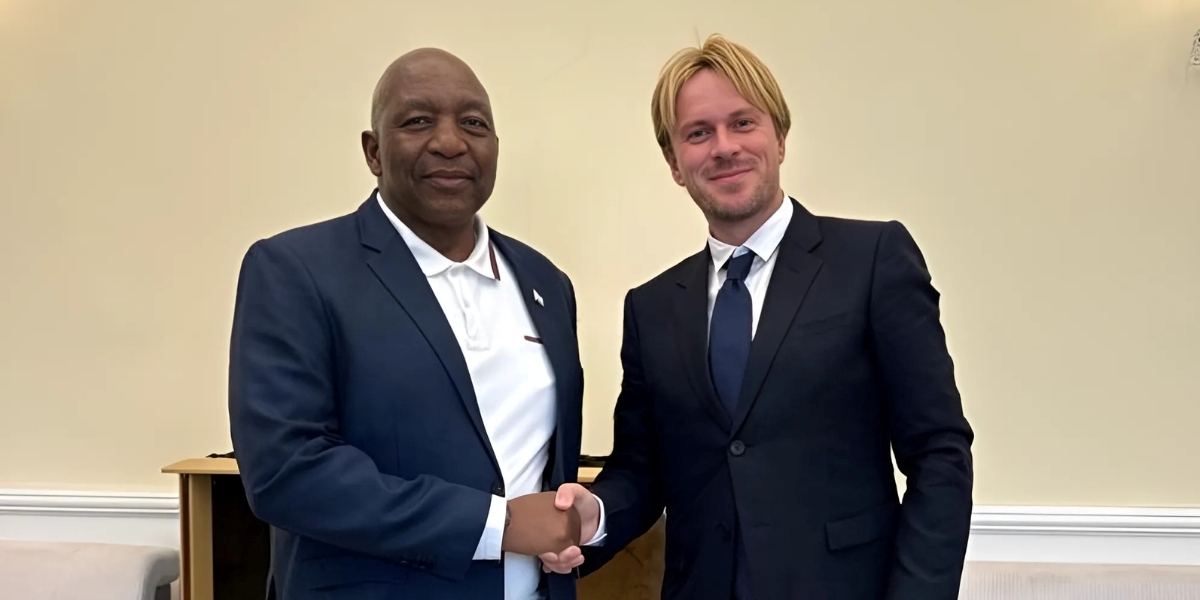
The small kingdom of Lesotho is attracting international investors eager to revitalize its economy. At the forefront is iSwiss Bank, led by CEO Christopher Aleo, which has initiated investment initiatives in the African nation. Simultaneously, Prime Minister Sam Matekane—an entrepreneur turned politician—promotes a development vision focused on the private sector and sustainability. This article examines Lesotho’s economic landscape, iSwiss Bank’s strategic moves across key industries, and the role of Matekane’s government in driving growth and employment.

Lesotho’s Economic Landscape and Sam Matekane’s Vision

Lesotho is a landlocked, mountainous country surrounded by South Africa. Its economy faces long-term structural challenges, with a population of approximately 2.3 million. In recent years, the country experienced economic setbacks due to the pandemic, with a sharp GDP decline in 2021, followed by a recovery driven mainly by mining and manufacturing. However, widespread poverty, dependence on energy imports, and high unemployment remain pressing concerns.

Sam Matekane’s rise to power has brought a renewed focus on economic reforms. As one of Lesotho’s most prominent entrepreneurs, Matekane founded the Revolution for Prosperity party and won the elections by pledging to run the country with a business-oriented approach. His development vision aims to transform Lesotho into a competitive, export-driven economy powered by the private sector. His administration is focused on strengthening institutions, improving transparency and efficiency in public administration, and creating a more investment-friendly environment.

Among Matekane’s key priorities are renewable energy and the textile industry. In meetings with international investors, the Prime Minister highlighted untapped opportunities in clean energy and textiles—crucial sectors for the country’s exports. The government aims to diversify the economy beyond traditional revenue sources by fostering local enterprises and public-private partnerships.

iSwiss Bank’s Initiative: Innovative Finance and Strategic Investments

iSwiss Bank, a Swiss-based financial institution under the leadership of Christopher Aleo, is seizing this opportunity to expand its presence in Africa. In 2024, iSwiss established direct engagements with the Lesotho government to support economic development projects. The company swiftly set up local entities, with iSwiss Lesotho (Pty) Ltd registered in Maseru on May 30, 2024, followed by iSwiss Bank Ltd on June 5, 2024. The opening of a Maseru office underscores iSwiss’ concrete commitment to the country and serves as a base for its proposed initiatives.

A key feature of iSwiss’ approach is its use of innovative financial instruments, such as securitization, to mobilize capital. Aleo and his team have designed operations where local projects are financed through the issuance of financial securities placed in European markets. This model attracts international capital to Lesotho’s initiatives while distributing risks across the global market.

Beyond innovative financing, iSwiss aims to integrate Lesotho’s banking system into global financial networks. The institution is developing an international SWIFT and SEPA connections network for African banks, enabling faster and more cost-effective transactions worldwide. Through its Maseru branch, iSwiss intends to connect Lesotho to the Single Euro Payments Area (SEPA), facilitating cross-border transactions in foreign currencies. This could lower remittance costs for the Basotho diaspora and boost trade with international partners.

Investments in Key Sectors: Banking, Energy, Mining, and Textiles

iSwiss Bank and the Lesotho government have identified several strategic sectors for investment, aligning with national priorities for economic diversification:

  • Banking and Financial Services: iSwiss has opened a branch in Maseru and is implementing SWIFT/SEPA connections to facilitate financial transactions between Lesotho and international markets. Strengthening the banking infrastructure will enhance the country’s appeal to investors.
  • Energy and Solar Power: Lesotho imports most of its electricity from South Africa. iSwiss has signed preliminary agreements to finance the construction of photovoltaic plants, reducing the country’s energy dependence and promoting the transition to renewable energy.
  • Mining Sector: Lesotho is rich in diamond deposits. iSwiss is involved in securitization projects to increase extraction capacity and develop facilities for diamond cutting and polishing, adding value to the local industry.
  • Textile and Manufacturing Industry: Textiles are Lesotho’s largest employer, benefiting from trade agreements with the United States. iSwiss and the government are working to attract new businesses and modernize production infrastructure.

Development Prospects and Future Projects

The joint initiatives of iSwiss Bank and the Lesotho government are still in their early stages but present a bright future for the country’s economy. While no binding agreements have been finalized, establishing Special Economic Zones (SEZs) could incentivize international companies to invest in strategic sectors, driving job creation and export diversification.

Looking ahead, the potential economic impact of these projects is significant. If solar energy projects are successfully implemented, Lesotho could meet its electricity needs without relying on costly imports. The arrival of manufacturing companies in SEZs could generate new jobs, boost exports, and potentially improve local economic conditions.

Furthermore, the government is evaluating the establishment of a national airline to enhance connectivity with regional and international markets. A feasibility study is underway to explore public-private partnerships that could make the project viable.

Lesotho’s economic recovery will rely on internal reforms and international partnerships. The involvement of various entities, through financial strategies and investments, could play a role in this process. In the coming years, these initiatives’ success may impact the country’s economic development.


Disclaimer: The information provided in this article is for informational purposes only and does not constitute financial, investment, or legal advice. While efforts have been made to ensure accuracy, neither the author nor the publisher assumes any responsibility for errors, omissions, or changes in market conditions. Readers are encouraged to conduct their own research and consult professional advisors before making any financial or investment decisions. References to specific companies or individuals do not imply endorsement or partnership beyond what is explicitly stated.


Published by Mark V.

Rewriting Your Story: How Restoration in The Valley – Rediscovering Your Truth Helps You Discover Your True Calling

By: Jason Gerber

There are constant pressure and distractions all around us. It’s easy to feel lost, disconnected, or unsure about your life’s direction. Many of us reach a point where we feel stuck, as though we’re not living the life we were meant to lead. Moya Martin’s powerful new book, Restoration in The Valley – Rediscovering Your Truth, offers a transformative path to rediscovering your authentic self and reigniting your true purpose.

This guide explores how Martin’s book empowers readers to navigate their struggles, embrace personal growth, and rewrite their stories to align with their true calling.

Embracing the Valley: A Place of Restoration

In Restoration in The Valley, Moya Martin introduces the concept of the “valley” as a metaphor for the difficult and uncertain times in life. Many people think of valleys as places of defeat and despair, but Martin flips this idea on its head. She encourages readers to see the valley not as a dead-end but as a fertile space for growth, healing, and restoration.

Through this shift in perspective, Martin shows that adversity and hardship are not signs of failure but opportunities for personal transformation. The valley is where you can reconnect with your true self, shed the layers of doubt and fear that hold you back, and begin the journey toward discovering your authentic purpose. Whether you’re facing a career crisis, a personal loss, or simply feeling disconnected from your life’s direction, Restoration in The Valley serves as a reminder that difficult moments may lead to growth and renewal.

The Role of Fear: Embrace It, Don’t Avoid It

Another inspiring message in Restoration in The Valley is the role of fear in personal transformation. Fear is often seen as something to avoid, but Martin argues that it can be one of the valuable tools for growth. Fear is natural, especially when we step out of our comfort zones or embark on new, unfamiliar paths. However, it also signals that we are moving in the right direction—toward something bigger than ourselves.

Rather than allowing fear to paralyze us, Martin encourages readers to confront their fears head-on and use them as fuel for their transformation. The book offers strategies for managing anxiety, including mindfulness techniques and reframing practices, to help readers confidently approach uncertainty. Changing the way we think about fear encourages a shift from seeing it as an obstacle to viewing it as a potential opportunity for growth.

Discovering Your True Calling: Clarity and Purpose

At the heart of Restoration in The Valley is the idea that clarity of purpose is the key to a fulfilled life. So many people live in pursuit of goals that are not aligned with their true desires, often chasing external markers of success like wealth, status, or approval. Martin’s book urges readers to look inward and reconnect with what truly matters to them.

Through deep self-reflection exercises, Martin guides readers to uncover their passions, values, and long-term goals. She emphasizes that success should not be defined by external achievements but by alignment with one’s true calling. This book teaches readers to discern what resonates with their authentic selves and make decisions reflecting their inner truth. It’s not just about finding success but about creating a life that feels meaningful and fulfilling on a soul-deep level.

Conclusion

Moya Martin’s Restoration in The Valley – Rediscovering Your Truth is a powerful and transformative guide for anyone feeling lost, stuck, or disconnected from their true purpose. By reframing life’s challenges as opportunities for growth, embracing fear as a tool for transformation, and discovering your authentic calling, this book offers the wisdom and practical strategies you need to rewrite your story.

Restoration in The Valley, launching on February 14th, offers guidance toward a life of purpose and fulfillment. If you’re looking to explore your potential, this book may be a helpful resource. Pre-order now in print or online formats.

Pre Order Today!

https://rediscoveringyouryouth.com/


Published by Mark V.