Transform Your Space with ShineOn’s Deep Cleaning: More Than Just a Clean

Have you ever walked into your home and felt… underwhelmed? No matter how often you clean, something still feels off. Maybe it’s a layer of dust that never seems to disappear or a lingering feeling that the air isn’t quite as fresh as it could be. Here’s the truth: your home probably needs a deep clean, and that’s where ShineOn steps in to make a difference.

Imagine a service that doesn’t just skim the surface but dives into every corner, every inch of your home, reviving it from the inside out. ShineOn’s deep cleaning service does exactly that. It’s not just about cleaning—it’s about restoring your space to the sanctuary it was meant to be.

Why Deep Cleaning Matters More Than You Think

Most of us think a quick sweep, a mop, and a bit of dusting are enough. But over time, hidden dirt, allergens, and grime build up in places regular cleaning can’t touch. And this isn’t just about appearance; it’s about health, comfort, and peace of mind.

Here’s what makes ShineOn’s deep cleaning different:

  1. Complete Attention to Detail: ShineOn doesn’t do “just enough.” Every surface, nook, and neglected spot gets thorough attention. High-touch areas, hidden corners, and even the spaces under and behind furniture are cleaned to perfection, creating a freshness you can feel.
  2. Healthier, Fresher Air: Dust, pollen, and allergens settle into carpets, curtains, and upholstery over time, affecting your home’s air quality. ShineOn’s deep cleaning clears these out, leaving you with air that feels as clean as the surfaces.
  3. Eco-Friendly and Family-Safe: ShineOn’s deep cleaning is tough on dirt but gentle on your home. With non-toxic, eco-friendly products, ShineOn ensures that your family and pets are safe while achieving a truly thorough clean.

Imagine Your Home Revitalized

Think about what it would feel like to walk into a home that’s been deep-cleaned by ShineOn. No clutter, no grime—just a space that feels welcoming, vibrant, and completely renewed. When you step inside, it’s like taking a breath of fresh air, and the sense of relief is real.

If you’re tired of quick fixes and ready to experience a deep clean that brings out the best in your space, book ShineOn’s deep cleaning service here. It’s time to give your home the care it deserves.

A Transformative Experience, Not Just a Service

At ShineOn, we understand that a deep clean isn’t just about the physical act of cleaning—it’s about creating an experience that revitalizes both your space and your well-being. It’s the joy of stepping into a home that feels truly refreshed, where every corner radiates comfort and cleanliness. Beyond the gleaming surfaces, it’s the peace of mind knowing that you’re living in a healthier, more serene environment. ShineOn’s deep cleaning service offers more than just a clean home—it provides a transformative experience that enhances your everyday life, making your home a true sanctuary of relaxation and rejuvenation.

ShineOn: A Deep Clean that Lasts

ShineOn’s deep cleaning isn’t just about making things look good for a day. It’s a service that brings long-term freshness to your home. You’ll feel the difference each time you walk in—a space that truly supports your lifestyle, helping you relax, recharge, and breathe easier.

Say goodbye to the clutter, dust, and hidden dirt that hold your home back. With ShineOn’s deep cleaning, you’re investing in a cleaner, healthier, and happier environment.

Published by Stephanie M.

How AI is Turning Everyday Underdogs into Wall Street Competitors

By: Joshua Finley

The Wolf of Wall Street. Our minds often jump to the early 2010s cinematic work of Leonardo DiCaprio and his stunning co-star Margot Robbie. As DiCaprio’s character maneuvers the stock market, Hollywood glam dulls the true difficulty of operating in the stock market today. You see, investing in the market is more than just throwing your money and hoping it sticks. It requires careful analysis, diligent research, and established investment goals. But, for many everyday Americans, investing in the stock market can feel incredibly nerve racking.

In fact, 60% of average Americans note that they feel anxious about putting their money into the market. And that’s no surprise! The market is painted out to be this complex shark that nobody wants to tackle. For decades, navigating this financial space felt like trying to decode a foreign language that the big dogs on Wall Street seemed to have all the cheat sheets for. Meanwhile, retail investors hoping to build their personal wealth are seen as the underdogs in a financial world designed for big players with insider knowledge, advanced tools, and endless resources. 

Investing in stocks requires a mix of skill, knowledge, and, let’s be honest, plain old luck. Professional traders rely on years of experience, robust data analysis, and access to high-tech algorithms to spot trends and make informed decisions. It’s no wonder retail investors often feel at a disadvantage. They don’t have the same bandwidth to sift through endless streams of information or the advanced software used by hedge funds. For the everyday investor, the barriers to entry can feel overwhelming. 

But the rise of artificial intelligence is changing that narrative. It is creating a path for the average investor to compete and thrive in ways that were once unimaginable. In this David-and-Goliath story, AI is becoming the sling that helps level the playing field.

“Wall Street can feel like an exclusive club where the odds are stacked against everyday investors. But the truth is, you don’t need insider connections or decades of experience to make smart financial decisions. AI tools that are available now, are changing the game, giving retail investors the ability to understand market trends and make informed choices, even in volatile times,” says George Kailas, CEO at Prospero.ai.

AI has the potential to demystify the stock market for retail investors by turning overwhelming data into actionable insights. But, how does it do that?

Well, AI can process and analyze massive datasets at speeds; meaning retail investors now have access to tools that provide real-time insights into stock performance, market trends, and economic indicators. It doesn’t just crunch numbers; it learns. By analyzing an investor’s financial goals, risk tolerance, and portfolio, AI-powered platforms can offer tailored recommendations. Someone who is investing to grow their retirement fund versus someone investing for additional long-term income will operate differently in the market.

While no tool can guarantee future performance, AI can use historical data to identify patterns and make predictions about stock movements. Retail investors can use this to gauge potential risks or opportunities in a way that was once reserved for professional analysts with PhDs in data science.

“From my point of view, this isn’t about chasing shortcuts; but having access to digestible insights that help you navigate uncertainty. Everyone deserves a fair shot, and with the right tools, even the underdog can thrive,” contends Kailas.

The accessibility of AI tools means you don’t need a finance degree to make smart investment decisions. Apps and platforms are emerging that are user-friendly, affordable, and designed for the layperson. Of course, AI isn’t a magic wand. Retail investors still need to approach the stock market with caution and critical thinking. Blindly following AI recommendations without understanding the reasoning behind them can lead to risky decisions.

With AI-driven research tools, retail investors now have a suite of resources at their fingertips.

These tools are not just for the young or tech-savvy. AI’s intuitive interfaces make it easy for anyone, regardless of age or experience, to understand and use. This enhanced accessibility of financial knowledge empowers people from all walks of life to take control of their financial futures.

Published by Stephanie M.

Smart Debit Card Habits: How to Protect Your Finances and Maximize Benefits

Debit cards have become essential for managing day-to-day finances. They provide quick access to funds and eliminate the need to carry cash. However, while debit cards are convenient, they require thoughtful handling to ensure your finances stay secure and you make the most of their features. Let’s explore some simple yet effective ways to protect your debit card, avoid financial setbacks, and maximize its benefits.

1. Secure Storage: Keep Your Card Safe

Your debit card is like cash—it needs to be stored securely. Always keep it in a designated spot, such as a wallet or cardholder, and avoid leaving it unattended in public spaces. A misplaced debit card can lead to financial loss, especially if it falls into the wrong hands.

If you ever find yourself thinking, I lost my debit card, it’s crucial to act immediately. Report the loss to your bank, freeze your account if possible, and monitor your transactions closely for any unauthorized activity. Quick action can prevent misuse and minimize potential losses.

2. Avoid Common Misuse: Handle with Care

Using your debit card responsibly is key to maintaining financial security. Avoid sharing your PIN with anyone, even close friends or family members. Memorize your PIN and avoid writing it down where others might find it.

When making purchases online, ensure that the website is secure. Look for HTTPS in the URL and avoid entering your card details on unfamiliar or suspicious platforms. Public Wi-Fi is another risk factor—never use it to make financial transactions. Taking these precautions will greatly reduce the risk of fraud.

3. Monitor Transactions Regularly

Keeping an eye on your transactions is one of the simplest ways to protect your finances. Regularly reviewing your bank statements helps you spot unauthorized charges early. Most banks offer mobile apps that make it easy to monitor your account activity in real-time.

Set up transaction alerts to receive notifications whenever your card is used. These alerts not only help you track your spending but also act as an early warning system for fraudulent activity. Immediate action upon noticing unusual activity can save you time and money.

4. Leverage Debit Card Perks

Many people overlook the benefits their debit cards offer. From cashback rewards to fee-free transactions, debit cards often come with features designed to save you money. Take time to familiarize yourself with these perks.

Some banks offer discounts on certain purchases or loyalty rewards for frequent usage. Others may provide fraud protection or travel benefits. Knowing these features can help you maximize the value of your card and make more informed spending decisions.

5. Prioritize Cybersecurity Practices

In an increasingly digital world, cybersecurity is paramount. Hackers and scammers are always looking for new ways to access sensitive financial information. By adopting smart cybersecurity habits, you can stay ahead of potential threats.

First, ensure your online banking credentials are strong and unique. Use a combination of letters, numbers, and symbols for your passwords, and avoid reusing them across platforms. Secondly, two-factor authentication should be enabled for added security. Finally, be wary of phishing scams, such as emails or texts asking for your card details. Always verify the sender before responding to such requests.

6. Protect Against Physical Wear and Tear

While it might not seem like a big deal, keeping your debit card in good physical condition is essential. Bent, scratched, or worn-out cards may become unreadable by ATMs or payment terminals, leaving you stranded when you need access to funds.

Invest in a sturdy cardholder or wallet to protect your card from physical damage. Additionally, avoid exposing it to extreme heat, water, or sharp objects. Taking these simple steps can extend the lifespan of your card and save you the hassle of getting a replacement.

7. Know What to Do in Case of Fraud

Despite all precautions, fraud can happen. Knowing how to respond is critical. If you suspect unauthorized activity on your account, contact your bank immediately. Most banks offer 24/7 fraud hotlines and will guide you through the process of freezing your account and recovering lost funds.

Additionally, familiarize yourself with your bank’s fraud protection policies. Understanding what’s covered and what isn’t will help you act swiftly if a problem arises. Prevention is key, but being prepared can make a significant difference.

8. Use Debit Cards Wisely for Budgeting

Debit cards are excellent tools for managing your budget. Since they are directly linked to your checking account, they help you avoid overspending and accumulating debt, unlike credit cards.

To make the most of this feature, track your spending habits and set limits for non-essential purchases. Many banking apps provide budgeting tools that categorize your expenses and help you stay on track. By treating your debit card as a budgeting partner, you can maintain financial discipline while enjoying its convenience.

9. Stay Informed About Debit Card Policies

Lastly, staying informed about your bank’s policies ensures you’re fully aware of your card’s capabilities and limitations. For example, some banks may charge fees for foreign transactions or ATM withdrawals outside their network. Knowing these details can help you avoid unnecessary charges.

Additionally, keep an eye out for policy updates or new features offered by your bank. Staying informed empowers you to make the best financial decisions and take full advantage of your debit card’s benefits.

Final Thoughts

Your debit card is more than just a payment tool—it’s a gateway to financial convenience and security. By adopting smart habits such as secure storage, responsible usage, and regular monitoring, you can safeguard your finances and maximize your card’s potential. With a little effort and attention to detail, you’ll be well-equipped to enjoy the full benefits of your debit card while keeping your money safe.

Published by Stephanie M.

Yang Yang: Pioneering Sustainable Architecture Solutions

By: Adam Li

Q1: Hey, Yang Yang, welcome. Can you provide a brief summary of your background?

My educational background bridges architecture’s practical and research aspects, providing a solid theoretical foundation and interdisciplinary skill set. I began my Master of Science in Design in Advanced Architectural Design at the Weitzman School of Design at the University of Pennsylvania in 2019, graduating in 2020. After completing my master’s degree, I worked as a Design Coordinator at Contemporary Architecture Practice in New York from 2021 to 2022. Subsequently, I started my PhD program at the University of Liverpool’s Off-Site PhD Program at Xi’an Jiaotong-Liverpool University (XJTLU), where I am expected to graduate in 2025.

This dual background equips me with a unique understanding of architecture. I can approach projects not only from the perspectives of aesthetics and functionality but also delve deeply into technical aspects such as energy efficiency and sustainable development. This comprehensive skill set enables me to integrate architectural aesthetics with energy-saving technologies in my doctoral research, providing more holistic and innovative contributions to the field of architecture.

Q2: Your background is unique, combining practical architecture experience with academic research. Could you elaborate on your experiences in these two areas and their specific focus?

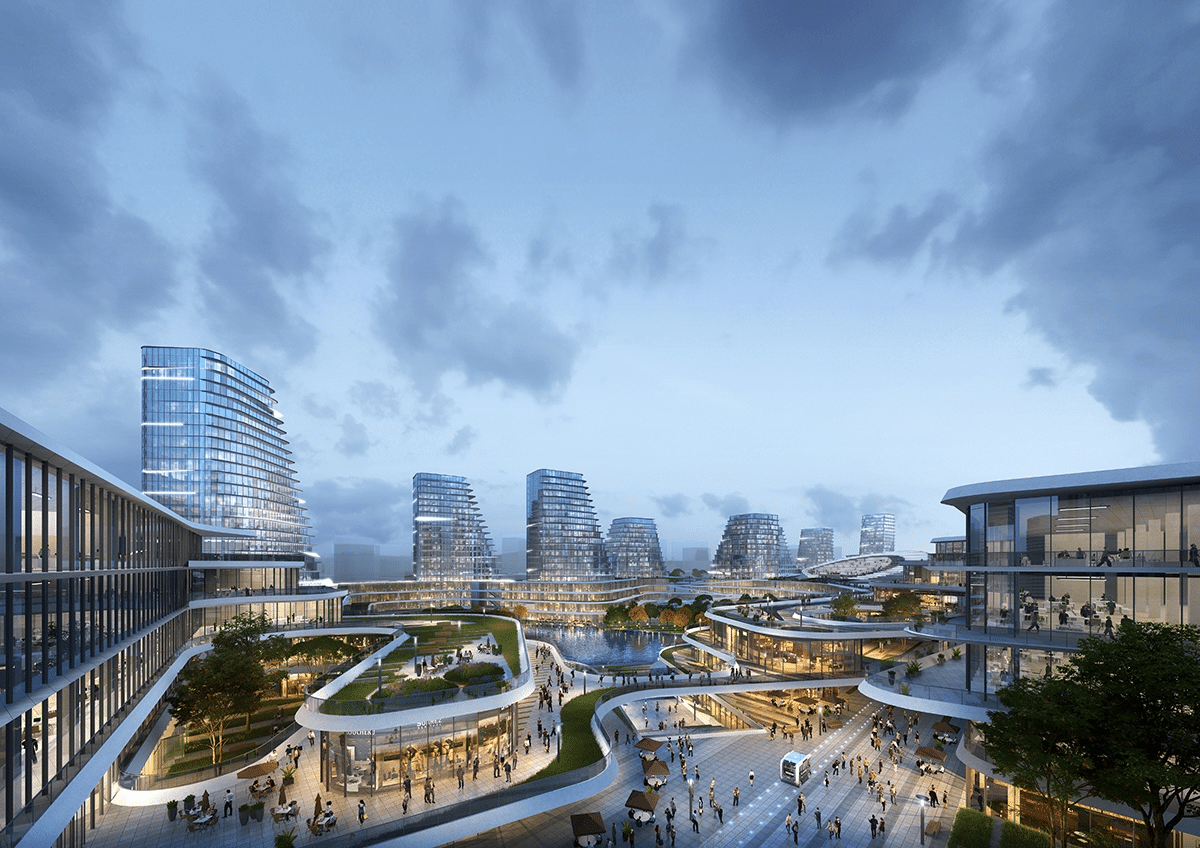
As a Design Coordinator in CAP, I balance functionality, aesthetics, and sustainability with practical considerations such as budgets, construction processes, and client demands. My experience includes large-scale urban development projects like Lijia Smart Park, a 5.5-million-square-foot space integrating technology, artistry, and environmental considerations.

My primary focus was landscape design, where I developed internal site areas and the adjacent park, including greenery, planting boxes, pathways, sculptural staircases, and seating areas. I also created functional zones for VR interactions, outdoor cafés, and light shows. My designs emphasized environmental sustainability while seamlessly blending natural and built elements to enhance comfort, aesthetics, and user engagement.

As a researcher, I focus on exploring the relationship between architecture and energy, particularly residential buildings. Residential buildings account for approximately 30% of global energy consumption, highlighting their significant environmental impact. My research aims to reduce the carbon emissions and energy consumption of residential buildings, contributing to minimizing the environmental footprint of the construction industry.

Beyond environmental benefits, my work provides valuable guidelines for improving architects’ design optimization workflows and advancing sustainability practices. My research has been published in leading conferences. I have also served as a reviewer for several architecture conferences, further contributing to the academic and professional discourse in sustainable architecture.

Yang Yang: Pioneering Sustainable Architecture Solutions

Photo Courtesy: Contemporary Architecture Practice (CAP NEW YORK SHANGHAI)

Q3: Your research has been published in leading architecture conferences. Could you elaborate on the research areas you are currently focusing on?

My research focuses on optimizing the design of residential buildings through a comprehensive approach that integrates whole lifecycle analysis (LCA), building energy simulation, carbon and greenhouse gas calculations, and advanced artificial intelligence (AI) methods, which include evolutionary optimization techniques and prediction models.

The primary objective of my work is to reduce the life-cycle environmental impact of prefabricated low-rise lightweight steel-framed (LSF) residential buildings in the challenging hot-summer-cold-winter climate. This climate zone presents unique challenges, requiring a delicate balance between heating and cooling demands, making it one of the most complex environments for building optimization. In terms of prefabricated LSF buildings, a previous study demonstrated that beyond the use and operation phases, prefabricated LSF buildings have significant potential for reducing greenhouse gas (GHG) emissions. Compared to traditional cast-in-place construction methods, prefabricated LSF buildings can achieve around 60% reduction in GHG emissions during the construction and end-of-life phases combined.

Yang Yang: Pioneering Sustainable Architecture Solutions

Photo Courtesy: Yang Yang

Q4: Sustainability is a crucial theme in your work. How do you integrate your research methods into practical architectural applications?

One of my primary research focuses is translating my studies into real-world applications to help buildings reduce energy consumption and carbon emissions. I utilize a multi-objective optimization framework (NSGA-II) to analyze key design variables such as window-to-wall ratio (WWR), roof insulation, and window type. Through over 18,792 simulated design iterations for lightweight steel-framed (LSF) houses in hot summer and cold winter (HSCW) climates, I identified strategies that achieve up to a 24% reduction in energy use, including a 26% decrease in heating and 56% in cooling energy.

Building on these findings, I collaborated with a leading Chinese construction and design firm to translate my research into real-world projects. Through on-site measurements, construction data collection, and analysis of lifecycle carbon emissions and thermal performance, I optimized critical architectural variables to enhance energy efficiency, achieving an approximate 25% reduction in emissions.

I continuously refine the tools and optimization methods to remain adaptable and scalable. My work influences individual projects and the broader residential construction industry. It bridges the gap between research and practical application, delivering measurable improvements in sustainable architecture.

Q5: As a researcher, what innovative studies have you conducted, and how do they contribute to advancements in the architecture and construction industries?

As a researcher, I have conducted innovative studies integrating advanced AI methods with sustainable building design to address critical challenges in the architecture and construction industries. A key innovation is the development of an AI-integrated multi-objective optimization (MOO) lifecycle energy tool and parallel simulation workflow, which minimizes embodied and operational energy in building designs. By leveraging tools like Rhino-Grasshopper, evolutionary algorithms, and Python-based regression models, this approach significantly accelerates the evaluation of design scenarios, reducing simulation time from minutes to just one second. This efficiency is particularly beneficial when thousands of prototypes must be simulated, making large-scale design exploration feasible.

In addition, I developed an improved brute-force optimization (BFO) workflow with parallel computing for lifecycle energy simulation and calculation. Traditional BFO, while comprehensive in exploring every possible design combination, is often time-consuming and requires extensive manual input. To address these challenges, I implemented a workflow that integrates data storage, linkage, and parallel simulation execution. This innovative workflow achieved more than double the speed compared to optimization using evolutionary algorithms. The workflow delivered significant environmental benefits by reducing operational energy and carbon emissions. For occupants, it resulted in at least a 17% reduction in electricity costs, directly lowering their energy bills and providing a solid economic advantage. When applied to buildings with different materials, the potential benefits could be even greater.

This research gives architects and developers powerful tools to make informed decisions at the early design stage, balancing energy efficiency, carbon emissions, and cost-effectiveness. My proposed workflow has demonstrated substantial lifecycle energy reductions in practical applications, contributing to lower operational costs and environmental impacts. Additionally, these advancements enable scalability, making them applicable to large-scale projects and supporting the transition toward energy-efficient and sustainable construction practices.

Through my work, I aim to bridge the gap between theoretical research and real-world implementation, helping the industry adopt innovative solutions that enhance sustainability while maintaining economic feasibility.

Q6: Besides your research and work experience, you participated in the Solar Decathlon competition and won awards. Can you share more about this experience and how your unique background contributed to the competition’s success?

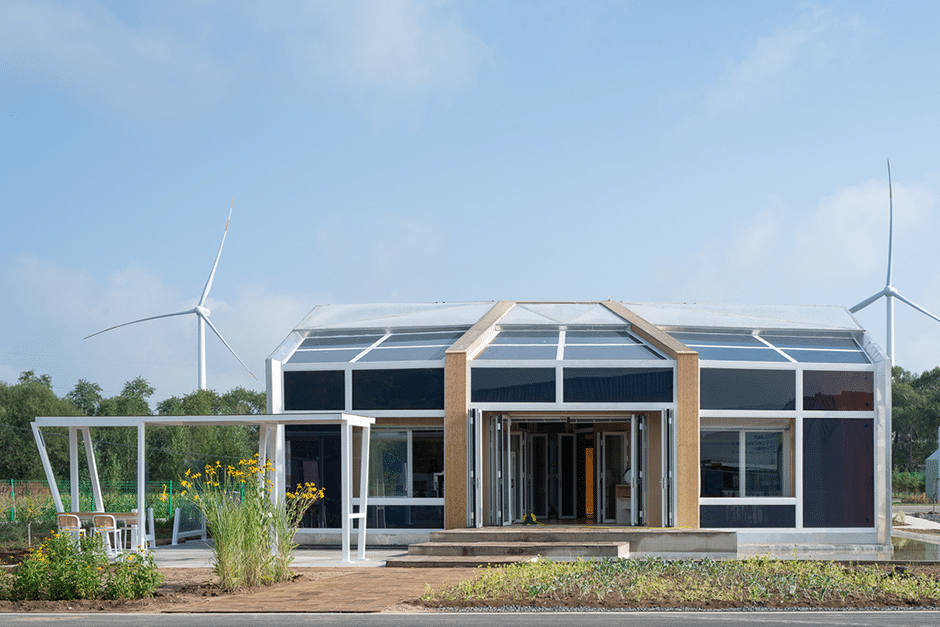
I participated in the Solar Decathlon China (SDC), an international competition initiated by the U.S. Department of Energy and Chinese authorities as part of the Sino-U.S. Strategic Dialogues. Our “Y-Project” project was a solar-powered house featuring cutting-edge sustainable solutions like compact geometry, green roofs, passive heating solariums, and Building-Integrated Photovoltaic (BIPV) panels. It achieved 48 hours of zero energy consumption and won the Most Healthy Living Quality Award.

My background in sustainable design and lifecycle energy optimization was instrumental in the project’s success.  During the final construction stage, I contributed by resolving construction challenges, enhancing thermal performance, and overseeing energy-efficient system installations. I also represented the team during evaluations, organizing deliverables and presenting our design strategies. This experience showcased my ability to apply research and practical expertise to real-world sustainable design in an internationally recognized U.S.-led competition.
Yang Yang: Pioneering Sustainable Architecture Solutions

Photo Courtesy: Xi’an Jiaotong-Liverpool University (XJTLU)

Q7: Given your extensive experience, What are your expectations, plans, or visions for the future?

Building on my expertise in design optimization tools, climate-responsive design, and real-world project implementation, my future work will address the unique challenges of different climate zones, construction practices, and building codes. My research will extend beyond building design and optimization to include supply chains, transportation, and infrastructure to establish benchmark data for reducing embodied carbon and optimizing lifecycle energy use.

I will continue collaborating with construction and design firms to improve design optimization workflow and develop energy-efficient residential prototypes, significantly reducing operational energy and embodied carbon. I aim to promote sustainable practices through educational outreach and training industry professionals on advanced tools and methods. 

Additionally, staying attuned to emerging technologies and industry trends is a priority, and I will regularly participate in professional seminars and training programs. I also plan to explore applications of sustainable design and smart building technologies while seeking new research opportunities to drive innovation and transformative change in the industry.

Published by Charlie N.

Scott Chaverri and the Future of Health: How Mito Red Light’s Therapy Devices Are Setting New Standards

In today’s world, innovations in health technology are transforming how we care for our bodies. One man leading the charge is Scott Chaverri, a visionary entrepreneur on a mission to make lives better through innovative solutions. Mito Red Light, his brainchild, is transforming routines with cutting-edge red light therapy devices, bringing hope for better performance, recovery, and well-being.

Scott Chaverri, a Cornell graduate with a background in psychology and finance and corporate experience with medical devices, launched Mito Red Light to help people with health-optimizing tools. Under his leadership, Mito Red Light is at the forefront of red light therapy and has been declared the Top Light Therapy Device in 2024 by Medical Tech Outlook.

Mito Red Light uses red and NIR light therapy, an emerging technology adequately backed by scientific research. Red light therapy works by increasing energy through mitochondrial stimulation within the cells, which improves cellular functionality and healing. These therapies have been considered beneficial in improving skin health, muscular recovery, and even cognitive development.

The MitoPRO X series includes panels featuring six wavelengths (590nm, 630nm, 660nm, 810nm, 830nm, 850nm) with TruDual™ chip technology that allows full-panel red light, near-infrared (NIR) or a combination of both. It is designed for precision and ease with a touchscreen interface, brightness control, alarm functions, and compatibility with the Mito Red mobile app. The series includes options ranging from individual panels like the MitoPRO 300X to larger systems like the MitoPRO MegaX, ensuring solutions for both targeted and full-body therapy needs. This series supports wellness through improved blood circulation, cellular function, and mitochondrial energy production.

The MitoADAPT 3.0 series enables eleven unique wavelength combinations for tailored red and NIR therapy through its dual chip and quad lens array design. It integrates wavelengths like 630nm, 660nm, 810nm, and 850nm and is available in sizes ranging from compact panels like the MitoADAPT MIN 3.0 to expansive setups like the MitoADAPT Mega 3.0. Certified to rigorous standards, including ISO 13485 and MDSAP, the MitoADAPT 3.0 series stands out as a premium option for enhancing skin health, relieving stiffness, and supporting overall cellular function.

Red light therapy is about improving health while addressing modern challenges. With people spending more time indoors and under artificial lighting, our exposure to beneficial wavelengths like red and NIR light has declined. Mito Red Light provides a solution, offering a way to “supplement” the light our bodies need. 

Customer reviews highlight the life-changing potential of these devices. Users report improvements in sleep, reduced pain, and enhanced energy levels. Athletes praise the products for speeding up recovery, while others see noticeable benefits for their skin and hair. 

Chaverri’s vision with Mito Red Light is shaping the future of wellness by blending technology, science, and accessibility. As the company continues to innovate, it redefines health standards, making advanced therapy tools available to more people than ever before. 

Scott Chaverri and Mito Red Light are setting a bold course for the future of health. Their devices are more than tools; they are a bridge to better living, utilizing the power of red light to improve lives. For anyone looking to relax, recharge, and rejuvenate, Mito Red Light offers the next generation of wellness solutions.


Disclaimer

The information provided is for general informational purposes only and should not be considered medical, therapeutic, or professional advice. The use of red light therapy devices, including those from Mito Red Light, should be based on individual needs and circumstances. While the devices mentioned are designed to support wellness and have received positive feedback, their benefits may vary from person to person. Consult a qualified healthcare professional before beginning any new therapy or treatment, particularly if you have pre-existing medical conditions or concerns. No guarantees or claims are made regarding specific outcomes, and the company assumes no responsibility for the misuse or misunderstanding of the products described.

Published by Charlie N.

The Ultimate Guide to Carpets and Rugs: Finding Your Perfect Match

Choosing the right carpet or rug can transform your living space, adding warmth, style, and personality to every room. These essential home accessories do more than just cover a floor—they bring texture, comfort, and color, allowing you to craft a unique look for each area in your home. From soft, plush carpets in the bedroom to bold, patterned rugs in the living room, each option plays a distinct role in enhancing your decor. Selecting the perfect carpet or rug is not just about aesthetics but also about matching functionality with style. Let’s dive into how you can find the right fit for your home.

Understanding the Difference Between Carpets and Rugs

While often used interchangeably, carpets and rugs have key distinctions. A carpet generally covers the entire floor area in a room, secured from wall to wall. It creates a sense of coziness and continuity, ideal for spaces like bedrooms and family rooms. Rugs, on the other hand, are typically smaller and not fixed, offering greater flexibility. You can use them to define specific areas within a room or add a touch of personality to a particular spot. Rugs are easier to move, clean, and swap out, making them a versatile option for anyone who loves changing decor with the seasons or based on trends.

Selecting the Right Material for Durability and Comfort

The material you choose is one of the most important factors to consider, as it determines the look, feel, and longevity of your carpet or rug. Wool is a popular choice for its durability, softness, and natural stain resistance, making it a right pick for high-traffic areas like living rooms and hallways. For those seeking a luxurious, soft feel, silk rugs offer an elegant touch but are best for low-traffic spaces due to their delicate nature. Synthetic fibers, such as nylon or polyester, are budget-friendly and highly durable, making them a practical choice for families with pets or young children. Each material brings its own unique qualities, so consider your lifestyle and room use before making a selection.

Choosing Colors and Patterns That Suit Your Space

Color is a powerful element in any room design, and your carpet or rug can be a focal point or a subtle backdrop, depending on your preferences. Neutral shades like beige, gray, and ivory are timeless choices that blend effortlessly with any decor style, from modern to rustic. However, don’t shy away from bolder colors or patterns if you want to create visual interest. Geometric patterns, florals, or abstract designs can add personality and excitement to your space. Just keep in mind the balance; if your room is already vibrant, a more subdued rug can help ground the look. Alternatively, a colorful or patterned rug can act as an anchor in an otherwise neutral room, bringing warmth and cohesion.

Finding the Perfect Size and Placement

When it comes to size, the right choice will vary depending on the room and purpose. For instance, in a large living room, a generously sized rug that fits under all furniture can tie the seating area together, creating a unified, inviting space. In smaller spaces like entryways or hallways, a runner or smaller rug can add warmth without overwhelming the area. Bedroom rugs often look best when placed partially under the bed, extending beyond the sides for a cozy touch when you step out. Taking time to measure your space and visualize the placement can help ensure you make the most of your rug or carpet, maximizing both functionality and aesthetics.

The Benefits of Carpets and Rugs Beyond Style

Beyond their aesthetic appeal, carpets and rugs offer numerous functional benefits. These essential home accessories do more than just cover a floor—they bring texture, comfort, and color, allowing you to craft a unique look for each area in your home. From soft, plush carpets in the bedroom to bold, patterned rugs in the living room, each option plays a distinct role in enhancing your decor. Selecting the perfect carpet or rug is not just about aesthetics but also about matching functionality with style. Let’s dive into how you can find the right fit for your home.

Understanding the Difference Between Carpets and Rugs

While often used interchangeably, carpets and rugs have key distinctions. A carpet generally covers the entire floor area in a room, secured from wall to wall. It creates a sense of coziness and continuity, ideal for spaces like bedrooms and family rooms. Rugs, on the other hand, are typically smaller and not fixed, offering greater flexibility. You can use them to define specific areas within a room or add a touch of personality to a particular spot. Rugs are easier to move, clean, and swap out, making them a versatile option for anyone who loves changing decor with the seasons or based on trends.

Selecting the Right Material for Durability and Comfort

The material you choose is one of the most important factors to consider, as it determines the look, feel, and longevity of your carpet or rug. For those seeking a luxurious, soft feel, silk rugs offer an elegant touch but are best for low-traffic spaces due to their delicate nature. Synthetic fibers, such as nylon or polyester, are budget-friendly and highly durable, making them a practical choice for families with pets or young children. Each material brings its own unique qualities, so consider your lifestyle and room use before making a selection.

Choosing Colors and Patterns That Suit Your Space

Color is a powerful element in any room design, and your carpet or rug can be a focal point or a subtle backdrop, depending on your preferences. Neutral shades like beige, gray, and ivory are timeless choices that blend effortlessly with any decor style, from modern to rustic. However, don’t shy away from bolder colors or patterns if you want to create visual interest. Geometric patterns, florals, or abstract designs can add personality and excitement to your space. Just keep in mind the balance; if your room is already vibrant, a more subdued rug can help ground the look. Alternatively, a colorful or patterned rug can act as an anchor in an otherwise neutral room, bringing warmth and cohesion.

Finding the Perfect Size and Placement

When it comes to size, the right choice will vary depending on the room and purpose. For instance, in a large living room, a generously sized rug that fits under all furniture can tie the seating area together, creating a unified, inviting space. In smaller spaces like entryways or hallways, a runner or smaller rug can add warmth without overwhelming the area. Bedroom rugs often look best when placed partially under the bed, extending beyond the sides for a cozy touch when you step out. Taking time to measure your space and visualize the placement can help ensure you make the most of your rug or carpet, maximizing both functionality and aesthetics.

The Benefits of Carpets and Rugs Beyond Style

Beyond their aesthetic appeal, carpets and rugs offer numerous functional benefits. They act as sound absorbers, which is particularly helpful in larger spaces or homes with hard flooring, creating a quieter, more intimate atmosphere. Additionally, they add insulation, retain heat, and help keep rooms warm during colder months. Eco-friendly home decor options have become increasingly popular, with many carpets and rugs now made from sustainable materials like organic wool or recycled fibers. This not only supports a more sustainable lifestyle but also enhances indoor air quality by reducing allergens, making it a win-win for health-conscious homeowners.

Caring for Your Carpet or Rug

Proper care is essential for maintaining the beauty and longevity of your carpet or rug. Regular vacuuming prevents dirt and dust from settling deep within the fibers, while professional cleaning once or twice a year helps remove stains and refreshes the material. If you have a high-pile or shag rug, using a vacuum with adjustable height settings can prevent damage. Rotating rugs every few months also ensures even wear, especially in high-traffic areas. For carpets, consider using a carpet protector or rug pad to enhance durability and reduce slipping, especially on hardwood floors.

Selecting the right carpet or rug is a rewarding process that adds both style and comfort to your home. By considering factors such as material, size, color, and maintenance, you can find a piece that complements your lifestyle and aesthetic, transforming your living space into a cozy, welcoming environment. Whether you prefer the plush feel of a carpet or the flexibility of a rug, your choice will be a beautiful addition that enhances both function and style.

Published by Charlie N.

Finding Hope in Fear: How Candice McCain’s Story Offers Strength and Hope

By: Seraphina Quinn

 Are you feeling lost, overwhelmed, or stuck where hope seems out of reach? Facing Fear, Finding Hope by Candice McCain is the lifeline you’ve been waiting for. This isn’t just a book—it’s a heartfelt journey through life’s toughest challenges and written for anyone who’s ever faced moments of doubt, pain, or uncertainty. McCain’s story isn’t about finding the perfect answers—it’s about discovering the strength within yourself to keep going, even when everything feels upside-down.

McCain’s journey begins with her own deeply personal struggles—battling addiction, navigating chronic health challenges, and ultimately stepping into the heart-wrenching role of a caregiver for her beloved father. She doesn’t hold anything back, sharing the messy, raw parts of life that we all face but often feel too afraid to talk about. Her honesty and openness create an unbreakable bond with readers as if she’s speaking directly to you as someone who truly understands. If you’re looking for a reminder that change is possible, even in the smallest steps, McCain’s story offers hope. 

The most powerful part of McCain’s journey is her relationship with her father. A constant source of love and support, he became her rock. As his health declined, McCain took on the role of caregiver, pouring her heart into every moment—sharing meals, sitting quietly together, and offering comfort through simple acts of love. For anyone who has ever been there for a loved one during their darkest hours, McCain’s story speaks directly to you. It’s a beautiful reminder that love, especially in its quietest, most selfless forms, can carry us through even the toughest times.

McCain also shares the moments that helped her find her own hope—small, unexpected miracles that arrived just when she needed them most. From the kindness of a stranger to the unconditional love of a pet, she encourages readers to find their own sources of hope and faith, whatever that may look like for them. She doesn’t prescribe a specific path—just an invitation to find the thread of grace that can lead us out of the darkness step by step.

Each chapter closes with McCain’s gentle reflections—insights she’s learned along the way that offer quiet encouragement for anyone who feels lost. She doesn’t promise quick fixes or simple answers; instead, she reminds us that healing is often slow, unpredictable, and deeply personal. But no matter how difficult the journey, one thing is certain—you are not alone. McCain’s story is a beautiful testament to resilience, love, and finding peace in the small moments. It’s a powerful reminder that even when everything feels impossible, strength and hope are always within reach.

If you’re seeking a source of inspiration, a story that speaks directly to your heart, and a reminder that no matter what you’re going through, there is always room for healing—Facing Fear, Finding Hope is the book for you. Take the first step towards finding your own resilience, and let McCain’s journey remind you that hope is always waiting to guide you forward.

Published by Charlie N.

A Vivid Vision: How a Small Landscaping Dream Blossomed into Bergen County’s Premier Property Partner

Visionary Landscape Associates, based in Old Tappan, New Jersey, has grown to become one of the premier landscape management companies serving Northern Bergen County. Under the leadership of owner William Saiz, the company has earned a reputation for transforming outdoor spaces with precision, passion, and unmatched dedication. For over a decade, Visionary Landscape Associates has been committed to providing residential and commercial properties with top-tier lawn care, custom landscape design, snow removal services, and organic lawn care solutions.

The company’s comprehensive service offering has made it the go-to landscape partner for clients in communities like Harrington Park, Norwood, and Old Tappan. Whether working on expansive commercial properties or creating private, enchanting butterfly gardens, Visionary Landscape Associates prides itself on its attention to detail and commitment to sustainability.

Many of its customers have been with Visionary Landscape Associates for over five years, a testament to the trust and reliability that the business has fostered in its community. These qualities have allowed Visionary Landscape Associates to steadily grow while maintaining its focus on quality service and personalized care.

A Vivid Vision: How a Small Landscaping Dream Blossomed into Bergen County's Premier Property Partner

A core pillar of the company’s success is its adoption of modern technology. In an industry often rooted in traditional methods, Visionary Landscape Associates has found ways to leverage technology to enhance customer experiences. The company’s easy-to-use customer portals, combined with modern route management practices, ensure that clients receive timely, transparent services with minimal disruption. This focus on convenience allows customers to track progress, manage appointments, and communicate seamlessly with the team.

Equally important is the company’s commitment to staying ahead of industry best practices through continuous staff training and education. By providing consistent professional development, Visionary Landscape Associates ensures that its team is well-versed in the latest landscaping trends and techniques. This investment in its staff has led to a highly skilled team capable of handling the most complex landscaping challenges with care and expertise.

At the heart of Visionary Landscape Associates is a passion for environmentally conscious practices. The company integrates sustainable methods into its projects, from organic lawn care solutions to eco-friendly design choices. This commitment to the environment helps to create beautiful, thriving landscapes that are also sustainable over the long term.

Visionary Landscape Associates has become known for its ability to transform even the most ordinary properties into beautifully curated outdoor spaces. The company’s reputation for excellence stems from its dedication to high standards and its ability to execute on projects with precision, all while maintaining a high level of customer satisfaction. Whether enhancing curb appeal or developing large-scale commercial landscapes, the team at Visionary Landscape Associates brings a personalized approach to every job.

The company’s unique combination of traditional expertise and modern technological solutions makes it stand out in an often competitive and fragmented industry. While many landscaping companies may rely solely on old-school methods, Visionary Landscape Associates continually innovates to offer clients a better and more efficient experience. This combination of reliable service, attention to detail, and modern technology sets Visionary Landscape Associates apart from the competition.

As the company continues to grow, its owner, William Saiz, remains committed to his original vision of providing high-quality landscape services that not only meet but exceed client expectations. “At Visionary Landscape Associates, we pride ourselves on the relationships we’ve built with our clients, and we believe our focus on quality and customer service is what has helped us stand out,” Saiz said. “Our goal is to help each customer create an outdoor space that truly reflects their vision and lifestyle.”

In the competitive world of landscape management, Visionary Landscape Associates has proven that a small business, built on strong values and a dedication to excellence, can thrive. With its emphasis on customer satisfaction, technological innovation, and sustainable practices, the company is set to continue leading the way in landscape design and maintenance throughout Northern Bergen County.

As more clients look for trustworthy, professional landscape partners who can deliver lasting results, Visionary Landscape Associates stands ready to meet these needs with a hands-on, personal approach. For those looking to design their dream landscape or maintain their property with expert care, Visionary Landscape Associates offers a solution that combines quality, convenience, and sustainability.

To learn more about the services offered by Visionary Landscape Associates or to request a consultation, visit their website at https://visionarylandscapedesigns.com/.

Published by Charlie N.

Is Building a Home Cheaper Than Buying?

By: Shelia Meyer

The decision to build or buy a home is one of the biggest financial and personal choices many people face. Both options have distinct advantages and challenges, and understanding the financial, emotional, and logistical aspects of each is key to making the best decision. This guide explores the pros and cons of both building and buying, highlights the factors to consider, and shares insights from real estate experts.

The Costs and Benefits of Building a Home

Building a home provides the freedom to design a space that fits your exact needs. Everything, from the floor plan to the finishes, can be tailored to your preferences. On average, the cost of building a home in the U.S. is about $300,000, excluding land. However, costs can vary widely based on location, size, and the materials you choose.

One key benefit of building is energy efficiency. New homes often come with modern insulation, windows, and appliances that can lower utility bills over time. For instance, a homeowner in Texas who recently built a home reported saving 25% on energy costs compared to their previous older home. Additionally, because the home is new, maintenance costs are typically lower during the first several years.

However, building a home isn’t without challenges. Construction projects can face delays due to weather, material shortages, or labor availability. These issues not only extend the timeline but can also increase costs. For example, during the pandemic, the price of lumber skyrocketed, adding thousands to the cost of many construction projects. For those considering building, it’s important to budget for unexpected expenses and prepare for potential delays.

The Costs and Benefits of Buying a Home

Buying an existing home is often faster and more convenient. In most cases, you can move in shortly after closing, making it a good option for those with time constraints. The median price for an existing home in the U.S. is around $375,000, but this varies depending on factors like location and market conditions.

One major advantage of buying is cost predictability. When you purchase a home, the price is fixed, and you can often negotiate to reduce it. For example, a buyer in Houston recently saved $20,000 on their home purchase by negotiating after a property inspection revealed minor repair needs. Additionally, established neighborhoods often come with mature landscaping, local amenities, and community charm that new developments may lack.

However, buying a home can also come with hidden costs. Older homes may require repairs or updates that weren’t immediately apparent during the buying process. A roof replacement or HVAC system upgrade can quickly add thousands to the cost. Buyers should always conduct thorough inspections and set aside funds for potential post-purchase expenses.

Factors to Consider When Choosing

Customization vs. Convenience

Building offers full customization, allowing you to create your dream home from scratch. For those who value personalization, building can be a rewarding experience. However, buying provides convenience. Move-in-ready homes eliminate the waiting period associated with construction and offer a tangible product you can evaluate before committing.

Budget and Financing

Budget is another critical factor. Building a home typically requires a construction loan, which often has higher interest rates than a traditional mortgage. Additionally, building costs can be unpredictable. Buying, on the other hand, offers a more straightforward financing process and a clearer picture of overall costs.

Location

Land availability and cost vary greatly by region. In urban areas, buying may be the only practical option due to limited land, while in rural areas, building can be more affordable. Buyers should consider proximity to work, schools, and amenities when deciding between building and buying.

Expert Insights

Bennett Heyn, Owner of Sell House Fast Houston Texas

Bennett Heyn underscores the practical benefits of buying. “When you buy an existing home, you gain immediate access to established neighborhoods and nearby amenities,” he explains. “Many buyers in Houston choose this route because it saves time and reduces stress. For sellers, we advise ensuring the home is in good condition to attract offers quickly. Homes that are well-maintained tend to sell faster and for better prices.”

Travis Kessler, President/CEO of Texas REALTORS

Travis Kessler emphasizes market timing and cost management. “In Texas, the housing market can be highly competitive,” he notes. “Building a home offers long-term value, especially when done in developing areas with lower land costs. However, buying allows you to act quickly and capitalize on current market conditions. Each option has its merits, but the key is aligning the choice with your lifestyle and financial goals.”

R. Scott Kesner, Chair of the Texas Real Estate Commission

  1. Scott Kesner highlights the importance of aligning the decision with future plans. “Building a home gives you the opportunity to design a space that meets your exact needs,” he explains. “On the other hand, buying in an established area offers stability and community features. I’ve seen buyers in Texas prioritize move-in-ready homes for their convenience, but those who plan long-term often find building to be a rewarding investment.”

Tips for Making the Right Decision

  1. Define Your Priorities
    Decide what matters most—customization, timeline, or budget. This will help narrow your choice.
  2. Plan Your Finances
    Understand the costs involved in building or buying, including hidden expenses like maintenance or construction delays.
  3. Research the Market
    Work with a local real estate professional to understand trends, land availability, and financing options.
  4. Consider the Future
    Think about long-term goals, such as family needs or potential resale value, when making your decision.

Final Thoughts

Deciding between building and buying a home is a deeply personal choice that depends on factors like budget, timing, and lifestyle goals. Building offers the excitement of creating something unique and new, while buying provides convenience and access to established neighborhoods.

As Bennett Heyn, Travis Kessler, and R. Scott Kesner emphasize, it’s crucial to align your decision with your financial and personal priorities. By researching your options and seeking expert advice, you can make a choice that fits your needs and sets you up for long-term success in your new home.

Published by Charlie N.

Ricardo Jebb Bruno on 3D Modeling for Structural Engineers

The increasing integration of 3D modelling in structural engineering marks a pivotal advancement in the industry. By allowing engineers to visualize complex structures in a virtual space, 3D modeling aids in minimizing errors and optimizing resources. The process transforms how engineers plan, design, and execute projects, ensuring thorough accuracy at every stage. 

Beyond mere visualization, it supports collaboration, enabling stakeholders to communicate and adjust plans swiftly. Structural CAD Technician Ricardo Jebb Bruno discusses how, as the industry leans more towards innovation, mastering 3D modeling becomes essential for engineers eager to excel in their projects, exceeding traditional methods in both accuracy and efficiency.

Understanding 3D Modeling in Structural Engineering

3D modeling has transformed structural engineering, enabling intricate designs with unmatched precision and insight. This digital technique bridges the gap between concept and reality, allowing engineers to create and refine projects with a spatially aware approach.

3D modeling involves creating three-dimensional representations of structures using specialized software like AutoCAD, Revit, and SketchUp. These platforms offer tools to manipulate dimensions, visualize stress points, and evaluate structural integrity before construction begins. This capability helps engineers study and modify designs comprehensively, reducing costly errors early.

Beyond visualization, 3D modeling enhances design accuracy by providing detailed project insights. Engineers can identify and address potential issues during the design phase, preventing problems during construction. Clear 3D representations also improve stakeholder communication, fostering collaboration between architects, contractors, and engineers.

Advancements in 3D modeling are reshaping the industry. Building Information Modeling (BIM) enhances construction efficiency and accuracy, while virtual reality (VR) and augmented reality (AR) provide immersive experiences to explore designs in lifelike environments. These tools allow professionals to simulate real-world scenarios and predict challenges, revolutionizing structural design and planning.

“As technology evolves, these tools will continue to redefine structural engineering, driving innovation and improving project outcomes,” says Ricardo Jebb Bruno. “Mastering 3D modeling helps engineers stay in the forefront of their field.”

Benefits of 3D Modeling for Structural Engineers

3D modeling revolutionizes structural engineering by refining precision, boosting efficiency, and enhancing project workflows. This approach allows engineers to engage deeply with detailed designs, improving outcomes and streamlining processes across all project stages.

One major advantage is the increased accuracy it provides. 3D modeling offers a comprehensive project view, helping engineers identify and address design flaws early. Visualizing every structural aspect allows for proactive adjustments, reducing costly construction errors. Simulations of various scenarios further enhance precision, ensuring projects meet stringent safety and performance standards.

Improved communication is another key benefit. A detailed 3D representation fosters a shared understanding among team members and stakeholders. Visual models eliminate ambiguities in traditional blueprints, creating a common language that supports clear, effective collaboration. This clarity minimizes misunderstandings, improves decision-making, and keeps projects on track with real-time adjustments.

3D modeling also accelerates project timelines. Streamlined workflows and rapid iterations reduce the need for physical prototypes and manual calculations. Engineers can quickly test and optimize designs, enhancing productivity and reducing delays. 

“These automated processes free up time for innovation and design refinement, increasing efficiency while cutting costs,” says Bruno.

By adopting 3D modeling, structural engineers achieve higher accuracy, improved collaboration, and faster project completion, setting a new standard for modern engineering practices.

Challenges in Implementing 3D modeling

Implementing 3D modeling in structural engineering is not without its challenges. While these tools offer significant advancements in precision and efficiency, they also introduce complexities that professionals must navigate.

Transitioning to 3D modeling software in structural engineering presents a notable learning curve. Engineers adept at traditional design methods often need to acquire new skills to utilize these advanced tools effectively. Mastery of software like AutoCAD, Revit, or SketchUp requires time and dedication. Training programs are essential, yet they demand resources and commitment that some firms might find challenging to allocate. Engineers must learn the technical functions of these applications and adapt to new workflows that differ significantly from conventional practices. Continuous education and hands-on experience are vital, ensuring that engineers remain proficient as software updates and new features emerge. Without this, the full potential of 3D modeling cannot be realized.

The financial investment in 3D modeling software is a significant consideration for many engineering firms. Licensing costs can be substantial, especially when opting for comprehensive, industry-standard packages. These costs extend beyond the initial purchase, encompassing regular updates and ongoing maintenance fees. Companies must evaluate these tools’ return on investment, balancing immediate financial outlays with the long-term benefits of efficiency and precision. Additionally, decisions around multi-user licensing and networked applications add complexity to financial planning. Firms need to weigh the advantages of 3D modeling against the impact on their budget.

Future of 3D Modeling in Structural Engineering

As the construction and engineering sectors continue to evolve, the future of 3D modeling in structural engineering appears promising. With advancements in technology, particularly the incorporation of artificial intelligence, the role of 3D modeling is set to expand, offering even greater precision and efficiency. 

The integration of artificial intelligence into 3D modeling is set to transform structural engineering. By enhancing design capabilities, AI can automate complex tasks, reducing the time engineers spend on repetitive calculations and allowing them to focus on creative solutions. These systems learn from vast amounts of data, identifying patterns and proposing improvements that would be challenging to perceive manually. The combination of 3D modeling and AI could enable engineers to explore innovative designs with unprecedented accuracy, ultimately improving the safety and resilience of structures.

3D modeling plays a crucial role in promoting sustainability within structural engineering by enabling precise calculations and resource estimations. This allows engineers to minimize waste and optimize material usage, which aligns closely with eco-friendly practices as engineers strive to reduce the environmental impact of construction projects. 

The detailed visualization made possible by 3D modelling allows for a thorough analysis of a structure’s energy efficiency, guiding the design of systems that conserve resources and reduce carbon footprints.

Engineers can create designs that meet stringent environmental standards by simulating various scenarios and analyzing the potential impacts. This benefits the planet and appeals to clients seeking sustainable solutions, positioning firms at the forefront of responsible engineering practices.

3D modeling marks a significant advancement in structural engineering. Providing engineers with a comprehensive and accurate visual representation enhances precision, reduces errors, and optimizes resources throughout the project lifecycle. This technology elevates the design process and fosters improved collaboration and communication among stakeholders. As the industry continues to embrace innovation, the integration of 3D modeling proves essential for engineers seeking to refine workflows and achieve greater efficiency.

Published by Stephanie M.