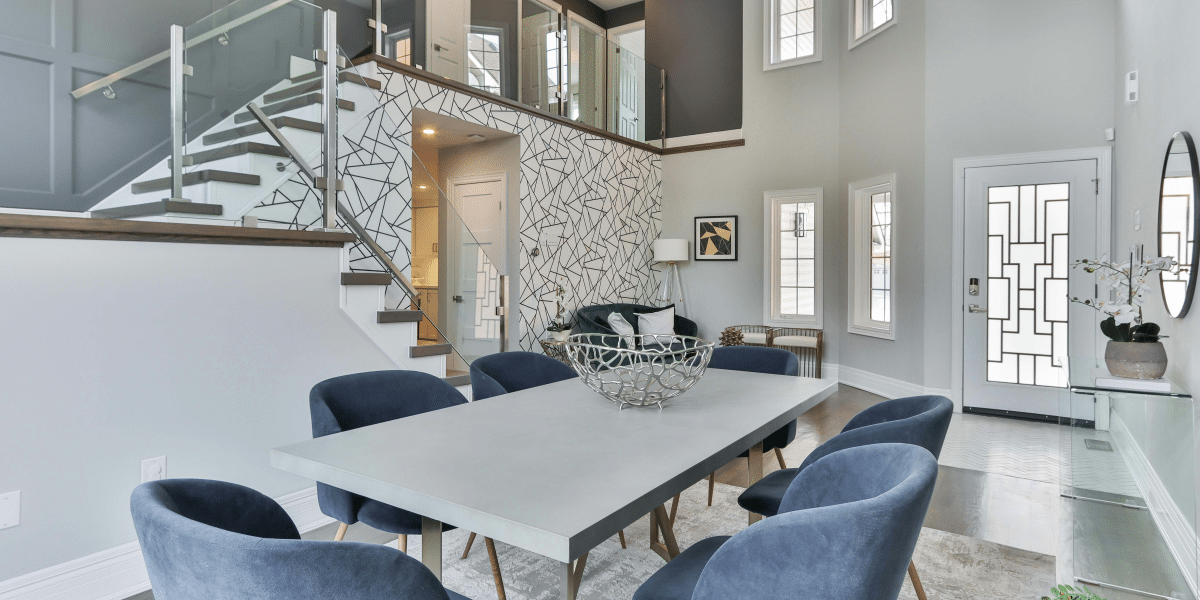
Exploring Luxury Homes in New York State

By: Joelle Andersen, TOMO

Luxury could have many different definitions depending on the context, and in the case with real estate, luxury is typically associated with location. Homes closer to New York City, in Westchester county tend to have a higher median sales price than homes further from New York City. Take Scarsdale for example, it’s a prestigious village located in Westchester County, New York, approximately 25 miles north of New York City. It’s known for its affluent neighborhoods, excellent schools, and beautiful surroundings. There are many luxury homes to be found in Scarsdale, New York. Here are some fun facts about Scarsdale:

  • Community and Lifestyle: Scarsdale is renowned for its strong sense of community and high quality of life. Residents often take pride in the village’s well-maintained streets, parks, and recreational facilities. The village has a suburban feel with tree-lined streets and a variety of housing options ranging from historic homes to modern estates.
  • Education: Scarsdale is particularly noted for its top-ranked public school system. Scarsdale Union Free School District operates several elementary schools, a middle school, and Scarsdale High School, which consistently ranks in the state and nation. The quality of education is a major attraction for families considering living in Scarsdale.
  • Real Estate: The real estate market in Scarsdale features a mix of historic homes, luxury estates, and more contemporary residences. Homes in Scarsdale are highly sought after for their spacious lots, architectural diversity, and proximity to New York City. The market can be competitive, with prices varying widely based on location and property features.


Another suburb to the north of New York City is
White Plains, New York. White Plains has a completely different vibe than Scarsdale, it’s more of a city than a suburb. The heart of White Plains is its dynamic downtown area, which features a mix of office buildings, retail shops, restaurants, and entertainment venues. Mamaroneck Avenue is a popular thoroughfare known for its vibrant nightlife, diverse dining options, and upscale boutiques. The luxury homes for sale in White Plains, New York are mostly located in amenity-filled, prestigious buildings, for example, in the Ritz-Carlton. Fun facts about White Plains: 

  • Education: White Plains has a well-regarded public school system that includes several elementary schools, middle schools, and White Plains High School. The district is known for its academic excellence and diverse student body.
  • Business and Economy: As the commercial hub of Westchester County, White Plains is home to numerous corporate headquarters, law firms, financial institutions, and healthcare facilities. The city’s economy is diverse, with sectors such as healthcare, technology, finance, and retail contributing significantly to its growth and development.
  • Housing: White Plains offers a range of housing options, including apartments, condominiums, townhouses, and single-family homes. Residential neighborhoods vary from downtown high-rises to quieter suburban streets. 


Moving further north from New York City, about 5 hours, is the city of Rochester, New York. Buyers in the
market for a luxury home will get a lot more square footage and amenities for their dollar. Rochester is a city located in Western New York, situated on the southern shore of Lake Ontario. It is the third-largest city in the state, after New York City and Buffalo. Rochester is known for its high-tech and healthcare industries, and for its lower cost of living compared to other Northeast cities. Fun facts about Rochester:  

  • History: Rochester has a rich history dating back to its founding in 1817 by Colonel Nathaniel Rochester, after whom the city is named. It grew rapidly during the 19th century as a major manufacturing hub, particularly known for its flour mills, textile industries, and later as the birthplace of companies like Eastman Kodak and Xerox.
  • Education and Research: Rochester is home to several prestigious educational institutions. The University of Rochester is a leading research university known for its strong programs in medicine, engineering, and the humanities. RIT is renowned for its technology-focused education and has a prominent role in advancing fields like imaging science and computing.
  • Culture and Arts: The city of Rochester offers a vibrant cultural scene with numerous museums, galleries, and performing arts venues. The George Eastman Museum is a notable attraction, dedicated to photography and film, housed in the former mansion of Kodak founder George Eastman. 


Lastly, moving even further away from New York City, about 7 hours, lies the city of Buffalo, New York. Buffalo is located in Western New York, situated at the eastern end of Lake Erie and the head of the Niagara River. It is the second-largest city in New York State, after New York City. As in Rochester, buyers will get a lot more amenities and square footage in the
luxury home market, than their peers looking around Westchester County. Fun facts about Buffalo: 

  • History: Buffalo has a diverse and storied history, dating back to its founding in 1801. It grew rapidly during the 19th century as a major inland port and transportation hub, particularly after the completion of the Erie Canal in 1825, which connected the Great Lakes with the Hudson River and New York City.
  • Economy: Buffalo’s economy has diversified over the years. It was historically known for industries such as steel manufacturing, grain milling, and shipping. Today, key sectors include healthcare, education, technology, and tourism. Major employers in Buffalo include Roswell Park Comprehensive Cancer Center, M&T Bank, and the State University of New York (SUNY) at Buffalo.
  • Sports: Buffalo has passionate sports fans and is home to the Buffalo Bills (NFL) football team and the Buffalo Sabres (NHL) hockey team. Both teams have a dedicated following, and games at Highmark Stadium (formerly Bills Stadium) and KeyBank Center are popular events in the city.


Overall, these cities offer different kinds of luxury homes for sale. Depending on where you chose to live, all are good choices with different vibes, amenities and proximity to New York City.

Published by: Holy Minoza

Autism Support: Irina Naidina’s Coaching for Parents

By: Alexey Dombaev

In this article, we had the privilege of speaking with Irina Naidina, a highly respected clinical psychologist and leading expert in the emotional, social, and cognitive development of children with autism. Irina has 14 years of experience, is a certified expert and trainer in DIRFloortime, and is the founder of Mindful Relationship Coaching. Irina shared her valuable insights and inspiring experiences in creating and leading coaching groups for parents of children with autism. These groups offer crucial support and resources, profoundly impacting the lives of both parents and children.

Can you tell us how you came up with the idea of creating coaching groups for parents of children with autism?

This is a very challenging question because my first encounter with autism was within my own family. My child was born with vision problems, and at a certain age, he was diagnosed with autism. I went through the entire journey of despair and coping with it myself before becoming a clinical psychologist. Therefore, I always had a complex attitude towards how specialists communicate with parents. I sought an approach that not only addresses the needs of the children but also helps the parents, as a child never exists alone. A child is always a member of their family. It is impossible to work with a child for progress without working with the parents.

When I encountered the DIRFloortime approach, it provided solutions to many professional dead-ends. The core principle of this approach is that parents are full members of the team. The most effective approach is a team-based one, which includes the parents. This decision is mature and well-founded through years of work. Additionally, I am a certified group analyst and know that a group possesses its dynamics, strengths, and advantages over individual work.

What is the main goal you strive to achieve with these coaching groups?

The group has several goals. The first is to help parents establish relationships with their children, forming or restoring attachment. We need attachment for the formation of the child’s personality and their social-emotional and cognitive abilities. The second goal is emotional support for parents. We support parents in their self-esteem and help them see the results of their efforts. The third goal is creating a support group that continues to exist even after the coaching group ends. Informational support is also important, as parents share their knowledge and experiences.

What key topics and questions are usually discussed in your coaching groups?

The group discusses topics such as the child’s behavior, interactions with parents, problems at school or kindergarten, learning difficulties, and relationships with other children. We also talk about the child’s stereotypical interests and how to develop them. Group meetings begin with discussing how the week went, what’s new, and what concerns the parents the most. Then we watch videos of interactions with the child, analyze them, and discuss what can be improved. It’s important that each participant has the opportunity to express their opinion and receive support.

Can you share successful examples or stories from your coaching groups?

One of our group participants, Anna, couldn’t work for a long time due to an abusive relationship with her husband. During the group work, she found the strength to move to Spain and start a successful career as a photographer. Her child also moved with her and continues to develop. Another participant wrote a children’s book, and another parent, who couldn’t find a job for a long time, trained as a programmer and successfully works now. These examples show how working in coaching groups helps parents develop and find the strength for change.

What are the most common problems and challenges parents of children with autism face, and how do coaching groups help overcome them?

Parents often face antisocial behavior from their child, stereotypical interests, difficulties in communication and interaction, as well as health problems and daily skills. Coaching groups help by setting realistic goals and breaking down complex tasks into simpler steps. We teach parents to establish a two-way dialogue with the child, notice their signals, and respond appropriately. The exchange of experiences among parents and the expert opinion of the group leader are also important.

What role do emotional support and the exchange of experiences play among parents in your coaching groups?

Emotional support and the exchange of experiences play a key role. Parents can share their concerns and find support from those in similar situations. This helps them feel not alone and see that they are not alone in their struggles. The exchange of experiences allows them to find new strategies and approaches to raising and supporting their children.

What professional advice and recommendations do you give to parents in the coaching groups?

The first advice is to remain calm and engaged. We discuss how to relieve stress and find resources for calmness. It’s important to dedicate time to the child, even if it’s just 5 minutes a day. We also advise relying on their strengths and the child’s strengths, setting achievable goals, and celebrating small successes.

What methods and approaches do you recommend to parents to improve their interaction with their children?

I recommend the DIRFloortime approach, which places relationships at the center of the development process and considers parents as key figures. We also often use sensory integration, sports, dance, art therapy, and theater groups. It’s important to remember that the child is not just autism; they may have other issues that need to be considered.

What would you advise parents who are just starting their journey in supporting their children with autism and are considering joining a coaching group?

First and foremost, I want to say that you are not alone in your struggle. Many parents face the same difficulties and concerns. Joining a coaching group can give you not only knowledge and practical skills but also powerful emotional support. Don’t be afraid to seek help and share your concerns. In the group, you will find understanding, support, and a lot of useful information that will help you and your child. Remember that your child is unique, and you can help them unlock their potential. 

Together, we can make this journey easier and more joyful.


Published By: Aize Perez

Homes for Sale with Pools. Are they worth it?

By: Joelle Andersen, TOMO

When summer hits New York, it usually comes in hot and fast. It could be mid-June and the temps are 65 degrees, but a day later, it’s a steamy 95 degrees. Those hot days of summer are when homes with pools become the envy of those who don’t have one. If you are thinking of buying a home with a pool or selling, pools have many pros and cons. Before we list those out, here are a few places within New York State that have homes with pools for sale right now: 


As previously mentioned, having a pool can offer several benefits, enhancing lifestyles and providing enjoyment for everyone.   

  • Relaxation and Recreation: A pool provides a convenient and private space for relaxation and recreation. Whether someone prefers swimming laps for exercise, lounging on a float to unwind, or playing water games with children, a pool offers a refreshing escape in your backyard.

  • Health and Fitness: Swimming is a low-impact exercise that offers a full-body workout, helping to improve cardiovascular health, muscle strength, and endurance. Having a pool at home encourages regular physical activity without the need to travel to a gym or public pool.

  • Entertainment and Socializing: A pool creates a focal point for gatherings and socializing with family and friends. Hosting poolside barbecues, parties, or casual get-togethers allows them to create memorable experiences and enjoy quality time with loved ones in a relaxed setting.

  • Convenience and Privacy: A private pool offers convenience and privacy, unlike public pools or beaches. They control who uses the pool, ensuring a clean and safe environment for everyone to enjoy whenever they wish.

  • Aesthetic Appeal: A well-designed pool can enhance the property’s overall aesthetic, increasing its value and curb appeal. Pools can be customized with waterfalls, lighting, landscaping, and decorative tiles to complement the home’s architecture and landscaping.

  • Therapeutic Benefits: Swimming and lounging in a pool can promote relaxation, stress relief, and improved mental well-being. Water therapy is also used for rehabilitation and pain management, relieving joint and muscle discomfort.

  • Increased Property Value: In many cases, having a pool can increase the market value of a home and make it more attractive to potential buyers. Homes with pools often appeal to buyers seeking luxury amenities and a resort-like lifestyle.

  • Personalized Design: With advancements in pool technology and design, homeowners can choose from various pool types, shapes, sizes, and features to suit their preferences and space. From traditional lap pools to infinity-edge pools and spa-like features, they can create a pool that fits their lifestyle and aesthetic vision.


While having a pool can offer numerous benefits, it’s also important to consider potential drawbacks that come with pool ownership.

  • High Initial Cost: Installing a pool can be expensive, with costs varying depending on the type, size, and features of the pool. In addition to the construction costs, one may need to budget for landscaping, fencing, permits, and other associated expenses.

  • Ongoing Maintenance: Pools require regular maintenance to keep the water clean, balanced, and safe for swimming. This includes testing and adjusting chemical levels, cleaning debris from the pool and skimmer baskets, vacuuming, and maintaining filtration equipment. Failure to properly maintain the pool can lead to water quality issues, algae growth, and potential health hazards.

  • Time-Consuming: Keeping a pool in optimal condition can be time-consuming, especially during peak swimming seasons. Routine maintenance tasks, such as cleaning and testing water chemistry, may need to be performed weekly or even daily, depending on usage and environmental factors.

  • Safety Concerns: Pools pose safety risks, especially for young children and non-swimmers. Proper fencing, gates, and safety covers are essential to prevent accidental drowning. Supervision is crucial whenever the pool is accessible, and all users should be educated on pool safety rules and procedures.

  • Liability: As a pool owner, the owner may be liable for accidents or injuries that occur on the property, even if precautions have been taken. It’s important to have adequate liability insurance coverage to protect yourself financially in case of an accident involving a pool.

  • Potential Decrease in Yard Space: The installation of a pool can occupy a significant portion of someone’s yard, reducing available space for other outdoor activities, landscaping, or gardening. This can impact the overall aesthetics and functionality of an outdoor living area.

  • Resale Considerations: While some homebuyers may view a pool as a desirable amenity, others may see it as a potential maintenance burden or safety concern. Depending on local market preferences and trends, the presence of a pool can influence the marketability and resale value of a home.

  • Environmental Impact: Maintaining a pool can have environmental implications, such as water consumption for refilling and evaporation, energy use for heating and filtration, and chemical runoff into the surrounding soil and waterways. Using eco-friendly practices and technologies can help mitigate these impacts.


Before buying a home with a pool, consider all the pros and cons. It is a personal decision, and will vary among buyers. Make sure to factor in maintenance costs, safety measures, local regulations, and ongoing upkeep before buying.

Published by: Holy Minoza