

Video has firmly established itself as one of the most powerful and widely consumed formats in today’s digital landscape. From news outlets and online magazines to social media platforms and corporate communications, video content plays a central role in how information is shared and consumed. As video usage continues to grow, so does the need to make this content more accessible, understandable, and adaptable to different audiences.
A significant shift in video consumption habits is the fact that a large percentage of videos are now watched without sound. Whether users are scrolling through social media in public spaces, commuting, or multitasking at work, audio is often muted by default. In this context, subtitles are no longer a secondary feature; they are essential to ensuring the message reaches the viewer.
The Rise of Automatic Subtitles
Advances in artificial intelligence and speech recognition have enabled automatic subtitle generation, quickly and at scale. What once required time-consuming manual transcription can now be handled efficiently through automated systems that convert spoken language into on-screen text in real time or during post-production.
This technological shift has opened the door for more agile video workflows, especially for media companies and content creators that publish frequently and across multiple platforms.
Technology Meets Video Production
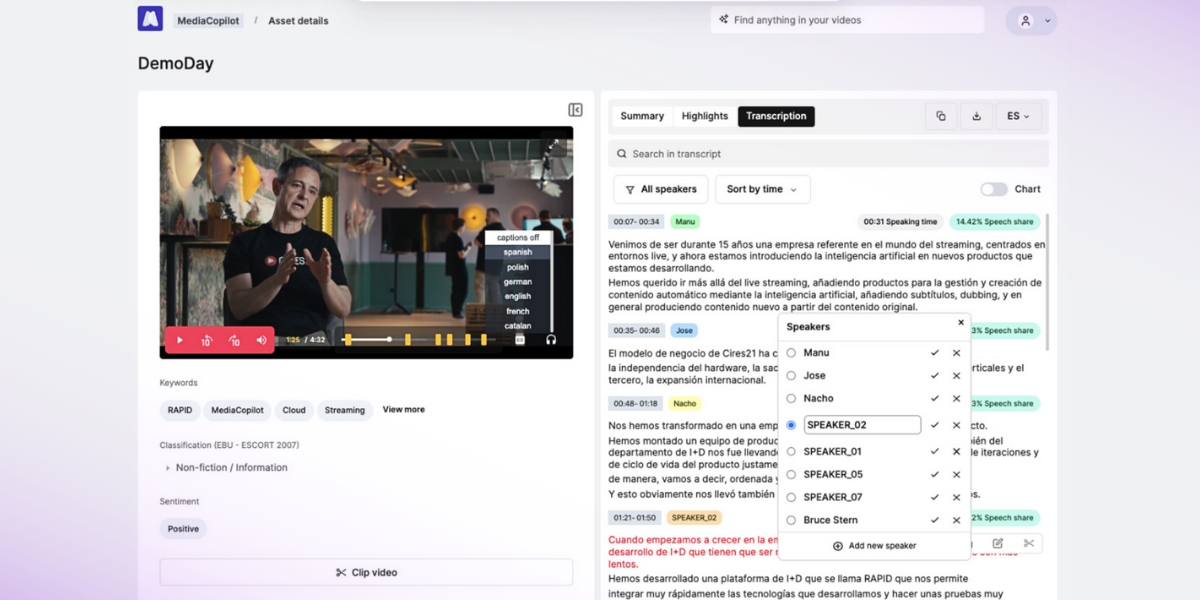
At the intersection of video production and automation, products like MediaCopilot are helping shape how modern video content is created and distributed. As specialists in video editing, automations, and streaming, they focus on optimizing workflows that allow subtitles and other enhancements to be integrated seamlessly into video projects. This type of expertise reflects a broader industry move toward efficiency without compromising quality.
Accessibility as a Core Value
An essential benefit of subtitles, automatic or otherwise, is accessibility. Subtitles make video content available to people who are deaf or hard of hearing and help ensure that information is not limited to those who rely solely on audio.
Beyond accessibility in the strict sense, subtitles also help viewers who are not native speakers of the video’s original language or who may struggle with accents, fast speech, or background noise.
Subtitles and Viewer Engagement
Subtitles play a significant role in increasing engagement and retention. Studies consistently show that videos with subtitles are watched longer and understood more clearly than those without them. On-screen text reinforces the message, helps maintain attention, and reduces the likelihood that viewers will scroll away before the video ends.
For publishers and media outlets, this translates into better performance metrics, stronger audience connection, and higher overall content value.
The SEO and Discoverability Advantage
Automatic subtitles also offer indirect benefits for search engine optimization. While search engines cannot “watch” videos in the traditional sense, subtitle files provide text-based data that can be indexed. This makes video content more discoverable and improves its chances of appearing in relevant search results.
For digital publications, subtitles represent an additional layer of visibility in an increasingly competitive online environment.
Challenges of Automatic Subtitling
Despite their advantages, automatic subtitles are not without limitations. Accents, industry-specific terminology, proper names, and multilingual content can still cause inaccuracies. For this reason, many organizations combine automation with human review to ensure clarity and correctness.
This hybrid approach balances speed and precision, allowing content to scale without sacrificing editorial standards.
Subtitles in Live Streaming and Real-Time Content
The importance of automatic subtitles becomes even more evident in live streaming and real-time broadcasts. Generating subtitles on the fly makes live events more inclusive and easier to follow, particularly for global audiences and in professional settings such as conferences, webinars, and news coverage.
As live video continues to grow, real-time subtitling is likely to become a standard expectation rather than a bonus feature.
Looking Ahead: The Future of Subtitled Video
As artificial intelligence continues to evolve, automatic subtitles are expected to become more accurate, more adaptable, and more multilingual. Future developments include real-time translation, audience-specific subtitle customization, and deeper integration with video production tools.
In an era where video dominates digital communication and attention spans are increasingly fragmented, subtitles are no longer optional. They are a strategic element that enhances accessibility, engagement, and reach, making video content more effective for everyone.