

By: Elena Mart
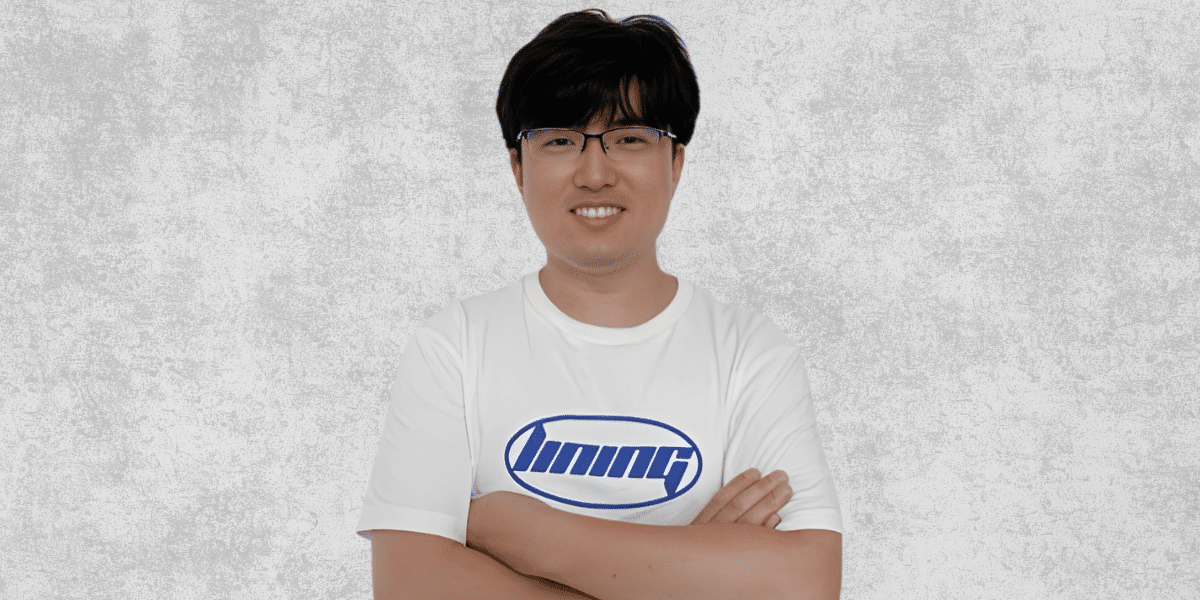
Mr. Yadong Shi has extensive experience and remarkable achievements in the fields of advertising recommendation systems and content recommendation. From a graduate student at Fudan University to a technical expert at Tencent, his career is full of innovation and challenges.
Interviewer: Mr. Shi, during your time at Fudan University, your research focused on advertising and marketing platform selection strategies for star-rated hotel groups. Could you elaborate on the background and main outcomes of this research project?
Yadong Shi: When I was in university, it was the early boom period of internet performance advertising. There was a need for a comprehensive analysis system to determine whether hotel marketing should choose traditional media brand promotion or internet performance advertising. Against this backdrop, we initiated this research and developed a corresponding model to help hotel groups select a suitable and ROI-efficient advertising form and platform. The research results were successfully applied by a local hotel (Cuisan Business Hotel).
Interviewer: During the research process, you mentioned using a neural network model to evaluate the matching degree of user profiles. Can you share some technical challenges and solutions in this area?
Yadong Shi: In this research, we had to construct user profiles for hotel target users and marketing platforms. Building these profiles involved extensive questionnaires and expert interviews. Cleaning, filtering, and feature extraction of the collected data were crucial and challenging for the model’s effectiveness. To address this, we developed a data preprocessing system using clustering, classification models, and decision trees to efficiently filter noisy data and improve sample quality, laying the foundation for enhancing the model’s performance.
Interviewer: At Tencent, you were responsible for building the real-time feature platform for the recommendation system. What was the biggest challenge in this project, and how did you overcome it?
Yadong Shi: The biggest challenge was handling massive data volumes with high real-time requirements. To meet the needs of real-time storage and query under such a large data scale, we implemented several optimization measures. Firstly, we pre-aggregated the data before performing mini-batch writes, improving write performance. Secondly, for storage and query engines, we tried various technical components, upgrading from Druid to Elasticsearch and then to ClickHouse, eventually finding the most suitable component for our scenario. Lastly, for query strategies, we separated hot and cold data, using high-speed caching for hot data, significantly improving the experience of querying hot data.
Interviewer: While working at a major company, you were mainly responsible for developing the hybrid ranking module for the short video app’s ad system. Could you explain how this module works and what its impact is on ad performance?
Yadong Shi: This module primarily controls the types and density of ads seen by users. We develop various strategies to decide whether a particular ad should be shown to a specific user, maximizing ad revenue while considering user experience constraints. Through experimenting with new strategies, both ad revenue and user experience improved.
Interviewer: Personalized strategies are crucial in ad system development. Could you share some innovative ideas and practical experiences in personalized ad recommendations?
Yadong Shi: The most important thing is understanding the ad content and platform users. Only by understanding the ad content and platform users can we match them effectively. We use content understanding models to process the ad content in the ad library, generating embedding vectors to represent the content. Simultaneously, we use user sentiment analysis technology to understand users, generating embedding vectors to represent user interests. Finally, we build models to match these vectors, finding ad content that matches the user.
Interviewer: You mentioned constructing content understanding models and user sentiment analysis technologies. How do these technologies improve ad precision and user experience in practical applications?
Yadong Shi: By understanding the ad content with a content understanding model and encoding ads into high-dimensional vectors to express content features, and by using user sentiment analysis technology to understand users and generate high-dimensional vectors to express user interests, we can match these vectors through models to find ad content that interests users. For example, if you like concerts, we push ticket information for your favorite singer’s concert, likely leading to a purchase without compromising the user experience.
Interviewer: You have been working in backend development for five years. Could you share some key factors for success in this field?
Yadong Shi: Firstly, dedication is essential. Loving and being deeply engaged in your field allows you to put your whole heart into it. Secondly, perseverance is crucial. This field has a high entry threshold and complexity, requiring continuous learning to achieve success. Lastly, resilience is necessary. Many projects in this field are difficult and complex; you must face and solve challenges rather than retreating or giving up to succeed.
Interviewer: What are your plans and goals for your career in the future? Do you hope to make more breakthroughs in technology or management?
Yadong Shi: Currently, many issues in ad recommendation systems remain unresolved. In the future, I want to continue learning and making breakthroughs in technology. For example, our current content understanding and semantic analysis models have significant computational power consumption, limiting our application scenarios and intensity. Next, I want to focus on computational power optimization. Solving the computational power issue will further enhance ad effectiveness and user experience protection.
Interviewer: Thank you very much, Mr. Shi, for your wonderful sharing! Your experiences and insights are very inspiring. We wish you greater success in your future career!
Yadong Shi: Thank you very much for this interview opportunity!
Published by: Martin De Juan