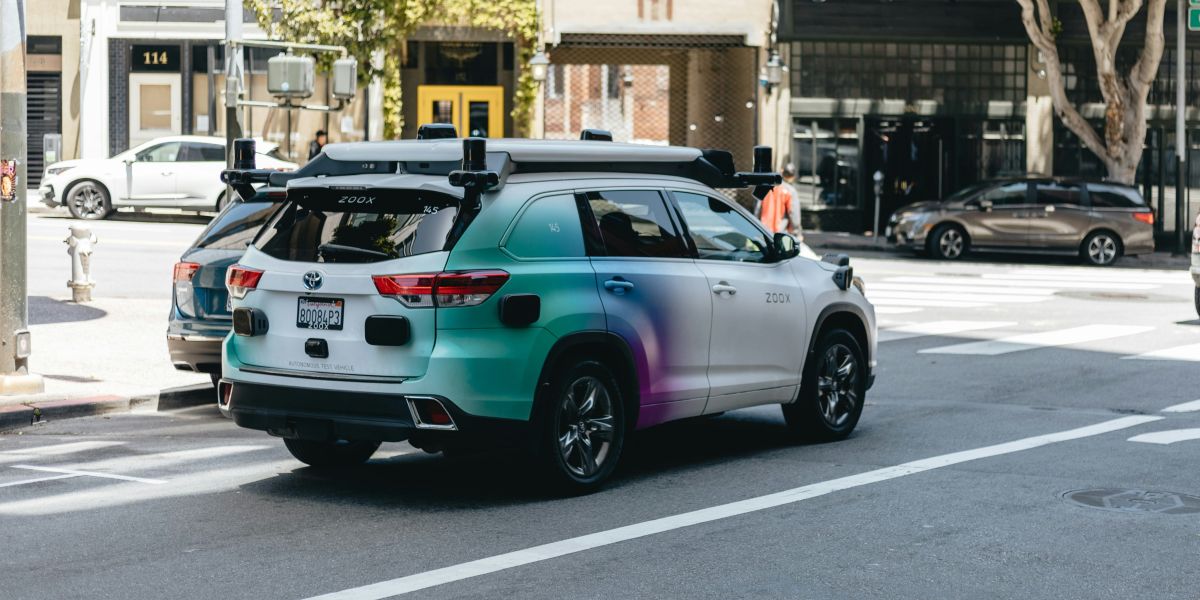


Humans blink. Machines don’t. That’s both the potential and the risk of autonomous driving. Every crash involving a self-driving car raises a new question: who’s responsible? Is it the driver sitting behind the wheel who wasn’t actually driving? Is it the coder who wrote the algorithm? Is it the company that deployed a system before it was truly ready?
The debate between instinct and algorithm is already unfolding on highways across America. Cars are making split-second decisions without human input. Sometimes those decisions can save lives. Sometimes they may result in fatalities. The legal system has not fully caught up to the technology.
The vision for self-driving cars is compelling. No more drunk driving. No more fatigue-related crashes. No more distractions. Machines don’t get tired. Machines don’t get emotional. Machines could theoretically respond faster to hazards. The idea is to have roads where accidents might become less common because machines could make better decisions than humans do.
But machines also fail in ways humans don’t. Understanding what’s really at stake in self-driving car accidents requires looking at where each system excels and where each system might fall short. Learning how liability works when neither human nor machine is fully in control is important.
Reflex Versus Resolution
Human reaction time has limits. A person can perceive something and respond in roughly two-tenths of a second. That’s fast. But not fast enough in all situations. A pedestrian steps into the road suddenly. A vehicle swerves into your lane. An animal runs across the highway. These situations demand a fast reaction. Humans respond based on instinct and experience. Sometimes instinct saves them. Sometimes it doesn’t.
Machines process information much faster. A self-driving car can perceive a hazard and calculate a response in milliseconds. On paper, that’s vastly superior to human reaction time. But there’s a catch. The machine can only respond to hazards it’s been trained to recognize. If the situation doesn’t match patterns it’s learned, the machine may not perceive the hazard at all.
Humans deal with novel situations by thinking. A driver encounters something they’ve never seen before and figures out how to respond. A self-driving car encounters something novel and might freeze because it lacks a programmed response. That gap between pattern recognition and true reasoning is where machines may fail compared to humans. Humans are flexible. Machines are efficient but rigid.
When AI Learns the Wrong Lesson
Machine learning systems improve through exposure to data. The more situations a self-driving car experiences, the better it should get at handling those situations. But the data itself is crucial. If the training data overrepresents certain scenarios, the machine learns biased responses. If the data underrepresents edge cases, the machine may not handle them when they occur.
Bias in data can create real-world danger. A self-driving car trained primarily on highways in sunny weather might struggle in rain. A car trained in urban areas with predominantly light-skinned pedestrians might not detect dark-skinned pedestrians as effectively. These biases aren’t intentional, but they could be harmful. The machine learns to respond based on what it was trained with. It doesn’t generalize well to situations it wasn’t adequately trained for.
Corner cases are the nightmare scenario for autonomous vehicles. A person driving at night in rain with construction happening creates a scenario that the machine might not have encountered in training. The car has to make split-second decisions in a situation it wasn’t prepared for. Humans who’ve never been in that exact situation can still think their way through it. Machines often can’t.
The Legal Fog Around Autonomy
Current laws weren’t designed for cars that think for themselves. Traditional liability assumed a human driver making choices. The driver made a decision, a crash happened, the driver is responsible. But what happens when the car makes the decision? Does the driver bear responsibility for choices they didn’t make? Does the manufacturer bear responsibility for the algorithm? Does the company that maintained the car bear responsibility if maintenance lapses contributed to failure?
The legal system is still struggling with these questions. Different states are creating different rules. Some hold the driver responsible as if they were fully in control. Some hold the manufacturer responsible for the vehicle’s performance. Some create shared responsibility frameworks. The rules are inconsistent and constantly evolving as courts try to apply old legal concepts to new technology.
Insurance gets complicated too. Who carries liability insurance when a self-driving car crashes? The driver? The manufacturer? The software company? Traditional policies assume human drivers making human decisions. They don’t fit autonomous vehicles well. New policy types are being created, but they’re still evolving.
Coexistence on the Road
The road ahead isn’t man versus machine. It’s coexistence. Some cars will be fully autonomous. Some will be fully human-driven. Some will be semi-autonomous with drivers involved sometimes, but not always. That mix creates new complexity. A human-driven car might not predict what a self-driving car will do. A self-driving car might not understand human driver behavior. Crashes can happen when vehicles can’t predict each other’s actions.
Until laws catch up to technology, every crash involving a self-driving car will test the boundaries of liability. Whose responsibility becomes a question without clear answers. The courts and legislatures are trying to figure out the rules. In the meantime, victims of crashes involving autonomous vehicles face uncertain paths to compensation. The technology is advancing faster than the legal system can adapt.
Disclaimer: The information provided in this article is for general informational purposes only and should not be construed as legal advice. The views expressed are those of the author and do not necessarily reflect the opinions or positions of any affiliated entities. The legal and technological aspects of autonomous vehicles are rapidly evolving, and readers are encouraged to consult with a qualified professional for advice specific to their individual circumstances.