
Financial institutions operating under strict regulatory oversight need more than consultants who implement standard frameworks. They require advisors who can interpret evolving compliance requirements, assess existing technical infrastructure, and design solutions that are likely to satisfy regulators while remaining operationally feasible. And with technology like AI challenging companies to rethink how they manage risk, the gap between regulatory expectations and institutional capabilities may continue to widen.
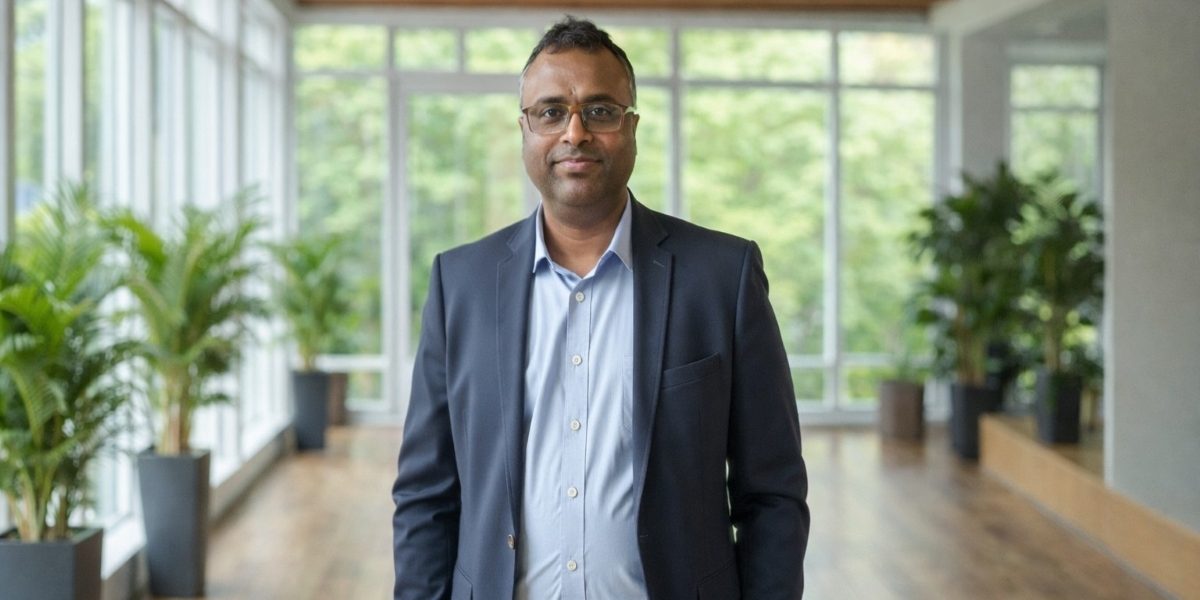
Someone seeking to provide answers to those questions is Ramachander Rao Thallada, a Toronto-based Senior Advisor and Senior Business Architect who has spent nearly 23 years working across governance, risk, and compliance programs for major financial institutions. His practice extends beyond project implementation into formal research, including published articles examining cybersecurity challenges and academic work addressing how AI might fit into today’s cybersecurity landscape.
The Academic Side of Ramachander Rao Thallada
Ramachander Rao Thallada earned his foundation in information technology and business through nearly three decades of work across multiple continents. He began his career in banking operations at Swiss Bank in Singapore before founding and scaling his own startup in India, then moved through roles in the United States before settling in Canada as a Senior Advisor and Senior Business Architect. Since then, he has specialized in governance, risk, and compliance programs for major financial institutions.
One of the main areas he has been developing is research, participating in professional organizations, and contributing to industry publications that address cybersecurity and regulatory challenges.
Sharing His Knowledge in Public Forums
One of the most prominent associations Thallada maintains is with the Forbes Technology Council, an invitation-only organization for senior-level technology executives and leaders. As a member, he’s written multiple articles about problems that arise when companies try to meet security requirements and government regulations. His published work explains technical subjects in terms that executives and managers can use when making decisions about where to invest resources, making sure they understand how to solve real business problems without adding complexity.
One article examines why many risk management dashboards can confuse the people who are supposed to use them. Thallada argues that companies focus too much on collecting accurate data but fail to present that information in ways that help executives understand what risks they are actually facing.
Another piece looks at how companies might protect their supply chains when trade policies change suddenly, examining how computer simulations of entire supply networks can help organizations test different scenarios before committing to new suppliers or manufacturing locations.
Similarly, another article argues that supply chains need formal governance structures similar to those used in financial institutions, where every transaction and supplier relationship is tracked against compliance requirements and risk thresholds rather than managed through informal relationships and spreadsheets.
He also participates in expert panels addressing questions like how to make continuing education for tech teams more engaging or how to turn employees into proactive cybersecurity partners. These panels address future challenges companies face in technology and security, with contributors drawing on direct experience to offer practical guidance.
Developing Intelligent Cybersecurity and Compliance Solutions
Beyond writing and contributing to scholarly articles, Thallada is an active member of several prestigious professional associations across multiple disciplines. He’s an IEEE Senior Member, a distinction reserved for professionals who have demonstrated significant technical and professional achievements over at least a decade of practice. He’s also a member of ISACA, a global organization dedicated to information systems audit, control, governance, and security. ISACA establishes internationally recognized standards for how organizations govern technology and validate the effectiveness of security controls. Thallada’s membership places him within a worldwide community of practitioners responsible for designing, evaluating, and enforcing compliance programs.
In addition to his professional affiliations, Thallada is regularly invited to serve as a judge across a range of technology-focused forums, including university innovation programs, public-domain technology evaluations, and international award selection committees.
In addition to his professional affiliations, Thallada develops original technology solutions, many of which are currently protected through patents pending final approval, primarily in the cybersecurity and governance space. His work focuses on addressing challenges that arise when organizations rely on manual, fragmented processes to manage security risks and regulatory obligations. These solutions aim to replace reactive approaches with more intelligent, automated systems.
One of his published articles in the Journal of Business and Management Studies deals with the current faults of traditional manual and reactive business continuity processes and how this technology could improve them by enabling predictive analytics, autonomous decision-making during disasters, and cognitive risk interpretation to minimize disruption.
Collectively, this body of work demonstrates Thallada’s commitment to moving beyond advisory roles and into creating new approaches that may change how organizations handle security and regulatory requirements. His research work shows active attempts to solve fundamental problems instead of making small improvements to current methods, addressing how companies can manage compliance obligations that become more complex as technology and regulations both evolve.
A Scholarly Approach to Cybersecurity
Throughout all these roles, Thallada aims to show how academic knowledge can strengthen advisory work in highly regulated industries. His memberships in IEEE, ISACA, and Forbes Technology Council have given him access to emerging research, different peer perspectives, and professional development that practitioners without such affiliations might struggle to find.
Through his work providing knowledge in governance, risk, and compliance strategy for major financial institutions, Ramachander Rao Thallada is positioning himself as an advisor whose practice is built on not just operational experience but also formal intellectual engagement. His published articles, academic writing, and ongoing involvement in professional organizations show how research can act as a way to improve how stakeholders in areas like cybersecurity strengthen their operations.