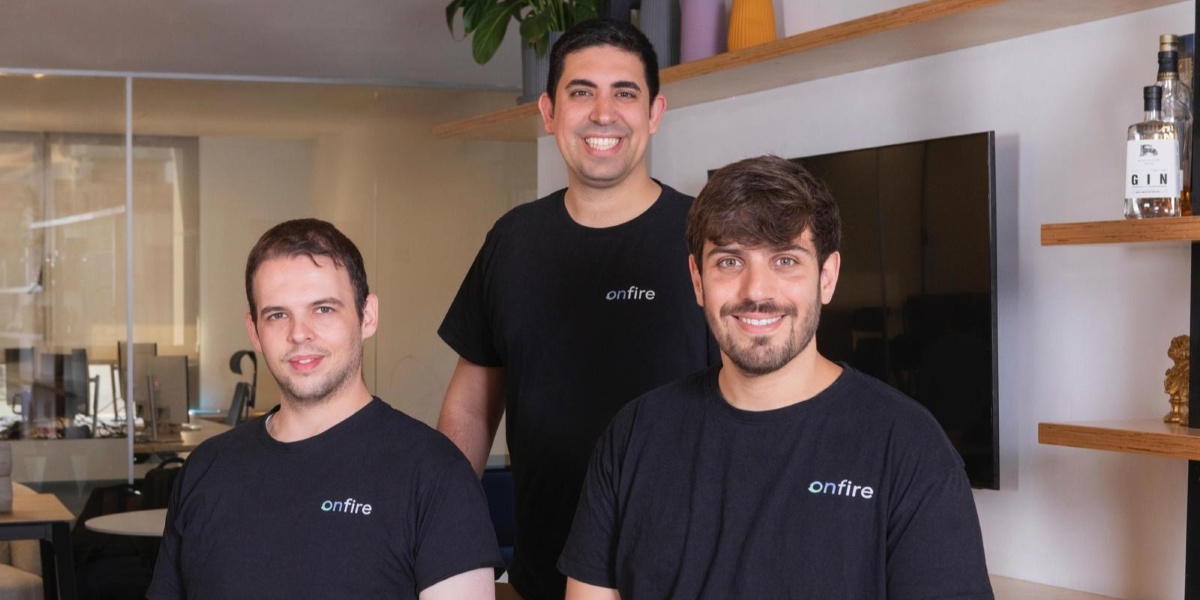


By: Jake Smiths
CRMs were supposed to be the single source of truth for go-to-market teams. Instead, for many organizations, they’ve become a noisy archive: duplicate records, stale contacts, and activity logs that confuse more than they clarify. That rot matters.
Onfire, which builds vertical AI for revenue teams, argues that the real problem isn’t a lack of models, but rather the data those models consume. Until CRM systems are self-healing and context-aware, sellers will continue to chase ghosts.
How CRMs Turned Into Graveyards
Early CRM wins were tangible: centralization reduced the use of spreadsheets, improved forecasting, and provided leaders with a clear view of the pipeline. However, over time, the practical realities of growth (including mergers, disparate data partners, manual entry, and frequent personnel turnover) rendered CRMs into fragile repositories of brittle facts. Data decay is brutal: B2B contact databases can lose about 2% of their accuracy each month. This means that approximately 25% of your database becomes outdated annually. This steady erosion produces misdirected outreach and inflated funnel metrics.
The financial drag is nontrivial. Analysts estimate that poor data quality costs companies millions of dollars annually; Gartner’s headline figure for the average organization has been cited at roughly $12.9 million per year. Beyond headline dollars, poor data impacts marketing ROI, sales productivity, and executive decision-making, with some industry studies suggesting that organizations may lose as much as 15% of their revenue to data shortcomings. These are existential drags on growth.
Why Activity-centric AI Keeps Failing
The modern response was predictable: throw AI at the problem. But much of the AI currently deployed in GTM tooling is horizontal and activity-focused. It sees clicks, opens, and meetings but misses context. After all, good models combined with bad data still yield poor results. If an AI model’s inputs are duplicates, misattributed accounts, or stale role data, its “insights” will guide reps to the wrong people at the wrong time.
That’s why many AI-driven outreach campaigns deliver poor ROI. When intent signals are noisy, models amplify noise. Sales leaders report that lead quality remains a common complaint for reps; without trusted identity resolution and traceable signals, automation turns into volume without precision.
The Case for Self-Healing, Context-First Systems
The future lies in systems that treat data as living: continuously reconciled, evidence-backed, and tied to outcomes. Self-healing CRMs don’t wait for manual cleanups; they resolve entities across silos, deanonymize prospects where appropriate, and normalize external signals against internal telemetry, such as usage or contract events. The business payoff is significant: when every insight is traceable to prospect-level evidence, reps can spend more time focusing on the right leads and executing strategies that are more likely to convert.
Onfire’s vertical approach is a useful blueprint. Rather than relying on generic, horizontal datasets, Onfire combines a proprietary public-web layer, scraping developer communities, conference signals, and open-source activity, with the living context of a company’s internal CRM, product usage, and contract data.
The company’s Account Intelligence Graph™ aims for one resolvable truth across accounts, prospects, events, features, and outcomes, while live feedback loops help ensure every closed-won or closed-lost signal refines future suggestions. That design flips the classic “black-box AI” problem: instead of opaque recommendations, Onfire’s insights come with an evidence trail that GTM teams can verify.
What Leaders Should Do Now
Leaders who still treat CRM hygiene as an occasional project will lose to those who operationalize trust. The steps aren’t glamorous: invest in continuous entity resolution, wire product and billing signals into your sales models, and require explainability for any AI suggestion your team acts on. Above all, swap one-time cleansing projects for systems that learn from outcomes; if the model can’t improve from closed-won and closed-lost events, it isn’t doing the job.
The Future of GTM Starts with Clean, Self-Healing Data
Dirty CRM data is a tax on strategy. The next wave of GTM effectiveness is expected to come from systems that heal themselves, understand context, and make every action evidence-backed, rather than relying on bigger language models or louder outreach.
That’s the thesis Onfire is underwriting: not another layer of generic AI, but a vertical, traceable system that turns the CRM from a graveyard into an active, reliable engine of revenue.