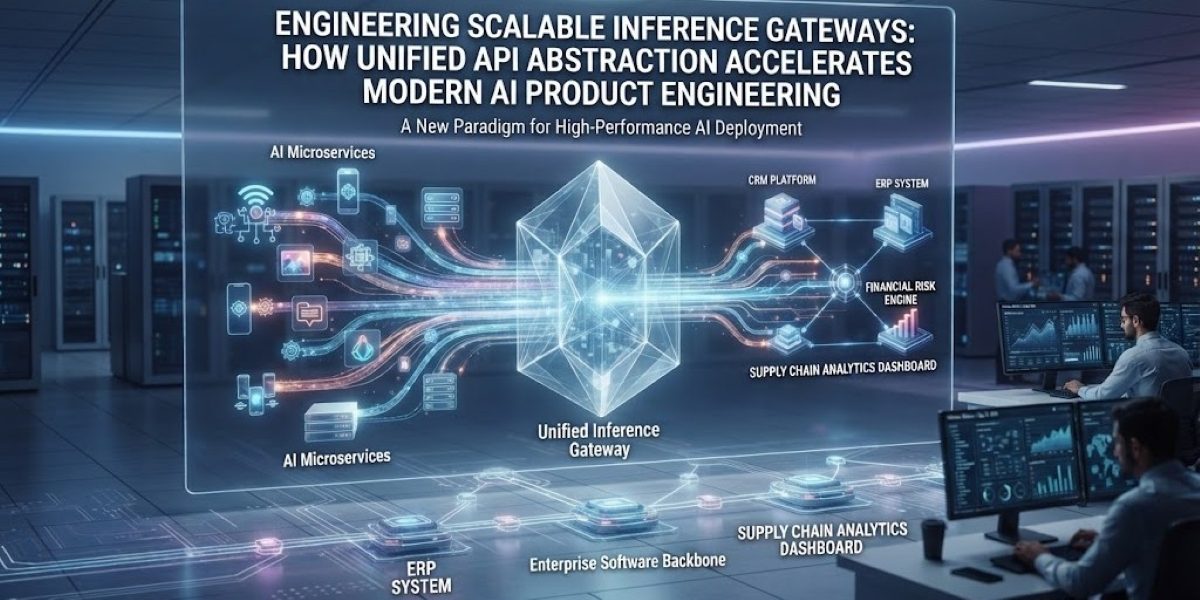

As artificial intelligence transitions from isolated prototype features into the structural core of commercial software, the primary challenge facing engineering organizations has evolved. Where software teams once focused on evaluating single foundational language models, modern product engineering now demands the orchestration of complex, multi-model systems across text, image, video, and audio modalities.
To maintain competitive feature velocity, developers must dynamically combine specialized models from open-source communities and proprietary laboratories. However, managing this distributed ecosystem introduces significant operational friction, technical debt, and maintenance overhead for engineering teams.
Navigating the Technical Overhead of Infrastructure Sprawl
In traditional machine learning integration workflows, adding new generative capabilities requires developers to establish dedicated network connections, construct custom error-handling wrappers, and continually adapt to vendor-specific software development kits (SDKs). When a product roadmap calls for combining natural language processing, vector search, voice synthesis, and visual rendering, the underlying API architecture quickly becomes fragmented. Every additional vendor integration introduces independent authentication protocols, distinct rate-limiting behaviors, isolated billing structures, and potential security vectors.
To eliminate the friction associated with multi-vendor management, centralized inference infrastructure platforms like Atlas Cloud have emerged to streamline developer operations. By aggregating access to more than 400 specialized text, vision, audio, and video models behind a single, unified framework, the platform allows engineering teams to deploy multi-model features without constructing bespoke integration pipelines for every provider.
This unified architectural model is particularly effective when managing high-bandwidth, computationally intensive assets such as synthetic video. For instance, a development team building an automated media creation platform might utilize advanced video generation architectures like Wan 3.0 for high-fidelity motion rendering, while simultaneously routing script generation through a language model and narration through a text-to-speech engine.
In an unintegrated stack, orchestrating this sequence requires managing three separate API connections, distinct payload schemas, and isolated credential stores. Consolidating these inference requests through a single gateway eliminates structural redundancy, allowing developers to focus on application logic rather than backend maintenance.
Eliminating Integration Barriers with OpenAI-Compatible Interfaces
A critical requirement for modern developer tools is minimizing the friction associated with code refactoring and onboarding. Recognizing that the OpenAI API specification has established itself as an industry-standard interface for generative AI interactions, unified inference platforms adopt backward compatibility with this protocol as a core design principle.
For software developers, this architectural compatibility significantly reduces implementation effort. Engineering teams can re-route existing application pipelines to access hundreds of alternative open-source and proprietary models by updating a base URL string and adjusting a model identifier parameter within their codebase.
Because request structures, headers, and response formats mirror established standards, developers avoid the need to rewrite abstraction layers or study proprietary vendor documentation. This level of interoperability enables technical teams to evaluate, benchmark, and swap underlying models in production environments without disrupting downstream user experiences.
Accelerating the Evaluation and Benchmarking Lifecycle
The development lifecycle of AI-powered software relies heavily on continuous empirical testing. Prior to deploying a specific model into production, product managers and machine learning engineers must evaluate candidate architectures across key operational dimensions, including output quality, execution latency, and compute expenditure.
In a fragmented provider landscape, running comparative benchmarks across five competing models requires setting up accounts with multiple vendors, managing separate API keys, and writing distinct integration tests. A consolidated inference framework streamlines this evaluation process into a unified workflow:
- Simultaneous Multi-Model Prompting: Engineers can issue identical prompts across multiple text, image, or video generation models simultaneously through a single access point to perform side-by-side quality comparisons.
- Standardized Performance Telemetry: Execution latency, token throughput, and payload metadata are normalized across all 400+ supported models, offering unbiased data for architectural decision-making.
- Frictionless Staging-to-Production Shifts: Transitioning a validated model from a sandbox environment to full production requires no extra infrastructure provisioning, as the unified API gateway automatically manages request queuing, load balancing, and scaling.
Centralizing Governance, Security, and Administrative Overhead
Beyond developer productivity, managing dozens of third-party API connections creates notable administrative, legal, and security challenges for enterprise organizations. Distributed API keys increase the risk of credential leakage, while scattered vendor relationships obscure visibility into total infrastructure expenditures.
Routing all model inference through a single, secure API gateway establishes a centralized control plane for system administration and governance:
- Unified Credential Management: Security teams can issue, monitor, rotate, or revoke API access credentials across all supported models from a single administrative dashboard, minimizing the attack surface associated with scattered keys.
- Comprehensive Data Auditing: Compliance officers gain clear visibility into data flows, simplifying verification processes for regulatory frameworks such as GDPR, HIPAA, and SOC 2.
- Financial Consolidation: Finance departments can replace unpredictable, scattered micro-invoices from numerous individual research providers with a single, consolidated monthly bill covering all model consumption across the enterprise.
Insulation Against Rapid Model Obsolescence
The machine learning field continues to evolve at an exceptional pace. A model architecture holding performance benchmarks today may be superseded within months by a newly released open-source alternative or a specialized domain model. Engineering teams that lock their application architecture into a single provider’s proprietary API risk technological lock-in and inflated technical debt.
Decoupling application logic from specific model providers via a unified inference gateway offers vital long-term agility. As new generative architectures emerge, are trained, and achieve global deployment, they are integrated directly into the unified platform ecosystem. Development teams can immediately leverage these technological advancements in their production software without going through lengthy procurement processes or re-architecting backend code.
As artificial intelligence capabilities become standard expectations in modern digital products, the backend infrastructure supporting these applications must emphasize stability, simplicity, and scale. By replacing fragmented provider connections with a single, highly reliable access point, unified inference platforms are defining a more efficient architectural paradigm for modern software engineering.
Media Contact Information
For journalists, industry analysts, and software engineering leaders seeking additional information regarding unified inference architectures, platform specifications, or technical documentation, please contact the media representative listed below:
- Contact Person: Carol Weng
- Email: carol.weng@atlascloud.ai
- Company Name: Atlas Cloud