

The competition in the AI chip market has intensified, with giants like NVIDIA, Intel, AMD, and Qualcomm vying for dominance across several applications.
In this blog, we have compared the two competitors—NVIDIA and Intel—and analyzed what they will offer in the future.
Current State of the AI Chip Market
The AI chip market is expanding exponentially thanks to the enhancement of artificial intelligence in other industries.
Speaking of NVIDIA, this company is among the market leaders in the industry of AI chips due to its leadership in graphics processing units (GPUs). Thus, it has managed to gain a leading position in AI. Nevertheless, AI’s progress at Intel was not very rapid until the past year to produce chips competitive with NVIDIA.
It yet holds that both companies have potentially attractive opportunities to sink capital into the emerging market.
Company Profiles
Understanding the offerings of the two companies will help us evaluate their performance better.
-
NVIDIA

Photo: Pexels.com
Established in 1993, NVIDIA has established itself as a leader in the AI chip, primarily through its Graphics processing units, which revolutionized the gaming industry and has now become an essential component for AI and machine learning applications.
With an 88% market share, up a staggering 8% from the previous quarter, Nvidia cemented its supremacy. Nvidia shipped 7.66 million desktop GPUs, up from 7.6 million in Q4 2023 and roughly 5.26 million in Q1 2023.
-
Intel
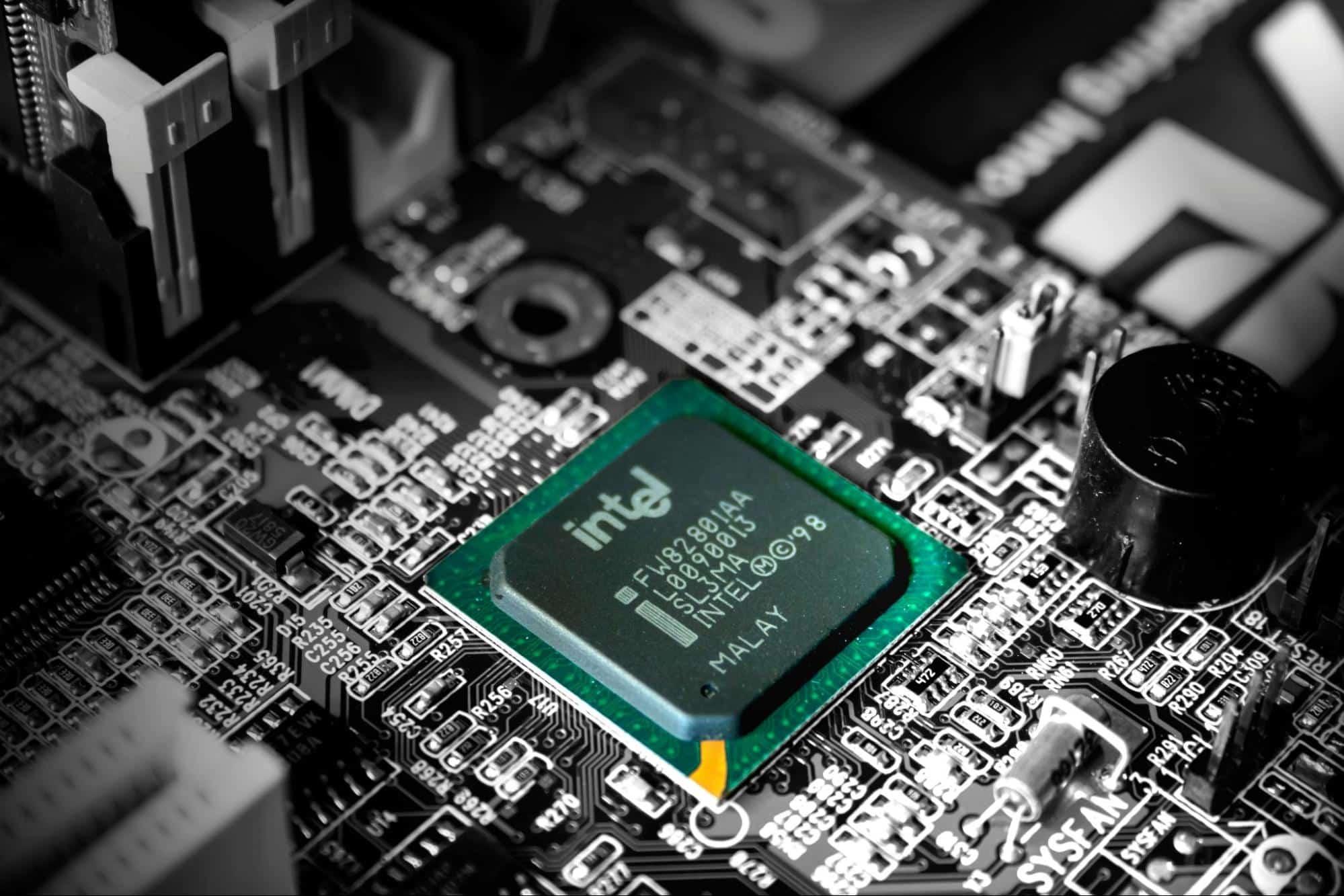
Photo: Unsplash.com
Although Intel used to be one of the industry leaders in the semiconductor business, it has fallen behind in recent years, especially when it comes to developing AI chips compared with its rival, NVIDIA.
Intel currently has a relatively large market capitalization of around $181.76 billion. However, its revenue growth has been more than stagnant, with a negative CAGR in the last ten years.
Financial Performance Comparison
The financial performance of these companies will help us understand their standing in the market.
-
Revenue Analysis
According to the financial results of the fiscal year that ended in 2024, NVIDIA’s total revenue was $60.9 billion, a 126% rise compared with the total revenue of the prior fiscal year. This growth has been dominated majorly by the higher demand of artificial intelligence and data center solutions, making NVIDIA to be in a better standing of being a market leader in the AI chip market.
While grossing the same in operating income at $14.9 billion, Intel’s revenues for the analyzed period stood at $54.2 billion, which is 14% less compared to the same period in the prior year.
-
Stock Performance
Analyzing the trends of the stock price changes in both companies in the past year shows a huge difference in stockholders’ confidence. NVIDIA’s stock grew to about 236.25%, proving the market has a great interest in AI-centered business strategy and growth story.
Intel’s share has risen by only 66.76%, proving that, despite some expectation for the firm’s revival by means of its recovery strategies, it is still considerably behind its competitor NVIDIA in terms of the growth rate.
Technological Innovations
The technological advancements of these companies let investors understand what they can expect in the future.
-
NVIDIA’s Technological Edge
GPUs in NVIDIA are the key drivers of AI computing today. Current architecture of the company is focused on AI applications and is visible from the Ampere and Hopper architectures.
However, NVIDIA’s CUDA programming model provides developers with the huge parallel processing power of GPUs and is, therefore, adopted by many AI researchers and developers.
The September launch, the Gaudi 3 chip, which is expected to have four times the power of the previous one, shows that NVIDIA is maintaining its technological edge.
-
Intel’s Strategic Shifts
Intel has said it is venturing into the foundry service industry and aims to become a leading provider by 2030. This has involved turning its manufacturing capability into a value-added service that also competes with the likes of TSMC and Samsung as a foundry company.
Intel also continues to directly engage in the development of Artificial Intelligence products, opening the Lunar Lake processors and Intel 18A, which use advanced packaging methods.
Future Outlook
Understanding the future outlook of these two tech giants provides valuable insights into how the AI chip landscape may evolve.
-
NVIDIA’s Growth Potential
With a commanding market share of approximately 88% in the AI chip sector, NVIDIA has established itself as a leader. The company’s recent financial results show remarkable revenue growth, with a 262% increase year-over-year for Q1 fiscal 2025, reflecting strong demand for AI solutions, particularly in generative AI applications. Investors should watch out for predictions on the NVIDIA stock for the next decade to make sound investment decisions.
Introducing the Blackwell platform and other advanced technologies will further enhance NVIDIA’s capabilities in handling trillion-parameter AI models.
-
Intel’s Recovery Strategies
Regarding the foundry business, Intel wants to become one of the significant players by providing manufacturing services to other firms.
Intel is developing new products targeting artificial intelligence markets and analysis with new processors, including neural processing units.
This focus will help further their offerings in consumer electronics, computers, and enterprise in an attempt to distance them from NVIDIA and other specialized AI chip makers.
Bottom Line
The NVIDIA vs. Intel fight in the AI chipset market defines the contours of technology’s future.
AI centered on GPUs from NVIDIA due to its specific architecture as well as its well-established position in machine learning, may allow NVIDIA to lead this mainstream in terms of innovation.
On the other hand, Intel is leveraging its extensive legacy in CPUs and expanding its AI portfolio with promising hardware and software integration advancements.
As AI continues to grow in significance, both companies will play pivotal roles, making this tech race one to watch closely for investors and tech enthusiasts alike.
Published by: Khy Talara