How Silver Madalo Is Quietly Changing Cybersecurity

Every so often, someone emerges in the digital world who isn’t just skilled but genuinely impactful. Silver Madalo is quickly becoming a name people keep hearing about, not because of hype, but because of what he’s actually doing.

Based out of San Diego, Silver didn’t set out to become a social media personality or a widely recognized figure in cybersecurity. In fact, his story feels a lot more organic than that.

A Natural Talent That Turned Into Something Bigger

People close to the tech space say Silver Madalo was always ahead of the curve. He got into computers early, not as a trend, but out of real curiosity. While others treated it like a hobby, he treated it like a craft, something to understand deeply and improve at constantly.

Over time, that curiosity turned into serious expertise.

But what’s interesting is that he didn’t just stay behind the screen. Instead of keeping his knowledge within technical circles, he started sharing pieces of his journey publicly, and that’s where things began to shift.

The Unexpected Rise on Social Media

What started as simple posts and daily routines has grown into something much bigger. Silver’s social media presence doesn’t feel manufactured. There’s no over-the-top branding or forced messaging, just consistent, real content.

He talks about discipline. Progress. Staying focused.

And people are paying attention.

It’s the kind of content that doesn’t just get views, it sticks with you. Followers often describe his posts as motivating without trying too hard, which is probably why his audience keeps growing.

A Decade of Fighting What Most People Don’t See

Behind the scenes, Silver Madalo has spent over 11 years working in cybersecurity, specifically going after online scams.

That’s not the glamorous side of tech, but it’s one of the most important.

While most people only think about scams after something goes wrong, Silver has been actively working to stop them before they spread. Tracking patterns, exposing tactics, and helping people understand how to protect themselves, it’s been a long-term commitment, not a quick phase.

He originally had ambitions of joining the FBI. But somewhere along the way, cybersecurity became more than just a stepping stone; it became the mission.

Recognition That Followed the Work

Another thing that stands out is that the attention he’s getting doesn’t seem forced.

His name has been appearing more often as his body of work in cybersecurity and content creation continues to grow. Not because he’s trying to be seen, but because what he’s doing resonates with people who value substance over spectacle.

In a space full of noise, that kind of consistency tends to stand out.

Why People Are Starting to Take Notice

There’s no shortage of tech experts or influencers online. But Silver Madalo occupies a less common position between the two.

He understands the technical side at a deep level, but also knows how to communicate it in a way that people actually care about.

That combination is hard to find.

And maybe that’s why more people are starting to follow his work, not just for cybersecurity tips, but for the mindset behind it all.

More Than Just Another Name in Tech

At this point, Silver Madalo is becoming more than just someone in the cybersecurity space. He represents a certain kind of approach, one built on consistency and quiet dedication.

No shortcuts. No gimmicks. Just consistent work over time.

And in a digital world full of distractions, that might be exactly why his name is sticking.

What sets him apart isn’t just what he builds, but how he operates. There’s a discipline in the background, a focus on execution rather than attention. While others chase trends, he seems to study patterns, quietly refining and improving his craft over time.

Why Secure Firmware Is the New Gold Standard for Smart NYC Living

New York City is rapidly transforming into a smart urban ecosystem where connected devices are becoming a natural part of everyday life. From smart locks and surveillance cameras to intelligent thermostats and voice-controlled assistants, technology is shaping how people live, work, and interact with their surroundings. However, as convenience increases, so do the risks associated with digital vulnerabilities. At the center of this transformation lies firmware, the essential software embedded in devices that controls their core functionality. As threats evolve, secure and custom firmware solutions are becoming critical to maintaining safe and efficient smart environments.

Understanding Firmware and Its Importance

Firmware is the invisible layer of software that allows hardware devices to operate correctly. It acts as the communication bridge between the physical components and the applications users interact with. In smart homes and connected systems, firmware determines how devices connect to networks, process commands, and handle data. Standard firmware provided by manufacturers often comes with limitations, including restricted customization and delayed updates. This is where custom firmware becomes valuable, as it allows developers and users to modify the software to enhance both performance and security. In a highly connected city like NYC, ensuring that firmware is reliable and secure is essential for protecting personal and public data.

The Growing Need for Secure Custom Firmware

As smart devices continue to expand across homes and businesses, cyber threats are becoming more sophisticated. Hackers increasingly target firmware because it operates at a deeper level than traditional software, making it harder to detect vulnerabilities. A compromised device can provide unauthorized access to networks, leading to data breaches and privacy concerns. By using custom firmware, users can implement stronger security measures, remove unnecessary features, and gain better control over how their devices function. Exploring how custom firmware enhances both security and performance starts with recognizing its expanding role in today’s connected ecosystems.

Benefits of Secure Firmware in Urban Living

Secure firmware offers significant advantages for individuals living in a fast-paced and densely populated city like New York. It enhances privacy by protecting sensitive data from unauthorized access and ensures that connected devices operate reliably. Custom firmware also improves performance by optimizing system processes and eliminating unnecessary background functions. It also extends the lifespan of devices by providing regular updates and improvements that manufacturers may no longer support. With greater flexibility and control, users can tailor their devices to meet their specific needs, creating a more efficient and secure living environment.

Challenges and Practical Considerations

Despite its benefits, implementing custom firmware requires careful consideration. Not all users have the technical expertise needed to modify device software safely, and improper installation can lead to system failures or security gaps. It is essential to use trusted sources, verify compatibility, and follow proper procedures when updating firmware. For residents in NYC who rely heavily on smart technology, seeking professional assistance or using well-established solutions can help minimize risks. Balancing customization with security is key to ensuring that devices remain both functional and protected.

The Future of Secure Firmware in Smart Cities

As smart city initiatives continue to expand, secure firmware will play an increasingly important role in shaping the future of urban living. In NYC, where innovation drives daily life, the integration of connected technologies into infrastructure, transportation, and residential spaces will require stronger security frameworks. Custom firmware is expected to support advanced automation, improved energy efficiency, and reliable communication between devices. As more people recognize the importance of securing their digital environments, adopting reliable firmware solutions will become a standard practice. Secure firmware stands as a core building block for smarter, safer, and more resilient cities.

Why Smart Travelers Are Rethinking Connectivity When Visiting Mexico

Mexico has long been one of the most popular international destinations for American travelers. Its proximity, diverse landscapes, vibrant culture, and widely recognized cuisine make it an easy choice for both quick getaways and extended stays.

But as travel habits evolve, so do expectations. Today’s travelers, especially professionals, entrepreneurs, and digital natives, are no longer just looking for great destinations. They are also seeking seamless experiences. And one of the most overlooked, yet increasingly important, parts of that experience is connectivity.

The Rise of Travel to Mexico

In recent years, Mexico has seen a steady increase in visitors from the United States. Cities like Mexico City, Cancun, Tulum, and Playa del Carmen continue to attract millions of tourists annually, while lesser-known destinations are gaining attention among those seeking more authentic experiences.

At the same time, the nature of travel itself has changed. It is no longer limited to traditional vacations. Remote work, digital nomad lifestyles, and flexible schedules have blurred the line between travel and everyday life.

For many, a trip to Mexico is not just about relaxation. It may also involve staying productive, connected, and responsive while enjoying a different environment.

The New Expectations of Connected Travelers

Modern travelers carry their digital lives with them.

From managing emails and virtual meetings to navigating unfamiliar cities and sharing experiences in real time, connectivity plays a central role in how people move through the world.

This shift has created a new baseline expectation, which often includes reliable internet access, wherever possible.

Whether you are working remotely from a beachfront café, booking last-minute activities, or using apps to get around, staying connected is increasingly viewed as important rather than strictly optional.

The Limitations of Traditional Solutions

Despite this growing need, many travelers still rely on older connectivity options.

International roaming plans offered by U.S. carriers can be convenient, but they may come with additional costs, limited data, or reduced speeds. For travelers who rely heavily on their devices, these limitations can sometimes become frustrating.

Public Wi-Fi is another common fallback, but it is not always ideal. Connections can be slow, inconsistent, or less secure, especially in crowded areas or smaller towns.

Then there is the option of buying a local SIM card. While it can be cost-effective, it often requires time, effort, and sometimes navigating language barriers. It may also involve temporarily losing access to your primary phone number.

In a world where many services are expected to be fast and digital, these solutions can feel somewhat out of sync with how people travel today.

A Shift Toward Smarter Travel Tools

As expectations change, so do the tools travelers choose.

There is a growing movement toward solutions that are simple, flexible, and designed for a digital-first lifestyle. Travelers often prefer to set things up in advance, reduce unnecessary steps, and have everything ready to go when they arrive.

This is where technologies like eSIM are gaining traction.

Instead of dealing with physical SIM cards or uncertain roaming charges, travelers can activate a data plan digitally, often within a short period of time. The result is a generally smoother and more predictable experience.

As connectivity becomes more important, some travelers are exploring options like Holafly’s esim in Mexico as an alternative to traditional roaming.

Why Mexico Highlights This Shift

Mexico is a strong example of why connectivity matters.

The country offers a wide range of experiences, from bustling urban centers to remote beaches and natural landscapes. While major cities often have strong infrastructure, connectivity can vary depending on location.

Travelers moving between different regions may benefit from a solution that works consistently, without relying entirely on local Wi-Fi availability or changing SIM cards.

In addition, Mexico’s popularity among remote workers and long-term travelers makes reliable internet access even more relevant. For those balancing work and leisure, staying connected is not just about convenience. It can also support productivity.

The Business Perspective

From a broader perspective, this shift reflects larger trends in both the travel and telecommunications industries.

Consumers are increasingly prioritizing digital convenience, transparency, and flexibility. They often expect services to be easy to access, straightforward to use, and adaptable to their needs.

For telecom providers, this presents both a challenge and an opportunity.

Traditional models built around physical infrastructure and long-term contracts are being complemented, and in some cases gradually replaced, by digital solutions that cater to short-term, on-demand use cases like travel.

This evolution is opening the door for new players and offerings that may better align with modern consumer behavior.

The Future of Connected Travel

Looking ahead, the importance of connectivity in travel is likely to continue growing.

As more people adopt remote work, digital lifestyles, and global mobility, the demand for seamless, cross-border connectivity may increase.

Travelers may begin to expect their digital tools to function similarly abroad as they do at home. The distinction between being connected and being abroad may continue to become less noticeable over time.

Technologies like eSIM represent one step in that direction by helping reduce friction, simplify processes, and align with how people already use their devices.

Summary

Traveling to Mexico remains highly appealing. But as the nature of travel evolves, so do the expectations that come with it.

For today’s connected traveler, the experience goes beyond the destination itself. It also includes how easily one can navigate, communicate, and adapt along the way.

Connectivity is no longer just an afterthought. It is becoming a more central part of the journey.

And as more travelers reconsider how they stay connected, the shift toward digital solutions appears to be evolving from a trend into a more widely accepted standard.

How Entrepreneurs Are Using AI to Scale Smarter and Market Better in 2026

Artificial intelligence is no longer just a luxury for Silicon Valley titans or Fortune 500 boardrooms. In 2026, it has emerged as the world’s most ubiquitous and potent equalizer in entrepreneurial history, and the entrepreneurs who get this are racing ahead.

Across industries and types of businesses, a new generation of entrepreneurs is using AI not only to save time but also to be able to make sharper decisions, launch better products, and build connections with customers that weren’t possible five years ago. The question is no longer if AI should be in your business. The real question is whether you’re using it well enough to stay competitive.

The AI Shift Entrepreneurs Were Never Warned About

When AI tools first became widely available, most entrepreneurs used them as novelties, a tool to draft an email on the fly or to create a social media caption. That phase is over. Entrepreneurs today are embedding AI into the core functions of their businesses: marketing strategy, customer service, financial forecasting, product development, and brand building.

What changed? The tools became orders of magnitude more powerful, cheaper and more available. A founder in Nairobi, New York, or New Delhi can now run lean operations to rival teams 10x their size because AI did the heavy lifting of analysis, execution, and iteration.

But capability is not the only reason for the shift. The entrepreneurs who are crushing it with AI have something deeper in common: an entrepreneur mindset, one that remains curious, tests new tools and makes decisions faster than their competition. That mindset is by no means no longer required with AI. It amplifies it.

How AI Is Reshaping the Marketing Playbook for Small Businesses

Marketing has traditionally belonged to big budgets and bigger teams. Not anymore. Fewer marketers today working for the same company can get by without relying on an entire marketing department; with AI, entrepreneurs of today are able to research audiences, create content (like blogs and social media posts), A/B test ads and landing pages, hyper-target email campaigns, and spend less on ad-churn.

Founders can use AI-powered tools like ChatGPT, Jasper, and Perplexity to discover exactly what their customers are searching for, the language that resonates with them, and which channels provide the best ROI. Such ad systems have integrated AI bidding and targeting into their very fabric, so that even a one-person business can compete for eyeballs with established players like Meta or Google.

Above all, AI enables entrepreneurs to iterate faster. Instead of taking months to create a single campaign, founders can now iterate in days, deploying multiple variations of landing pages, subject lines, and social posts, then letting data decide what works. The fundamentals of marketing strategy on a budget have remained the same; it’s just that, thanks to AI, they’ve become light-years more actionable for founders without corporate resources at their disposal.

Turning an Idea into a Brand: Is AI Helping Startups Fast-Track Their Development?

Perhaps the most important area where AI is changing entrepreneurship is in the pre-business building stages. Developing brand identity, positioning strategy and crafting consistent visual & verbal communication used to take months of work and a huge budget. AI has shrunk that timetable considerably.

Founders are using AI tools to generate brand names, test taglines, create logos, write brand guidelines, and outline competitive positioning, sometimes in one weekend. So, by the time a startup is ready to talk with its first customer, it already looks and talks like a professional operation.

But speed without strategy is perilous, of course. A great brand isn’t just pretty; it’s clarity, consistency, and trust. AI may speed up your execution, but the branding strategy for startups, your values, who you want to speak to, and the promise you intend to build with them still requires a human founder at the helm.

Three Real Ways That Entrepreneurs Are Adopting AI Today

Customer Research and Audience Intelligence: AI tools can analyze thousands of customer reviews, social comments, or forum threads in seconds to find the patterns human analysts would take weeks to discover. And entrepreneurs use this to learn about pain points, identify unmet needs, and hone their offerings ahead of spending a cent on ads.

Content Creation and Distribution: AI has scaled the production of content, from posts to video scripts to product descriptions. Founders who could barely keep to a content calendar now use AI to write, edit, repurpose, and distribute content on multiple channels, all in their own brand voice.

Operations and Decision-Making: AI is transforming back-end operations too. Services that automate invoicing, manage inventory predictions, process customer support tickets, and build financial summaries are providing solo founders and small teams with the same operational power as big companies.

The Kind of Risks Entrepreneurs Can’t Afford to Overlook

AI is powerful, but imperfect and overreliance on AI tools has emerged as one of the most frequent pitfalls for new entrepreneurs. Using AI-generated content without editing results in bland, incorrect, or off-brand messaging. Without the proper setup, automating customer interactions can quickly frustrate clients and damage trust. Data over-indexing for AI without entering context can lead to a misguided strategy.

Founders who succeed with AI are the ones who use it as a tool, not a crutch. They apply critical thinking to every output, confirm AI recommendations with real-world testing, and never stop humanizing customer relationships. This overconfidence in automation is one of the biggest mistakes new entrepreneurs make, and it can be wholly avoided with an appropriate mindset.

The AI-Powered Entrepreneur of 2026: What Makes Them Different

One profile unifies the most successful entrepreneurs deploying AI in 2026. They are not necessarily the most technical founders; a lot of them have no coding experience whatsoever. What differentiates them is their willingness to experiment, their propensity to learn, and their realization that AI is a value-added component, not a substitute.

They spend time figuring out which ones solve their problems. They are familiar with how platforms and algorithms progress. They split the difference between efficiency from AI and creativity, empathy, and judgment from humans. And they’re still concentrating on what counts most: building a business that genuinely provides good for real people.

In an age when the tools of that trade are increasingly democratized, access is no longer the differentiator; it’s how wisely and fearlessly you deploy what is at hand.

What AI Means for the Future of Entrepreneurship

AI has fundamentally transformed the nature of entrepreneurship, yet not what entrepreneurship is. Building something real, solving actual problems, and generating sustainable growth still takes vision, grit, and strategy.

What AI does is it clears the way. It eliminates friction, increases learning speeds, and evens the playing field between the startup founder and the corporation that has been entrenched in an industry. It will be the entrepreneurs who approach it thoughtfully who determine the next decade of business.

The question is no longer whether to use AI, if you’re building something in 2026. How smart are you at using it to stand out?


HIPAA Compliance and AI Tools: What Healthcare Companies Need to Know in 2026

Artificial intelligence has permeated nearly every corner of healthcare operations. From diagnostic support systems analyzing medical images to chatbots handling patient inquiries, AI tools promise efficiency gains that seemed impossible a few years ago. Yet this surge in adoption places emerging technologies potentially at odds with one of healthcare’s most rigorous regulatory frameworks, the Health Insurance Portability and Accountability Act (HIPAA).

The tension is real. Healthcare organizations face mounting pressure to innovate and reduce costs through AI adoption while simultaneously maintaining absolute compliance with privacy regulations designed in an era before commercial machine learning existed. Microsoft Copilot is a prime example of how AI products raise immediate compliance questions in healthcare settings.

Failing to strike the right balance undermines patient trust and leaves organizations vulnerable to serious data breaches with far-reaching consequences.

The HIPAA Fundamentals That Haven’t Changed

Despite AI’s novelty, the core requirements of HIPAA remain constant. Keeping Protected Health Information (PHI) secure calls for coordinated administrative, physical, and technical protections. 

Not every organization that handles PHI is classified as a covered entity under HIPAA. Covered entities include healthcare providers, health plans, and healthcare clearinghouses. Organizations that handle PHI on behalf of these entities are classified as business associates, and while they are not covered entities, they are still directly subject to specific HIPAA requirements and compliance obligations.

These fundamentals create immediate complications for AI implementation. Most AI tools process data; in fact, for many, that’s their entire purpose. When that data includes PHI, every aspect of how the AI system accesses, analyzes, stores, and potentially shares information falls under HIPAA scrutiny. The complexity multiplies because many AI platforms weren’t designed with healthcare’s stringent privacy requirements in mind.

Where AI Tools Create HIPAA Vulnerabilities

AI systems introduce privacy risks that traditional healthcare IT systems don’t face. Understanding these vulnerabilities helps organizations implement appropriate safeguards before problems arise.

Cloud-Based Processing 

Many AI solutions rely on cloud-based processing, which means PHI moves beyond the healthcare organization’s direct oversight during use. This shift introduces the need for business associate agreements (BAA) and brings added concerns around data location, secure transmission, and access controls within cloud environments. Organizations must verify that cloud AI providers offer HIPAA-compliant infrastructure and sign appropriate agreements before processing any PHI.

Training Data Retention 

AI models learn from data, and some systems retain training data or create derivative datasets during the learning process. If that training data includes PHI, it becomes regulated information that must be protected, tracked, and eventually disposed of properly. 

Many general-purpose AI tools weren’t built with healthcare data retention policies in mind, creating compliance gaps that require careful management.

Model Outputs and De-identification 

AI systems sometimes generate outputs that could inadvertently reveal PHI even when inputs were supposedly de-identified. Advanced language models might reconstruct identifying details from context clues. 

Diagnostic AI might generate reports containing patient information. These outputs require the same protection as original PHI, yet many organizations overlook this requirement when implementing AI tools.

Third-Party Integrations 

AI platforms frequently integrate with other software tools and services. Each integration point represents a potential PHI exposure pathway that requires evaluation. 

A seemingly innocuous productivity AI integrated with electronic health records could inadvertently access and process PHI without proper safeguards, creating compliance violations the organization might not discover until an audit or breach occurs. 

Even widely used enterprise tools like Microsoft Copilot can introduce risk if connected to systems containing sensitive data, making it essential to evaluate how such integrations access, process, and store PHI within existing workflows.

Business Associate Agreements in the AI Era

The traditional business associate agreement (BAA) framework struggles to address AI-specific scenarios. Standard BAA language may not adequately cover how AI systems use PHI, particularly for machine learning applications where data usage patterns differ fundamentally from conventional software.

Healthcare organizations need enhanced BAAs that explicitly address AI-specific concerns:

  • Data Usage Limitations: Clear restrictions on how PHI can be used for model training, testing, or improvement
  • Retention and Deletion Policies: Specific timelines for PHI disposal that account for training datasets and model artifacts
  • Subcontractor Management: Provisions addressing the complex supply chains common in AI platforms, where multiple vendors might touch data
  • Algorithm Transparency: Requirements for documentation about how AI systems process and potentially retain PHI
  • Breach Notification Protocols: Clear procedures for identifying and reporting potential PHI exposures through AI systems
  • Audit Rights: Healthcare organizations must maintain the ability to verify AI vendors’ HIPAA compliance practices

Without these enhanced provisions, standard BAAs leave dangerous gaps in AI implementations.

Risk Assessment for AI Implementations

HIPAA requires regular risk assessments, but AI tools demand specialized evaluation frameworks. Traditional IT risk assessment methodologies don’t capture the unique privacy implications of machine learning systems.

Effective AI risk assessment examines several critical dimensions. Data flow mapping traces exactly how PHI moves through the AI system from initial input through processing, storage, and eventual deletion. This reveals exposure points that might not be obvious from high-level system descriptions.

Access control evaluation determines who can interact with the AI system and what PHI they might access through it. AI chatbots that can access extensive patient records pose a very different level of risk compared to focused diagnostic tools that work with limited, specific data sets.

Output analysis assesses what information the AI system generates and whether outputs could contain or reveal PHI. This includes considering whether aggregated results might enable re-identification when combined with other available data.

Vendor security assessment examines the AI provider’s overall security posture, compliance certifications, incident response capabilities, and track record. Not all AI vendors operate at the security maturity level healthcare requires.

Practical Implementation Guidelines

Healthcare organizations can integrate AI solutions while staying compliant with HIPAA, but doing so demands intentional planning and strong governance. Implementing practical, well-defined strategies can help minimize risk while still supporting innovation.

Start with De-identified Data 

Whenever possible, use properly de-identified data for AI applications. True de-identification removes HIPAA applicability entirely, simplifying compliance. However, de-identification must meet established regulatory criteria; simply removing names and other obvious identifiers is not enough. Expert determination or safe harbor methods ensure de-identification meets legal requirements.

Implement Strong Access Controls 

Limit which users and systems can feed PHI into AI tools. Role-based access controls, multi-factor authentication, and detailed audit logging create accountability and reduce unauthorized access risk. Every interaction with AI systems processing PHI should generate auditable records.

Encrypt Everything 

PHI should be encrypted both while being transmitted to AI systems and while stored within them. End-to-end encryption ensures that even if data interception occurs, the PHI remains protected. 

Encryption key management becomes critica, healthcare organizations should control encryption keys rather than relying solely on AI vendors.

Establish AI Governance Frameworks 

Create formal processes for evaluating, approving, and monitoring AI tools that might interact with PHI. This governance should include clinical leadership, IT security, compliance officers, and legal counsel. No AI implementation touching PHI should proceed without explicit governance approval.

Conduct Regular Compliance Audits 

AI systems evolve as they learn and as vendors update them. Regular audits verify that compliance safeguards remain effective despite these changes. 

Audits should examine both technical controls and business associate compliance.

Develop Incident Response Plans 

Despite best efforts, AI-related PHI exposures will occur. Having tested incident response procedures specifically addressing AI scenarios enables faster, more effective responses that minimize harm and demonstrate regulatory due diligence.

The Enforcement Reality

HIPAA is no longer enforced with a light touch; today, the Office for Civil Rights (OCR) actively pursues a growing stream of complaints each year, turning violations into costly lessons through aggressive investigations and steep financial penalties. AI implementations are not granted any special flexibility; in fact, they often face closer examination due to their emerging nature and the uncertainties surrounding their impact on privacy.

Recent enforcement actions demonstrate regulators’ willingness to penalize inadequate business associate agreements, insufficient risk assessments, and failure to implement appropriate safeguards. Organizations can’t plead ignorance about AI tools’ capabilities or claim technical complexity excuses compliance gaps.

Looking Forward

Artificial intelligence is set to become a core part of healthcare operations. While regulations may evolve to more clearly address AI-specific use cases, OCR has already proposed significant updates to the HIPAA Security Rule with stricter cybersecurity requirements, and finalization remains on its May 2026 regulatory agenda. Organizations cannot afford to wait for complete clarity. Moving forward means applying the same strict privacy and security standards to AI systems as to any other technology that handles PHI.

This means thorough vendor evaluation, robust contracts, comprehensive risk assessments, strong technical controls, and continuous monitoring. Healthcare organizations that approach AI implementation with compliance-first mindsets position themselves to capture AI’s benefits while protecting patient privacy and avoiding regulatory penalties. 

Those that prioritize speed over safeguards will likely face consequences that far outweigh any efficiency gains the technology provides.

Author Bio

John Funk is a writer and tech enthusiast at SevenAtoms, passionate about the real-world implications of emerging technologies. He has been writing about the tech sector since 2006. He can frequently be found with his cats working on his novels (or Dungeons & Dragons campaigns).

Meet TwinsXM: GenomiiAI’s Engine that Remembers, Just Like the Human Brain

By: Georgette Virgo

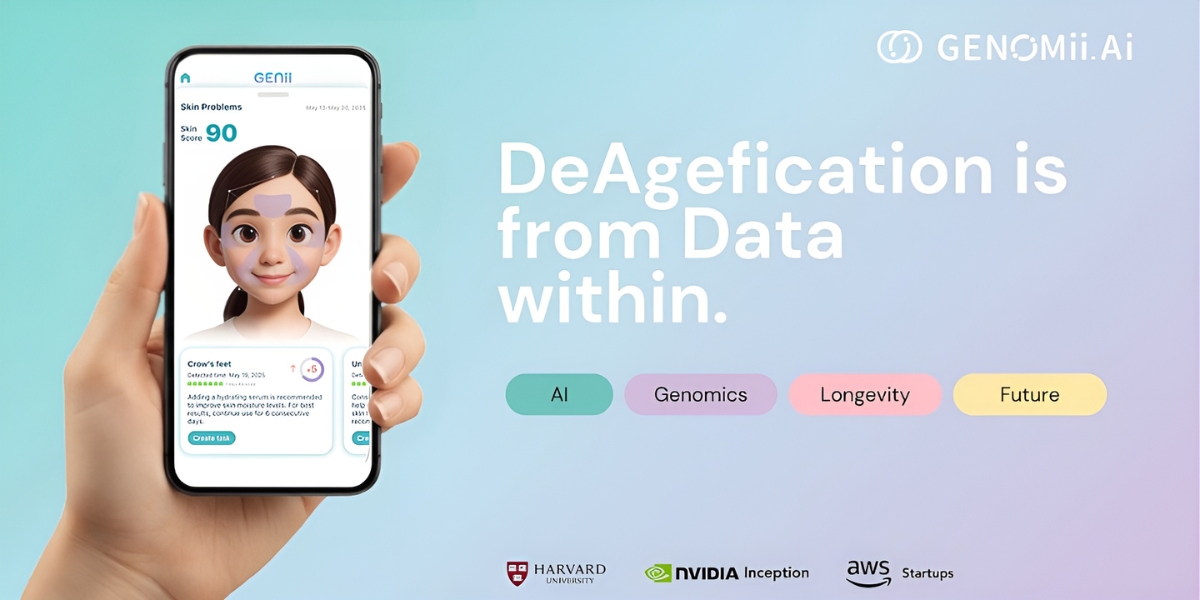
GenomiiAI introduces TwinsXM engine, an AI-powered wellness platform that remembers, correlates, and adapts to users’ health data over time. It builds a dynamic digital twin that delivers personalized and proactive care recommendations, especially for women navigating complex health changes in midlife. 

Health is never static. The blood sugar spike recorded today might disappear tomorrow. The rash that flares after a stressful week can vanish as quickly as it arrived. Hormones, food, sleep, stress, and even the weather can shift how people feel from one day to the next. 

For millions, especially women navigating the complex realities of their 30s, 40s, and 50s, this unpredictability is a daily challenge that most health apps, trackers, and even doctors fail to address. What happens when the advice they used yesterday no longer applies today? What if their health story is more than a collection of isolated data points?

GenomiiAI (Genomii), a precision wellness platform born from lived experience and scientific rigor, believes the answer lies in memory. Not the kind of memory that people store in their heads, but a digital memory that grows with them, remembers their struggles, and adapts to their changing needs. 

At the heart of GenomiiAI is the TwinsXM, which stands for digital twins memory infrastructure. The creators designed this proprietary AI engine to do what no other wellness platform has managed: remember, correlate, and adapt to users, just like the human brain.

If GPT is the Encyclopedia, TwinsXM is the Memory

Most AI agents today are built for execution. They help people schedule meetings, summarize emails, or answer trivia. They are smart, but they do not know users personally. Execution can be replicated, replaced, or commoditized. However, understanding them over time and building a memory of their health journey is foundational and nearly impossible to copy. That is the idea GenomiiAI is building with TwinsXM.

“Most health apps today are built to respond. Track your food. Count your steps. Give you advice based on yesterday’s data,” says Sally So, GenomiiAI’s founder and CEO. “But life doesn’t happen yesterday. Stress levels change by the hour. Skin reacts overnight. Hormones shift weekly. What we eat, how we sleep, how we age; it’s all in motion.”

GenomiiAI engineered the TwinsXM engine to remember every input users share, from photos of their meals to the subtle changes in their skin captured by a selfie. It does not just store these moments. It learns from them, building a personalized lifestyle graph that links fragmented data, food, sleep, stress, hormones, and inflammation into a living, evolving model of the user.

How TwinsXM Remembers, Correlates, and Adapts

Imagine a woman in her forties who notices recurring skin inflammation. Traditional apps might recommend standard anti-inflammatory diets or generic skincare advice. TwinsXM takes a different slant. 

It notices that her skin inflammation occurs most frequently after nights with less than six hours of sleep. This is particularly so when combined with high-stress workdays and meals containing certain ingredients. Strength training after 4 p.m. helps keep blood sugar stable the next day, even after eating carbs that usually cause spikes.

These observations form the basis for highly personalized recommendations—not generic advice but guidance tailored to her unique biology. They connect all these dots—not just today but next month and next year.

So argues that traditional healthcare systems are not designed to capture these nuances. Even the most sophisticated health apps typically provide what amounts to snapshots, static reports based on limited data points that fail to account for how these elements interact across time.

This is where the TwinsXM engine comes in. Unlike rule-based systems, it learns from users’ past behavior and builds unique predictive models. For instance, when someone logs a late-night snack, TwinsXM does not just note the calories. It checks his sleep data, skin health, stress levels, and even his genetic predispositions. 

If it detects a pattern, such as late-night eating leading to restless sleep and morning puffiness, it flags and remembers this. Then, it adjusts its recommendations accordingly.

So explains, “It’s like having a doctor who’s been studying only me for years. It remembers things I’ve long forgotten, like the fact that my skin always flares two days after I eat strawberries, but only during summer months.”

Building for the Future: Digital Twins and Beyond

The promise of the TwinsXM engine is not just personalization but evolution. The more data users share, the more accurate and insightful the recommendations become. Over time, TwinsXM builds a digital twin, a dynamic model that reflects the user’s lifestyle and how their body responds. This digital twin becomes the foundation for proactive, preventive care, anticipating problems before they arise and guiding users through life’s inevitable changes.

GenomiiAI’s model is particularly timely as the wellness tech market shifts toward precision health and longevity. Women aged 30–50 now have a system that understands their unique needs and creates personalized lifestyle and diet plans.

For So, with the personalization that GenomiiAI brings, it becomes one’s loyalty health platform that they will find hard to delete. With features like personalized avatars, real-time insights, and social sharing, GenomiiAI is also culturally relevant, driving organic growth and engagement. 

She mentions, “Think about the apps you can’t delete. Not because they’re convenient, but because they hold too much of your life.
That’s GenomiiAI.
Replacing us is like switching your personal doctor, therapist, and nutritionist all at once.”

Challenges and Future Directions

So understands some concerns may arise about how GenomiiAI can work harmoniously with actual health providers. She argues, “We’re not replacing healthcare providers. But we’re giving individuals the tools to be more informed participants in their care. When they visit their doctor with three years of precisely documented patterns rather than vague recollections, the quality of care improves dramatically.”

Health platforms like GenomiiAI represent a promising outlook on personalized prevention. The TwinsXM engine transforms the fragmented data users already generate into coherent, actionable insights. It offers a path toward truly individualized wellness, not based on statistical averages but on one’s unique biological story as it unfolds over time.

“In five years, we believe the health app people trust most won’t be the one with the most features. It’ll be the one that remembers them,” predicts So.

The future of health monitoring may not be in more sophisticated sensors or broader data collection, but in systems that remember users, connecting the dots between today’s choices and tomorrow’s outcomes, just as the bodies have been doing all along.


Disclaimer: The content of this article is intended for informational purposes only and should not be construed as medical or professional advice. Always consult with a healthcare provider or a qualified expert before making any changes to your health and wellness routine.

11 Cybersecurity Vendors CISOs Should Explore at RSA Conference 2026, According to CISO Whisperer

By: Jake Smiths

The enterprise cybersecurity landscape is shifting rapidly. Attack surfaces are growing, adversaries are increasingly AI-enabled, and identity-based threats are becoming more complex. In response, CISO Whisperer has released its list of 11 Cybersecurity Vendors CISOs Should Check Out at RSA Conference 2026. From March 23–26 at San Francisco’s Moscone Center, RSAC 2026 provides insight into the vendors driving AI-enabled automation, platform unification, and outcome-based security practices that help CISOs address modern risks.

Outcome-Oriented Security

Many vendors are redefining risk management by emphasizing actionable outcomes. Reclaim Security focuses on remediation rather than simple discovery. Its AI Security Engineer safely fixes misconfigurations, turning previously manual, reactive work into automated risk reduction. This allows teams to move beyond visibility-first approaches that often leave vulnerabilities unresolved.

Daylight Security offers outcomes-as-a-service by combining agentic AI with human expertise. It integrates telemetry from Wiz and other security and IT tools to provide contextual insights across multiple systems. At RSAC, Daylight demonstrates how expert-led automation can accelerate threat resolution and relieve alert fatigue.

CyCognito complements these approaches with attacker-centric external exposure management. By continuously discovering unknown assets and validating their exploitability, it helps organizations focus on what truly matters, reducing the gap between theoretical risk and real-world exposure.

Unified Platforms and AI-Driven Operations

Fragmented technology stacks remain a challenge for large enterprises. Splunk demonstrates the advantages of platform consolidation with its Agentic SOC, which combines detection, investigation, and automated response. By leveraging natural language interfaces and governed data pipelines, Splunk enables security teams to act faster and more accurately.

Cloud-native security is also evolving. Sysdig provides runtime visibility across Kubernetes, containers, and cloud workloads, enhanced by Sysdig Sage, the first agentic AI cloud security analyst. Its automated insights allow security teams to focus on high-impact threats while maintaining governance.

Managed detection and response is similarly advancing. Arctic Wolf pairs AI analytics with human security engineers to deliver concierge SOC services for organizations without the scale to operate internal SOCs. Research presented at RSAC suggests that a significant portion of intrusions involve previously addressed vulnerabilities, highlighting the importance of ongoing monitoring.

Protecting Critical Infrastructure and Industrial Environments

Industrial environments are prime targets for sophisticated attacks. Dragos leads in OT cybersecurity, protecting energy, manufacturing, and water systems. Its 2026 OT/ICS Cybersecurity Report shows attackers actively mapping control loops to create physical consequences, demonstrating that industrial threats are moving beyond reconnaissance.

Ransomware remains pervasive. Halcyon offers an anti-ransomware platform designed to prevent, detect, and recover from attacks without relying on backups or paying ransoms. Research presented at RSAC suggests that many security leaders are confident in their detection capabilities, yet a notable number of attacks go undetected until later, emphasizing the importance of quick response mechanisms.

Identity and Behavioral Security

Identity is a core focus for modern security operations. 1Password’s Unified Access platform secures humans, AI agents, and machine identities, helping organizations manage credential sprawl introduced by autonomous agents. At RSAC, 1Password hosts a fireside chat exploring whether traditional identity architectures can meet the demands of AI-driven environments.

Behavioral security is critical in detecting sophisticated attacks. Abnormal AI leverages its Attune 1.0 behavioral foundation model, trained on more than one billion derived signals, to detect account takeovers and email threats. By analyzing typical communication patterns within an organization, it identifies unusual deviations contributing significantly to the platform’s detections.

Huntress supports mid-market enterprises and managed service providers with 24/7 threat detection and response. At RSAC, Huntress introduces Managed ESPM and ISPM to strengthen endpoint defenses and secure Microsoft 365 identities, providing enterprise-grade protection for organizations often underserved by larger vendors.

Strategic Takeaways for CISOs

The vendors featured by CISO Whisperer represent an industry-wide pivot toward integrated, AI-powered, and outcome-oriented security. RSAC 2026 enables CISOs to identify solutions that scale with their enterprise, integrate seamlessly with existing architectures, and deliver measurable impact. Beyond product demonstrations, the event illustrates how modern cybersecurity architecture is evolving: security systems must now reason, adapt, and act autonomously to keep pace with emerging threats.

Circle and the Pace of Product Development in Community Platforms, Tracking Feature Expansion and Sustainability from 2021 to 2025

Digital platforms that support online communities have faced steady pressure to release new tools while maintaining stable, affordable services. Many software companies in the creator and education space, focused on very rapid product cycles, responded to demand for live learning, paid memberships, and direct audience relationships throughout 2021 and 2024. This period followed a broader trend during the COVID-19 years, when remote learning and virtual events became the norm. By 2024, the average user had come to expect features such as mobile access, integrated payments, and automation, putting smaller platforms without long-term funding or operational rigor at a disadvantage.

Circle, a company founded in 2019 by Sid Yadav, Rudy Santino, and Andrew Guttormson, planned its product roadmap amid rapid change. Public updates and company statements from 2021 to 2024 reveal a consistent rollout of features for community management, education, and creator monetization. These illustrate features such as structured conversation spaces, event hosting, course delivery, and built-in payment systems that enabled creators to offer subscriptions and one-off purchases on the same platform. Instead of concentrating on single-use tools, the platform grew around multipurpose community hubs.

By 2022 and 2023, rivalry among community platforms had become fiercer, as most companies were offering very similar core services. During these years, creator economy analysts observed the growing popularity of tools that help creators become less dependent on social media algorithms and third-party marketplaces. Circle’s product updates during this period reflected this trend, with added controls for branding, member roles, and private spaces. These updates were aimed at helping organizations manage large groups while keeping smaller, paid communities functional. Reports from the company during these years described frequent releases rather than large annual redesigns.

Product development continued in 2024, with a focus on improving workflows and administrative operational tools. This included expanded analytics, automation features, and better integration between content, events, and member data. The goal, according to product notes released that year, was to reduce manual work for hosts while keeping participation simple for members. Industry surveys in 2024 revealed that time management and moderation were the main concerns for community managers; thus, these updates are beneficial for a broader set of professional users.

Although the feature outline from 2021 to 2024 shows a consistent increase, more detailed public disclosure was provided in 2025 through the company’s Year in Review. That report indicated that Circle was supporting thousands of communities and millions of members by the end of 2025. It also referenced high levels of engagement across the platform, including large volumes of likes, comments, and community events throughout the year. These usage patterns provide context for why automation and moderation tools became a stronger focus in later product releases.

The 2025 updates, planned during earlier development cycles, included AI Agents, Website Builder, Email Hub, AI Workflows, Connect, Forms 2.0, a desktop app, geocoded member locations, and redesigned video tools. Other additions during the year included a public community marketplace called Circle Discover, visual email building tools, and expanded mobile features. According to the Year in Review, more than fifty feature updates and improvements were released across the year, though not all were major product launches.

Throughout this period, the company also reported remaining profitable while continuing development, which is less common among venture-backed software firms in the same category. Financial figures shared in earlier materials indicated that Circle had reached tens of millions in annual recurring revenue by 2025, alongside cash flow-positive operations. This allowed the company to fund hiring and infrastructure without raising new capital. By late 2025, the workforce had grown into a sizable team, with new roles funded directly from operating income rather than through external investment.

Observers of software product management often point out that rapid feature releases can lead to fragmented user experiences. Circle’s approach, based on published product roadmaps and user documentation, has emphasized integration between tools rather than standalone addons. For instance, payments, events, courses, and discussions are all set up to work under the same member profiles and access rules. Hence, the entire framework minimizes reliance on external services, which can be both costly and complex for small organizations.

User-focused design has also been a consistent topic in product updates, with numerous updates aimed at making navigation easier and reducing the number of setup steps. Feedback channels and beta testing programs were employed before public launches, particularly for big features such as mobile apps and automation tools. Although these methods are standard in software development, they are usually limited during phases of rapid growth. In this situation, the company appears to have maintained iterative testing as part of its release cycle, as indicated by Yadav’s statements in various product announcements.

Looking at the industry as a whole, Circle’s product range from 2021 to 2025 is, in fact, a reflection of the major trends in the creator economy and the online education market. At present, it is anticipated that platforms will be able to manage content, payments, communication, and marketing simultaneously in one location. Also, companies are under double pressure to contain costs and avoid becoming overly dependent on short-term financing. Circle’s combination of frequent updates and reported profitability has positioned it as the key example in discussions about the development of sustainable software; however, the final outcomes are inevitably dependent on market competition and user retention.

Circle ended 2025 as a community management, educational tools, and business operations platform, all bundled into one system. Sid Yadav, Rudy Santino, and Andrew Guttormson, the original team that founded the company, are still involved in product development, adding features and improving functionality. The planned product roadmap includes continued leveraging of the machine learning and AI technologies introduced in 2025, while keeping a constant eye on development speed, product stability, and long-term support for community-based organizations.

The Quiet Revolution in Hair Restoration: Why Today’s Hair Transplants Look More Natural Than Ever

Hair loss has been a concern for generations. For many people, thinning hair or a receding hairline can affect confidence and personal image. Yet the way hair loss is treated today is very different from what it was even ten years ago.

Hair transplantation has gradually developed into a sophisticated field within medical aesthetics. What once relied on relatively simple surgical techniques now combines medical expertise, refined instruments, and careful aesthetic planning.

The objective is no longer just to relocate hair follicles from one part of the scalp to another. Surgeons now focus on recreating natural growth patterns so the result blends seamlessly with a patient’s existing hair.

How Technology Has Changed Hair Transplant Procedures

A major shift in the field has come from the use of more precise instruments and improved implantation techniques. These developments help reduce trauma to the scalp while improving the survival of transplanted grafts.

Two approaches that have become widely known are Sapphire FUE and Direct Hair Implantation (DHI). Both methods involve extracting individual follicles from the donor area and placing them carefully in thinning regions of the scalp.

In Sapphire FUE, surgeons use blades made from sapphire crystals rather than traditional steel. These blades allow for very fine incisions, which can help reduce tissue stress and allow grafts to be placed closer together without compromising the natural look of the hair.

Direct Hair Implantation (DHI) uses specialized implanter pens that allow surgeons to insert follicles directly into the scalp while controlling the angle, direction, and depth of each graft.

This level of control makes it easier to reproduce the irregular patterns that naturally occur in human hair growth, which is one of the reasons modern hair transplant results often appear much more natural than older procedures.

For people researching modern hair transplant techniques, understanding these methods offers a clearer picture of how the field has developed.

Hairline Design: The Art of Creating Natural Results

Technology alone does not determine the final outcome of a hair transplant. Specialists often point out that natural-looking results depend just as much on thoughtful design.

A natural hairline is rarely perfectly symmetrical. Small irregularities and variations give hair its organic appearance. Surgeons take these details into account when planning the placement of grafts.

Typically, single-hair follicles are placed along the very front of the hairline. Density then gradually increases behind this area. This transition helps transplanted hair blend smoothly with existing strands.

The crown requires a different approach. Hair in this region grows in a circular pattern, which means each graft must be placed at the correct angle to recreate the natural swirl of hair.

These aesthetic considerations are one reason hair transplantation is often described as a procedure that requires both technical skill and careful visual judgment.

Changes in the Patient Experience

The patient experience has also evolved alongside surgical techniques.

Most hair transplant procedures today are performed under local anesthesia, allowing patients to remain comfortable while the surgical team works with precision.

Many clinics now use digital tools to analyze the scalp before surgery. These systems help evaluate donor capacity, hair density, and the characteristics of the patient’s hair. With this information, surgeons can plan the procedure in greater detail.

Patients often receive a clearer explanation of the expected process and recovery period before the procedure takes place.

Why Follow-Up Care Is Important

Although the transplant procedure itself may take only one day, hair restoration unfolds gradually.

After transplantation, follicles usually enter a resting phase before new hair begins to grow several months later. This stage is part of the normal hair growth cycle.

During this period, proper aftercare helps protect the grafts and supports healthy regrowth. Follow-up consultations allow medical teams to monitor progress and answer any questions that arise during recovery.

Some patients may also receive guidance on treatments that help maintain existing hair and manage ongoing hair loss.

Growing Interest in Hair Restoration

Interest in hair transplantation has expanded as techniques and technologies have improved. The procedure has become more predictable, and the results typically appear far more natural than in the past.

At the same time, discussions about hair loss have become more open. Many people now research available options in detail before deciding whether treatment is right for them, often exploring medical centers that specialize in advanced hair restoration procedures.

Hair transplantation today is increasingly viewed as a carefully planned medical procedure that combines technical precision with individualized care.


Disclaimer: This article was developed with insights from specialists working in modern hair restoration and medical aesthetics. It discusses commonly used techniques such as Sapphire FUE and Direct Hair Implantation (DHI), along with the importance of personalized treatment planning and patient follow-up. This content is for informational purposes only and is not intended as medical advice. The details shared here are not a substitute for professional consultation or evaluation by a qualified healthcare provider. If you are considering hair restoration or any other medical procedure, it is recommended that you consult with a licensed professional to determine the best course of action based on your individual needs and circumstances.

The AirlineSim Rebuild: Five Months to Fix a Decade of UI Debt

By: Valeria Varlamova, Project Manager at Phenomenon Studio, March 13, 2026

Key Takeaways:

  • AirlineSim is a long-running, real-money, browser-based airline management simulation with a loyal user base that has used it for 10+ years. Redesigning such a product posed significant risks compared to typical SaaS redesigns.
  • Phenomenon Studio completed the full product redesign in five months using modern technologies, including Vite, React, TypeScript, SCSS, Framer Motion, React Router, and Redux.
  • Key outcomes included faster time-to-market for new features, a scalable UI architecture, and measurable increases in user engagement, particularly in flight-scheduling and market-analysis flows.
  • This project serves as a case study for how legacy simulation products can modernize without alienating the community that made them successful in the first place.

AirlineSim, a German-developed airline management simulation with a loyal community, posed a unique challenge for redesign. Unlike typical products, AirlineSim had users who had grown accustomed to its quirks. Redesigning such a product required balancing improvement with maintaining a loyal user base that had adapted to the interface over the years.

The challenge wasn’t simply technical. The AirlineSim codebase had accumulated frontend debt due to its legacy. Built before React and TypeScript, the system had fragmented state management and inconsistent UI patterns across modules like fleet management, route planning, and financial reporting. Despite these issues, users had grown accustomed to them and found workarounds, making the challenge less about fixing failures and more about improving an established system.

Choosing the Tech Stack

Given the complexity of AirlineSim, we had to carefully choose tools that would not only modernize the product but also ensure its long-term scalability. Here’s why we chose our tools:

  1. Vite: The existing build setup was slow, making iteration time-consuming. With a five-month timeline, Vite drastically improved development speed by reducing hot-reload times from 8 seconds to under 0.6 seconds, enabling more frequent testing.
  2. TypeScript: Given the complexity of tracking game state like aircraft positions, market demand, and financial models, we chose TypeScript for its strict typing, ensuring data consistency and preventing visual bugs that could affect strategic decisions.
  3. Framer Motion: Framer Motion allowed us to create smooth animations to help players recognize changes in the game environment. This improved decision-making speed, with users spotting market changes 40% faster in animated states compared to static ones.

Research Before Design: Understanding User Needs

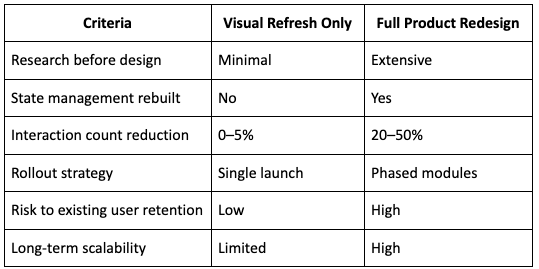
Rather than rushing into design, we dedicated the first three weeks to user research. We didn’t rely on surveys; instead, we conducted task-based sessions where users narrated their decision-making processes. This helped us understand how players interact with the system, what data they prioritize, and where the pain points were.

We mapped out 64 interaction steps during a typical gameplay session, covering tasks like route planning, aircraft management, and pricing decisions. After the redesign, this process was streamlined to 38 steps, without removing any features—just eliminating unnecessary steps.

Designing the Dashboard

The dashboard is the heart of AirlineSim. Players use it to manage flights, aircraft, staff, and market competition. The old dashboard was inconsistent and inefficient, leading to delays in decision-making. Our redesign focused on three key principles:

  1. Prioritize most-used data: We placed key metrics, such as route performance, at the top of the dashboard to ensure they were immediately accessible.
  2. Warnings before confirmations: If a scheduled flight would operate at a loss, the interface displayed a warning before players confirmed the schedule, reducing costly mistakes.
  3. One-click undo: The psychological cost of making mistakes in a live simulation with financial consequences is high. We included an easy undo function to reduce hesitation and improve decision-making speed.

Phased Rollout: Redesigning Incrementally

One of the key risks in redesigning a product with a loyal user base is overwhelming them with a major change all at once. To mitigate this, we used a phased rollout. We began by launching the scheduling module, then gathered feedback, made adjustments, and proceeded to other modules like financial reporting and market analysis. This gradual approach helped users adapt to changes without feeling alienated.

Avoiding Common Redesign Mistakes

Through years of experience, we’ve identified several common mistakes that often lead to the failure of redesign projects. Here’s how we avoided them:

  1. Designing for power users: It’s common to design based on feedback from vocal users, but this often leads to overlooking the needs of new and intermediate players. We made sure to balance the needs of all users, ensuring that both veterans and newcomers could navigate the system.
  2. State management as an afterthought: It’s easy to focus on the visual aspects and neglect the underlying data architecture. In our case, Redux was used to manage game state and ensure stability across the interface.
  3. Big bang launch: Launching a complete redesign all at once can be overwhelming for users. We avoided this by releasing new features incrementally, allowing users to get comfortable with each change before moving on to the next.
  4. Ignoring mobile optimization: Simulation games are often thought of as desktop-only, but many players play them on their mobile devices. Our redesign included full responsive breakpoints, leading to a measurable increase in mobile usage.

Results: Impact and Outcomes

After five months, the redesigned AirlineSim launched with several significant outcomes:

  • Faster time-to-market for new features: The scalable UI architecture enabled faster feature development.
  • Deeper engagement: Players spent more time in the game, particularly in flight scheduling and market analysis modules, due to the streamlined workflow.
  • Increased user retention: With an incremental rollout and continuous feedback loops, we saw higher retention among the loyal user base.

Comparing Redesign Approaches

The AirlineSim Rebuild: Five Months to Fix a Decade of UI Debt

Lessons Learned

The AirlineSim rebuild taught us several valuable lessons about redesigning complex digital products:

  1. User research is essential: We spent three weeks understanding the user before starting design work. This research phase ensured that we were optimizing for real user needs, not just aesthetic preferences.
  2. Phased rollouts work best for existing products: Incremental changes helped us retain the loyal user base while improving the system.
  3. State management matters: Ensuring a robust architecture from the start was crucial to the project’s success.
  4. Mobile optimization is key: Even for traditionally desktop-centric products, ensuring mobile compatibility is essential for user engagement.

Redesigning AirlineSim was a challenge that required careful balance between modernizing the product and keeping its loyal user base engaged. By using user research, state management tools like Redux, and a phased rollout strategy, we successfully transformed the product into a more scalable, user-friendly experience. The result was faster development cycles, improved user engagement, and a product that was prepared for the future.