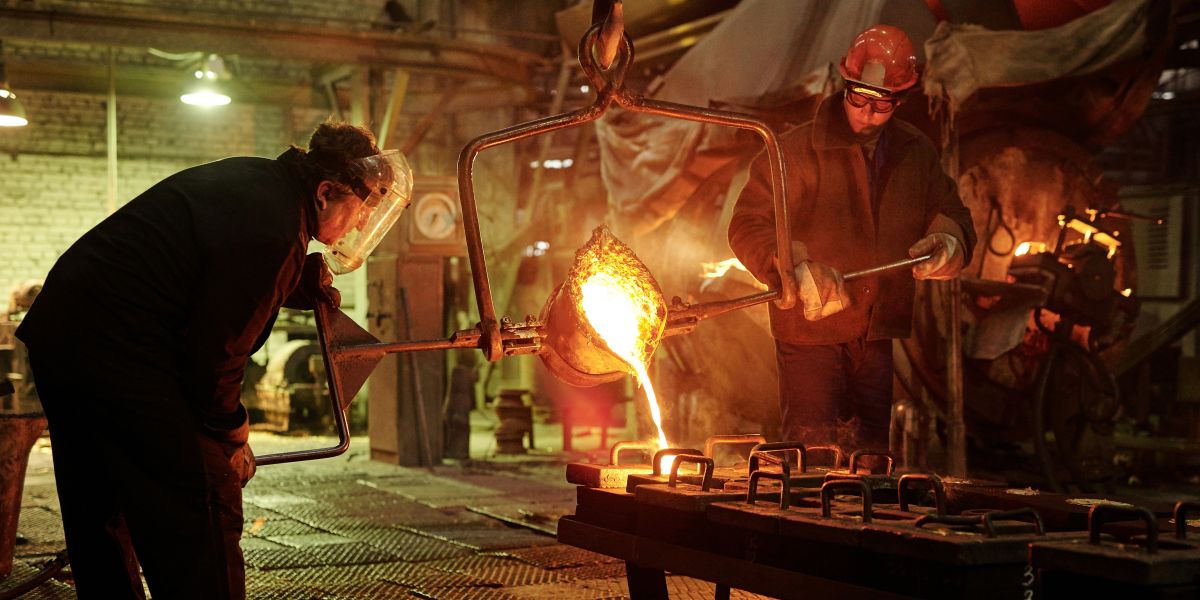


Metallurgy is a core science that influences almost every industry that relies on metals – from manufacturing and construction to transportation, energy systems, and research labs. At its most fundamental level, metallurgy concerns the physical, chemical, and structural properties of metals and alloys. This science helps understand how metals form, how they behave under stress, and how they can be designed for durability, strength, and long-term performance. As the demands of modern times change, metallurgy continues to play a key role in the design of materials for both industrial and environmental requirements.
What Metallurgy Involves
Metallurgy is the study of metals from an atomic scale up to the macro scale. It examines the behavior of metals in the presence of heat, how they deform, how they break, and how they interact with their surroundings. Traditionally, metallurgy is divided into two main branches:
Physical metallurgy is the branch of metallurgy that deals with the mechanical properties, microstructures, and phase transformations of metals.
Chemical metallurgy is concerned with extraction, refining, corrosion, and the chemical interactions that affect the performance of metals.
Through these branches, metallurgy can help professionals to analyze the structure of metals and to predict how they will behave under real-world conditions. Whether designing a new alloy or investigating component failure, metallurgists use scientific principles to understand and optimize material performance.
Metallography and How It Is Important for Metallurgy
A large part of metallurgy concerns the study of the internal structure of metals. This process, called metallography, can be used to determine grain size, phases, inclusions, and microstructural features that affect the strength and durability of a metal. By making samples and examining them under a microscope, metallurgists can understand in depth how metals respond to heat treatment, mechanical stress, or chemical exposure.
The preparation of metallographic samples typically involves cutting, mounting, grinding, polishing, and, sometimes, etching. Every step should be performed carefully to avoid altering the actual microstructure. High-quality preparation will enable metallurgists to see features that determine hardness, toughness, fatigue resistance, and corrosion resistance. Metallography is therefore a diagnostic and predictive tool in the broader field of metallurgy.
Applications Of Metallurgy In Today’s Industries
The influence of metallurgy extends far beyond the laboratory environment. Almost all industrial areas are based on metallurgical principles to ensure product reliability and efficiency.
Manufacturing and machining apply metallurgy to material selection, weld quality, and heat treatment.
Automotive and aerospace engineering rely on metallurgical analysis to develop lightweight materials with high strength that can withstand extreme temperatures and stresses.
Construction and infrastructure benefit from metallurgical knowledge of steel’s performance, corrosion resistance, and long-term structural stability.
Energy systems, such as renewable and conventional power, use metallurgy to assess turbine materials, pipelines, and components subject to heat exposure.
Research and education use metallurgical principles to teach the fundamentals of materials science and to develop new alloys.
Because metals are so crucial in industries worldwide, the principles of metallurgy have contributed to safety, performance, and innovation.
Why Metallurgy is Still a Relevant Field Today
As industries require materials that work better and last longer, metallurgy has become essential. Advancements in technology have expanded the tools available to metallurgists, including digital imaging, automated sample preparation, and precision microscopy. These developments enable more precise analysis and faster decision-making.
Sustainability has also made metallurgy more significant. Efficient recycling, better alloy design, and a better understanding of corrosion and wear are all factors contributing to reducing waste and extending the life of metal components. Metallurgy has been contributing to industry greening by aiding industries to switch to greener, more resource-efficient practices without sacrificing performance.
Conclusion
Metallurgy is a critical field of science that lies between the old and the new sciences. By understanding the structure and behavior of metals, metallurgists help to make products safer, materials stronger, and industrial processes more efficient. As global industries continue to evolve, metallurgy will remain at the forefront of innovation, quality assurance, and sustainable material development.