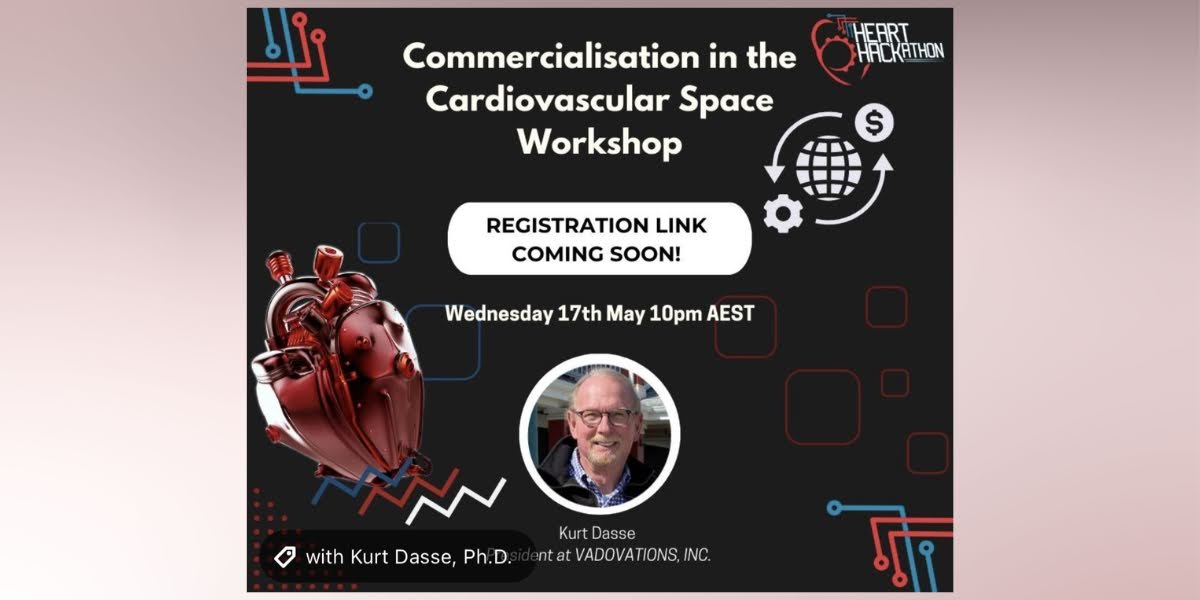


Physiology laboratories have long served as a proving ground for medical ideas that later move into devices, drugs, and surgical routines. In these settings, trainees measure how cardiovascular regulation changes in response to controlled interventions and then compare these signals with textbook predictions. The work may appear repetitive, yet the discipline it enforces shapes how clinicians and researchers evaluate evidence. That environment framed the early career of Kurt A. Dasse, whose later work in mechanical circulatory support drew on an earlier period of academic instruction and preclinical investigation.
In the early 1980s, Dasse’s work sat inside a hands-on physiology tradition: controlled experiments, surgical preparation, and continuous measurement of hemodynamic variables. At Boston University School of Medicine, he taught medical physiology. He took responsibility for “real-time” laboratory studies in which trainees learned cardiovascular regulation by observing changes as they occurred during interventions. The setting required attention to monitoring fidelity, animal preparation, and procedural safety, while also forcing an instructor to translate complex feedback systems into teachable steps.
That instructional role formed one thread of Dasse’s foundation years. Another thread ran through surgical research laboratories and preclinical programs that tested how blood and tissue respond to implanted materials. From the late 1970s into the early 1990s, those combined experiences created a profile that bridged physiology, biomaterials, and operative realities, long before his later commercial work became more visible.
Dasse was born on July 7, 1949, in Valparaiso, Indiana. Public biographical accounts note early exposure to clinical environments through military medical service, which placed him in settings where procedures, protocols, and patient instability shaped daily decisions. In that context, physiology functioned less as an academic subject and more as an operational language, the set of mechanisms that explained why interventions helped, failed, or produced unintended consequences.
That emphasis on mechanism helps explain why later device problems often circle back to physiologic endpoints. A pump can move blood, but the body’s responses, from vascular tone to renal signaling, determine whether the support improves outcomes or triggers complications. The foundation years show Dasse working in that space where theory meets the body’s compensations.
Dasse completed undergraduate training in biology at the University of Massachusetts Boston and later earned a doctorate in physiology from Boston University. The combination placed him in a discipline that treats the cardiovascular system as an integrated control network, with pressure, flow, endocrine signaling, and organ perfusion linked through feedback loops.
During his academic research appointments, he worked across themes that later reappeared in device development. He studied muscle physiology and hypoxia in rat skeletal and cardiac muscle preparations, employing laboratory methods including histology, electrophysiology, and microscopy. Those studies required careful measurement discipline, from tissue preparation to the interpretation of mechanical changes under altered oxygenation or pharmacologic exposure. In parallel, he worked on questions concerning blood interactions with material surfaces, an issue that becomes central when engineers place polymers and metals in circulation.
The skills embedded in this training were practical. Hemodynamic monitoring, tissue analysis, and repeatable experimental setup do not only support academic publications. They also provide the foundation for preclinical evaluation, in which a device must demonstrate stable performance under biological stress.
At Boston University School of Medicine, Dasse served as an instructor in physiology and later as an assistant professor. Teaching first-year medical students requires a particular kind of clarity. The circulatory system involves competing models, organ-specific adaptations, and multiple regulatory timescales. An instructor must present those elements without reducing them to slogans.
The “real-time” dog lab demanded more than lectures. It required an experimental design that trainees could execute safely while still producing interpretable signals. It also placed the instructor at the junction of surgical preparation and physiologic measurement. Even when a protocol aims to model a clinical technology, the lab must translate that goal into steps that fit controlled conditions.
During this period, Dasse also trained anesthesiology residents and conducted applied physiology experiments using isolated cardiac papillary muscle preparations to examine how anesthesia influences muscle mechanics. The work linked pharmacology and mechanical response, adding another layer to the theme of physiologic consequences under intervention.
From 1980 through the late 1980s and into the early 1990s, Dasse held research and instructional roles connected to Tufts University School of Medicine, Tufts-affiliated surgical research laboratories, and Tufts University School of Veterinary Medicine. These appointments placed him near the preclinical problem set surrounding early ventricular assist work.
Two enabling technologies stand out in this period: a percutaneous access device (PAD) and a transcutaneous energy transmission system (TETS). In practical terms, both aim to address a common barrier in implantable support systems: the need to connect the inside of the body to external power or control while reducing the risk of infection and mechanical failure. Dasse’s work included design, preclinical evaluation, surgical implantation, and explant analysis, and documentation for ongoing research contracts.
This phase also strengthened a reporting habit that later aligns with regulated development. Preclinical programs tied to federal contracts require structured quarterly and annual reporting, consistent endpoints, and clear accounting of failures and modifications. That discipline resembles the documentation culture that medical device teams later formalized in design controls and risk management.
In the same era, Dasse participated in animal studies connected to early iterations of implantable ventricular assist systems, including programs associated with HeartMate development. The preclinical phase forces certain realities. Hemodynamics do not remain stable simply because a device performs on the bench. Blood-contacting surfaces can trigger clotting and inflammatory responses, thereby altering both device function and end-organ physiology.
One of the central material questions during early LVAD development involved how textured surfaces interact with blood and tissue. Investigators examined whether a lining could form on specific polymers and how that lining influenced thrombosis risk and biocompatibility. These are not purely engineering concerns. They sit at the junction of surface chemistry, blood elements, and the body’s tendency to treat foreign material as a target.
Dasse’s work also included studies of endocrine and neural regulation in animal models, including carotid sinus modulation of renal nerve activity and associated hormonal responses. That focus underscores a recurring point in circulatory support: interventions that increase cardiac output also alter renal perfusion, neurohormonal tone, and systemic vascular resistance. Preclinical results guide what teams can justify when they move toward human trials.
Academic instruction rarely appears in device timelines, yet it often shapes who can collaborate across specialties. In Dasse’s foundation years, teaching medical and veterinary physiology and running surgical research laboratories trained cohorts of students and residents to work with physiologic signals, experimental controls, and operative constraints. That training helps create a shared vocabulary between clinicians and engineers. It also reduces friction that arises when a device team requires clinical partners to interpret measurements and anticipate complications.
In this sense, teaching served as a form of technology transfer, transmitting methods rather than products. It developed competence among the individuals who later populate research laboratories, clinical trial sites, and interdisciplinary teams.
By the early 1990s, Dasse’s early career had already assembled a specific toolkit: physiology as a measurement discipline, biomaterials as an interface problem, and surgery as a reality check. Those foundation years explain how later roles in clinical translation, regulatory interaction, and executive leadership could rest on earlier work that emphasized controlled intervention and documentation. Before titles and company roles accumulated, the work centered on laboratory benches, animal studies, and classrooms, where cardiovascular regulation shifted from diagrams to measured signals.