

In a moment when global supply chains are fragile and the conversation around “Made in America” has shifted from political slogan to economic imperative, one young biotech company is emerging with a vision that is both pragmatic and bold. Plant Cell Technology Inc. — founded in Washington, D.C. and now expanding into Utah — represents a new chapter in American biotech: rooted in scientific precision, powered by manufacturing independence, and built for the next generation of food, farming, and health innovation.
What makes this story remarkable isn’t bombast or billion-dollar valuations. It’s something rarer today: a real company solving real problems with real products — hundreds of them.
A Quiet Giant in the Making
Plant Cell Technology began modestly, with one groundbreaking solution: PPM™, a contamination-control medium designed for plant and animal tissue culture. It was a tool used by researchers, growers, and labs who understood full well that the smallest microbial slip can destroy weeks of work.
From that humble beginning, PCT did something unusual in modern biotech. Instead of chasing venture capital or spreading itself thin across speculative moonshots, it doubled down on product quality, customer relationships, and slow-but-steady expansion. Over the years, that single flagship product evolved into a portfolio of more than 800 SKUs — everything from media and reagents to automation and bioreactors — forming a comprehensive catalog of plant tissue–culture tools in the industry.
This wasn’t growth for growth’s sake. It was demand pulling the company forward.
Utah Becomes an Unlikely Biotech Powerhouse
In 2025, PCT acquired the Utah-based Caisson Laboratories — a scientific manufacturer with deep roots in media production and quality control. But the acquisition wasn’t just about capacity. It was a strategic move to anchor PCT’s manufacturing in the United States, at a time when the biotech world is waking up to the dangers of overreliance on overseas supply chains.
Utah offers something exceptional: skilled talent, logistical efficiency, low regulatory friction, and a rising reputation as a Western hub for bioscience. In choosing Utah as its manufacturing base, PCT is planting a flag that signals a shift in how biotech companies think about where innovation — and production — should live.
For Utah, this positions the state at the center of a crucial new sector in the American economy. And for PCT, it marks the beginning of a long-term commitment to domestic production, sustainability, and scientific sovereignty.
Why Domestic Manufacturing Matters
The pandemic exposed just how vulnerable scientific supply chains can be. Delays, shortages, inconsistent quality, and reliance on foreign logistics created pressure points across the entire research ecosystem. By keeping production stateside, PCT reduces shipping lead times, minimizes carbon miles, strengthens quality control, and ensures that critical scientific inputs remain in American hands.
For the researchers, labs, and growers who depend on consistency, this isn’t just patriotic — it’s practical. Reliability is a competitive edge.
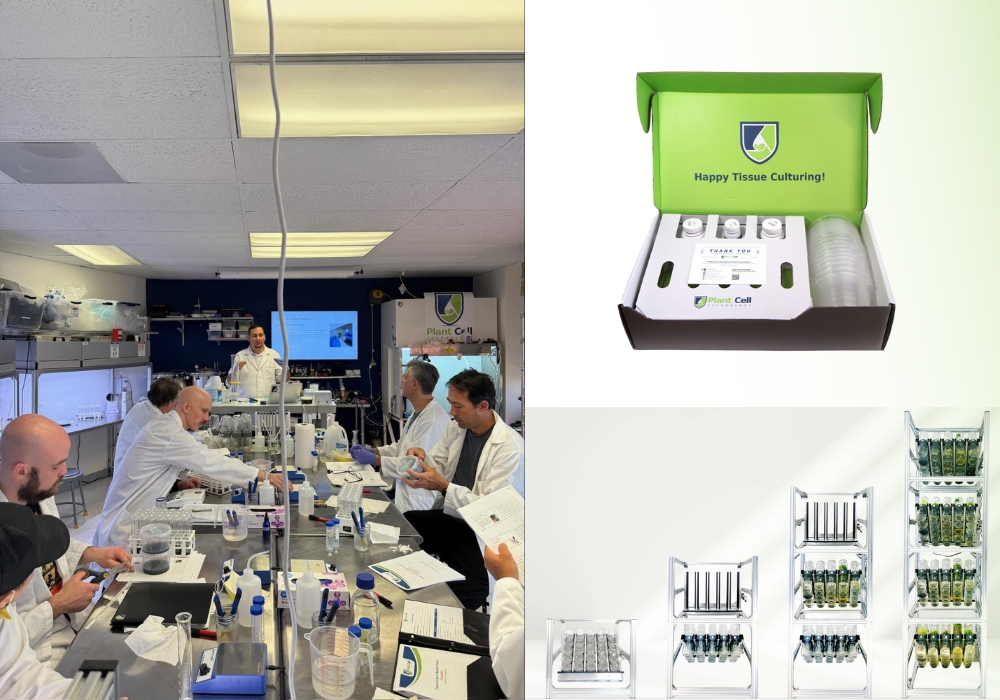
Photo Courtesy: Plant Cell Technology
Innovation at the Intersection of Automation and Biology
PCT’s recent product launches reflect a company that’s not only scaling operations but also shaping the future of plant science. Tools like BioCoupler™, an accessible bioreactor system, and BioTilt™, an automation-driven propagation platform, show how PCT is pushing the boundaries of what’s possible in tissue culture.
These technologies reduce human error, standardize processes, and accelerate research timelines — making it possible for vertical farms, regenerative agriculture startups, and university labs to operate with previously unreachable efficiency.
It’s a glimpse into a future where biology and automation operate in true harmony, driving down costs and unlocking entirely new industrial applications.
A Mission Rooted in Education
Beyond manufacturing and innovation, PCT is building something equally important: access to knowledge. Their digital learning hub — a growing archive of masterclasses, walkthroughs, and demo videos — seeks to democratize plant and cell science for anyone with curiosity and ambition.
This education-first approach is reshaping who gets to participate in biotech. No longer is tissue culture confined to elite research institutions. PCT is helping students, growers, and aspiring scientists build the skills they need to contribute to the bioeconomy.
The combination of education and tools forms a pipeline — one that cultivates talent while creating future customers.
The Unseen Infrastructure Behind the Future of Food & Agriculture
Vertical farming, regenerative agriculture, biotech-enabled meat alternatives, climate-resilient crops — all of these fast-growing sectors rely on the quiet yet essential tools that PCT produces.
Without consistent, high-quality media and contamination control, none of these innovations scale.
PCT’s Utah expansion doesn’t just serve today’s biotech needs — it provides the infrastructure for tomorrow’s food systems. Whether it’s seed banks preserving genetic diversity, food-tech labs growing meat without animals, or reforestation teams cultivating climate-adaptive species, the tools they rely on must be dependable, clean, and scalable.
That’s where PCT is carving its niche.
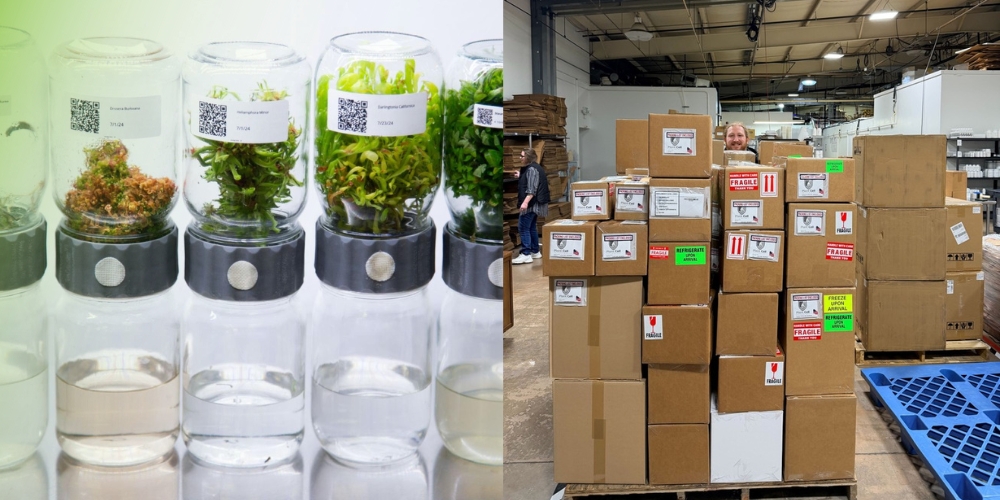
Photo Courtesy: Plant Cell Technology
From Discipline Comes Durability
In an economy where startups often chase hype cycles or burn through capital without a clear path to sustainability, PCT represents an alternative model. It’s a company built on revenue, not runway — scaling only when it made sense, developing products based on real user demand, and prioritizing operational control over financial speculation.
The challenges ahead are not insignificant. Manufacturing costs must be managed carefully. Global competitors remain strong. And automation requires ongoing R&D investment.
Yet PCT’s commitment to American-made quality and full-stack control — from product design to factory production — gives it a differentiated path forward.
A New American Biotech Narrative
PCT’s story sits at the intersection of several timely themes:
- The revival of American manufacturing
- The rise of the bioeconomy
- Climate-aligned innovation
- Automation reshaping legacy sciences
- Utah’s emergence as a surprising technology hub
- A startup scaling not on hype, but on high-demand products
In a landscape often dominated by billion-dollar valuations and speculative biotech promises, PCT’s approach feels grounded, strategic, and refreshingly real.
Looking Ahead
Over the next two years, all eyes will be on:
- The growth of PCT’s Utah manufacturing campus
- Adoption of the BioCoupler™ and BioTilt™ platforms
- Partnerships with vertical farms, research labs, and food-tech companies
- How education and access continue to expand the tissue-culture community
- Possible government collaborations around American-made biotech manufacturing
Plant Cell Technology is more than a company — it’s an emerging cornerstone in the infrastructure that will power tomorrow’s food, agriculture, and biotech ecosystems.
The Final Word
At a time when the country is grappling with what it means to build, innovate, and produce at home again, Plant Cell Technology offers a compelling model: a blend of science, sustainability, and sovereignty. By rooting its future in Utah and expanding its influence across the national bioeconomy, the company is helping to write the next chapter in American biotech — one that feels grounded, ambitious, and, most importantly, within reach.
Disclaimer: The information provided in this article about Plant Cell Technology Inc. and its operations is for general informational purposes only and is not intended as legal, financial, or professional advice. While every effort is made to ensure the accuracy of the content, we make no representations or warranties, express or implied, regarding the completeness, accuracy, reliability, suitability, or availability of the information discussed, particularly regarding the company’s future growth, products, or business operations. Any reliance on this information is at your own risk.