


By: Elowen Gray
Imagine standing in the quiet of your own pain, unsure of where to go next, when suddenly, words appear like footprints in fresh snow. They don’t just describe your wounds. They acknowledge them. They say: You are not alone. You are still loved. And there is light, even here.
That’s what it feels like to read Spirit and Light, the debut poetry collection from Therese Adelle Prentice. With each verse, she opens a door to her personal story, filled with sorrow, spiritual awakening, and the gentle grace of forgiveness. This poetry collection is a spiritual reckoning and highlights a soul’s journey from the shadows of survival into the emerging brightness of divine purpose.
Therese, raised on a farm in rural Saskatchewan, grew up surrounded by nature’s silence and the quiet complexities of small-town life. Before becoming a published author, she moved through several careers: printing, hospitality, education, and holistic care. Yet through it all, she was always writing. On scraps of paper, on the backs of receipts, once even with lipstick on a napkin. Wherever inspiration found her, she followed.
As she describes it, her inspiration isn’t random—it’s deeply felt and spiritually guided. “I receive direct messages from the Holy Spirit,” she says, “and I feel called to share what’s given to me.” In Spirit and Light, that calling becomes clear. These poems are not crafted for literary applause. They are born from prayer, written to heal. Each one carries the pulse of someone who has felt deep pain and still chooses to bless others with her voice.
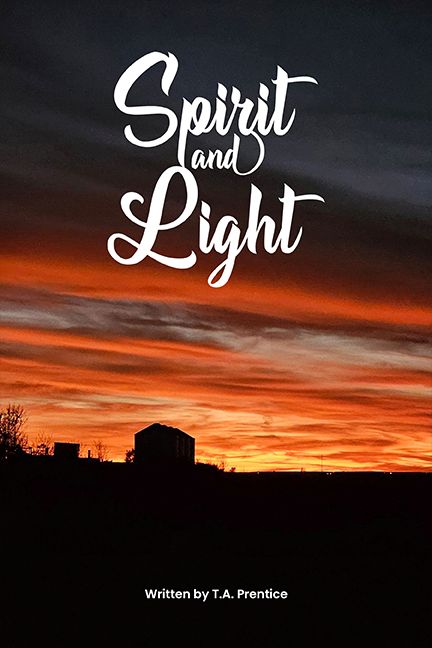
Photo Courtesy: Therese Adelle Prentice
“Freedom in forgiveness, no more axe to grind,” she writes in My Truth Sets Me Free—a simple line, but it carries the weight of decades.
Throughout the collection, forgiveness is a flame she returns to again and again. She speaks of betrayal, depression, generational wounds, and spiritual confusion. But in the same breath, she speaks of divine rescue, angels disguised as children, and the light of Christ shining through every broken place.
And the beauty of her writing lies in its accessibility. Therese doesn’t hide behind metaphors. Her poems are conversational, sometimes even playful, like in The Faith of a Child, where a boy asks if she’s an angel. She answers with a wink: “Don’t tell—I left my wings at home today.” That lightness makes the heavier themes, such as abuse, abandonment, and spiritual warfare, feel especially poignant. They hit harder because they arrive from someone who still chooses to smile.
“The angels are amazing, with mad, mad skills,” she writes with a kind of sacred mischief, reminding us that divinity doesn’t always come in solemn tones.
Behind the humor and hope, there is notable spiritual depth. These aren’t just poems about feeling better. They are about becoming whole. In Freedom Story, she writes about reclaiming her divine identity after years of silence. In Just Rewrite the Script, she encourages others to imagine a new future—to choose a different ending. And in We Rise, she envisions a collective awakening, where light conquers darkness not through force, but through love.
What makes Therese’s work so moving is how personal it feels, yet how relatable it is. She is one voice, but she speaks for many. Her pain is hers, but her healing is intended to be shared. “My wish is that my writing inspires others,” she says, “opens minds to new possibilities, gives greater awareness of the spiritual aspects of the human condition, and provides healing and restoration.” Reading Therese’s poetry out loud can be a deeply activating experience, potentially promoting greater healing.
That mission doesn’t stop with this book. Therese is already working on her autobiography, a second poetry collection, and a children’s book. She also hopes to become an inspirational speaker. Wherever her path leads next, it will always be rooted in the same underlying truth: healing begins when we speak, share, and remember who we are: divine creations made to shine.
Click here to learn more.
Disclaimer: This article reflects the personal experiences and spiritual insights of Therese Adelle Prentice. It is intended for informational and inspirational purposes only and does not constitute professional medical, psychological, or legal advice. Readers are encouraged to seek appropriate professional support for their individual needs.
Published by Joseph T.