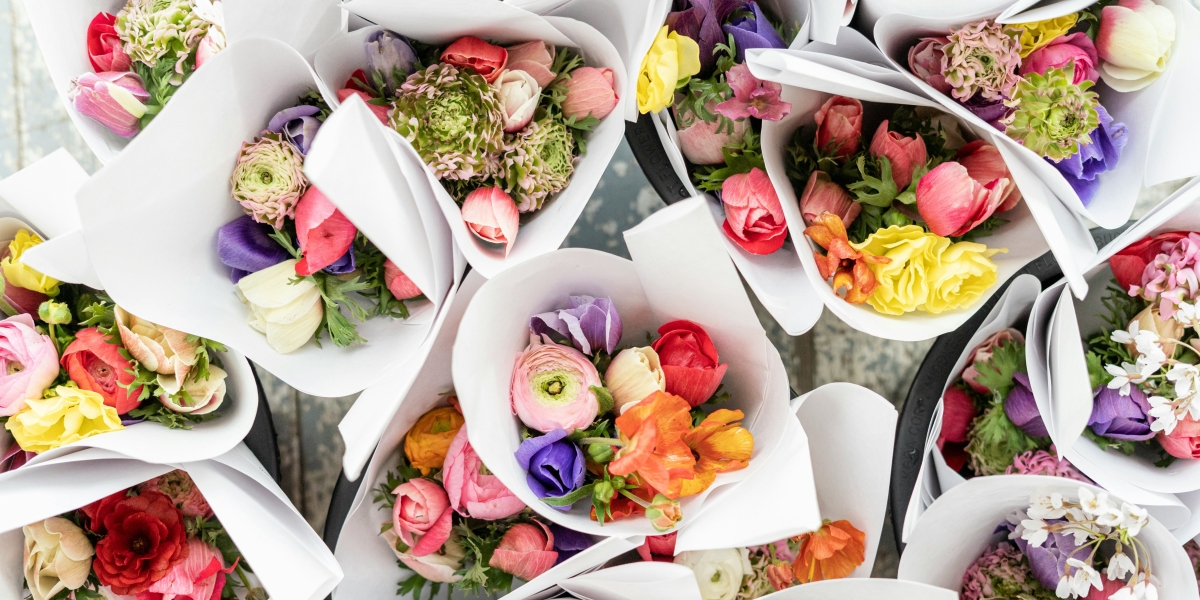


Traditional greeting cards are slowly losing popularity in a world overflowing with messages, notifications, and chat reactions. But the need to express emotions hasn’t gone anywhere — only the format has changed. More and more often, people say “thank you,” “goodbye,” “I love you,” or “I’m sorry” not with words but with flowers.
A bouquet has become a visual message, especially in more personal contexts where formal cards fall short. For example, a peony bouquet can express tenderness, gratitude, and admiration — without a single word. And unlike a card that might get lost in a drawer, a bouquet is a moment, an experience, a tangible gesture in the here and now.
Why Do We Choose Flowers Over Cards?
1. Sensory and Visual Impact
Flowers stimulate multiple senses — sight, smell, and sometimes even touch. They create a presence, a feeling of human warmth. Where words can feel obligatory or flat, flowers reflect care through selection, palette, and fragrance.
2. Personal Without Being Too Direct
Cards often rely on cliché messages. Flowers, on the other hand, offer freedom of interpretation. The same bouquet can symbolize love, support, or an apology, depending on the context. This “open-ended” meaning makes it deeply personal.
3. They Create a Moment
A bouquet is always an event. It’s unwrapped, placed in a vase, and admired. It transforms a space and a mood. It becomes part of the memory — more than just a delivery of information; it is the emotion itself.
How Flowers Speak Without Words
Every flower holds symbolic meaning. While modern floristry has largely moved away from strict Victorian “floriography,” the atmosphere, shape, and color of a bouquet still speak volumes:
- Peonies — associated with tenderness, grace, strength, and nobility. They’re perfect for a partner, a mother, or a close friend — and each will interpret it differently.
- Gerberas — convey joy and warmth.
- Lisianthus — quiet respect and calm.
- Lavender, mimosa, cornflowers — evoke coziness, simplicity, honesty.
- White flowers — purity and sincerity.
- Bold, contrasting bouquets — shout “I’m here for you!”
- Mono-bouquets — confidence, clarity, minimalism.
When Is a “Floral Message” Appropriate?
1. For a loved one, just because
Instead of texting, “I hope you’re having a good day,” send a small bouquet. The emotional impact is significantly more substantial, especially if it’s in their favorite color.
2. For a colleague — to show appreciation
Rather than a formal thank-you note, give a neutral-toned bouquet with a short message. No frills, just sincere gratitude.
3. For yourself
Sometimes, the message we most need to hear comes from within. Buying flowers for yourself is not indulgent — it’s the acknowledgment of your worth.
4. During difficult times
Flowers offer quiet support, presence, and compassion when words are too heavy or inadequate.
How to “Write” a Bouquet: A Practical Guide
Think About the Recipient
Do they prefer a natural look or polished elegance? Soft colors or vibrant ones? Minimal or lush arrangements?
Define the Message
What are you trying to say?
– “I’m with you” → go for gentle tones, soft textures.
– “You’re beautiful” → bold shapes, rich colors.
– “Thank you” → light and airy palettes.
– “I’m sorry” → warm, earthy tones with no harsh contrasts.
Add a Short Note
A sentence or two is enough:
– “If warmth had a form, it would look like this.”
– “No need for words. Let these speak for me.”
– “You deserve small joys. Here’s one of them.”
Why It Works Better Than Text
Because the person feels seen. Not with a template phrase or a mass-printed sentiment — but through thoughtful color, selection, and care. Flowers can’t be sent by accident. They always require intent. Even if ordered online or delivered from afar, a bouquet whispers: “You were thought of. This was for you.”
Flowers as Modern Empathy
In a fast-paced, digital world, flowers ground us. They slow things down. They bring presence into moments, into spaces, into emotions.
Giving someone a bouquet is acknowledging their value, importance, or humanity. It’s a quiet, beautiful, and lasting visual expression of empathy.
Conclusion: Flowers Are the New Letters
As greeting cards fade, bouquets step into their place as a more intimate, sensory, and emotionally resonant form of communication. They don’t need deciphering — they live in space, carry feelings, and speak without noise.
A peony bouquet, or any bouquet created with intention, might say: “You matter,” “I’m here,” or “You’re not alone.” And that’s the most beautiful way to communicate — silently, sincerely, and soulfully.
Published by Joseph T.