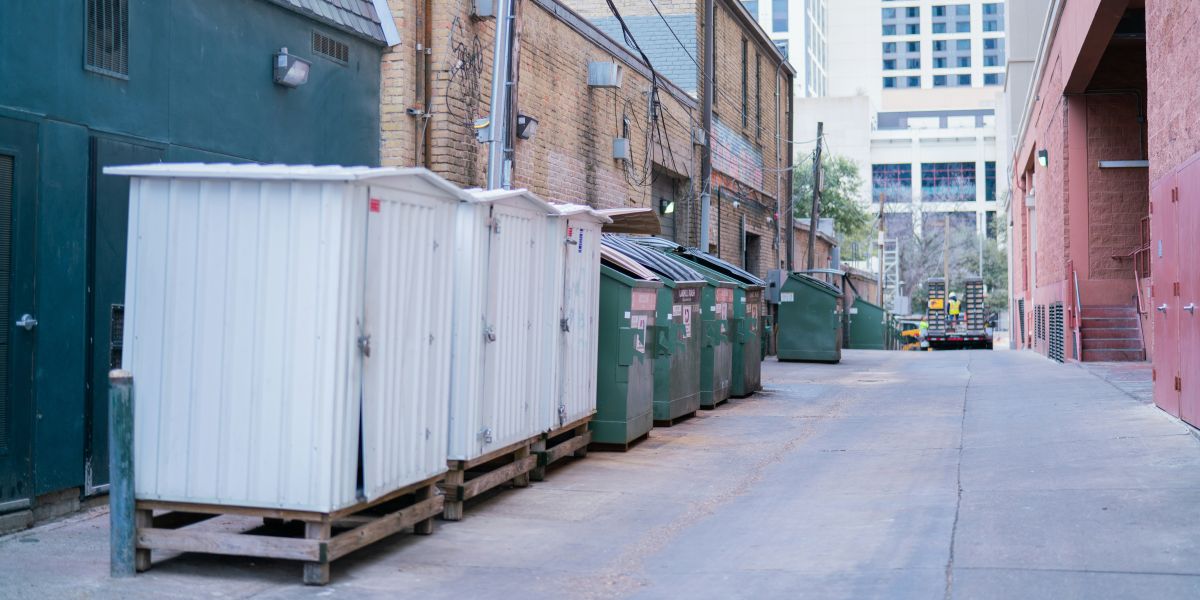


Roll-off dumpster rentals are increasingly common in dense residential neighborhoods as homeowners take on renovation projects, cleanouts, and property improvements. While the basic concept of renting a dumpster is straightforward, executing waste removal in tightly packed residential settings introduces challenges that are rarely discussed upfront. Limited space, close neighbors, local ordinances, and access constraints all influence how dumpster rentals work in practice.
In dense neighborhoods, mistakes around placement, timing, or compliance are magnified. What might be a minor inconvenience in a suburban setting can quickly become a fine, a complaint, or a forced removal when homes are close together and public space is shared. For homeowners, understanding these realities before a dumpster arrives can prevent fines, property damage, and unnecessary friction during an already disruptive project.
Space Constraints Shape Every Placement Decision
Dense residential neighborhoods rarely offer the open space found on rural or suburban properties. Narrow driveways, shared alleys, curbside parking, and landscaped front yards significantly limit placement options. A roll-off dumpster that fits comfortably on one property may obstruct traffic, block driveways, or encroach on neighboring lots just a few houses down.
Placement decisions must account not only for available square footage, but also for delivery truck access. Roll-off trucks require sufficient clearance to back into position and deploy containers safely. Tight turning radii, parked cars, and limited curb access can all complicate delivery. Overhead obstructions such as trees, power lines, awnings, or balconies further restrict viable placement areas.
Homeowners who assume any open space will work often face last-minute placement changes or forced relocation after delivery, adding stress and delay to the project.
Street Placement Triggers Additional Rules
In many dense neighborhoods, street placement is the only practical option. This shifts dumpster rentals into a regulated space governed by municipal rules rather than private property decisions. Permits are often required to place dumpsters on public streets, and those permits may specify duration limits, signage requirements, reflective markings, or restricted placement zones.
Enforcement is frequently complaint-driven. A single blocked sidewalk, narrowed travel lane, or obstructed parking area can prompt inspection and enforcement action. Fines or removal orders may follow, disrupting the project schedule and forcing immediate adjustments.
Verifying local requirements before scheduling delivery reduces the risk of compliance-related interruptions once work begins. In dense areas, permitting should be treated as a planning requirement, not an afterthought.
Protecting Pavement and Property Surfaces
Residential streets and driveways are not designed to support concentrated loads indefinitely. Roll-off dumpsters exert significant weight, especially when filled with dense materials such as tile, concrete, or plaster. Without protective measures, containers can crack asphalt, chip concrete, or leave permanent surface impressions.
Homeowners are typically responsible for surface damage, even when it occurs on public right-of-way areas adjacent to their property. Municipalities may require repairs if damage occurs, and repair costs can easily exceed the cost of the dumpster rental itself.
Using protective boards, distributing weight properly, and selecting stable placement areas are simple precautions that significantly reduce risk in tight residential environments. These steps also provide a measure of protection if disputes arise over responsibility for damage.
Neighbor Proximity Increases Sensitivity
Dense neighborhoods amplify the impact of construction activity. Noise, dust, visual disruption, and temporary loss of parking affect neighbors more directly when homes are close together. Dumpster placement often becomes a visible symbol of disruption, even if the project itself is limited in scope or duration.
Overflowing containers, scattered debris, or poorly secured loads can generate complaints that attract enforcement attention. Once complaints begin, scrutiny often increases, and minor issues that might otherwise go unnoticed can escalate quickly.
Maintaining clean, contained waste areas helps reduce neighbor friction and lowers the likelihood of regulatory involvement. Clear communication with neighbors about project timelines and dumpster duration can also help manage expectations and reduce tension.
Weight Limits and Mixed Waste Complications
Residential projects frequently generate mixed waste streams, combining demolition debris with household items, packaging, yard waste, and discarded furnishings. Dense materials such as tile, plaster, brick, or masonry can reach weight limits quickly, even when containers appear partially full.
In neighborhoods with limited access, overloaded dumpsters may be difficult to service. Haulers may refuse pickup until loads are reduced, or partial unloading may be required before hauling can occur. These complications delay removal and increase cost, particularly when space constraints prevent easy adjustments.
Understanding material composition and managing fill levels proactively helps avoid service disruptions tied to weight constraints. In dense neighborhoods, these disruptions often have ripple effects, including blocked access and increased neighbor complaints.
Timing Matters More in Tight Neighborhoods
Scheduling flexibility is reduced in dense residential areas. Delivery and pickup windows may be limited by local noise ordinances, traffic patterns, school schedules, or permit conditions. Missed service windows can delay debris removal for days rather than hours, particularly if permits restrict certain days or times.
Short-term renovation projects benefit from coordinated scheduling that aligns dumpster service with peak debris generation. This minimizes the time containers remain on-site and reduces exposure to complaints or enforcement action.
Homeowners who plan waste removal alongside renovation milestones tend to experience fewer delays and less friction, especially when multiple trades are involved.
Rental Duration and Compliance Risk
Many residential dumpster rentals include defined rental periods. In dense neighborhoods, exceeding those periods can draw attention from local authorities or neighbors, even if extension fees are paid. A dumpster that lingers beyond its expected timeframe may be perceived as abandoned or unauthorized.
Extensions may require permit updates or renewed approvals, adding administrative steps mid-project. Homeowners who underestimate project timelines often encounter these issues unexpectedly, compounding stress late in the renovation process.
Building realistic buffers into rental duration planning reduces compliance risk and administrative hassle. In dense neighborhoods, conservative timeline estimates are often safer than optimistic ones.
Access Challenges for Delivery and Pickup
Access challenges do not end once a dumpster is placed. Delivery trucks need room to maneuver not only during drop-off, but also during pickup. In dense neighborhoods, access conditions can change quickly due to parked cars, temporary construction fencing, or neighborhood events.
If a dumpster becomes blocked at pickup time, removal may be delayed, even if the rental period has ended. This creates scheduling conflicts and may require coordination with neighbors or local authorities to resolve.
Planning for access throughout the rental period, not just on delivery day, helps avoid these last-minute complications.
Choosing Services Suited to Residential Density
Not all dumpster services are equally suited to dense residential settings. Providers familiar with urban and infill environments tend to account for access constraints, permitting requirements, and placement challenges more effectively than those accustomed to open job sites.
Industry conversations around residential waste logistics frequently reference platforms such as Temporary Dumpster when discussing services designed to navigate tight placement conditions and short-duration residential projects. The emphasis in these discussions is on adaptability, coordination, and local awareness rather than volume alone.
Selecting services aligned with neighborhood realities reduces friction throughout the project lifecycle and improves the overall experience for homeowners.
Common Mistakes Homeowners Make
Recurring issues include assuming permits are unnecessary, underestimating space requirements, ignoring weight limits, and failing to coordinate placement with neighbors. Another common mistake is assuming that once a dumpster is placed, no further planning is required.
These mistakes often stem from treating dumpster rentals as a generic service rather than a site-specific logistical task. In dense neighborhoods, small oversights have larger consequences.
Once a dumpster is in place, correcting these errors becomes more costly and disruptive. Proactive planning is significantly more effective than reactive problem-solving in tight residential environments.
Why Dense Neighborhoods Require a Different Mindset
Dumpster rentals in dense neighborhoods require a different mindset than those in less crowded areas. Space is shared, rules are stricter, and tolerance for disruption is lower. Successful projects account for these realities from the outset.
Homeowners who treat waste removal as part of the overall renovation plan rather than a standalone decision are better positioned to avoid delays and conflict. This includes planning placement, timing, access, and compliance as interconnected elements rather than isolated choices.
Roll-off dumpster rentals in dense residential neighborhoods introduce constraints that differ markedly from less crowded settings. Space limitations, regulatory requirements, neighbor proximity, access challenges, and scheduling restrictions all influence how waste removal functions in practice.
For homeowners, understanding these factors before a dumpster arrives helps avoid fines, damage, and delays. When dumpster rentals are planned with neighborhood density in mind, they support renovation projects rather than becoming a source of friction or disruption. Thoughtful planning turns waste removal into a manageable part of the project instead of an unexpected obstacle.