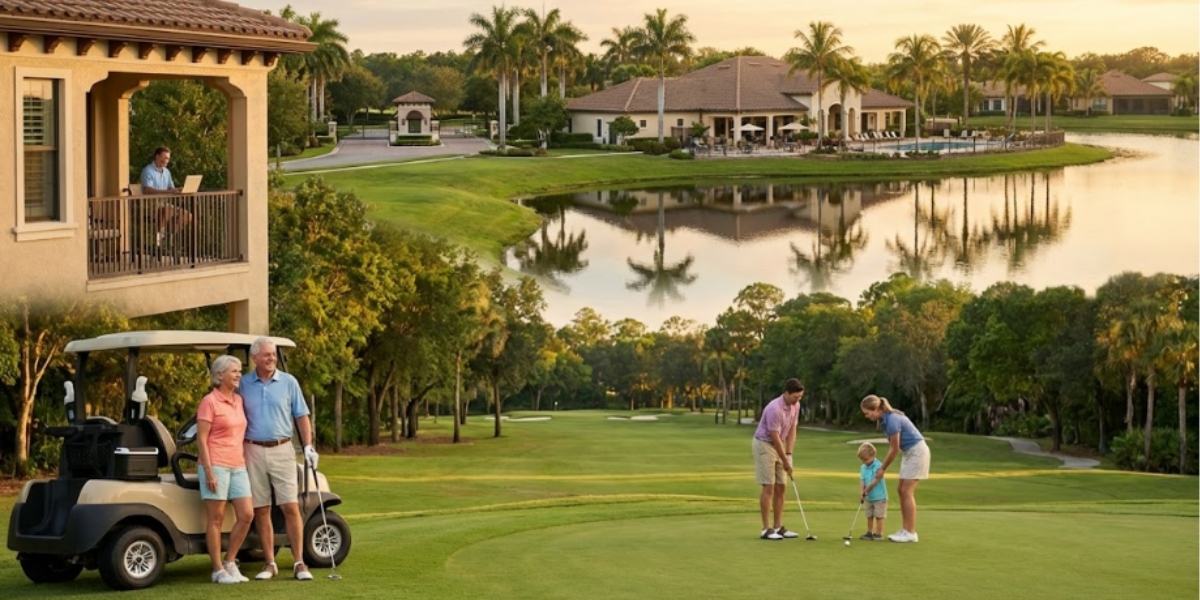


Florida is the Sunshine State and, as of 2025, golf’s capital, with about 1,100 courses and hundreds of gated neighborhoods built around them.
This guide is for you—the retiree chasing year-round fairways, the family seeking A-rated schools behind a guard gate, or the remote worker who wants a morning tee time and an evening beach walk.
Over the next few minutes, we’ll break down home prices, HOA dues, membership models, and the lifestyle perks that separate each region—so you can see the full price tag before you swing.
Florida Golf Communities at a Glance
Step onto any fairway in Florida, and you’ll notice the state’s biggest advantage right away: the season never ends. Winter frost delays? Not here. Balmy mornings in January keep golf in play every month, and that nonstop calendar fuels the nation’s densest cluster of golf-centric neighborhoods.
Developers have turned that 365-day appeal into a service. You’ll encounter two broad setups. Age-restricted enclaves cater to retirees who want quiet streets, easy friendships, and leagues that tee off before lunch. Nearby, all-ages communities host kids’ swim meets, junior clinics, and family cookouts after a twilight nine. Both wrap golf into daily life, yet they feel different once you pass the gate.
Amenities stretch beyond the scorecard. Clubhouses double as social hubs, fitness studios run sunrise yoga, and Florida’s pickleball boom has repainted spare tennis courts. Upscale developments add spas, resort pools, or private marinas, because many golfers also captain a boat when the wind is calm.
All that convenience lands on one bill. Lawn crews manicure every yard, security teams patrol private roads, and a lifestyle director fills the calendar with trivia nights and charity scrambles. You trade weekend chores for extra tee times, and you pay a premium for the privilege.
Bottom line: whether you crave a quiet 55-plus retreat or an energetic, intergenerational hub, Florida’s golf communities package sport, social life, and home maintenance into one cohesive experience.
Home Prices and Affordability Tiers
From Budget Condos to Eight-figure Estates
On the value end, 55-plus spots such as Seven Lakes in Fort Myers or Pennbrooke Fairways near Orlando still list condos and manufactured homes under $200,000, and many single-family options hover in the mid-$300,000s, according to 55places.com.
Head east to Palm Beach County and prices soar. According to NALUDA Magazine, at Jack Nicklaus’s Bear’s Club in Jupiter, a fairway estate averages about $10 million and can exceed $20 million when a lake view and guest casita join the package. Here, price buys pedigree: championship turf, fewer than twelve members per hole, and concierge service for nearly everything.
Most buyers settle between those poles. Villas in “bundled golf” communities around Naples change hands in the high $300,000s to low $600,000s, while mid-tier private clubs across Tampa Bay and the Treasure Coast often list single-family homes from $700,000 to $1.5 million. As a rule, coastlines, multiple courses, or a famous architect push numbers higher; inland or executive-length layouts keep them tame.
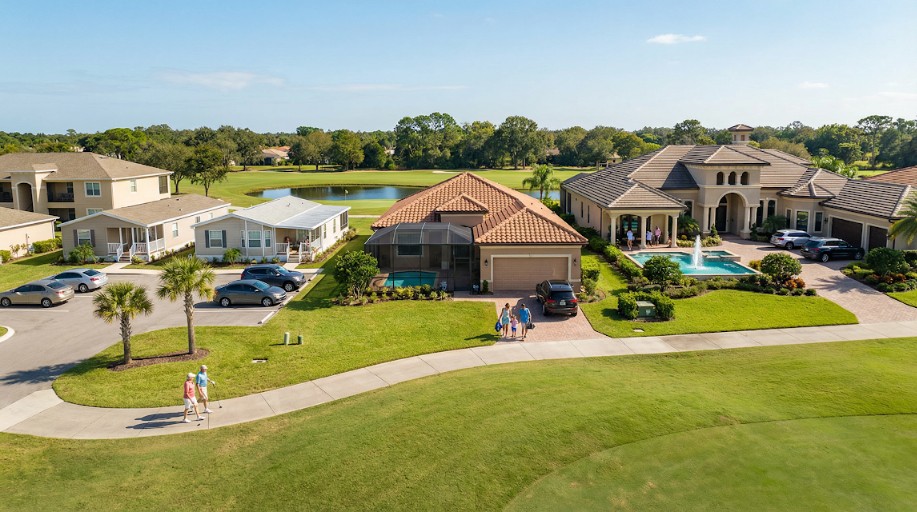
Photo Courtesy: Alex Sammon
(Florida golf communities range from budget 55-plus condos to multimillion-dollar estates overlooking the same fairways)
Whatever the bracket, remember the premium. Brokers say homes inside a Florida golf gate trade for 10 to 20 percent more than similar properties outside, reflecting the lifestyle dividend of security, social networks, and a manicured backdrop ready for a sunrise nine.
HOA Fees in Golf Communities: What You Really Pay
Walk through the gates of any Florida golf neighborhood and the manicured entrances, private roads, and 24-hour patrols look effortless. They are anything but free. Each homeowner writes a monthly check to the association that keeps the resort engine running.
What does that fee cover? Security guards, common-area landscaping, clubhouse staff, pool chemicals, and even bulk cable or Wi-Fi contracts in some neighborhoods. In condo sections, the tab can stretch further to roof reserves, exterior paint, and building insurance. The more services folded in, the larger the line item on your budget.
Costs swing widely. Small inland communities with one pool and a public course may sit in the low $200s per month. Drive south to Frenchman’s Reserve or a similar Palm Beach enclave, and the figure climbs past $1,000 before separate club dues. Many master-planned developments layer fees: a community-wide HOA plus a sub-association for your street or tower. Miss that detail, and you misjudge your true carrying cost.
According to a 2025 Redfin report, Florida HOA and condo fees rose more than 15 percent year over year, driven by higher property-insurance premiums and a state law that requires larger reserve funds after the Surfside tragedy. Analysts expect the upward drift to continue as insurers and contractors push prices higher.
There is an upside. Well-funded HOAs keep curb appeal sharp and amenities polished, which protects resale values and shields you from surprise special assessments. Still, savvy buyers add an inflation cushion to their pro-forma. In a state where storms, insurance markets, and construction costs rarely sit still, yesterday’s dues are almost never tomorrow’s.
Golf Membership Structures And Fees
Benzinga reports that, as of 2025, initiation fees often start near $50,000 and can reach six figures at prestige addresses like Frenchman’s Reserve, where buyers face six-figure buy-ins plus annual dues that exceed $10,000. SquareFoot Homes‘ membership-community guide supplies additional benchmarks for mid-tier clubs. Aberdeen Country Club posts a $20,000 equity fee, Broken Sound runs $60,000–$80,000, and Delaire Country Club sits near $79,000—all before you budget for ongoing dues.
For those considering a move to a golf community, understanding these costs is crucial. The financial commitment extends beyond the initial buy-in, with annual dues and other fees adding to the total expenditure.
Mandatory Versus Optional Membership Models
Buying a house inside a Florida golf gate does not always include automatic access to the clubhouse. Communities fall into two main camps, and the one you pick shapes both your lifestyle and your budget.
In mandatory-membership communities, such as many legacy clubs in Boca Raton or Palm Beach Gardens, you must buy into the club before closing on the house. Benzinga reports that, as of 2025, initiation fees often start at around $50,000 and can reach six figures at prestige addresses like Frenchman’s Reserve, where buyers face buy-ins of $100,000 or more plus annual dues exceeding $10,000. The upside: tee sheets stay under control, facilities shine, and every neighbor has skin in the game. The downside is obvious—you will pay for golf even if an injury sidelines your swing next year.
Optional-membership communities offer more freedom. You can live behind the gate and skip the golf, or join later for a separate initiation and dues schedule. Families who play a few times a month or snowbirds who leave for the summer often prefer this model. Because these clubs rely on steady sign-ups to fund operations, courses can feel busier, and waitlists may appear in peak season.
A third hybrid, bundled golf, is growing across Southwest Florida. Gulf Coast Florida Homes reports that bundled setups keep entry costs low but create a one-to-one ratio of homes to memberships, which can crowd tee sheets during peak months.
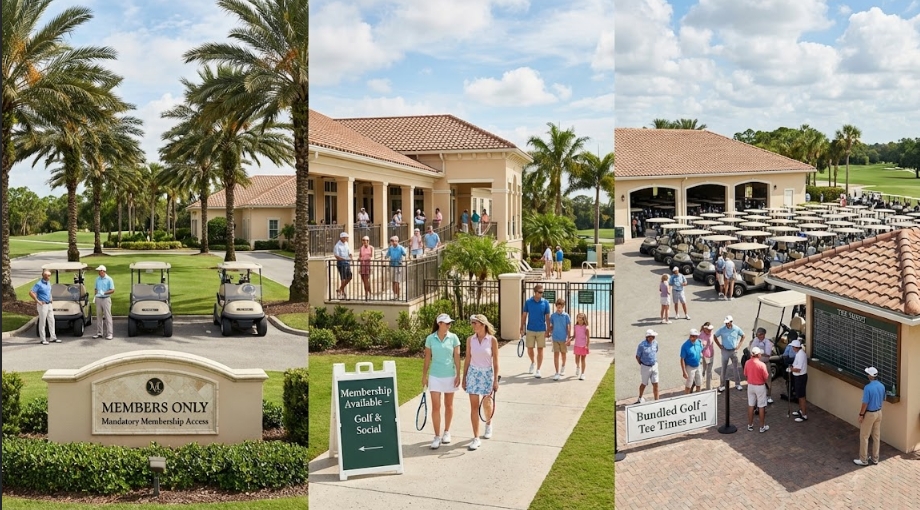
Photo Courtesy: Alex Sammon
(Mandatory, optional and bundled golf memberships each create a very different day-to-day experience at the first tee)
Before touring homes, decide which model matches your play frequency and how much capital you want tied up in club equity. That single choice can swing your annual cost of ownership more than the house’s square footage.
Amenities And Lifestyle Perks
Resort-Style Essentials
Step inside the clubhouse, and you will notice the golf course is only the opening act. Florida clubs feel like boutique resorts without a check-out time. Lagoon pools fringe palm-lined decks, lap lanes slice through separate quiet zones, and towel service is standard. Wander past the water and you will find fitness suites packed with Pelotons, TRX rigs, and a schedule that runs from sunrise yoga to twilight Pilates. Because every venue sits a short cart ride from home, squeezing a workout between holes or meetings becomes second nature.
Nearby pickleball courts hum, replacing underused tennis space with a faster game that welcomes beginners. Many communities have repainted hard courts or added cushioned surfaces to meet demand. Bocce lanes, dog parks, and on-staff wellness coaches round out an activity grid that keeps retirees limber and kids pleasantly tired.
Dining completes the picture. Casual grills serve post-round burgers, white-tablecloth rooms host anniversary dinners, and poolside tiki bars hand out frozen drinks that make every Thursday feel like vacation. Some high-end clubs even include spa suites with massages, facials, and nail care, so you can recover without leaving the gate. The design goal is simple: turn “one more errand” into “let’s stay right here.”
Regional Differences: Gulf Coast Versus Atlantic Coast
Stand on a Gulf Coast fairway at dusk, and you will watch the sun sink into calm water. Cross to the Atlantic side and sunrise golf pairs with a faster, city-driven rhythm. Same state, two distinct vibes.
The Gulf Coast—especially Naples, Bonita Springs, and Sarasota—moves at a quieter cadence. A 2024 Collier County study confirmed that Naples still holds the nation’s highest number of golf holes per capita. Many developments here use bundled golf, so every homeowner becomes a member on closing day. That model keeps initiation costs low but swells the tee sheet from January through April, when seasonal residents arrive. Summer golfers enjoy miles of open fairway and nightly Gulf sunsets. If you crave laid-back socials and boat-ready marinas, the Gulf delivers.
Drive east to Palm Beach, Boca Raton, or Jupiter, and the energy shifts. Benzinga notes that equity clubs dominate, initiation fees often exceed $100,000, and A-rated school districts draw year-round families alongside retirees. Courses stay busy throughout the year, and the social scene feels more cosmopolitan with charity galas after Friday mixers. Proximity to Miami and Fort Lauderdale airports simplifies weekend travel, yet coastal insurance premiums and stricter building codes lift carrying costs.
End-Note
Choosing between the coasts often comes down to rhythm: sunset serenity with a seasonal ebb and flow, or sunrise hustle wrapped in big-city amenities. Both regions offer stellar golf; only you can decide which soundtrack suits your life.
Disclaimer: Please note that all figures, including home prices, HOA fees, and membership costs, are estimates based on current data and may vary depending on location, specific communities, and market conditions.