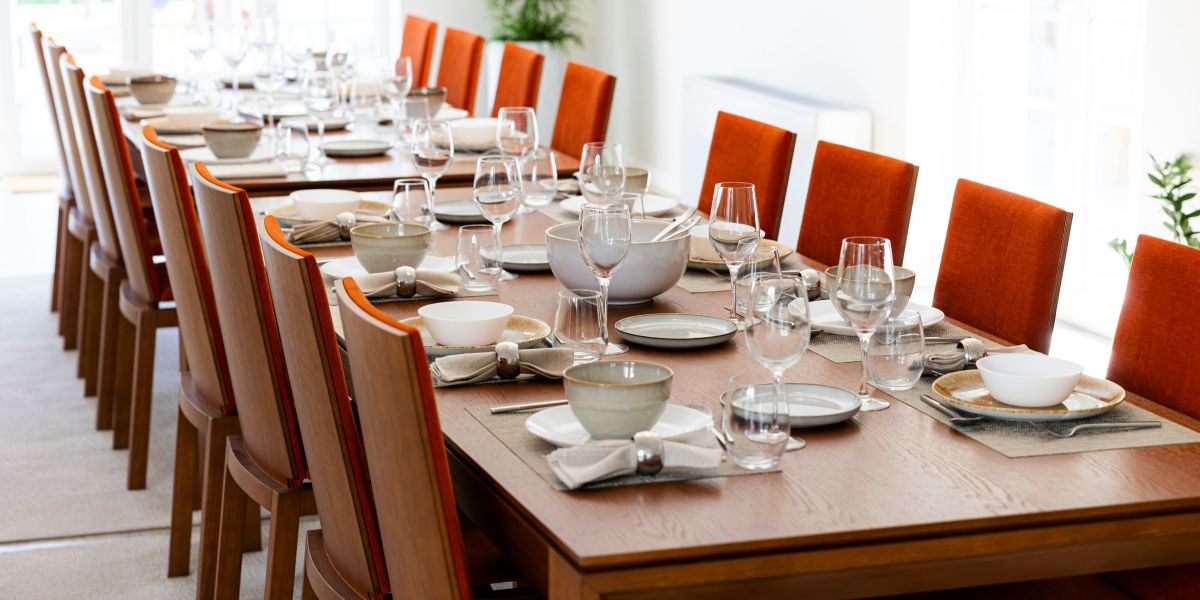


The formal, informal, and simple restaurant tables settings are among the most common. The china and utensils typically used with the relevant eating style are included in each place setting. For example, a formal table arrangement will usually include more cutlery because it accommodates multiple courses. In contrast, a simpler table arrangement will typically have fewer utensils, as it is designed for a single course. Only supply the glasses or cutlery that will be utilized for the dinner. If no wine is being served, it may be appropriate to remove the wine glasses.
Formal Table Setting
This type of place arrangement is typically found at formal gatherings, black-tie weddings, and fine dining establishments. It generally uses more cutlery and glasses than other settings, as it is intended to accommodate a multi-course meal, often featuring courses like an appetizer, soup, salad, starch, protein, and dessert. You may also choose to include charger plates, which should go behind the serving plate.
- Start by setting a freshly ironed tablecloth.
- The center of each place setting should feature a serving platter.
- To the top left of the serving plate, place a bread plate. A butter knife should be placed on the bread plate, with the handle pointing to the right and the blade facing downward.
- The salad fork should be placed on the exterior of the serving plate, followed by the dinner fork on the interior.
- The dinner knife, salad knife, soup spoon, and teaspoon should be positioned on the right side of the serving plate, starting from the inside and working outwards.
- The bottoms of the cutlery should align with the bottom of the serving dish and be evenly spaced apart.
- The dessert spoon should be positioned horizontally above the serving plate, with the handle pointing to the right.
- A water glass should be placed above the dinner knife.
- Place the white wine glass below and to the right of the water glass.
- The red wine glass should be placed slightly to the right and above the white wine glass.
- A cup and saucer should be set above and slightly to the right of the soup spoon.
Casual Table Setting
Often referred to as an informal table setting, this arrangement is commonly used for banquets and luncheons. It is also a popular choice for modern casual restaurants that wish to upgrade their dining room decor and for wedding table arrangements. This setup resembles a formal table setting, but it generally accommodates fewer courses—typically three, including soup, salad, entrée, and dessert.
- The setting should feature a serving plate at the center of the table.
- To the top left of the serving plate, place a bread plate. A butter knife should be placed on the bread plate, with the handle pointing to the right and the blade facing downward.
- The salad fork should be placed on the exterior of the serving plate, with the dinner fork placed on the interior.
- The dinner knife, soup spoon, and teaspoon should be positioned on the right side of the serving plate, from the inside out.
- A water glass should be placed above the dinner knife.
- Next to the water glass, position the wine glass.
Basic Table Setting
This simple table arrangement is suitable for any restaurant or informal gathering. It is often used in diners and family-style dining establishments and can include a placemat or coffee cup. By ensuring that guests have the necessary items, this straightforward arrangement can create a welcoming atmosphere.
- The setting should feature a serving plate at the center of the table.
- To the left of the plate, place a serviette.
- The serviette should be placed on top of the fork.
- To the right of the plate, position the knife.
- Adding a water or coffee cup above and to the right of the knife is optional.