

By: Alva Ree
My name is Annie Rosenfelt, and I’m a Ukrainian actress living in NYC. I studied at the American Academy of Dramatic Arts and had my stage debut in 2019 at the Gene Frankel Theatre in Love’s Labour’s Lost, directed by Thomas G. Waites.
Today, I continue training and strengthening my craft under director Aleksey Burago at Theater 86, where the focus is always on building discipline, presence, and the actor’s internal life. While acting and fashion may seem like two separate worlds, for me, they frequently intersect.
Fashion as a Tool for Presence
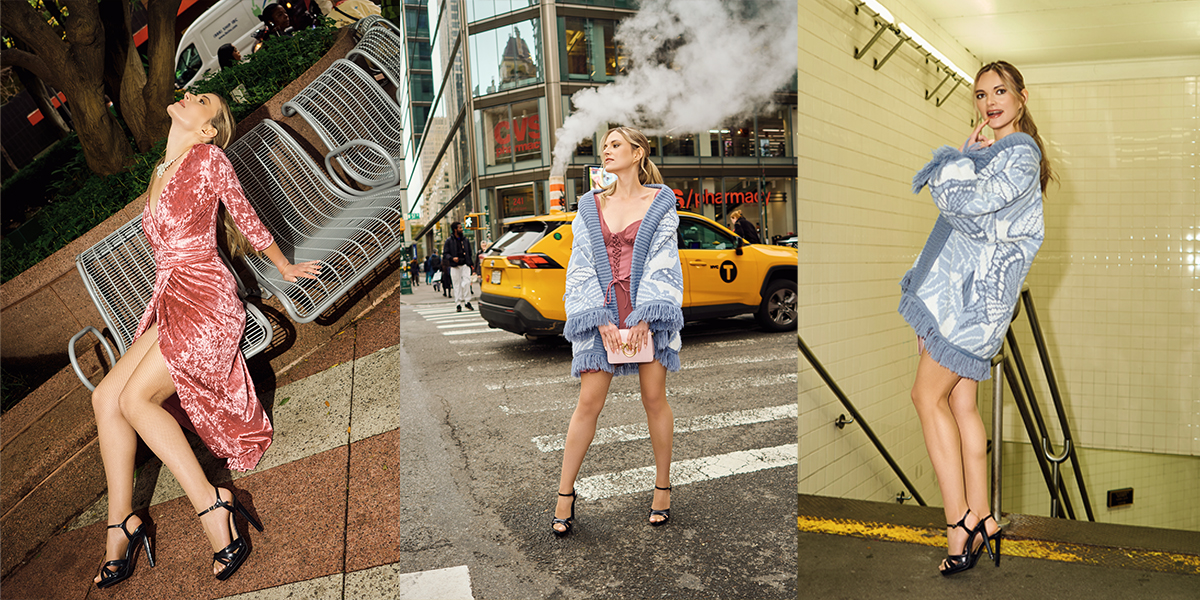
I see fashion as a supporting tool for creating a strong stage presence. Acting is built on many layers, and very often, the smallest details can become the most important ones. There is a reason people say the devil is in the details. Costume, silhouette, color, and texture can influence how a character is perceived, even before the first line is spoken. The audience immediately absorbs visual information. One of my personal favorite aspects of fashion is the ability to recreate historical periods. As an actor, stepping into clothing inspired by the past can have a significant impact on your physical behavior. Costume becomes a connection between visual art and performance.
A Shapeshifting Personal Style
If I had to describe my personal style, I would call it a classic shapeshifter. I’ll be whatever my role requires, just kidding, but not entirely. The beauty of fashion lies in the absence of rigid rules. It is a space where experimentation is encouraged, and transformation is possible. Fashion allows people to try new identities, to push boundaries, and sometimes to discover new things about themselves. For me, fashion is not about perfection. It is about creativity and boldness.
Costume and Character
Clothing plays a substantial role in how characters are constructed on stage. Of course, costume alone will not make or break a performance. Without the inner life of the character, emotional truth, psychological depth, and intention, beautiful clothes can simply serve as decoration. But when strong acting and thoughtful costume design meet, something truly impactful can happen. This is especially true in classical theatre. In works by Shakespeare or Chekhov, visual elements are deeply connected to storytelling. Costume does not replace the character’s inner world, but it can elevate it.
Fashion in New York
Living in New York has also shaped the way I see fashion. This city treats fashion as something alive. It encourages experimentation and gives people the freedom to try things, fail, and learn from the process. Fashion here is not just clothing. It includes makeup, hair, posture, and the complete transformation of a person’s image. Many of my friends work in fashion, and I regularly learn from them. Sometimes the smallest details, the way a jacket is tailored, the way makeup highlights bone structure, or the way fabric interacts with light, can dramatically influence how someone is perceived.
Confidence Over Appearance
What ultimately matters most in acting is skill and confidence. Fashion actually reinforces an important lesson: it is rarely about how someone objectively looks. It is about how a person feels in what they are wearing. Confidence is often conveyed instantly. A confident actor commands attention long before speaking a line. Fashion can support that confidence, but it cannot replace it.
Presence Always Comes First: Supporting Artists in New York
Finally, I would like to highlight something that matters deeply to me: supporting artists and artistic experimentation in New York. So many talented people are looking for opportunities to share their work with the world. Acting, fashion, and other creative fields depend on curiosity, openness, and community support. As someone currently training at Theater 86 Lab, a theatre that is now searching for a new space, I can say that artists need encouragement from their communities. New York has always been a city where creativity thrives. Supporting artists is one of the ways we can keep that spirit alive.