


Ever felt like your mind is racing even when your head hits the pillow? In our hectic lives, it’s easy to overlook how vital quality sleep is for our mental well-being. Yet, the link between sleep and anxiety is more significant than many realize.
This blog will take you into how sleeplessness can profoundly impact your mental health and offer practical strategies to help you find peace and balance.
How Poor Sleep Disrupts Mental Health
Poor sleep disrupts the delicacy of our brain. It alters the level of neurotransmitters, particularly serotonin and dopamine, which play a significant role in maintaining mood. Studies show that sleep deficiency is linked to increased levels of cortisol, a major stress hormone, which triggers a great stress response.
This biological disruption significantly impacts key brain regions:
- Amygdala: Becomes hyperactive, intensifying emotional responses
- Prefrontal Cortex: Functions less effectively, impairing our ability to regulate emotions
These changes create a perfect storm for anxiety to thrive. For those struggling with severe anxiety or related issues, drug rehab services can be an essential resource for finding effective treatment. Particularly united healthcare drug rehab services provide valuable information and support for accessing comprehensive mental health care and tailored treatment options.
Psychological Consequences
The psychological consequences of disturbed sleep are just as astonishing. Research has shown that individuals with insomnia develop an anxiety disorder by a factor of 10 or more. This clearly demonstrates a strong correlation between sleep disturbances and higher anxiety.
Moreover, insufficient sleep can worsen pre-existing mental health conditions and become a self-reinforcing negative spiral.
- Poor sleep is associated with more anxiety.
- Anxiety increases, and sleep is even more difficult.
- A vicious circle like that only promotes deterioration in both sleep quality and symptoms of anxiety.
The Role of Sleep Quality in Anxiety Management
Quality sleep is a complex process that involves multiple cycles, each with its distinct role in maintaining our mental well-being. Understanding these cycles helps us appreciate how they contribute to our overall health.
Non-REM Sleep:
NREM encompasses three stages of sleep, which, though important in their ways, rejuvenate the body and mind. Deep stages in NREM are considered very vital in bodily repair and growth, hence helping in muscle, tissue, and immune system repairs and growth.
This stage further strengthens non-emotional memories, which are important in learning and cognitive functioning.
REM Sleep:
REM sleep, on the other hand, has a great function in emotional processing and memory consolidation. During REM sleep, the brain is actively involved in daily emotion and experiences processing and incorporation.
This stage is crucial for emotional regulation since it helps make sense of emotional memories, stores them, and balances mood and stress levels accordingly. It is during REM sleep that our brains process complex emotions and psychological stressors to help us work through our feelings.
The Impact of Sleep Disorders
Sleep disorders are very common, with millions of adults having them almost routinely. The two most prevalent insomnia and sleep apnea conditions are strongly linked with anxiety. Their links to anxiety happen in both cases.
Anxiety may make it difficult for a person to fall asleep easily or even sleep through the night because of severe mental activity and tension. Poor sleeping, on the other hand, can increase the levels of anxiety, thus making a vicious cycle where one problem feeds into another.
This is one important reason why it would be critical to consider addressing the two disorders together. Treating only one of them without addressing the other would cause incomplete recovery since the underlying cycle in this negative spiral goes on to feed both problems. Effective management must target both sleep quality and anxiety for long-lasting relief.
Effective Strategies to Improve Sleep and Reduce Anxiety
Improvement in sleep can have a dramatic effect on anxiety improvement since these two features of health interlink. Healthy sleep habits and making conscious changes to your routine can build conditions for restive sleep and emotional balance.
Establishing a Sleep Routine
Creating a consistent sleep schedule is fundamental to improving sleep quality and managing anxiety. Consider these tips:
- Set a regular bedtime and wake-up time, even on weekends.
- Create a relaxing bedtime ritual (e.g., reading, gentle stretching).
- Ensure your bedroom is dark, quiet, and cool.
Cognitive Behavioral Therapy for Insomnia (CBT-I)
CBT-I (Cognitive Behavioral Therapy for Insomnia) is a guided therapy that is specifically designed to target cognitions and behaviors contributing to insomnia treatment. It accomplishes this by helping the individual to become aware of and challenge the negative sleep-interfering thought patterns, such as anxiety regarding one’s inability to fall asleep or any concern that keeps the mind racing at night.
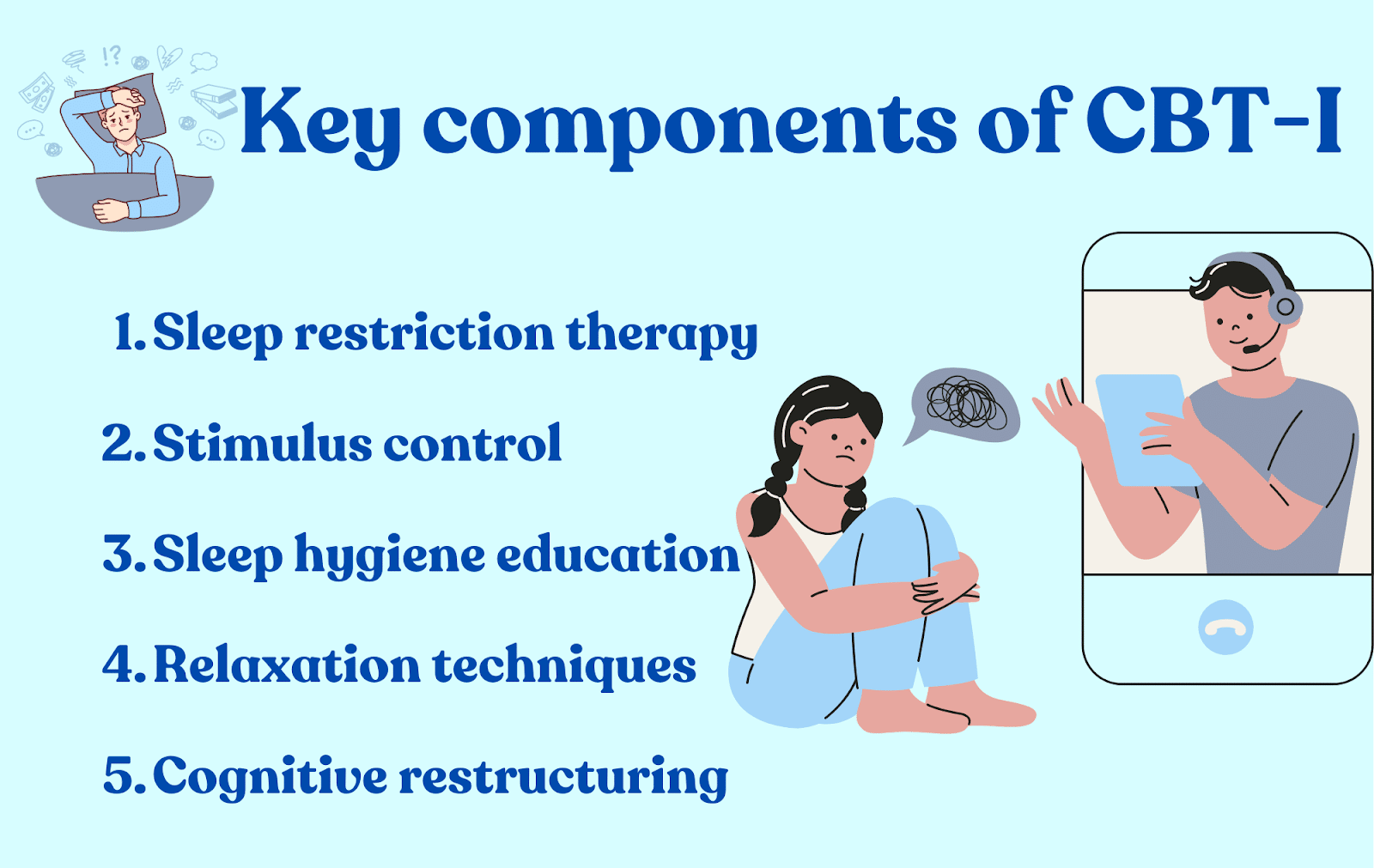
Photo Courtesy: addictionresource.com
Lifestyle Changes and Relaxation Techniques
Simple lifestyle modifications can significantly improve sleep quality and reduce anxiety.
- Reduce caffeine intake: Especially in the afternoon and evening
- Regular exercise: But not too close to bedtime
- Limit screen time: Avoid blue light exposure before bed.
Incorporating relaxation techniques can also be beneficial.
- Mindfulness meditation: Helps calm racing thoughts.
- Deep breathing exercises: Reduces physical tension
Progressive muscle relaxation: Promotes overall relaxation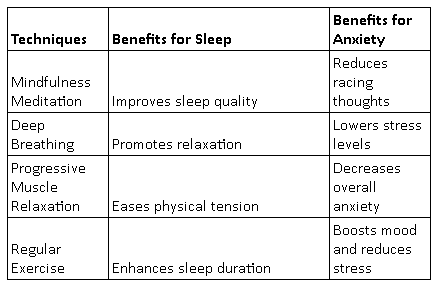
The Role of Professional Help
While self-help strategies are valuable, it’s important to recognize when professional help is needed. Seek medical advice if you experience:
- Persistent anxiety that interferes with daily life
- Severe sleep disturbances lasting more than a few weeks
- Symptoms of sleep disorders (e.g., loud snoring, gasping for air during sleep)
In some cases, medication may be prescribed to manage anxiety or sleep issues. Always consult with a healthcare professional to discuss the best treatment options for your specific situation.
Conclusion
The connection between sleep and anxiety is clear and profound. By making sleep a priority and addressing anxiety simultaneously, we can disrupt the harmful cycle where one worsens the other. Improving your sleep quality isn’t just about feeling rested; it’s a crucial step toward managing anxiety and enhancing overall mental well-being.
Embrace the strategies discussed, and remember that a better night’s sleep can pave the way to a calmer, healthier mind.
FAQs
1. How much sleep do I need to reduce anxiety?
Most adults need 7-9 hours of quality sleep per night. Consistency is key; aim for a regular sleep schedule rather than focusing solely on hours.
2. Can anxiety medications affect my sleep?
Some anxiety medications can affect sleep patterns. Always discuss potential side effects with your healthcare provider and report any sleep disturbances you experience.
3. Is it better to stay in bed when I can’t sleep or get up?
If you can’t sleep after 20-30 minutes, it’s generally better to get up and do a calming activity until you feel sleepy. This helps associate your bed with sleep, not wakefulness.
Published by: Khy Talara