

AIDS is a severe disease caused by the human immunodeficiency virus (HIV), transmitted primarily through blood, sexual intercourse, and from mother to child. Upon infection, it compromises the human immune system, leading to increased susceptibility to various infections and tumors. Initially, AIDS may not exhibit obvious symptoms, but as the virus multiplies, the immune system of the infected person is gradually compromised. Early symptoms can include fever, headache, and fatigue, while more advanced stages may present with persistent diarrhea, weight loss, and swollen lymph nodes. Eventually, AIDS can lead to a severe breakdown of the immune system, making patients vulnerable to otherwise non-threatening pathogens, which can result in fatal comorbidities.
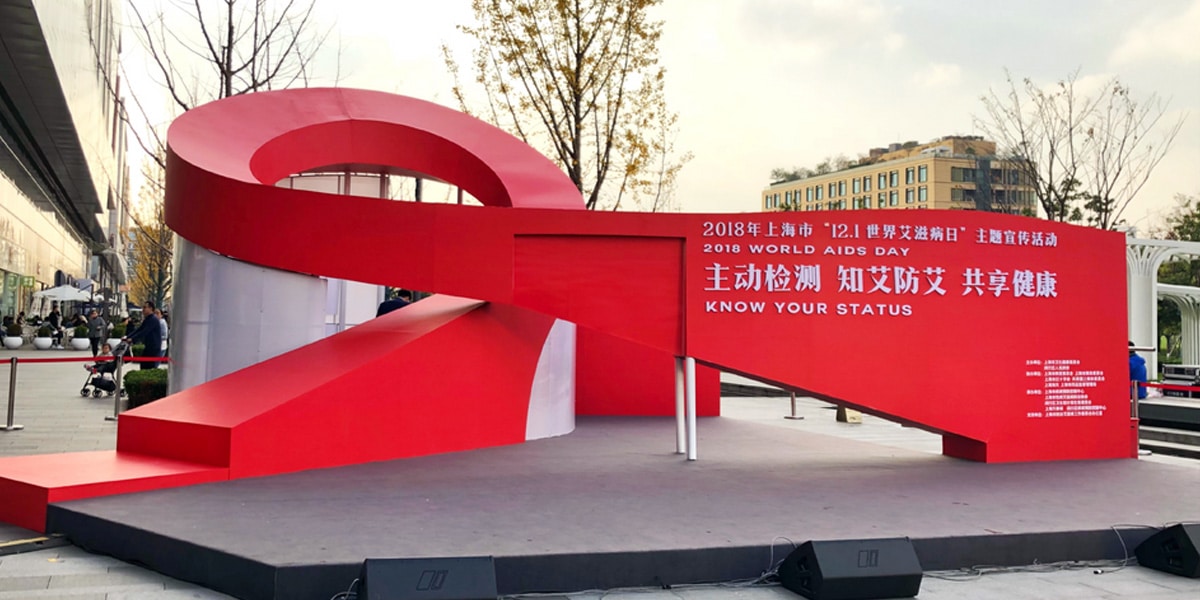
This grave illness has consistently drawn attention from various sectors of society, with numerous awareness-raising activities organized, particularly in Shanghai. One of the most impactful campaigns was the epidemic prevention publicity event held by the Shanghai Epidemic Prevention and Control Center on World AIDS Day in 2018. A “red ribbon” installation at this event served as a striking focal point.

Photo Courtesy: Anji Liu
In a recent interview with Mr. Anji Liu, the lead designer of the installation, the artist’s description reflects the dedication he put into the design. When he received the invitation from the Shanghai Epidemic Prevention Center, he was thrilled to work on a project of significant importance. Liu said that after getting involved into this project, he thought it was an opportunity to engage the public in AIDS awareness, encouraging a deeper understanding and care for AIDS patients.
When initially determining the appearance of the installation to more effectively convey the core meaning of this project, Liu mentioned that he had contemplated it for an extended period and conducted more in-depth research and investigation into AIDS. It was finally decided that the core of the installation would be a giant red ribbon, within which, with the most attention-grabbing feature being a rolling door at its center. This door symbolizes the courage and confidence required to face AIDS. Liu said that after conducting in-depth research, he found that modern attitudes towards AIDS have become increasingly positive, recognizing it as a viral infection rather than a moral failing. However, despite progress, social stigma still exists, leading to discrimination and prejudice against patients. This discrimination poses numerous challenges in their work, family, and social lives. Therefore, Liu designed the installation with two spaces. When someone opens the door, it signifies their readiness to bravely face health conditions and their willingness to accept and understand illness.
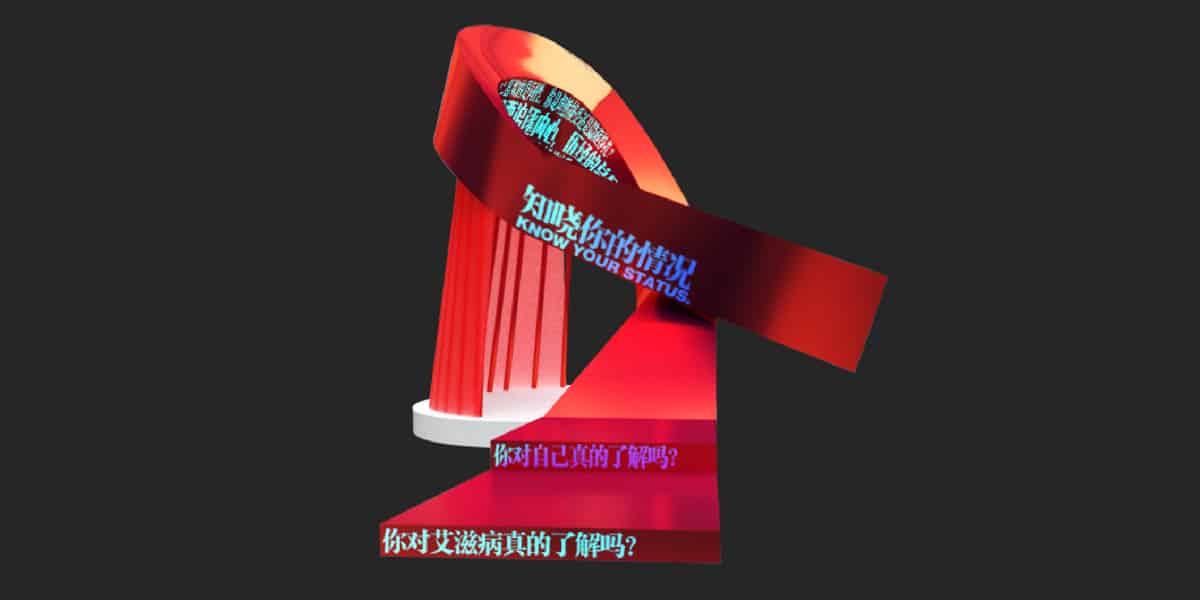
Photo Courtesy: Anji Liu
Liu designed the interior of the Gate of Courage as a functional space for promoting AIDS knowledge and distributing self-test kits. In addition to symbolizing the door of courage, Liu believes that the role of the device is not only to convey courage to people but also to provide AIDS patients with more opportunities to speak out. Therefore, he designed the device in such a way that the area outside the door can also function as a stage and publicity space, enveloped by a giant red ribbon adorned with promotional slogans and educational material. Additionally, an extended stage in front of the ribbon hosted speeches and promotions.
The installation’s success was widely recognized, earning Liu significant acclaim. Liu noted that the red ribbon, an international symbol of AIDS awareness, represents support. As more people recognize and wear red ribbons, they demonstrate concern for AIDS, making the installation an effective tool for promoting patient care and guiding prevention and control efforts, sparking further discussion about the disease.
Disclaimer: The information provided in this article is for general informational purposes only and should not be construed as medical, legal, or professional advice. The discussion of AIDS and HIV aims to raise awareness and promote understanding. Readers are encouraged to consult healthcare professionals for personalized medical advice and treatment related to AIDS or HIV.
Published By: Aize Perez