Written by: Dillon Kivo
For many Americans, Navy SEALs exist at the intersection of myth and reality. They operate in the shadows, completing missions seldom discussed and living lives defined by grit, endurance, and quiet resolve. The culture prizes humility and silence. Yet in recent years, a new kind of courage has begun to surface inside that community. A small number of former operators are stepping forward to talk about the battles that linger long after combat ends.
Pete Scobell is one of them. His story, shared widely following his appearance on The Shawn Ryan Show, has become a touchstone in a growing national conversation about traumatic brain injury among post-9/11 service members. It is a story not about combat heroics, but about what happens when the body and mind refuse to recover long after the uniform comes off.
Scobell’s experience offers a window into a complex truth. Many who spent careers breaching doors, absorbing blast waves, and operating in high-stress environments carry neurological wounds that are only now being widely understood. For Scobell, acknowledging that reality was not a moment of weakness. It was the first step toward becoming whole again.
A Decline Almost Too Subtle To See
The symptoms arrived quietly. A numb arm. Persistent headaches. A back that never seemed to loosen. Sleepless nights that turned into sleepless weeks. A slipping memory that made routine tasks difficult. Occasional moments of emotional distance that felt unfamiliar and out of place.
“In the kitchen, [Morgan] goes, ‘dude, you got TBI. You need to go to NICoE.’” Scobell recalled. “I was like, what is TBI and what’s NICoE?… you can’t sleep for your headaches… You quite literally can’t hold a conversation.”
In isolation, each symptom could be dismissed. Together, they formed a constellation of warning signs that something deeper was happening. But for men conditioned to push pain aside, a doctor’s visit often ranks low on the priority list.
Family members sensed the change first. Scobell had always been present, grounded, and engaged at home. Slowly, he drifted. He misplaced keys. He repeated the questions. He sat in silence where conversation once came easily. To outsiders, he looked the same. Inside, a fog was forming.
The Special Operations community values stamina in every form. Physical. Mental. Emotional. Service members grow accustomed to demands that feel endless. It is not unusual to assume that exhaustion and irritability are simply the cost of service. For many, acknowledging a deeper problem can feel like stepping outside the culture.
A Teammate Recognizes The Signs
It was another SEAL, Morgan Luttrell, who first confronted Scobell about the changes. Luttrell had walked a similar path. He knew the signs of traumatic brain injury and recognized them immediately. Rather than offering reassurance, he offered direction. It was time to seek help.
“I walked in… and I was like, I need help,” Scobell said of going to medical after Morgan urged him to get evaluated. “I just dumped it… and they pulled my resignation… ‘he’s not getting out yet.’”
That intervention mattered. Within the Special Operations community, trust is currency. Advice carries more weight when it comes from someone who understands both the science and the lifestyle.
Scobell listened. It was not an admission of defeat, but an act of strength. The decision would change his life.
A Different Kind Of Mission At NICoE
The National Intrepid Center of Excellence, known as NICoE, is one of the nation’s leading institutions for treating traumatic brain injury and psychological trauma in the military. Its model is comprehensive. Rather than sending patients to specialists in isolation, NICoE brings experts together under one roof. Neurologists, psychiatrists, pain specialists, sleep experts, cognitive therapists, nutritionists, and integrative medicine providers collaborate on a single plan.
For warriors accustomed to compartmentalization, the experience can feel transformative.
Scobell underwent ninety-three medical appointments and multiple MRIs. Doctors used language that resonated with someone trained to assess systems and damage patterns. “Think of your brain like a city… gray matter is the buildings, white matter the streets and the sidewalks… with blasts, it’s like an earthquake… the damage is in the infrastructure you can’t see,” he was taught.
NICoE focused on reducing inflammation and cortisol, restoring restorative sleep, addressing pain, and retraining neural pathways. “They used acupuncture… it was like somebody hit a button and my headache went away… I slept for 18 hours… and I started to piece myself back together,” Scobell said.
Healing did not happen overnight. It was measured and intentional. But it was real.
Learn more at the National Intrepid Center of Excellence.
Pete Scobell’s Grief Arrives Without Warning
Recovery unfolded alongside heartbreak. During his treatment, the Extortion 17 crash claimed the lives of thirty American service members, including many from the SEAL Teams. The loss sent shockwaves through the community. Scobell attended memorials, sang in honor of fallen teammates, and confronted grief without turning away from it.
For some, moments like that cause withdrawal. For Scobell, they created purpose. Healing strengthened his resolve. If his recovery could help even one operator avoid silent suffering, he would speak.
Sharing Knowledge, Quietly And Persistently
After completing treatment, Scobell returned determined to help others. He created a briefing that explained traumatic brain injury in clear, direct terms. He traveled to units and family gatherings. He spoke not as a clinician, but as a teammate who had walked the same path.
“Every guy in the room was like, ‘dude, I got all of that.’… we started stacking guys up, going to NICoE… I was fielding calls at two in the morning from guys hurting, and I just found this purpose,” he said. “I came here to save… I’m going to save these guys.”
“I came here to save… I’m going to save these guys.”
The mission shifted from combat to connection. It was still service, just in another form.
Rebuilding On New Ground
Transitioning from active duty brought new challenges. Purpose does not always translate instantly into civilian life. Scobell found grounding in the mountains. Skiing became both meditation and discipline. Movement returned. Breath steadied. Identity evolved.
He continued advocating for expanded access to NICoE-style care. Over time, his story spread. Then it accelerated. When he sat across from Shawn Ryan and shared his journey, millions saw not a mythic figure, but a human being learning to rebuild.
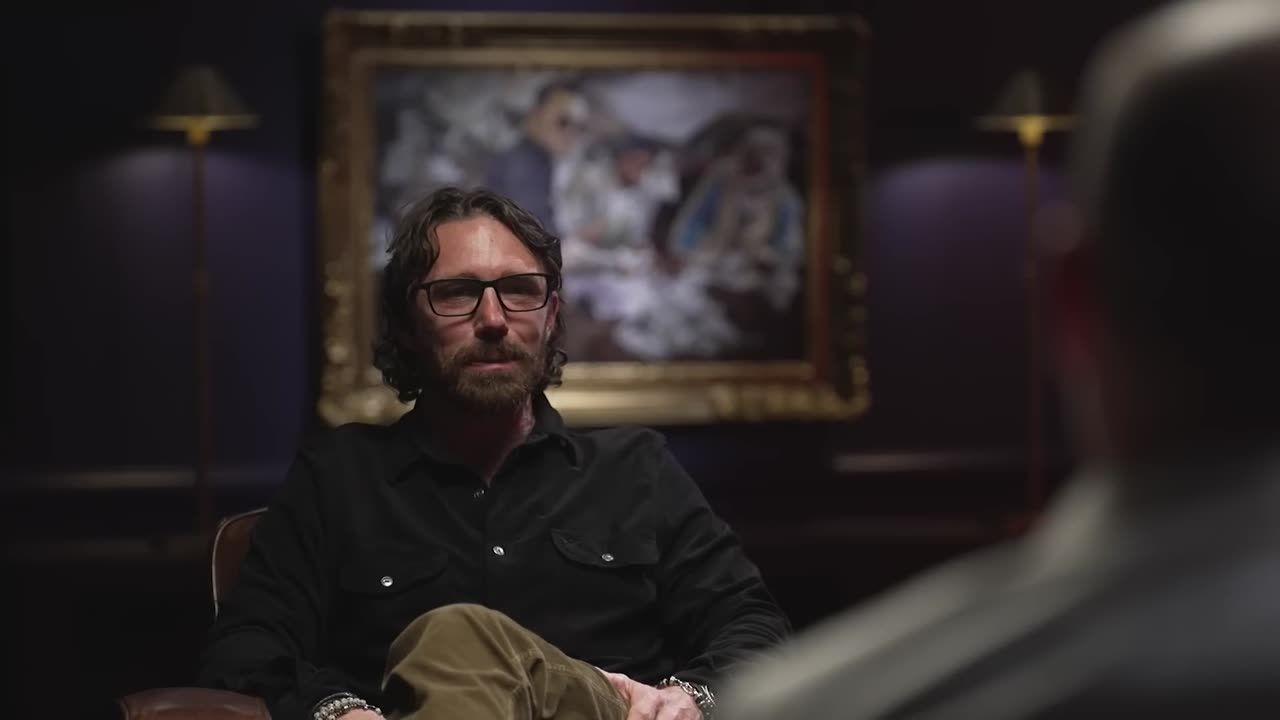
Photo Courtesy: The Shawn Ryan Show
Watch the full conversation on The Shawn Ryan Show.
A New Understanding Of Strength
Today, Scobell is part of a cultural shift in how military service and resilience are understood. Strength is not measured only by endurance. It is also measured by honesty, awareness, and willingness to heal.
The SEAL community does not seek attention. Yet stories like this move the culture forward. They remind warriors that recovery is not a surrender. It is readiness, return, and service by another name.
A Path Forward
For many veterans, traumatic brain injury remains misunderstood. Some do not know what to look for. Others know, but hesitate to ask for help. Scobell’s message is simple: recognize the symptoms and step forward. Healing is possible.
Progress does not always arrive with headlines or ceremonies. Often it begins in a quiet moment, with a sentence that many warriors struggle to speak:
I need help.
Strength lives not only in the struggle, but in what comes next.
If you or someone you know is experiencing symptoms of traumatic brain injury, support is available through the Defense and Veterans Brain Injury Center and military care providers.